Men on Show · Episode 7
Men, Paralysis and Recovery with Steven Dowd
- 1 November 2023 .
- 29 min .
- Hosted by Andrew Pain .
Steven Dowd committed to get fit and registered for a charity cycling event.
Andrew hosts this podcast. His own keynotes are on burnout, resilience, imposter syndrome and difficult conversations.
Key points of the episode
- How a devastating accident turned his life upside down… but how he thought of an immediate coping strategy.
- A key decision that he made that was intimately connected to his rehabilitation.
- The magic of a "200 day promise" .
- His contribution to the world now.
- An inspiring (and do-able) vision for future generations.
Keynote
Steven describes a key decision behind his rehabilitation; Andrew's keynote on wise decisions under pressure is about making difficult decisions when the stakes are high.
Men on Show shares lived experience and honest conversation – it is not medical or therapeutic advice. If you're struggling, you don't have to cope alone.
Samaritans: call 116 123 (free, 24/7) NHS: 111
Full transcript
Read the whole conversation
A complete, verbatim transcript of this episode – every word is the host's and guest's own; the topic headings are ours.
Welcome to Men on Show, the podcast, Candid Conversations with Everyday Heroes. Join Andrew Pain as he interviews fascinating guests, ordinary men doing extraordinary things. If you love the show and you think somebody could benefit from hearing it, why not tell them about it by giving it a share on social media? Oh, and at the end of the podcast, if you can leave us a five-star rating and a review, it really helps us more than you know, and it gets this important message out to more people that need to hear it the most. Right now, enjoy the next episode.
So, welcome to Men on Show. I'm absolutely delighted to be joined by the inspirational Steven Dowd today, a man with an incredible story, a story of a horrific setback, a story of courage, grit, and ultimately hope. Steven, welcome to Men on Show. Yeah, good, it's a pleasure to have you here. And let's just start, let's go back to where this story starts in June 2016. What happened that day, and what do you most vividly remember about that day?
The bike accident and being paralysed
Well, I suppose what you're referring to there is my injury. So, to give you a little bit of backstory before we hit the ground, as it were, my, quite literally actually, my team at BNY Mellon, where I used to run a recruitment desk effectively, consisted of a bunch of people who were very much into their sport and into their achievements, one of which was an iron man, a guy called Dan. And Dan said to me one particular morning, let's get involved with some charity challenges.
We can do something for charity, do something fun, do something physical. And he wanted to sign up to Ride London, which is the charity bike ride, where they close down the roads around London and you cycle 100 miles. And it's all pretty intense. And I'm not really a cyclist, but I did what self-respecting boys should do, right? I went out and bought the most expensive carbon fibre bike I could find and colour-coded my helmet with my socks, all the important stuff.
And then set about training. And you're right, it was a summer morning, I was heading down, this is 2016, I was heading down to Dan's place to do the daily commute with him. And unfortunately, I didn't get there. I hit a barrier I didn't see, and I went over the top. And as I went over the top, the six foot three me came crashing down, 100 kilos of me came crashing down onto my beautiful colour-coded helmet, which saved me from a brain injury, but didn't save me from breaking my neck. And unfortunately, in an instant, I was paralysed from the neck down.
Wow, wow. And then, so what do you remember about that sense of being on the floor? Is it something that you realise very quickly that, hey, I'm in trouble, this is really, really serious? Were you aware of how bad it was?
Yeah, I mean, I remember almost too much really. I was unfortunate enough to not lose consciousness. I was conscious throughout the whole ordeal. But as I smashed into the ground, I literally just collided like you would do if you ran into a fist or into a wall or something. And so I was seeing stars. But it was in that moment where I sort of was shaking off the stun moment rather than the pain. It wasn't particularly painful, but it was just shocking.
And I reached up to rub the bit that hurts as you naturally would do. And unfortunately, my hand didn't get there. And it was only as I went, oh, hold on a minute, this isn't right. I went to do it again. And the same thing didn't happen. Yeah, I didn't get my hand to my face. And it was at that point really, when the real horror struck home that I wasn't able to move my arms and I couldn't feel the rest of my body.
And whilst I had this kind of stunned moment in my face, I had an incredibly emotionally shocking moment when I realised that I had no control over my body at all.
And so did people see you go over the top of that barrier? Were you alone for a long time or was it some of the help sort of arriving on the scene quite quickly?
Read the rest of the transcript Collapse transcript
The Thames path, and deciding on the trial
It was more the latter actually. So I was bright and early in the morning and I was down by the Thames. I lived in Woolwich at the time. So I was very lucky in a way because it was a bit of an off the beaten track kind of area, the half past six or whatever it was in the morning. But purely by coincidence, there happened to be a couple of women who were running along the Thames path there.
And they saw me crash and they come running over to what they thought was a dead body because I just was in a very unseemly position. I wasn't moving. And the two women there, one was called Camilla, I remember. In floods of tears, she came running over, like, oh my God, you okay, you okay? And from the ground, even though I couldn't move, I had to sort of manage my own process, as it were. Manage my own help, because I was able to not only get a grip of the rising panic that I felt in my chest that wrapped itself around my throat like I was being strangled.
I mean, it was an incredible panic moment. But there was a weird time for me, just in that few seconds, where I'd said to myself almost, this stop, this won't help you, this panic won't help you. You need to get through this second. I remember saying that to myself. Almost like it was another person, almost like it was another me in the room. And I said, yeah, stop, this won't help you. Get through this second, and I did that.
And then I went, okay, well done. Now get through this second, and this second, and this second. And I carried on living my life second by second until Camilla ran over and I was able to get some assistance and sort of ask her, well, tell her really what my name was, what I thought I'd done to myself, that I was badly injured into a phone and ambulance. And then to her friend, I told her my wife's name and phone number and to give her a call, but not to worry her, just to tell her that I've been in an accident and it's bad enough for me to go to the hospital so I should see her there, but don't tell her anything more than that, really.
I don't want her panicking. And in fact, she did such a good job. That woman left a voicemail which my wife picked up and finished her cup of tea before she even came over to the hospital.
So then you're in the ambulance, you've gone to hospital. How quickly was it that the sort of a consultant confirmed your fears? Because I know reading about your story, there's a time, wasn't there, where a consultant confirmed and sort of said, you're not gonna get any sensations or feelings back. How soon was that?
Yeah, it wasn't an out and out confirmation, but it was a very low probability. So, very quickly, I arrived at St. George's Hospital in London. They put me through the battery of tests that you would do, scans, X-rays, MRIs, all that sort of stuff to see what was going on inside. And very quickly, they got the results back. And I remember a consultant, a guy called Matt, Matt Gallagher, his name was, came to the end of my bed and said, Steve, we've put you through these tests.
We've got the results. We, it's devastating. We don't know what you're going to get back, if anything. You may not be able to feel or move below that point again. However, which is a great word to hear at that point in the conversation, right? However, we are running a clinical research trial at this hospital. We're funded by an external body, a group called Wings for Life, a spinal cord injury foundation, to run 50 people on this particular trial.
And if you wanted to be involved, you would be a good candidate for that. And if you wanted to be involved, you could be number 45. And if you wanted to be involved, you've got two hours to decide. So yeah, it was a pretty intense sort of piece of news.
So two hours to decide, was it any, I mean, I'm presuming that was quite a straightforward decision.
Was it straightforward?
Yeah, it was actually. And trigger warning, everybody's response to their injury is unique and everybody's is theirs to deal with as they wish. I didn't want to be driving around in a power chair with my mouth for the rest of my life. I didn't see that as my future. I didn't know if I wanted to really be a part of that future. And so my decision with Helen was very quickly, if that would be the outcome, then I don't really think I want to be a part of that.
So when the offer was made to be a part of an experimental research trial, which they don't normally do unless that's kind of last ditch attempt often, then yeah, within about 10 minutes, we said, look, you know what, Switzerland's always there. Let's give it a go. Grab it with both hands as it were. Not that I could use them. And move it forwards and see, if we can get something back from that.
The 200 days promise and daily wins
And so then there's a promise, isn't there? I was reading that you made a promise to your wife. Tell us more about that.
Yeah, so that was known as my 200 days promise within our family and actually subsequently externally as well. It was on day two after the surgery. I woke up in intensive care and I was only through normal sleep. I'd been awake through normal stuff anyway, but a couple of days after my injury, I looked across to my wife and I said, what's 200 days from now? And she worked it out and said, it's December the 22nd.
Why is that? And I said, give me Christmas Day and I'll be back to normal. And that was, I don't know where that came from. It was, it felt like, having worked in corporate business for a long time, everything's done on 100 day intervals, right? You get to your new job, let's do a 100 day review. And 100 days never feels like enough time. So three months ish and I said, well, let's double that. Let's go 200 days.
It gives me six months and I'll be back to normal. That means I can work hard, but it gives me a goal, long-term goal, bold, ambitious goal and I can work towards it. And so that promise to my wife became my daily driver for the next 200 days, each and every day. I looked to where I was, I looked to where I needed to be in 200 days, which is a mammoth goal to try and achieve when I couldn't move anything or feel anything.
However, I was able to then break that down into tiny little goals. Normally more than one a day to say, right, let's just be better than yesterday. Yeah, let's focus on where I was yesterday, do a review. I did it at the same time every night, 24 hours later, and say, where was I yesterday? Where am I today? And if I've moved forward, then that was worth celebrating, even if it was only incrementally. And I did that every day for 90 days.
So I made an improvement every day for 90 days. I know it was 90 days because on day 90, as we were counting them up day by day and documenting them day by day, I remember saying nothing much has happened in the last 24 hours. So we celebrated that because that showed us that we'd had 90 days of wins. So I think it was that mindset of bold, ambitious goals coupled with tiny little goals that were very achievable and celebrating every win as soon as we could.
Low points and the rope ladders
That's amazing. I love that. And were there, within the 200 days and you're trying to make small steps forward each day, were there any really, really low points that you can remember? And if so, was there a trigger for those low points?
Oh, absolutely. I mean, I've cried my river of tears for sure. I've been through the why me moments. I've woken up at four in the morning where nothing good happens at four in the morning, right? And I've been in desperate positions and I still do. Yeah, I still cry. I still have those moments. I have them less and less, less frequently, but I definitely have them. But I don't know if there was any particular triggers other than being four o'clock in the morning, which is probably a trigger for a lot of people.
But I don't think there was any particular triggers. Sometimes it would just hit me out of the blue. I could be feeling totally fine, and then suddenly the ground falls away from me, and I wonder where I am and how I can get back. But I was given very good advice very early on by one of my intensive care nurses. That's how early on it was. So I was in intensive care for about 10 days before I moved to the high dependency unit, where I spent another, well, best part of four months, between high dependency and rehab hospitals.
And so in those very early days, a guy called Julianne Osdean, who was my ICU nurse, said to me, Steve, you're going to have down times. They're going to happen. So just get used to that. That will happen. You're an upbeat guy and you'll need every ounce of that. You're optimistic. You'll need all of it together, but know that it will happen. That you'll feel down, you'll spiral down and be prepared for it ahead of time.
So he literally gave me like a little task almost to create what we ended up calling my rope ladders, where we could think about scenarios. We had three, right? Cause in case one didn't work. One was a past memory. So in my case, I look back on what I was doing with my granddaughter, rolling around in the grass, playing in the fields, you know, visualising it, smelling the smells and feeling the sun on your face, hearing the dogs barking in the background, that sort of thing.
Making it really vivid. And then a desire to get back to that stage. And building a desire. And then the second one was actually a future memory, because your body doesn't know the difference between memories, whether it's past or future, frankly, it's biochemical reactions very similar. So I designed a scenario where I was completing that 200 days challenge, where I was able to stand and walk and do the things I wanted to do at the 200 days mark.
And then we had a third one as well, which is more about being in the moment. And so for me, that was floating out of my body, sitting in the corner of the room, looking down on myself and accepting that scenario for what it was, but also what it wasn't. You know, it was pretty dire, but it could be worse. So I was almost accepting where I was and looking for the wins, looking for the positives in that scenario.
And so effectively, I had this little tool kit. And whenever I started to get to those four AM moments and started to have negative thoughts that would compound and spiral away from me, then I could deploy those tools because I'd practise, and this is the important bit, he told me to practise them in the good times, not in the bad times. Don't wait till you need the tool to try and practise the tool. So in the good times, when it was the middle of the day and there was hustle and bustle around and everyone was laughing and smiling, that was the time to practise those thoughts and that was kind of mindfulness. So that when the dark times came, it became more like a muscle memory and you were able to just get yourself out of those pitfalls.
Day 200, and the Christmas turkey
Mate, fantastic, fantastic advice. I mean, that's just so insightful. I really appreciate you sharing that. When you get to the 200 days, where were you at when it came to sort of hitting your targets? What happened on day 200?
Well, on day 200, I wasn't back to normal. It was Christmas day, 2016, my house, Southeast London. My whole family were in the kitchen, sorry, in the dining room, and they're laughing and joking, and it's Christmas day. And you can imagine we had more people than we normally would, and it was a bigger day than Christmas day because of this promise to my wife that obviously was really a promise to everyone. Kept me honest in terms of where I was going and who I was doing it for.
I wasn't there. I was in my kitchen next door, and I could hear all of this happening, all this kind of laughing and joking. And I looked down at the turkey in front of me. It was on this big silver platter, and it was huge. I remember thinking it was the biggest bloody bird I'd ever seen. And I was standing at this point. And I looked down at the turkey, and I could smell this bird. It was beautiful.
It was really heavy. Well, as I picked up the platter, and I slowly but surely walked this turkey to the table. I walked down my little hallway, and I hung a left into my dining room, and to lots of cameras, and people whooping and cheering, I was able to carry my turkey to the Christmas table. And it was a pretty intense moment for everyone involved, but it was interesting as well, because it wasn't just the culmination of a lot of physical effort and emotional effort that had got me there. It was a celebration for everyone that had helped me get to that stage.
His work today and Wings for Life
Incredible. That's fantastic. And so, let's fast forward to today. What's your life like today? Tell us about your work today.
Well, I used to run recruitment for an investment manager, so financial services, corporate management, all that good stuff, leadership roles. I no longer work in those areas. I now am a keynote speaker, and I speak on challenge, forced change and crisis recovery. They're my core areas for organisations around the world. And I use my story as a backdrop, really, to tell their story. And so I use it as a memorable indication, but in reality, I'm pulling out various elements of it, particularly around the challenge methodology, which is nine letters, and each one of those letters is a different tool.
And we talk about two or three of those tools normally with clients around the world to help them tackle change that's been forced upon them and to recover quickly and effectively from crisis. I can't stop change happening, and I can't stop crisis happening, but we can tool people up to deal with it when it does. I'm very lucky to have a bit of a portfolio career. So I advise global corporates on diversity, equity and inclusion initiatives, particularly wearing the disability hat.
And I'm on the board of the Para Rowing Foundation, which is an international not-for-profit where we help people with impairments around the planet become the best person they can be using rowing. So really fulfil their potential using para rowing, effectively.
And you also involved in raising money for Wings for Life, in fact, the organisation that funded the experimental research, is that right?
I do, I'm an ambassador for Wings for Life. They're a spinal cord injury research fund and they did fund the trial that I was a part of and benefited from. They're an incredible charity and they're global in scale. Their whole raison d'etre is to find a cure for spinal cord injury paralysis. So I don't just raise money for them because they funded a trial that I was a part of and benefited from, although clearly I have an emotional attachment to that and a lot to thank them for.
But I just love what they're doing and how they're doing it. They raise money around the world to put research together or fund the research, not do the research, but fund the research wherever it is, wherever that is in the world that is looking promising and moving towards that one mission of curing spinal cord injury paralysis. So I do that really through, again, keynote talks and fundraising challenges. I put together a number of different challenges and we've raised a ton of cash for Wings for Life through that, more than paid back the money that was spent to get me through the trial, which I'm really pleased to say, but also if we can help create other people like me on the way, but ultimately make the charity redundant if we find that cure for spinal cord injury paralysis, which not only affects the individual in a physical and emotional way, but also affects like a rock in a pond, their whole family, their whole friendship circle, their work employees.
I found the same when it happened to me. But also you and I, I mean, it's socioeconomically expensive to keep people disabled. We do what we can to help them with chairs and lifts and stuff, whatever people might need in the world of disability, but actually in reality, it would be so much easier to find a cure for the problem and then follow it up with the right support from a physio perspective. So that they become fully functional, paid up members of society in the same way as they were prior to injuries.
Nobody within injury necessarily wants that injury. Some people were, it's opened doors for them and has created some great opportunities. And like we said earlier, every injury is unique in your response to it. But if we can find a way to solve the issue for the people that is detrimentally affecting, then that's a wonderful charity to help.
Why men and boys are struggling
Amazing. Given your story, you're also a stepfather, aren't you? And the work you do today, I'm intrigued. What do you think about sort of modern masculinity? We hear so much that men and boys are struggling. We hear about the statistics that three quarters of people that die by suicide are in fact men. There's so much in the press about men struggling. Why do you think men and boys are struggling from your perspective?
It's a really good question actually. I am a stepfather. I've got a son and a daughter who are both adults now. I've got a granddaughter too of 12. And I see, if I compare what my life was like, I grew up in Rumford in Essex. It was very masculine as an environment. Boys were boys and girls were girls. And they met at nightclubs. And that's kind of what we did. So it was very demarked in terms of where you did and didn't live.
I remember going to school with a, particularly one guy, he's quite famous now. And we literally hounded him out of school because we insisted that he was gay. It was really funny. It was just, it became that term of abuse. You know, the last bastion of abuse in the school playground, isn't it? Was I particularly homophobic? I don't think so. I didn't really know what that meant. But you just kind of jumped on the bandwagon because the momentum of masculinity in that environment is the way you went.
So racism, homophobia, any of the kind of isms, the othering of people was quite common. People with disability, ironically. So growing up in that environment, it was a very unspoken about place to do things differently or to consider things differently. If I look at where my son, stepson grew up, he's 28 now, but when he grew up, he was in East London in reality, in lots of different places, but in East London. And it was different because the discourse at home was different.
We were talking more about sexuality or about opportunity for men to behave and perform differently to those stereotypes that had come before. It was accepted in our family for people to do what they want to do. My wife was quite disappointed when my son wasn't gay in the end. I think she was kind of hoping to have another son at some point. So that level of acceptance within the family and the level of education within the family around those topics made it much easier.
And then I kind of wind that down again. I mean, I know she's a girl, but I'm a young woman now really, an in-between age, and my granddaughter. And again, I think society as a whole has moved on even further than that. Her mom is now with a woman. My mom is just about to get married to a woman in the next two weeks. She's got an auntie who's gay. And so that's just a sexuality element.
Obviously, there's disability that exists within the family too. And when I hear the conversations that are being had at her age within her friendship groups, girls and boys, it's so much more accepted and open. It's still got a long way to go, don't be wrong. I mean, we're not there yet, whatever that looks like. I don't think we ever will be. It's been an iterative moving target in some ways, isn't it? But the discourse is definitely open at a younger age and much more wide than it ever was.
And that actually is a good thing, I suppose, in terms of thinking, are men and boys struggling? The fact that these things are spoken about, that there's more awareness about the struggle people have when they're in certain situations, about being in the minority. I mean, that's hugely encouraging. That shows a level of progress.
It does, although, as you rightly say, the stats don't necessarily follow yet. So maybe the conversation is more of a future indicator than the stats are catching up with. And I hope to see those stats change, because you're totally right. I mean, suicide, I might be right in thinking. I'm sure you could correct me if I'm wrong here, but it might even be the biggest killer of young men over and above things like lung cancer and heart attacks and stuff.
Yeah, which is incredibly sad and potentially unnecessary. It feels solvable. It feels curable if you could have the right support, the right identification processes and structures in place, the right environment where people can speak up, but not just rely purely on the person who might become a statistic to do all the speaking up either, because they might not be ready for that, might not be able to do that.
And it's about creating environments where people feel comfortable to speak up, where they won't feel belittled, ignored, patronised, I suppose. But I mean, the reasons why men and boys are struggling, I feel, it's a good question, because on the one hand, we're talking more about mental health, there's so much more awareness. So you would have thought that actually the statistics would start to reflect that, wouldn't you, over time?
Well, yeah, I mean, I don't doubt that they will, but they're not there yet. So statistics are a little bit, could potentially be a little misleading, couldn't they? Because I think statistics are a retrospective often, what has happened as opposed to what is happening or what will happen. Wouldn't it be lovely to know what will happen? Yeah, I'll buy that lottery ticket. But I think we can use the statistics to offer trends and look at trend analysis and where the kind of directions that things are going in and how those directions can be augmented or sculpted by taking different actions, which doesn't always necessarily come down to the individual, doesn't always save the bob in that situation, but it might be something where you can test different responses and see where the better outcomes come from in order to kind of save the future generations.
Giving boys the words to talk early
So thinking about men and boys and helping men and boys to be the best version of themselves. So for example, I love your rope ladder technique that you so eloquently describe. What can we do to help men be the absolute best version of themselves?
I wish I would have had that question before the call. I'd have a more thought out answer for you. But I think the one thing that's always struck me around development is the opportunity to speak and to use the words and to be heard, whatever words they are, because a lot of the time you don't have to be overly eloquent or deeply educated and have a huge vocabulary to be able to describe your pain. Most people can't describe their pain.
It becomes very difficult. Even those people that do have the vocabulary would struggle with that. So I think some hands on conversations with people at the grassroots from the very young ages to make it a normal conversation, to give them the language that they can use effectively to either raise flags to show that they need more help or that they are suffering with something or maybe suffering is the wrong word, maybe experiencing something that they don't quite understand that could potentially be the touch paper for something else or the beginning of momentum towards becoming a statistic.
Then I think that would go a long way. So getting hold of young boys as they are very young and having that conversation to make it really normal, really not something that they have to kind of pluck up the courage to talk about, but something that's just there.
Yeah, making it normal to have those difficult conversations and express perhaps difficult feelings. That's just wonderful. I mean, I so appreciate your insight, Steven, and your time in sharing your story here on Men on Show. How can people get in contact with you? What's the best way to get in touch?
Where to find Steven online
I'm very easy to find. So I'm a big user of LinkedIn. So you want to come find me on LinkedIn. I won't be hard to find there, Steven Dowd with the D-O-W-D, Steven with the V. Or alternatively, just drop me a line through my website, which is stevendowd.com.
That's wonderful. Look, thank you so much for your time. I wish you the best and thanks for coming on to the show.
My pleasure. Thank you. Thank you.
Thank you for listening to Andrew Pain's Men on Show. If you could leave us a five star rating and short review, it would be really, really appreciated. It helps us get this important message out to more people that need to hear it the most. See you on the next episode. Thank you for tuning in.
About the guest
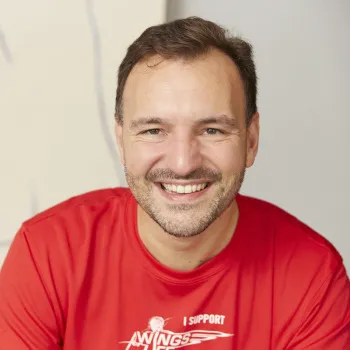
Steven Dowd
Steven Dowd committed to get fit and registered for a charity cycling event. He bought a bike, started training and one idyllic June morning in 2016, he left his home to meet a friend for the daily commute on his bike, but he never arrived... a horrific life-changing accident, a broken neck, total paralysis and a bleak future. Against the odds, Steven fought back and now raises money for charities including Wings for Life Spinal Cord Injury Foundation (wingsforlife.com) and The Para Rowing Foundation (pararowingfoundation.org)
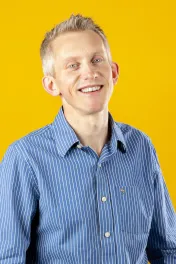
Hosted by Andrew Pain
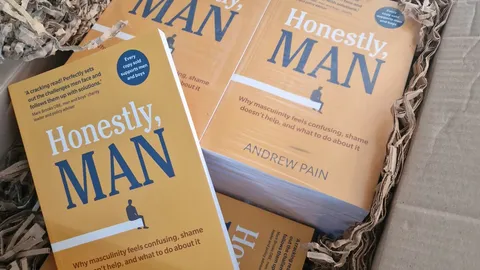
Andrew Pain is a Mental Health & Resilience Keynote Speaker who speaks from lived experience on resilience, burnout and workplace wellbeing. Host of the Men on Show podcast, author of the book Honestly, Man, and a TEDx speaker. Member, International Coaching Federation, and Mental Health First Aider trained.
Never miss an episode
Candid conversations with everyday heroes – ordinary men doing extraordinary things.