Men on Show · Episode 4
Men, Guns and Forgiveness with Azim Khamisa
- 10 October 2023 .
- 42 min .
- Hosted by Andrew Pain .
Following the murder of his son in 1995, Azim Khamisa founded the Tariq Khamisa Foundation (TKF.org), which started a subsequent forgiveness movement that has reached millions globally.
Andrew hosts this podcast. His own keynotes are on burnout, resilience, imposter syndrome and difficult conversations.
In this episode
About the conversation
He is the author of five books: Award-winning Murder to Forgiveness; From Forgiveness to Fulfillment, From Fulfillment to Peace and The Secrets of the Bulletproof Spirit: How to bounce back from life’s hardest hits and Leadership for the Greater Good – a guide for Truth to Power Champions. He has been featured countless times in local, national and international media. In November 2018, Azim spoke for the TEDWomen conference that has been viewed by over 1 million viewers: go.TED.com/azimandples.
And for more information on Azim, please visit www.AzimKhamisa.com
Key points of the episode
- How his only son was lured and murdered by a street gang.
- How Azim received a "download" from his Higher Power that inspired not only help and healing but was the beginning of an incredible legacy to the world.
- His thoughts on the education system and what he feels should be taught in our classrooms.
- How he has come up with viable, doable and cheap solutions.
- How he feels people are hungry for this of all ages.
- How he feels that there is no power or quality of life in any kind of victimhood, and towards a psychology of forgiveness.
Men on Show shares lived experience and honest conversation – it is not medical or therapeutic advice. If you're struggling, you don't have to cope alone.
Samaritans: call 116 123 (free, 24/7) NHS: 111
Full transcript
Read the whole conversation
A complete, verbatim transcript of this episode – every word is the host's and guest's own; the topic headings are ours.
Welcome to Men on Show, the podcast, Candid Conversations with Everyday Heroes. Join Andrew Pain as he interviews fascinating guests, ordinary men doing extraordinary things. If you love the show and you think somebody could benefit from hearing it, why not tell them about it by giving it a share on social media? Oh, and at the end of the podcast, if you can leave us a five-star rating and a review, it really helps us more than you know, and it gets this important message out to more people that need to hear it the most. Right now, enjoy the next episode. The next episode.
My name's Andrew Pain, and welcome to Men on Show, and I'm delighted to have Azim Khamisa on the show today. Azim's TED Talk is one of the best TED Talks that you will see. There were tears in my eyes when I watched it, and I can't say that happens with every TED Talk that I see. So Azim, welcome to the show.
Thank you, Andrew, welcome.
Remembering his son, Tariq
Your TED Talk blew me away, the story and your inspirational response. But first, tell us about your son, the boy and man that you remember.
Yeah, Tariq was an old soul in a young body. He was a student at San Diego State University, studying journalism. He aspired someday to work for a National Geographic. He was a brilliant writer. He wrote an essay at the age of 18, which I still have on my wall, called The Philosophy of My Life. And it's an amazing piece. And he was a brilliant photographer and a kind person and a generous person. And he loved to travel and loved cultures.
And had a great sense of humour. He could even crack a joke in the most strenuous situations and soften the atmosphere. His favourite hero was Gandhi, a man of peace. He just got engaged to Jennifer. They had been dating for about two and a half years. They met at the university and six months before he passed away. And she was a delightful lady. I got to know her quite well. And just a joy to be around.
He grew up with his mother in Seattle and then came after he graduated from high school, he came down to San Diego where I live. And so we were able to see each other quite often. He had a key to my home because I always travelled a lot. And I was an international investment banker and I've done a lot of work in Europe and the UK and Africa. I grew up in Kenya. I speak a half a dozen languages in the Middle East and the Indian subcontinent.
So, you know, Jennifer and he spent a lot of time and he'd always pick me up when I got back from my trips. So a big loss, needless to say.
So tell us what happened.
Read the rest of the transcript Collapse transcript
How Tariq was lured and killed
Well, he worked as a pizza delivery man on Fridays and Saturdays to make some extra money while he was going to college and loved the outdoors, kind of like what I did when I was studying in college in UK. I worked for the post office delivering parcels because I liked the outdoors. I had him a job at a nonprofit organisation, but he didn't like a desk job. But he found this job by himself and it's a lovely Italian restaurant that he worked for and loved his boss.
And he basically delivered pizzas on Fridays and Saturdays. And he was lured to a bogus address on a Saturday in January of 1995, and they gave the right address of the apartment building but the wrong apartment number. And it's a middle-class area. The restaurant was an old restaurant, over 20 years old. They delivered in that area all the time. So there was no sense that it would be dangerous. So it was his turn to make the delivery.
And he jumped in his Volkswagen and got to the apartment building, knocked on many doors, found out that nobody had ordered the pizzas. He came back to his car, put the pizzas in the boot, and climbed into the driver's side seat. And as he was about to back his car from the driveway of the apartment building, he was accosted by four youth gang members. Three of them were 14-year-old, and the leader of the gang was an 18-year-old who handed a 9-millimetre handgun.
And as my son is trying to leave the scene of the crime, the leader gave the order, bust him bones. Most gang members have nicknames. And he fired one round. He came through the driver's side window. He entered my son's body under the left shoulder blade. The bullet actually travelled across the upper part of his chest, and it exited from his right armpit. As the coroner explained to me later that the bullet followed a perfect path.
A perfect path, I queried. I thought that was an interesting choice of words. But he was quick to tell me, Mr. Khamisa, I'm not trying to be insensitive. We do not see a path like this very often. What it really means in my lingo is that it destroyed all the vital organs in your son's body. And Tariq died a couple of minutes later, drowning in his own blood over a lousy pizza. At the age of 20, the sudden senseless death of an innocent, unarmed human being, the overwhelming grief of a family, the total confusion as you try to absorb a new, hideous reality.
He was my only son. I do have a beautiful daughter. And thank God for that, because having done this work for the last 20 years, 28 years, I speak very often both in the US and internationally. I've met many parents that have lost an only child, which would have been much harder. And after making some very hard and excruciating calls to his mother who lives in Seattle, I mean, think about it, you know, how do you tell a mother she's never ever going to see her son again or hear him laugh or give him a hug?
How do you do that? Tariq had a very special relationship with his mom. I too relate, I had a very special relationship with my mom that I lost in 2017 and still miss her. She was a rock in my family. One of the hardest things I've ever had to do, Andrew, was to make that call. When I had to call my daughter, I think as a father, you're responsible for the safety and welfare of your children.
It was an important role that you have to play as a dad. I felt that I had failed because if I had been there at the scene of the crime, I would have instinctively put my body between him and the bullet. You do that naturally. Of course, I wasn't there. Of course, I had to call my parents. But before I did that, I just returned from a trip on Friday from Mexico City. This tragedy happened on January the 21st.
Some friends of mine picked me up at the airport because we had an invitation to go to a birthday party. They brought me home really late at midnight. I had no clue at ten miles south of me when I got home at midnight that my son lay dead. The next morning, there was a note on my front door and my housekeeper brought it in. It was Saturday and it said we are trying to reach Tariq's family and I called.
I won't remember the name. It was Sergeant Lambert at Homicide. She told me that Tariq had been shot and killed on the found. My knee-jerk reaction was, no, that doesn't happen. It's obviously a mistaken identity because he was a good kid. I essentially didn't believe because I always felt that Tariq would not be in any situation where something like that would happen. In San Diego, we have a lot of people that I hear from Mexico and Latin America.
They have dark skin. I have dark skin. Tariq had dark skin. I thought it was a mistaken identity. It didn't make sense that Tariq was shot and killed. So I quickly hung up on Homicide and called his home, fully expecting him to pick up the phone. Of course, he didn't. Jennifer did. And she couldn't say anything. She was just sobbing because Homicide had gone to their home before they came to my home, and I wasn't there because I had just gotten back from Mexico and left that note.
I was in my kitchen. I lost strength in both of my legs as I collapsed to the floor, called up in a ball, hit my head against the refrigerator. I don't have the words for describing how excruciating the pain was. I'd never in my life felt pain like that. It's literally like a nuclear bomb that had gone off in my heart. And I practised as a Sufi Muslim. And I meditated an hour a day when Tariq was alive today.
My practice is two hours a day. And I remember I left my body because the pain was so unbearable. I could not be in my body. And I believe in God and I left my body and believe I went into a loving embrace of God. I don't remember how long I was gone for. It felt like a long time. But when the explosion subsided, God sent me back into my body with the wisdom that there are victims at both ends of the gun.
So that didn't come from my intellect or my loving heart. Rather, it was a download from a higher power. And I've read that in tragedy, sometime there is a spark of clarity. Every saint has suffered the dark night of the soul. I did not really understand the relevance of their download. But after I'd made those excruciating calls, I lived by myself, I called my best friend and he said, we'll be right over. He came over with his wife and his wife went to pick Jennifer.
And by this time we had a visit from homicide and we knew there was a youth gang involved. There were some eyewitnesses. And I was alone with my friend and he said, whoever these kids are that killed Tariq, I hope, they fry in hell. And my response to him was, I don't feel that way. What I see is that there are victims at both ends of the gun. And I know he broke down and cried. He said, Azim, where do you get this strength?
If somebody killed Adam, which was his son, not only would I want the killer, I'd want the whole clan. I never went there. I mean, I could see obviously that my son was a victim of the 14-year-old, but somehow I felt empathy for the 14-year-old. I mean, who's the enemy here? I mean, of course, in those early days, I did not know that. I did not even know there were such things as youth gangs. They were not on my radar.
I mean, I travelled the world, had a good life, and was successful in my international finance career. And now, of course, I'm an expert at the plight of youth violence in America. And I look back and say that I routinely flew in from the UK, from London, changed suitcases and flew to Japan. And then it literally took all of my willpower just to climb out. But it's nothing more complicated than losing a child. It never, ever goes away.
But somehow I had compassion for the 14-year-old. And it shocked me. It probably would shock you too and your audience that in America we use a young person every hour. And when you think about Sandy Hook in Newtown, Connecticut, and recently in Uvalde, Texas, which are two cases where nine, ten years old were gunned down in Uvalde and 26, 27 years old were gunned down in Newtown, Connecticut. I'm thinking, you know, they had a lot of life to live.
And they died so young. And how did we create a society where children kill children? And how do we lose a young soul every hour in the richest nation in the world? We can spend trillions of dollars on wars on foreign soil. Yet every single day right here in our own backyards, our defenceless children are being wiped out in a frenzy of bizarre violence. How did we get here? I mean, sure, you see that Tariq was a victim of Tony, which is his real name, but I saw Tony as a victim of society, of American society.
Who is American society? Society is not just happenstance. So I felt as an American citizen, a naturalised first-gen rest of American citizen, that I must take my share of the responsibility for the bullet that took my son's life. Because it was fired by an American child. I mean, you could take the position to kill my one and only son. He should be hung from the highest pole. Well, how does that make a better society?
Separating the offender from yourself
So much of your work is centred on championing forgiveness. So how do you forgive when it really hurts, where the pain is overwhelming and it feels like you've tried to forgive, but you just can't? How do you get started on the road towards forgiveness?
Yeah, what's a good question, Andrew, because I teach a two-day workshop on forgiveness, on how you forgive people that have harmed you, and how do you forgive yourselves, because at some level we've all harmed as well. But to address your question, the two big issues about forgiveness or how to forgive somebody that has hurt you so badly is you have to separate the offender from yourself. Even the scriptures tells you that vengeance is mine. You know, I had, I have my journey, Tony had his journey.
And if I stayed in anger and resentment and hatred, who am I hurting? Myself. It's a great quote by Mandela. He says that unforgiveness is like drinking poison and waiting for your enemy to die. So all of those negative emotions of anger, resentment and hatred essentially manifest into, into disease and sometimes into cancer. So I think you need to understand that, that staying in those unhealthy, debilitating emotion, essentially self abuse. You might as well take a whip and beat yourself.
I believe there's no wrongdoing that karma does not balance. Karma always balances the wrongdoing, so it's best to leave the offender in the higher power. And I think that separation helped me, because I thought I don't want to go through life with this debilitating emotion. And the second piece, which I think is equally important, that I did not want to go through life as a victim. I didn't want to go through life on crutches. A lot of people feel sorry for me, because I lost my one and only son.
But there is no quality of life being a victim. I had a very full life when Tariq was alive. I wanted that life back. We all do. So I think this is an important point, that unless you forgive, you remain a victim. And there is no quality of life as a victim. Now, of course, I have a very full life today. It's different than what I was doing before. This is about saving lives of children. The foundation I created in my son's name is called the Tariq Khamisa Foundation. tkf.org is also in its 28th year.
And we've reached 2 million kids over this. I speak all over the country and the world, teaching forgiveness and teaching the principles of nonviolence. And we are successfully keeping, because I started the foundation with 3 men. The first was to save lives of children, because we lose so many. It's important to do. Secondly, to empower them with the right choices, so they don't fall to the crack and get involved with gangs and crimes and drugs and alcohol and weapons.
And third, to teach the principles of nonviolence, of accountability, of empathy, of compassion, of forgiveness, of peacemaking and peacebuilding. You know what? I have over 150,000 letters from kids that tells me that not only are these principles teachable, our children and youth are hungry for them. And I have the same impact on adults. I speak, I've given over 700 keynotes to adults. I just came back from Chicago. 7,000 people gathered there in the Parliament of World Religions.
It was an amazing week-long event, which started actually in 1893. And it went dark for 100 years. And then they rekindled at 1993, which was the 100th anniversary. And that particular meeting now has happened in the last 30 years in many of our cities around the world. And it was an amazing experience to see so many of these people that was an interfaith community and the love and the unity, even though they came from 20 different religions, 200 different traditions, there was this camaraderie, the brotherhood, and the sisterhood was extremely powerful.
It was literally the whole week the Sikh community there provided a free lunch called langar to all the people that wanted for the whole five days. And I thought to myself, you know, why can't we be the same way outside of the parliament of world religions? So it was heartwarming to know there are people that are trying to work to create a better world.
Anniversaries, meditation and self-care
Is your forgiveness a mindful and daily action? Do you have to make that decision every day? And do you have those like bad days where you feel drawn into bitterness against the person that you forgave? Or is your sense of forgiveness and peace now like a set state of being for you?
Yeah, I mean, obviously, anniversaries and birthdays are very hard. And they continue to be. Tariq died on January 21st. His birthday is March the 6th. And those 43 days in the middle, I'm never quite the same. And I've learned to anticipate that. I almost feel like I am on sea legs. There's a good book called The Body Keeps Score. It's a good read if your audience is dealing with deep trauma. And I meditate two hours a day, but during that time I actually meditate more.
And what helps, I think, is that through meditation, I'm getting better at navigating those days than I used to soon after the tragedy. Although, as Sufi, I'm supported by my community. We always have special prayers on January 21st and Orni's birthday. And that ritual of meditation, prayer, and community support is very helpful. And I think that during those times, self-care is very important. So I try to slow down. I walk seven miles six days a week.
I take one day off. And living in San Diego, we have beautiful beaches. And I spend more time with nature. I journal a lot. And that has been a good practice. I was used to journal. But during those days, I made journal more. I think meditation, prayer, reading, inspiring scripture or literature, those are good practices.
Gun culture and the law in America
Many of us in Britain struggle to make sense of gun culture in America. We get that it has its roots in some way in the Constitution. It's deeply cultural in a way that it isn't here in the UK. But we still don't completely get it. Do you think the mood now in America is changing towards guns? Do you think enough people are now saying enough?
No, I don't think it's changing. In fact, if anything, Andrew is getting worse. America is probably more divided than I've ever seen it. I emigrated here from Kenya where I was born. It would still be there if not ED. Amin had happened as a minority. You probably know this, that we were targeted. I left, well, it will be 50 years next year. I left in 1974 thinking that my children would have a better future in America.
It's ironic he was killed on a street in a country I'd picked for him. And it used to be that every successful, successive generation in America left a better world from the founding fathers. But that has not happened in the last 50 years or so because the Yuppie culture was very much about me, me, me, me, me. And today we've essentially become more tribal. The gun sales are off the charts. For 320 million people in America, we have substantially more guns than that.
And people have collections of them. This talk of a civil war, I just got back from a trip to Georgia and Florida and was amazed at some of the people I know and trust and love and respect. That they, you know, it's essentially, there's no debate anymore. If you are not with me, you are against me. And many of them have weapons. And I mean, I've never owned a gun, I never will. But it's amazing to me that because of the Second Amendment of the American Constitution, which is the right to bear arms, because I was concerned that government may be too oppressive.
And there's a lot of people in America that feel that way. So, you know, besides, it's a general question, but you know, what surprises me is that you can buy an AK-17 or one of these automatic rifles that can shoot out, I don't know how many, but several bullets in a second. I mean, why do we need those? We're not on the front line of a war zone. And on the other end of the spectrum, you can buy a midnight special in every inner city in America for 20 bucks.
There's no safety on it. I mean, that should not be a big deal to outlaw both of those. And I mean, if you're going to have to have handguns, I think that's going to be hard to get rid of in America. Or if you're a hunter, you need a rifle. But at least I think we can start with, you know, outlawing the midnight specials and these automatic weapons that are on the other side of the spectrum.
I don't, I mean, we're trying. There was one minor law passed under the Biden administration. The first one, I think, in decades. So I don't get why we have not learned from places like the UK. You know, because kids killing kids is very much an American issue. I know it happens in other countries, but nothing to the level it happens here. And there are many first world countries like the UK and, you know, Germany, Switzerland, Japan, and even Australia.
They were able to, you know, do the buyback of their guns and gun violence has reduced. So there are solutions and there are some good examples, but I don't see the political will in America to do that.
Isolation, drugs and spiritual purpose
We hear so much about toxic masculinity. There are awful statistics around male suicide. 75% of people who die by suicide are men. Every day there seems to be a new headline about misogynistic behaviour. Individuals like Andrew Tate. Do you think men and boys are in crisis? And if so, what's driving that?
Yes, I think it's a good question. I think that when you look at suicide, we have the same issue here. Of course, the leaders that we've had demonstrate some of this very damaging behaviour, which makes it look okay. The rise in other areas of... We have a big issue here now with racism, also gender identification. I think Black Lives Matter has created some better opportunities for people of colour. But there's also a negative side to it.
What we are finding that the pandemic also created a lot of isolation. As humans, we are social beings. I just read an article that there was a feeling that these large shopping centres that we have are now dinosaurs because of most everybody buying online. But the recent statistics show that the pedestrian traffic in these big malls is up by 12 percent. Because I believe that humans are social, and I think we've lost that. The advent of drugs, I think, has a lot to do with your question.
My girlfriend's brother-in-law died by suicide. He was an educated man. He had two gorgeous boys. Of course, he still has those boys, although he died about 12 years ago. The boys are older now, but they were like 8, 9 years old. He was a CPA or like a chartered accountant would be in the UK. Smart guy, but he was on opioids and he drank a lot. I talked to a friend of mine who is a psychologist that I respect, and she said that when you are on opioids and when you combine that with alcohol, you go into this spiral where the only out you see is suicide.
So I think all of that has a lot to do with it, but my own version is that something that I always am very sensitive to is that we need purpose and we need spirituality and we need a spiritual practice, because I wouldn't be here, although my undergrad is in mathematics and my post is in finance, but I can tell you in my deepest tragedy those degrees were useless. What saved me was my spiritual foundation. I think that is something that needs to be promoted.
Obviously, you don't see much of the Indian American schools because we don't bring God into the classroom. I think that some of the more schools that are spiritually based, like the Catholics have a lot of schools, also universities, I think they do better. I think we need to bring this sense that we all have inner guidance and we can all tap into our higher power. That's probably where our solutions are better. The way you tap into those, at least the way I tap into those, is through meditation because I learned in my life that if my spiritual practice has helped me navigate the biggest tragedy in my life of losing my only son, well, why don't I use it in my daily life?
So I no longer lead from my intellect or my loving heart. I lead from the spirit. I even teach this to the kids that if you have an important decision to make, sure, nothing wrong with a good intellect. I mean, there's nothing wrong with getting a PhD. And the more intelligent you are, the better you are able to analyse and say, you know, what the pros and the cons are. And I always tell them, if it makes sense, don't stop there.
Go to your heart. That's where emotions reside. But we all have a sense of what is good, right and just. And I said, if it makes sense, go to your heart. And does it feel good, right and just? If you feel this good, right and just, don't stop there. Go to your spirit. And you ask the question, is it inspiring? Will others follow my lead? And if I don't get a check in all of those three boxes, I won't move forward.
Because the spirit never makes a decision that is not in the highest good for you, the other person and the universe. Yet, I think we find that many of us live in our heads, some of us that are more evolved, maybe live in our heads and our hearts. But few that you meet that actually live in their heads, heart and spirit. And I truly believe that without that connection with the spirit, I wouldn't be where I am.
Purpose, meditation and leadership
How do we then inspire the next generation of men? How do we help men and boys to be the very best version of themselves?
Well, I think that the thing that I would recommend is to make sure that you are on purpose. I think all of us have a spiritual purpose. And to create a spiritual practice, I mean, if you go to my website and scroll down on the home page, there is a preamble. I meditate three different times a day and I do three different things during those days. And so the preamble explains to you my methodology of meditation.
One is on forgiveness. The other one is on manifesting your life's mission. And those in your audience that are interested in developing a spiritual practice, I would recommend that they are both free downloads. The main thing is to check out the one on life's mission because I truly believe that all the answers we seek, we need to be able to tap into that inner guidance.
How do people find you and tell us about your books?
Yes, so my website has all my books and under resources there are many, many other videos. There's quite a lot of videos on YouTube. I've been interviewed a lot. But my fifth book is about leadership. And I think since you have an audience that are leaders, of course we are all leaders, the title of the book is Leadership for the Greater Good. It's essentially a guide about using truth to power champions because you don't hear much truth.
There's a lot of fake news out there. But what came to me is that the world is in a very precarious situation for a variety of issues that we haven't solved. And I'm concerned, I have three grandchildren, and I'm concerned that what kind of a world are we leaving for them. And I think it starts with leadership. And what came to me is that we need leaders today that have a triad of competency. It's not about just being a Ph.D. or being a CEO of a major corporation, working 70 hours a week and feeding your bank balance.
That's not going to change the world, and that's not going to give you any purpose. I'm nothing wrong with good leadership. I'm not knocking that. But I think at the same time, you have to remember, you don't just live at home and work. You live in a community. So every community has social ill. Like I took on the problem of youth violence, have created a viable, impactful, tested, and also affordable solution. So if you are a leader, you need to take on a societal ill in your community, and not only because of your skills, you can create viable, impactful, and affordable solution.
It will give you purpose. And the third part of your competency is that as leaders, you have to espouse strong, very strong ethical, moral, and spiritual values. And I think to myself, well, if you think about how many leaders do we have in the world that demonstrate this stride of competency, that they are brilliant in their endeavours, that they have solved a societal ill, and they espouse strong ethical, moral, and spiritual values. Not many come to mind.
But having spoken worldwide for the last 28 years, I have met many, from all generations, genders, nationalities, religions, that these people do exist. Obviously, we don't have enough of them. So if you are a leader, hopefully this will inspire you to develop this stride of competences. Because first, I think it gives you purpose. And I think that it will create a better life for you, your families and your communities.
So Azim, that's absolutely wonderful. Thank you so much for being a guest on Men on Show. It's been a pleasure speaking to you and learning more about you and hearing your insights. Thank you again.
You're very welcome, Andrew. Thanks for having me.
Thank you for listening to Andrew Pain's Men on Show. If you could leave us a five-star rating and short review, it would be really, really appreciated. It helps us get this important message out to more people that need to hear it the most. See you on the next episode. Thank you for tuning in.
About the guest
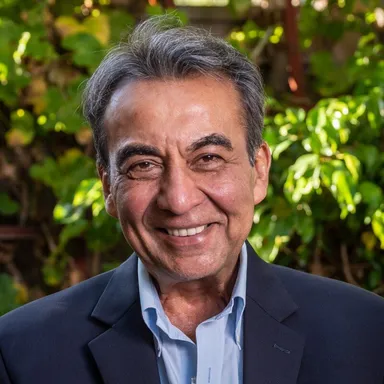
Azim Khamisa
Following the murder of his son in 1995, Azim Khamisa founded the Tariq Khamisa Foundation (TKF.org), which started a subsequent forgiveness movement that has reached millions globally. He is now leading the effort to inspire world peace through the practice of Forgiveness. A dream he has had for over 12 years and now becoming a reality with the awesome team featured on the website.
He has received over 80 local, national and international awards. He is an emissary of peace and an international inspirational speaker with over 700 keynotes and over 1,000 student presentations.
Hosted by Andrew Pain
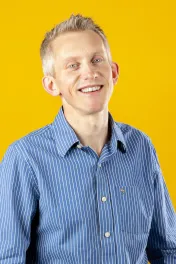
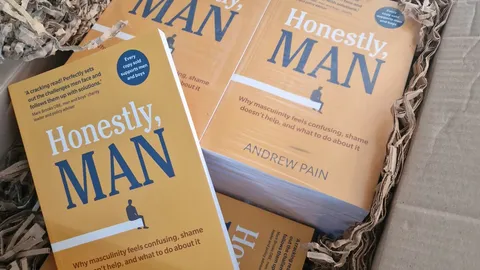
Andrew Pain is a Mental Health & Resilience Keynote Speaker who speaks from lived experience on resilience, burnout and workplace wellbeing. Host of the Men on Show podcast, author of the book Honestly, Man, and a TEDx speaker. Member, International Coaching Federation, and Mental Health First Aider trained.

Never miss an episode
Candid conversations with everyday heroes – ordinary men doing extraordinary things.