Men on Show · Episode 2
Men and Suicide Prevention with Steve Philip
- 10 October 2023 .
- 30 min .
- Hosted by Andrew Pain .
Suicide is the biggest killer of people under 35, 75% of those cases are men.
Andrew hosts this podcast. His own keynotes are on burnout, resilience, imposter syndrome and difficult conversations.
In this episode
About the conversation
Suicide is the biggest killer of people under 35, 75% of those cases are men. The biggest risk to people in this age group is not cancer, not accidents, not heart disease, not diabetes - it's themselves.
Men on Show shares lived experience and honest conversation – it is not medical or therapeutic advice. If you're struggling, you don't have to cope alone.
Samaritans: call 116 123 (free, 24/7) NHS: 111
Full transcript
Read the whole conversation
A complete, verbatim transcript of this episode – every word is the host's and guest's own; the topic headings are ours.
Welcome to Men on Show, the podcast, Candid Conversations with Everyday Heroes. Join Andrew Pain as he interviews fascinating guests, ordinary men doing extraordinary things. If you love the show and you think somebody could benefit from hearing it, why not tell them about it by giving it a share on social media? Oh, and at the end of the podcast, if you can leave us a five-star rating and a review, it really helps us more than you know, and it gets this important message out to more people that need to hear it the most. Right now, enjoy the next episode. The next episode.
Hi, my name's Andrew Pain, and welcome to Men on Show. And I'm so excited to speak to our guest today, Steve Philip, a successful speaker and consultant, historically in the field of social media and marketing, but who on the 4th of December 2019, received a phone call that is every parent's worst nightmare that his son Jordan had died by suicide. And wine forward to today, and Steve is a passionate advocate for a zero suicide society. And spurred on by his determination to prevent other families experiencing the trauma of losing a loved one, Steve has established The Jordan Legacy Community Interest Company, delivering suicide prevention training and strategy, talking to the Governance Cabinet Office, The Department for Health, Social Care, The Home Office, The Ministry of Defence, the list goes on and it is a seriously impressive list. So Steve, welcome to Men on Show. It's a pleasure to have you here.
Thank you, Andrew. And yeah, that was quite some build up. I hope I can live up to that, but thank you so much. Appreciate it.
Jordan growing up and the man he was
Thanks. So, I mean, just to start, Steve, tell me about Jordan growing up. But who is the man that you remember?
Yeah, thank you for asking. Cause sometimes I think, you know, the work we do focuses so much on that day, on December the 4th, but of course, you know, Jordan was my son at 34 when we lost him to suicide. But he was a young lad that was a shy lad, I think, as a youngster, even as an adult, could be somewhat reserved, certainly in the company of family, very thoughtful and considerate. I've heard his sister even just remark on what a good listener he was as he got into his adulthood.
But he had a huge network of friends. Having lived in the UK, the Northwest of England around Morecambe where he was brought up in school, we moved to Canada in the early 90s. And for several years we lived in Winnipeg in the Prairies and he became very much a North American lad, very much into his basketball and the North American way of life. In fact, he really didn't want to move back when we had to make a decision to come back in 1997.
So to all intents and purposes, he was a Canadian kid when he got back to the full accent, as both Danielle and Jordan were. So I think he had some struggles in assimilating back into the UK initially, had some challenges there, but to all intents and purposes as time went on, he did settle back into the way of life here. He went to university in Northumbria University in the North East and successfully completed a four-year law degree there.
And although he decided law wasn't necessarily a career for him, he did kind of keep in touch with various aspects of law, including working for a short period of time with a good friend of his who ran a successful law firm in Dubai. But more recently, his work was working in the Civil Service. He worked initially in the Immigration Office in Leeds for The Home Office. And then even more recently was an officer with the Independent Office of Police Conduct, which obviously looks into any issues or public complaints received by the police.
Huge network of friends. In fact, we learnt after his death just how extensive four separate networks of friends were, each not known to each other, which was quite unusual, and each had someone who considered themselves to be Jordan's best friends. They would describe a lad who was always there for you. If you were struggling, he'd be the first to be there. If they were out on a night out in the city centre or Newcastle, his mates would be looking over their shoulder, and there was Jordan knelt down chatting with a homeless busker or somebody.
It was very much, he had a lot of empathy for other people, as I mentioned earlier, a good listener. He had his own house, he had a lovely girlfriend, a loving family, despite his mother and I divorcing in 2005. We'd kept a close relationship and he had a good relationship with his step-mum. So he was someone that his mates looked up to and aspired to be. Good-looking, just over six foot tall, really on the face of it, had everything going for himself, Andrew.
Warning signs and the autumn of 2019
So, I mean, what every parent, I imagine, would love to know. I mean, I've got three boys myself, currently under 11. Looking back now, were there any possible warning signs about what might happen at all that you can think of?
Read the rest of the transcript Collapse transcript
I think it's difficult to look back into his younger years. There were times where he was quite a sensitive child, but people are sensitive, and it's OK to be sensitive, of course, and in touch with your emotions. It doesn't automatically mean you're going to develop a mental health issue, or nor should you be alarmed as a parent that that might happen because a child is sensitive. So, I think it's fair to say that through most of his life, we were not concerned, you know, aware that Jordan was maybe struggling.
It's easy to look back now at key events in his life, like the move from Canada, which, you know, was, you know, quite a traumatic event for him, the breakup of his parents and their marriage in his first term of university when he was away from home. You can look back at potential events that might have impacted what led to his ultimate clinical depression and anxiety that was diagnosed when he was just 30 years old. But no, nothing that really would have stood out in his childhood until, really, he was first diagnosed as, say, in 2015 at 30 years old with clinical anxiety and depression for the first time.
Wow, and you knew about that at the time that he was diagnosed?
Yes, he was very open about that in terms of being diagnosed. He didn't share a lot about it. I think Jordan could be quite a private person. We were aware that what that meant for him was a series of 14 weeks of CVT, cognitive behavioural therapy, and he was prescribed antidepressants at that time. But already he was obviously living away from home and had his own house and had a job, and we felt okay, we were there for him as much as you could be with an adult.
But we felt he was kind of managing things. He would have low periods, perhaps where he would dip a little bit more. But in the main seemed to be functioning and managing his depression reasonably well in inverted commas.
Yeah, and there were no signs of that sort of deteriorating as we came closer to sort of looking back as you got closer to December 2019, that as far as you were aware, it was sort of a situation that's being managed.
Well, I think as we got closer to that date, and there are two periods in Jordan's life in terms of us understanding that he had depression and anxiety. There was that first diagnosis and a period of time where he was living with a girlfriend at the time, so that was prior to him having his own house. And he did dip very, very low. In fact, we brought him to come and live with myself and his step-mum at our house, and I don't remember picking him up that day from his girlfriend's house, and he was a shell of a lad on that day.
So that was a very clear moment where you saw, yeah, clearly someone who was struggling. Over the following weeks and months, we stayed with as he gradually found himself again and started to get back into work. And from that point onwards, seemed to be managing life much more effectively at his ups and downs, of course, as everyone does, and relationships that were maybe not all they could have been. But it wasn't until I think we got to the autumn of 2019 that we started to notice Jordan was really struggling again, much lower in mood, struggling to sleep, and yeah, not in the best of places.
So at that time, I think you could say we were on heightened alert in terms of being there for Jordan, because there was not one moment where we ever considered that Jordan might end his own life. That for me certainly was not a consideration at all, and certainly I'm not aware that any other family member thought that might be a concern. But we were there more for him in support. We just knew he was struggling, so we did the best we felt we could do with the toolkits that we had at the time, which in retrospect now were very inadequate toolkits. Sure.
The Linked In article and the Jordan Legacy
So I mean, which brings us on to the Jordan Legacy. What did you most want to achieve by setting that up, and what drives you in doing that work?
Yeah, it's really interesting. I've met so many people over the last three and a half years since doing this work that unfortunately have been thrust into a very similar situation because of a loss of a loved one to suicide. Many go on and set up charities or community interest companies or whatever it may be because of what's happened and a desire to make a difference. When I'm still dealing really with the trauma, I experience a lot of physical trauma as a result of Jordan's death, despite kind of throwing myself into dealing with everything that had to be dealt with from coroner's inquiries and dealing with Jordan's affairs, dealing with funerals, all these things.
I felt it was my role as the man, and this is a very, something we'll talk about, I'm sure, to deal with all these situations. So I kind of cracked on, even though I was kind of struggling myself. And then I published an article on Linked In, on December the 16th, just really three weeks after Jordan's death. And that article was titled, The Day My Son Took His Own Life. And it was a way of sharing on a very public platform, because of my past consultancy in social media, I was very familiar with.
It was a way of me kind of getting out there and saying, has anyone else been through this? Because I didn't know anyone else who had experienced anything like this. I certainly didn't know anyone else who died by suicide, for example. This was a new world. But I also wanted to reach out and ask and hope that my message and by sharing just what we were going through would be enough of a wake up call for someone else who might be considering suicide to go, you know what?
I've just read Steve's article. I don't think I can go through with this. I can't leave my family or my loved ones in this situation. And the huge outpouring I got globally was quite phenomenal. Much of that outpouring amongst that were quite a number of people that did reach out and say, look, I have read your article. I just cannot do this. I was intending to end my own life, but I just can't do this to my family now having read your article.
So as naive as I was in hoping that would work, I did receive a number of messages to suggest that that had worked. So what did I want to achieve? I'm not sure I was that clear, to be honest. Andrew, in the early days, it was only by having lots of conversations with people that worked in this space and a couple in particular that led me to realise that I didn't want to set up a crisis helpline centre or anything like that, or be a kind of fundraising charity.
I wanted to understand what were the practical issues around suicide and what could be done to prevent them. And that really formed the foundation, if you like, of the Jordan Legacy to say, if we consider that suicide is a practical act, and that I'm never going to have enough time probably to become qualified as a psychologist, what can we do in our society and our workplaces to prevent that practical act from happening? And that was very much the focus of the Jordan Legacy the passion was to say, I need to do whatever I can to educate people because I just was not educated enough about what the potential risks were.
The work of the Jordan Legacy
Yeah. Yeah. And so what does the, what do you do through the Jordan Legacy? Tell me about your work.
Yeah, gosh, I look at my list some mornings after. I go, how on earth do we get this done? We're a small unit. We are literally three people, including my daughter, who Danielle, who joined us in September of 2021 and looks after our social media. And we all work remotely. We all work from home. Quite amusingly, I have someone recently said, we'd love to come and visit your foundation. I thought, well, I better build one then, because at the moment, it's my office at home.
But that made me smile, but maybe punching above our weight in some people's eyes, perhaps. Yeah, we do a lot and that ranges from the various events that we run online each year, typically panel discussion events, where we invite senior people from the world of mental health, and people like CEOs of Mental Health First Aid England, and recently had Dean Russell, the MP for Watford on one of our panel discussions. We talk about different aspects of suicide, not unusual to have between 300 to several hundred people registered to attend those events.
We run a fortnightly radio show called Jordan Space, pre-recorded and shared on YOWA Radio, which is very much about lived experience. We invite guests on to talk about their experience, and in many cases the work that they're now doing. Always to end that show on a message of hope as well, and on our website, on thejordanlegacy.com, those talks are all there, those conversations for people to listen to. We run an annual conference, the Hope for Life Conference, a physical event, typically with around 130 attendees and delegates, where we'll have inspirational speakers, we'll have theatrical acts and music.
And yes, it's a suicide prevention conference, but it's not your typical, let's get a university professor to talk about statistics. It's about lived experience, it's about stories of hope. We then deliver talks to organisations over the coming weeks and months. I've many talks booked, some of those are physical talks, some online, and those talks can range from how to open up a conversation and support someone who might be struggling with suicide to workshops that we run with Paul, my colleague and myself, called How to Have Difficult Conversations, where we're going to law firms or police forces that we work with.
And not only will we do the workshops, but we'll maybe work with them on their suicide prevention and postvention strategies and workplace policies as well. And of course, we're very active on social media, sharing a lot of the work we do and thoughts around suicide. So, yeah, when I look at my things to do list in the morning, it does seem to get quite long.
Zero suicide and why men are struggling
And thinking about, we know that the suicide stats for men in particular are awful. Only three quarters, I think, of people that die by suicide are in fact men. Given that there's more awareness about that now, how far along the road do you think we are as a society now in putting in meaningful groundwork so that we truly can move to a point of zero suicide in our society? How well are we doing?
Yeah, I think there's a couple of things to unpack with that question. It's a really good question. So, first of all, the term zero suicide, some of your listeners may be thinking, okay, zero? What do you mean, really, we're going to prevent all suicides? And this term is born out of some extensive research and case studies in the early 2000s through to 2009 in Detroit, where the Zero Suicide Framework was developed at the Henry Ford Health Services over there, where they did in one year, within the healthcare environment, managed to get the suicides down to zero.
But it's really more a philosophy, it's a framework and our definition of zero suicide society is one that is willing and able to do all it can to prevent all preventable suicides. And much of the research will support the fact that most suicides, although not all, most suicides are preventable with the right infrastructures and supports in place. How are we doing? I think we've never seen so many charities and talk clubs, some Andy's Manned Club out there, to Banda Builders, to the Submaritans and Papyrus, and the Three Dads Walking.
I think we've never had so much awareness about suicide and mental health. And yet we're still losing 6,000 plus people to suicide every year. And that number has remained largely consistent for the last 15 years. As you rightly say, 75% of all suicides are men. So we're not making a dent, as we should be. Arguably, we're preventing more suicides from taking place. So without all these wonderful organisations, you could point to the fact that those numbers could be significantly higher.
And there is some thinking that in some cases suicide might be under reported, and those numbers could be higher anyway. But I think we have a lot of work to do as a society, to particularly educate society better, and to recognise that in the case of suicide, it is the biggest killer of young people under 35, of which we've already said 75% are male. And when you stop and think about that figure for a moment, you think okay, so it's not road traffic accidents, it's not cancer, it's not diabetes, it's not heart attacks.
The biggest risk to a young person under 35 at the moment is themselves. So why aren't we investing more time and money in preventing this from happening as we would do if it was cancer, diabetes, heart attack or a road traffic accident? And that's what we've got to start to do. We've got to take this, I think, much more seriously than we are doing as a society.
And with the men, obviously three quarters of people that die by suicide are men, so let's not lose sight of the fact that that includes a great number of women as well. But talking about men, why do you think men and boys are struggling today? What are some of the issues there you think that are driving these dreadful suicide statistics?
Yeah, I think it is a lot of it still to do with male masculinity and then stigma. Stigma created by society, stigma created within men themselves. I know there was an Ipsos-Moray poll undertaken in 2019. It was actually commissioned by the mental health charity Movember. Just to look at a few of the statistics that came out of that survey, where 48% of men that were interviewed said that masculinity, their masculinity was dependent on their physical and emotional strength.
And what many of those men said, actually, this pressure wasn't necessarily coming from within themselves, but expectations of society. So, you know, that's interesting in its own right, that men still feel pressured to be, inverted commas, men and masculine. 38% of the men surveyed said that they avoided talking about their problems for fear of appearing unmanly. So, of course, again, we've got this, what we might define as toxic masculinity happening and creating stigma. 41% of those men surveyed then said they'd actually expressed regret about talking to someone about their problems, with over half of those saying they wouldn't do it again.
Now, what this means is that, and this might be in a male environment, within an industry, let's say, that's very male dominated, where they have opened up and actually that concern hasn't been taken seriously. So, what they're now going to do is make sure they never talk about it again. And yet, 43% of men wish they could talk more about their problems. And almost three quarters of them said they actually believe that talking can help. So, we've got men wanting to talk, and yet we've maybe still got a society and a culture that isn't allowing them to feel safe enough to do so.
Education and asking directly about suicide
So, the creation of safe spaces, psychological safety, so crucial in that men will talk, men do want to talk, but they need to feel that they are in a space where it's okay to be open and talk.
Yes, absolutely, totally agree with that.
And presumably, therefore, that is at the heart of how we help men and boys to be the best version of ourselves. If there's one thing that we could do to really drive those statistics down and move to a zero suicide society, is there anything else that you would add to that? The safe spaces, anything else that you'd add?
I think education is key here, Andrew. I think it is down to us all, whether that be in our families, whether that be in our workplaces, whether that be in schools and our communities, to get educated about not just mental health, but suicide. We still have this, you know, I deliver a talk, it's called How to Coat with the S-Word. And I've used that title very deliberately because it's how we used to refer to cancer when we didn't like talking about cancer.
We refer to it as the C-Word. So I deliberately throw that up as a bit of a challenge, if you like, in the title of the talk. But we have to start getting as comfortable talking about suicide as we've started to become talking about mental health. We have to know that if someone is struggling with their sleep, if their changes in behaviour are such that it's given you cause for concern, that there may be a risk that if those patterns develop and continue over a period of time, and sometimes not much longer than a couple of weeks, that there may be a risk that someone might just decide they've had enough.
If someone is struggling with their finances, if someone is struggling in a relationship that's hit them really hard, or trapped in a relationship, or trapped, as you'll be familiar through the work that you did through domestic abuse, there are many factors that can lead someone to consider suicide. It's not always a mental health illness. So I think we need to be aware that there is a risk, and there is a heightened risk in certain demographics such as men and young men under 35.
And if we're all educated to understand that, but also educated to know what to do and what to say if we spot signs of someone who is struggling, then that's something we can all do very quickly. Every one of us today can go onto the zerosuicidealliance.com website and take a 20-minute video course that says free. You can just log on and see it today. You will leave with enough knowledge to be able to spot the signs that someone might be at risk and how to have a conversation. It will take 20 minutes out of a day to do that.
I think so. One of the things I didn't realise until I did some mental health first aid training, and we covered suicide as a small part of that, was if I was worried about someone that I felt might be thinking about suicide, I might ask if they're okay, but I probably naturally, by instinct, would dance around the issue, whereas what they teach on the mental health first aid is that you should actually be more direct and ask actually are you having suicidal thought?
I would never ever have guessed that that would be the right thing to do unless I'd been on some kind of training course that would show that that is the right thing to do.
Really important point because the natural instinct, and in fact an instinct that's been perpetuated through stigma, is that, well, surely if I ask someone if they're going to be suicidal, I'm planting that seed in their head.
I'm making it worse, yeah.
And all the research says no, quite the opposite. In fact, it will often be a relief to that person that they've been asked. And one of the best ways to ask that is if you've spotted signs that somebody's really struggling with their sleep, drinking too much alcohol, really their whole character and mood has changed and their behaviours are causing you concern. You know, just very simply to say, look Andrew, you know, sometimes when people struggle with their sleep as they've been doing for as long as you have and maybe start to drink a little bit more or finding the way the financial pressures are becoming such a burden, sometimes they do consider suicide or sometimes they consider ending their own life. I just need to ask you, are you having those thoughts? And that's the question. That's how you ask it.
That's so powerful. And before you go, Steve, I'm sure for many parents listening to this, aside from the excellent video resource that you've mentioned, the reducing stigma, creating safe spaces, for parents, if there's just one thing you could do as a parent consistently and over time, which might reduce the risk in some way of their children dying by suicide, is there one thing that parents could do and put into practice today that might help them?
Yeah, just one simple thing that we should be doing for everyone, I think, Andrew, and that is listen. Listen to your kids. We're all busy. We all charge around. We all think we know what's best for our kids, so we'll tell them what we think is best. What we're not particularly good at, as human beings generally, is listening to others. And sometimes just taking a bit of time out to listen to our kids and what they're going through or what their school day has been like, what's causing them concerns, worries and fears. One of the best things we can do for kids and for anyone really is just to take a bit of time out to listen to them.
Where to find Steve online
Brilliant. Thank you so much, Steve. And how can people connect with you, Darren? What's the best way to get in touch with you, Steve?
Yeah, a lot of resources, a lot of health resources, by the way, we have on our website, along with the radio show, the conference and all the other things I've mentioned. So thejordanlegacy.com is the website. And we're very active on social media, but a lot of people will know me through my Linked In profile. So as long as they search for Steve and then Philip, which you correctly spelt, I think in most places, P-H-I-L-L-I-P, they can find me on Linked In, where I share a lot of our content and thoughts around suicide prevention and mental health there.
Brilliant. Well, look, thank you so much for sharing your story and sharing your insights. So helpful. You're doing invaluable work. And yeah, just thank you so much again. It has been a pleasure to have you on here as a guest.
Thank you, Andrew, we really appreciate the invitation.
Thank you for listening to Andrew Pain's Men on Show. If you could leave us a five-star rating and short review, it would be really, really appreciated. It helps us get this important message out to more people that need to hear it the most. See you on the next episode. Thank you for tuning in.
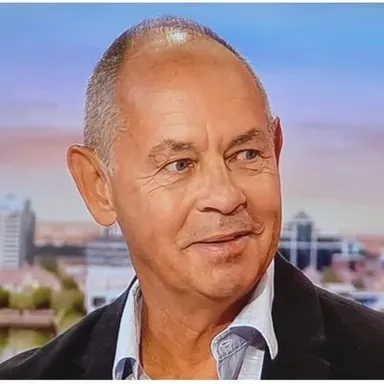
About the guest
Steve Philip
Steve Philip – a successful speaker and consultant, historically on social media and marketing, but who on December 4th, 2019, received the phone call that is every parent’s worst nightmare, his son, Jordan had died by suicide.
Wind forward to today and Steve is a passionate advocate for a zero-suicide society and spurred on by his determination to prevent other families experiencing the trauma of losing a loved one, Steve has established The Jordan Legacy Community Interest Company, delivering suicide prevention training and strategy, talking to the Government's Cabinet Office, The Department for Health and Social Care, The Home Office, The Ministry of Defence and a variety of corporate sector organisations.
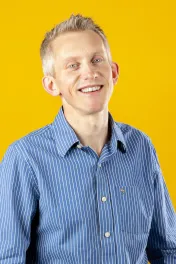
Hosted by Andrew Pain
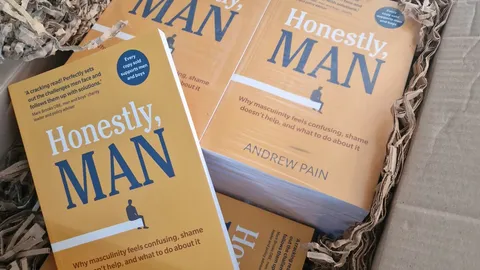
Andrew Pain is a Mental Health & Resilience Keynote Speaker who speaks from lived experience on resilience, burnout and workplace wellbeing. Host of the Men on Show podcast, author of the book Honestly, Man, and a TEDx speaker. Member, International Coaching Federation, and Mental Health First Aider trained.
More from Men on Show
Keep listening

Never miss an episode
Candid conversations with everyday heroes – ordinary men doing extraordinary things.