Men on Show · Episode 3
Men, Policing and Psychological Safety with Keith Fraser
- 10 October 2023 .
- 23 min .
- Hosted by Andrew Pain .
In January 2018, Keith Fraser was appointed as a member of the Youth Justice Board, then in April 2020 He was appointed by the lord Chancellor as Chair of the Youth Justice.
Andrew hosts this podcast. His own keynotes are on burnout, resilience, imposter syndrome and difficult conversations.
In this episode
About the conversation
He supports a number of charities as well being a Judge for the UK’s National Diversity Awards and 2022 and 2023 National Creative Awards for Children and Young People. He is the Chair of 999 Cenotaph and the Deputy CEO for 999 Day.
Key points of the episode
- The letter he sent on the off chance when he was 14, and the life changing response!
- His idea on policing in the future.
- The charity he is patron of and the important work they do.
- His views on "toxic masculinity" and men's main issue today.
- Today's problems - worse than ever?
- Solutions for the workplace.
- The Solution focussed and powerful A.C.T. acronym.
Men on Show shares lived experience and honest conversation – it is not medical or therapeutic advice. If you're struggling, you don't have to cope alone.
Samaritans: call 116 123 (free, 24/7) NHS: 111
Full transcript
Read the whole conversation
A complete, verbatim transcript of this episode – every word is the host's and guest's own; the topic headings are ours.
Welcome to Men on Show, the podcast, Candid Conversations with Everyday Heroes. Join Andrew Pain as he interviews fascinating guests, ordinary men doing extraordinary things. If you love the show and you think somebody could benefit from hearing it, why not tell them about it by giving it a share on social media? Oh, and at the end of the podcast, if you can leave us a five-star rating and a review, it really helps us more than you know, and it gets this important message out to more people that need to hear it the most. Right now, enjoy the next episode.
Hi, welcome to Men on Show. My name is Andrew Pain, and I'm delighted to have Keith Fraser with us today, Chair of Youth Justice Board for England and Wales, 30 years of policing experience, operating at senior level in some of the most complex organisations within the policing and criminal justice sectors, patron for Employability UK, and a commissioner for the UK Commission on Race and Ethnic Disparities, ambassador for The Lads Like Us, a non-profit organisation, an expert on reducing violence and preventing gang involvement.
The list goes on and I would be here a long time if I was to go through the whole list, reeling off the accolades and experience. So I'm so excited to have you on the show, Keith, and share your story. So welcome to the show, Keith.
Andrew, thanks for having me and really, you know, just thankful for having me on.
Choosing policing, and its frustrations
So just to sort of start off, Keith, what point in your life did you decide to go into policing? Was there something that particularly inspired you?
So very early on, actually, I was quite fortunate when I looked back to ask this question quite a bit. I was about eight or nine years of age. But looking back on what drove me to actually go and I think it was my parents, the way my parents worked, my parents were very selfless, very giving, did things for other people without necessarily looking for other things in return. My mother used to talk about some of her family that was in the police and she spoke quite proudly about that.
So I think it's how my parents were and how they gave the community expecting nothing in return. And also how positively my mother spoke about the police officers that were in her family back in Jamaica.
Gotten, was that sort of always in your blood? Was there a certain age where you really thought, yes, policing is for me? Or was it something where even when you were a younger boy, you knew that that's what you'd want to be?
Read the rest of the transcript Collapse transcript
I suppose where I really kind of went for it was at the age of 14 when I wrote to the wrote to the home office and filled out an application form with all of my correct details on there. And unfortunately, some faceless civil servant wrote back to me with a personalised letter, loads of information. I'm so thankful to them because I then use the information they sent me back as a template for what I need to do through my schooling and also to prepare for my interview later on.
That is just fantastic. Those small details and small acts can have such an impact. That's a brilliant story actually. And in all that you've achieved within the 30 years, what are you most proud of having achieved and why?
Good grief, Nora. I don't know if I've got a kind of most proud moment. I think the fact I actually achieved my ambition of getting to the cops, and I did 30 odd years, it was 32 years I did. I think getting through it and still being happy at the end when I left, I loved policing, being proud of being part of policing. So I think doing the full 32 years and still being happy at the end of it all, and giving the opportunity, I'll do it all again. Obviously there's a standout moment, there's one in particular.
And what would you say your biggest frustrations have been in that time?
I suppose in policing, I suppose the biggest frustrations are about the pace of change, really the amount of work that you're asked to do, and also just making sure that the public kind of understand the pressures of policing. Because quite often you're stuck between a rod and a rock and a hard place really. Because if you don't act, then you get said the police are too soft. If you do act, then the police are too hard.
And then it's the demands that are placed on policing and the constant increase in complexity. But I think that goes to the nature of the job. And I think that what policing needs to do is do more about explaining to the public about what's involved in policing.
Social media, and Lads Like Us
And I suppose with social media tabloid culture, we're quite encouraged, aren't we today, to draw very quick conclusions rather than taking the time to look at the wider picture.
I have noticed that with social media, social media posts of various instances that involve the police, and the public quite often put up one, the question would be why they post it. Number two, what's the outcome that they're expecting. And number three, and I think probably the most important thing for me is that anybody that sees things on social media, all the posts of incidents involving police, just to really keep an open mind. And that's one about because you don't know what's happened before the incident, you don't see everything that's involved during the incident of that post, and you don't see what happens afterwards.
So it's not necessarily about being 100% in favour of policing or 100% against, I would just ask that people keep a really open mind and a really challenging mind and I hope that any posts that are on social media makes people ask questions rather than come to conclusions which are sometimes wrong.
And The Lads Like Us, tell me about that work Keith.
Yeah, Lads Like Us, that's the, I'm a patron for them and they're an amazing couple of guys and they, I'm sure they won't mind me saying they've gone through some trauma and challenges in their own lives and they're now actually using their past experience as younger, younger men and children to challenge professionals in how they, in how they respond to trauma and respond to the trauma that young people might be suffering and their big thing is around trying to promote professional curiosity because, and not just taking things at face value, not just responding to the behaviours that you see children and young people displaying, but really trying to get behind what's actually driving that trauma and they're having a really, I think, a really positive impact on a number of different parts of the state, if you want, out there, like from probation to social services to police to the voluntary sector to various parts of local authorities.
No, that's fascinating, really, really good to hear and one thing I really wanted to ask you, Keith, given your experience, I know that you sort of do speaking around a sort of gang prevention, your work as patron of Lads Like Us, your policing, all that background, we hear so much about toxic masculinity, gangs, young men out of control, antisocial behaviour, often where the people featured are young men. Do you think the problems are actually worse today than they were 30 years ago?
It's a good question. If you look at it overall, if you look at the overall thing, you'd see that violence is actually might not feel like it's actually on the decrease overall. But what you will see is a greater awareness and a greater understanding of what's happening. So because of the increased access that we have to publicity, now that increased understanding and increased spread of awareness can do two things. One, it can help us work harder to prevent stuff, but also it can also spread a bit of fear in people as well that things are getting worse out there.
What I hope it does is get people to double down and try and prevent children and young people, and particularly young men and young women and girls and boys from being exploited by criminal gangs, for example, or those who are involved in gangs.
Toxic masculinity, and why men do not talk
Yeah. And what does the term for you in terms of this term, very sort of common, modern buzzword, toxic masculinity, what does that mean to you if you had to define that?
I agree. That's fine. I'm not sure that I would agree with that label is one thing. But what it might be talking about, what it might be talking to, is the kind of group culture that you get amongst men, the kind of lads culture, whereby it might be seen as misogynistic, a little bit like having a drink at the weekend, you may be a little bit more aggressive, but these are the kind of stereotypes that come from that. And I'm not sure that's really helpful, terms like that.
Yeah, I mean, my experience would suggest that the term itself is more of a wall builder than perhaps a bridge builder, in terms of reaching the people we need to reach. Yeah, I like your description there, you said, was it lad culture or that even is a bit more specific and definite than just toxic masculinity, which we can just throw about to encompass a whole range of behaviours.
Yeah, well, it can reinforce stereotypes around men, around young men, and it does two things really. One, it can encourage men to stick to that kind of culture that they're supposed to be part of and reinforce this stereotype that they're meant to be part of, reinforce this ideal that they're meant to be part of. And also, others cause others to fear, to fear men, and I think that's that, that is, you know, that's awful. And neither of those outcomes are positive.
What we need to do is understand why men sometimes aren't as prepared, quite often aren't as prepared as others, particularly women, to talk about their feelings, talk about what's going on for them in their lives, talk about some of the challenges that they, they may, they may have.
No, no, really, really, really good, really insightful stuff there. And what would you say, when we consider the statistics for men, from suicide, we know that 75% of people who die by suicide are men. We know that there are falling levels of attainment within education. In the UK, 57% of graduates are now female, 43% are now male. And we know that boys are three times more likely to be excluded than girls. So some of these stats make for quite grim reading. Why do you think these stats are so bad and how do we start addressing them?
I think one, the first thing is around just raising awareness. How many people are aware of those statistics? Because if you're aware of those statistics, you'll start to look at it from a different perspective. You'll hopefully start to say, OK, what is going on for men? What's going on for young boys? What is it that we need to do to put in place to support young boys and men early in their lives that encourages them to see the value of talking about their own feelings, about increasing their attainment and academic ability in school, education or in a trade?
What is it about men that might say that they tend to be less individualistic and wanting to be part of a group? You know, these are hopefully the questions of those stats that you've just quoted, which are people behind them would generate.
Yeah, and why do you think they're as bad as they are? Do you think there's like, with all these things, there's going to be a host of complex reasons? But are there any sort of standout reasons for you that we need to be mindful of in how we address these things?
I think one of the big standout reasons is one that's talked about a lot. You see more and more awareness of it. It's just the fact that men do not talk about what's going on for them. They don't talk about, generally don't as much as women talk about their health and their well-being. They're more likely to downplay what's going on for them. More likely, I feel from what I've seen, more likely to actually put up a front and hide their feelings.
They're more likely to show, or less likely, shall I say, to show their vulnerability. And so, as a result of having to maintain this facade, there's an awful lot of things that could be going on for men that's not coming out. And then as a result of that, it gets to a level whereby individuals can't cope. And they could take some extreme options of actually committing suicide. Unfortunately, you know, I've got a friend of mine who died in their early 20s, a young man, successful, but, you know, I don't know, I'm not going to make any guesses around here.
But there were things that were probably going on for that individual that we didn't know about, his family didn't know about, his friends didn't know about. What, you know, if that person had been prepared to speak to us, felt able to talk to us, could that life have been lost? And I think that story can be told many times over, unfortunately. Just a simple act of being prepared to talk about what's going on for you.
Psychological safety, and a last message
Yeah, because certainly, I mean, some of the talking, some of the speaking work that I do around my experiences of domestic abuse in a former marriage, sometimes people say, well, how come you didn't talk about it? How come you didn't open up at work? You know, you go into work occasionally with sort of cuts, bruises on your face. And I worked with really nice people, we got on ever so well, but no one talked about vulnerability.
You always had your best bits on display. It was all about targets, profits, all the things you're doing well at. I wouldn't have dreamt of opening up, but perhaps if someone else had taken the lead to be vulnerable and started to create more of an environment where vulnerability was normal, acceptable, safe, then I might well have opened up.
Yeah, there's two things that come out of your question there. There's one about what happens to people who are going through domestic abuse, and I led on and worked with a lot of people around domestic abuse who were going through it whilst I was in the police. And a massive element of that is around control and dominance. Therefore, the person that is going through that domestic abuse, they quite often do all that they can not to disclose what's going on to keep it quiet.
Sometimes they don't realise that they're in a vulnerable situation until they're actually writing something which is really, really deep and it's really hard for them to kind of find a way out of it. There might be all sorts of reasons why that person has control over the other person, not just physical control, it can be psychological control, it can be financial control. So it's not just a simple thing of just reaching out and asking for help, which leads on to your other piece there about the workplace.
Is the workplace the right place, always the right place for you to be able to seek help? You think about how much of your time you spend in work, how much of the time you spend with colleagues, is the environment the right place whereby people can ask for help when they need it? You know, myself as somebody who is slightly different to what you were talking about as dyslexic, it was a difficult place for me to seek help.
Although they tried to create an inclusive environment, an inclusive atmosphere, the response I got from my line manager when I spoke about my dyslexia in my mid 40s wasn't a great one. So I think employers, heads of organisations, leaders in organisations need to really look at inclusivity and what does inclusivity mean and are they creating that kind of safe space, that safe atmosphere in the workplace?
And what you are referring to, there is that modern buzzword, psychological safety where leaders genuinely create an atmosphere where if you made a mistake and you could get away with it, you would still open up to say that you made a mistake because you are psychologically safe. And that has certainly become, as I say, a modern buzzword. Have you seen that term psychological safety much in the work that you are doing and do you see that growing as sort of a trend as something that people want to create at work?
I see that growing as a trend, what you have spoken about there. And it is more than just a buzzword and I am sure you don't mean it like that as well. There is actually some real good evidence as to why you need to be creating a place where people feel safe. It is so that one, people want to come and work for you. You can bring the right talent into your workplace. And then three, people are more productive if they are happier.
And four, if people are happier in the workplace, you are able to retain them. So there is a real human value on a moral level around creating a safe space. But there is also a business benefit as well for creating that safe space.
Yes, absolutely. Yes, completely. Just to second what you said, for me with modern buzzwords, there are some very silly modern buzzwords and there are some really sensible ones that are here to stay. And I definitely see psychological safety as one of those. And for anyone that wants to do more research on some of the evidence that you're referring to, I know Google launched a project called Project Aristotle where they tried for years to get to the heart of what's that missing ingredient in the best performing teams.
Can we define, is there an ingredient? And of course, after years of picking this apart, what they found was psychological safety was the key ingredient for their high performing teams. Keith, just sort of a lasty sort of as we sort of come to the conclusion of this podcast, what would your message be today for young men? If you had a message to encourage our young men today, what would that be?
The message for me would be it's about taking action. When I was in work and I was bullied, and I know we haven't had a chance to speak about that this morning, the thing that caused me the most harm was not taking any action. So one is about being aware of what's going on for you. The second thing was once I found out, I tried to conceal it and I thought it was something else that was going on and then tried to say that it was a personality clash.
And then finally it's the T in act, which is about taking action. So it's being aware of yourself as a person. And then two, the C is not concealing what's going on or trying to cover it up with yourself. And then number three is about taking action. So it really is a strong message there to act now.
That's a really, really powerful message, Keith, and a thank you and a good one to conclude on. And Keith, for people to find out more about you, I know that you're a speaker yourself. How's the best way for people, you know, what's the best way for people to get in contact with you?
The best way for people to get hold of me is via LinkedIn, via my name and also I'm also on Twitter as well. I'm unresponsive. I'm up for a chat with people and see where the conversation goes.
Fantastic. So that's Keith Fraser on LinkedIn, Fraser, F-R-A-S-E-R, and obviously your bit. What's your Twitter handle, Keith?
It's Keith Fraser, 2017.
Brilliant. Well, look, Keith, thank you so much for sharing some of your story and insights and thoughts there on today's show. I hugely, hugely appreciate it and wish you the very best for the rest of the year.
Andrew, thank you. It's a really important topic that you're exploring here, so I do wish you all the best in relation to raising awareness around this.
Thanks, Keith.
Thank you for listening to Andrew Pain Men on Show. If you could leave us a five-star rating and short review, it would be really, really appreciated. It helps us get this important message out to more people that need to hear it the most. See you on the next episode. Thank you for tuning in.
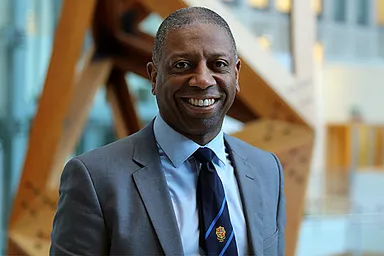
About the guest
Keith Fraser
In January 2018, Keith Fraser was appointed as a member of the Youth Justice Board, then in April 2020 He was appointed by the lord Chancellor as Chair of the Youth Justice. Keith is also the Non-Executive Director/Trustee at The Work Force Development Trust Limited, previously an Advisor for the National Police Chiefs Council Digital Engagement Project for Young People, a patron for Employability UK. Keith was appointed by the Prime Minister as a UK Commissioner for the Commission on Race and Ethnic Disparities on 16 July 2020, there he championed fairness, agency, inclusivity, and trust. Most recently in May 2022 he was appointed as the Chair of local Partnerships, (Owned by Welsh Government, HM treasury and the Local Government Association).
Prior to this, Keith was a Superintendent and Chief Inspector in the West Midlands Police, having joined as a Constable, during which time he produced the 2016-19 Preventing Gang Involvement and Youth Violence strategy. He was the Children and Young People’s lead for West Midlands Police. He was the victims lead for West Midlands Police and he also led on some ground-breaking research for survivors of domestic abuse. All the recommendations from this research were accepted by West Midlands Police.
Keith also produced the business plan for City of Wolverhampton council where he was the Chair of the authority’s statutory Youth Offending Management Board. He led an innovative preventative project, targeting over 7,000 children and young adults, working with Sport England and was the Strategic Police Lead for the Princes Trust across the West Midlands.
In summary his policing career spanned 32 years, working in the Metropolitan Police Service and West Midlands Police.

Hosted by Andrew Pain
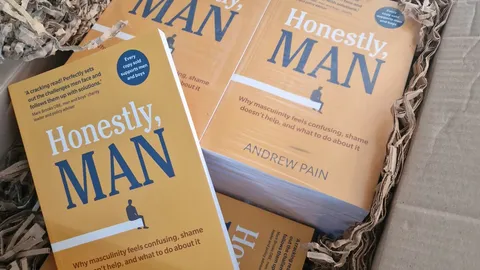
Andrew Pain is a Mental Health & Resilience Keynote Speaker who speaks from lived experience on resilience, burnout and workplace wellbeing. Host of the Men on Show podcast, author of the book Honestly, Man, and a TEDx speaker. Member, International Coaching Federation, and Mental Health First Aider trained.
More from Men on Show
Keep listening

Never miss an episode
Candid conversations with everyday heroes – ordinary men doing extraordinary things.