Men on Show · Episode 51
Why acrimonious parental separation is bad for the kids and how to prevent it with James Hayhurst
- 8 October 2025 .
- 46 min .
- Hosted by Andrew Pain .
James is the founder of the Positive Parenting Alliance and creator of the Parents Promise.
Andrew hosts this podcast. His own keynotes are on burnout, resilience, imposter syndrome and difficult conversations.
In this episode
About the conversation
As for James’s ‘day job’ he has 20 years experience in marketing and PR and has worked ‘both sides of the fence’ as agency leader and client. In his spare time James is a keen runner, burgeoning autism awareness activist and usually wrapped tightly around the fingers of his three little girls.
Key points of the episode
- The Parents Promise. What is it?
- What happens when the relationship starts to slip.
- The damage that conflict between parents does to children.
- Family courts and their problems and biases.
- The problem with court orders.
- The "Mrs. Doubtfire" comparison.
- The complete blindspot in society about separation and damage.
Keynote
James sets out the problems and biases of the family courts; Andrew's keynote on abuse-aware workplaces follows life after abuse, from parental alienation to the family courts.
Men on Show shares lived experience and honest conversation – it is not medical or therapeutic advice. If you're struggling, you don't have to cope alone.
Samaritans: call 116 123 (free, 24/7) NHS: 111
Full transcript
Read the whole conversation
A complete, verbatim transcript of this episode – every word is the host's and guest's own; the topic headings are ours.
Welcome to Men on Show, the podcast Candid Conversations with Everyday Heroes. Join Andrew Pain as he interviews fascinating guests, ordinary men doing extraordinary things. If you love the show and you think somebody could benefit from hearing it, why not tell them about it by giving it a share on social media? Oh, and at the end of the podcast, if you can leave us a five-star rating and a review, it really helps us more than you know, and it gets this important message out to more people that need to hear it the most. Right now, enjoy the next episode.
Hi, my name's Andrew Pain, a host of the podcast Men on Show. I'm delighted to have another fantastic guest here today, James Hayhurst. So career-wise, very much in the creative and marketing space, we may touch on that briefly, but we're really here to talk about his amazing initiative, The Parents Promise. That's what we really wanna be focusing on, exploring the topic of relationship breakdown and trying to co-parent when things are really tough, trying to be a father figure in that scenario. So James, it's an absolute pleasure to have you here. Welcome to the show.
Thank you very much, Andrew. A pleasure to be here.
His career and The Parents Promise
Cool. So just before we jump into learning about The Parents Promise, I really wanna hear about that. It touches on me as well, very closely. It's a topic very close to my heart. Just tell us a little bit about your work today. What's the Magic Source course? If anybody stumbles across you, they'll be like, what's that to do with?
On LinkedIn, yeah. Well, certainly that gives a good intro, a very quick pre-seed to my career, which is spent most of my life in advertising agencies for my sins. And then I became a marketeer at Unilever. So the Magic Source course is about helping agencies, ad agencies and big marketing clients work better together in a relationship sense, actually. And the advertising kind of creative industry background is relevant to The Parents Promise in how we've approached stimulating this conversation in wider society. So no doubt comes to that in a sec. But yeah, that's me in a nutshell.
Okay. Well, I mean, let's talk about The Parents Promise. I think for our listeners, well, what is it? How has it come about? Well, yeah, tell us about it.
Read the rest of the transcript Collapse transcript
Yeah. So there's The Parents Promise is a social initiative and an idea that launched in 2021 around helping the UK to separate better, have a different conversation around separation. And before I explain what it actually is, the principles behind it and the thinking was that, I think like you, as we're going to maybe come to touch on, had an experience in terms of relationship breakdown and the family courts and just generally observed that this was something we don't talk about as a society and a lot of things really, really don't work.
And there were certain prejudices that I had around this subject that I wanted to kind of dispel. And the prejudices I had were, personally, I never thought I'd get separated. That happens to other people. And then, secondly, I assumed, I was aware of these blokes that dressed up as Batman or whatever, and I sort of assumed that they must have done something to not be seeing their children. That was kind of because, you know, generally the UK seemed to work, so I couldn't imagine why there was this, how it could be that it was possible for a parent, a loving and safe parent, not to see a child.
I'm sure we'll get to this later. But ultimately, what my observation, pretty simple one was, it's become so gender toxic, this subject, that despite how damaging it is to children, and despite the judiciary and most MPs, kind of most of them understanding the problems, they find it very hard to sort of address the issue because it's just, you know, you just get shattered down from the start. So to begin to answer your question, the approach for The Parents Promise was, I was trying to think of, firstly, there seemed to be a role for communication.
That's what we talk about in advertising. There's a role for a different kind of conversation. And would it be possible maybe to create something that was almost impossible to disagree with, which is what The Parents Promise is? And then is it possible to bring lots of organisations together around this cause? Because I was aware of the two extremes, Women's Aid and Fathers for Justice, just to pay a couple of examples, that were sort of shouting at each other.
But yet there were tens of organisations, child-centred, I'm not saying that those aren't, that could move the conversation forward if we could get them together. So a couple of things we did. First, you would create an alliance called the Positive Parenting Alliance. And then we launched this idea called The Parents Promise, which is really a prenup. It's not a legal document, although it may become one. And there's some law firms that want to take us up on maybe making it something a bit more belt and braces and robust.
But essentially, the thought I had was, it's possible if you're rich to have prenups around things that don't really matter, the material possessions. But nobody ever seems to talk about the most important thing, which is the relationship with the kids. And I remember thinking, wow, how can it be that these people, on the day their child is born, could anyone imagine trying to prevent access for the child to that parent, all the rubbish you hear around the family court?
So wouldn't it be nice, wouldn't it be maybe a game-changing conversation to commit to each other that no matter what happens in your own relationship, you will always do what's right for the child? So we'll know that link to the Parents Promise website and show notes and what have you. But yeah, if you go to parentspromise.org.uk, there is the promise that you can look at and download to discuss with your partner. And the three disarmingly simple things that we want you to promise are that whatever happens, that you will always make sure that your children have lots of time with you and your wider families, that you will always be nice and kind to each other and that you will always work together to create the right conditions, you know, because your children to thrive, because it's a very organic process being a parent and you both need to work together.
And you may not be together in terms of in a relationship, but you're both the parents of the children and they need you both. So that's the Parents Promise in a fairly long winded way. It was a preen up and a conversation starter because we launched with a survey. We discovered that 90% of us parents have actually talked about and thought about what we'll do if we win the lottery, which sadly is never going to happen.
But less than 5% of any couple, any parenting couple, had ever talked really about separation and what might happen. And of course, there's reasons for that. It's not a pretty subject to discuss. But with 40% to 50% of couples ending in separation, it felt like a dangerous conversation not to be having. So that's it.
Whether a new partner makes things worse
Absolutely. And I mean, just when I think about, and we'll talk about data shortly, when I think about the guys that I know, understanding that when things go wrong post-relationship, it's not always that a mum is blocking the dad from seeing the kid. It can be a two-way thing. Sometimes there are safeguarding issues. I get that. But I wonder whether as well, from your experience, whether part of the difficulty when relationships break down is that the intention is, well, of course, for the sake of the children, it would be fine, it would be nice to each other.
It hasn't worked out. But the reality is that the difficulties really kick off when one of the partners now has a new romantic interest and there's either a new father figure around the kids or a new motherly figure around the kids that seems to really kick these problems off. Do you see a link there from your work so far that things really go downhill when a new romantic interest, or do you find that in most cases, actually, things have been going downhill in terms of the parents getting on post-relationship long before one of them starts dating again?
I think it's a real mix. And I think the issue is, I think most parents, again, safeguarding issues notwithstanding, the huge majority of parents would not want to do anything that damaged their children. And I think what isn't appreciated is that, you know, that separation, if it's not done well, I mean, clearly, as a kid, I mean, my parents are still together, but you want your parents to be together. But if you are able to separate well, and it's definitely possible, then children can thrive and it can be the best kind of for everybody.
I don't think there's the appreciation in broader society that parents, parents or conflict, that's the wrong term really, but that it is incredibly, incredibly damaging for children. And we're totally kind of blind to that. And I think that feeds then into if you're not aware of that. And that's what the parents promise is really around. We were just thinking, you know, if you get married in a, well, if you get married, but say you get married in a church or registry office, there's that moment when the person marrying you says, you know, well, you're going to support this couple on their journey.
And everyone says yes and hooray, which is brilliant. But the thought that we had was, okay, well, when you separate, firstly, acknowledging that it's hard to separate well, but actually praising those that do, because it's the best thing you can do for your kids. And with the Parents Promise, we're almost thinking it would be brilliant if the best man and chief bridesmaid signed that too and kept you honest. Because it may be that clearly, you know, whether it's super amicable or whether there's some issues, what tends to happen is parties split off into groups, and it kind of makes it worse.
And what we want is for people to be saying and for society to realise that, yeah, okay, it's hard this, but you really need to separate well for the best outcome for your children. And I think if people realise that, a bit like we're starting to realise with phones, like how damaging they can be, there's been a change. And we're not there with separation. Yeah, sorry.
No, no, so with the Parents Promise, it seems to me what you're saying, one aim is that this is taken up, enshrined as much as it can be in law. So when people sign it, presumably, it has some kind of influencing factor within the family courts, within mediation. And I'm presuming here, so correct if I'm wrong, part of your other thing with the Parents Promise, what you want to achieve is just to get people talking about it more perhaps than they are.
Yeah, I think it's about changing culturally. I think that's the most powerful thing, behaviour change. If we all know that separating well is good and separating badly is damaging to your kids, then far fewer people would do that. And then finally, to go back to your actual question you asked about new partners and stuff, I think because people don't realise that, then of course, there are triggers that, ultimately, we're all wounded little kids inside without turning this into a therapy session.
I think that, yeah, that does happen. So, then people, you know, parents actually end up acting like children and they feel hurt and stuff happens. And then they, when lawyers get involved, it becomes harder and harder and harder. And I suppose people think, okay, well, little Johnny needs me more than he needs this other person. And we tend to, I think we tend to talk to some child psychologist as well. We tend to miss, we understand, or we underappreciate how much our kids understand everything.
So we don't think our behaviour is making a difference or they're not noticing everything. And they are noticing everything. So there's a lot of stories and some real horror stories of people I've got to know who, you know, that things have gone really downhill when they've met a new partner years later. And it shouldn't even be a, it shouldn't even be a thing.
An HR policy for separation at work
So what about the HR initiative? What's that? You mentioned that I know when we were discussing this and we sort of first got in contact. Where does that fit into this?
So yeah, so we launched the Promise in 2021. And then every couple of years, we try and do something in culture to make a difference, like an actual thing. So rather than maybe talk a lot of hot air, can we actually do something which will make a difference? And the first thing we did of note was, we observed that in HR policy in general, there are lots of great HR policies in the last kind of five years, dealing with really important things, whether that's miscarriages or all sorts of bereavements.
But we realised there was nothing around separation. And I changed my career slightly upon my divorce. I was running an ad agency. And for various reasons, I decided I'd go the other side after that. There's a bit better work-life balance, et cetera, et cetera. Both my CEO, the ad agency, and Unilever, who I went to work for, were wonderful. But there was never a policy. So they were wonderful because my line manager was wonderful. And it just seemed to be a blocker.
So what we thought we'd do is, and post-COVID, it was much easier, was wouldn't it be great if firms and companies had a bespoke HR policy, which just collecting things they probably do anyway under a little subhead so that if you were separating, they could point you to that. And the things we were looking at were flexible working, which I know is much easier now. Because if you and I were together and we were separating, then your routine needs to change.
And you know that because you've been through it as well. And suddenly you have to pick up the kids when you didn't, and that kind of stuff. So the easier, it was about creating the right path that people could start to separate well. So there was some practical stuff, linking people to counselling. You know, it's a big deal getting separated. It doesn't just happen, and then it's over two months later. And then we produce some resources with good information.
Because again, culturally, we don't know much about separation. We tend to think you need to go to family court. And there's almost too much bad information online. So we produced some resources and pulled from our various charities and support partners so that people could get the right information most quickly. And then finally, just helping line managers and people talk about this. Because it's quite an awkward thing to raise and you feel pretty shamey and you failed.
So to stimulate the conversation. And it was brilliant. We got an MP supported us, Siobhan Bailey, and we got eight huge companies, Tesco being the biggest, that signed up January 2073. So nearly a million employees were positively affected. And we were delighted by that as an outcome.
That is brilliant. And I suppose, yeah, when I talk about, well, what can companies do? What could employers do to help people? And I think of, we hear, is a very sort of jargony phrase, your employee, the EAP is your Employee Assistance Programme. You know, actually, for organisations to understand. So for me, having been through the family courts, a big problem. I was fortunate when I was going through it, that I had quite a flexible employer.
But if your case, people may not know this if they've not yet experienced the family court. If your case is listed for 9am in the morning as a half an hour hearing, you might think, well, I need to get half a day of annual leave sorted for that, because I'll be back by lunchtime, because my office is only around the corner from the family court. You might be back by lunchtime. If your case is heard by 2 o'clock, it will be a minor miracle.
You could be in there an hour, although it was listed for half an hour, or maybe you'll be in there for two minutes, because there's a piece of paperwork that's missing. By the way, that's a waste of your money having the barrister there for that whole day, for the two minutes that you're in court. Likewise then, CAFCAS, the organisation that advises judges on what they should do. The CAFCAS officers obviously get to know the case, so theoretically they do.
When they call you, if they call you for a fact-finding conversation, you could be on the phone to them for ten minutes or two hours. Your solicitor could need information like that. And so for me, I think what you touch on with flexible employment is that really, I think there's a conversation for employers. They need to understand what the family courts are actually like when you go through them, because all the time, you want to be a reliable employee.
You need the money because you're being absolutely scammed in the financial courts. Not scammed, but you know what I mean. So I think there is a whole piece that needs to be, that policies procedures are 100 percent. Was that your experience at the family courts? Was that just mine?
Yeah, definitely. I'll come to the family court in a sec. Just to your point, your first point about how hard it is to keep going work wise. And this was, it was really easy to have these conversations around with the HR leaders because they were all like, oh, my God, I didn't, I can't believe we don't do this. And it was an open door. But essentially, we did, we obviously usually launched the surveys. We discovered, not unsurprisingly, I think like 90% of people surveyed said that separating had affected their ability to work.
It affected their mental health. Lots of people had had to change careers or felt they had to change careers. And 95% said that it affected their mental health. Nearly 40% had taken time.
Was this a survey that you carried out, James?
Yeah, we did a survey at Round Launch in January 23.
How many people, roughly, did you survey?
Family courts and orders that are not enforced
It would have been in the hundreds. I've got the precise amount. And it was one of those things that becomes a, I think, less than 10% had any specific policy. And what we discovered was therefore it was a bit of a no-brainer because work generally is a good thing and it helps your mental health to keep working. And a lot of people will give more to work during the dark times because, essentially, you're clinging on to what you know.
So it was a real win-win is, the press have misreported this a little bit. We've got a lot of coverage on a lot of the morning shows about divorce leave and time off work. It was really about understanding what your person's going through. To your point, lots of people said they had to leave their jobs because they have to, you can't not go to family court. You can't not do these. They're so important. It allows people to do what they're doing.
As an employee, you get payback because people feel incredibly grateful and they're able to continue doing what they need to do. But yes, the family court is just not a good experience on a whole host of levels. Very expensive. It's just not the right place to go, really. I think people think that, maybe you see it on telly or maybe you see it in a state, that someone will make a decision, the right decision and justice will be done if you've been slighted or something like this happens.
It's just not a good experience all around. I can go into a rabbit hole about how bad it is. Sometimes you've got no choice and sometimes there are real safeguarding issues that you need courts, but ultimately there are a lot of middle class or no safety concerned people ending up in courts because they think they have to or they just get dragged there. It's not good for anybody. It's incredibly expensive and it's not good for your kids.
Obviously, you touch on this and I think people often aren't aware of this when they start the proceedings, is that you could spend an absolute fortune and a whole ton of stress months of your time, and an agreement is made or a court order is made, but then the other person may not adhere to it, and then we'll race back to court, then you won't be racing back to court. The wheels of the court system turn very, very slowly.
So it's a very unsatisfactory experience. And I had the privilege of speaking to Jackie Tiotto, who's the CEO of Kafka, this independent organisation. They advise the judges what to do, as you'll be aware, but they've got like 1,400 case workers across the UK. So within that group, of course, you've got old school, black and white thinkers who probably need to retire. And sometimes they'll be brilliant and insightful. So it is a bit of a lottery. You don't know who you're going to get.
The judge I got in my second time around at court just had a very fixed opinion that the reason my daughters were not seeing their mum had to be down to me because that just wouldn't happen and would not deviate from that that kind of mantra aside from the evidence that was put forward. So these are how do we make the family courts work better, though? I mean, obviously, we ideally want couples to not end up in the family courts. But what can we do within the family courts, do you think?
If I were a magic wand, I would say there's two things either end of this. Firstly, if you can create societal change, then people will realise they shouldn't go there and they will separate better. That's the biggest thing. So it's the demand and supply thing, isn't it? Reduce that. Ultimately, it's under resourced and there's all sorts of, you said, subjectivity within the court. So the big thing I would do at the very sharp end, and you reference this, Andrew, is make court orders legally enforceable, and they are officially, but they never are.
So what happens is that if one party doesn't want to adhere to what the court's saying, there's very little that is ever done. And that is at that end, where all the real damage gets done. And there's lots of horror stories where, you know, judges after 10 years, I think Judge Stephen Wildblood is a good example. He's just retired, just saying, he released a case where I think the child was so damaged, and he was a teenager, you know, essentially he said he should go to Parent A, but the damage has been done, there's nothing I can do, and they're gonna stay with Parent B. And I think because it's not, because these orders aren't enforced, in parenting terms, having done a few parenting courses, from what I remember, you don't want to be a permissive parent, and which basically, you just let the kid get away for as long as possible.
You don't want to be authoritarian, you want to be authoritative, and for me, the court is permissive, and that's the problem. Maybe only a relatively small minority, but that's where a lot of the damage is done in these long running cases. It seems bizarre maybe to people listening to this, is how can a court order not be enforceable? You get parking tickets get enforced, and TV licence payments get enforced, this surely, but it just isn't. That's what when people often want to pick my brains about when they're starting out in this, I think that's a big caution is this is not just going to get sorted and try and be as amicable as you can.
How much time judges have for a case
Yeah. There were a couple of things that really concerned me, I suppose. One of them, just to add to what you said, we were able to prove time and time again in both of my family court sagas, that my ex was lying. It was there on paper, but it didn't seem to have any impact on the judge or their thinking. There seemed to be no sense of telling her not to lie. The judge just didn't seem bothered.
That concerns me that there doesn't seem to be as much concern on sort of perjury as they would in a criminal court. Of course, we don't know how long the judges read all the paperwork. It's very hard to find that information. But the solicitors and barristers that I talked to were saying, well, a judge probably won't have more than six or seven minutes. And you're like, yeah, but we've spent months preparing these bundles, preparing the paperwork.
There's no way anyone could read that in six minutes. So my concern, I suppose, is it's quite arbitrary. People are allowed to lie. It doesn't seem, as you say, court orders are not particularly enforceable. And you've references, you know, because they're so over run with cases and not enough resource. Judges, how can they get to know a case, the intros of a case in no time at all?
Yeah, they can't. And yeah, they said this huge, for those who've not done a bundle, I can see them behind you, these Leverarch files, if you're on YouTube, they're huge documents. And it just, yeah, it's just an awful lot of time, money and energy wasted when you just, ultimately, again, how would you solve these things? I think there are rough rules. It doesn't need to be 50-50, but in theory, again, if I had a magic wand, when you separate back to the Parents Promise, kids should see a lot of both parents.
And for me, you could strip out most of the friction, I'd say, in the system of nuance. And just so it's going to be roughly, basically, this is the formula. But to agree that now, we could deviate slightly. And then if there's a big issue and the safeguarding, you go to core. And that would do it. There's this kind of like, I don't think family law is a bad people. I think it's a bad system. You could argue till the cows come home about what's in the best interests of a child.
And actually, what's in the best interest of the child is roughly what's in the parents promise. So we've overcomplicated something. And what's damaging, I think there's two big things. One is the cases that, you know, maybe, as I said, maybe something that you went through where they just should never have gone to the court, but had to go there. And then there's also real safeguarding concern cases, you know, with domestic violence, DV, children in danger. They need the court time.
They need the expert time. And I suspect, I know a lot of that time is going to cases that shouldn't be there. So there's a real imperative to change this on those two levels, at least.
Parental alienation and children turned against parents
And what are your thoughts on parental alienation? Often when I speak about men's well-being and I touch on fatherhood, most people have heard the term, but most people that haven't experienced the family courts are a bit vague as to what it is. You mentioned Fathers for Justice, Women's Aid. My view of what Women's Aid would think is that they would see it as a male construct, used to bash women, whereas Fathers for Justice would see it as a very real thing, probably more with women guilty of it than men.
What do you make of parental aid? Is it junk science, as some people say? Is it bone of what would you say? How would you explain what it is and its impact?
Yeah, again, I suppose for those that aren't aware, it's about when a child's relationship is meaningfully and kind of manipulatively damaged with a parent. And you'd think it's not possible for those that are listening, hopefully happily in a relationship and with loving kids. You couldn't imagine that your child would ever not want to see you. But sadly, if you speak to any of the main charities, there is an epidemic of whatever you want to call it.
But the problem is that the term is being demonised, which I think is a tactic. And it's not something I talk about massively or we focus on as part of the Parents Promise. But there are many, I know many mums and dads who simply do not see their children. And it's heartbreaking. So I think we need to get to a stage where we, as grown ups, talk about the issue. Because there's the two big things that are really dangerous in breakups.
One is domestic violence, which is again, nothing I've experienced, but is huge. And there's also kids being turned against their parents, which again, is highly damaging. Isn't noticed often for 10, 15, 20 years, because the child doesn't really know what's happening. And it's important, I think we're maybe getting there slowly, that everyone, because we're all focused around children, that you can have a proper conversation, because both things happen, and you need to solve for both of them.
I think that's the issue. And hopefully, we're getting to a position where we're starting to have just calmer conversations. I mean, this is about children's health, and we need to have serious proper conversations around that, is what I'd say.
See, for me, with parental alienation, just to add, there's a sense of parents not seeing their kids, which you touch on and mention. I do also think that part of parental alienation is the bad mouthing of parents. So when my daughters used to live with their mum before they were moved, their residency was moved, ASDA, she blocked my contact, alleged to kidnap threats, and I took it to court to get contact back, because I'd had all direct contact taken and the courts moved residency.
But long before it all went to court, I would pick up the girls for a weekend of contact, and they'd say in the car on the way back to my house in Birmingham, why'd you shout at mummy in the week on the phone? You really upset her. I'm trying to think, well, I literally have one conversation with your mum on the phone in the week, and I asked her for some, it was an extra day of half-term, something like that, and she said that she wasn't going for it.
As I always did, I just capitulated straight away. I would always ask and respectfully lose. I always try to keep the peace. We just had a reasonable conversation. I didn't shout at her, but unfortunately now, I've got to explain, well, I didn't. Well, who's the liar then? Then you can start to get in some very dangerous territory around, well, what is alienating? How do I find that line between being honest with the kids and not mouthing mum?
I know I've mentioned this to you when we spoke. My nine-year-old daughter once asked me and her father to daughter just before bedtime, you still have a little bit of a chat on the weekends that I had them. Why does mummy always lie? That's now really difficult to answer that without bad mouthing mum. Because if I say she doesn't lie, that's a lie. If I say mummy loves you, well, that just doesn't answer the question. So there is complexity with parental alienation.
You could have people that are accused of it and actually, they're just really dealing with a complex situation. Whereas other people are very proactive in trying to break down that relationship. Is that what you found?
Yeah. I mean, ultimately, politicians will answer here. But just going back to the Parents Promise, it's like if we're able to hold ourselves to lots of contact and being nice to each other and working together, then that's going to create the best conditions possible for a child to not be damaged. Clearly, there's going to be some fallout from a separation. Yeah, there's quite a lot of literature, which if people are interested, there's some academics I'm sure you can put there.
Dr. Ben Hine, Professor Ben Hine is really good to follow, but they do proper science on this. I'm no psychologist, but there's lots of things that happen where children are far too young, and probably we're all far too young to ever be caught into this. They start to be let into their parents' relationship in a way which just doesn't healthy. There are loads of things. I think there's a checklist of 17 signs of alienating behaviour. They're all worth having a look at for those interested.
It's the point maybe I made at the start, your children will be hypersensitive to everything, and as hard as it is to separate, well, it's really important to try and do that. To your point, if one party is not doing that, it's really hard because you're then caught in this tailspin because there are questions that you're not really sure how to answer, because you can't ignore them. Hence, ideally, we'd never start. Yeah.
What you're saying is quite reasonable though, because it seems like with the Parents Promise, your hope for this, you're not saying that it will take out so many cases that the family courts would cease to exist. You're saying, hopefully, with the Parents Promise, your goal is that it would reduce the numbers of families that are there that probably don't need to be there.
Yeah.
The lack of data on family courts
It's just got a bit carried away, and actually both parents could be coached and coached away from it, maybe if they thought about it more and talked about it more. Where do you, you know, so you mention obviously Dr. Fenn Heine in terms of psychology, where's the research on, or is there research on children's mental health through that family court process? Is that stuff that you touch on?
I mean, there's a whole lack of, the lack of data in the family courts is shocking. You know, you'll get more of a follow up if you buy a dishwasher from Curry's. And it is, it's something I sort of bang on about quite a lot is, I think it's still paper based, incredibly. If your, you know, if your children go through the court, no one is, firstly, they shouldn't go to court, and this is a health issue.
But, you know, like if you went to the doctors, there should be a follow up. And how, you know, how's the child doing? Is, you know, is the set up right? All of those, none of that stuff happens. So there's, there is just very, very little data. So therefore nothing ever changes. And also the magnitudes of the problem falls over. So, I'm sorry, is never seen. So again, if you look at things like phones and all the work that Jonathan Hite has done for the anxious generation, he has done an amazing, written an amazing book, and then you've got the smartphone free child has sprung up as a result of saying, look, we can see this.
We can see the damage that's being done to children by smartphones is pretty irrefutable now. And parents are starting to change. I think that is probably a lifelong piece of work. But I think, you know, if society realised that separating badly was so damaging, then a lot of the cases wouldn't go to the court. But I think we're totally blind. We're totally blind to the damage of separation in culture. It's still all kind of glamorised around courts.
Maybe a slightly random example, but I think it's important to make a point. Mrs. Doubtfire, the film, which I've never seen, but I know the story. And that essentially is about, I think, one parent trying to stop the other parents seeing the kids. And Rob Williams has to dress up and like that. If that flips and that was the story about domestic violence, that wouldn't be on the West End. It's really damaging behaviour. I think we just think it's normal.
We think it's normal that mommy or daddy and daddy or daddy, or if you're in same-sex relationship, they're going to fall out when they separate and you just have to deal with it. And my hope is that maybe in 15, 20 years time, it's a bit like now when we watch episodes of Friends and we go, Oh God, there are some things you just can't say now. Rightly so, society's changed. I still think there's a almost complete blind spot around separation and the damage.
I don't know if you agree, Andrew, but that's where I think we are. And I think if we can change that, if socially a parent, if a parent was just hanging out with their mates and they're saying, why hasn't your child seen the mom or dad for six months? That's not cool, is it? Social shame and that kind of social pressure is quite a big deal. Whereas at the moment, we don't have any of that. It's just, you know, he had an affair, so I'm not going to let him see the effing kids. Well, that's not fair on the kids, even if that was the case.
Transparency, standard rules and data
I mean, this, like I say, this is close to my heart. We're both working in a space that, I mean, for you it's much more men and women. People mind, my focus is on men, although of course women, people struggle with this. And I really, so a few things, Parents Promise, more people talking about the issue, to create awareness about separating well and the impact of not doing it well. Perhaps within that, the reality of what the family courts are actually like, and it's completely arbitrary.
So that's a good start. Employers doing more, becoming aware of this problem, and perhaps reflecting that in policies and procedures. And obviously, the Parents Promise Initiative is something that you're going to hope kickstarts at. So that if people know what, have thought about it, and know what the family courts potentially are like, hopefully it might strip out some cases to take the pressure off the family courts, which would then help those cases where it is really, really complicated.
My case was complicated, and, you know, you put in some mental health issues with another parent or a destructive parent, there was never going to be an easy way to solve that. With the family courts, I wonder whether, and I know that, and I don't know where we're up to with this, so I'm talking just as I'm thinking here, which is never a good sign, because then I just talk and talk and talk. So I'm going to shut up if I go on too long.
Is there just some transparency in how decisions are made? We don't have that at the moment, and I am aware of calls for some kind of transparency, accountability on how decisions are made. Maybe that would help if judges knew they were accountable, that the information was going to be more public, whether that's in terms of anonymous data. But as you say, it's very hard. As I say, I'm trying to find out. I put every question imaginable through the AI models on to how long a judge spends reading a case and got absolutely nothing back. There should be some best practice guidelines there that people are aware of.
Yeah, I would agree. I think back to, there is a formula for this. As in, when there's no safeguarding issues, parents should see their kids a lot, whether that's 60, whether the boundary, and you need to not go for 50-50 if you can't, and it needs to not be a kind of a turf war. But a lot of time with your child, maybe the boundary is 70-30, it's just my family court. So that's the thing. You may say, do you know what, I was a breadwinner, I'm still going to have a stressful job.
I can see them 30 percent of the time. But at the same point, if a parent wants 50 and can do it, then I'd say, look, that just has to be what it is. That would reduce a lot of the issues. But to your point, there should just be some standard rules, and then you know where you are because it does vary, and that, then, I think, breeds, well, it just adds complexity, and then people then make a case about why they need to see, why half term is six days for them or one for the other. It just allows people to argue about stuff that's not going to benefit your children.
Yes, go on, you carry on.
To the data point of view, I think if it existed where, because I think it's less about judges being evil or making mistakes necessarily. I think it can be certainly can be made more uniform. But if there were data, which there will be, just it's not, we haven't got it, that says, look, do you know what? We've looked at the cohort of kids that went through family courts and where the orders didn't hold or where it was really traumatic.
Guess what? Five years later, this is where we're on the mental health. There's an amazing report launched yesterday, I think, to sort of date our conversation slightly by Brendan Cox's foundation around the mental health of boys and girls generally together, no, more in common. I just think if you had those data around children that have been through the court, you would see the issues and everyone would race to stop it. So that's what I think the problem is.
It's like we can't see, you know, imagine, take it, it's like, you know, if it was in physical health, if you give, you know, very simply, if these children went on this programme and look six months later, you know, half of them are really at sad and it's not, you wouldn't give them that pill, would you? And I think, you know, I think if we have that follow up, it would make a huge difference.
Yeah, wonderful. So just to conclude the podcast, there's two things I always ask. One is where can people find you?
Separation in schools, and a message of hope
Yeah, can I add one plug as well before? Please do, please do. The next thing we're going to do, which will happen, I think, by the time this launches, is we're going to look at separation in schools. So early in September, we're going to launch our second big initiative, which is a really important area for your kids, which is school, which if things are rocky at home, then that should be a safe place for you. What we're discovering, and again, you may have some personal perspective on this, that is that often parents take their disagreements to and through school.
So we've got a survey which will launch next week, which shows that 58 percent of teachers have seen this, and reporting on the bad behaviours they have to deal with, and how stressful it is for teachers. Then we've also discovered a lack of training for teachers, so it's not their fault. But I think only a third of schools have any kind of separation policy, less than 15 percent have had any training at all in this area, and less than 5 percent know about the legal aspects, which means that a parent can say something to the school, and the teacher is caught in the middle, and then doesn't know how to react and what to do.
So we're producing a load of resources that will land on September the 9th, that will hopefully make a big difference. And again, if we can start to use schools as a bit of a buffer for parents, so that you need to, you know, you really need to separate, well, certainly in this environment for your child, because the other thing the teachers say is they see the mental health issues and they say the academic performance and the attendance drop.
And we think that will make quite a big difference. So that's the, on our life's journey, on my life's journey, that's pretty excited about hopefully that as a way of making change a really important point for children.
That is literally fantastic. That is really exciting to hear that. So great job and wish you the best with that. Have you, so first of all, how do people connect with you? You're doing some fantastic work. How do they follow you and get involved and get working?
So the best thing, obviously, the website is parentspromise.org.uk. And there you can download The Promise and look at what we're up to. I'm not on loads of social media, but I'm on LinkedIn. So the best one is to search me on LinkedIn. So James Hayhurst should come up. There's not too many James Hayhurst in the world. So you should find me there. And then we do, yeah, they'll be the main team. Okay.
And I always ask this of all guests on every topic imaginable that we've discussed. Can you give me, can you give our listeners a two sort of sentence, message of hope, three sentences is fine by the way, but just a short, concise message of hope just to round the podcast off with.
I think this is an incredibly solvable issue. It's an issue that affects thousands of children every year. And if we can start to educate ourselves as loving parents as to how to behave differently in this stressful situation, we can really help the next generation.
So to paraphrase, separating badly is a solvable issue, generally speaking. Exactly. Yeah, perfect. James, it's been an absolute pleasure having you on the show. You're doing such important work. Please keep up that good work and thank you again for your time.
Thank you for having me.
Thank you for listening to Andrew Pain's Men on Show. If you could leave us a five star rating and short review, it would be really, really appreciated. It helps us get this important message out to more people that need to hear it the most. See you on the next episode. Thank you for tuning in.

About the guest
James Hayhurst
James is the founder of the Positive Parenting Alliance and creator of the Parents Promise. Having seen up close the multitude of issues in the family courts and the numbers of children and parents affected James wanted to begin a new conversation about separation.
In May 2021, after many conversations with like-minded people and organisations the Parents Promise was launched. Backed by over 20 organisations ranging from the likes of the children’s mental health charity Place2Be to Relate to Black Mums Upfront the aim of the Alliance is to effect important cultural change around separation in the UK and beyond. In January 2023 the Alliance launched a ground-breaking HR initiative encouraging a number of large UK corporations including Tesco, ASDA, Natwest and Unilever to sign up to recognise separation as a ‘life event’. In 2025 he turned his focus to the subject of separation and schools and the Parents Promise Education Initiative launched in September.

Hosted by Andrew Pain
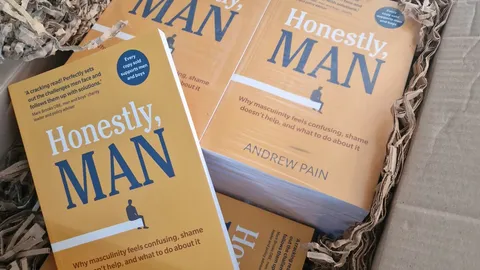
Andrew Pain is a Mental Health & Resilience Keynote Speaker who speaks from lived experience on resilience, burnout and workplace wellbeing. Host of the Men on Show podcast, author of the book Honestly, Man, and a TEDx speaker. Member, International Coaching Federation, and Mental Health First Aider trained.


Never miss an episode
Candid conversations with everyday heroes – ordinary men doing extraordinary things.