Men on Show · Episode 48
How Porn & Body Shame Are Destroying Young Men with Shaun Flores
- 9 July 2025 .
- 48 min .
- Hosted by Andrew Pain .
Shaun Flores is a former porn addict who now helps men break free from pornography addiction and body shame.
Andrew hosts this podcast. His own keynotes are on burnout, resilience, imposter syndrome and difficult conversations.
In this episode
About the conversation
Linked in and Insta @shaunflores
Key points of the episode
- Welcoming a 4 times TED Talk speaker.
- How porn and its fallout negative body image are damaging society.
- His inspirations and influences growing up- a long list!
- How the death of his father deeply affected him.
- How he did not get the support he needed, and neither did his Mum… who had her own health issues as well.
- The values his Aunt taught him (as a man) .
- How he got into the modelling industry.
- His thoughts on the modelling industry.
- The problem of "Money over Mental Health" .
- The surprising percentage of men that have a negative body image, - not only women. The concept of "Comparisonitis" .
- The surgery some men have had to look "good" .
- His thoughts on online porn.
- The REAL average penis size.
- The false correlation between penis size and partner.
- How easy access to unrealistic porn is damaging.
- Towards the beginning of a possible solution.
Men on Show shares lived experience and honest conversation – it is not medical or therapeutic advice. If you're struggling, you don't have to cope alone.
Samaritans: call 116 123 (free, 24/7) NHS: 111
Full transcript
Read the whole conversation
A complete, verbatim transcript of this episode – every word is the host's and guest's own; the topic headings are ours.
Welcome to Men on Show, the podcast, Candid Conversations with Everyday Heroes. Join Andrew Pain as he interviews fascinating guests, ordinary men doing extraordinary things. If you love the show and you think somebody could benefit from hearing it, why not tell them about it by giving it a share on social media? Oh, and at the end of the podcast, if you can leave us a five-star rating and a review, it really helps us more than you know, and it gets this important message out to more people that need to hear it the most. Right now, enjoy the next episode.
Hi, and welcome to Men on Show. Of course, I'm the podcast host, Andrew Pain. I'm delighted to welcome Shaun Flores to the show. Shaun is a four-time TEDx speaker. Now that, for me, is seriously impressive. Four TEDx talked. He is a campaigner. You may have seen him in mainstream media talking about porn, talking about negative body image as a former model. He also talks about ADHD, race, masculinity. A seriously interesting person, a wealth of knowledge on some of this stuff. I'm really excited to get into some of these topics. So Shaun, welcome to the show. It's a pleasure to have you here.
Absolutely. Thank you so much. I really appreciate the opportunity and the chance to be able to tell you about my story, tell you about the work I'm doing. I definitely believe that porn and body image, are conversations that need to be had. So yeah, the honour is absolutely mine and mine alone.
Role models, from his dad to Trevor McDonald
Amazing. So just to get you started and to get us started, when you were growing up as a boy, what are the things that really stand out to you in your memory in terms of inspiration? Do you feel that you had any particular role models or anybody that stood out to you, whether that was a family friend or family member or someone like a celebrity? Was there someone that really inspired you?
It's a really good question. So I'd say for me, growing up as a young boy, some of the people that inspired me was undoubtedly my dad. My dad was a massive inspiration for me. Apparently, I was a big daddy's boy and my dad spoiled me quite a lot. He loved me and he adored me. He was a massive influence in who I was. Apparently, my father was a very kind, very warm, very gentle and extremely giving man.
And some of my aunties would say that I've taken on his traits. They would say that my dad would, you know, they would ask my dad for like one bottle of milk, or for example, back in the day. And my dad would bring four bottles. And that's something that I do. I'd rather give to people, give them too much for them to knock, rather than them being without. I'd also grown up as a Trinidadian young boy in the UK.
Some of my idols were other Trinidadians who had made a name for themselves in the UK, such as Trevor McDonald, the first ever black news anchor man on ITV. That was a big moment for myself and my mum. It was almost like this representation that we could be successful in spite of our skin tone. My mum never taught me to be a victim. She taught me to be a victor in spite of the challenges. So my mum was a big inspiration, my dad was a big inspiration.
My aunties were also really big role models for me. It was Auntie Mel, Auntie Lorraine and Auntie Mackey who helped to raise me in what a bedrock of who I am as an individual. Trevor McDonald was also an inspiration. Interestingly enough, I would say as much as Lego is not a human being, Lego as a metaphor was something that also helped me to really understand and to conceptualise the world actually, or something I really looked up to.
I used to love building these pieces and putting them together, and it helped me to really stack and build and layer my thoughts and to build some sort of an identity. If I go back to how much I loved Lego, I remember, I don't know if you remember Woolworths back in the day? Oh, yeah. My mum couldn't afford Lego pieces because obviously, it's just the time. My mum worked as a nurse, but it still was incredibly difficult.
I would cut open the boxes when I used to go into Woolworths. I used to take the Lego figurines out, and I used to take them home with me. Obviously, my mum didn't know that. But that was something that really helped me, and it was something that I really enjoyed. I wanted to be a journalist when I was younger. I wanted to be a journalist and a lawyer. My dad was also studying to be a lawyer, and I wanted to be a journalist, like Trevor McDonald.
I believe I wanted to go and tell stories of the world. I believe I wanted to speak to the hopeless and to give the voice to those who have no voices. So that's a lot of what I was inspired by. But yeah, it was my mum, my dad, my aunties. Lego was also something I looked up to as well, and Trevor McDonald.
Amazing. You know, a common theme, because I always ask that question when I open up these podcasts. And of course, most people that I interview are of a certain age. I don't interview 15-year-olds, 17-year-olds. And so far, most people say they're inspired by like a family member, a friend. They might mention a celebrity, but they don't know a lot about their life, or they didn't at the time. And we had these role models because we didn't have this life online of all these negative influences and technology.
I feel like we're really advantaged by that growing up before all of this stuff that we have in the 21st century, because we had real role models, real people, real wholesome people to look up to. So I think it's great to hear that about your dad. It sounds like a wonderful man. And really, I mean, that brings us on to, I was watching your TEDx tour, one of the four that you've done, and you described that harrowing scene regarding the passing of your father on Christmas Day. How did that impact you, Shaun? And when did that happen in your life, exactly?
Read the rest of the transcript Collapse transcript
His father's death on Christmas Day
Yes. And let me, I'll start addressing also by saying about, we had real models and role models. And I think what's really interesting is if the rise of the internet, and for someone like myself, who grew up in the rise of the internet, whereas young children now are grown up with the internet at their fingertips, they're grown up with internet, with parents are now giving children the internet the same way my mum would give me a pacifier when I was younger.
So the internet has become the new pacifier, and that's a whole other topic we can talk about another time. But for me, my father died on Christmas Day when I was six years old. Woke up in the early hours of the morning, he was having a heart attack. My mum always trained me just in case anything happened, to know the address for the house and to know the phone number. So I called the ambulance and the ambulance came, I took my dad out and I never saw him again.
I remember when my mum was holding me in her arms as we got to the hospital, I held his hand, I called it the cold hand of injustice. I remember I asked myself what kind of God could take away a father that loved his son so much? And someone, how could he just leave me lost and so alone? And I actually now remember there was a nurse that said to my mum, are you done grieving yet?
At that very moment. And it was awful to think about that someone would ask my mum in that very moment, are you done grieving yet? It was almost like there's a sense of a sense of a inhumanity. But losing my father was painful, for sure. I remember going back to school and everyone knew my father had passed away. And I just kind of just tried to get on with life. I missed my father deeply. And it's still something that's incredibly challenging to this day.
Grief never goes, but you learn how to process grief differently. And I always have said, and even in my TED talk, I said that my father didn't die so that I died with him. He died and he lives through me. Which is something that's been incredibly important for me as a young man. And I had a loving father. I had a very caring father. I had a father who was there for me. I had a father who believed in me.
My father was a lot older when he had me. My father was 62 when he had me. So he died when he was 68. And I understood that my father had health complications. My mum and my dad weren't supposed to be able to have children. My mum had fibroids. So I technically was the miracle child, from what I understood. So it was a miracle that I was to be alive, but it was also incredibly haunting that my father passed away.
It was, and it was a shock. No one expected it. I remember when my aunties came around, my mum was distraught, absolutely distraught. All my aunties were distraught. And it's because my dad was an incredible human being. He was someone with fantastic qualities. And I looked up to him highly, you know, that in many ways losing my father, there were parts of me that I definitely lost and there's parts of me that I had to rebuild.
And you were six, obviously, very, very young to experience that. Were you able, as you grew up, as you sort of struggled with that, were you able to get help? Do you recall there being support for you? Or was it something that you were sort of expected to just kind of move on beyond, let's move on. It's done now. How do you recall the level of support you got?
It's a fantastic question. I didn't get the support that I needed. My mum went through severe anxiety, severe depression. She went through a lot of memory loss as well. My mum was barely holding on herself. My mum didn't go back to work for six months. And I remember she would leave her keys in the door, leave shoes on top of the car. My mum had panic attacks on the way for places. So my mum didn't even get the help she needed.
What became a sanctuary for my mum was the church, that place that she held on to, that really gave her an anchor. But I didn't get the help that I needed. I remember I developed actually quite a bad stutter growing up. And I'm 31 now as of last week, Wednesday, last week, Monday, sorry, I'm 31. And I remember when I've gone through some of the most traumatic parts of my life, my stutter actually comes back. And for a lot of people, that's really hard for people to conceptualise.
And they suspected there was trauma as to why I developed a stutter. So I didn't get the help that I needed. I went to speech and language therapy for the stutter, but I didn't go to grief therapy for the loss of my father. I didn't really talk about it that I really remember or recall. It was almost my mum had to move on. And I used to be very angry at my mum about that. I used to say, you know, don't you think a child would need help? You know, after losing their father, but I didn't get the help that I needed, no.
Aunties, and getting into modelling
So your father's passed away. You've described aunts, you've described your mother. Obviously, from what you've said, there's a lot of caring on your part. If your mum, in going through this, is leaving keys in the door. So you're having to sort of pick up the pieces there at a very, very young age where you should be the one being looked after. How do you feel? Because I'm getting a sense, and correct me if I'm wrong, that growing up there for the main role models in your life when your father had passed were females. Do you feel that shaped your sense of masculinity in some way or not really?
Yes. My aunties being around deeply shaped my sense of masculinity. I was able to still be a young boy that had a quite soft emotional side. I would say I was quite emotionally literate. And they really showed me what love, commitment, loyalty, and belonging looked like. And those are some of the key qualities. My auntie Lorraine would come and visit every single Saturday, I think every Friday and still until Saturday. And she lived in Birmingham. She was also a nurse as well.
And then my mum, she knew my dad before my mum. And I think they, I don't remember the story, but I think they introduced my dad to my mum. I don't remember how it goes, but they informed me in a sense of masculinity that had a blend of the nurturing, warm feminine with the strong ever present physical rawness of a man, I think in so many ways. And growing up, I did feel like I missed the father figure growing up, but my aunties did as best as they could.
My mum did as best as they could, but there were questions my auntie still couldn't answer. I remember when I was around 10 or 11, I tried to shave, I had no facial hair, I barely even have facial hair now, but as much as they did as best as they could, there was still parts of me that were deeply, deeply missing.
Yeah. So you, as a man, moved into the modelling industry, which I imagine is really hard to get into. What led you into the modelling industry?
Great question. What led me into the modelling industry? So let me take you back in time. So everything that was going on with my auntie, my mom, they helped to support me in my education. I was always a skinny young man, incredibly thin, always no matter what, no matter the amount of food I ate, I was always thin. I remember my cousins, interestingly, who were actually overweight, used to say to me, I look like I don't get food.
I used to make the jokes with them that you look like you ate all my food. No matter what I did, I was just skinny. People always were commenting on it no matter what. I think it distorted my sense of body image because I also have quite a curved lower back. I've got anterior pelvic tilt. It's something I've always had. I was always long, skinny, thin, curved back. I hated my ears. I wasn't a big fan of how big my lips were.
I hated a lot of the features in regards to myself. But that kind of naturally dissipated as time went on. And I went to an event called Trinny's in the Park in Morden when I was around maybe like 20, 21. And a woman said, I would love to take photos of you. I think you'd be a great model. She took photos. And from then after that, we did a photo shoot. And I just started sending off my profile to people.
And at the same time, I was doing my Masters and it became relatively quite successful. I was on the height of international fame. I was signed in Nigeria, Netherlands. I was supposed to be signed in New York, which would have been an incredible opportunity to sign to red models out there. But I would go through disordered eating or an eating disorder, so to speak. I was starving myself. I had a very destructive body image. The way that I viewed myself was not how I was actually being viewed in real life.
But I was being positively affirmed by the individuals all around me. Everyone said, you look great, Shaun, but no one knew what was going on. And I can't blame anyone. I don't think I can blame the modelling industry. It was just what it was at the time. I shot for brands such as Bumble, Uber, John Lewis, Peloton, Lovehoney, all these different brands I shot for. And it was an incredible career that I had. It taught me so much about myself. But the modelling industry damaged my body image and left me with a distorted sense of self.
Models' mental health, and men's body image
So, that's one of it. And what about in terms of masculinity stereotypes, looking out for the mental well-being of models? I imagine it's one of those industries where it's very much you get used, you turn up, there's not a lot of extra care. Is that the case? Am I right to imagine it that that's how it is?
I would say you are 100% correct. It would be a lie to tell everyone and say that the modern industry cares about its models. People say now they do, but it's not what I saw at the time. At the time, you are simply a hanger. That's what you are. You put the clothes on, no one cares about how you feel. In many ways, for them to care about how you feel is almost like a distraction on the work that they're doing themselves.
For me at the time, they did not care about how I felt in any way, shape or form. You just get used to it. You know there's nothing else that you can actually do. There was no safeguarding. I know that the industry is now changing. But from the individuals that I do know that model now, some of them still aren't cared about by the industry. But back then, it certainly wasn't the case that they cared at all.
It was more so money over your mental health. Yes, I know we're talking about mental health, and some things are more difficult than others. But I think in the modern industry, when your business is predicated upon how you look, and how you look is a deep shame in society to some people. When you think about the rise of the internet, you think about the rise of comparison, you think about the rise of surgeries and body dysmorphia, it's very important to care about the way people look. But back then, they did not care about the way that I felt within my sense of self.
Yeah, and I was reading something that today apparently 40% of men have a negative perception of their body. I imagine that's down to comparisonitis and internet and things like that. Does that surprise you? What do you think is causing that?
It's a really good question. I think once upon a time ago, we believed that body image was only related to the way women felt about themselves. But I think now with the rise, there's less shame and stigma around surgical procedures such as hairline transplants or the loss of testosterone. Young men are being deeply affected by the way that they look. And when you refer to the study, yes, it was a study done with a meta-analysis at Chapman University with around 100,000 men that they found up to 40% of young men reported dissatisfaction with their body image.
And that was mainly related to muscle tone and body size. And I think in particular with young men now, there's this overarching prevailing idea that they're supposed to look at a particular kind of way. And if you know, the YouGov survey actually also done where 40% of Britons, they actually felt the pressure to actually have the perfect body. And men weren't exempt from that in any way, shape or form. I think body image isn't just a male, isn't just a female issue.
It's a male issue too. I think it's also a human issue. But I think the problem is young men are more labile with their body image, are more labile with their mood when it comes to the way they look. And it's because there's this idea of young men that your value is built upon the way you look and it's built upon what you produce. And for a lot of young men, for example, who may be short, they're not looked at a particular kind of way in the data market.
You know, there's a lot of reasons behind that. It's quite complex and obviously I can give you some of my reasons around it, but as of some of what I would say, I would say there's the dating aspect that's deeply affecting men. A lot of young men want to date. I think the unrealistic body standard is on the internet. And also what we attribute to power, fame and influence is typically with a certain kind of physique.
Yeah. And what are your reasons? You said you could give some of your own reasons. I mean, I don't disagree with anything you said. It's insightful. It's thoughtful. What about some of your own experiences? What's driven the negative body image for you personally?
So for me, I wanted to have a particular kind of cheekbone structure. I considered getting buckle fat removed. I don't know if you ever heard of that. Zoe Kravitz, Liam Payne, they've all had the surgery where you remove fat from your cheeks to have a particular gaunt looking cheekbone structure. Because at the time, the modelling industry was incentivised, and I was in fashion modelling. So in fashion modelling, you're skinning. You're incredibly thin for a particular kind of reason.
It's because you look great in photos is what they believe. So for me, I wanted to have really gaunt looking cheekbones because I thought it looked good on camera. I could actually even find the article of the photo that I took, and it started one of my really big modelling careers actually. I got a lot of success and fame from that picture. But for me, yes, it was, I wanted to look at a particular kind of way.
I was comparing myself to the other models out there, who were getting more modelling work than me. So as you said, comparing that, is it Comparisonitis? I think you said it.
Social media, porn and penis size
Comparisonitis is just a phrase I use. Yeah, I imagine. So my oldest boy, he's at secondary school now, but in his final two years at primary school, he was allowed to leave school on his own. There's a big park next to school, and him and his mates would go into the park and play football, had a football match. That's great when it wasn't raining a lot, or the weather was okay. Some of them, whilst playing football, would be filming themselves for their social media accounts at the age of 10.
So I feel my own view is that the negative body image, if it's become a bigger issue, if 50 years ago, 40 percent of men would not have said they had a negative body image, if that's got worse, for me, I see it quite closely related to social media. Comparisonitis driven by the need for likes, attention. I feel that when I post on social media, I want it to be a post that gets engagement. I have to remind myself of the reality of social media and I'm 50.
So imagine what a 10, 11-year-old... Imagine them trying to handle that complexity of needing likes, feeling that you need it. Actually, it doesn't really matter. It's all fake. I think there's a lot of fake negative influences as well that haven't helped. The Liver King is one of my favourite stories. Have you heard of Liver King?
Yes, I have actually. He's someone that I actually talk about in my workshops with young men.
Yeah. And it's a great example. I mean, what a physique he has, reportedly down to his caveman ancestral lifestyle, but actually look a little closer. The little secret is that he spends 11,500 a month on performance-enhancing drugs. And so I think some of negative body images driven by fake stuff on social media, which to those are not discerning, they see it as real. Do you think online porn has affected negative body image?
Yes, online porn has deeply affected body images, especially with young men feeling as if they're supposed to have a certain length of penis, for example, is another really big thing. So penis dysmorphia is a massive thing. Social media once upon a time ago was correlated with poor mental health, but social media has now also been known to be the cause of poor mental health. Jonathan High in The Youngest Generation, fantastic book by one of my favourite authors, has also spoken heavily about that.
If you're consuming copious amounts of porn, and I was consuming porn from the age of 11, it distorts what you think is normal. I've often said to people, what do you think the average penis size is in the UK?
I actually don't know.
If you could take a guess.
Are we talking about in its flaccid form?
Yeah, let's go flaccid.
I'm just trying to think of my measurements now. You caught me on the spot here. At best, a couple of inches.
Couple of inches is quite vague. Could you put a number on it?
I know, about two inches, two and a half inches.
So the average penis flaccid, average length of penis is 3.61 inches. Erect, the average penis is 5.17 inches, right? And what's interesting is if you just use those numbers, a lot of young boys I've spoken to somehow believe they're small, right? And I said to them, do you know what small is by actual data and by actual science? Most kids don't know, there's a very distorted view. Kids somehow believe, especially young boys, believe that if they're not carrying these absolutely massive penises, that they're small.
And porn's messing with their minds, you know? The average person is a normal person. Not everyone has to be extraordinary, but I think for a lot of young men, there's this need and desire because of porn, and people forget porn is like the Hollywood of sex. People forget that. Most people are normal people, not striving to be anything extraordinary or extra, and that's absolutely okay. But whereas when you look at individuals like Liver King, who he didn't disclose to people he was taking steroids, he was popped for steroids by a YouTube channel called More Plates More Dates.
It's something I talk about, someone I talk about as well. You think about Ashton Hall, who was also kicked out of his millionaire home. Ashton Hall was the guy who put the banana on his face in the morning routine. I don't know if you've seen that one.
No, tell us.
So he put a banana skin on his face. It's known as engagement farming. He said this is his morning routine. He wakes up at 3 o'clock in the morning, drinks only a particular kind of Saratoga water. It's ridiculous. He's clearly on steroids as well. You cannot carry these physiques natural. If you carry these physiques natural, you are a freak of genetics in many ways. We also know that if we look at the Greek statues and the Roman statues, these people were exaggerated.
Their physiques were actually exaggerated. People forget this as well, that we have an over-amantanised view of history. And you think about the easy access to the internet now. How can young men not have distorted views of body image? You think of Andrew Tate, who tells people don't be broke and don't be fat and get into the gym. People forget that body sizes are all different. I'm not here to say that we shouldn't live a healthy lifestyle.
We should. Absolutely we should. But we're living in a time of unrealistic body standards. Absolutely unrealistic. For example, if you think about influencers on the internet, who edit all their photos in sports pics, most people you go to the gym with don't look the way that they do look online. It's just unrealistic. Young kids, they don't know the difference nowadays between what's real, what's fake. The real world and the virtual world are starting to blend so much together that they're not sure.
Also, as a disclaimer, what's interesting based on the science is there's no actual correlation between penis size and sexual satisfaction for partners. This is what I keep saying to young men, what actually matters more is the trust, communication, and confidence. This is something I'm trying to get young people to get out of their heads, essentially.
Porn addiction, and the acquisition deterrent
One change for me, when I was a teenager and I do talk about this in my book, which I'm currently writing, I refer to it as the acquisition deterrent, in that the act of acquiring pornography when I was a teenager would have been such a risk and so humiliating, you just didn't do it. The acquiring of it was his own deterrent. For me to go into WH. Smith's and buy a magazine in a crowded shop where my dad's the local vicar with loads of church congregation members, they're never going to happen, or a sex shop to get a video, but I wouldn't have even known where one was, probably one in Birmingham City Centre somewhere or other.
But the act of acquiring it was his own deterrent, you just didn't do it. There was the odd magazine floating around in school bags, maybe on one or two occasions that I recall. But that was it, and I realise now how the acquisition deterrent was a blessing for us. It protected us, didn't give us all this unrealistic stuff. Obviously, male porn stars, their bodies have changed and perfected within the industry. They're all on Viagra, they're all having certain enhancement on their genitals, so the penises are bigger.
Young people are consuming this in vast quantities because it's just easy and it's accessible. I wouldn't have done if it was that accessible when I was a teenager, and I guess they're being exposed to it. Do you find any evidence? Because I was reading an article about the British comedian, Marcus Brigstock, who talks quite candidly about porn addiction, how it spoiled his relationships. One thing that he says was that his sexual tastes became much more extreme as that habit developed.
That the stuff he was now watching, if you'd have told him 18 months ago, he'd be watching that today, he wouldn't have thought that was possible. He'd say, that's disgusting. There's no way I'd ever watch that. And yet he is falling slowly into this funnel of depravity, the more that he watches. And it starts out as an innocent habit, and then the more and more time he spends on it, it goes from half an hour a night to an hour a night.
He's watching it, consuming it. He needs that bigger hit each time. And so his tastes become much more extreme. Is there any evidence, though, other than anecdotal evidence? Because I know you talk a lot about porn addiction, and I'm just interested in your world, in your space. Do you see any research that really backs that up as a thing?
There is actually clear evidence that shows, especially because of the addictive nature of porn, you need to get more and more dopamine hits. To get more and more dopamine hits, what do you have to do? You have to do things that are more and more extreme, because the brain is built from novelty, right? We build, our brains love new things, typically. And we're living in a world that is predicated upon what? Things always being new, things having ease towards getting to it.
Like you spoke, for example, about, you have to go to a newsagent to go pick up a raunchy magazine. But do you know what made that journey so important? You have to go, I'm feeling aroused or horny, call it whatever you want. You want to spank the monkey, whatever people call it now, right? You have to get out of your house, you have to walk to the shop, you had a lot of time to calculate and consider your decisions.
You have to get to the shop, find the right magazine, buy it, take it home or maybe you'll have looked at it there and then, and you have to take it back home and hide it, right? We're living in a time where you no longer have that friction. We're living in a frictionless society, and friction is actually really good for the brain. This is why I think especially with porn, there's no friction with it anymore, right?
Humans have loved sex for as long as we could imagine. Sex is how we've been created for the most part, right? But if you're going on the internet, you have to go for things that are more and more extreme to hold more and more of your attention. Have you ever been addicted to anything in your life, Andrew?
Yeah, I mean, porn addiction is there for a brief period in my life when I came out of my first marriage. I wouldn't say addiction, but I think I've had to deal with an unhealthy connection with food and alcohol and put strong parameters around that, which I'm better at now than I was and definitely an addiction around my body. So for me, I was a late developer physically and I developed an addiction with weightlifting at university and having a perfected body.
And I think it's now healthy. Like I play football, I got a chin up bar, stay fit and active. I am quite toned, so people say, but it's not addictive now. But at uni, I was spending hours and hours and hours and hours in the gym, desperate to be this person that women would want. Where actually I should have probably been perfecting my dancing skills and getting out there socialising, rather than just pumping iron in a gym, thinking that this would give me the answer to all my problems.
Absolutely. I really also appreciate you sharing that with me. And that level of transparency is absolutely really important. Typically, addiction can take many different forms. And what happens, very similarly, if I use the gym as an example, you went to the gym, you would have to lift heavier and heavier to break down more and more tissue, right? That's typically how it works. You have to put the body under stress and put it under load to build more muscle.
The problem is people forget the brain is like that. If you watch the same things repeatedly over and over again, you build tolerance to that. You have to watch more extreme things to get the same dopamine here. What happens is it continues to escalate. Those dopamine spikes are very important. It's very important to understand neuroscience, that you need to go for more novel, extreme and taboo content to feel the same level of arousal. That's exactly what happened to me.
Marcus Brigstock, who speaks about that, I absolutely agree with him. There is clear evidence that shows that coquettish porn use is causing erectile dysfunction. It's causing a distorted sense of the real world in terms of sex and relationship and intimacy. Once upon a time ago, again, to talk to a woman, you have to go out into the street, have the confidence and have the skills. You have to have some sort of, you know, confidence, as I said, confidence and social skills.
Now you can go on a data nap. So what did I say before? It's frictionless. People don't have to build their skills anymore. You can hide behind the internet. It's actually really important for young men to go out and be rejected, or just humans to go out and be rejected in life. Rejection builds your tolerance. That's a good form of tolerance that you need, but porn undoubtedly is a causing issue. And it's because it's so easily accessible.
I can type in on the internet, Lily Phillips and Bonnie Blue, and I can just have them plastered all over my internet. And they're also a damaging impact on society. If we can say Andrew Tate is damaging, we should also in the same breath be able to acknowledge that the access and the ease of sex now has made love harder to find.
Friction, hardship and instant gratification
Yeah, and for any listeners thinking Bonnie Blue, who's he talking about? This is Lily Phillips. These are women who are trying to break records of sleeping with like a thousand men, getting it filmed for their OnlyFans accounts. So, and I would agree with you, Shaun, they are as damaging for young people as Andrew Tate for sure. No, I completely agree with that. And I was just going to add to what you were saying, actually, that I understood as a teenager, that the height of what I was looking forward to, to be actually with a real woman that I was attracted to, with her having no clothes on, being naked.
If I wanted to get to that point, I was going to have to make something of myself. I was going to have to get out there and meet people. I was going to have to work on myself. Yes, that created a bit of an unhealthy gym obsession for a while. But there were all these things I had to do that involved me getting out of my house, communicating, socialising, losing, experiencing rejection, then making some connections. But understanding as well, this was going to take time.
That isn't just something that I would expect quickly. And that's a good... These were all healthy sort of expectations and things that generated healthy action. Whereas today, you want to see a naked female or do whatever you want to do on your internet in solitary confinement in your room by your own choice, not communicating, not connecting, not learning. And yeah, these are really unhealthy patterns.
Absolutely. And it's the fact there's no more friction in things.
Interesting word.
You need hardship. Yeah, you need hardship to grow. If we're living in a time of constant, instant gratification, how do you expect young people to go out into the world and want to get into a relationship where you realise being in a relationship is not easy, but also at the end of it, anything that's not easy, they absolutely get some of the most beautiful things that you can imagine in the world. But young people now are growing up with everything at their fingertips.
How can I turn around and tell you now, go out and get into a relationship, work through the hardship, work through the low mood, work through the challenges. Kids don't want that nowadays. Kids want what's easy. And you've grown up with the internet. You've grown up with Deliveroo and Uber and all these apps. You've grown up with AI now that's making the world even more accessible, even more easy. It's going to continue to deeply affect young men's sense of self, young men's sense of masculinity and young men's sense of belonging.
What can be done for young men
Yeah. So how do we, I mean, these are really massively important issues. And there's no, I'm a firm believer, people issues are complex. There's no one straightforward answer. That's ridiculous. But how do we make progress on this? We've talked about the issues and just in terms of coming, so concluding the podcast on a positive action-based note, what can we actually do about this?
It's a really good question. So a lot of the work that I do, I try to address this by helping young men have a sense of belonging and identity beyond just the things they produce and just beyond these external achievements. I think young men are not realising that there are lots more than what they produce and what they bring to the world. They have inherent value and meaning for simply being a human being. That's something else I really try to talk to young men about.
One of the other things I really try to get young men to do is to do the things that are hard. So one of the things I often speak about is I refer to the gym. The gym for me is my sanctuary of suffering is what I call it. I go into the gym, I get some hard, intense lifting in. Do you know why? Because it teaches me about life. Life is not easy. If I want to build, if I want to grow, I need to do what's uncomfortable.
That's something else I think they can do. Do the things that are hard physically. Get them physical, get them outside, take them away from their external achievement. I think another thing that we could really do is work with society on the way that we portray young men. So I think we label young men often as just perpetrators. It's as if two truths can't co-exist at the same time. You can't be a perpetrator and a victim at the same time.
So for me, at the bedrock and the cornerstone of a lot of my work is actually redemption and growth. I believe as human beings, we all have the ability to change. We all should be given the chance and the opportunity to change no matter what we've done in life. It's something that's been incredibly important in what I do in my work as well. I think something else that I think that I've noticed has worked quite well is telling stories.
So as humans, we're storytellers. We love a good story. We fall in love with stories. We fall in love with narratives. Stories have helped us to transport values and so much more throughout time. Stories change lives, not facts. I could give you all the facts on this podcast and that won't change your mind. But if I tell you a story that grips you well enough, I can change your mind. So I think we need more stories for young men to fall in love with because you think about Andrew Tate.
We're not teaching them enough to critically think about him. We think about David Goggins. I quite like David Goggins personally. A lot of people think he represents hustle porn. But we need to teach these young men to critically think about the world that they're living in. Not tell them what's bad, not tell them what's good, but help you come to your own decision. And let's interrogate that belief. I interrogate my own beliefs all the time, Andrew.
And I want you to interrogate my beliefs. I want you to help me think differently about the world. So I think we need to spend also a lot less time on social media. It's too polarising. There's no longer a middle ground. And I know for some people, they believe if you're silent in the face of injustice, that's a side you've taken. But I also ask people, why should we have to take sides in this world we're living in?
Why can't we help young men without always demonising them by giving them a chance to grow? So those are some of the things that I, unless you're giving a really short and rounded up version, I often say to people, I need more time to talk about how else I'll change things.
Banning social media, and education
No, of course. These are massive topics. I floated the idea. You see, Richard Pomfret was one of my guests on a few episodes ago. And he does a lot of stuff on online safety and stuff like that in schools. And I was floating to him the idea, of course, that it's being trialled in Australia where they're banning social media. I agree. The 16s, where it's a very, very robust response. Do we need to take that up a notch?
And not just social media. When we think about online, Paul, we need to do more to make it impossible to access that. But his view was very much countering that, saying absolutely, the ban is completely wrong. I mean, the proof will be, as the old saying goes in the pudding, won't it? All eyes are on Australia. Let's see how they fare with this. When I've talked about this online, people generally are quite like disparaging about that as an idea will make it worse, it's gone too far now, you can't just take it away.
But it'll be interesting to see what happens. Do we, I agree with you that we need to get our men outside. We need to give them a sense of belonging community. We need to teach them to critically think 100%. And I wonder whether on top of that, what is required is something very robust that sounds draconian. Richard Pongford would disagree, and that's fair enough, we had that conversation. But for me, all eyes are on Australia. I'm really interested to see how that experiment goes.
Actually, I can understand why you would believe that something punitive would work. The problem is punitive measures don't work. We just have to look at the rest of the Western world, America so much to speak to see that the punitive approach is not working. We have to do something radically different. I often have said in my work, and when I talk to clients and so much more, the unconventional problems require unconventional solutions. We need to think outside the box.
Anything that you ban gets relegated and thrown into the underground. In the underground, it festers more and it grows. You can actually create more extremity. I believe education is one of the biggest tools. I think that's absolutely incredible. But also, I think you have to shift society from the profit model that is from destroying people. If you think about it, we live in a society that profits itself off the destruction of people. In some ways, I would argue that capitalism is the snake that eats itself.
How much more can you produce over and over again until you don't burn people out and complain? Hold up. We're burning people out. They're not consuming anymore what's going on. I'm not a socialist. I'm not a communist. I'm not sure what I am. I have more reading and research to do. But banning does not work, number one.
Interesting.
I also think education could work incredibly well. We know that education really helps. Getting people with lived experience to go into place and speak to these young men about the damage and effects of porn, and having real life conversations about any addiction that they're suffering from, and helping them to work through that mentoring. Because we know also in the research that blaming people for addiction does not work either. What's actually incredibly important with addiction is actually community and a relationship with the therapist and the people around you that will help to bring you out of your addiction.
Often, if we model from Johan Hari's work that addiction is a scream for belonging. It's a scream to belong. It's a scream to connect. Loneliness is a scream to connect. I think we need to live in a society that incentivises more collective action, more community action, the more upbringing of people. And it goes back to the African proverb, a child who is not embraced by its village will burn it down to feel its warmth. And I think for a lot of these young men, addiction is a way for them to feel some sort of warmth and belonging by a world that has let them down.
I believe it's a damning indictment on society. And we judge a society by how it treats its most vulnerable. I don't think they're at fault for their addiction. I think there's some responsibility to take. But we should be helping them with their addictions.
A message of hope for the listeners
Amazing. I mean, I could just listen to you talking all day, actually. But that is really insightful stuff. I really appreciate that. I'm really challenging and motivating as well. Just to conclude the podcast, there's two things that remain. One is, could you give us just a two-sentence message of hope for the listeners? Anything that sort of springs to mind, a message of hope in two sentences, how would you sum that up?
Ask me that question again so I can make sure I've locked it in to my head.
Yeah, just like a message of encouragement to the listeners, in a couple of sentences, if you could give them some kind of sense of encouragement to conclude this podcast, what would you say?
The world is changing even when you think it isn't. I know we're looking at we're feeling quite negative and there's this kind of existential dread in the world. But when there's people like myself, yourself, Andrew giving platforms to people like myself and the other people you've had on, we are fighting for change and change happens through collective action. If we all give up on change and we give up on helping young men that the world then will never change, we will never have hope.
I've once heard someone say hope is a poor man's currency, but sometimes the people that are the poorest in the world are happier than us with this abundance. That's something else I would often say. Another thing that I think is really important for people to understand is you don't have to be a big advocate or an activist. Your existence is enough as it is. You having these small conversations in your network are helping to change people's minds and to empower people.
I think sometimes we think we have to do these massive elaborate acts to feel like we have meaning and purpose and we're doing something in the world. But I don't think that's always the case. You leave it up to the people who you believe are best at what they do and if you want to be part of that story and part of that conversation, come and let us help you. But also the work I do in schools, I've seen the power of young men in particular.
If my story is not the story of redemption and growth and the ability to change from addiction, positive negative body image, I'm in a successful relationship now and so much more. I learnt more in my hard times than I ever did in my good times. So sometimes the hardship is what people really need and it's hard, but to sometimes trust the process. Be there, be that consistent figure, be that rock or that anchor in the time of storm and quite often you'll see people change.
Amazing. Shaun, it's been an absolute pleasure speaking to you. You've offered so much rich insight. The last thing, therefore, you're a successful speaker in your own right. So to find out more about you, to book you, how do people find you?
Yes, I'll send over all my details to you, but my email is shaunflores1994.gmail.com so shaunflores1994.gmail.com Reach out to me on LinkedIn or Instagram, ShaunFlores, that's my handle. I'm open to having any sort of conversation with people and I genuinely believe what I say, that unconventional problems require unconventional solutions. If you want someone who has an unconventional solution to unconventional problems, bring me on board. Let's have a conversation. I love having difficult conversations and I mean that. Brilliant.
No, I can see that. You're doing some phenomenal work. So keep it going and it's been a pleasure having you on the show. Thanks for your time, Shaun.
Absolute honours mine. Thank you, Andrew.
Thank you for listening to Andrew Pain's Men on Show. If you could leave us a five star rating and short review, it would be really, really appreciated. It helps us get this important message out to more people that need to hear it the most. See you on the next episode. Thank you for tuning in.
About the guest
Shaun Flores
Shaun Flores is a former porn addict who now helps men break free from pornography addiction and body shame. In this powerful episode, Shaun shares his personal journey of recovery and the devastating impact that pornography and body image issues are having on young men today. Shaun discusses how early exposure to pornography shapes unrealistic expectations and creates deep-seated shame that follows men into their relationships and self-worth. His work focuses on helping men understand the connection between porn consumption, body dysmorphia, and mental health struggles.
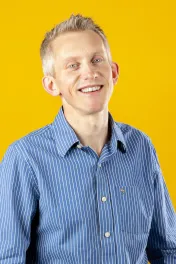
Hosted by Andrew Pain
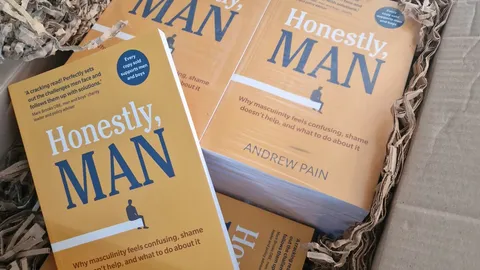
Andrew Pain is a Mental Health & Resilience Keynote Speaker who speaks from lived experience on resilience, burnout and workplace wellbeing. Host of the Men on Show podcast, author of the book Honestly, Man, and a TEDx speaker. Member, International Coaching Federation, and Mental Health First Aider trained.
More from Men on Show
Keep listening
Insights
Read next
Never miss an episode
Candid conversations with everyday heroes – ordinary men doing extraordinary things.