Men on Show · Episode 47
When Men Break Down: Why It’s the Beginning, Not the End with Harun Rabbani
- 14 May 2025 .
- 49 min .
- Hosted by Andrew Pain .
Harun Rabbani is a serial entrepreneur, mentor, and retreat leader who has spent over two decades helping high-performing individuals recover from burnout, reconnect with purpose, and lead with renewed clarity.
Andrew hosts this podcast. His own keynotes are on burnout, resilience, imposter syndrome and difficult conversations.
In this episode
About the conversation
Harun’s work blends science, spirituality, and leadership – with one clear message: Your breakdown isn’t the end of your story. It’s the beginning of your true leadership.
Key points of the episode
- How burnout is misunderstood.
- His burnout experience and what he learned from it.
- Signs of burnout.
- Our "male intuition" and how we ignore it… and why we do it.
- Relationships, and how to save them!
- Nature or Nurture? The ongoing debate.
- His incredible retreats and what happens on them.
- How as human beings we hold onto emotions and we need to let them go.
Keynote
Harun talks through the signs of burnout and how it is misunderstood; Andrew's burnout keynote for teams covers the same signs and the myths around them.
Men on Show shares lived experience and honest conversation – it is not medical or therapeutic advice. If you're struggling, you don't have to cope alone.
Samaritans: call 116 123 (free, 24/7) NHS: 111
Full transcript
Read the whole conversation
A complete, verbatim transcript of this episode – every word is the host's and guest's own; the topic headings are ours.
Welcome to Men on Show, the podcast, Candid Conversations with Everyday Heroes. Join Andrew Pain as he interviews fascinating guests, ordinary men doing extraordinary things. If you love the show and you think somebody could benefit from hearing it, why not tell them about it by giving it a share on social media? Oh, and at the end of the podcast, if you can leave us a five-star rating and a review, it really helps us more than you know, and it gets this important message out to more people that need to hear it the most. But right now, enjoy the next episode.
Hi, well, welcome to Men on Show. And delighted to have Harun Rabbani as our guest today. Serial entrepreneur, mentor and retreat leader who's spent decades working with high-performing leaders, helping them recover from burnout, find clarity and purpose. And after navigating the toll of managing multiple businesses himself and dealing with burnout, Harun has become a catalyst for profound change. And I'm really looking forward to exploring his story, exploring your story, Harun, of burnout, of how you recover and of the work that you do today.
I know particularly within your retreat work as well, you do a lot of work within neurodiversity, working with people that are either ADHD or other forms of neurodiversity as well. So I want to definitely touch on that too. So Harun, welcome to the show.
Andrew, it's a pleasure. I'm absolutely loving the work that you're doing. And it's the kind of work you're doing to help men and men's health, particularly mental health, is long overdue, absolutely long overdue.
Chronic stress and his first burnout
Oh, bless you. Thank you for the compliment. Well, look, I mean, let's just jump straight into burnout as a topic. We hear so much about burnout, don't we? Some people will say, well, I'm feeling a bit burnt out today. And you're like, you're not burnt out because you wouldn't sound like that if you were. Surely, you're just using it as a light term because it's in our language. Other people say they're burnt out, they're off work, they're not ill.
They're not coming back anytime soon. So I know it's something that you yourself have experienced. You ran multiple businesses and experienced burnout. So just tell us about that. What triggered the breaking point? And what did that teach you about yourself?
It's, burnout has many guises, but the long and short of it is this. And if it's okay with you, I'm going to go Uber, and I'm not going to expose you.
I'll do it, I'll jump straight in.
Read the rest of the transcript Collapse transcript
So imagine this, imagine if you were to position yourself in the centre, this is who you are, this is what you stand for. The further you remove yourself away from the true essence of your own nature, the more stress you will feel, the more anxiety you will experience. And I'll go into detail in a bit. But then if you do it consistently over a period of time, it doesn't look like, you know, burnout doesn't happen for a while.
I've done a big project and I'm exhausted. That's not burnout. It's that chronic stress, chronic exhaustion, eventually it's like whacks you out and you're knocked out physically, mentally, emotionally. And, you know, it really screws with your head. Now, me, I've always been a high energy person, always all my life. And my very first time I experienced burnout was by the time I was in my thirties. So prior to that, I'd been in martial arts for a long time.
I've been physically fit. I've done half marathons, 10 Ks and so on. So I was physically very fit. I ate relatively well, so I don't eat junk food, or back in those days, extremely rare, I should say. And, but I was in a job. So this job that I was doing, it was a headhunting job, funnily enough, and it was for a company. And the only reason I moved to that company in London, from Leeds, was I just went for the money.
I thought, okay, I'll only move to London if they double my income. And I was on, this is in 1990s now, late 1990s, I was already on 50K a year, which is quite high in that sector. It's equivalent to about 100 grand a year now. So I was earning good money. And so there was a side of me that just wanted to get out of the rat race. But then what did I do? I plunged myself into the rat race, chasing the money, hated the job.
And it wasn't, it's not the jobs fault. I wasn't suited for it. And, but I land with myself with a big mortgage, new baby on the scene. You know, my first son was born and he was only a few months old. I was married at the time. And all that stress of travelling in London, 45 minutes to get to work on the underground, it was a very miserable experience, just being there, nobody wants to talk to you, everyone looked like they just hated everybody else around them.
So I was working in a job constantly on the phone, cold calling, and I've never done cold calling per se, even though I was in sales before that. Within weeks, I ended up being so exhausted, I had to take a whole month off. I was like bedridden. And I'd moved so far away from where I was. Now, where was I before that? Well, I was selling medical devices to doctors to help save lives or improve lives.
And my purpose, the reason I did well was, it wasn't trying to make sales. It was like, okay, I want to be the best person in my team, which guarantees I'll earn more than everybody else. So I didn't have to worry about the money. But my big purpose was, I'm here to save thousands of lives as much as I can to the best of my ability. The consultants, the doctors, who just happened to be the ones who facilitated these life-saving, I was going to say experiments, they weren't surgery and keyhole surgery and so on.
Two, moving from that purpose to, I gotta make the money. And I moved from a place of, where I lived in Leeds, I bought my house, a three-bedroom, beautiful house in the suburbs, 60,000 pounds, back in those days. I moved into a one-bedroom apartment, which I purchased for 130,000, overlooking the Thames. It was such a shock to my system in so many different ways. But the big issue was, I was so far removed from who I was and what I stood for, that it was inevitable. I landed, I am responsible for that burnout. I can't blame anyone.
Signs of burnout, and red flags he ignored
It's interesting. So you were a headhunter, because I was a headhunter for a number of years, like, and hated the job, but felt like there were no real options. And it is both a relentless job, quite soul destroying, quite monotonous, actually, as a job goes. Were there any signs? I mean, you described the burnout, you describe having to have a month off, you describe kind of almost that culture shock of coming to London. So that kind of makes sense to me. Were there any particular signs, though, that you overlooked, ignored, that were kind of indicating that burnout, this thing was coming to?
Definitely. Number one, because I was so busy and so exhausted from work, I stopped going to the gym. That was the big one. I was used to running.
I stopped running.
Right? I stopped running. I stopped going to the gym. I didn't have time for meditation. I didn't have time for yoga. And other signs was I was constantly, me and my wife at the time, were constantly arguing. I felt unsupported.
Interesting. Certainly, new fathers, one of the issues we find with new fathers and struggling with depression and health, is they cease doing their hobbies due to time constraints. The things that they used to do, that were good for them, they no longer have time to do. So that's one sign maybe for people to look out for, is when you suddenly have stopped doing the things that were really positive, that were important to you. Were there any other signs?
I know some moved to, I didn't have time for spiritualities. I'm Muslim. I didn't have time for prayers. I say I didn't have time. We all have time, right? In my mind, I was just exhausted. I was coming back home. It wasn't that late. I was with that long, like eight in the morning till, you know, six in the evening or whatever. But it wasn't like I was doing 14-hour shifts or anything like that. But I was coming home mentally exhausted.
And the signs were, being someone who was constantly top of the game to constant thinking, am I gonna survive this? It was that inner dialogue that was really the other side. And now, I was in the way of this going on, by the way, just to let you know, I learned a heck of a lot since then. But at that time, looking back at it, I was just questioning my existence. Am I doing the right thing?
What have I done? The mortgage was almost, by the way, I didn't make the money that I was looking for. In fact, my salary halved because it was primarily commission-based. Because if you're operating from survival, you lose your creativity. You're operating from fear. It doesn't matter how good you are at your job, you lose that ability to solve problems. You lose that energy. All, everything you can think of was being neglected. All the signs were there.
All the red flags were there. And, oh, here's another one. Leading up to this, which was interesting, was while I was still in Leeds, I thought I was in a happy marriage. We had a house of our own. We were living on our own. We didn't have to be too reliant on family. And this is, even before my son was born, I ignored the red flags within the marriage, because that had a big toll as well.
And the red flags was, you know, have you heard of this? My wife at the time was saying to me, oh, you need to read these books, personal development books. There's this one book you need to read. I think it will be useful. And I thought, no, we're all good. Of course, the red flag should have been the title of the book. And the author was Phil McGraw. And I forget the title of the book. And it was something about broken relationships and fixing a marriage.
And I'm like, no, no, why should I read this? That's how dumb I was. What? Because clearly she thought the marriage was broken. I didn't like, no. Why do you want me to read a book when there's no problem? So I was good at what I was doing. And I was doing the typical thing guys do, which was, hey, I'm going to build something for the family, a big house, lots of cars, save the money, build a business, do a lot of networking.
I was doing all of that. And I took the eye off the board. But there's something intuitive we have. And as guys, we often, when it's too, before it's too late, we often ignore our intuition. Intuition is saying, something's not quite right. But our logical brain keeps us, our brainwashed brain keeps us plodding along, doing the thing that we think needs to be done. But then, something happened, you think, oh my god, where's this come out of the blue? I mean, I can't believe it. Well, it's been happening. You just, I just chose to ignore it. Sure.
Why men ignore red flags in relationships
So some of the signs were, you stopped doing some of the things that were important to you, which includes health and spiritual stuff that you would have done, but that those things kind of went out the window. You felt you didn't have enough time. You felt exhausted. You were coming home, you were mentally exhausted. There were signs of issues within your marriage. You described arguing a lot. And I know when I've been on the road to being burnt out, I've been a lot grumpier.
And whether you like my sense of humour or not is debatable, but I am a lot more jovial when I'm in a good place. But I know when I've been on the road to being burnt out, I'm a miserable grouch. And I know that to be true. So these are some of the signs. You mentioned sort of ignoring the red flags. And obviously, as a guy, you wanted to build a life, you wanted to achieve. What is it in us about guys? Why do we ignore these red flags? Is that something that's inherently part of being a man? And if so, what's causing that?
You know, the difference between men and women is so stark. It's incredible that we even ever get together. Seriously, it is so different. We operate from a different set of rules, a different set of algorithms. It's a bit like for any of our listeners and viewers listening in. It's a bit like, you know, if you want to do social media marketing, the way you do it on Facebook is extraordinarily different to the way you do on LinkedIn.
It's a different set of rules. I mean, never the twain should meet, right? So and yet we do that. So with men, we are a lot more simplistic. We are definitely driven by a natural instinct to provide, a natural instinct to protect. It's extremely difficult to get rid of that. Obviously, I'm talking about heterosexual men. In this case, I'm no expert in anything other than that just to let you know, and I honour everyone's pathway. There's no judgement on that.
But from a heterosexual point of view, we have this innate desire to provide, to protect, to save. I've interviewed, I had so many problems with relationships, especially post-divorce as well, that I ended up doing an online summit bringing some of the best relationship experts, like the guy who wrote Men are from Mars, Women are from Venus, Dr. John Gray. I interviewed him a couple of times. Great time, he loved it. And some big names in the field, basically.
And there's so much I love. By the way, I did that summit because I was really messing up with my relationships. I thought, I don't want a therapist, I'm going to get all the best relationship experts together. You know, and there's three things that we have in any kind of relationship, which we need to consider. First of all, we need some kind of chemistry. I'm gonna talk about soulmate relationship, husband, wife, spouse situation, girlfriend, boyfriend. You need some kind of chemistry.
If the chemistry is not there, if your oxytocin isn't being released, you're not feeling comfortable in each other's company. If you haven't got that inner drive, that vavavum inside of yourself, that chemistry isn't there. So that needs to be there. Second one is compatibility. Now compatibility can be, we can, I'll use extreme examples. If you take a Hindu who they're polytheistic and they're very, say if you take a devout one and you bring a Muslim or a Christian who are devout in their religions, it's just not gonna happen.
One of them has to compromise big time, or both of them have to compromise. So there's incompatibility there. And then finally, it's about communication. If you don't have transparent, open communication, doesn't mean you have to spill beans about every single thing that's happening every single day. That's not necessary. But you need some kind of honest communication between yourselves. With those three elements, you have engagement and trust. Now, what's the challenge with men? How we communicate is a lot more different as men to how women communicate.
We know that. We can make an entire episode just on that. The desires women have are one set of things. But for men, bottom line I heard from John Gray was, we just need to feel valued. That's it. Are we like... Valued means, by the way, this is how powerful it is. I worked with a couple using my own therapeutic system. The guy's a billionaire, the wife's former model living in the Middle East. And she was telling me that she was having trouble with her husband.
He's like, you know, staying away more and more out of his work. He's a very successful guy. And she says, I'll try to help him. I tell him how to make his job a lot more streamlined, etc. And she's given me all these solutions. And I'm like, whoa, whoa, whoa, hold on. That's, how long have you been doing this? And we started tying up the loose ends. It just coincides with him being more and more away.
This is a guy who created a billion dollar company, shipping company, I think it was actually. Billion dollar company. He knows how to fix problems. He didn't get to there by, you know, coincidence. You know, he had to work his way there. As your wife, as his wife, don't take away the one thing that makes him, in his eyes, in his psyche, the man, meaning the problem solver. Even in a relationship, I've seen relationships turn around when the wife, a lot of my clients have been female actually, when the wife reminds the husband, oh, thank you so much for putting the bin out, even though she could have done it by the way, putting the bin out, right, because you've got so much more strength.
Even that kind of thing, it makes us feel valued. But what makes us feel valued are the little things. It's just being noticed. And so when you're in a situation where you're clashing between husband and wife, and I can't remember which of the experts told me this, a man only cheats not because of the woman that he's cheating with, but he cheats because somebody is making him feel momentarily more valued than at home. And so when you devalue a man, I mean, I have no plans in talking about this, by the way, but it's just come up.
When you're in a relationship, if you devalue the asset that he is within the family, in essence, you're emasculating him. You emasculate a man. That's the worst thing you can do. That is what ultimately leads to a break up issue, because at some point, over time, unless he goes with being emasculated completely, over time, if something pops up, someone else pops up in his life, and he feels like a man, and he's appreciated for the little things, not the big things.
You don't need to be told, well done, you know, you bought the house. It's just little things. It makes a difference. But from a man's perspective, many of us are extraordinarily patient. Meaning, on the face of it, we know it may not be, but as you get more and more devalued over time, we bite our lip and we keep our mouths shut, but eventually it just like you're either going to implode or you're going to explode.
Nature or nurture in men
I think there is a tie in there with value. I think what you're saying is very interesting in intimate relationships. But actually, I think it does relate back to burnout as well. I remember in a former employer, it was a third sector organisation, small charity. I was in a dead-end job, no hope of any promotion. Not that great pay, but I felt valued in my first five, six years there. So I loved it. I didn't mind that it was a dead-end job that underpaid, really.
I just loved being there. And then later on, things started to change. I didn't feel valued anymore. And suddenly I felt resentful, annoyed, bored, disengaged, definitely more prone to making errors because of all those things. But really the only change, the work hadn't changed and I hadn't changed, but I felt less valued. So now I was changing. And I think, yeah, I think that's a hugely important point. But going back to the, you make a point about a man, you use the words kind of, it's almost part of who we are as men.
It's like a natural thing, this desire to provide, to solve problems. Do you think that is more nature than nurture? Because there'd be some that would say this whole thing about men providing, being like something in us that's natural. They'd say that's absolute rubbish. It's social conditioning and we need to change the social conditioning. Or do you think that's naturally part of it? I mean, I'm someone that's raised boys and girls, and I see extraordinary differences.
And I would still get caught in these debates, where there's some that would say, yeah, but you are instinctively parenting them differently, which is why your boys can't sit still at the meal table for more than five minutes and your daughters always could. I would say, no, I think it's a difference. But how do you see it? Is it nature or nurture? Do you think that as to why we're so different?
I think if you look at the biology and the biochemistry of our makeup, without a shadow of a doubt, there's a difference. Absolutely without a shadow of a doubt. So, for example, we know that, just think of the hunter-gatherer mindset, that a man has more, what's the terminology? It's like when you're driving a car, for example, we have a lot of awareness, self-awareness, about driving and manoeuvring, et cetera. But we know when it comes to hunting, that we can be hyper-focused on something until the job is done.
Whereas, again, whether you believe in cavemen or not, but let's pretend for a moment that women were the natural nurturers. Now, if something's been happening, whether the world is 6,000 or 6 billion years old, doesn't matter, but there's some things that have been happening for tens of thousands of years, you're going to have some kind of biological imprint. It could be epigenetic. I'll give you an epigenetic example. So if you take, there's a link here, 10 years, though it is, it's still an important link.
If you look at, in the UK, and basically white people, so I'm talking about Caucasians, although that's not the right terminology, people with light skin. In the UK, the average diabetic from people with white background is about between, they're diagnosed between 45 and 55 years of age. That's kind of average age group. Obviously, there's always outliers. Indian culture, Indian subcontinent, Bangladesh, Pakistan, India, Sri Lanka, that kind of area, the average age is between 20 and 25.
Why is that? Well, they were, God knows how many, I think it's 25 famines, some of which were manmade, that happened during the colonial period. Now, what does the body do when you go into starvation mode? If you survive it, and millions did it by the way, if you survive that, then your body starts adapting to the food as if it's, okay, this is the food I need to have, I need to retain every single iota of that food.
And so what happens is that your ability to draw energy out of food goes to the roof. But it also means, in reality, that trauma became intergenerational. So now as a result of that shift, those many, many famines, you'd see so many more people who are diabetic at a much younger age amongst the Asian community. Now, back to the men. Nurture or nature? Sure, you can nurture someone to be caring, or you can nurture them to become a warrior, you know, training martial arts or whatever.
But there's something inherent in all of us that comes with nature. And for me, it's not a matter of, oh, let's have a debate with this nature or nurture. Everyone's going to be different, but there's a significant portion that is nature, and then there's the element of nurture. As an example, I've got a nephew who is in his late 20s. He separated from his father when he was only, what, a year and a half, two years old, something like that.
So he was consciously unaware of how his father was. And yet he's almost like the exact replica of behaviours, thinking process, problem, all the challenges that his father had is exactly the same. How did that happen? Nobody trained him to be like that. And he's an outlier regarding the rest of our family. So it's like, it's almost like a total blueprint of one person being handed to the other. And yet those things that you would think is nurture, actually none of that was involved. There was no observation. There was no discussion earlier. It was like, but it's exactly the same. So there's my argument. I think a lot of it is nature.
Recovering from burnout, starting with the body
Yeah. I mean, I completely agree with you. And even on a very simplistic level, if you look, for example, at the fact that men generally have 10 to 15 times more testosterone in their system than equivalent age women. And during male puberty, it goes 25, 30 times, goes through the roof. That alone is going to impact how we behave, how we see the world. So, I mean, I agree with you. I was just interested in picking that back up.
You obviously, you've experienced burnout. We've talked about that. But I think it's important. We've talked about some of the signs, some of the things to look out for, some of the reasons why you feel you've got burnt out. So in terms of giving people real value today, listen to this. How did you recover from burnout? Number one, how did you recover from burnout? And in terms of the lessons from that, how does one deal with burnout?
Okay, so a bit of context first, or a bit of framework here first. You know, like you've heard of the terminology mind-body connection. It's not true. The mind and the body are one. Let me explain. I don't know if you're allergic to or sensitive to certain types of food, but let's say you, for example, raw white onions, red onions, I can do any day, raw white onions. Imagine I'm going to a networking event or a business event, or I'm doing a speech presentation on stage, or I'm doing a retreat, and I have a bunch of raw uncooked onions.
Could be on it. Won't be on it. Let's say it's in a salad or something. That's going to get me all gassy and bloated and so on, and it's going to create anxiety in my mind as well as in my body. So the food physiological leads to anxiety of the mind. That means I don't perform so well on stage as a speaker or at work or in a relationship because you're bloated up, you're feeling windy and all that kind of stuff.
Now, what happens when you go to a job interview and you're desperate to get that job or a date and you're desperate to get into a relationship? Your body starts feeling anxious. You don't feel like eating. So the mind has a direct effect on the body and the body has a direct effect on the mind. When we treat it as two separate things, I think that's a bit of a problem rather than treat it as one.
So when I was going through a burnout, the biggest issue was the mental health, which led to the physical health stuff. So the one thing I learned is, first of all, I started running again. I hated wanting to go running. So but that number one helped. That was in 2000, a couple of years later, when I got separated and divorced. I used to go to the gym, but it would be like pumping iron and ifending it often gets you more aggressive.
But I thought, you know what, I'm going to try this Tai Chi yoga business. I'd heard of yoga for decades, but I'd never really paid too much attention to it only because of my martial arts background. So I joined this class at the gym, it was for free. It saved my life because when you're doing yoga in those moments, what you're trying to do is align your breathing techniques, your breathing technique, there's many techniques, your breathing technique, with your movement.
And as you are so focused in on the breath and the movement, in essence, the rest of your mind goes silent. All those many voices, I'm not good enough, oh my god, you're so rubbish, how could you not make a man. I was suicidal, my friend. I was, many times I wanted to take my own life at that point, 2002, 2003, incredible. But, it was the yoga combined with the meditation that probably saved my life. I was angry with God, just to let you know, I was like having massive arguments.
It was one way street, of course, I was doing the arguing and screaming and shouting. And it got so bad, I remember I was selling medical equipment to, I was living in Solihull at the time in the Midlands, West Midlands, and I was driving all the way down to Southend on Sea to take equipment for my consultant surgeon to try out. It would be a four hour, four and a half hour drive, really five in the morning, I'd cry all the way down.
Operation, I'd then go into the hospital, one of the bathrooms, toilets, basically, wash my face in the sink, put my mask on, hey Harun, not hey Harun, I never did that, but go in there, being the professional. I'd leave, and while I was doing my job, my mind and heart and everything was in the job, but when I'd leave, as soon as I leave, it'd be there, I remember this is November 2002, I'd go in the car, and four and a half hours, five hours traffic, right, on the way back, nonstop crying, hoping in the dark that some lawyer would knock me off completely.
I didn't want to commit suicide or anything like that, but knock me off completely. But those one or two days, or three days ago to do yoga, it would just re-set my body and my mind. It would just shut that horrible dialogue that was going on in my head. It's not one voice, it's many voices, and they all sounded like the devil to me looking back at it. It was all really, really horrible. So to deal with burnout, there's a number of things that if I can recommend in terms of value for our listeners and our viewers is this.
Number one, your mind's all over the place, fine. Work on the body. Number one, sleep early. Your brain has a system of getting rid of the toxins only while you're asleep. And according to Chinese and Ayurvedic medicine, only, your brain detoxes only between the hours of 9 p.m. in deep sleep and 11 p.m. So have an early night's sleep, get eight hours, nine hours. That's very important. You need, your body does not heal. The rest of the body will not heal if you sleep in the middle of the day.
Yes, you get a bit of a rest, but you need to have that sleep. That's number one. Number two, if nothing else, go for a 10, 20 minute walk every single day. Come rain or shine. In fact, if it rains, go out for longer. It shines even better. Go for long walks if nothing else. Now, if you are going through burnout, what you don't want to do is heavy duty workouts. That's because that releases more cortisol, which is the stressor hormone.
You don't want that much. You want to do things that are more calming. This is why I strongly recommend yoga. You don't want to do something that's going to hyper activate you. You want something that is movement work, but also calms your body. Number three now is very important. Eat good quality food. Your body is recovering. You need to put food that will help it recover. So avoid high sugar foods because that's going to mess around with your hormones.
Avoid processed foods and junk foods. Yes, we want that dopamine fix, that like chocolate or muffin and go, ah, that's so nice. Yeah, that's temporary, but it's going to screw up your whole system. So have, go as best as you can to the highest quality food. You got to be like a samurai. When you go to the mental health, excuse my language, you really can't give a shit about anything else other than looking after your mind or your body.
Do everything that you can to create the atmosphere. Now, granted that if you're in a job and you're going through burnout, you're probably going to end up sick anyway. So take time off. If you can afford it, go away. Go away somewhere. I mean, this is why I do my retreats. Go away to somewhere either on your own or go on a retreat. Just get away from it all. It's so important that you also change your environment. There's so many things you can do, and I haven't even talked about psychotherapy. Your biggest psychotherapy is to allow your body to reset to nature's vibration.
Why people book onto retreats
So tell me, that's really helpful, and I really appreciate you sharing that. I think there are some really useful takeaways. I think particularly with the sleep, I mean, I know I'm guilty. I do get seven hours. I'm trying to get nearer to eight. And often it's sleep that I cut back on because I'm doing something else. And I know that that's something I want to work on this year. You talk about retreats, and let's just go to that as a topic.
I think that's important, because I have had a few podcast guests that run retreats for men. And I know that you do for some seriously successful people, including men. Tell me about your retreats. Why are people booking on to those retreats? And what are those retreats actually achieving for those that book on?
We, especially, you know, men who are caring, compassionate, looking after others. In other words, non-psychopaths and non-sociopaths who end up being burned out. We usually overcare for others. We're absolutely rubbish at looking after ourselves. Absolutely terrible at looking after ourselves. So we end up also burning out because we're giving out too much. We're, you know, we're giving out more energy, mental energy towards others, which is fine, but they're not big. That's not fine is, and yet we don't make time for ourselves.
Just think about it. Our body is the most finely tuned piece of engineering that's on the planet. Yes, there are some amazing animals out there, dolphins and dolphins, but in terms of, you know, the ones who are, in terms of, on one of the highest on the food chain, and it all sounds horrible to say we're on the highest on the food chain, but that's where we're at. We recognise the importance of other things, like our car, for example, you need an MOT at least once a year, by law.
In the periphery, you service your car once a year at least. And if it's something like a Ferrari, every thousand miles, right? So, isn't your body way more important than a Ferrari? So, the retreat is more like a reset, a reset in one level. It's not about talk, it's about staying silent enough to start understanding the real essence of you. Going back to, you know where I said, when we get burnt out and stressed, we will move away from the essence of our authentic nature, our true selves. So, the retreat is about, okay, number of things. Number one is getting that space in nature. Our retreats, we hold in a monastery, actually, of all places.
Christian Monastery.
Yeah, yeah.
Oh, wow. Whereabouts?
Letting go of emotions on retreat
It's in Cambridge, yeah. So, it's so old. It was actually when Henry VIII divorced his first wife, Catherine of Aragon, that was where she retreated to, to do her meditations and prayers. So, there's even more. It's absolutely amazing place. The energy is phenomenal. I wouldn't have picked a monastery, but I just coincidentally, I like, oh my God, this is so cool. So, we get you back into nature, align you back into true nature. So, we do some movement work.
You don't have to be someone who's a yogic, yoga master who can do pretzel positions. No, it's all relative to how your body is. We get you to start allowing the free flow movement of your energy. The other thing, very important thing is, as men, women are the same as well. So, our retreats tend to be mixed. There's only certain things you can do with emotions. You can either suppress your emotions, so bottle it up. Those emotions are what forms physical and mental diseases.
And we can go into that deeper if you want, but we got emotions. So, you can either suppress them, or you can express them. Now, here's what happens when you express. Imagine I get angry with somebody, say, Andrew, you know, we've got kids, yours are smaller than mine. But imagine you're shouting at your child, no, no, no, no, no, no, no. And you shout at them, right? And you've expressed your emotion. And then you go, oh, goodness, I can't believe I said that.
And you start feeling guilty. How do you express guilt? You end up suppressing it, right? So you end up even expressing it and it ends up leading to suppression. The other third one, the most common one, especially in this day and age, we run away from it. Form of addictions, right? Or think of all the forms of addiction. It's of there's some kind of void or some kind of fear or some kind of emotive stuff going on while we're running away from it.
And this is escapism. But escapism is another form of suppression because it only gets worse because the universe, God is saying, hey, pay attention, pay attention. You go, no, I'm not, no, I'm not, no, I'm not. So you keep yourself distracted. And the fourth one, and in my mind, the really, the only conscious choice you have is to let go. So I had a mother and daughter once come to one of my retreats and they're not spoken for years and years, but somehow the mother persuaded the daughter to come along.
When she came along, I took them through my process of letting go, releasing unwanted emotions towards each other. And this is in a group. It's not like they have to open up and say all the nitty gritty details. We then did a letting go. And you know what? This is a few years ago now. Within an hour of the retreat, they've become best of friends. This is a mother and daughter who would not talk to each other.
Patterns emerge by the way. We all have patterns. Because that same lady had the same issue with her own mother. Now, this lady was in her 60s, her mother and her hadn't talked for decades and the mother was always critical. So that one person became my private client and we worked through what was the underlying childhood trauma, which is a perception that she had about her mother. Anyway, we worked on her. The mother was on her deathbed, literally on a deathbed in hospital.
And so that we didn't do anything with her mother, but my client, we worked with her in releasing the attachments to the negative emotions. And by doing that, she realised through my process that oh my god, actually, what my mom was doing was gifting me. She was protecting me, not trying to cage me in and lock me in and try to control me. She was actually teaching me how to honour my freedom. And anyway, so she saw that what her mother gave her, as horrible and nasty as it was, was a gift to her.
The relationship between her and her mother changed. And this is with a lady who's in her 90s or something like that, had her deathbed. Now, this lady had several, still has several siblings. And she thought, my client thought, she was the most hated child. And had a deathbed leading up to her death. The mother, her mother was saying, you've always been my favourite. You were such an adventurer. And sometimes you were doing things a bit dangerous and needed to protect you.
So even her relationship with her mother and her deathbed changed. We're talking about decades of not talking to each other properly, decades, lifetime of resentment. And so as human beings, we hold on to stuff. So The Retreat is really about letting go of useless emotions. And yet it's the emotions that make us human, right? Except when we're attached to it, even if it's positive, yeah, I'm a British kickboxer, I'm a former kickboxer in Japan. Yeah, I'm a British kickboxer in Japan.
It's no good to me right now. Yes, I can look back in memory in hindsight, I go, yeah, that was good. But that's the past. If I'm living in my past, even if it's glory days, what about now? How am I, am I even alive physically, maybe? But am I living in the moment? And so people get to understand, not by theory, but by practice, what it is to be in the now. And also a very big element of my retreats are making sure the nutrition is of the highest calibre, that it A, it becomes detoxing, and B, it becomes an awakening nutrition.
So we're bringing in specialist nutritionists and specialist caterers to make sure that every single individual has food that serves them. Why is that important? Because our DNA is all different. So I don't know how many European people I've met who can't handle spicy food, for example. They get very, very sick if they eat something too spicy. But at the same time, I'm a wuss compared to some of my cousins who can just eat some of the hottest chilies.
And in fact, my whole family struggled. So having nutrition that is generalist doesn't actually help us. It drains our energy. So how do you have? What are the kinds of foods that actually are neutral for you, or more importantly, rejuvenating for you? So it's not just a matter of, oh, just come along there, meditate for three days or two days. It's not just about doing lots of yoga. It's not. It's about, okay, let's get you to experience your true nature. Sure.
Discovering ADHD, and a retreat for it
And in terms of just beginning to conclude this, I know that you've got something new coming up. You've got very much an ADHD-focused retreat. What's the thinking behind that?
Well, a year ago, at the time of recording now, almost exactly to the year, I discovered, because I took a month off work to do all my fasting, and in my spare time, I was looking at some videos, and you know how the algorithms are. You watch one video on one topic and they give you loads more. Well, I kept getting ADHD videos. I thought, oh my goodness. I know I used to joke about, yeah, I'm an entrepreneur, I'm ADHD.
Turns out, I'm actually quite severely ADHD. And for about two months, I was grieving because it then explained a lot of the domestic violence and a lot of the issues I've had in my entire life, why my marriage had actually broken down. It just gave me so many different answers. So rather than just randomly go to anyone and everyone and just watch videos, I found one of the best brain scientists in the country who focused on ADHD.
That's his specialty, he works in Canary Wharf in London. We've done a few interviews together. But again, we talked about, is there, because the people with ADHD and people with autism or just general population, neurotypical, are very, very different. There isn't a single retreat in the world specifically for people with ADHD. Because the way you treat someone with ADHD is very, very different than the way you treat someone who hasn't got it. And so we're putting on a retreat, which looks at the nutritional element big time, but also helps them to get over there.
Not wear it like a badge. Does that make sense? It's like, don't define your life. And a lot of people do that because I know we belong to a mastermind, right? Somebody who is a very successful professional speaker, David mentioned, our mastermind leader, that he's saying this person is very successful, then he discovered his ADHD and he went downhill. He just let that control his life and his business suffered big time. So it's really about bringing together a group of people and deep diving, but with a very big focus on how do you navigate through life and life challenges and relationships as partially workshop, definitely retreat.
And also how do you silence your mind? Because you can ask me one question in an interview, like you've had, you only asked me two or three questions, and I can go on. I can make an entire dialogue. So yeah, that's the ADHD is really about how do we honour who we are without having to wear the badge, and also recognise that our relationships are going to be very different to the relationships you watch on television or Hollywood or read about.
Getting in touch, and a message of hope
And so that's really helpful, and thank you for clarifying that. How do people get hold of you, Harun? What's the best way to get in contact with you?
I've got a couple of gifts for people, which you can add, and we won't necessarily talk about them, but I've got a gift for your entrepreneurs, leaders and anyone who's listening, any of the men who are listening, who feel they get ADHD, I've got a kind of a blueprint to help them navigate without even coming to a retreat, navigate the next 12 months of their life, if they've got ADHD, I've got that. And so if you don't mind putting that in your links.
And also for people who want to get involved in the retreat, the first thing is, of course, let's look at how is your life now, how much are you in control of your life, and how much is life in control of you? So I've got a little quiz for them, again, in the link. But in terms of getting hold of me, so I do retreats only once a year now. I used to do loads and loads of retreats.
I only do once a year. Next year, we'll have two retreats, one for ADHD and then one specifically general one. But for people who want to get hold of me, most of my work is on either Facebook retreats or if it's the business side, LinkedIn, they're the best places to find me.
Right. That's great. We'll make sure there are some links, of course, in the description. And to completely conclude, if you could give a message, a two sentence, two or three sentence message of hope, particularly to the men listening to this podcast, what would you say to them?
There's a saying, African saying called, it takes a village to raise a child. Every single one of us, our children, little boys, men and women in big bodies, surround yourself with a village, meaning build a community around yourself if you can, otherwise join a community.
That's great. That's great. I mean, really insightful, particularly as the theme for this year's Mental Health Awareness Week is community. The theme for Men's Health Week in June is standing shoulder to shoulder around men's wellbeing, which to me says something about communities. I know that's a really great way to end the podcast. Harun, it's been an absolute pleasure having you on the show. Thank you so much.
Thank you so much, Andrew. It's been a pleasure joining you. And I really hope the listeners, our listeners, our viewers, take some of what we share in and listen to all the other episodes because there's some amazing gems. You've got to make the time. Start looking after yourself. Don't just try to brush over it like I did and then experience all the horrible stuff that we often do.
Brilliant. Thanks so much again, Harun.
Thank you for listening to Andrew Pain's Men on Show. If you could leave us a five star rating and short review, it would be really, really appreciated. It helps us get this important message out to more people that need to hear it the most. See you on the next episode. Thank you for tuning in.

About the guest
Harun Rabbani
Harun Rabbani is a serial entrepreneur, mentor, and retreat leader who has spent over two decades helping high-performing individuals recover from burnout, reconnect with purpose, and lead with renewed clarity.
After navigating the emotional toll of building multiple businesses while hiding behind a mask of success, Harun experienced a personal breakdown that became the catalyst for profound transformation. Today, he works closely with leading experts – including embodiment teacher Nelia Freitas and forensic psychiatrist Dr Ali Ajaz – to create powerful healing spaces for men and women seeking a deep reset, especially those with ADHD and other forms of neurodiversity.

Hosted by Andrew Pain
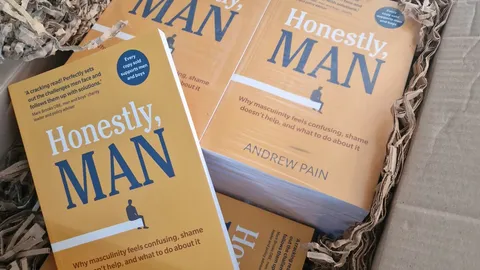
Andrew Pain is a Mental Health & Resilience Keynote Speaker who speaks from lived experience on resilience, burnout and workplace wellbeing. Host of the Men on Show podcast, author of the book Honestly, Man, and a TEDx speaker. Member, International Coaching Federation, and Mental Health First Aider trained.
More from Men on Show
Keep listening

Never miss an episode
Candid conversations with everyday heroes – ordinary men doing extraordinary things.