Men on Show · Episode 49
Boys don't need fixing, but a failing system does with James Searjeant
- 10 September 2025 .
- 44 min .
- Hosted by Andrew Pain .
James Searjeant is an experienced educator and advocate for inclusive education, currently serving as a primary and nursery headteacher in South East London.
Andrew hosts this podcast. His own keynotes are on burnout, resilience, imposter syndrome and difficult conversations.
In this episode
About the conversation
Key points of the episode
- Who inspired him on the way up.
- How he lived with anxiety all his life and how he developed a "quiet resilience" .
- His thoughts on a difficult and key educational transition.
- How we are using tools of the last century and how it needs to change.
- His thoughts on phones and social media.
- The poor policies behind seeming good and excellent official reviews.
- A message of hope for men and boys.
Men on Show shares lived experience and honest conversation – it is not medical or therapeutic advice. If you're struggling, you don't have to cope alone.
Samaritans: call 116 123 (free, 24/7) NHS: 111
Full transcript
Read the whole conversation
A complete, verbatim transcript of this episode – every word is the host's and guest's own; the topic headings are ours.
Welcome to Men on Show, the podcast, Candid Conversations with Everyday Heroes. Join Andrew Pain as he interviews fascinating guests, ordinary men doing extraordinary things. If you love the show and you think somebody could benefit from hearing it, why not tell them about it by giving it a share on social media? Oh, and at the end of the podcast, if you can leave us a five-star rating and a review, it really helps us more than you know, and it gets this important message out to more people that need to hear it the most. Right now, enjoy the next episode.
Hi, my name's Andrew Pain, and welcome to Men on Show. I'm delighted to bring you James Searjeant, our first head teacher. As a guest, we've had guys doing amazing work within the educational field, as researchers, as sort of almost external consultants doing great projects within schools. But I've not yet had an active teacher or head teacher on the podcast. So I'm so pleased to have you, James, here on the show to get your insights where we'll be talking all things boys, standardised testing, fatherless boys, burnout and other great things. So James, thank you for giving us your time. Welcome to the show.
Thank you. It's great to be here.
Growing up and becoming a teacher
Cool. Great. Well, let's get straight into this. I'm always interested briefly first, before we get into some of the topics that will form the podcast. Like, as you grew up, what was it that inspired you? Do you recall anyone, either a family member or even a celebrity or someone on TV that had an influence on your life in some way?
Yeah. I was thinking, I can't think of a celebrity as such. And I know it might sound a bit cheesy, but I do, obviously, it is my mum. Yeah, I don't know why I said that sounds a bit cheesy, but it is my mum. I think she was my person. She was my champion and something that always stands out. And I've kind of adopted to being a dad as well. She always said, be you, be kind and be whoever, whatever you want to be.
And that stuck. And for me, especially as a kid growing up and a teenager and then a young adult, I lived with anxiety, which was quite tough at times. Often I didn't feel like I fit in, but her belief gave me quite a, gave me this kind of quiet resilience. And looking back, it definitely shapes how I lead today.
Amazing. I mean, it doesn't sound cheesy at all. That is almost sounds, it's not almost, it's inspirational in itself. And we'll come back to that in terms of the teaching. What were your experiences of school? I mean, when you were at school, did you ever think you were going to be a teacher? Did that come early or how did you experience school as a teen?
Read the rest of the transcript Collapse transcript
I remember my first memory of primary school. I must have been about four years old. My mum took me to the school. It must have been like a look around before we started in the reception. And I remember walking into the school hall and all of the children were in their underwear doing PE, which we don't do now, obviously. And I just remember being petrified that I was going to have to wear my underwear and prance around a school hall with a load of people that I don't know.
That was my very first memory. Also, smoke billowing out of the bottom of the staff room door, which we don't do now. But I didn't particularly like primary school. It doesn't evoke too many nice memories. Like I said, I was a very anxious child. I didn't fit in. I wasn't very sporty. I was rubbish at football. So a lot of boys my age were kind of just a bit obsessed with that. And that got me a bit of stick.
So there was a little bit of bullying, not traumatic bullying, but a little bit, looking back, it was a bit of bullying. So I wasn't very confident. And then into secondary school, I went to an all-boys school, and I was a bit worried about that, but it was the local comp. And it's the best thing I did. I'm still best mates with the mates that I met in year seven at that boys school. And I got into music, I tried a bit of PE.
I was on the basketball team, but again, not very good. But I learned to play the saxophone, I had a really good teacher called Mr. Ringer, who sadly passed away now, but that kind of saxophone tuition gave me confidence. So I did enjoy secondary school, but never thought that I wanted to be a teacher. I actually wanted to work in the media. I was obsessed with film, I wanted to be a cameraman. I was obsessed with Steven Spielberg.
Actually, he was probably a hero of mine growing up. Then I went to college to do my A-levels, and we had a careers meeting. And I remember the guy, I walked in and he looked really frustrated and peed off, because I think he must have been the hundredth young person he'd seen that day. And he said, oh, what do you want to be when you grow up? Or what do you want to be next? I said, I really, really fancy a career in media.
I'm really interested in film. I was doing media studies A-level. He said, oh, you're about the 200th kid today that's mentioned that. Do you know how competitive that sector is? Probably not a good idea, mate. Have you thought about teaching? So in a way, it's the worst careers advisor ever. I don't know his name, but he did say, have you thought about teaching? So maybe it was a good thing.
You were saying how things have changed, the smoke billowing out of the staff room, kids in their underwear. I'm 51. I remember I was the only kid in my last year of primary school. We had this teacher, Mr. Phillips. I was terrified of him. Absolute tyrant. I was the only boy to have not been hit by him by the end of the year. I was trying and trying. And he really used to hit. He really was quite violent.
And you think, wow, that just kind of happened. And then the careers advice, whenever I went to careers advice, I had to do these little test things and then it tells you what you should be. And I was always supposed to be a town planner, which would have been the worst job ever for someone like me. But I think careers, I like to hope they have come on a bit. So where, for you, he said, look, if you try teaching, hundreds of people doing media, but was that it for you? Or was there something that really gripped you? Or did you just sort of fall into it? And then the rest is history?
It was actually, one of my cousins had a baby, probably when I was about, I can't remember, it's been about 10 or 12, and my mum looked after the child quite a lot. And I did notice that I've gotten well with children, and I seem to be able to engage with them. And I liked teaching them and being around and helping my mum. And my mum was actually a child minder as well. So there's always a lot of children in the house.
And then after that careers advisor incident, I did actually volunteer at my primary school where I went as a child. So I think it might have been work experience. And I did one day, one afternoon a week, just to see the environment. Really liked it. And then I got a job as a teaching assistant. Sorry, I finished my degree. I did my degree in humanities and thought about teaching. But I thought, right, let's see if I really like it.
Let's get a job as a teaching assistant, do that for a year and see if that kind of cements what I'm thinking. So I've got a job as a teaching assistant in quite a tough school in South East London, and absolutely loved it. And just knew within a couple of weeks that that was what I wanted to do. So I did that for a year. I worked with some very difficult children because as a teaching assistant, you do have to work with the vulnerable children, with the most challenging children, with the most brightest children.
You have to support them and support the class teacher. And I just found myself kind of taking groups out, and the teacher, I think, was quite pleased about that. And I'd often take the rowdy boys out and do like a mini-lesson, so they're not disrupting the class. So theoretically, mid-year of that teaching assistant position, I was teaching, but in a very modified way. So it just made me think, yeah, this is what I want to do. So I went to, I applied for the PGCE, which is the Postgraduate Certificate of Education. And yeah, and then, yeah, did it.
Teaching challenges and the year six transition
And I imagine teaching must be one of the most difficult jobs to do. On the one hand, you have children from a whole range of households coming into the school. You've got children at very different levels, although they might be within the same age group. You can't pick and choose the kids that you have. You've got stakeholders such as Ofsted, and obviously that things are changing there, hopefully for the better, but that has traditionally put an incredible pressure on teachers.
You've got parents. I mean, when I look around at the other parents, the children at my children's schools, I'm just in disbelief at some of the behaviour from parents. What do you think are the biggest challenges you've personally faced as a teacher?
All of those. And like I said, I haven't said, but I've been teaching for 23 years now, 24 years, and I've been a head teacher for 10 years. And all of the things you've just said are constant challenges. And sadly, I do think they're getting harder. For lots and lots of different reasons. Every challenge you mentioned, I would say, is a lot harder now than it was when I first started teaching. And I think social media, pressure, lots and lots of factors.
Now I've been doing it for 10 years. I really want to focus my time and energy on looking at problems at a sector level. And one of the things at the moment, there's lots of things wrong with the system, as we know, the education system. But for me, a really, really worrying thing is the year six to year seven transition. And that's something, year on year, and I was a year six teacher for a lot of my time in class.
And that's something I've seen year on year. You get the children at the end of their primary career, and they've come through your school. Primary schools are often close-knit communities. Everyone knows each other. You're in your class of 30, mostly from nursery. And then suddenly in year six, there's this immense pressure on schools, families, leaders, and for these kids to perform in their key stage two SATs, the standardised tests that happen at the end of year six.
And a lot of schools, unfortunately, the warmth that was built through the primary school, that is often replaced by panic, and it is about results and unrealistic accountability. And I've got this real nagging question that who is that really for? And it's at a point that's so crucial for those young children, especially boys in my experience, they've got to leave year six, they've got to leave that comfort, they've got to leave somewhere where they've spent years getting a sense of belonging.
And then suddenly they're thrown into a secondary school. And I'm an uncle to two boys who have done that transition. And sadly, they've got lost at secondary school. And I do think that that is a massive contributing factor.
Can you be specific? Like, I want to pick up on this then. You mention your nephews, you use the word lost. Can you give what specifically, what do you mean by lost? How have they struggled at secondary school?
So one of the weird things is this year, this key stage two SATs, this is what, who's it for? Because it's often not for the secondary school teachers taking them into year seven, because most secondary schools I know will assess the children at the beginning of year seven anyway. So it is unnecessary, I believe. And I think there's often so much accountability for school leaders and so much pressure to get that, to get that target or to get that percentage, that I think there's a lot of data farming.
And I think there's a lot of results that are exaggerated and that might not match where the child's level is. Maybe if the year six were more focused on personal development and holistic human assessment, thinking about those crucial skills the children need to reduce that feeling of lost when you get to year seven, instead of data farming, maybe that would help so many.
And I'm imagining this is a challenge for girls and boys. When I think back to my two daughters that are now grown up, it feels like the older of the two made that transition quite easily from primary to secondary school. It feels like the younger one, who's now also grown up, struggled. She really struggled, she desperately missed her primary school, and it took a long time for her. I wouldn't say she was truly happy at school until year eight, nine, and then she started to settle in a little bit.
So I'm imagining it affects girls and boys, but do you think there's a particular pressure for boys? You seem to suggest that there is. Why would you say that?
I don't know, without sounding too stereotypical, girls seem a bit better at relationships at that age, in my experience, as a year six teacher. Although they argue and they bicker and they often freeze a crowd and two will gang up on the other one, they can be quite nasty like lots of children. Boys at that age don't seem as emotional literate, not all boys, but a majority of boys. And this is what I mean, I don't think they're emotionally ready.
I don't think when you're 10 and 11, you are emotionally ready at the moment for year seven. And it's a bigger school, it's a faster pace, it's huge jumping expectations. My gosh, like zero tolerance behaviour policies. You've got to be at this place at this time, at that place at that time, you get detention if you forget your blimmin pencil. So I think it's just emotional, they're not emotionally ready.
Redshirting and the year six tests
Yeah, and of course there is that argument, I think backed up by research that girls mature more quickly at a younger age than boys. That seems to be quite robust. The research that supports that. I know one of the leading thinkers in the men's space, Richard Reeves, author of Of Boys and Men, a massively popular book. A British guy based in the States travels between the two. But one of his points in Of Boys and Men is that is redshirting.
He suggests that as a solution where redshirting is where boys start school a year later to account for the fact that they're not ready to really be in school. And of course it would take, I mean, bringing redshirting in across the board in the UK would be a massive monumental shift for schools. But something needs to be done potentially to address the fact that boys emotionally, in terms of communication skills, may not be at the same level as girls. And maybe that's redshirting or maybe it's rethinking how we do this year six. I mean, what's the argument for having these tests? There must be a reason.
Do you know what? I don't think there is. No, it's basically to show that the children have met the expected standard. But why does that need to be in a standardised form? Because a teacher can assess that. Well, then they're designed to hold the school to account and the leader to account. And Ofsted and local authorities and academies will use that as a judgement of whether the teaching and learning in that school is good. So there is a place for assessment, but not in its current form.
I really firmly believe that. Some of the leading countries in education, they don't use standardised assessment methods until the children are 18. And in those schools, the children don't start school until they're seven. So it's definitely got to change. We are using 20th century tools in the 21st century, and it's a joke. And it's so much pressure on everybody. And also, you've got kids in year one that are six, also doing standardised tests in phonics. The teachers are teaching phonics.
The teachers can assess the children because the teachers are the professionals, but then the child has got to sit down and do a standardised test and see if they can get 35 out of 35. And we know as humans that you perform differently on different days. I've seen so many children walk into that test hall in year six in May crumble. And I'm standing there as a leader thinking, gosh, he's not going to show how much he's learned because he can't cope at this one moment, at this one time. So it's completely not fit for purpose anymore.
So I mean, thinking more broadly, that there's so much at the moment, and really good conversation around the welfare of boys, boys falling behind in education. We have the Lost Boys report. I'm not a fan of the Adolescence Netflix series for a lot of reasons, but it has created a conversation nonetheless. Gareth Southgate's excellent lecturer, I'm more of a fan of his lecture than the Netflix series Adolescence. So there's a lot out there at the moment on boys.
And so I guess what I'm picking up from what you're saying is that if we're thinking about the welfare of our boys and what needs to be done within the education system, this standardised testing at that year six, that transition level, there needs to be some thought, some rethinking about that entirely, about how we do that transition, about how we prepare our girls and boys for year seven, that move to second degree. Understanding that boys actually, let's just say it as it is, maturity wise, they may not be at the level of girls, as a general trend, not as an absolute.
So we need to be, what would we do instead then? What would you propose as a head? If you got rid of them, and maybe you just do that, do you just get rid of them and a more sort of person-centred development? What do we do? What do you suggest?
Replacing the tests with teacher assessment
Yeah, so I think we need to replace them. And we did it a few years ago now at Key Stage 1. So at the end of year two, there was a standardised test, which again was ridiculous because those children are eight. And you had to submit those outcomes to the local authority, to the DFE, and you were judged as a school on those outcomes, and they got rid of them. And nothing has changed, Andrew. Nothing has changed.
The teachers now in year two, they assess the child because they are the teacher, they are the professional, they know the child, and then we submit those, we don't even have to submit them now, that those results are recorded for school purpose to help us measure progress from year two to year six. But there's no standardised test in Key Stage One now at the end of year two. They got rid of it, nothing bad happened. So I imagine the same would happen in year six.
If you got rid of that standardised test, and the teachers assessed, nothing bad will happen. We didn't have any standardised testing during COVID. Nothing bad happened in terms of the children's, well, yeah, I've just questioned who those tests are for. And there's so much good practice happening at the moment in so many schools, where people, schools, leaders, academy trusts are proving that you don't need that. You still obviously we have to do it because it's statutory.
But there's so many other ways to assess children. You can assess children through learner profiles and track their learning through the years and have it on a database or software. Children can assess their own learning. Yeah, should we be assessing solely maths, reading and writing? Should we be assessing how well the children collaborate, how well they team work, how confident they are? More holistic, more human, really. Yeah.
And I suppose it is part of... I'm just sort of thinking on my feet here. When we think about how do we create better outcomes for boys, there's so many pieces of that puzzle that need to be considered. But maybe if you took away the standardised testing, and maybe if the Ofsted was massively changed, I think they've moved away from those one word definitions, which is a good start, but I think more needs to be done.
But if you relieve some of that pressure on teachers, then I imagine they will feel more at ease about teaching more holistically, which of course is good news for our boys and girls, but particularly our boys who are behind girls, generally speaking, as they go through school. So you could argue, in terms of how do we save our lost boys or our boys that are struggling, that actually getting rid of standardised testing, massively altering Ofsted and how Ofsted report and how schools work with Ofsted, that has a trickle effect that will massively impact boys in terms of their emotional well-being.
Totally. And sadly, maybe not in every school leader's experience, but in my experience, a lot of my staff avoid and don't want to be in year six for that exact reason. They don't want to be in year six, which is so sad because I was a year six teacher for many years. It's wonderful. There's so many positives about being a year six teacher. But I would say there's only two or three teachers on my team that want to be in year six. The rest are always, please don't put me in year six, please don't put me in year six. It is sadly that pressure. Children are more than a school.
Yeah. Also, if the teacher doesn't want to be in that role, they know they've got to take their turn. Are they then giving of their best? I know I don't if I don't want to be in a certain role. I give my best when I'm excited, inspired, got room to be creative, not box-ticking. Box-ticking, anything would just switch me off completely. So it's a really interesting angle. There's not really picked up. Because I mean, I see a lot of debate on social media.
I've had people on the podcast. I collaborate with, follow on social media, people that work in this space. How do we do more for boys? But I don't think the cancellation of standardised testing at year six, I've ever seen that mentioned as a step forward, as something that could be done. So it's an interesting angle, and one that makes a huge amount of sense in helping teachers to deliver that person's sense, holistic, whatever words you may mean.
Neurodiverse boys and when dad wasn't around
And then you've got the, we won't go into it, I'm short now, but then you've got the second layer of that, where some of these boys are also diagnosed with ADHD, with autism, with anxiety, disorders, and they've gone through trauma. And yet they're still expected to sit for an hour in test conditions to prove their worth.
To prove their worth. And presumably, again, I'm presuming, please correct if I'm wrong, in terms of the number of people that you teach, number of children that you teach who are neurodiverse, I'm imagining a higher percentage of those are boys than girls, from what you see. Or is it equal?
Tough question. From what we see, it's boys. I think, yeah.
I think it could be hidden. Yeah. Yeah. Another question, then, on this. I'm moving away slightly from standardised testing. Do you see a particular impact on the behaviour and attainment figures of the boys that you teach when they come from a household where there's not an active father? Do you see an impact at all?
Again, I think I have seen an impact. And I think it comes down to the individual circumstances, because there are boys that I've known that have thrived with a single parent, with just their mum, where I couldn't really see any differences. But there is, I would say, there's more boys that I've worked with over the years and taught, and who have been in my school that have struggled more because dad wasn't around. Yeah.
Few men on school staff, and the caretaker
Interesting, interesting. We've had Lads Need Dads on this podcast. So they journey with boys that don't have an active father in their household for literally years, and they're flagged up through the school system. So they had some interesting insights on that. And of course, fatherhood, not just for the child, but for the men, it's so important that they are engaged. I see a lot of research that seems to suggest kids' attainment scores are better when there's a positive active father.
Do you see the same thing? Because I know in primary schools, I think the percentage is roughly 15% of primary school teachers are male. Do you see that in your school? That's the first question. There's a second question that's sort of part of that. And do you think that more male teachers would have an impact, a positive impact on boys? What are your thoughts on that?
Yeah, we, there aren't, in my school and every school I've worked in, there's only a handful of male staff. But in primary school, I think that's definitely improving and has increased in my 23 years. When I first started, especially earlier on, there was only, it was just me in my school as the only male teacher. Oh, and the caretaker, the caretaker is always a man, often a grumpy old man. No, that's the stereotype. I'm only joking.
My premises manager is absolutely lovely and he's not a grumpy old man. But yeah, and being one of just a few men on staff, I do think you've got to prove yourself. And as a leader now, a school leader, it's something I really value, a balance in the male and female amount of staff. But when you put an advert out for a teacher, it's still the minorities men applying at primary level. I believe it's completely different at secondary level.
It's higher. I think the statistic is 35%. So it's still in the minority, but a less significant minority than 15%.
Yeah. But I mean, yeah, if you're a good teacher, you're a good teacher, regardless of being male or female. And that's the way we should look at it from that kind of perspective. But there's definitely children within the school that I have seen behave and thrive, build better relationships with male teachers than maybe female teachers. But again, this is all individual, individual. But it's got to be a good thing. It's got to be a good thing to have a mix of a different, yeah, a different characteristics on your staff team, because that will improve the building of relationships.
Yeah, the caretaker, by the way, at my kid's school is an old man and he's actually the jolliest figure at that school. He really is a character.
Now, Alwon is amazing. He's so engaged. I mean, he's playing football with the kids at great times. He's building things for them. He's wanting to make a difference. Yeah, they're worth their weight in gold.
Nature or nurture, and boys shutting down emotions
Yeah, yeah, that's fantastic. Do you see, there's a couple of things I want to touch on as we come sort of towards the concluding part of this podcast. And you don't have to answer this question, by the way, because it can be a contentious question. I find when I've posted about this on social media, it can, you can get some very cross people with opinions on this. So for me, having raised girls and boys, and I always caveat this with, you know, it's my own limited experience.
I've got two grown up daughters. I've got 12, nine and six year old boys. And the differences in parenting them is just extraordinary. I mean, I could just go on for days about how different girls and boys seem to have been, where I feel like I've parented them in similar ways. It's not like, so the boys can't leave, for example, my boys, they just literally fight the entire time, just literally. Like how many times a day I lose count.
Often there's no logical reason. Whereas when my daughters bickered and argued, which they did, and occasionally that got physical, you could at least identify, even if it was a trivial reason, there was a logical reason as to why this all kicked off with the boys most of the time. I mean, I just lose track of what's what. But there's so many differences. A lot of people say that that's entirely nurture, it's not nature. Others say it's entirely nature.
Girls and boys are different. For me, I'm a bit of a fence sitter. I think it's probably a mix of both. Do you see a difference in girls and boys' behaviour? Do you have an opinion on whether it's more nature than nurture, or whether it's both? What are your thoughts on that?
It's both, I would say. That's my thoughts. But I do think we underestimate nurture as parents and school staff. Boys, I think boys, in my experience, learn early what's acceptable. And often that means, I think, shutting down emotions, especially from my experience. I mean, I've got a son who's 10, and I've got two daughters, one who's 12, one who's 8. But my two nephews are 15 and 13, and I'm really close to them. And I think they have shut down emotions for lots of different reasons.
So I think if we give boys, and we've said this before and I've read a lot, permission to be vulnerable, permission to be creative, and permission to be caring, then the outcomes will change completely. And I think we've got a responsibility as parents and carers to do that, but also that is the responsibility ultimately of the school, because that's where the boys are spending most of their time. Yeah, so I think it's a bit of both.
Because maybe there's also a permission to be angry, because I know when my boys are angry, they shout. So my temptation, and I'm working, I'm a work in progress, I always am, is the temptation is to shout louder, and to assert your authority, so this doesn't all get out of hand, and they don't think it's okay. But actually, it is okay to be angry, and to not, I think it's easy when a boy is shouting, kicking off, to sort of, go to your room, shut up, you're not gonna have this, punish them with a, well, that's it, you're not going there, we're not going to do this.
And actually, they're just angry, and they don't quite know yet how to express that. And it takes a lot of patience to, and I mean, how do you have that in a school where you've got discipline, you've got standards, you've got other kids, they're gonna be affected. If they see that it's okay to be angry, is everyone gonna be, but that's a trickier one.
Yeah.
To be angry, but I think we shut boys down often when they are angry, because when they are angry, the way they express that is often very disruptive.
Suspensions, and the need to rehumanise school
It's because, and this is what I wanna keep coming back to, it's because the current education system, it isn't built for them anymore. And touch wood, I don't have to suspend many children. I think I've only ever suspended one girl in my whole career, in the 10 years as a head teacher. All the rest have been boys.
And when you say all the rest, I mean, could you give a figure, pluck one out of the air, a rough gut feel?
Not many, thankfully. But I do think it's because of the culture of our school. And at primary school, it's very, you do have to do something very serious to be suspended a bit, all right? And they're young, they're younger. So I know there are more suspensions. It's disgusting at secondary level. And there are some massive problems with that. And boys, in my experience, have been more likely to be suspended. They are more likely, like we know, to disengage, and they're less likely to access emotional support.
So we do have to, like I keep coming back to, we do have to rehumanise school, I think. Otherwise, we're going to keep losing them. And it's happening, and it is happening younger and younger. And it's a big problem. And there's so many schools now that have got this good or outstanding label where when you look at it, their behaviour policy is atrocious. And it's zero tolerance. And it excludes so many. And you've got isolation rooms, and these children aren't being heard. So yeah, it's a big problem.
Advice for parents and social media
Yeah. How can, from your perspective, for me, there's two more key questions. What can parents do to make a difference? I mean, given that this is Men on Show, it's focused on men and boys. So I'm really thinking in terms of boys, if you had a piece of advice for parents of boys, you have your own son, you're very close to your nephews, what can parents do to create better outcomes for their boys? Is there a few things that you say, look, do this and that? It's not saying don't do other things, but make sure you do these few things. What would you say?
Yeah. And again, like me as a parent and a carer, it's got to be individual to you. You've got to act on your gut instincts. So like you said, I'd never tell people what to do or anything like that. But if it was my advice, what works for me and when I work with parents within a school setting and myself as a dad and an uncle, is stay curious about your son. And even if he pulls away, ask questions instead of giving answers.
And parents and carers be partners with the school and choose schools where schools value that partnership and help the school see what you see at home. And also, I really respect parents that challenge us as well, but that do it with collaboration in mind. And that's the thing. And also remember, please, please, please remember that your child's worth is not their test score.
Remember your child's worth is not their test score. That's a good, that's a good quote, that is. And do you have an opinion? We haven't discussed this yet, and maybe we've only got a few minutes, really. But I wanted to cover it because this comes up a few times. I'm still not sure where I stand on this, where some of the guys I speak to, and they are mostly guys that go in and do work about, with schools about online safety and things like that, and the Manosphere and all the rest of it.
They're very clear that a ban on social media that we have in Australia, under 16 is now banned from social media. It's going through. It'll be interesting to see how that plays out in Australia. It's quite robust. There's other research. Teachers in St. Albans, they all got together and just banned phones from their schools, and they all worked collaboratively, the schools did, and saw massive improvements in the behaviour of their kids because they realised kids as young as year three and four were having phones.
And by coming together as schools and working with parents, they cut that and improved. So do you, what's your view on social media? Like I say, some people say we just need better education. Others say you just need to get, you just need to ban it. So everyone's in the same boat. Do you have an opinion on that?
Yeah, I don't think we should ban it because it's there. That's just, you can't do that. Smartphones, they don't need, maybe they don't need smartphones. The biggest argument I get from parents when we talk about mobile phones is, well, I want them to have a mobile phone because I want them to be safe when they're walking home from school. And I said that to my own daughter. The fact that she's got a mobile phone and she walks home to school and home from school on her own gives me so much reassurance to the fact that that overrides her scrolling TikTok or for me, that I value that more than anything.
So that is a really positive thing. So maybe I've known parents that don't give their children a smartphone. They give them an old Nokia that you can't access social media on. You can access hit, they can access social media on their laptop at laptop time, when that's being controlled. And it's not a little device they can hide under their bed and access the world. So and also a lot of parents and a lot of secondary schools are encouraging tags, secure like tracking tags to put in the bottom of the bag.
So you can track where the child is on their journey to and from school. It's definitely got a lot to answer for social media, as we know. But again, like you said, it's about educating the child on how to access it, how to use it, when to use it, learning the dangers, which is good, which many schools are good at that. And I'm confident in my school that we're good at teaching children about social media and electronic devices.
But I don't think we should ban it, no, because I think it's got so many positives. It's a bit like AI. Everyone's freaking out about AI, and is it going to have an impact? Of course it's going to have an impact, but the amount of positives AI can bring to education is exciting and it's extraordinary.
A message of hope for men and boys
And just to sort of sum up the podcast, if you could give a message of hope to people listening to this podcast for the men and boys out there, for fathers out there. Is there like a two-sentence, as a head teacher, a two-sentence message of hope? What would you say?
Yeah, every boy can thrive when we build the right environment around them. And I really, really don't believe we need to fix boys at all. I think we need to fix the parts of the system that hold them back.
Fix the system, then the rest takes care of itself. Create the environment for the boys, then the rest, yeah, yeah.
Be bold, be brave, and work with the school as parents, and carers, work with the school, and make it better.
Yeah. That's fantastic. James, been an absolute pleasure having you on the podcast. Thank you so much for giving your time and insight. I think anybody who, through whatever level in the school you are as a teacher, is remarkable, doing an amazing job. The schools pick up so much stuff from what I consider to be a broken society. So, completely salute you for the work that you're doing. And thanks once again for being a guest.
Thank you.
Thank you for listening to Andrew Pain's Men on Show. If you could leave us a five-star rating and short review, it would be really, really appreciated. It helps us get this important message out to more people that need to hear it the most. See you on the next episode. Thank you for tuning in.

About the guest
James Searjeant
James Searjeant is an experienced educator and advocate for inclusive education, currently serving as a primary and nursery headteacher in South East London. James actively contributes to national discussions on SEND, curriculum, assessment and accountability, calling for systems that better reflect the progress and achievements of all pupils. He is dedicated to developing inclusive and equitable approaches that support every learner to thrive.

Hosted by Andrew Pain
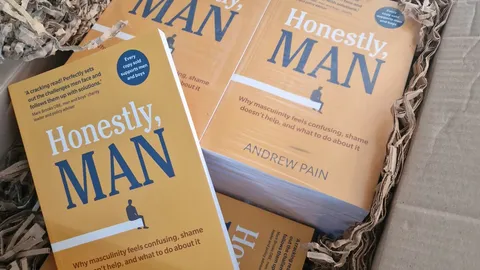
Andrew Pain is a Mental Health & Resilience Keynote Speaker who speaks from lived experience on resilience, burnout and workplace wellbeing. Host of the Men on Show podcast, author of the book Honestly, Man, and a TEDx speaker. Member, International Coaching Federation, and Mental Health First Aider trained.
More from Men on Show
Keep listening
Insights
Read next
Never miss an episode
Candid conversations with everyday heroes – ordinary men doing extraordinary things.