Men on Show · Episode 5
Men, Domestic Abuse and Changing the Narrative with Mark Brooks
- 10 October 2023 .
- 30 min .
- Hosted by Andrew Pain .
Mark Brooks OBE has been campaigning in the field of men and boys’ health, wellbeing and inclusion for twenty years.
Andrew hosts this podcast. His own keynotes are on burnout, resilience, imposter syndrome and difficult conversations.
In this episode
About the conversation
He is a communications / public policy expert by profession having been worked at communication director level for two national charities and has stood at three General Elections – but never won. As a Charlton season-ticket holder, he is used to not winning! His website is www.mark-brooks.co.uk
Key points of the episode
- How he was influenced by a "working class, rebellious, salt of the earth" Dad!
- How he wants to change "class barriers" .
- How he now works with "Mankind", campaigning about domestic abuse on men.
- How he has had an eclectic career, all based round campaigning.
- How the current narrative is problematic.
- How testosterone is NOT the enemy!
- A position that needs creating in government, NOW!
- A vision for the future .
Men on Show shares lived experience and honest conversation – it is not medical or therapeutic advice. If you're struggling, you don't have to cope alone.
Samaritans: call 116 123 (free, 24/7) NHS: 111
Full transcript
Read the whole conversation
A complete, verbatim transcript of this episode – every word is the host's and guest's own; the topic headings are ours.
Welcome to Men on Show, the podcast, Candid Conversations with Everyday Heroes. Join Andrew Pain as he interviews fascinating guests, ordinary men doing extraordinary things. If you love the show and you think somebody could benefit from hearing it, why not tell them about it by giving it a share on social media? Oh, and at the end of the podcast, if you can leave us a five-star rating and a review, it really helps us more than you know, and it gets this important message out to more people that need to hear it the most. Right now, enjoy the next episode.
Hi, my name is Andrew Pain, and welcome to Men on Show. And I am absolutely delighted to welcome Mark Brooks OBE, and a man who I have so much respect for, the work he does in speaking up for male victims of domestic abuse, for example, and male health, campaigning for men and boys' health, well-being and inclusion for some 20 years. Now, his work is incredible, and I know I'm not the only man to be extremely grateful for Mark's work, and be inspired by it. So Mark, it's a pleasure to have you on the show today.
Well, thank you very much, Andrew. And the key thing, it's a team game. I've worked with many other great people as well, so always important to make that point.
His dad, and seeing class barriers
Great. Well, look, Mark, just to sort of start with, who inspired you growing up? And growing up, did you always see yourself as the campaigner that you are today?
Well, it comes really from my dad. I mean, you know, I'm from a working class, South East London background, which is where I still live. The accent will give it away somewhat. And my dad was a van driver, and he was always a number of things. He always wanted to do things for others, always involved in the Working Man's Club, running football teams for kids, for example, but also always had this kind of working class, rebellious, anti-establishment, inquisitive type of outlook.
And I really picked it up from there. And, you know, I mean, we actually were so rebellious. I know this may not sound rebellious now, but we actually moved from one borough in London to another because that borough we were originally moving in actually closed their grammar schools. And he wanted to give me and my two younger brothers a good opportunity. So we moved boroughs so we could get into a grammar school if we passed the 11 plus, which is a real sign of kind of rebellious behaviour because it was the sole reason he moved.
And I managed to get to the grammar school. And I suppose I would describe myself as a classical liberal. So I managed to get to university, nobody in my community went to university. I'm talking mid-80s now, especially the working class community in Belvedere, in the Eryth, which is where I'm from. And I felt, therefore, even at school, some of the teachers would ask me questions or I would ask them questions. I was always asking the question, why, why, why, you know, why does this work?
Why should I do this? What's the point? And I think it all comes from there. And I think, you know, when you, then you're growing up, said, I went to quite a middle class, obviously, grammar school, did stick out quite a bit, primarily because of the accent, you know, I do sound like a chimney sweep. And you kind of then feel you're being judged by how you sound, how you look like, and how you conduct yourself, and that being far more important than what you do and what you say.
And I started to see really those class barriers. And so I've always been wanting, therefore, to actually make a difference and change that for people, as well as for myself and my family.
The case that led him to domestic abuse against men
Yeah. And you do, today, you do so much amazing work with ManKind Initiative for the Men and Boys Coalition. And I know that that's not all of it. But what drove you into sort of speaking up for men and championing that cause? Was there like a gradual moment, sorry, a gradual journey, or was there a standout moment which really sort of called you into what you're doing today?
Read the rest of the transcript Collapse transcript
Well, I think it was gradual, but there was a standout moment that got me into the domestic abuse field. I mean, certainly, you know, I spoke about the kind of working class kind of background, but I started to see, especially in my twenties, this kind of growing narrative that men and boys are problems, and they have all the privileges. And I remember being at a workplace where there was schemes to get more young women into the workplace where I was working, and also, you know, management courses, et cetera.
And I was thinking, well, you know, I'm not able to access them because I'm a man, but actually, I'm not privileged, you know, from that type of background. And the people who were going on those courses were women who had been in private schools. And I'm looking around going, well, they've got more privilege than me, if you're going to look at that. And that kind of started to work me somewhat. And I think I then was seeing this narrative in the media about men and boys issues not really being taken seriously or being seen as a problem going forward.
So that kind of like I started to look at those issues and then I'm probably well known, I've been trying to get into parliament a number of times, not made it. And I was a local counsellor for some time in Bexley and I was supporting a man who was a constituent and he had two children, lived in a council house or a council flat. And he was having problems with his female partner. She was abusive, she had police caution, for example.
But the council's housing department wouldn't rehouse him and his children because they couldn't get their head around the fact that a man could be a victim of domestic abuse. So he came to me to get some help and then once I started getting involved, I managed to get him moved. And that kind of put me on to the whole subject of domestic abuse against men because I hadn't heard of it, I hadn't seen it, hadn't been a victim, didn't know anybody who had.
And so that kind of was a real catalyst for me for really wanting to get more involved, not only in domestic abuse for men, but also men and boys issues more widely. It was, I feel like, a light bulb moment.
The Men and Boys Coalition, and a career in campaigning
And so to tell us about your work, that leads nicely into the work that you do today with Men and Boys Coalition, ManKind Initiative. What are the kind of things that you're doing?
Well, in terms of that type of activity, obviously myself and a group of men and women set up the Men and Boys Coalition, which is the umbrella charity for men and boys charities, academics, campaigners and others, looking at a whole range of issues. Because we were starting to see that there was lots of organisations and it's been accelerating actually the last couple of years around men and boys issues and wellbeing. We wanted to make sure that there was a voice representing the sector because it has become a sector.
So I helped sell up that charity. We did initially meet some opposition from the charity commission, which was interesting in terms of not accepting our original application because it was just focused on men and boys, but we worked with them and managed to change that, and to be fair, they did. I think that that work and I particularly focus under that charity on International Men's Day. That's the campaign I look after for the charity. Obviously, with my colleagues.
That's been important. Also, my broader policy work, being a policy advisor on the All Party-Parliamentary Group on Men and Boys Issues, so being the lead author on things like the Men's Health Strategy Report on Male Suicide. I've gradually started to move into a career in this field. And I suppose the modern vernacular, Andrew, is a portfolio career, which is a thing I'd never even heard of two years ago. So I'm doing work in that field, I'm supporting some MPs on their work in this field.
And it really builds on my professional career because before, up until a couple of years ago, I was the comms lead at two national charities, including SureTrust. I've been the head of PR at Premium Bonds for eight years, if you can imagine, and also done a number of really good things professionally. So SureTrust Disability Power List 100, I was the person who first commissioned that in the UK. So I've had a very eclectic career, which has always been founded on campaigning.
But I just feel that I'm in my 50s now, and I want to continue to make a difference wherever I can. And that's why I'm continuing the work in this field, because it's so sorely needed.
A toxic masculinity headline, and the national narrative
We hear so much, don't we, about toxic masculinity. I only saw yesterday, actually, I'm sure you've probably seen it, a front page article in the Australian press of a boy who looks probably about nine or ten, probably at the same age as my eldest boy. And the headline is, How do we stop this kid becoming a monster? And then there's a tagline where the tagline is, Calls for domestic violence lessons in all schools to tackle the menace of toxic masculinity. So should we be worried?
Well, we should be. We should be very worried. And I think there's this kind of parallel world or parallel discussion going on around men and boys issues. So you've got grassroots charities springing up all the time, helping men. Often by and for men, but lots of women are organising those. Employers taking men's health and wellbeing far, far more seriously. The general public. I mean, International Men's Day is a complete phenomenon, especially in the UK. It has 600 organisations involved.
Huge presence on social media around the kind of week leading up to and after November the 19th. But then at a political level, a national establishment political level, you've got this narrative that men are problems and only women have problems, when of course men and women have problems. And it's this narrative which is, I think, extremely damaging because it's having a negative impact on the mindset of men and boys and how they feel unfairly treated, they feel picked upon, they fear that the problems that they have are being ignored on purpose.
And also it's creating a very divisive society. And I find it very bizarre that this decade has been really mirrored around the need for more recognition of diversity and inclusion, equality, stroke equity, but on issues like ethnicity and sexuality and obviously equality for women. But when it comes to men and boys, actually the opposite narrative is actually happening that actually seems almost a purposeful narrative to actually shut down any discussion on men and boys' wellbeing issues.
But this is at a national level, it's not a grassroots level, because the work you do with employers, the work that I do with a whole range of organisations, show that there's a real parallel world. And I find it very odd. I find it very odd and very troubling. And when you see front pages like that, that is the demonisation of a whole gender. Because men and boys aren't toxic, there's toxic men, there's toxic women, but men and boys and masculinity isn't toxic in itself.
And it says to me again that the problems that men and boys have, and especially boys and young men, are actually shaped by the adult world that shapes those young men, creates problems, and then has the temerity to then ignore those problems when they exhibit themselves.
Testosterone, and two dangerous phrases
Yeah, and there's obviously as well so much misunderstanding around data and stats. You know, we like to draw quick conclusions, don't we, in this fast-paced world that we live in. You know, it's only recently that I think testosterone as a thing, people are beginning to question, you know, we know if men have a fight in a pub, it's just too much testosterone floating around, like testosterone is a bad thing, but actually testosterone, when you think about male health, mental health, physical health, is a really, really good thing.
We shouldn't be looking to reduce our testosterone levels to somehow become less aggressive. There's that view, isn't there? Testosterone and aggression are linked, but many of us draw these conclusions, but we don't, we've not actually done any research into this.
Well, yeah, absolutely. It's just part of these two phrases, which I think are dangerous phrases, and I'm happy to be on the record on saying that. I always have been. The dangerous phrase, toxic masculinity, and the other dangerous phrase is malprivilege. I mean, non-toxic masculinity, basically, is demonising all men, especially for the behaviour of very few. And the reason it's dangerous is because if you're vulnerable, vulnerable male, and you are told that you're somehow toxic, that there's something inherently wrong with you, that there's something inside you that's toxic because of your very being, then it actually makes vulnerable men even more vulnerable.
They're hardly going to talk, they're hardly going to reach out, and also it gives an excuse for society and public services to actually not become more accessible and more male-friendly because, in effect, you're saying, well, there's nothing we can do, if a man has a problem, it's his fault and it's his fault because he's a man. And also there's this mismatch about what masculinity is because masculinity is just a range of behaviours which are attributed primarily to men, but lots and lots of women have them too, which I therefore find bizarre when it's used around that kind of phraseology.
You know, it's good to, you know, we do need men and women to be strong and resilient and stoical and care for others and, you know, be independent and also show leadership. Lots and lots and lots of women have those as well as men and to try and demonise them. The other thing is about this phrase, male privilege. I mean, it's an ideological, you know, without getting too highfalutin, quite a Marxist term where you're trying to put people into, judge people, not based on their talents or them as primarily as an individual, but on what kind of identity you think they should have, when really privilege, even in the UK today, is really based on class, certainly not based on gender.
And I think that, you know, again, using the phrase male privilege, you know, I'm the son of a van driver, I don't feel particularly privileged. But nor do, you know, I ask a mother who's just lost her son to suicide, whether she felt her son was privileged in any way. And I think you'll get quite a different answer. And, you know, my last point, and I suppose it goes back to what I said before, is that, you know, a woman who goes to roadine private school, dad's a stockbroker, mother's a barrister, goes to Oxbridge and goes straight into a job in the city, you're not telling me she's less privileged than a black or white working class lad from a councilman's estate in South London.
You know, I mean, it just doesn't stack up. And it's this sort of language which really minimises and damages, poisons the debate on men and boys, but also is used as an excuse not to do anything.
Schools, Ukraine and telling boys they are a problem
Yeah, and then just sort of adding to it to what you say, some really insightful stuff there, Mark. My concern, so as a speaker, I do know speakers that they go into schools to talk about toxic masculinity, to tackle toxic masculinity. It's a good seller to have that on your profile, a good buzzword. Schools want to tackle toxic masculinity. But my concern is statistically speaking, when you look at the domestic abuse statistics, we know that a third of victims of domestic abuse, a third of victims reported domestic abuse are in fact men.
So this message of toxic masculinity, some of those vulnerable men that you refer to, they will have abusive mothers, grandmas. And so it's actually quite a confusing message. That's one concern I have for toxic masculinity. And I think the other thing with the male privilege is, and I was reading something about how the diving team that rescued the boys from the caves in Thailand was all male, but there were no headlines in the papers of, you know, this man can or you got, you know, made about the fact that it was an all male team. I think with the whole male privilege, there's almost a shying away from celebrating amazing stuff that guys are doing.
Oh, absolutely. I mean, I mean, the star kids example is actually in Ukraine. I mean, broadly speaking, it's the men who have been left behind in Ukraine to fight the Russians and the women and children have left. And that's how society is kind of set up. And I'm not complaining about that. But what I would complain about is the lack recognition of that. I mean, it's kind of like it's just it's it's almost like equality when suits and nobody you don't hear anyone really.
We don't see that media narrative about about, you know, the situation in Ukraine, for example, as a as a real kind of example. And and I am concerned about these organisations. Talk given by one organisation yesterday was really good. Progressive masculinity and what I was really pleased about those that talk was that it was about it was being very positive and about what men are and young men are. Whereas other organisations, I won't name them. Now I have a real issue.
I mean, I saw some research in Easter from Civitas, for example, that said that 41 percent of sixth form boys and girls had been in lessons where it's been explained to them that boys are a problem for society. And Future Men Charity last year issued research that said a third of young men had been told, you know, they were said that they felt unfairly treated and ignored. And of course, if you're vulnerable, well, aid is wrong anyway, but also if you're vulnerable, you know, you might be a victim of bullying, you might have people hanging around school gates trying to get you into county lines, you might have a dysfunctional family, non-aspirational community, and you're being told you're living in that environment and, you know, no positive male role model at home, for example, and you're living in that environment, and then you've got organisations coming in and then saying, oh, you're a problem and you need to be fixed. I think it's quite offensive, frankly.
What society can do for men and boys
Yeah, yeah, no, absolutely, absolutely. And we know that the stats for men and boys are troubling. The tragic suicide statistic that we have, most people are aware of that. 75% of people who die by suicide are men. And some of the educational stats, 57% of graduates in the UK now are women, boys three times more likely to be excluded from school than girls. We know that men and boys are struggling in many areas of life today. So how do we help them? How do we tackle this problem? What can people listening to this podcast, what are the everyday things that we can do to start addressing this issue?
Well, I think there's a number of issues about what society can do. Certainly, we need to care more about men and boys. We need to look out for them. We need to value them more. We need the political establishment to care because the messages and the funding, you know, male charities are completely underfunded. And we need the public services to be more accessible. And the last point, I think, really, on that is that is to really change the narrative around men and boys.
We need to accept how men and boys are and not spend so much time trying to change them. You know, I've got this kind of mantra, really, is that if you want men to talk, you need to ask, you need to listen and then act. If you want men to care more about other people, society needs to care about men too. And if you want men to stop being violent towards others, you need to stop violence against them.
And so, you know, we need to care, we need to act and we need to value men and boys far more than we are at the moment. And it's not a zero sum game. I mean, you can help women and girls and men and boys at the same time. And I think that's the narrative that we've got to pursue, certainly around the rest of this decade, if we really are going to create the inclusive world that we all want.
A minister for men, and boys' education
Because, of course, a step forward for male mental health, physical health is a step forward for those men and their sons and their granddads and their uncles and their aunts and sisters and mums. Everybody wins. It's not a step forward for one and a step back for another, which leads me to sort of another area I just want to touch on. There's a campaign at the moment. Nick Fletcher MP campaign for a minister for men. We have a minister for women.
I hear she does a fantastic job. And can we please have a minister for men, given that some of the stats are quite troubling. We know men and boys are in crisis. Surely, therefore, that is just a no-brainer. Surely, that is a campaign that's like, you know, if ever you were going to launch a campaign with a certain, that would absolutely get the response you want in a minister for men, surely this is one. It's just a no-brainer.
Yeah, absolutely. And because what's happening is that with the Minister for Women, which is great and no one disputes that, is that she is able to coordinate across government issues that are affecting women. She's also in some respects not only accountable herself, but also she makes other people accountable. And it just means that there's this focus, which is all great. And given that there's these issues that affect men and boys, especially a particular area around education, which is an area that I'm particularly concerned about, and I'll go on to in a minute, if I may, but one of the things that the Minister for Men would do is actually help have this focus across government on these range of men and boys issues.
We have a women's health strategy, brilliant, but we don't have a men's health strategy. We have a violence against women and girls strategy, but we don't have a similar strategy for men and boys. And in fact, male victims of domestic abuse or boys who are sexually abused are actually wrapped up in that. You know, a man who is a victim of a false marriage is classed by the government as a victim of violence against a woman.
I mean, it's like, how can that possibly be? So I think it is a no-brainer, and certainly the last week or so, the narrative around that and the work that Nick Fletcher and others have been doing has really helped to not only focus people's minds on those particular issues, but also on that particular campaign. I mean, just on the boys' education is the fact that we've been working on the All Party-Parliamentary Group on Issues Affecting Men and Boys, and we've been speaking to academics and researchers, but importantly head teachers, about what they're doing to improve boys at school.
And it's been quite eye-opening, because what the head teachers who have successfully closed this gender-retainment gap between young men and young women is that it's not necessarily doing anything specifically for young men, but it's really about the fact that you need to, want to close the gender-retainment gap, but also importantly just create this overall environment that's aspirational, fair, positive, empowering, and that will really, and boys are seen and celebrated as being successful at school. Also make sure their parents feel inclusive and included in that as well, and just caring for boys and young men, and that's really had an effect in these schools with regard to closing their attainment gap, and I think that that's something that's a really important report when that actually comes out.
The last point is that we do need more male teachers, and we do need more positive male role models as well, so that would certainly help, but there's some positive work going on. We just need to push on.
A message for men and boys
And so coming to the end of the podcast, and it's been really, it's been wonderful to have you on the show and get your insights and thoughts given the work you do. If you could put together like a two-sentence message of encouragement to men and boys at the moment, what would that be?
Be positive, enjoy life, speak up for health, buy me a beer, and if your team is in League One, make sure you don't beat Charlton.
That's a brilliant way to conclude the podcast. Mark, it's been fantastic having you as a guest on Men on Show. Thank you so much for your time.
Absolute pleasure. It's been a real privilege, Andrew. Thank you.
Thank you for listening to Andrew Pain's Men on Show. If you could leave us a five-star rating and short review, it would be really, really appreciated. It helps us get this important message out to more people that need to hear it the most. See you on the next episode. Thank you for tuning in.
About the guest
Mark Brooks
Mark Brooks OBE has been campaigning in the field of men and boys’ health, wellbeing and inclusion for twenty years. He is the Chair of trustees for the ManKind Initiative charity for male victims of domestic abuse, a co-founding trustee of the Men and Boys Coalition charity and a national ambassador for International Men’s Day UK. He is also the policy adviser of the All Party-Parliamentary Group on Issues Affecting Men and Boys, which was formed in 2021.
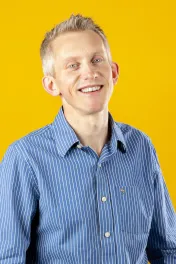
Hosted by Andrew Pain
Andrew Pain is a Mental Health & Resilience Keynote Speaker who speaks from lived experience on resilience, burnout and workplace wellbeing. Host of the Men on Show podcast, author of the book Honestly, Man, and a TEDx speaker. Member, International Coaching Federation, and Mental Health First Aider trained.
More from Men on Show
Keep listening
Never miss an episode
Candid conversations with everyday heroes – ordinary men doing extraordinary things.