Men on Show · Episode 42
Why I blanked out my r*pe for 15 years and why I stand for ALL victims of abuse with Duncan Craig
- 26 February 2025 .
- 1h 5m .
- Hosted by Andrew Pain .
Duncan is is the Founder and CEO of We Are Survivors.
Andrew hosts this podcast. His own keynotes are on burnout, resilience, imposter syndrome and difficult conversations.
In this episode
About the conversation
In this episode we discuss how the charity started, Duncan’s role in it, the different projects they work on and why he was inspired to found the charity through his own story of surviving sexual abuse.
Duncan is a gay man and was sexually abused as a child and later sexually exploited as an older teenager and young adult by a male perpetrator.
It took him a long time to realise that what he went through was actually sexual abuse and we discuss the impact that it did or didn’t have on his sexuality and how that can be a common issue among victim-survivors.
Key points of the episode
- How his Grandad was his greatest inspiration, friend and muse.
- The importance of kindness and its relationship to mental health.
- His time in the performing arts.
- The life changing events, and his perception of same.
- How it was like 2 lives - the light and the dark.
- "As he grew up, the abuse grew up" .
- How much therapy helped and how the floodgates finally opened.
- How his journey to becoming a therapist helped.
- The creation of "We are Survivors" .
- Given the size of his home - Manchester - how he could not believe the lack of support there… and what he did.
- His journey of healing.
- How the organisation has expanded, and the reach of its work today.
- The odd objections he gets from a minority.
- How the data on these subjects can be convoluted and poorly curated.
Men on Show shares lived experience and honest conversation – it is not medical or therapeutic advice. If you're struggling, you don't have to cope alone.
Samaritans: call 116 123 (free, 24/7) NHS: 111
Full transcript
Read the whole conversation
A complete, verbatim transcript of this episode – every word is the host's and guest's own; the topic headings are ours.
Welcome to Men on Show, the podcast Candid Conversations with Everyday Heroes. Join Andrew Pain as he interviews fascinating guests, ordinary men doing extraordinary things. If you love the show and you think somebody could benefit from hearing it, why not tell them about it by giving it a share on social media? Oh, and at the end of the podcast, if you can leave us a five-star rating and a review, it really helps us more than you know, and it gets this important message out to more people that need to hear it the most. Right now, enjoy the next episode.
Hi, my name's Andrew Pain, host of the podcast Men on Show, and I'm absolutely delighted to welcome Duncan Craig to the podcast Duncan Craig OBE. That is an impressive, impressive accolade. I've not met many OBE holders, so great job. Duncan is the founder, chief executive of We Are Survivors. It's a voluntary sector organisation supporting male victims of sexual abuse, rape, and exploitation. His list of accolades is very long. If I was to go through it, we'd be here all day. Obviously, we've mentioned the OBE, which is absolutely out there. What did I understand, Duncan? Was it for your services for male victims of rape and child abuse? Is that?
Yeah. So the actual honour is for services to male victims of rape and child sexual abuse. Oh, wow. Wow.
Well, incredible. Well done, you.
Thank you.
As well as the OBE, he's consulted on script and story development. And I think as an expert in your field, you know you've got there when soap operas are coming to you, asking you to consult on none other than not just Holly Oakes, not just Casualty, but the big two, Coronation Street and EastEnders. I mean, again, amazing stuff. Working closely with government, the NHS Crown Prosecution Service in relation to supporting victims of rape and abuse. So I mean, these are just a few of the snapshots. And I could continue for a very long time. Duncan, welcome to the show.
Read the rest of the transcript Collapse transcript
Thank you.
His granddad, and his start in theatre
Cool. Well, look, it's a pleasure having you here. And the first question I always start with, with all our male guests is, as a guy growing up, was there someone that particularly inspired you growing up that you recall?
Yeah, my granddad. My granddad, the best, my best friend in the whole wide world. He was the most incredible man. And I mean, I knew it at the time. I knew it at the time. But since he died in 1999, I think it was, yeah, 1990, 2000. So that kind of, that September of, as we come to millennium. And since I lost him, I've just discovered over the years more and more and more stuff about him, which just makes me, I don't know, it makes me just love him even more if that's possible.
But also, just be really inspired by him. And so much stuff makes sense. He was the best storyteller in the world. And even at the age of, what, in his 70s, we were still, well, like 60s, 70s, we were still going on these long walks, climbing up hills and all sorts of stuff. And he was the person that introduced me to culture. He was the person that opened my eyes to theatre, of which I then ended up having quite a long career in the performing arts.
And he was the person, without a shadow of a doubt, he was the person that gave me, I suppose, my social conscience. He was the person that was helping guide me through, as he would always say, making sure you look after the underdog.
Oh, I love that. And what gave him that sense of purpose? What was his story? Was there a particular experience? I mean, obviously you're saying you had a lot of stories to tell.
Yeah, I mean, he... So his father died in the First World War and is buried abroad. I think in, I think in Germany, I think. And so he grew up without his dad, but would always talk about his dad. And then my granddad was stationed in Malta during the Second World War. And he had the most amazing friends. He would often talk about them. He would never talk about kind of like the horrors of war. He would always tell me these fabulous stories about him and his friends.
And he had this tattoo on his arm of a snake. And I remember, like, it became like a bit of a family story that I would go in school and would talk about the fact that my granddad's got a snake on his arm. And one of the teachers, when I was a kid, one of the teachers said something like, oh, is it a tattoo? And I was adamant, no, no, no, it's real. It's just it only comes to life when no one's looking.
I just like this fantasy kind of stuff. I think for me, though, the thing about my grandma used to say, oh, you always bring the wastes and strays home with you. And it was my granddad that it was my granddad that would always be the person that when we were out, he would always give some money to homeless people. And he would always tell me stories about how kind people were to him throughout his life, particularly when he was in the war.
But many, many, many years later, I found out that, and this was when he died, I found out that he had two quite serious suicide attempts. I mean, I'm guessing, I really am guessing this. One of them was just after he came back from the war. And I mean, if you think about it, we don't talk about, we never talked about PTSD back, just after the Second World War. But there was a story that I was told about the police finding him sat by the canal and bringing him home and him being in hospital.
And so I think, because he knew all of that, and I think he lost one of his friends to suicide, although I only knew that afterwards, but he would always talk about this friend. I think he was showing me something about mental health and showing me something about being kind because others are kind to you. And yeah, an amazing man.
Amazing, amazing. And you mentioned he introduced you to culture. You were in the theatre. Did you have a sense of what you wanted to do? Did something happen where you suddenly thought I'm going into theatre?
No. I mean, when I was growing up, we would always go on days out, just me and him. Just me and him. Nobody else was allowed. So we would often be at the Science Museum or the Air and Space Museum in Manchester, where there were just like all these planes and helicopters. And then we would go to if there was a fairground on or every year, we went to the pantomime and it was like the most exciting thing ever.
And I just got this real taste for, I don't know, showing off performance. And I would put on plays and I would do a lot of make-believe. And he just really encouraged it. And so when I was leaving school in Howard, fifth year, I don't know what key stage year it is. I'm talking old money now. So fifth year, as I was leaving fifth year and going into college, I wanted to go and design sets and design the big windows like Harrods and House of Fraser.
And because the Christmas window reveal was always something that we used to go and see. And I just thought it was so magical. And whilst I was at college, I got a job working for Granada Television. And there used to be a visitor attraction called Granada Studios Tour. And it really was like in its day, it really was the kind of the MGM, kind of Universal Studios of the Northwest. You got to see the sort of the behind the scenes of Coronation Street.
And we had the inside of the House of Commons that was originally built for Jeffrey Archer's First Among Equals. We had the original set for Sherlock Holmes, of which Jeremy Brett's Sherlock Holmes, I arguably one of the better ones. And I just used to get to play on these sets and do make believe and be characters. And that then led me into the theatre. And yeah, it was all about kind of being anybody that you wanted to be.
Grooming from 11, and the rape at 15
Amazing, amazing. It sounds idyllic in a way, but then you had a life experience that changed things. Are you happy to talk about that?
Yeah, yeah. I mean, the two things, if I'm honest, Andrew, I think the two things kind of go together. So I talk about sort of like being 15 was the first time that I remember the rape happening. And it's really important that I say the first time I remember, because actually what I'm talking about isn't just a one incident thing. I'm talking about being sexually abused as a child. And so, the grooming, I think, started round about 11-ish, and the whole lifespan of it went to round about 17.
Now, that's not that I was sexually abused, raped, and sexually exploited continuously. There's lots and lots and lots of incidents by the same individual, by the park keeper. And I think two parallel things were going on at the same time. I had this wonderful life, this wonderful childhood, going away, doing all these brilliant things with my granddad, and then at a certain point, things were dark, as if I had two lives. And I think part of me sort of leaning into the, I suppose you could call it escapism, was because I was trying to escape from, I was trying to not be the boy who was experiencing these things, experiencing these touching, the sexual experiences that were traumatic without a shadow of a doubt.
But at the time, just incredibly confusing. So how I kind of think about as I grew up, I always talk about as I grew up, the abuse grew up. What I mean by that is, the early stuff was very much more kind of, I always tried to make sure that I don't fall into my psychotherapy kind of mind and start talking about it through that lens, because no one wants to listen to a whole lot of psycho babble nonsense.
But what I'm talking about is testing boundaries. That's clearly what he was doing. Testing the boundaries to see what I would and wouldn't accept. So the early stuff was lots of toy fighting, tickling, that kind of stuff. And then as I got older, the tickling, the toy fighting ended up with grabbing. So grabbing parts of my body that no man should be grabbing. Engaging in bringing in and introducing kind of pornographic magazines. So again, looking at this through the eyes of I am now as the psychotherapist in this field, I'm like, oh, okay then.
So then that was again, trying to normalise sex and trying to normalise a lot of this adult stuff. And then from kind of that sort of normalisation, then it makes it easier for him and made it easier for him to introduce like masturbation and until you kind of get further and further on until like that 15, 16 when the first time I remember being sexually assaulted in that way, like we're talking about penetration at that point.
And that was kind of, I think that was such a significant moment because I think that the scariness of it, the confusion of it, I think was that if I'd shut down in some sense from ever talking about this, that was the point that locked the door.
And where did you meet this? You said he was a parkkeeper.
Parkkeeper, yeah.
How did that start?
So I don't know. I mean, I don't really know when it started, I don't really know when it finished. I mean, I have a rough idea. But there's a bit of me that kind of over the years has really crucified myself over that. Like, what do you mean you don't know? And like other people asking, you know, when did it start, et cetera. And I kind of get too much more of an intelligent answer now, which is, well, you're not supposed to know when you're being groomed.
That's the whole point of it. Yeah, it's it's this normalisation. And so I go to the fact of some anchor points. So I knew where I lived, I knew where I would be going, I knew what school I was at. So I'm like, OK, so it had to be at that point. And it and it had to finish at that point because I wasn't there anymore. And so he was just somebody that everybody kind of knew.
He was somebody that all the kids and all the local community knew. And yeah, I don't really remember, if I'm honest, about how did it go from absolutely nothing to even the beginnings of something. But like I say, the intellectual part of it goes, yeah, but you're not supposed to know. That's not supposed to be a cliff edge. It's supposed to be so normal that you don't even notice. And he did exactly what he, I don't know, set out to do.
Which is why, the other question that people often ask is, was there anybody else involved from both a perpetrator or a victim point of view? In a kind of, thinking about it in a very sort of criminal justice sort of way. And the answer is no, I never remember any other person ever been involved at that point. Either somebody else that was involved in harming me, or did I ever see him harming anybody else? No, but again, I guess I'm not supposed to know.
And that's why I think he was so expert at it. You don't get that good at a behaviour without practice. I'm convinced of it. I'm convinced of it. And I've worked long enough with perpetrators of sexual violence as well, that I know kind of behaviours. I know the kind of the psychology bit behind it. And so, yeah, I think this was probably something I've been doing for quite a while.
Questioning his sexuality, and breaking silence
And you mentioned it sort of locked you up, that final act. So I was going to say, at that time in your life, then how does that impact you sort of emotionally? You're growing as a guy, you're not technically a man. Obviously, you're 15, maybe going on 16. How did that impact you emotionally?
I think, again, like, I don't know, I don't remember. But when I look back, and I think, what was I like? Was there any signs there? And I guess there's two things that really strike me. I think around that time, there was a lot of self-questioning of sexuality. Partly, maybe, maybe, let me caveat this, maybe partly because of what was going on with the abuse, but maybe partly that would have happened anyway. It's impossible to say, because I can't go back in time and do a kind of another run of it without that, to see whether sexuality questioning would have been part of.
But I think it might have been. I think it might have been. And so, let's say it was. I was questioning who I was anyway. I had girlfriends at the time, but then there was something that just never felt right. But at the same time, where I grew up, there wasn't much diversity. There wasn't much difference. A very, very northern, white working class. The Coronation Street type of environment, and different people really stood out. And so, I remember there was this old guy, I say old, and he was probably the same age as I am now.
But because I was a lot younger, obviously, just seemed like an old guy. There was this old guy who lived round the corner, and I remember him being with another man. And I don't think, I really don't think, I had like a concept of, oh, he's gay. Not in the way that people who are 15 have this complete concept of it now. I don't think I ever did. But I knew there was something different about them, and I knew that, I suppose in some way, I knew that they had sex.
I knew that they were that type of... And there was this real... How would I describe it? Like a permission. We were always sort of inadvertently given permission to be able to shout at them, call them names, play knock-a-door-awn as kids. It was always... The other adults in our lives always kind of turned a blind eye to that. And I think that's, you know, what we're talking about is community homophobia within that. And so, I think there was something about me recognising those two guys are doing something in a sexual way and kind of like, okay, but they get hounded for it.
And yet this thing that I was experiencing with this man was like, oh, maybe that's the same as them. I better make sure that no one ever finds out. And so, emotionally, I think I shut down and put a mask on because I wanted to hide what was going on, but maybe who I was. So the two things kind of end up being really blended together. One of the things that I think is so important when we talk about males and why male victims, male survivors, have some differences than female survivors.
Because overwhelmingly, we know, whilst there are female perpetrators, overwhelmingly, perpetrators of sexual violence are male. And when you're a male victim who experiences sexual violence, sexual abuse, exploitation, sexual harms, as we try to call it now, you're more likely to be abused by a male. And so, male victims at every age, I think, experience, in layman's terms, question of sexuality. And I don't necessarily mean every person goes, oh, am I gay? Am I not gay? I don't mean it like that.
It's much more subtle and nuanced. Like, I suppose in some ways, it's like an attack on the very fabric of someone's maleness. I don't think that female victims and survivors have the same experience. Because whilst, again, I say, there certainly are female offenders, females are more likely to be assaulted and abused by a male. And in some way, sexuality doesn't kind of come into it, if that makes sense.
It does make sense. It does make sense. So when were you first able to confide in someone about what had happened?
I was 29, 30.
Wow, so for nearly 15 years.
Yeah, sadly I'm just an average. I'm just an average. So the average length of time that a male, if he doesn't disclose at the time of something happening, the average length of time that a male will be in silence is round about 20 years or in excess of 20 years. It's usually between about 17 and 21. So it's round about that time. So I had my career in the theatre and TV, and then decided that I wanted to kind of leave it all behind, and again, my granddad's influence, and I became a drug and alcohol worker.
I'd seen lots of people in the theatre and TV have drug and alcohol issues without a shadow of a doubt. And so, yeah, I went to do that, and it was that that then led me on to accessing therapy myself. At that point, I hadn't really ever made that big disclosure, but I loved being in therapy. It was one of the most like, refreshing. I felt like I could breathe again, and I remember leaving my therapist, finishing therapy, and kind of thinking, I want to do that.
And I think that's the first time I ever, I want to do. I think that's the first time I ever really wanted to do something. And so I went off to train, and whilst I was in my clinical practice, so 29, I would have been 29, 30, I was working in the NHS, doing my clinical placement, and I was working with a lad, 17-year-old lad who had been sexually abused by his uncle. And I was waking up in the middle of the night, like, having these nightmares, these night terrors, where effectively, it was like I was replaying what he was telling me about, but it was like my face on him is probably the easiest way to describe it.
And I, as a trainee psychotherapist, you have therapy, you have what's called clinical supervision. And I went to my clinical supervisor, and I was talking, I was like, something about this lad that is just, I just can't get him out of my head, and, you know, he'll just think about something, and can be walking down the street, and he just pops into my mind. What I now know that as being is trauma, and me experiencing secondary trauma or vicarious trauma, being traumatised by his trauma.
And my supervisor, Heather, said, so what do you think it is about this individual? Because I'd worked with people before who were adult survivors of childless sexual abuse. And I was like, oh, I don't know. I mean, it's not like I've been abused. And she said, I didn't say you had. And literally the floodgates came open. And I just remember seeing like his face in my mind and thinking, hold on a minute. I can't have been that age, and he can't have been that age, and I must have.
And like, I suppose like all the jigsaw pieces came down, and I had this real moment, and I just broke down. I just broke down crying. And that was the first time that I think I ever put two and two together. And you know, the power of the brain and the power of story telling. I think my brain had told me lots of stories and or maybe rewrote the real story. Because I remember having these conversations with friends about, oh yeah, when I was growing up and when I lost my virginity and blah, blah, blah.
And I would always be thinking about him, but I would always talk about it like it was, there was an equality to it. And there wasn't, you know, when it all started, I was like 11, 12. He would have been like 50, 55. So when I was like 16, he would have been late 50s, early 60s. And there was this, like, that was that moment of all these years, I've kind of re-narrated the story to have some level of equality.
And now I look and it was completely unequal. So yeah, that was that. I have therapy to thank for it, but interestingly, not going to therapy, being the therapist.
Being the therapist, that's so interesting.
I often think, I genuinely, Andrew, I often think, if I hadn't trained to be a therapist, would I have broke my silence? And I honestly don't think I would have done, because I didn't have a compare-contrast. And I think the compare-contrast, being the therapist working with this lad, I think that compare-contrast broke the story. And I think if I hadn't had that, I just would have carried on thinking what I thought.
Starting We Are Survivors, and its services
So you create We Are Survivors back in 2009, 16 years old. I can see that behind you as well, which is congratulations. I mean, that's amazing. 16 years to have that organisation developing and holding that together is a wonderful thing. I'm presuming that this, that the rape and the impact and the recognition of that, sort of 15 years later, that's what prompted you to set up the organisation?
Yeah. Yeah. I went looking for, as soon as I kind of broke my silence, I just wanted to know everything. I wanted to know everything about the subject of male victims of sexual harms. I wanted to, I was thinking about all the experiences that I've had throughout my life, being sexually exploited much later, and I'm thinking, I need to know. And I mean, I was born and bred in Manchester. Manchester, arguably, is the second city, depending on who you speak to.
People from the, yeah, I know I heard your accent. I'm from Birmingham. Exactly, exactly, yeah. There's a bit of a tussle, isn't there, between, I mean, Manchester often thinks, of course, Birmingham, you're the second city. We're not arguing with you. It's the argument between you and London that needs to decide on which is the second city. Manchester, being this great city that it is, I was so shocked to find that there was no support here. And so I went looking slightly outside.
There was no support. And then I was looking in the Northwest. Couldn't find any. And the more and more and more I looked, the only place I could find was a place in London. But they were only serving London. And so I did what I think lots of men do, is I turned to the Internet, and I went looking for support services for men. I found a website called malesurvivor.org, which is an American website. And at the time, they had lots of, like, what would you call them?
Like notice boards, where people just kind of would put stuff and answer stuff, and then they had a chat room. And so when I was, you know, waking up with night terrors and not necessarily wanting to even go to bed because I didn't want to dream, and I would go online, and I would go and just chat to people. And then the time difference meant that the chat room at night for me was in the day in the American, so I was really busy.
I got pointed to an organisation in Wiltshire by an American, and I started my journey of healing and kind of got to this point where I just thought, right, okay, once I've qualified, once I have got myself to some level of sanitary, I'm going to start this organisation, and that's kind of where it started from.
Yeah, what does it achieve today? What's its purpose? We are survivors. What do you do?
So we do the same thing as we've always done, which is about providing trauma-informed, survivor-centred services to male survivors and their loved ones. So that's everything from traditional kind of one-to-one talking therapy, group activities. We have a drop-in. We have a garden at RHS Bridgewater. So the lads are growing fruit and veg and flowers and just tending to the garden plot. We have art therapy. We have creative writing groups. We had and have the first ever male ISVA service, Independent Sexual Violence Advisor.
So the role supports an individual from report to court. And we also have a service in all 15 prisons across the Northwest. So three days a week, we have a survivor talking therapy service in all 15 prisons in the Northwest, which I'm really proud of, our outspoken service. And we also have started a new service now, which is kind of separate. It's part of the organisation, but it's done in a separate space with separate staff, which is the group of survivors that no one really wants to talk about, those that have committed sexual offences.
So the idea, and I've spent years being really clear about this, the idea that if you've been abused, you'll go on to become an abuser. The data doesn't stack up to that whatsoever. About 3% of victims will ever go on to offend.
Ah, it's low. Okay.
Interesting. Yeah, it's really, really low. What there is, though, flip to that, a different data set is a really high percentage of paedophilic contact offenders. Really high percentage of them have been abused themselves. So what we know is that the majority of offenders have been victims, but a tiny minority of victims will ever go on to offend. Two different data sets.
Yeah, that makes sense. So you have now a service for survivors who also go on to perpetrate.
Survivors who have offended.
Who have offended, yeah.
Yeah. So the reason for that is we have our vision of no male survivor left behind, and that has to be no male survivor left behind. We have to ensure that. It's important. We can't pick and choose. If we're here for male survivors, we're here for all male survivors. We have to be. Now, there is a safety aspect to it, of course. I can't have people who have committed sexual offences in the same space as those that haven't.
There's a real practical stuff to that, and we've sorted that out. We have a different space, and different team, et cetera, et cetera. But we've also kind of like begun to re-pick up populations like sex workers. So male sex workers, men who are kind of content creators, who are engaged in porn, and men who are homeless, men and boys who are engaged in drug and alcohol, as a coping mechanism, prisoners. We have to, I feel really strongly about this as a survivor, we have to stand by and make sure there is provision of support for all survivors.
Objections from men's rights activists
And given that some of the survivors, you know, in media terms could be seen to be an unpopular group of people. How do you find it when you're, I know on your bio, you're often sort of at parliament, you're campaigning, undoubtedly probably trying to fundraise as well, undoubtedly probably rubbing shoulders with other groups that promote women's equality for women and girls, that their whole work is about keeping a narrative quite clear, that actually the vast majority of victims of violence in the UK are women and girls.
How do they deal with you? What do they like with you? Are they quite welcoming of you within this space? Do you feel that there are walls up? Or how does that work?
On the whole, I have never had any problems with the women's movement. On the whole, there have been pockets by individuals. So many years ago, I remember, the very, very, very beginning of my career in this area, there was certainly hostility to me being there. I was often the only man in the room. But that was only by a very, very small select group of people. Now, nowadays, I think partly because I hope, because what I'm saying is just logical and makes sense, that I'm accepted for what I'm saying.
Apart from, like I say, a couple of very, very academic-y type people in the women's movement, services on the whole, never had any issues. The issues that I've often had and still have are from men. They're from men's rights activists who, I think, I'm just not the right type of man for them. I'm not manly enough. Whenever I get hate stuff, is often from men's rights activists. I've had some of the worst trolling from MRAs.
Is that because certain groups of men would sort of... Something that you said on this podcast, which you have the research, you have the experience, you have the work experience, you have the life experience that backs this up. But I suppose there are some men's rights activists that would be very clear that sort of the number of men abused by women is hidden, goes under the radar, underreported, and is far higher than we have data for.
So is some of that reaction, just because obviously you stand up for male survivors, you thought, well, men's rights activists surely would give you their support and blessing. Not that you need that, but they would do that. But is it because you're saying that actually the vast majority of perpetration of sexual violence is men? Is that the issue? Is that the beef that they have? Do you think?
I have no idea because I don't often... It's not something that I often talk about. I don't stand out there saying the majority of people are... Majority of bodies are men. That's not in my narrative. That's, you know, like anybody could kind of go and Google anything I've been saying. And even if it was, okay, let's say hypothetically that that's what I've been doing. Does that warrant onslaughts such as... And I'll tell you, this is some of the hideous stuff that comes from MRAs.
One thing I remember in particular was I did a piece in the Express, in the Daily Express. Not my kind of newspaper, but it's important. No male survivor left behind. I have to speak to all political persuasions. I have to speak to in all spaces, because all male survivors need to ensure that they know that they're not being left behind. There was a photo, and we did a report. I did an interview. And in the comments, one of the comments that came from an MRA was, he ought to think himself lucky that he got raped. At least somebody touched him. Like, wow!
Yeah.
Okay. So even if, even if my whole interview was saying something about the disproportionate amount of men that commit offences, I still don't think that kind of shit is warranted.
And I think some of that is, with social media, people can just sit behind a persona, that, you know, they can call themselves, and they just come up with any old rubbish. Yeah, yeah, yeah. But, but, and I think, but I wonder with men's rights activists, where perhaps you're dealing with more logical, balanced thinkers within that subset of people, I wonder whether that would be their beef. I mean, my own approach would be the data is what the data is.
Yeah. We know that in domestic abuse, in terms of abuse, manipulation, gaslighting, emotional control, the data suggests that there's a group of men where there's quite a number of the perpetrators are female. Most male victims of domestic abuse, the perpetrators are female rather than from the LGBT community. But sexual violence is a totally different thing. Would that be your, and within sexual violence, it's male driven?
What data is collected on men and boys
I don't want to compare because I don't know the DVDA data very well. What I would say, what I would say is data, my comment on data in general is that we don't know enough. We really don't know enough, and we can only know what we know. We can't know what we don't know. And what I think is really important is that we have a really honest, open conversation about what are we actually collecting? So we can talk about the analysis of it, we can talk about the analysis of it, and there's lots of, I could go over hours about the analysis of the data.
But what are we actually collecting? What is our national data sets? I, so something as simple as, when the police collect data, they're collecting, they're often, the data sets are focused on the victim, whereas the Crown Prosecution Service data is on the perpetrator. So if you're wanting to know something about a case, let's say you're supporting a victim of even domestic abuse, you're supporting a victim and you want to know something about the case, if you ring up as that victim's supporter, you can only find out about the case if you know the name of the perpetrator, because that's how the case is classed.
And so then when you try to pull together Crown Prosecution Service data and police data, it doesn't necessarily talk to each other and then add in to that health data. And I'm only talking about police, Crown Prosecution Service and health data, because there's your three big data sets. There are your three big data sets. Then on top of that, you've got Crime Survey England and Wales, which lots of people refer to as British Crime Survey. And then there is a wealth of data in organisations like mine, in the voluntary sector.
The voluntary sector is so data rich, but there's no standardisation of data. And so often what we're talking about is apples and pears and oranges and lemons. And then what then happens is people who legitimately, I have no time, I say this very popularly, I have no time for MRAs that just want to come and go, like, I'm tired of it all now. I'm tired of it. Now, if you want to have a legitimate conversation with me, and you want to tell me that something I'm saying is wrong, or I've not got the right data, I am dead happy to do that.
But please don't tell me that Bernard on Twitter has told you blah, blah, blah. I couldn't give a shit about Bernard on Twitter. I'm interested in good solid data. And I think we have got to really get underneath that, really get underneath that and try in some way to look at what do we really know. You and I can't have a conversation about data without going well at the moment. The data for men and boys is in the data for women and girls.
When we talk about violence against women and girls, so sexual abuse, domestic abuse, so-called on-the-base killing, forced marriage, FGM. The five kind of key crimes that are worldwide within the UN, they're the five biggest threats to women and girls, safety and lives. And so if you're a male, so for me, as a sexual violence victim and for anybody, any other male that's a victim of any of those crimes, we're classed as victims of violence against women and girls.
Now that's bonkers, that just makes no sense whatsoever. But the data, whilst the Crown Prosecution Service, Home Office, MOJ, have committed to making sure they can do much more data cleanliness, part of the reason for some of this isn't that there's been somebody sat in an office somewhere going, oh no, we're not separating it. It's that they've not even been able to. Like some of the tech that some of the databases that they use are so old, like we really need to update.
If data is the new gold, if data is the new currency, we better get on top of making sure that we understand what we can put in to a database. We should be able to get out of, we should be able to use properly. And so yeah, there is this bonkers thing around data where we still, men and boys are clusters, victims of violence against women and girls, and so what that does is that starts a whole, A, conspiracy theory, B, a whole load of people are trying to ignore us and blah, blah, blah.
I don't think anyone's trying to ignore anybody. I genuinely don't. I think what there is though, I think sometimes I think there's a slight embarrassment that this bonkers thing is happening and actually no one knows how to get the data out.
A strategy on violence against men and boys
So, and that's a beautiful segue into sort of the final topic I want to cover really on this. I've seen you campaigning for sort of a specific strategy to tackle violence against men and boys. It's something that I feel strongly about. For me, surely you'd either have a VAMB as well as a VAG, Violence Against Women and Girls. You'd have a separate strategy or you just have a violence against people strategy, I suppose, that encompasses everything and then that you have to have your subtopics within that.
But I know you've created your own strategy, haven't you? In the absence of there being a strategy, what's the purpose of that? I mean, you've mentioned by not separating it, you get this conspiracy theory, you get a sense of nobody cares about us, and you don't feel that it is that deliberate. So if there was a strategy, what does that actually achieve? What does it do for anyone?
So first of all, many people have said exactly what you said. Why can't we just have a violence against people strategy? So I think when you neutral, because that's about neutralising, let's make it neutral. I think when you neutralise something, you lose good detail. And so I am of the opinion that we should have a violence against women and girls strategy and an interpersonal violence against men and boys strategy. My personal preference would be if the violence against women and girls strategy is focused on the kind of the big, what in policing you would call force threats, what are the big threats to these individuals?
I think we should do the same, we should have the same aetiology of it with males. So I would have a strategy that looks at domestic abuse, sexual violence, so-called on a base killing, forced marriage. So that's like parallel. And then I would add into it suicide and knife crime, because that's hitting the markers for the, what are the big threats to males, health and wellbeing, life, et cetera, et cetera. In the absence of a national strategy, Greater Manchester, we devised our own.
So the strategy was written and the plan was written by Professor David Gad at University of Manchester and myself, we co-authored it. We took a whole load of information and opinions from a wide range of organisations that work with men and boys. I discovered things like data, how poor our data collection is around so-called on-the-base killing and forced marriage when it comes to males. The data collection on that is so poor, and the response to those crimes, for want of a better phrase, is very, very, very poor across the country.
And so we need to really start looking at sexual violence and domestic abuse as the kind of the two big hitters in that area. But some of the other ones, we don't do it hardly enough. And so the strategy for me would focus on exactly the same thing as the violence against women and girls strategy, which is about making sure that there is equal, equitable access to support for male victims, making sure we understand the differences.
So I understand the arguments and the theories behind violence against women and girls and patriarchy and male dominance. And I understand all of that. I understand the psychology and the theory and all that behind it. But there's a question that I have to ask, which is, was I sexually abused? Was I raped for exactly the same reasons as a female is? And the answer is, I don't know. And I don't know, because nobody's been doing the research.
No one's asking those questions about men and boys as victims. I also think that, you know, we have to think, well, is sexual violence committed in war? I spent some time in Uganda in 2019 with a group of international friends and colleagues, where the whole purpose of the work was about supporting and working with men who had experienced rape and sexual exploitation as an act of war. Is that patriarchy? Is that? And I'm straight away, I'm like, mm, I don't think we can start adding those things in.
So we have to do a lot more, and that's what I would hope. Well, not hope, but that's what the Greater Manchester Plan is about. It's about tackling those issues to ensure that victims, men and boys, have good access to support, that their loved ones have good access to support. And also, and really importantly, the perpetrators of these crimes, you know, again, statistically speaking, what we know from data sets is that they're overwhelmingly male, disproportionately male, however you want to describe it.
I'm interested in ensuring that those people get access to the right services and treatment. What, why wouldn't I be? Like, that doesn't make any sense to me. I am, I am desperately, it's desperately important to me that the health and wellbeing of men and boys is better than it is. Having been through that looking round for help when nobody was prepared to help, or I just was going to knocking on doors and being told, we don't support men and boys here.
I'm so sorry. We don't support men and boys here. We're a women's organisation. Me just going, what do you mean? No one wants to help me. That put the pin in the map for me of, I have got to do everything. And that's where the strategy will come from. It has to be separate. We have to have those nuances.
Why the strategy names women and girls
Yeah. So final question. I'm aware that Baroness Newlove, current Victims Commissioner, wrote to Jess Phillips before Christmas, imploring her to create a separate men and boys strategy, describing it as most unfortunate, I think were her exact words, that the Tory government did not do such a thing. Do you think we'll see a violence against men and boys strategy within this current government, or do you think we're still quite a long way off? What's your gut feel on that?
So within this current government, do you mean, so within the next four years? Yeah. I am more hopeful than I have been about the past 14 years. I'm much more hopeful. I'm much more hopeful. The bit that, so I spend quite a bit of time at both the Ministry of Justice and Home Office. The past few weeks, I've spent quite a bit of time with Minister Phillips and a number of different people including Baroness Newlove, Vera Baird, Dame Vera Baird, the previous Victims Commissioner, Sarah Cruz, the Chief Constable for Avon and Somerset, who effectively is the architect, one of the architects of Operation Sceteria, which is the National Guidelines for Sexual Violence.
I haven't ever had a sense from any of them that they don't want to do this. What I would say is that there is, I think, part of a confusion as to why this is the way it is. And I think what there may be sometimes with some people is that there's a, well, somebody must have decided this. And like, if we reverse it, what are we missing? And I genuinely, genuinely, having, I was there at the beginning.
So I was part of the original Sturm Review. And I put it into Baroness Sturm's review of rate investigation, which is 2008, 2009. I was there at the very, very beginning of the violence against women and girls strategy. I have actively been involved in all of all of that work and continue to be and continue to be. And I'm very proud of that. But if somebody said to me, Duncan, like you were there at the start, how did it end up being violence against women and girls?
And I would say, well, it didn't. It was originally violence against women and children. So I remember being at home office meetings, at VORC meetings, violence against women and children meetings, and then being at NHS meetings and talking about violence against women and girls. And I remember being at a particular meeting, and I was sat next to, and she wasn't Victim's Commissioner at the time. I was sat next to Vera. I've known Vera for donkey's years.
And people may remember Vera had been Solicitor General, and as well as been an MP at one point and a PCC. And I remember being like, sorry, I've got a question. Can we just get straight what we're talking about here? Because I go to that meeting, and you're talking about violence against women and children. And I come to this meeting, and you're talking about violence against women and girls. Are we talking about the same thing? And everybody would go, yeah, yeah, yeah, yeah, yeah.
And I genuinely, genuinely, I think that what happened was somebody somewhere just wrote it up, like, yeah, okay, like, we just need to talk about the same thing. And that was it. And that's why we're stuck with what we're stuck with now. I've never, ever heard anybody present me an argument or tell me that it's really important that we have men and boys included in violence against women and girls. No one's ever said that. I think what there is, is just a whole load of head scratching that goes, how the hell have we ended up here?
That's very interesting. Because I had heard, I know I'd read it somewhere. And I know we can all say, I've read it somewhere on social media. It could be burned on, maybe it was burned on Twitter.
Burned on Twitter. I'm sick of it.
Yeah.
I'll burn it out. I'm sick of it too.
I'd heard there'd been sort of a sense that it's called the Violence Against Women and Girls strategy because the vast overwhelming majority of victims of violence are women and girls. But of course, statistically, that's not a completely true. But I'd heard that was a reason. But maybe, as you say, maybe it just happened. Some things do just happen.
Yeah.
Maybe it just did happen.
And if you go right back into not just the UK, but worldwide, Violence Against Women and Girls was the thing that everybody was talking about, UN member states, because that was the reports and that was the research that was happening. So we as a country, we didn't do something that nobody else was doing. In fact, I would argue we were doing something better, because we were talking about Violence Against Women and Children, which includes boys.
Yeah. Yeah.
Now that makes sense.
Finding Duncan Craig, and a last message
So, I mean, I feel hopeful. I feel positive talking to you, which is great. It's nice to see things changing. You're doing incredible work as you have been doing for some time. We're very, you know, I feel very blessed with Three Sons, knowing that there's people like you out there, doing the work you're doing. It's incredible. To some of the pod, to finish the podcast, it's been a fantastic conversation with you. There's just...
Yeah, I really enjoyed it.
No, good. Thank you. No, me too. Where can people find you, first and foremost?
Yep. So, www.wearesurvivors.org.uk. If you go onto there, you'll find loads and loads of information.
Brilliant. And you're obviously on LinkedIn as well. That's one of your main social media.
Yeah, LinkedIn. I was trying to think of my LinkedIn profile. If you go onto the We Are Survivors website, my LinkedIn profile is on there. So, yeah. And then every social media where the organisation is at, this is Survivors.
Yeah. Well, I'm sure there's a lot of Duncan Craigs on LinkedIn, but I don't think there'll be as many Duncan Craigs with OBEs.
Yeah.
They could always search for that and they'll come to you. Yeah. So, and to conclude the podcast completely, if you had a two sort of sentence, in a couple of sentences, if you could give a message of hope to those listening to the podcast, what would you say?
I would say, in the words of my wonderful friend, who is now the sixth time Emmy winner, Golden Globe winner, et cetera, et cetera. In the words of Mr. Richard Gad, no matter how bad it gets, it always gets better.
Oh, I like that. No matter how bad it gets, it always gets better. That's great. Well, look, thank you so much for your time, Duncan.
It's been a pleasure talking to you.
Thank you for listening to Andrew Pain's Men on Show. If you could leave us a five star rating and short review, it would be really, really appreciated. It helps us get this important message out to more people that need to hear it the most. See you on the next episode. Thank you for tuning in.
About the guest
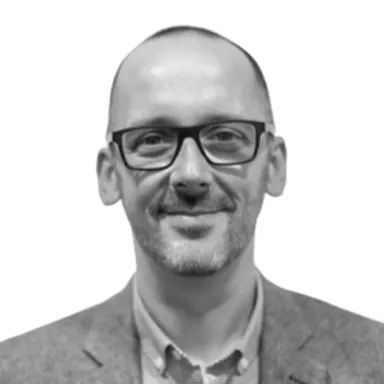
Duncan Craig
Duncan is the Founder and CEO of We Are Survivors. We Are Survivors is a survivor focused voluntary sector organisation that aims to create and facilitate safe spaces for male survivors of sexual abuse, rape and sexual exploitation across Greater Manchester providing access to quality assured support.
Their work is focused on developing ways for individuals to empower themselves to work through personal and sometimes painful issues, guided and supported by their trauma-informed team, following the trauma and recovery model.
Hosted by Andrew Pain
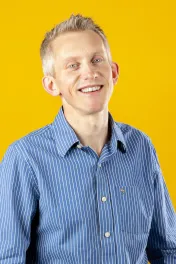
Andrew Pain is a Mental Health & Resilience Keynote Speaker who speaks from lived experience on resilience, burnout and workplace wellbeing. Host of the Men on Show podcast, author of the book Honestly, Man, and a TEDx speaker. Member, International Coaching Federation, and Mental Health First Aider trained.
Never miss an episode
Candid conversations with everyday heroes – ordinary men doing extraordinary things.