Men on Show · Episode 39
Men, Sexual Abuse and Mental Health: how do you heal when you've been groomed? with Phil Mitchell
- 11 October 2024 .
- 57 min .
- Hosted by Andrew Pain .
Phil is a senior accredited counsellor, psychotherapist, supervisor and trainer specialising in working with boys and men who have experienced recent and/or historic abuse.
Andrew hosts this podcast. His own keynotes are on burnout, resilience, imposter syndrome and difficult conversations.
Key points of the episode
- The real "Phil Mitchell" (no Eastenders in sight!)
- His early life growing up .
- The challenges as coming out as gay.
- How the school dealt with the bullying.
- How society accepts gay men now, but not men!
- His parents reactions when they were finally told.
- The discrepancies between male and female sex offenders sentences.
- His experience of grooming and abuse… and the gaslighting.
- The shocking treatment by the police after he reported rape.
- How the right kind of masculinity can be used to overcome abuse.
- His work as a counsellor.
- How our perception of gender affects our perception of risk.
- Can we get more men into counselling? Or should we?
- The problems with some counselling approaches.
- How the media affects the perception of men today.
- A message of encouragement to men and boys.
Men on Show shares lived experience and honest conversation – it is not medical or therapeutic advice. If you're struggling, you don't have to cope alone.
Samaritans: call 116 123 (free, 24/7) NHS: 111
Full transcript
Read the whole conversation
A complete, verbatim transcript of this episode – every word is the host's and guest's own; the topic headings are ours.
Welcome to Men on Show, the podcast, Candid Conversations with Everyday Heroes. Join Andrew Pain as he interviews fascinating guests, ordinary men doing extraordinary things. If you love the show and you think somebody could benefit from hearing it, why not tell them about it by giving it a share on social media? Oh, and at the end of the podcast, if you can leave us a five-star rating and a review, it really helps us more than you know, and it gets this important message out to more people that need to hear it the most. And right now, enjoy the next episode.
Hi, my name's Andrew Pain. Welcome to Men on Show, and I'm so excited to have Phil Mitchell as our guest here. I'm suspecting Phil has heard every joke there is to hear about the EastEnders Phil Mitchell, but this is the real Phil Mitchell, the real deal. Talking about a really tough topic today, and I'm looking forward to exploring it, just because it's a topic that I think a lot of us would prefer to avoid, but we need to talk about and understand more.
He's a specialist, a 19 years experience, working with counselling abused men. He's a lived experience survivor of abuse. He's an excellent speaker, campaigner, author of the book. I'm just going to read it so I get the book absolutely right, in case anyone's interested. The sexual abuse of boys and men, creating an approach for neglected victims. That's Phil's book. Do look out for that, get a copy of that. But Phil, welcome to the show. It's a pleasure to have you here.
Thank you for inviting me.
Growing up gay, and a false accusation
So just to sort of start, and I always ask guests to start in this way. There's such a variety of male guests on this podcast. So growing up, tell us about your life growing up, Phil. Were there any specific challenges now that you, looking back on, you realised, actually these were challenges, particularly because I was a guy, a boy, and then a young man.
Well, I was sort of brought upon what I would describe was a very rough counsellor state in South Leeds, with, in a small family where we didn't really express explicit love or care. I think we showed it in other ways, but it was never verbalised and anything like that. And that was quite interesting. But I think for me, the toughest time was that about 12, I started to realise I was gay. And really not knowing the word gay or what it meant or anything like that, that was the biggest challenge.
And kind of what followed on from that was violence, lots of verbal abuse, lots of isolation, sort of being away from peers, losing friends, poor mental health, suicide attempts, which were horrific. And I look back on that life now, and it feels like ages ago. And it's quite interesting, because even though that was quite a difficult time for me, and I went through lots of horrific experiences linked to that, I think now, I think society, government, MPs, the media, whatever, I think society at large kind of is very accepting, certainly in the West, accepting of men who were gay, but very, very much not accepting of men generally.
Yeah, that's very interesting observation. Yeah, one, yeah, that from my own experience as a white heterosexual male, that's something that I definitely pick up on. I know my dad was a Baptist minister. I was in a group in a big church. And if anyone had, if a young person said they were gay, that would have been like a major thing, a major sort of scandal, whereas today in church life, it's just be fairly normal, depending on which church you go to, whereas, but as you rightly say, there is an empathy gap, I would say, for men, to coin the title of a book on that topic.
You describe, so just before I go on to the second next question, so you mentioned the suicide attempt, you mentioned there was a start of violence from the age of 12. Is that when it kicked in or was that later in your teens?
Read the rest of the transcript Collapse transcript
Later in my teens. So I think 12 was when I, maybe 11 or 12, at the start of high school, I started to realise that I was gay. But you question it, you don't have, you know, certainly I didn't have this really strong identity, if you like, it was all confusion and things like that. It's got a very, very long, complicated story short. I told a few of my friends, it spread around the school, the violence started, the rumours started, and it went from there.
And that was when I was about, I think, 15, perhaps 14, 15. And so, I ended up at that age, you can't imagine the future. You're very much in the now, aren't you, as a young person? You can't imagine the future. The idea that one day I'd be sitting here talking about this as if it happened years ago, and I've dealt with it, would just not even enter my head. It was like, this is now, this is now, life's going to be horrible.
I'm never going to deal with this. It's absolutely horrific. And so, I ended up having all of my lessons for the last six to eight months of school. Something like that in a sort of room on my own, where some of the kids that weren't bullying me would come to the room, and they would give me sort of work, and there'd be instructions on what to do. And that was the school's way of dealing with it, because everyone, I was away from them, and they were away from me.
And it was awful, it was really isolating, but it meant there was no verbal name calling, there was no violence, and it was the best of the number of options available.
And that must have been massive. You told people, you didn't know how you felt, you felt confused, you sort of told people that you thought you could trust. That must have felt like a massive betrayal of trust, like a huge letdown.
Yes, absolutely. I mean, I look back now, and I kind of think I was maybe a bit stupid, a bit naive thinking, you know, why am I trusting these young people of the same age as me? You know, we were known for having big mouths and talking, and not necessarily keeping a confidence. But at the same time, you don't think like that. You think they're my friends, and that's fine. But I think that the complexity was that there was a boy who shall remain nameless.
And he was in the same year as me at school, and he would come around to my house after school. And I think he and I, we both started to kind of experiment, should we say. I think we both started to kind of think, actually, you're gay, I'm gay. We never used that word, but it was kind of, that's what we were doing. And I told some of my friends what were going on, and all of that.
Anyway, they told him, sorry, this boy who again shall remain nameless, told people that actually I forced myself on him, which was an absolute lie. The police got involved, and I was terrified. They spoke to me. They didn't arrest me or anything, but it felt like I was treated like an absolute criminal. And to cut a long story short, they spoke to him. And if my memory serves me right, he admitted that he made it all up, because he didn't want to get bullied in the same way I was being bullied.
And so whilst part of me can understand why he might have done that, I was absolutely well and truly thrown under the bus. The police walked away. He was left, and I think he went to another school shortly after, but I was then this, not just gay, and it's terrible, it's horrible, I'm this gay rapist. And so there was sort of that on top of it as well.
Overdoses and his mum's anger
And did that impact your relationship with your parents, your mum, was it, did she have a mum and a dad at home with you?
Yeah, yeah. So they had no idea, you know, all of this was going on at school, and they had no idea. I was the typical teenager, come home, eat, go into my room. And it was getting worse. So the time that I, the first overdose I took obviously didn't work. I ended up vomiting everywhere. I naively thought, I'm gonna go to sleep and not wake up, but that didn't happen. I ended up vomiting and vomiting and vomiting.
And then in the morning, my room is covered in all this sick. I have to tell my mother, I think I might be ill. She starts shouting and screaming because the room's covered in sick. She takes me to the doctors, walk into the bus, getting on the bus, getting with a washing up ball over me, and as I was sick into that. Quite embarrassing, as you can imagine. The doctor just said, oh, he's probably got a tummy bug keeping him off school for a few days.
There was no blood test or anything. And that was that. Then there was a second suicide attempt where I thought I was buying drugs off someone. It was a time where there was all this stuff with Leobet, so I think had died of ecstasy. And I thought if you take ecstasy or any sort of drugs, you'll die. Long story short, a boy had given me what I thought was ecstasy. I'd given him my Sega Mega Drive in exchange, thinking if my mum knows I've given my Sega Mega Drive away, she'll hit the roof.
But it doesn't matter because I'm going to be dead. And so it didn't work. I look back now and I think they were probably paracetamol. He ripped me off. I had to tell mum. She hit the roof that I've given my Sega Mega Drive away. And I realised that actually what's happening. So again, up to this point, she still doesn't know about the bullying, about being gay or all the violence at school or anything. About a year or so later, the bullying is continuing, the violence continues.
And it was a family friend who knew about all my problems. It was a really good support. And she said, I think it's getting worse. We need to tell your parents. We did, dad, in his very Yorkshireman way, I will say, kind of gave me a bit of a pat on the back and said, it's all right. I work with lots of them down at the hospital, you know. And as I kind of giggle at that, I remember at the time thinking, oh my God, that's not what I want to hear.
That's a horrible thing to say. Oh my God, lots of them. But I now look back thinking, that was just my dad's fumbled way of saying, I love you and I don't care and it's fine. And you didn't say the most perfect thing in the world, but my God, you didn't say the worst thing. Mum hit the roof. She went into the kitchen, she was in the kitchen where the family friend was trying to calm her down.
She was shouting, she was screaming, she was smashing plates into the sink, she got a knife and she was stabbing the side of the washing machine, no idea why. And then through these discussions, and she said everything, oh, it's a phase, you'll grow out of it, you've had girlfriends before, what will people think, what if you get AIDS? All of the, you know. And then the family friend said, you need to know that he, when he was ill that time and he was sick, he'd taken an overdose because of the bullying.
At that point, and this is, you know, all the violence from, you know, she used to throw like glass tomato sauce bottles at us. She sometimes threw an iron at us. She'd sometimes, you know, she, you know, we never saw it as violence. It was just mum getting angry, where we are the ones that have done something wrong. But when she found out that I'd taken an overdose, she opened up the kitchen cupboard, grabbed a bottle of pills, twisted the cap off, lunged them all down her mouth and swallowed them in front of me and said, there, you like overdoses?
What do you think of that? Are you happy now? And I just felt absolutely terrible. She was taken to the hospital, her stomach was pumped, and it was never spoken of again. And I just felt like a terrible, terrible son. But as I look back now, I know exactly what that was. That was her taking the victimhood spotlight off me and back on her, because God forbid, anybody in that house was more of a victim than her.
And so what happened is I ended up being a victim of her desperate need to be a victim. And that and the manipulation in the mind was, and since then, I've worked with numerous men and boys who have been in similar positions where that has happened. And so it's quite an interesting dynamic, should we say.
Yeah, and I do wonder whether, I mean, probably if I was experimenting physically as a gay man or a heterosexual man, I wouldn't be telling my parents about it. But you do wonder, don't you, if you'd have had parents where your dad sounds like you could describe a typical Yorkshireman. But if you had sort of a really open relationship where you were used to talking about tough stuff, you felt safe at home to talk things, you had a loving mother that you could trust that was consistent and kind.
Whether you would have told them at 11 and 12 and not your friends, we'll never know. But I think to me, one thing that shouts out to me as a parent is that importance of that connection with your child, that they grow up understanding that actually nothing is off the table, anything can be said and shared and encouraging them to open up as much as, maybe it would make a difference or not. Do you think with your mum, I mean, as a man today, it sounds like to me there are mental health issues there of some description with your mum, whether it's a personality disorder, it's something else. Was there ever anything that ever been diagnosed with your mum?
There was things like asthma and things like that, but there was nothing that is in, I would say, the mental health sphere, certainly nothing I'm aware of. Maybe there was, but I wasn't aware of anything. But I think what's interesting, though, is that when mums and women behave like this, I think there's often this sort of society is quicker to go, oh, but hang on, she's not well, she's got stress, there's mental health issues. And I certainly think that that can be a very relevant factor.
But even when it's boys and men behaving like that, and it's a relevant factor, we don't consider it as much. And so there's a real imbalance there, isn't there? But yeah, as far as I'm aware, there was nothing diagnosed as far as I'm aware.
Men and women facing different sentences
I mean, generally, when I see articles where they've made it into the press, the article, it is a woman that is abused. It could be a teacher abusing her trust, or it could be a violent woman at home. Maybe she's murdered her children. It happens, in fact, statistically more common, just about, than fathers. I think it's fairly equal, but just about 51%. I think it's women. But what you see factually in the papers, it's a factual account of what happened.
There's no sense of mum being a monster. Often mental health issues will be cited, but when it's a guy doing the same stuff, he is a monster, and out comes this whole narrative, which doesn't seem to come out in the way that the media report on females that offend. And often I see as well females where they have been the perpetrator of violent domestic abuse. Maybe it's a male victim, maybe her children. Often the woman seems to have a much more lenient prison sentence, often because she's cited, she's a mother.
We've seen that with some of the few rioters recently that were female have got much more lenient sentences, and it states because they're a mother, they've got care and responsibility. So I do think there's a real bias there, generally speaking, that I see. So I definitely just do it.
And there are numerous studies as well. I'm not sure what the most recent one is, but there's been numerous studies done over the last 20, 30 years. The findings are relatively consistent, where they show that men and women, when men and women perpetrate similar crimes, I think it's something about how a man is, on average, going to get something like a 63% more likely, or is more likely to get a 63% higher, more severe sentence, something like that.
I can't remember the exact word, but a quick Google of the sentence in discrepancy, 63%, you'll find it's there. And I think that's what we see. And even then, there's been a new number of articles in the research, and I've started collecting them. So when I deliver my training, I share these. And I say, look, here's a number of articles of men who've been found guilty of sexual abusing boys, pervert, disgusting, monster, et cetera. And sometimes then, when it's women who've been found guilty of sexual abusing boys, there are some articles that do refer to a pervert teacher and that, but they're a lot less likely to do so.
And you'll see judges making very explicit and appropriate comments. There was one where a female teacher was found guilty of sexually abusing a 14-year-old boy. And because she was an attractive young woman, the judge said, what 14-year-old schoolboy would turn down such an attractive offer? Things like that. That's just one of a number of examples. There's another judge who said, if you'd have been a male teacher doing this, you'd have definitely been sentenced to prison, but because you're a woman, that's going to affect my judgement. So there's a number of examples. And yeah, it's a massive problem, and it creates a real imbalance. And as I often say, another day, another normal standard.
Being groomed and exploited at 16
Yeah, yeah. So tell me about your own experience. You talk about abuse, obviously, at the age of 16. You mentioned rape at the age of 21. Are you able to describe the context in which this happened and how that's being dealt with?
So at 16, again, sort of leaving school, all of that little part-time job, and mum had just kicked off. She had now accepted that I was gay, and she was coming out with me to some of the bars in Leeds, which was a real U-turn. And it was really interesting that the boy, if you remember, the boy who had told everybody that I had forced myself on him, he had now also come out as gay. And he'd gone from, I'm not gay, it's terrible, it's disgusting, he's forced myself on me to, oh actually, yes, I am gay.
And so he started coming out, he started hanging around with people I knew, and he started coming to the youth group. So I was really upset, I was really angry. And I had said, so yeah, it was towards the end of school. So I had said, I'm going to tell my school, so I was seeing a counsellor in school at the time, I'm going to tell my counsellor, and I'm gonna talk to her about this. That's when mum hit the roof and showed, no, you can't tell your counsellor, because she's gonna ruin things.
And I believe it was because my mum thought the counsellor would get maybe police and social care involved, and it would mean that mum would have to stop going out, and she enjoyed her nights out. That's why I believe. And I just said, it is confidential, I need to speak to someone, I need to get stuff off my chest. Mum went mad, shouting, screaming, punching me, hitting me, kicking me, pushing me in the corner of the room.
That night, I went and stayed with the family friend I mentioned. A few days later, I got a bed sit, I didn't speak to my mum for, gosh, I can't remember how long, 10 years maybe, something like that. I can't remember the exact age. And so that was it. And then my little part-time job went to a full-time job. I abandoned my plans to go to college, and I needed the money to pay the rent. At that point, so then I was 16, then I met this guy at one of the bars in Leeds.
So I was 16, he was, I don't really know exactly how old he was, late 20s, early 30s, handsome guy, very attractive. Said things like, oh, you're really, really good-looking, you're really mature for your age, which I think he knew I liked. He started buying me things, little teddies with love hearts on it saying, I heart you. Wristbands that you get at festivals saying, I heart you. And I'm thinking, this guy's brilliant, he's fantastic, he loves me, and all of that.
And he would come around to my bed set. I never went to his. He kind of told me loosely where he lived, but I suppose I don't really know. And he'd be buying me things. He'd pick me up from work. He'd come around to my bed set. And it wasn't long after that, that he started bringing other men round. And to cut a very long, complicated story short, for four weeks in a row, it was either a Friday night or a Saturday night.
I can never remember which one. He'd brought different men round. And each of these men, I was expected to give them oral sex. And the first one was, I don't know, I'd look back now and I suppose that was, he might be testing me. And so he brought this guy around. I'd upgraded from my Sega Mega Drive at this point, and I've got a PlayStation, second hand. And I was playing a game called Resident Evil 2, a great zombie game, which I really liked.
And I was stuck on a certain part of it. So the guy whose name I won't mention, he brought this other guy around who was allegedly into Resident Evil 2. And he was. We sat there playing on it, and he was helping me. I always thought, it's a bit weird that you've come to my place with this random guy I don't know and I've never met. It's a bit rude. But to be fair, he seemed like a nice guy, and he was actually really nice for a period of time.
And he helped me play the Resident Evil game. He bought me, why he bought me this, I think it was part of the grooming process. He bought me a cheat guide, and it was like a visual book, how to start Resident Evil 2 and complete it. And he bought it, it looked brand new. And these were about 15, 20 quid, which was, you know, and I was like, Oh my God, this is great, fantastic. And long story short, he said, Oh, well, say thank you to him.
Give him a kiss on the cheek. It all felt a bit weird and awkward. And basically he said, no, no, no, say thank you properly, go on, suck him off. I was kind of outraged. I was really embarrassed. I did all the nervous laughter. And he basically, this was the first time I saw him, the first time I saw him angry. It wasn't violent unless, well, I suppose he grabbed me and kind of yanked me behind the, I had a sort of separating bit in my bed seat.
So we went behind that and yanked me behind that. Was that violent? I mean, it wasn't horrific violence, but that was the one and only time he was any sort of violent. So he yanked me there and he looked at me, he was in my face, he was really angry. I mean, you're embarrassing me. What are you doing? I've brought this guy around. He plays that stupid game that you play. He's bought you a book to help you do it.
He's helped you do it and all of that sort of, why won't you do this? You're embarrassing me. And I was just laughing, nervous, giggly, smiling, what are you doing? And I said, and I suppose it did sound a bit naive, no, no, no, you don't do that. I'm in love with you, not him. And he laughed and he laughed and it was this really sort of patronising laugh. And that was the first time I felt angry with him.
And he basically goes, oh, you're so childish, you've got a lot of growing up to do. Now I think he'd done that because he wanted to get me angry. He knew that I liked the idea of people telling me I was more mature for my age. He said that when we first met. Now weirdly saying I've got a lot of growing up to do. So I'm like what? And he said, I'll never get it, he goes, you don't get it.
He goes, just because you're going to suck him off doesn't mean you love him. It's not love, it's just sex. He went, you're only 16. He went, do you really want the only sexual experience that you're going to have from now until the day you die, is going to be with me? Is that all you want? Don't you want to experiment and experience different sex and different life? Of course you do. You're a young guy, of course you do.
He goes, and I love you enough to make sure that I'm going to let you have those experiences and I'm not going to stop you because I'm not selfish like that. So whilst you're in a relationship with me, I'm going to let you do sexual stuff with other people. Don't you think you should be thanking your lucky stars? Shouldn't you be biting my hand off? And the way he described it, I remember thinking, oh my god, he makes a good point.
I am young, of course I want to experience different sexual things, and I can still have my boyfriend and be in love with him. And it felt really weird and wrong that I was seeing it as a problem. And he got in my head and made me think, I'm the problem for seeing it as a problem. And so I did it, it was weird, it was uncomfortable, and I think that's the one word I often use, it was weird.
And I said to him, it felt weird. He went, yeah, it will do, it's gonna feel weird. He went, but that's what happens when you're young and you experiment with different people and different sorts of things. It does feel weird, but that's all right. Just because it's weird doesn't mean it's wrong. And I was like, oh, all right, then okay. And then the week after, another man, week after, another man, week after, another man. And it was the fourth man who was a little, he was quite aggressive, actually.
And he was the one where I'm like, this is not right. And I took a long, slow shot. I said, stop, I don't like this. This is uncomfortable. It's just practically not very nice. And the man said, oh, look, he's asking me to stop. And he laughed and my boyfriend laughed. And when they were both laughing, they're both laughing at me. And I'm saying stop and this feels uncomfortable. And you're laughing while I'm saying stop. And I thought, you don't really like, you don't really love me.
Oh dear. I went in a big mood. I made it pretty obvious that I was, was not happy. He knew because I was, yeah, you know, that passive-aggressive. Yeah, fine, fine, fine. I was like that. And for a few days after, he was ringing me. Now, this was when he never, he never phoned me. Never. It was always text messages that he did. And after a few days, I was ignoring him because I wanted him to know I was not happy with him.
The phone call stopped, and I'm like, oh, why have the phone call stopped? And then I thought, oh, but I miss him, I miss him, I miss him. So I'm texting and the texts are not going through for some reason. I think some, I can't remember what the word was happening. So then I tried phoning him, which again, we never did. And it said, number not recognised or number disconnected, something like that. I never saw him or heard from him again.
And at that point, I was really heartbroken thinking, oh my God, he's just disappeared. I never ever thought he's abused me, he's groomed me, he's exploited me. The words grooming and exploitation were not in my vocabulary. Never had that in school, no idea. And it was only years later when I was running a child sexual exploitation service for boys, and I was working with a particular boy, and he was going through something similar, albeit different in some ways, but he was going through something similar, and I thought, hang on, I can clearly see now I'm older, that what's happening to him is sexual abuse and exploitation.
Why can't I see what he did to me was exploitation? And that's when it hit me. That's when it hit me going, oh my God, yeah, he did groom me, he did sexually exploit me. And I worked with men as boys and men today, where sometimes the realisation is often worse than the actual thing itself for some people. So yeah, that was the exploitation, and that was before the rape, sadly at 21, but the rape at 21 I knew was bad and I knew was wrong immediately. So that was different.
Gaslighting, and the police after the rape
Yeah, I mean, there's so much to unpack there. But I think what I would just add in, perhaps rather than unpacking, you've given such a vivid description of being groomed. That's actually really helpful. And being gaslit, actually, he was gaslighting the way he was getting you to reframe your thoughts to match the story that you wanted so that you were doubting yourself and absolutely trusting what he was saying. So I think there's a really helpful description, very vivid. Through these things, you described the rape. Did you at any point seek police attention, or was the realisation that it was wrong so much later that it was kind of pointless?
The police attention for the rape or the exploitation?
Well, the exploitation was definitely not, wasn't it? But with the rape, did you seek police?
Yes, I did. Immediately after.
How was that process with the police?
Awful. I wish I'd not done it. So, I kind of, so ultimately, I was on the edge of Leeds City Centre, and to save taxi fares, we would sometimes walk into Leeds City Centre. It might take, I don't know, 45 minutes, but you know, and the street where I lived, there was a police station on the road next to it. So I went in there and I'm screaming. The guy afterwards, he'd throw me in this bush afterwards.
So I had a few sort of shrubbery, and there were two presumably off-duty police officers, because there were two guys dressed in plain clothes. And I went, I've just been raped. I've just been raped. What do I do? I don't know. And they went, calm down, calm down. Go home, sober up, calm down, and then see if you've been raped in the morning. Right. Okay. So I was in shock at their response. I went home. At this point, all my friends are going, you've disappeared.
Where are you? What's happening? I said, I explained what had happened. My friends within half an hour in taxes appeared en masse and hugs and all of that. One of my friends had phoned the police and had a go at them and said, what the hell is this? This is not right. Different, I think, yeah, different. But I don't know. Yeah, they were different police officers. They came in, I explained what had happened. And the thing that one of them said, so hang on.
Afterwards, when he'd finished, or when it had stopped or you were interrupted, you had the noise on both sides of the bridge. You're saying that you walked off with him willingly. And I went, yeah. And they went, well, that's not going to look very good in court, is it? And at that point, I just, I lost it. I didn't start shouting and screaming. I went, do you know what? Get out. I felt a little bit cocky at this point because I was eight.
No, it was just before my 21st birthday. I was 20, that was it, but I was living in my own house. So I had my own house. I bought my own house. 99 pound deposit. You don't have those days anymore, do you? So I felt a little bit cocky, able to say to please get out of my house. It was like Peggy Mitchell, get out of our pub. And I was just, just get out, just get out.
I want you gone. And then they said, oh, no, no. If we've had a report and we have to act, and I went, are you kidding? I've just been into that police station over there and you've told me to go home and sober up. I went, go away, get out. And so they went, well, if you want us to go, they gave me this pad. And it was like, you know, like a duplicate pad, we've got a pink copy, a yellow copy and all of that.
And I can't remember exactly what it was, but I had to sign it to basically say, I don't want them to take any further action. I can't really. So I just did it and they went and that was it. And I just thought, my God, I don't know if I'm ever going to risk speaking to the police again, because I don't know if it's worth it. But then as I say that, I'm thinking, well, hang on, as a man, I think it'd be great if we did tell the police more, because it would feed into statistics and data, which was what we need.
So it's, you know, where do you go? So it's on a big level yet, but on an individual level, I can see why you wouldn't do it. And then what followed was me going to the gym more, drinking more, becoming quite aggressive, me wanting to show the world and myself that I am a tough guy. And I often find this with male victims today, where there's various responses, but two common responses, and I write about this in my book, is how you believe your masculinity has been damaged.
But the problem is, what version or perception of masculinity do you have in the first place? And so if you think my masculinity has been damaged, so by asking for help, by saying I'm weak and vulnerable, well, that's going to damage it even further. So I'll say nothing, and I'll go inward, and I'll do nothing, self-harm, suicide, say nothing. The other flip side of the coin would be, well, I think my masculinity has been damaged, so I'm going to fix it.
And how am I going to fix it? By showing the most extreme, perhaps unhealthy version of masculinity I can. Violence, going to the gym, I moved away shortly afterwards, and I was going out drinking most weekends. I'm very embarrassed to say this, but the blunt reality is, after I had a bit to drink, I would walk around Coventry, where I was living at the time, and there was a sort of subway tunnels underneath the city centre.
And I would walk around there after I've had a drink, looking to get into fights with people, which, look at me, can you imagine me in a fight? It'd be ridiculous. I would be pulverised, easily, I'm not a fighter. And guys would laugh at me sometimes, they'd push me. I was quite lucky that I never suffered anything too severe. But for me, I think there's something inside, and I'm going to show the world that I am tough.
The thing is, it's okay for male victims to go, I am going to show the world I am tough, and I'm going to show everyone I'm taking control. But there's different and healthy ways of doing that. And now I realise that. So I think this is one of the things about men. But you can use masculinity to help you overcome the abuse. But it's got to be a healthy, realistic version of it or perception of it.
His work as a counsellor
So you are an incredibly impactful campaigner. I know before I press record, I follow a lot of your stuff on Twitter. It's now called X. I still call it Twitter. It's very balanced. You definitely make a lot of enemies by just a quite balanced approach actually to issues, inequalities that you see. And of course, there are people that troll you. Tell me about your work first as a counsellor. What are you doing and what are men saying to you that are coming to you? What common themes are you seeing?
So I suppose if you include the years I was a trainee and I was doing volunteer counselling, it'll be 20 years next month, 20 years in September. We've been doing this. I'm trying to, as I said, work a little less now, take more time off. Sometimes I hear some pretty horrific stuff and I'm a human as well. So I want to look after myself. So I like to go to a little coffee shop and read a book.
And it's reading a book on men's issues and counselling. So I think I maybe need to balance up a bit of humorous fiction, which I've just bought. But I have friends around and we have games night in and we have a laugh and we have fun. And I go out and I have a drink and make a fool of myself on karaoke. And so I like to think I've got something where I can switch off. But yeah, so what I often hear, I don't work with girls and women as well, but it generally is more boys and men.
I think it's really interesting. So boys and men who were victims of various forms of abuse, historic, recent, both, different types of abuse, which I really didn't think I'd end up working with, false allegations. Boys and men who were victims of sexual and physical abuse, but also victims of false allegations simultaneously. So this narrative that we need to address them both separately. Well, how can you if you've got someone who's experienced all of it? Paternity fraud, forced fatherhood.
Issues that predominantly affected boys and men that we don't often talk about. But there's some really interesting themes that come up. So often what I hear from boys and men is that, well, it's the word victim. You don't always use the word victim with boys and men. You don't need to. If you use it and they're okay with it, fine. But it's like, oh, god, I'm a victim. Oh, that's cringe. Oh, okay. Well, actually, rather than you being a victim, it's that label, you know, what someone did to you was bad, wrong, illegal, abusive.
So rather than thinking we need to find a label for you, let's find a label for their behaviour. And actually, how did you overcome it? How did you get through it? How is it affecting you now? But sometimes there will be boys and men that will very casually say something to me. I went, oh, so you're telling me that you were a, you've been a victim of domestic abuse. No, no, I'm not saying that. I mean, you've just said that he or she kind of, you know, you got angry when you're doing that, and then they turn around, and they threw something at you, and they slapped you across the face.
Yeah, because they were angry at me. Right, are you saying that, because you think anger motivated their physical reaction to you that it's not domestic abuse? And the go-to is, so if that was the same situation, but we switch the genders, oh God, yeah, would be domestic abuse. Yeah, what's the difference then? And it's how our perception of gender affects our assessment of risk. And so, and actually, guys will often say to me, but it didn't really hurt me, and I didn't feel really scared.
Okay? Did you feel respected? And look, do you think that your partner, whoever they are, do you think that shows respect? Do you think it shows love? Do you think it shows care? And in a relationship, isn't it kind of standard to expect to feel a certain amount of love, care, acceptance, respect? Whereas if you disagree with her opinion, and she's throwing a heavy bookend at you, or, you know, something like that, then, but you can't do that to her, you never would do it to her, but she can do it to you.
What does that say? Where's the balance upon your relationship? And I say to, you know, I sometimes say to guys, you're telling me that it's not that bad because the physical injuries that you sustained were either non-existent or minor or you didn't feel scared that she would inflict serious pain and all of that sort of stuff. That doesn't mean that her actions are any less abusive. And there's got to be a little bit of kind of awareness raising.
You've got to validate and empathise, of course, but there's also, but how would that be? And if the genders were switched, is that, do you think you deserve this? You know, is that behaviour acceptable? If that was a man doing that to a woman, well, why is there perceived privilege about, it's okay for her to do that to you because you're a man and she's a woman? And so I think there's that, to some degree, I would say, it doesn't matter if you were terrified, and it doesn't matter if the injuries weren't, on this occasion, very severe.
That's still abusive behaviour. And a lot of guys will often say to me, when they have got to that point where it is very severe, some of them have said, I'd rather she hit me, kicked me, punched me, and threw some at me. I'd rather she did that than lie about me, give me the psychological abuse, tell people that I've been abusing her when I haven't, say she'll take the kids off me, say things to me that make me question myself, and all of that.
That's hard for me to deal with, in a punch in the face. Some guys have said that. But it's about kind of, you know, a lot of these guys have been told, you're controlling, but it's the people in their lives that are controlling them. And these guys have often got, yeah, but isn't control a bad thing? And I'm sure you've probably read, you know, Martin Siegel's work on archetypal masculinity, and, you know, the archetypes of masculinity, fighting and winning and succeeding, providing and protecting and kind of mastering self-control, things like that.
So control can absolutely be used and present in a really abusive way. Control can be present in a very healthy, useful way. So you coming to therapy now, is you trying to take control of your problem, trying to win, trying to succeed, trying to master it. And if someone is abusing you or disrespecting you in your life, then you can show the element of being controlling in an abusive way. But you can also take control of your situation, assertively and appropriately. And that is a really good thing.
So as a counsellor, because I need to be clear on my figures here, so I think I'm correct that something like 70% to 80% of therapist counsellors in the UK are women. I think that's a correct stat.
I think that the British Association of Counsellors of Psychotherapy printed that around 2014, I believe. Since then, because I spoke to someone else about that, that link has now disappeared, which is a little bit frustrating. It's been replaced, so I can't remember the exact figures, but I think it's absolutely safe to say that the majority of counsellors who are members of the British Association of Counsellors of Psychotherapy and the National Counselling Society, let's not forget them, most members are women.
Getting more men into counselling
Oh, women. So for me, if I'm struggling with something, if I was today, I would be okay with a woman or a guy. It wouldn't really affect me particularly. And in fact, coming out of a formerly abusive relationship, where for the entire time I was in that relationship, I didn't see it as abuse. I saw it as I completely deserved it, because I'm such a bumbling fool, that actually if I got my own act together and was more of a man, this wouldn't happen.
So for me, I didn't see it as abuse because I saw it as a deserved thing. That's what stopped it. But how do we... I do speak to guys that say, well, actually, it would help if there were more male counsellors, particularly for some of the issues that you describe if a male, the guy's been the victim of something or other, particularly if the perpetrator is female. How do we get more men into counselling?
It's an interesting question, because maybe another question could be, how far do we go with that? Should we get more men into counselling? Or should we perhaps accept that it's just the sort of profession that's going to attract more women than men? I don't know. I'm not sure what the answer to that question is. I think, no, we do need more men. Let's encourage more men. It's like, well, I think, you know, any men that are interested but are unsure, they're the ones I think we should say, well, what's stopping you?
And let's explore that. And I think if we go down the route that, well, yes, we need to get more men. And I'm not I don't know if I have a firm view either way, but I'm considering both. But I think I think for me, one of the ways we do it is by stop being so emotional, emotionally focused and focusing very much on the fact that is, as some people might say, some people don't like the word, but some say it's feminised.
So, you know, you would go into a waiting area, and there's pink, lovely flowers on the wall, soothing scatter cushions, pastel colours, all of that. And there's nothing wrong with that. But I think, you know, it's just as bad as having dark boards and pool tables. You know, it's rigid stereotypes at the end of the gender spectrum. And I think that how can you make it accessible from that point of view for men and women? Nothing's perfectly 50-50.
Nothing ever will be. But it shouldn't be so unbalanced that it's 99-1. But I think one of the ways is to say, well, actually, coming to counselling is not necessarily just talking about your problems and expressing your emotions. It's more than that. For sometimes, it can be tackling your problems, taking control of your life, being strong and confronting things, fixing problems, solving issues and things like that. But a lot of counselling courses, a lot of literature around it, a lot of practice around it, kind of pathologises that approach.
And it's about why? And actually, if we kind of say that sitting and expressing your emotions and talking and talking, exploring how you feel and getting things off your chest, nothing wrong with that. What is wrong with that is assuming that that approach should work with everyone. And if it doesn't work with someone, it's a problem with that person rather than the approach. No. One size does not fit all. There are different therapeutic approaches, and that's before we explore the different methods and different ways we apply them.
And so if guys see me and they'll say something like, I can't believe I'm here. I'm really weak. I can't deal with my problems, and now I'm seeing a counsellor. I'm like, all right, OK. Empathise, validate, explore. And again, then reframe. I'm just wondering, is there a different way of looking at that? What do you mean? Well, you're here and it's difficult for you, and a big part of you doesn't really want to be here, but you still made the decision to come, even though it's difficult.
So making a decision to do something that's difficult, I guess, takes strength. There's something there about some inner strength, resilience. And I guess you're saying coming here is just showing you can't deal with your problems. Maybe you deciding to come here is you starting to take control, and this is how you perhaps tackle your problems by two guys talking together and figuring things out. That sounds like strength and control to me. So you frame it. And a lot of guys and men go, I never thought of it like that.
I like that. Great, let's go with that. But there are some counsellors, maybe even a lot of counsellors, no, that's really bad, that's really, really bad. You just need to encourage this man to sit there and be. No, you don't. You need to have an absolute acceptance that there are differences in what people want. And if what they want is legal, ethical, and not harmful, and it helps them get to an outcome that's useful, why is that a problem?
And so for me, we would never, you know, we say to, we often hear, and I often hear, men just need to come and talk and open up more and express their emotions. We would never, ever say women just need to stop talking about emotions and fix their problems and solve things. Oh my God, there would be outrage. There would be outrage because it's that world where it's socially acceptable to criticise what men do, but not women do in the same way. And what about if you've got men and they want to come and they're using, fix things, do things, take action, don't pathologise it, utilise it.
Walk and talk therapy, and a pint
Yeah. Yeah. And I like, I think the variety of approaches is so important. We've had guests, Ben Mason was a guest on Men on Show in an earlier podcast where the grieving pint is sort of a thing that he's created around some of the pubs in Bristol where he used to go to university, where men come to the pub, people, not just men, come to the pub over a pint to discuss sort of mental health. And I know I would feel much happier if you were my therapist.
There might be times where I'd want, if I felt like we were going to touch on something really emotional, I might want to be in your counselling room, wherever that is. But I tend to open up more either in a pub or if I'm walking with my... So actually doing stuff rather than sort of sitting there, it was really helpful.
Absolutely. I have on my table behind me, again, because walk and talk therapy is a thing now, and there's the action orientates of the doing. And there's even been talk in the future. It's a bit radical, but in the future, will therapists provide sessions over a pint in the pub? And I think at the moment, it's a bit, no, unethical, terrible, no, no, no. But I think a few years ago, we'd say walking in the park shoulder to shoulder was really problematic.
So I'm not saying we should all take our clients to the pub and have a bite with them right now, but I guess what I'm trying to say is, it's useful to have a conversation about different approaches and the pros and cons. But on my table behind me, I have a slinky. I have one of those plastic things where you pop bubble things. I have a fidget cube, and that's because a lot of guys, they don't like sitting there, and the science backs it up, doesn't it?
There's a lot of science there. Yeah. So if they sit there and they faff about with something in their hands, they're doing something, they're moving, they feel like doing something, and I find that that helps a lot of boys and men engage in the process a little bit more comfortably.
The media portrayal of men
Brilliant. That's so interesting. Just coming on to your campaigning, just as we get to the latter stages of the podcast, how do you think, because as a campaigner, I see you commenting, like I say, really helpfully on day-to-day stuff, stuff you see in the media, stuff that's kicking off in this newspaper, in this political sphere or whatever. How do you see the media portrayal of men today? How does that affect men's mental well-being, do you think?
Horrifically. First of all, I feel quite flattered that you call me a campaigner. I'd say I'm just a bloke online who's moaning about things. I think there's lots of mode about, but I think that there's people who do a much better job than I do campaigning. I guess it's how you define campaigning, but I see what you mean by going online and raising awareness of things and all that. But in answer to your question, I think it's horrific.
It's absolutely horrific that it's getting worse and worse and worse. All we have to see is what we saw last week about treating misogyny as if it's terrorism. And I think for me, the narrative that went with it, the comments from certain people and other comments from social media, it was, as expected, leading towards men are the problem, men are the problem, men are the problem. It's because men, men are the problem, men are the problem.
No discussion of misandry, which is rife online, you know, absolutely vicious. But I think the way the media portrays men, you know, is horrific. Just go to the Guardian website, go to the Guardian website, and in their search, search bar, type in misogyny, you'll get an abundance of articles. And in, I won't say all of them, but in many of them, it's all anti-male, very critical of men. Go to the Guardian and type in misandry, you'll get very little results, and the ones that do, they criticise those that say misandry exists or that sort of thing.
You'll be labelled a what abouterist.
Exactly. And for example, the case of Cherie Spencer, she worked at the Ministry of Defence, I believe, and she, there was the Channel 5 documentary, wasn't there, where she put her, I don't know if it was a husband or partner or not.
Cherie Spencer, yeah, I saw the programme.
Horrific abuse, absolutely horrific. To date, and to the best of my knowledge, to date, the Guardian has never reported on that. The Guardian never reported on that. You go to their thing. I checked about two months ago, so maybe in the two months, they could have done something. I think it's unlikely, but they've never reported on it. Now, if that was a man doing that to the woman, you can guarantee the Guardian and other papers would be reporting on it massively, talking about how misogyny is a problem.
And so I think the media have got an agenda, and the agenda very simply is women are victims, men are perpetrators. But what we often do, and this is a real, real problem, but whenever a man does anything adverse to a woman from harsh criticism all the way up to violent abuse, we always assume it is motivated by misogyny, whether it is or is not. But when a woman does something adverse to a man, from harsh criticism to horrific abuse, we don't even consider the possibility that that might be influenced by misandry.
So what we have is we have this outcome that's completely distorted and it's reached using only a half method. And so how can we say that? How on earth can we reasonably say that? But nobody wants to have that conversation. Nobody wants to go near this, oh, misandry might be influencing harm as well. And so the media have got a huge amount. The media do a great job of sometimes highlighting issues affecting boys and men, but nowhere near as much as girls and women. And so I think the media and the headlines, the wording they use, it's just horrific, absolutely horrific.
And the case with Cherie and Richard Spencer, that was aired on Channel 5. Quite a harrowing watch for anyone that wants to go and watch it. But it interested me at the time, and maybe I'm just standing fussy here, that it wasn't aired on the BBC, which would have undoubtedly had far more views than Channel 5 as a mainstream channel. But when the BBC did a bit of a news article on the fact that this story had come to light, and Mark Brooks, he's one of the lead voices supporting male victims of domestic abuse, what really made me chuckle to myself, but not necessarily in a good way, I suppose, was the female interviewer.
She kind of got in quickly. What we should remember is, of course, the vast majority of victims of domestic abuse are, in fact, women. Like, she was so uncomfortable about this. And it's like, wow, first of all, that's not statistically correct. Secondly, for all male victims wondering whether to report, that makes them feel like a complete Wally now, and there must be really something wrong with them, if the vast majority, though actually it's a third. And it made me realise as well, looking back, as I speak out sometimes about my own experience of domestic abuse, it's some of the speaking that I do.
Sometimes people will say, yeah, but a third of victims are men, but that's going to come from the LGBT community, which also, of course, affects female victims, is what I add. And in fact, we know from the research that it's more prevalent female to female than male to male, which they don't like to hear. Or what often they say is, yeah, but women, when women are violent domestically, it's usually the result of self-defence, which again, it's like, oh, thanks a lot, because I'm a former victim of domestic.
So you're saying that I... So these are the attitudes. I mean, I concur, and I think recently the misogyny as a labour MP has tried to put that through as a hate crime several years ago, and it got pushed back mostly by Tory politicians. And this is where, for me, the whole thing becomes politicised, it really shouldn't be. So I guess it's not surprising that now labour and government, it's coming through as being branded as terrorism.
I'd be interested to see how that develops, what's their criteria, because they're not a lot of detail yet. The danger of false allegations worries me. And what it says to our young men, where almost technically it's illegal to be hateful towards a man, but sort of advisory to not be hateful towards a woman, I think for me that's a problem in trying to create, in trying to have balanced, nuanced debate in our schools around some of these things that we need to talk about.
A school detention, and the white feather brigade
But I think, sorry, there are some schools that don't want the balance. They do not want that balance. There was a boy that contacted me, was it earlier this year or late last year? I can't remember when. Contact me privately on Twitter. He'd contact me anyway. Basically said, is it true that the white featherbegreered in World War times stuck white feathers to men to shame them into fighting in war? Is that true? Well, yeah, it's well known, it's a story, you know, and all that.
Well, it's just that in my long story, he said in his class, they were talking about the war and all that, and how men and the patriarchy responsible, there was absolutely apparently no women, no women wanted men to fight. This boy had said, Oh, but what about the white feather brigade? There was a number of women. And the fact that he brought that he was put in a detention. He was put in a detention for saying this, because I can't remember the exact wording that he told me a teacher said, but it's all through another person.
Because this is a class, a lecture, I don't know what you, a presentation, I can't remember exactly. This is a presentation on men forcing men to fight in war. This is not about women. And he was saying, yeah, but you've said that women didn't do it, it was men. Well, there were some women that did do it, absolutely. And she went, you are not getting the point. This is not about focusing on women. Because he was trying to debate, he was put in a detention.
I mean, that...
I've got loads of examples like that, loads, but we never hear about them. And boys and men are scared to say, oh, because ultimately, you've got various people with very loud, articulate voices. You're a misogynist, you're a misogynist, you're a misogynist. And enough people loudly say that, they'll feel and they'll be silenced.
A message of encouragement for men and boys
Yeah. If that happened to any of my boys, I mean, for me, what a brilliant young historian in the making. What a brilliant critical thinker and debater in the making. That makes my blood boil to hear that. But instead of my blood boiling, can you finish this off? It's been an absolutely brilliant episode. So interesting talking to you. I could talk to you for hours. But for matters of time, can you finish this off with a message of encouragement for the men and boys?
In a couple of sentences, if you could spread a message, or two sentences, but you knew for a fact it would get to millions of male listeners, what would you say to them in a couple of sentences?
I guess I'd say do not think that because you are a male, a boy or a man, that you are a lot less deserving of respect. You are not. Do not think that being a boy, a male or a man means you are inherently bad, horrific, abusive or toxic. You're not. And don't ever think your masculinity is bad or toxic or automatically problematic. It is not. As Martin Seeger, chart psychologist who wrote a lot about masculinity, he has a fantastic metaphor that I always steal.
He knows I steal it, so he's fine. It's like a hammer. Masculine is like a hammer. A hammer can be used to knock someone on the head and kill them. A hammer can be used to build a house. The hammer is not good or bad. It's not toxic. The hammer is just a hammer. How you use it is more about that person. It's the same with masculinity. Your masculinity is just your masculinity. You can use it in a really harmful way.
You can use it in a really helpful, useful, effective way. And the vast majority of boys and men on this planet do use their masculinity in a positive, helpful way. But what we do is we ignore that, and what we do is we turn a blind eye to that, but we hold a magnifying glass up to those that use their masculinity in a harmful way. And so that's hopefully what I would say. So don't think you have to tolerate any sort of abuse or neglect, even if it's just a slap or a punch or whatever that you see as minor, I think you do not have to tolerate that just because you're a man.
Bill, that's a wonderful way to finish the episode. It's been an absolute pleasure speaking to you. Thanks so much for giving up your time to be a guest on Men on Show.
Thank you for inviting me. Cheers, though. Thanks very much.
Thank you for listening to Andrew Pain's Men on Show. If you could leave us a five-star rating and short review, it would be really, really appreciated. It helps us get this important message out to more people that need to hear it the most. See you on the next episode. Thank you for tuning in.
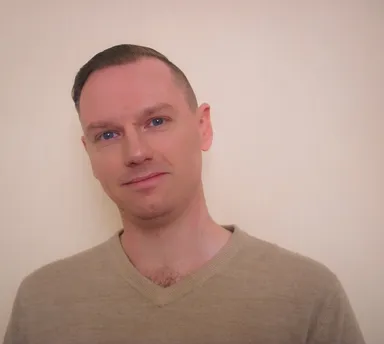
About the guest
Phil Mitchell
Phil is a senior accredited counsellor, psychotherapist, supervisor and trainer specialising in working with boys and men who have experienced recent and/or historic abuse. Since 2004 Phil has worked therapeutically with males affected by rape, sexual abuse, sexual violence and sexual exploitation. Phil experienced sexual exploitation as a child, and rape as a young adult. He is an experienced public speaker and has trained thousands of professionals across the country on male sexual abuse/exploitation addressing how masculinity can play a part and help boys and men deal with abuse. Phil released his first book addressing the sexual abuse of boys and men in 2023.

Hosted by Andrew Pain
Andrew Pain is a Mental Health & Resilience Keynote Speaker who speaks from lived experience on resilience, burnout and workplace wellbeing. Host of the Men on Show podcast, author of the book Honestly, Man, and a TEDx speaker. Member, International Coaching Federation, and Mental Health First Aider trained.
Never miss an episode
Candid conversations with everyday heroes – ordinary men doing extraordinary things.