Why didn't you hit her back?
It’s a good question - direct and to the point. A sixth form lad had listened to my talk on my experiences of domestic abuse. He was curious.
- Why didn’t you hit her back?
I was brought up to ‘never hit a woman’ because men are typically physically stronger, so a man hitting a woman was cruel and cowardly. This meant that even if I’d seen the abuse for what it was, I probably wouldn’t have hit her back, it just wasn’t in my DNA. But there was something else I explained to that sixth former. I’d been conditioned to see our problems as ‘my fault’, that if I hadn’t been such an idiot, she wouldn’t have been provoked into violence. My default response was constant apologies and promising to try harder next time, because if you truly believe you’re in the wrong, you’re unlikely to retaliate.
But towards the end of the relationship, there was a moment when I came close. It happened during the candlestick incident, and yes, you read that correctly - a candlestick of all things and it’s not even an Agatha Christie film or game of Cluedo – this really did happen. Let me explain:
The candlestick incident:
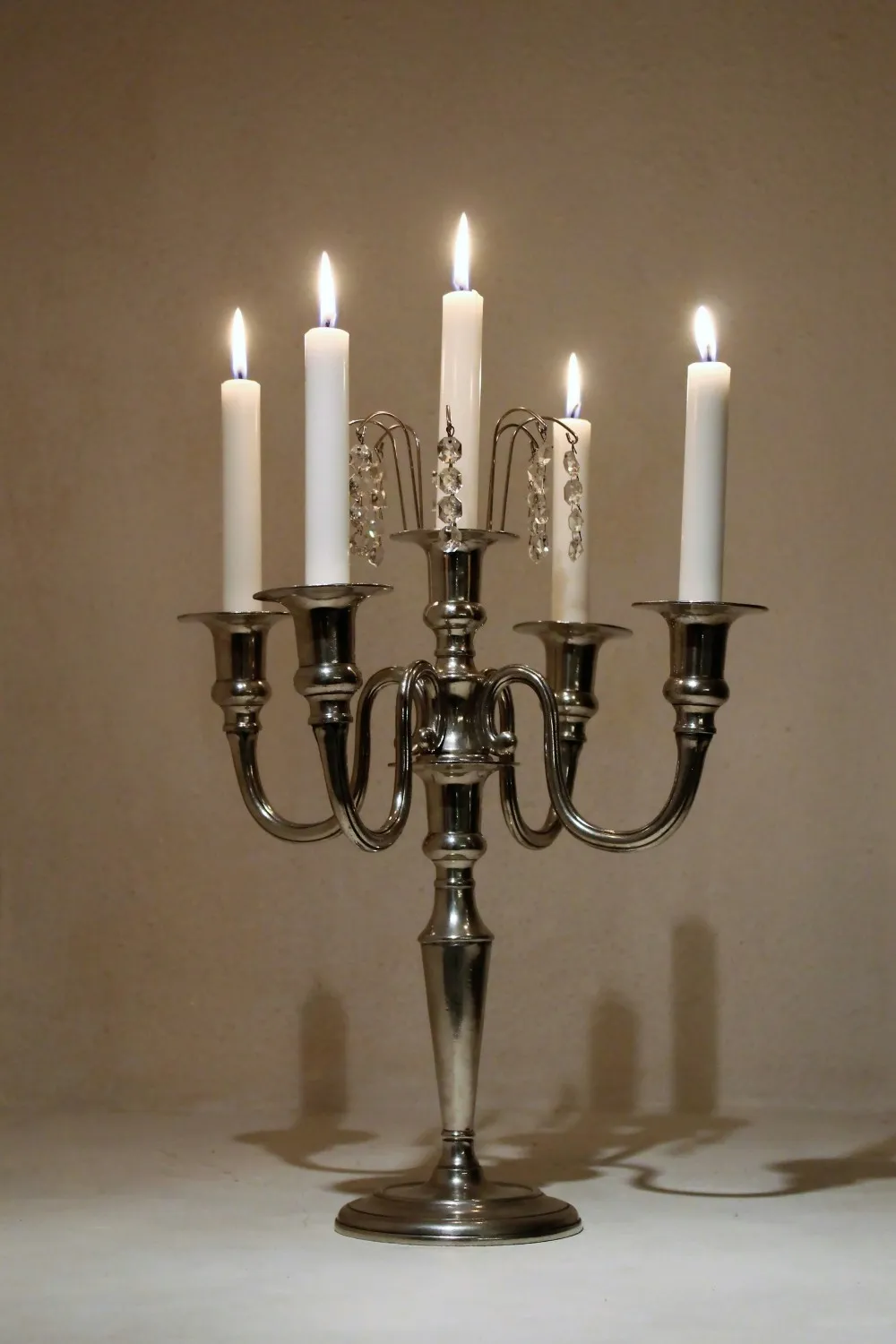 Photo by Anne Nygard - Unsplash
It was close to the end. I’d moved out and was fairly sure it was over although I desperately missed living with our young daughters day-to-day. It made me hesitant in closing off all hope of us getting back together. I was now living several miles away and one evening, my ex rocked up (our daughters were being looked after by neighbours). She wanted a decision there and then - are we getting back together or aren’t we? But I was unsure either way, so in frustration, she grabbed the metal candlestick from the sitting room table and slammed it over my head.
(Top Relationship Tip: If you want to persuade someone to get back into a relationship with you, attacking them with a candlestick, isn’t a smart thing to do)
The pain reverberated around my head but as she went for a second blow, instinctively, I leapt up and held her arms. A mini wrestling match ensued. I was trying to stop her from hitting me, whilst also keeping her at arm’s length (as she was trying to bite my face and knee me in the groin) all this whilst my head was absolutely throbbing. I pushed her hard onto the sofa, ran out the property and didn’t come back until I could see her car had left.
The next morning, I got a call out of the blue from one of my football mates who’d just seen her on the school run:
“Hey, Andrew, what happened last night between you and X?”
I paused for a moment and was about to answer, when he continued.
“She has bruises on her arm - she’s telling people you’re beating her up”
Oh the shame on the school runs from that point forward! Oh the dagger eyes from mums and dads! Then the rumours that some blokes were coming to sort me out (for a few weeks, I slept with weapons by the bed – I was genuinely worried) And what do I say to those parents on the school run?
“Listen – I know what you’re thinking, but I didn’t beat her up – she attacked me with a candlestick!”
Who would believe that?
I started this newsletter with a question a sixth former asked me. But now, I have a question for you.
To what extent should victims of domestic abuse be able to defend themselves?
There are no easy answers for victims of domestic abuse, particularly men. But we need to be having these conversations in our homes, schools, organisations. We need to be having conversations about domestic abuse which avoid naturally framing men as perpetrators and women as victims, and which reflect on the complex scenarios victims will face. In the UK at least, an estimated 40% of victims of domestic abuse are men, that’s nearly half, and of course, domestic abuse includes the LGBT community, parents abused by their children and sibling abuse - it’s not just male partners abusing their intimate female partners.
I’m glad I didn’t hit her back. Had I done, I think my ex would have gone to town on exploiting any kind of physical assault from me, and if I had hit her back, how would I have explained to my daughters how mummy got those bruises? I’m glad I didn’t hit her back because two wrongs don’t make a right, and fundamentally, I think it’s wrong to hit people, man or woman.
If you want to bring the topic of men’s wellbeing to life, either as part of an away day, or as part of a wellbeing week initiative, or as part of men’s health week (June) or International Men’s Day (November) then get in touch and let’s talk.
I’m a CPD accredited and TEDx speaker, podcaster and author, delivering entertaining, inspirational and relatable keynote talks, grounded in lived experience and global research.
Connect with me at: https://www.andrewpain.co.uk/
And/ Or let’s connect on Linkedin and DM me to book an exploratory conversation
 Available now in Kindle and Paperback through most major book retailers
A version of this article was first shared with Andrew's newsletter subscribers on LinkedIn .
Get the next one straight to your inbox
Andrew writes regularly on men's mental health, burnout and resilience. No spam, unsubscribe any time.
Subscriptions open shortly – the mailing list isn't connected yet.
Booking a speaker instead? Let's talk .