Men on Show · Episode 31
Men and Surviving Domestic Abuse with Rob Wells
- 19 June 2024 .
- 55 min .
- Hosted by Andrew Pain .
Rob Wells is a former Military Police officer and security professional as well as a published author, international speaker and writer.
Andrew hosts this podcast. His own keynotes are on burnout, resilience, imposter syndrome and difficult conversations.
In this episode
About the conversation
His story has been featured in multiple national and international newspapers and magazines, with appearances on radio shows in both the UK and USA. Robert was invited by the Durban government in South Africa to present on domestic abuse.
Robert is available for national and international engagements, including training courses, conference speeches, business consultations, and media interviews on the subject of domestic abuse.
Key points of the episode
- What most stands out for him as a child. (And how the 70's and 80's were better!)
- How he was the last of 5 kids, and what he was told about it.
- How he could not choose between army and police.
- What life was like in military training (legalised bullying) .
- How there was zero mental healthcare here.
- Why military included the best 12 years of his life.
- Why he got into campaigning about domestic abuse.
- How domestic abuse affected him, and the innocent mistake that drew him in.
- The time he could actually speak about it.
- Why domestic abuse is hard to spot, even though the red flags are there in full view.
- How on one occasion he was treated worse by the police than the abuse itself.
- How depression set in when he was trying to turn it into a positive.
- His take on modern masculinity - what it takes to be a "gentleman" .
- Some final wise words.
Men on Show shares lived experience and honest conversation – it is not medical or therapeutic advice. If you're struggling, you don't have to cope alone.
Samaritans: call 116 123 (free, 24/7) NHS: 111
Full transcript
Read the whole conversation
A complete, verbatim transcript of this episode – every word is the host's and guest's own; the topic headings are ours.
Welcome to Men on Show, the podcast, Candid Conversations with Everyday Heroes. Join Andrew Pain as he interviews fascinating guests, ordinary men doing extraordinary things. If you love the show and you think somebody could benefit from hearing it, why not tell them about it by giving it a share on social media? Oh, and at the end of the podcast, if you can leave us a five-star rating and a review, it really helps us more than you know, and it gets this important message out to more people that need to hear it the most. Right now, enjoy the next episode. See next episode.
Hi, my name's Andrew Pain, and welcome to Men on Show. And I'm delighted to welcome Robert Wells to the show. Former military police officer, security professionals, a published author, international speaker, and a survivor of female perpetrated domestic abuse. Robert, welcome to the show. I'm so looking forward to getting into some of the topics that we've got prepared to explore today. It's great to have you here.
It's great to be invited on. You've had some unbelievable guests and I feel quite humble to be here, to be honest.
Childhood in the 70s and 80s
Oh, well, we have another unbelievable and truly wonderful guest. I've known you, Robert, for a number of years now, always been impressed by your work, by the way you talk about stuff, by the way you communicate, the quality of your communication. So, you know, all of that stuff, I'm really, really chuffed to have you here. So, just some stuff that I don't know about you, for all I know about you professionally. Tell me about yourself growing up, like looking back on your life as a boy, what do you most remember? What kind of most stands out to you?
I think looking back with the eyes of a modern day child, I feel relieved, frankly, that I was born in the 60s, late 60s, grew up in the 70s and 80s, and when I look at the children today and the way they're living their lives through computer screens and phone screens, to be honest, I feel relieved that I grew up in the 70s and 80s. We see a lot about Gen X and Gen Z and Gen this and Gen that, but truly spending all day, every day through the summer whole days, out and about on bikes with your friends, rather than cooped up in a room with a computer screen.
What a great childhood we had. I really do feel for the kids these days. I was watching a video a couple of nights ago on YouTube, incredible nightclub, incredible music and unbelievable set up, but everybody, all you could see was phones in the air. And I just felt for those people. They weren't in the moment. They weren't enjoying, truly enjoying the music in the moment and the people around them, like we did back in the 80s and 90s. It's a different world, but I don't necessarily feel that everything's for the better.
Yeah. You know, as a football fan, you know I'm a football fanatic. I'm an Arsenal fan, so obviously not in a great place at the moment.
Read the rest of the transcript Collapse transcript
Yeah, that me too.
I mean, I've got great, you know, tomorrow just feels like a bit of a washout really, although mathematically.
Is that how you feel?
I do really. City, dropping point. I think Arsenal will win. But for me, like, if you think about football fans on the terraces in the 60s, you see them waving those, swinging those things around. And like in the 80s and 90s, everyone's roaring and jumping. But for me, like, what I feel when a football fan celebrates a goal, is they're all jumping up and down, like with their phones in the air, filming themselves while celebrating. It's like, just put your phone away, and like, what are you doing?
And it does, I agree with you. I feel lucky that in my house, we have one landline. There's no mobile phones. Computer games were quite basic. So you'd play them, but they take half an hour to load up. They'll probably crash on you. So you'd be out in the garden most of the time anyway. And yeah, you look at the challenges, and particularly teenagers have, I think today, the fear of missing out. Well, if I'm not on it, then everybody else is. It's really hard.
Yeah, I mean, as well as that, the fact we had more freedom in them days to come and go. You know, I can think back to my childhood and a couple of incidents that happened at the time, never really seemed suspicious. But I look back now in the modern day eyes, and I think, you know, that was a dangerous position I was in. You know, but we were out all the time. Parents most of the time didn't know where we were.
And these days, obviously parents, I think quite rightly to a degree, are far more cautious about where the kids are and what they're doing. Can I just say, it's not over till it's over. I've got every faith in West Ham to come out and do the job and for us to win the title and snatch it at the end. Anyway, back to it, sorry, I had to get that.
No, it's funny though, I'm an optimist in most things in life, but football, for some reason I'm a pessimist, even when I still play, I'll go onto the field on a Friday and look around, I think we're gonna get battered tonight. We're gonna get battered. I don't know what it is about because everything else, I'm an optimist, but clearly not in football. But you're going back to what we were saying, I think even for me as a teenager, one of the things I remember most from Christmas was the sheer excitement and wonder that my parents would come back in, so it'd be the 21st, 22nd December with a crate of fizzy drinks.
We didn't have those in the year. And you think now about a 14 or 15 year old being that excited about a fizzy drink, what were you even talking about? And I think we were, it's easier to be so joyful back then because you had a lot less, you had less stuff that you felt you're entitled to, whereas today, how do you experience joy if you've got everything at your fingertips?
Last of five kids and joining the Army
Yeah, I agree, but I was spoiled as a kid. And it's something that I'm very aware of and it's something that I realise has definitely affected me in older life. You know, I was the last of five kids. I was told very early on that I was a mistake. I wasn't planned. There was a huge gap. I think it's 12 years between me and my next youngest brother.
It's a big gap, yeah.
And really, you know, I never wanted for anything. And my parents worked incredibly hard. They really worked hard. I grew up in a lovely house, never wanted for anything. But it was, I think they'd done the parenting thing, you know, with four kids. My next youngest brother was a real handful in and out of prison and caused a lot of problems for the family. So for me to come along, it was far easier for my parents to come and say, well, here's some money, go off and do your own thing.
You know, I was quite skilled at sports in the day, never interested in coming to watch me do sports or get involved in anything. I think my passing outbreak from the army was one of the very few things they ever came to see.
So tell me about the military, were you in the army before the military police?
No, it doesn't quite work like that. The way it works is that you go to the recruiting centre, or certainly the way it used to work, this is obviously a long time ago, back in the 80s. You go to the recruiting centre, you sit a series of tests and depending on your score, depends on what you can actually go into. I think there was, if I remember right, Army Air Corps and a couple of other things that I wasn't bright enough to get into.
But growing up as a child, I'd always wanted to be in the army, and I'd always wanted to be a police officer. I could never decide between the two, but as a kid, from my earliest memories, I'd always wanted to be one or the other. Then I found out you could be a military police officer, and that was that. So, yeah, I was supposed to go to college, and I was stood at the gates of the college, and everybody was streaming past me going into the college in Leicester.
And I just stood there looking at the hundreds of kids going past and thought, I don't want to do this. And I literally walked from there into town straight to the Army Recruiting Office. And when I got home, my mother was surprised to see me, and she asked why I was there back so early. I said, well, I've started the process of joining the Army. What about college? No, not doing that. So that was that. So I joined the Army. As I say, I attained enough points to be able to go into the Military Police.
And tell me, as someone who doesn't know, Military Police, what's the purpose of the Military Police? What do they do?
First and foremost, whatever you join, you're a soldier. So you'll do your basic soldiering to start off with. Used to be six weeks, if I remember right. And that's just basic soldiering. Once you complete that, you'll then go on to do your chosen profession, be it police officer or engineer, whatever it may be.
Military culture, legalised bullying and discipline
And looking back now, how would you describe the culture within the Military Police where you were? So you're there, what, in the 80s? Was there any sense of mental health and well-being and that kind of stuff?
No, is the short answer to that, zero, big fat zero. No, there was nothing like that. In fact, I was watching a video yesterday, actually, put out by BFBS, who cover things that go on in the military. It's like their news side for the military. And they were talking about how we no longer shout at recruits in training, you know, it's about working with them and trying to develop them in a positive way. I've got a kind of old fashioned way of looking at that.
And judging by the comments from other ex-soldiers, they felt the same way. I don't feel that's the way forward, but you know, I'm not a specialist in that kind of thing. You know, it was incredibly hard. It was brutal. It basically, I always describe it as legalised bullying. That's what it was. You know, when you joined, it was legalised bullying and it was designed to break you. It was designed to absolutely break you. You know, because at the end of the day, if you can't put up with the pressure during training, you're gonna find it very difficult out on the battlefield.
So, but you know, times move on, things change. Soldiers, certainly during Afghanistan and Iraq, they performed incredibly well, incredibly well. And I would like to say it was harder in my day, but all veterans do say that. But yeah, these kids went through a completely different way of being trained and they performed exceptionally out in the field, something that I never had to do. So, you know, it's not my place to criticise them. So they've done a phenomenal job.
And you put that phenomenal job, potentially could be down to the fact there's greater emphasis on mental wellbeing. Is that what you're saying?
No, I don't really know how the mental wellbeing works in the military these days. You know, all I can talk about is my time. And in my time, there was no such thing. As I say, it was legal bullying. It was designed to break you and break you they really tried to do. If they broke you and you decided to stay, great, you soldiers on and you made it through training. If they broke you and you decided to leave, well, that's you gone and on to the next guy or girl.
But no, nobody ever sat down and talked. In fact, in my last year in the army, I spent 13 years in the military. And I can honestly say that were the best 12 years of my life, the last year was awful, really awful, truly awful. And I think I was definitely having some mental health issues then and nobody cared. Nobody was interested. So, yeah, it's a shame because it kind of, it didn't ruin what I experienced because it was the best time of my life. But that last year was definitely difficult.
And why were those 12 years the best years of your life? What specifically was going on to make it such a great time for you?
The military sets you up for life. There's no two ways about it. Everything you learn in the military sets you up for the rest of your life. And I've met guys, I've worked with the guys today in construction, many of whom are in the military, different arms of the military, like the Royal Tank Regiment, Royal Marines, engineers. And they all say the same thing, that it was the best time of their life. It really just set you up as the discipline is a really important role.
Because without discipline, every area of life becomes difficult, I think. You need that self-discipline. We used to be, when it started, they used to get us to do stupid things like polish the soles of our boots. And at the time, you don't understand what that's all about. You just think it's ridiculous. But later on, you realise that if you've got that attention to detail and discipline to carry out those kind of mundane tasks, that your attention to detail and everything else, like keeping your weapon clean when you really need it, is so important.
And that just transfers over into civilian life. When I worked in personal security, I used to have people say to me all the time, you're ex-military, aren't you? And I'd say, yeah, how did you know? I can just tell. And you used to get that all the time, all the time. Interesting.
Why he campaigns on domestic abuse
So you campaign, you campaign a huge amount over the last few years on the topic of domestic abuse. And I think you're a very skilful campaigner from what I've seen. I like the fact that you're so research-backed, evidence-based, a strong voice, but a very sort of fair voice, balanced voice. So yeah, total respect for you as a campaigner. But what prompted you to start campaigning for domestic abuse? What's the interest there?
So I'm a survivor of female-perpetrated domestic abuse, which is something that still, even all these years on, affects me a great deal. For a long time, I kind of shut it away, didn't really want to talk about it, didn't want to acknowledge it. But eventually, by pure accident, through social media, I was invited to give a talk to at a police station in Old Ashok. It was to a very small group of people, police officers, both military and civilian, and frontline agencies.
I gave that talk. It was very difficult to do, and it just snowballed from there. I just received one invitation after another to do various talks, and through social media, that just built and built, really, until I was writing articles, giving talks both live and over the internet, culminating in a talk that I gave to the Durban government in South Africa. It was after that that I chose to take a break for two years because I was just finding it all a little bit too much, constantly going over the experiences that I had. And as you know, I've recently come back.
So, I mean, some people would be surprised to hear this. Partly stereotypes, sometimes, that we have biases that we have. Everyone has biases and stereotypes. It's how we make sense of the world. It's obviously important we challenge them. And you're a great example because you do challenge stereotypes in the... I was once asked in a school, you know, if you're a survivor of domestic abuse and you're a man, does that mean, like, you're a bit weak and feeble?
Because, like, you're a guy, right? But obviously, you've been in the army, you've been in the military police, you've worked in the security field. So, to some people listening to this, they'd be quite surprised that you've been in a victim of domestic abuse. The perpetrator was a female. How was that for you within that abusive relationship? You know, questions like, did you ever think about fighting back? Did you understand it was abuse? Did you ever talk to anyone within that relationship? What was going on for you when you were in that relationship?
When I give my talks, one of the things I go through first is my background. So, for Military Police, 13 years, a security professional for 14 years. You know, I worked in the security industry with officials from, I think, it's 11 different countries. I've looked after visiting heads of state, along with the Diplomatic Protection Group. I think they're called something else now. But yeah, for many, many years, for nearly 14 years, you know, I was an incredibly confident person, both professionally and personally.
And domestic abuse absolutely ripped that from me. I never thought I could become a victim to domestic abuse. I always thought that domestic abuse victims were kind of weak minded people with low self-esteem. All the years that I used to go out to domestics when I was in the military police, we had a very blase attitude towards it back in them days. But one of the things I think about is that at no point ever did I go to a house and think he could be the victim.
We obviously know now one third of men, one third of victims are men, many of those are female perpetrators. And at the time though, and this is quite common, at the time, I didn't think the words domestic abuse didn't come into my consciousness. I didn't see it as domestic abuse. And I was just trying to survive day to day, to be honest. You know, unlike many abusive relationships, again, this is something I always say, is that the red flags were all there.
You know, it was 10 foot neon signs warning me about what she was like. But because I found out very early on in the relationship that something really terrible had happened to her in her childhood, you know, I was really attracted to her, really fell for her. And I just thought if I stand by her, you know, I can show her that not all men are like that. But the more I gave, you know, financially, physically, emotionally, mentally, the more she took.
And eventually, it's just such a classic thing, the isolation. You know, I had no family in the UK, except my eldest daughter, no parents, no brothers and sisters in the UK. And suddenly moving to Scotland, being completely isolated, the violence got worse. Well, I moved in with her and we moved to Scotland. And it just completely all got out of control, you know, until there's always a pivotal moment, I think, for everybody. And for me, it was when she felt pregnant, the abuse stopped overnight.
Absolutely everything overnight. As soon as she found out she was pregnant, everything stopped. The physical abuse, the mental abuse, everything. And it just for nine months turned into what I'd always dreamed it would become. And it was like the perfect relationship. She was a completely different person. And I put that down to the fact that she wasn't drinking and she wasn't taking drugs. So yeah, for nine months, it was amazing. Then our daughter was born, and for another couple of months, it stayed like that.
And then it happened. So she was giving medicine to our daughter. As she gave it to her, she, I'm trying not to use names here. So my daughter inhaled and really started to choke very badly. I, my partner had her in her arms, and she was panicking quite rightly, because anybody who sees their child choking, that's a really horrible thing to experience. Blindly first aid, so I shout out, hand her over to me, give it to me.
I had my daughter upside down. I was trying to clear her airway. And as I was trying to do that, I was struck really hard on the side of the face, which nearly knocked me to the ground. You know, I instinctively pulled my daughter into my chest and I was hit again. And basically, I very quickly realised that it was my partner, she was attacking me. That went on for probably about 30 seconds, felt like longer, but it was just an absolute rain of blows.
And obviously I was trying to clear Sophie's airway and protect her from being hit. But that was the tipping point because probably if it was next day or a couple of days later, I went into work and had a complete breakdown at work. I then revealed, I had a very good occupational health department, revealed to them what had been going on because a child was involved, they got social services involved. And eventually I had to be interviewed by them.
And that was the first real time I spoke about what had been going on for probably about three years at that point. So, and then it just got worse from there, unfortunately.
Drink and learning to recognise the patterns
I mean, some really interesting dynamics, obviously really sorry to hear what you've gone through, some harrowing experiences there. I think a few things that I'd reflect on from my own experiences and from what I see from guys who've been through it is that I think there is a commonality among many men that want to be good men. They want to be good people. So they fall into abusive relationships because they want to help this sort of vulnerable female who may have story of a really difficult background, really difficult upbringing.
That story might be true or it might literally been invented and it's one that she spins all the time. But the sense of actually male victims of domestic abuse, often they're good people that want to help, they're conscientious, they're dutiful, they've got a good heart, they love women, they probably trust women and then they get drawn into this relationship and then before you know it, you're bogged down in it. Did you ever think, his thing? So for me, one of the reasons why I'd never have thought it was actually domestic abuse.
If you'd have asked me, I knew I had a troubled relationship, but I always put it down to me being a complete idiot that basically every situation where my ex sort of lost the plot and it wasn't always violent, but it was often. It was always my fault. And she's very good at convincing me it was my fault. So when you always think it's your fault, of course you're not gonna leave. You're just on a self-improvement project.
I remember going to counselling, not because I was in an abusive relationship, but it was because I wanted to become a better person so that I could be a better husband. So did you feel that as well, like in your relationship, you mentioned the months. I mean, you seem to, what you've just said, you seem to have a clear link today between her drinking and drug use and violence and abuse or whatever it was. Did you know back then, is that a link that's come to your mind now or back in it, did you mostly think it was your fault?
No, I knew most of the time, it was when she was drunk. You know, I learnt to recognise the patterns. She would start off, she would heavily drink most evenings. She would, there were three phases. There was the happy, playful, drunk, and then there would be the overtly sexual drunk. Even if there were other people in the house, she would, you know, there was one time she took all her clothes up except for a pair of boots and paraded around the living room.
When I tried to take her to one site and say, what are you doing? You know, you're really going to regret this tomorrow because there was somebody else in the house. You know, I was just bombarded with, you know, foul language until I was a boring, you know, this and that. And then the violence would start. So obviously once I learned to recognise that, I would take myself away. You know, there were many times where I'd question, you know, did I do something to provoke that or, but on the whole, I knew that it was down to the drink.
And you're, if I may just say, cause you prompted a thought process in me here. You just, different things that I've experienced. So I know you said you were quite isolated from friends and family and stuff like that, but were there times where you were out, she'd been drinking, maybe you with mates, peers or whatever. And I'm interested in how, if they experienced a drug, whether they picked up on this dynamic. And I share this, you'll see where I'm going with this question in a minute, because I knew of a guy, I knew him quite well.
And he had, he was married to a woman who was absolutely fine when she was sober, but it was known that when she was drunk, she'd get very aggressive. And so his male friends, he used to really wind me up, would deliberately ply her with drink, because they saw it as a bit of a pantomime. Then they could just sit back and watch the show as she was absolutely outrageous and foul to this poor henpecked guy.
And it was the guys that were trying to ply with drink so they could sit back and have a good laugh. Did that happen for you, or did you have friends that see that and they were like, dude, this is not right, mate, we're worried about you?
No, no, we didn't really have a big social circle. There were literally a handful of people that would occasionally come round. We didn't go out together that often. These were all things that happened at home.
Right, yeah.
She would drink heavily, but even when she was sober, she was always, there were always other guys in the background and things like that.
For me, when I came out of my relationship, I know this is an issue for men, women, people, where the abusive person is abusive behind closed doors, but out in public is a complete, completely charming, wonderful. Everyone's like, I can't believe it.
Surely not.
Her family, and how the police treated him
And I remember talking to an Asian guy. I spoke at an Asian event, and his challenge was that his family had bought this lovely girl over from India. It was an arranged marriage, and he faced quite a back rush from his family coming out of this abusive relationship. They wouldn't believe him. I feel like I was lucky because everybody believed me. My now ex was not easy with other people. Was your ex partner charming to everyone else? Was it just behind closed doors, or was her behaviour also replicated elsewhere with other people?
Yeah, members of her family knew that there was an issue, because before I met her, she had had to give up her young son to go and live with his grandparents in Scotland. That was because of her drinking and drug taking. She was in a situation where she could barely look after herself. She was just out doing drugs and drinking every night. So he'd already gone to live with his grandparents in Scotland. His father was working in the Middle East as a security contractor.
I later on found out that he was sending all that money back to her, and she was basically snorting it and drinking it. So he didn't realise what she was up to. When I met her, he'd already been sent away. So, as I say, the red flags were there in massive 10-foot neon signs, really. But when you go back to what you just said about belief, I think the big thing for me was, and I've said this many, many times, was that on the occasions where the police got involved, the way I was treated by the police was quite often, and particularly in one instance, worse than the abuse itself.
You know, her mother, the first time her mother found out something was happening was, she hit me so hard in the face one day that she broke her hand. And the next day, her hand was like a balloon. And she said, I need you to send me to the hospital. And I actually refused. I said, no, I'm not doing it. I refused point blank to take her. I said, why don't you phone your mom, who lived 20 minutes down the road, and get her to take you.
I said, then you can explain to her how you did it. And eventually, that's what she had to do. And her mom came out. And I challenged her there and then in front of her mom. I said, go on, tell your mom how you did it. What's going on? What's going on? And eventually, I had to tell her, because my partner wouldn't. I said, she's broken her hand, because she punched me so hard in the face.
She literally punched me right here. So, yeah, but every time the police got involved, it was that whole same biased scenario. I only ever had one apology from the police. And that was when we'd moved down to Wiltshire. And he came around. The police officer raged to come around whilst I was off and she was at work. And I'd been arrested. I'd been held in cells overnight until lunchtime the following day. He came around, he apologised personally.
But when I asked for that in writing, he refused and I asked him to leave. I wasn't particularly polite about it either. He said that the officers were receiving further training in how to deal with things. But that was nothing compared to what was to come in Scotland for sure.
Severe depression, then two years homeless
So how have you, you know, you've faced obviously a very abusive relationship. You faced people not believing you in terms of the police, the way they were dealing with it. That must have just been to say, galling is an understatement. How have you sort of moved beyond that and repaired then? Have you been able to repair and move beyond that?
No, no. I again said many times, I don't think I'll ever fully be able to move on until I get some sort of apology from the police. But the problem is that whilst I've got all the information through Freedom of Information requests, I've had it for years now. Every time I sit down to go through it, I just can't go through with it. I just think the battle to get any kind of recognition for what happened in Scotland in particular, I just think it's not going to happen. I just feel like I'm stuck in a loop really. There's been good times. Sorry, gone.
How does that affect you in terms of trusting women again? Or do you find in new relationships, is that a challenge for you? Or are you able to put it down and say, look, it was just a bad look? It's one of these things. Or is it something that really affects you at the moment now in relationships?
No, it's something that affects me really. I think my last relationship was with a really wonderful, wonderful woman. And that's when I started doing the domestic abuse work. And I didn't see it. But opening up and talking about what I experienced, I thought I was making a real difference to people's lives. And people have told me that I did. And to a degree, I enjoyed what I was doing, because I felt like I was really doing something important and positive. What I didn't realise was that the effect it was having on me mentally.
Yeah.
And I ended up severely depressed. I mean, severely depressed. And that pretty much ruined that relationship. You know, and then obviously, as you know, I went on to, after that relationship, I went on to homelessness for two years. And, you know, I'm now in a wonderful place. I've got a good, decent job, you know, a lovely home. But mentally, I think I've been offered loads of help, loads of help. But unfortunately, I'm not very good at accepting that.
And there's been some very kind people, very experienced people, who have offered me help. But I'm just not, I'm not able to go down that road. I kind of just don't want to talk about it too much anymore. I don't want to keep me busy in that. So, yeah, so it ripped out the person I was. All of that confidence, both professionally and personally, all disappeared. I'm a completely different person to the person I was. Yeah, and really, I feel that as an individual, it ruined me really.
You know, particularly because I came from a policing background, and because after leaving the Military Police, I then went on to do a lot of work with the police in personal and corporate protection. All of those years, only to when I eventually turned to the police and needed that help to be treated the way I was treated, that it was just crushing, absolutely crushing. And there are things that have happened in my life since. So, for example, one, the environment that I work in, there was a workplace assault.
I was assaulted at work. And it was a guy who's assaulted loads of people at work. He's been doing it for years. He hasn't been sacked. You know, so it wasn't just me. He's well known for it. So I was assaulted at work. And realistically, I should have called the police. But I didn't want to call the police because I don't want to be involved with the police. I don't want anything to do with the police because I just don't have any faith in them or any trust in them.
I do, on the other hand, like giving talks to the police because it's good to try and get that message across. I mean, the very first, sorry, the first talk I gave to the Military Police, when I asked for questions, the first question I was asked was, why didn't you just lay her out? That was the very first question I was asked. Yeah. You know, so, but I mean, today, I'm not the person I was for sure.
The data around men and boys
Yeah. I'm not often asked that question, but I don't deliver that many talks on domestic violence anymore, but I have been asked, did I ever think about hitting her back? And I did right towards the end, but I always knew that if I hit back with children, you know, how am I going to square their mother's black eye with my children? And I always knew she was the type of person that that would be a gift for her to be like the black eye.
That would be perfect. And she would have taken, she would have just taken me to the cleaners with that black eye. So I'm always really glad I resisted. And when people say that, I like the question because it creates intelligent debate about why that would be the worst thing you could do as a guy. But it shows where some people's thinking are when they ask that instinctively. When you really step back and think about it, it's obviously not going to do that.
Well, just talking more broadly, I mean, a man with your experience, Military Police within the world of security, your experiences of domestic abuse, trying to move beyond that, the challenges that you've had, your experiences as a campaigner, your day job within construction, you're a great guy to speak to with such rich insight about all things, men, boys. When we think about modern masculinity, we know that a lot of the data around men and boys isn't great.
From boys' education, boys falling behind in every subject at school, barring maths across all age groups, yet still the focus is women and STEM. We know in terms of homeless, 85% of rough sleepers are men. We know that in terms of women still living with their parents in their 30s, it's 5% men at the same age group, it's 15%. We know that three quarters of people that die by suicide are men. And the list could go on, 57%.
Yeah, I've got a very long list here.
I reckon any list I can look with, you could outdo my list a hundred times over. You're very, very well researched.
It's a very big list. I spent a lot of time today checking, because I did this list a long time ago, and I went back to it today to make sure the stats were right. And it's just an absolutely frightening list. It really is, yet society seems obsessed. I have two daughters, a granddaughter, I've got another grandchild on the way. I want to see women protected. I want to see them treated well and protected. But society needs to recognise the difficulties that men and boys are going through at the moment. And it is truly, when you look down these lists, horrific what men and boys are going through. It really is.
Gentlemen rather than toxic masculinity
And what do you think is at the heart of those stats? Or maybe they're all just different stats communicating different problems on different things. Is it easy to say? Well, not easy, but is it possible to say, well, look, what's at the heart of it? Is this A, B and C? Or is it just so complicated that it's hard to draw any conclusions?
I think it's quite complicated. I don't think it's hard. It is complicated. I mean, everything's complicated. Domestic abuse is a complicated issue. But, you know, we talk about masculinity, toxic masculinity. We debate that all the time. The programmes that have been on recently. There's been so much talk about it. But, you know, I think, I think we need to go back to looking at what it means to be a gentleman. Rather than talking about masculinity, what it means to be a gentleman. And again, I did a fair bit of research today about how, excuse me for looking away from the camera, but I'd like you to remember all of this.
I'm often looking at notes, so don't worry about it.
Yeah, I looked at what, over the ages, what it meant to be a gentleman in the 30s, 50s, 60s, etc. And moving on. You know, the more I looked at it, the more I thought, you know, this is an, I think, this is a direction we need to be going to, going, moving more towards. But the problem we've got, you know, is there are so many boys being brought up in single parent homes by, mainly by mothers.
They go to school, the majority of the teachers are female. You know, there's a huge lack of positive male role models out there. And alongside that, boys, I mean, there was that great example, a horrific example in Australia, where all the boys in the school were made to stand up, turn to the girls and apologise basically for being boys and everything that boys and men do. You know, the obviously parents were quite rightly outraged by that.
But this is the kind of thing that's going on in the world. And, you know, when you have no positive male role models and you're constantly being told that you're the problem in society, you know, are we surprised that suicide is where it is? You know, are we surprised that boys are falling behind in pretty much every area? Are we surprised that men and mental health is so poor? Yeah. You know, it's absolutely shocking. But I think looking back now, you know, I mean, I've got a paragraph here. A gentleman typically embodies a combination of positive attributes that reflect respect, integrity and courtesy.
You know, I think we need more of that.
Where do we start with that? You know, or male role models in the classroom, how do we deal with this? I'm tired of hearing the term toxic masculinity. I'm not tired of hearing the term masculinity. You know, for me, I'd like to see us going back to core gentlemanly values. And, you know, I've got, again, a long list here. I don't think we've really got time for that now.
But I like that. So the toxic masculinity thing, I probably mentioned on my social media stuff. I worked with a school last year where they the teachers have banned the phrase, although if the kids bring it up, they'll talk about it. But they banned the phrase as teachers because, yes, they saw it as a wall builder, not a bridge builder. But more than that, they felt that actually the behaviour of their female students is as challenging as the behaviour of their male students, the way the females treat each other and their boyfriends, the way the boys treat each other and their girlfriends.
Like it's a lazy term with no clear definition. And actually people are destructive towards self and others for all kinds of reasons. And we need to understand those complexities. And brushing it with a toxic masculinity is impulsive. It's lazy. It's not helpful. And I think there's more. So when I deliver talks on men's mental health, and clients can of course choose what makes up that talk, I can't remember a client that said, don't talk to us about toxic masculinity.
And the way that I talk about it is that we shouldn't use it as a phrase, full stop, if we want to make progress with men and boys. And I'd like to think that is being challenged. And I definitely think that much of the media narrative about men hasn't been helpful. We always hear about the terrible things that the very few men, the vast minority of men are doing, but less so about the vast majority, unless if we are going to hear something that the vast majority are doing, there's this sort of little thing, but we should remember of course that they're privileged and the rest of it.
And so I think we've missed out on sort of celebrating men doing amazing things. I think that's a disservice we've done to our young men. I do also think that just in society, it's just tough to be, we're still brought up somehow, or maybe it's just in us biologically to feel like we should be providers, we should have the answers, we should have it sorted. And it's harder than ever today. I mean, when you think 3 million people last year reached out to a food bank back in 2008, it was 26,000.
It's tough for so many people. So for me, when I think about why it's so tough, I think there's some specific things around the way men and boys have been forgotten. And the second, just broader stuff, that it is just tough. Is that what you would agree with that? Or do you think there's, would you add to that?
Yeah, absolutely. I completely agree with it. But I think there's a massive lack of discipline and accountability in society. And for me, we need to get back to getting some discipline and accountability.
And how do we do that?
Discipline, national service and a list
Exactly, how do we do that? You know, I think the society has become so soft. You know, I'm talking about someone who's been in the military now. So I've said this before. I said this on a fit, on an all-women podcast once, and they were horrified that I used the word discipline. They were absolutely horrified. Yeah, how do we do that? I mean, there's been a complete breakdown of the nuclear family. And if there's nobody setting boundaries and kids are not experiencing discipline and accountability, then are we surprised that we're going down the road we're going down?
Unfortunately, I can't give you an answer to how we go about that. I've got one idea, but it's not a very popular idea. You know, and that is I am today and always have been a firm believer in national service.
Yeah, interesting.
And I'm not talking about a wishy washy modern 2024 version of national service. I'm talking about a proper old school, hardcore national service to give people some real discipline, experience, teamwork, camaraderie at the start of their lives when they probably need it most. And as with myself and many others that served in the military, something that will go on to help them throughout the rest of their lives.
Interesting. So that's one way of looking at national service. And you're right, people listen to this podcast, I think could potentially be split by that. Although I definitely see the logic, the value of that from what you said. I really liked. So in just something that you said that I just want to flag up really, because I haven't thought about it like this before. So to counter the toxic masculinity narrative that we hear, I hear men, really good male thinkers, talk about it in ways of progressive masculinity.
In fact, there's a whole progressive masculinity group, organisation. They go into schools and they do great work. I've got a lot of respect. In fact, Mike Nicholson, the heads up, has been one of the podcast guests. They're doing some great work. I've heard of restrictive masculinity rather than toxic masculinity, but I rather like, actually, and I myself have tried to define what's positive masculinity if we've got toxic masculinity, but I quite like forgetting that word and maybe thinking about what are our core gentile values.
I've heard people talk about bloke code, but I quite like core gentile values that you mentioned. I think you're on to something there that that's a way of looking at how we might try to redefine masculinity in a way that is really fit for purpose for the 21st century. So you've given me, I think that's a great label, something to aspire to and something that's a really positive way for men to start thinking about what it is to be a guy.
That wasn't a term that I've really heard of, core gentile values, but I like that. I think that's better than restrictive masculinity. I think it's better than progressive masculinity. I think it's better than my positive masculinity. It's something to use as kind of a thought. How do we become the men we want to be?
Yeah, I mean, obviously, time's going on. I'm not sure how we're doing for time. But, you know, having looked back at gentlemen and what was expected of gentlemen over the decades, you know, I made a list that kind of encompassed pretty much everything over the decades. I mean, just to give you a few, you know, to be respectful, to be respectful, politeness, always using kind and courteous behaviour, you know, to be a listener, paying attention and value other people's opinions.
You know, that's something these days that is becoming even rarer because it's either my opinion or no opinion. You know, people aren't interested in having conversations. You and I have very different political views, massively different. Yet this is the second podcast we've done because you were kind enough to come on mine many, many years ago. I have massive respect for you, even though your political views are a bit bonkers. I would never vote Labour if you nailed my feet to the floor.
But then I wouldn't vote Conservative anymore either. But you know, the fact that we can have an open discussion about these things, I see it more and more and more. People are not interested in listening to other people's opinions. They're not willing to say, OK, well, we'll agree to disagree. You know, I can see that that makes sense. How about my view? You know, people just don't want to do it anymore. But anyway, to be considerate, think about how actions affect others.
Integrity, honesty, speak truthfully and maintain transparency. Be dependable. Keep your promises and follow through on your commitments. Have a moral compass. A person's ability to judge what is right and wrong and act accordingly. You know, and those are just the first six. You know, there are, on my list, just from having a read for an hour earlier, I've got 24 here. Well, in fact, it's more than that actually, sorry. It's 27. With the last one, which I've highlighted as being the most important, discipline.
Focused on motivation to achieve your goals. You know, and I think, I think there's a lot of kids out there today that maybe don't see a future because they're so well-informed now, you know, with AI coming through and just seeing podcasts and news reports all the time now saying about how AMAs are going to put people out of jobs. You know, guys and girls have spent years coding and now going to be at, you know, so many years of hard work.
And I think a lot of youngsters are seeing a not such a bright future. You know, where am I going to get a job? You know, AI is going to take over X, Y and Z. What am I going to do? I think it's really difficult for youngsters these days, really difficult.
Finding Robert Wells, and a last message
So, and that brings us to a good point in the podcast. I always like my guests to finish with a couple of sentences, like a message of encouragement to those listening to the podcast, the men and boys listening to this podcast. Before you round off on that positive note, how can people connect with you? Where can people find out? But if people wanted to hire you to do a talk and talk about some of the stuff you talk about, people wanted to contact you, reach out to you, where's the best place for them to do that?
I want LinkedIn. In fact, I'm on most social media platforms now, so I can be found there under Robert S. Wells. I'll put the S in there because there's a very famous singer called Robert Wells apparently. So every time you Google him, Google that, he comes up. So it's Robert S. Wells to be found on LinkedIn, Twitter and on the social media platforms.
Brilliant. So give us that too. So if you could sort of conclude the podcast with a message of hope, the men and boys in a couple of sentences, what would you say?
I would say what I've already said, and that is live your life with discipline, be true to your word and don't lose hope. There have been many, many dark times over the last 20 years for me. And I'm sorry to say there was an occasion where I did try to commit suicide. I didn't see a way out. And I feel incredibly grateful that I survived that, because there have been many great times since then, and there will be many great times in the future.
So even in your darkest times, keep going, because it's so true, it's a cliché, but you really don't know what's around the corner. And it could be your greatest moment in life. If you're not here, you're never going to experience it. Hold on, no matter how bad it gets.
Amazing. Robert, it's been an absolute pleasure, as a new would be, speaking to you so much rich insight in today's podcast on a variety of things. Thank you so much for coming on to the show.
Thanks, Andrew. It's been an absolute pleasure, as always. Keep up the great work.
Thank you for listening to Andrew Pain's Men on Show. If you could leave us a five-star rating and short review, it would be really, really appreciated. It helps us get this important message out to more people that need to hear it the most. See you on the next episode. Thank you for tuning in.
can.
About the guest
Rob Wells
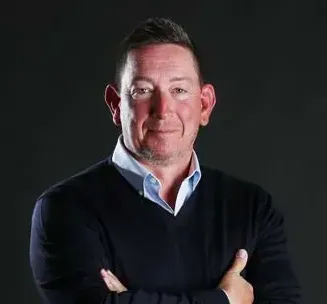
Rob Wells is a former Military Police officer and security professional as well as a published author, international speaker and writer. He is also a survivor of female perpetrated domestic abuse.
Rob has delivered talks to a diverse range of audiences, including domestic abuse frontline agencies, Military Welfare Units, Government Councils, the Army, Royal Navy, Royal Air Force and the Royal Marines. His expertise has been also sought by civilian police, the Ministry of Defence and the National Health Service.

Hosted by Andrew Pain
Andrew Pain is a Mental Health & Resilience Keynote Speaker who speaks from lived experience on resilience, burnout and workplace wellbeing. Host of the Men on Show podcast, author of the book Honestly, Man, and a TEDx speaker. Member, International Coaching Federation, and Mental Health First Aider trained.
More from Men on Show
Keep listening
Never miss an episode
Candid conversations with everyday heroes – ordinary men doing extraordinary things.