Men on Show · Episode 9
Men, Depression and Walking Communities with Scott Johnson
- 15 November 2023 .
- 24 min .
- Hosted by Andrew Pain .
Scott Johnson founded the proper blokes club a very simply action step: he started going for some walks!
Andrew hosts this podcast. His own keynotes are on burnout, resilience, imposter syndrome and difficult conversations.
In this episode
About the conversation
Check it out on www.theproperblokesclub.co.uk
Key points of the episode
- The simplest idea that has snowballed into something magnificent for mental health.
- The mental health challenges he has faced.
- How immediate medication is not necessarily the go to.
- The systemic problem with the family court system .
- How "letting go and allowing the unfolding" worked better than struggle and strain.
- Why a great ally for Men's mental health… could be women!
Men on Show shares lived experience and honest conversation – it is not medical or therapeutic advice. If you're struggling, you don't have to cope alone.
Samaritans: call 116 123 (free, 24/7) NHS: 111
Full transcript
Read the whole conversation
A complete, verbatim transcript of this episode – every word is the host's and guest's own; the topic headings are ours.
Welcome to Men on Show, the podcast, Candid Conversations with Everyday Heroes. Join Andrew Pain as he interviews fascinating guests, ordinary men doing extraordinary things. If you love the show and you think somebody could benefit from hearing it, why not tell them about it by giving it a share on social media? Oh, and at the end of the podcast, if you can leave us a five-star rating and a review, it really helps us more than you know, and it gets this important message out to more people that need to hear it the most. Right now, enjoy the next episode. The episode.
Hi, my name's Andrew Pain, and welcome to Men on Show. And I am delighted to have as our guest today, Scott Johnson on the show. Scott founded The Proper Blokes Club with the simplest of actions in that he started going for some walks. He took videos of himself walking in his favourite spots, talking about some of the mental health challenges he faced, and he simply asked if anyone else was struggling, and would they like to join him? And fast forward to today, he has a small army of walking men, sharing their stories, seeking support and fellowship with groups all over London. Scott, you're a complete inspiration. Welcome to the show.
Oh, thank you. Thank you for having me.
Growing up, and his mental health challenges
You're welcome. So Scott, just to get us started, tell me about your life growing up. What was life like?
Yeah, very easy. Yeah, just a working class background, really. I was brought up by my nan, mom and aunt in a place called Bermondsey in Southwark in London. And I've been around that way all my life, really. And I was never growing up wanting stuff, you know, like I was very well looked after being the only man in the household, you know. So I was really lucky in that sense. I had really good support around me.
I mean, I was looking at The Proper Blokes website. We'll obviously talk more about The Proper Blokes in a moment. I love your story. But you said on your website, you'd had some of your own mental health challenges. Do you mind sharing what some of those challenges have been for you?
Read the rest of the transcript Collapse transcript
Yeah, definitely. So before, it must have been sort of 24, 25, I was very much a stereotypical bloke, you know, like I bottled up a lot of stuff and never spoke about it because it wasn't spoke about in your friendship groups or the pubs you went down or anything like that. It was seen as a weakness then, you know, but it wasn't until I had my own children and I went and I was in and out of the court system for the best part of 10 years, trying to get access and stuff like that, which at the early stages was still really difficult, but I was still with that mindset of, no, I took everything away and just put it at the back of my mind and everything would be all right in the end of my mind.
I don't show these types of emotions and stuff like that, but it just got too much. I was going to work and things like that. I was there physically, but mentally, spiritually, whatever you want to think about it, I wasn't there at all. Like I was in a complete different space. And I just said, I couldn't live like this anymore. And I always say I'm one of the lucky ones because I actually reached out and got some amazing support from the NHS, had some CBT therapy with those guys on cancelling.
The only issue was it was a very limited amount of time. I was only doing eight sessions, and then it's back into the wild as it is. And they referred me on to my local counsellor, which had my GP, but I didn't have that relationship with that person. So I didn't continue with it. So I was searching for my own methods and things to help me maintain that feeling on a daily basis after I had my CBT sessions, which was once a week.
And exercise is one of the biggest things that kept coming up. You know, like the massive link between exercise and mental health, your physical and mental health come hand in hand, you know. And it wasn't until when I've done a bit of research until you actually make that connection. Yeah, that does make, I never feel rubbish after going for a run or playing sports or whatever, you know. But I wasn't much of a gym go or anything like that.
So, walking was my exercise of choice, you know. And from there, I made it a case of going out on a daily basis, going out for even a 15, 20 minute walk minimum, you know, a day, just to get myself level headed. And just being out in the open as well, you know, really helps. But going slightly back, I was told that I had sort of low mood, anxiety, and stuff like that. But it was manageable to the point of where having the discussions and going out for the walks would maintain it.
It wasn't, I needed to go on medication or anything yet, you know. But if I probably went to my GP with that sort of stuff straight away, yeah, take these straight away, rather than looking at these alternative things to sort out, you know, which can definitely end down a bit more of a slippery route.
Family courts and why the group began
Yeah, I mean, there's so much in what you've just said. Obviously, you did reach out to the NHS. You were one of the lucky ones. There was some support available to you, although not probably the complete amount that you needed. Interesting about the family courts. I mean, I think there's a lot of dads that can really resonate with what you've said. I myself have been in the family courts for many years in a previous life. And I found, I don't know about you, but the family courts, the stakes couldn't be higher because it's your access to your children. When you're in the courts, you've got all these sort of barristers racing around. It feels so intimidating. And it's so unpredictable. It's just so, did you find that?
That was mainly one of the reasons why I set up. So the group originally came about because I wanted to help and support dads because what I went through in that process was nothing sort of traumatic, you know, because I didn't want to bring anybody else with me to court that is because I didn't want to bring them into that environment. And then usually you have the other half coming in with their three solicitors and like entourage and all this sort of malarkey, you know, paid for by the government.
And every single floor you go in, you know, yourself, you go in, you look at the listings and there'd be, I used to go to the central family court in Holborn and there used to be, I think there's about five floors, 10 courts on each floor. And it would be Ramo from the moment it opens till five o'clock. Now, if you're telling me that the problem, that's what it is. And then you see all these barristers running around and all that and after.
And you hear the conversations when they're coming out of the courtrooms, well done, we won and all this. They don't think about a lad's life that they've destroyed, you know, because they've won their case and it's a little tick box to whatever they've done and stuff, you know. And I held a lot of animosity towards everything in the court system. The judges, CAFCAF, maybe social services for some people, if it was involved, solicitors and everyone, because I thought everybody's against dads in this scenario.
But looking back at it in hindsight, I would, I sympathise with the judges, because you've got two people, two complete different stories, no evidence backing it. Who do you go with? You know, I couldn't imagine being in that scenario. So, solicitors, I would never ever recommend going to those guys. Just teach yourself the basics and you're going to get the same if you spend a pound. A pound or 50 grand. That's my take on that anyway.
But yeah, and going forward as well, I definitely want to do more with lads, you know, in the court system because they are the unforgotten people and they're the classic suffering silence lads, mate. Because I've seen them go in their best suits, with all their files in place, ready to go, because they're looking for the greatest. I'm going to win this today, I'm going to see my kids. And then I see them come out the other side at the end of it, and it's nothing but emotion just drawn from their face, you know?
How the walks began, and how it grew
I think the way, I mean, you're right, the way that I sort of coped, and I agree with you with some of the sort of the bitter feelings is that, yeah, the courts don't get a lot of time with each individual case, each case of which is highly complex. And so it's not surprising that actually good, decent parents get a rough deal, mums and dads in the family court. But moving on, so you started walking and filming yourself on the walks in your favourite places.
Did you ever think in those early days that that action and the inviting other guys to join you, did you ever think it would grow into the emerging movement that it is today?
No, definitely not. It's very much the case of, like if I go back to the beginning, it was I wanted to start up a little group round in Southwark, try and get a few lads that might end up being me mates, you know, and then cutting the group down and then just cutting the group off and then just cracking on with whatever sort of dead end job I would have probably ended up in and just going from there.
So I'm really grateful that I've sort of changed my mindset in the sense that I want the old Scott, because the old Scott would have very much just done that, because that was the lazy option, you know. But yeah, carrying on and where it's gone now is unimaginable, you know. Yeah.
And did you ever feel, so as this thing starts to grow or you start inviting other people, because my thing is, you know, it's a little bit like at Christmas, we invite the neighbours round, we reach out to people that we don't know on our road, but there's always that worry, what if nobody comes and then we're going to look ridiculous? Did you ever get a sense of that? When you're inviting other people, did you ever feel really worried that actually nobody was going to join you?
On the first ever walk in Suffolk, I was so pumped up by the feedback that I had on social media and everything like that. I honestly had it in my head that there was going to be thousands of lads standing at that meeting point, because now all the lads are going to start opening up and like I'm really reaching a lot of people. Got down there, nobody was there. So it was the opposite, you know. And it was only because I waited 10 minutes that the first lad, obviously Jack, who was always thanking so much for coming, because none of this would have happened, that all I could see is him, I can visualise it now, he's running towards me and he says, Scott, sorry I'm late, is this the walking group?
And I was like, all right, yeah, because in my head, I thought there was going to be hundreds of people down. So I've only got one lad to chat to, and I was a little bit antisocial before I started this, so it's a bit weird how I've started a talking group of loads of people. And we was out for about five hours that night just chatting away. We'd done the original route, and it was something we both needed.
And he's an incredible inspiration, Jack, and he's got a great story. But yeah, we just bounced on each other that whole night, and it just flew past really quickly, you know? And then we posted up the first ever picture of the group, which was just me and him. And then it just went from there, mate.
And since then, since obviously Jack joined you, somebody showed up, which is really cool, and you've grown from that. Have there been any days recently where it's felt like actually you're really struggling as a group? Or has it been pretty much plain sailing since then?
The group has really grown organically. Like we're on our third sort of birthday, I guess, if you want to call it, my anniversary, whatever, last couple of weeks, kind of 15th of September. What I've realised is it's grown very organically, and it's the first thing I've ever done where I've not pushed, I've just let it flow, and I've come to the ideas, and I've put them into place, but I've just relaxed a lot more with it.
But what I've realised over the past year, since we've become an official CIC, obviously, because the workload is so much then, it's got a lot bigger from just one group and a couple of lads. The pressure of all the other stuff, running a business or an organisation, it's sort of like, that's a bit more intimidating. I'm loving every bit of it, because I'm learning every day. You've got to put on your marketing hat one day, or your finance hat another, or your sales person hat another day.
Because I know everything that I do with that, although it might not be my specialty, it's going towards something for the greater good. It's going towards building this organisation into something that's going to be massive. And I always describe it as, it's like a steam train going down a hill with no brakes on. You're not stopping it. It's just going. So that's where we are at the moment. But I do get overwhelmed a little bit sometimes, but I've got some really great lads.
You've got your Johns, you've got your James, you've got your Dan's and all that behind the scenes that are people that I can talk to. So I say to them, I'm going to do this, going to do this, going to do this. And they say, Scott, right, yeah, all great ideas, but let's do this one first. Like they put in order for me a little bit better because my mind goes 100 mile an hour and I want to do everything.
Like I have an idea Monday, I want to implement it Tuesday. If it ain't successful on a Wednesday, I've got the hump by Thursday, and then I give up on a Friday. But lucky enough, like I've got really good lads around me that I sort of talk to these people for and I've got an amazing partner, Sophie, who I ban stuff off and she does exactly the same thing, you know, like super supportive of what we're doing, but helps me organise my brain a little bit, you know, and I think it's so important having these people behind, because although, yeah, I might be the front of everything, but behind me, the team is what makes us go forward, you know?
The name Proper Blokes Club, and its vision
Yeah, no, that's amazing. And just out of interest, I love the name for your group, I've got to say. You could have called it just Scott's Man Group or whatever, The Proper Blokes Club. I like that. Where did that name come from?
How big headed would it be if I called it Scott's Walking Club? Terrible would that be. And I'd probably get told off for saying that in the group. So yeah, you probably would have thought of doing that. No, the name, it was, to be fair, I was playing about different names. One part was a gentleman's club, and I thought, nah, that can't be. Like, I second thought that one. I thought, no, we can't call it that.
So, the Proper Blokes Club, because bloke is something that I hear a lot, you know, being South East London, it's a word that gets banded about a lot. And it's probably latched on to some people in the wrong way, but all the blokes that I know, the proper blokes, you know, they're really good, sort of the earth type of people. And even if people look at the dictionary, it just says an Australian term, a good bloke.
So I think that's a nice one. But it's just a play with words really. And it was a conversation starter, which is one of the big things, you know, even like that and sort of logo and things like that. Although they're pretty simple, they're a bit of fun, but they're good conversation starters, but there's nothing really deep behind it, you know, so.
Interesting. And so for The Proper Blokes Club, just tell me briefly, what's your vision? What are some of your ideas for where you want that group to go in the next sort of 12 months or so?
Well, so the idea is obviously, the vision now over the next two years by 2025 is to have a walk in every London Borough, which is 32. And I think we're in nine London Boroughs now. So over the next two years, there's gonna be a lot more pushing going forward, you know, but you might be able to get a walk that covers two boroughs, you know, like you could be on the Borough both. But I just want it to be a case of when I get a message from a lad in need, who needs that support, that there is one within five miles where they live, you know, in London, because one of the big things we have is people contact, oh, we've got a walk here.
Sorry, we ain't got a walk there, but we've got it here, and it's too far away from me, Scott. You know, I want to eliminate that excuse, too far, you know? Because if you really, really need, as I have lads coming from miles to come to some of these walks, because they really need it, they value it, and they come down, but I can't expect everyone to just value it that much, you know, especially if you're in a bad place.
The last thing you want to do is get on the train for half an hour to come to something, you know? So you want something there, walk in maybe 10 minutes on a trip or something like that. So that's the vision down the fall over the next two years. But if we're going five to 10 years along, we want to be national. Ideally, have something in every major London city to push forward. Because obviously, the bigger we get, the more fun that we get, then we can get more people on board on paid roles, who can organise different parts, we can categorise the UK and get people running them in certain areas. But this can work everywhere, and it's just a matter of time.
Men talking, and women as allies
Amazing. Guys, just truly, truly amazing. I love the sound of your vision. I love the reason why you have that vision. That's truly amazing. And while I've got you, Scott, I'm interested, we hear so much that men don't talk. How do we get our men to talk? And my view is, I don't know about you, I'll ask you, but is that men probably do talk, as long as the conditions are right. What's your view? Do men not naturally talk? What do you think about that?
I think the problem is, half of it is generational. So their dads didn't talk, their dads didn't talk, their dads didn't talk. It just goes down the line. And you even see it now, I work with young people and stuff like that, and you can see some of the lads, they find it really difficult to talk about stuff that really matters. And if you ask them why, then they're probably on their own anyway, they'll probably say, well, that's how I've been brought up.
So that's probably the biggest factor. But the biggest thing to help us combat that, funny enough, is women. Because the biggest supporter of us has been women, the wives, the mums, the sisters, the girlfriends, whatever, the nans, the aunts, they're all the best friends. We, the majority of people that contact us through social media to ask what we're doing are females. Because they see it directly, because lads are, we're very much, like we don't see our own problems.
You know what I mean? If we were to do a 24 hour recording of how we look, sometimes we come home from work, and we don't even feel like that. Just look as miserable as anything. But we can't see that. They see it all the time, you know? So they're our biggest, our biggest refer and our biggest help, you know? But then once we get them in, our job now is to create that environment to keep them.
You know, because if they go from their normal laddie culture, where they can't talk about things anyway, into ours and it's the same, then you're going to lose them, you know? So the first part is getting them to the walk, which is obviously the women usually help us. Some lads reach out, you know? And then once they're on, create that culture, create that atmosphere where it's safe, where they can talk if they want to. But we also have that where it's not too serious. It's really informal, really relaxed, you know?
That's really, really interesting and insightful. Women, that actually a way forward with men's mental health and mental health is drawing in women to be our allies. I really think that's a hugely important point, really interesting that so many of your referrals are women. That's really, really interesting. I mean, I guess with that, do you see, you know, we hear a lot about toxic masculinity, particularly in the press and the media. Do you think men and boys are struggling today? Do you think masculinity is inherently toxic? What are your thoughts on that?
Well, I think masculinity is good, you know, like people need to be able to be a man if they want to be a man, you know, or an old school man and they're portrayed, you know. But I think when you come to the toxic side, that's when we're looking at, especially the younger generation, they're very influenced by people on social media, which is an absolute nightmare. These people are terrible, terrible, terrible role models for these young people.
And they're so easily influenced, it's just easy. They could watch one video of a man talking down to a woman, be rude at work, earn loads of money, have this lifestyle, which is all absolute rubbish. You know, and we all know that, you know. But they look at it, because I work with young people between 18 and 16. These are the catchment for these lads. And you talk to them like they are working football, right? So their life is, I want to be a football player.
None of them want to work hard enough to become it. They want the lifestyle, because that's how it's portrayed. And that's a part of that toxic masculinity, you know. There's nothing wrong with being a hardworking man that wants to provide for his family. And they go by those traditional values. No problem whatsoever. But when you start adding all that other stuff on there, that they're showing to young people, not even just young people, you know, because I've been calling out, I'm 36, you know.
And I sometimes look at so many social media posts, I think, guys, they're doing all right, aren't they? You know, I wouldn't mind that for five minutes on his yacht, you know what I mean? But you know, soon you turn that phone off, you know what I mean? He has to hand that yacht back over, he's rented for the day. You know what I mean? And you just come back to reality. And I think you just need to, I really encourage these lads especially, and all lads, just to be individual and just stop caring about, one, what other people think of you, and just live your life. You know, live your life how you want to live it. As long as you're contributing to society in a good way, you know, I'm all for it.
Finding the walks, and a last message
No, that's amazing. Again, really insightful stuff. So how do people get in touch with you, Scott, for anyone wanting to join Proper Blokes Club? Anyone that just wants to find out more about what you're doing, it's so important what you're doing. What's the best way for people to get in contact with you?
I'll always say that. The best way is to just use your search engine on your phone or Google, wherever it may be. Just type in the Proper Blokes Club. It literally lists from our website down to all our social media pages. Any publications, any podcasts, they'll all be on that search engine. And it just gives you not only the locations of where we walk and stuff like that and how to get in contact, but it might give you a bit more insight to how we do things and all that.
And obviously give people the opportunity to listen to podcasts like this one, which will be on there as well at some point. Just about what we do and what type of people we are, you know, because I think some people can get a little bit, wow, is there a hidden agenda in this? You know, do we have to go into, like do we all meet in a big circle and everyone looks at us and really intimidating environment and you have to talk about your emotions and feelings, like why are you here?
It's all a delimit. And it ain't like that at all, you know. But yeah, go on, type us into any of your search engines and that's the best way to find out where your walks are and everything we do.
Just to conclude, Scott, I mean, I so appreciate your time on the podcast today. If you had a final sort of brief message to encourage men and boys, what would that be?
If you ever feel like you need to talk to somebody about whatever issue it may be, there's people like that. You're never ever, ever alone, no matter how much you feel that. There's so many great professional organisations out there that are free, that can help you at the drop of a hat. And even if you want to come down to us and talk, like we're free and you can come, you can say it half an hour before the walk, and come down to us. So yeah, you're never alone. And if you feel you need to talk, make sure you talk.
Really, look, Scott, thanks so much for your time. It's been an absolute pleasure having you on the show.
Appreciate it, thank you.
Thank you for listening to Andrew Pain's Men on Show. If you could leave us a five-star rating and short review, it would be really, really appreciated. It helps us get this important message out to more people that need to hear it the most. See you on the next episode. Thank you for tuning in.
can. can can
About the guest
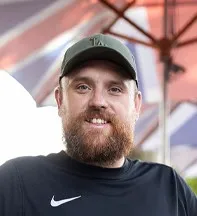
Scott Johnson
Scott Johnson founded the proper blokes club a very simply action step: he started going for some walks! He took videos of himself walking in his favourite spots, talking about some of the mental health challenges he faced and simply asked if anyone else was also struggling and would they like to join him? Only one person showed up for his inaugural group walk but fast forward to today, he has a small army of walking men, sharing their stories, seeking support and fellowship, with groups springing up over London: The Proper Blokes Club has arrived and is one to watch!

Hosted by Andrew Pain
Andrew Pain is a Mental Health & Resilience Keynote Speaker who speaks from lived experience on resilience, burnout and workplace wellbeing. Host of the Men on Show podcast, author of the book Honestly, Man, and a TEDx speaker. Member, International Coaching Federation, and Mental Health First Aider trained.
More from Men on Show
Keep listening
Never miss an episode
Candid conversations with everyday heroes – ordinary men doing extraordinary things.