Men on Show · Episode 1
Men, Nursing and the Jabali Network with Patrick Nyarumbu
- 10 October 2023 .
- 27 min .
- Hosted by Andrew Pain .
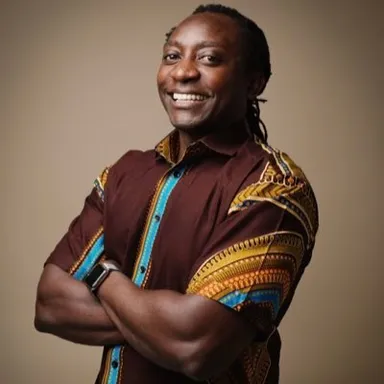
Patrick Nyarumbu is the Deputy CEO and Executive Director of Strategy, People and Partnerships for Birmingham and Solihull Mental Health Foundation Trust.
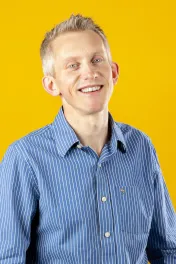
Andrew hosts this podcast. His own keynotes are on burnout, resilience, imposter syndrome and difficult conversations.
In this episode
About the conversation
Key points of the episode
- How at the time, nursing was not really seen as a "male" profession… and how far we still have to go as a society.
- How best to teach our children.
- How his father grew up in the time when people who "looked like that" were unbelievably not allowed any education.
- A key moment in Patrick's career.
- His charity legacy and its purpose.
- The challenges men and boys face today… and one proposed solution.
Men on Show shares lived experience and honest conversation – it is not medical or therapeutic advice. If you're struggling, you don't have to cope alone.
Samaritans: call 116 123 (free, 24/7) NHS: 111
Full transcript
Read the whole conversation
A complete, verbatim transcript of this episode – every word is the host's and guest's own; the topic headings are ours.
Welcome to Men on Show, the podcast Candid Conversations with Everyday Heroes. Join Andrew Pain as he interviews fascinating guests, ordinary men doing extraordinary things. If you love the show and you think somebody could benefit from hearing it, why not tell them about it by giving it a share on social media? Oh, and at the end of the podcast, if you can leave us a five-star rating and a review, it really helps us more than you know, and it gets this important message out to more people that need to hear it the most. Right now, enjoy the next episode. The next episode.
And welcome to Men on Show. I'm delighted to have as a guest, Patrick Nyarumbu, Deputy Chief Executive Officer, Executive Director of Strategy, People and Partnerships at Birmingham and Solihull Mental Health NHS Foundation Trust, MBE and Chair of the amazing Jabali Network. And Patrick, I met several months ago, one of those guys who you just meet and you know you are in the presence of greatness. Patrick, I'm delighted to have you on the show today.
Really delighted to be here with you today.
Choosing nursing as a man
Thank you. And first of all, just to sort of kick things off, what actually inspired you into nursing? As a male nurse, what was it that made you think, you know, that's what I want to be when I'm older?
Well, I wouldn't think that. I thought about what I wanted to be when I was older. But growing up, my mother was a nurse and she's always been an inspiration to me. She would always work hard for the family, provide for us. And so when I finished my education and I was really starting to think about my own journey as an adult. And when nursing came up, in fact, it was my sister who suggested it. And she was a nurse herself.
And of course, my mother did encourage me to do that. And I must say, you know, at the time, I didn't think that that was for me. And we can unpack a bit about that. But certainly that was my biggest inspiration and kind of thinking about going into nursing.
And why did you, well, let's unpack it now. What was it that made you think, actually, I'm not sure, that's really for me.
Read the rest of the transcript Collapse transcript
I think as a male, nursing is, at the time, wasn't really seen as something that you would get into. And I recall, you know, examples, some of my friends were getting into IT, some were getting into finance, and, of course, for me, I did sciences at school, and I was really interested as well in IT. But actually, I really then found the love in mental health when I started nursing, and I absolutely enjoyed it. Even to date, I still remember my very first placement in London, and I recognise that I do like to work with people, I like to support people, something that I had not really thought about as much. So I'm really pleased that I've continued to work in our National Health Service. This is 25 years now in the NHS, and I really enjoyed that.
And when you told people that you wanted to be a nurse, obviously your sister had suggested it, I'm imagining your mum was really supportive of it. Were there people that you told that were like, what are you doing? You're a bloke. Or were people generally very supportive of that decision?
Well, no one ever said that to me directly, but of course, sometimes you feel like you can't say that to people, to say, well, I'm doing nursing. But I think it's a lot better now. It feels like people are starting to really understand that this is a rewarding career. It's not about careers for men, careers for women. And interestingly, there was a book recently that was written about my dad is a nurse. And I was really pleased to be one of the people who were promoting that book.
I got my children to read it as well, because it's really important that as a society, we don't label certain professions by gender, because there is value that we bring as men into professions like nursing.
Yeah, because I guess when you think about childhood, cartoon characters that have jobs, we got Bob the Builder, we got Simon Sam, Postman Pat, but we don't have any nurses as males as children, children's characters, do we?
No, we don't. And you kind of wonder why, and it just shows that we've got a long way to go as a society. And maybe for those who have children, you know, it's part of our responsibility to be able to educate them and support them to be whoever they want to be, with our judgement.
His father, and barriers to overcome
Absolutely. So you've talked about, your sister had some influence, she suggested nursing, your mother had been a nurse for many, many years and provided for the family. Were there any particular positive male role models around you growing up that really inspired you?
My father was really a great inspiration to me. He was equally hardworking. My father grew up in the time where people that look like me, Andrew, were not allowed to have any form of education. He grew up in a time of colonisation and so he wasn't as privileged. However, he was very clear about the support to his family, the education that we had. We all went through education to A level, to universities, something that he never managed to do.
So I think he was a great inspiration. And even now, when I reflect on some of his personal sacrifices that potentially at the time, I didn't think with sacrifices or just thought, well, he's just doing what he's got to do. And it does help me as well to think about how I support my own family. So yeah, he was a big inspiration to me.
Okay, so as a male nurse and the journey that you've been on, and I'll put this in here now, you received an MBE for your services to nursing, which is fantastic. What are some of the biggest barriers that you've had to overcome to get to where you are?
Many barriers, and at times, even whether you recognise that is a barrier. So yeah, thank you for talking about the MBE, which came really as a surprise, because sometimes when you're doing your job, you just focus on making sure that you bring your best version of yourself to work and don't really think about accolades like that. I never thought that something that can happen to me or even expect today. I remember when I received it in the post, I was so shocked that I even struggled to share that with my wife because I didn't believe it.
So I think, for me, I think there was something there about re-reflecting on my journey and my career. I've met some really amazing people who have been extremely supportive. People who have really helped me to boost my own confidence and self-belief. But equally, I've had difficulties and people who were not supportive, who would not give me the opportunities that were available. But I persevered, and I'm glad I did. And I always use that mantra that wherever I am, I like to really think ahead in terms of what's my purpose here, what else can I do?
And when I'm standing still, I look back and I think, well, if I was feeling like that 10, 20 years ago, I'll still be standing still. So what is it that I need to do right now to stop just standing still? What's next for me? So I'm constantly using that and reflecting on my past.
His proudest moment, and the Jabali Network
Oh, that's brilliant. That's brilliant. And what would you, I mean, obviously, the MBA is a fantastic achievement. Aside from that, is there something when you look back at your time within the NHS and what you have achieved? Is there one achievement that stands out that you're really proud of, aside from the MBA?
When I started nursing and working in mental health, I'll tell you that one of my proudest moments in my working career was when I was a community mental health nurse and I was supporting an individual who had really struggled to be in the community and to thrive and talked about what is it that she genuinely wanted to achieve. And the one thing that we were working on was for her to be able to go on holiday.
And I recall one day at work receiving a postcard from abroad to say, thank you so much for your help. I'm on holiday and I'm enjoying it, and it's because of the support that you've given me. That is, for me, my biggest achievement. Everything else is irrelevant. I think if you really focus on why you're here, for me, that was just a demonstration of the impact that we have as nurses.
That's a beautiful story. I love that. And tell us about the Jabali Network. Of course, it's how I met you. Briefly, I did a talk with the network, met some amazing people, I have to say. It was a real privilege to work briefly with you as I did. What inspired, you're the chair of the Jabali Network. What inspired the creation of that network? And just tell us what is the Jabali Network and what its purpose?
Yeah, thanks for talking about the Jabali Network. So the Jabali Men's Network is really a network for men, specifically with a nursing background. And how it came about is because when you look at nursing, it's very much dominated by females. And for men, especially men that look like me, who are from African, Asian or Caribbean background, sometimes the support is not really there. Partly intensive support, whether it's around career development or well-being, and also when people are thinking about a career in nursing, I think you want to see role models, people that look like you and feel more motivated to do it.
So the network itself, it's sponsored by Dame Ruth May, who is the Chief Nursing Officer for England. And I'm really pleased that she was keen to sponsor it. And I remember when we met for the first time with her down in London three years ago, and it was only nine of us when we met with her. And we had support from colleagues like Yvonne Coghill, who was at the time the Director of the Workforce Race Equality Standard within AHS England.
And with that support, we've just been able to build from strength to strength, starting with nine people. And now we're about 100 people. And the idea really of the Jabali Mental Network was to create a talent pool of people who can actually start to progress into senior positions within the NHS. So that was one of the first objectives of that. Because it's really important that we have senior leadership that's reflective of our communities that we serve.
And also people have role models. I didn't see any of that in my career. So that was partly that. And also for us to be more visible, because there will be organisations, Andrew, up and down the country that don't have people with senior leadership that look like me. And it's important that we are visible across the NHS. So that means people can actually approach us for support, for mentorship, for coaching, which we have been doing that.
And in addition, we've been doing work with speakers for schools, where we're more visible now outside of the NHS, for people to start to see a nursing profession or a profession in health and social care as attractive.
Because when I, I mean, I was talking, I remember it was on imposter syndrome, we were sort of talking that through. There also seemed to be a lot of within that Jabali Network, there were about 70 people on that call. And there seemed to be a lot of sort of mutual support for one another. It seemed to be a really vibrant network from what I can see. What's the secret to making a vibrant men's network? How do you do that? Because I'm sure there's plenty of organisations that would love to have a thriving men's network. So what sort of advice would you give to any organisation trying to set one up?
So, for the network, it took us a while to kind of really think about our own identity. You know, people use all sorts of acronyms, BAME, BME, this. And we wanted to move away from that because that was creating division for us. Are we BAME? Are we BME? And when we landed with Jabali, so Jabali is a Swahili word that stands for bold and strong. And it really resonated with us as a network in terms of what we want to achieve.
And at the time, there was no one in the group that actually spoke Swahili. Because it spoke to all of us. We ended up with that name. And your question really about, so what is it that's different? It's because we have that common purpose of supporting each other and listening to each other, where you kind of leave all the egos outside the door. When you come into that space, and what's quite fascinating is, I'm sure when you joined the meeting, Andrew, when you see a sea of men, from an African, Caribbean and Asian heritage, this is not something that people see when they're joining Teams calls or Zoom meetings at work.
You're usually in the minority, and you joined a call. And what people have said to me is, when I joined the calls, I feel psychologically safe. I can share some of my challenges. Some of them are actually common experiences, and people can support each other. So I think that's really important. And we talk about Campfire meetings, and it was one of our members, Edwin Lovell, who is the Chief Operating Officer at East London Foundation Trust, who used to talk about campfires to say this feels like men sitting around a fire and having a conversation. And sometimes that's really what it's about, just talking. Yeah.
Challenges facing men and boys
I love that campfire conversations. That's a wonderful term. And perhaps moves us into the wider conversation around men and boys. And I'm not sure how much of you see within your role in nursing, but we hear that men and boys are struggling. The statistics around male suicide, around homelessness speak for themselves. From your own perspective, why do you think men and boys are struggling? What's going on there?
Because at times people can struggle to share their emotions, having someone that you can trust and talk to. And in this day and age where we have social media, it feels sometimes that your life is out there for everyone to see. And that means if you're not maybe doing as well as your peers, you're constantly being judged. You were talking about when I started my own career early on. And I can only imagine if those were the days of social media, I probably would have had different challenges, compared to now.
So I'm always very proud when I see people who post their pictures in their uniform being proud to be a nurse. I think in terms of men and boys and the challenges that we're facing, it's making sure that we can create some of those spaces for us to talk about some of those challenges. And people in our society being more open and ready to listen and be less judgmental. And these are conversations that sometimes I do have with my son, he's nine.
And when he's showing his emotions, being able to support him to know that it's OK. It's OK to show your emotion. And for me, we have to do a lot more of that in the workplace, at home or just in our own communities.
And of course, that takes time and patience. As a father myself, I know when I get home from work and the boys are kicking off, you just want them to shut up. But it takes time to help them and work through their emotions. It takes our mental energy as a father. And that's a challenge, but a challenge that we must take on. And in some ways, I guess you've answered to some degree the next question. And really the question that I want to conclude with, and probably one of the most important questions we should be asking around men's mental health is, how do we best help men and boys?
You have answered it to some degree, but I wonder if there's anything else you would offer in how we help men and boys to be the best version of themselves.
I don't think that there's a single solution to it, because we are all different. How we thrive and what works for us is different, and we have to acknowledge that. But I think for me is trying to make sure that people can access support at any time, and support that's not judgmental, and whether it's in schools or whether that's at work. So in my own organisation, we've only just started Men's Network, and we want to encourage as many men to be part of it.
But it is quite a challenge, because sometimes with men, they want to watch and see what happens before they join in, and kind of thinking about, so what is it that I can share? We like to keep a lot close to our chests, not everyone. I know I'm being a bit judgmental or just brushing everyone with the same brush, but I think what's important is really about how do we allow people to express themselves and to talk about their challenges, talk about opportunities.
And specifically, I think men from some of our most challenged communities, we have significant inequalities within our communities. And there is a risk that we can lose some of our young people who are very bright, who have a lot of potential, but because we're not listening to them, we are not giving them opportunities to express themselves, then we lose them and we lose them to crime, drugs, and I think there's a lot more that we can do collectively in terms of different partners, whether it's the voluntary sector, the public sector and the private sector as well.
Finding Patrick, and a last message
I mean, you're inspirational in the work you're doing. I know you refer to school speakers. How would someone find out more about you? If someone wanted to book you as a speaker, where would be the best place to find out more about you?
LinkedIn. I am on Twitter. But people can get in touch with me via LinkedIn. I'm here for people to make contact. I do support quite a number of people who either would have approached me through LinkedIn or any other ways. Just in terms of coaching and mentorship or just general guidance as well. So I really believe in giving back. And for me, it's important that I'm visible. We don't have a lot of time to do that. But for me, I always make time for that.
Oh, thank you. I mean, it's been an absolute pleasure talking to you. I'm so grateful you've given up your time for the show. Is there one sort of final message? If you could say one thing to men and boys, what would be your sort of final message to conclude the podcast?
I think for me, it's really about self-confidence. I know there are people who are really good at what they do, but sometimes just lack that self-confidence. And for me, that's what I got from some people who've mentored me and coached me over the past few years. So really think about how you get support from others just to build that confidence. There is value in mentorship and finding a good coach. And there are really good people out there who want to help, who want to support.
So don't suffer in silence. Don't try and just work through some of these really wicked issues that we have in this world on your own. There are good people out there who want to support and help you.
Fantastic. That's a fantastic message. Patrick, it's been an absolute pleasure. Thank you so much for being on the show.
Thank you, Andrew.
Thank you for listening to Andrew Pain's Men on Show. If you could leave us a five-star rating and short review, it would be really, really appreciated. It helps us get this important message out to more people that need to hear it the most. See you on the next episode. Thank you for tuning in.
About the guest
Patrick Nyarumbu
Patrick Nyarumbu is the Deputy CEO and Executive Director of Strategy, People and Partnerships for Birmingham and Solihull Mental Health Foundation Trust. He has an MBE for his services to nursing, and is chair of the Jabali Network, supporting African, Asian and Caribbean, senior male nurses. Patrick is passionate about mentoring the next generation of nurses and talks openly about his journey into nursing as a man, and how to enable people to be the best version of themselves.
Hosted by Andrew Pain
Andrew Pain is a Mental Health & Resilience Keynote Speaker who speaks from lived experience on resilience, burnout and workplace wellbeing. Host of the Men on Show podcast, author of the book Honestly, Man, and a TEDx speaker. Member, International Coaching Federation, and Mental Health First Aider trained.
More from Men on Show
Keep listening
Never miss an episode
Candid conversations with everyday heroes – ordinary men doing extraordinary things.