Men on Show · Episode 53
The Men's Therapy Hub Launch and why more male therapists helps men with Chris Hemmings
- 5 November 2025 .
- 46 min .
- Hosted by Andrew Pain .
Chris Hemmings returns for the second time to this podcast, the second of only 2 guests to do so!
Andrew hosts this podcast. His own keynotes are on burnout, resilience, imposter syndrome and difficult conversations.
In this episode
About the conversation
Chris Hemmings returns for the second time to this podcast, the second of only 2 guests to do so!
Men’s Therapy Hub is on Instagram @menstherapyhub
We’re also on LinkedIn if you search Men’s Therapy Hub you should find it.
Here is YouTube, though nothing is on it at time of publishing (but do check back!) https://www.youtube.com/@MensTherapyHub
Key points of the episode
- Why there is still a lack of positive stories about men.
- The shift in the "Overton" window, from "Men are the problem" to "Men have problems"... but when do we celebrate men?
- Why we need to stop victim blaming.
- The Men's therapy hub - what is it?
- The previous faults of therapy.
- The faults of the medical profession.
- How more men will come to therapy if they see themselves represented in the therapeutic space.
- A brilliant "fish" analogy about men in therapy.
- "Change the model to fit men, not change men to fit the model" .
- Why many men relish a challenge and some don't and a theory of why.
- The most common issues for men in therapy.
- The ultimate act of violence on the self.
- The future plan for the Men's Therapy Hub.
- "Call In Your Masculine" .
Keynote
Chris argues for changing the model to fit men, not men to fit the model; Honestly, Man, Andrew's keynote on male wellbeing, asks why men are struggling and how we help.
Men on Show shares lived experience and honest conversation – it is not medical or therapeutic advice. If you're struggling, you don't have to cope alone.
Samaritans: call 116 123 (free, 24/7) NHS: 111
Full transcript
Read the whole conversation
A complete, verbatim transcript of this episode – every word is the host's and guest's own; the topic headings are ours.
Welcome to Men on Show, the podcast, Candid Conversations with Everyday Heroes. Join Andrew Pain as he interviews fascinating guests, ordinary men doing extraordinary things. If you love the show and you think somebody could benefit from hearing it, why not tell them about it by giving it a share on social media? Oh, and at the end of the podcast, if you can leave us a five-star rating and a review, it really helps us more than you know, and it gets this important message out to more people that need to hear it the most. Right now, enjoy the next episode.
Hi, my name's Andrew Pain. Welcome to Men on Show. And Chris Hemmings, who we have here today, is back for a second time. Only one other guest has achieved this. I recognise there should be some award for someone that comes back twice. I'm so excited to be diving into this subject today. Chris is a counsellor, a psychotherapist coach, specialising in working with men. But we're really excited to talk about the launch of the Men's Therapy Hub, some understanding of what is that, why is that needed, what's its purpose, what's going on with that, men and therapy.
I really want to talk about some of these issues today. Chris is also the author, I should absolutely say this, of a book published in 2017, Be a Man, How Macho Culture Damages Us and How to Escape It. So if you fancy a good read as well as a good listen, go check that out. I assume Chris, you can get that on Amazon, or in all the usual places.
You can, but only old copies, because it's sold out and they didn't republish it. So I don't understand how these things work, but you can find copies online quite easily because people are selling old copies of it. I'm still really hoping one day to find a copy in a charity shop. That's like a lifelong dream. So one day I will.
Positive stories about men in the media
Excellent. Okay, we had a funny thing going on there with the camera for anyone watching this on YouTube. You'll be like, did something just freeze it? I think it did. But for those of you listening on Spotify, you won't care. So we'll keep going. So yeah, well, Chris, it's great to have you back. And I think actually, because it's your second time back, a bit of an update, I think is useful. In the last episode that we did together, it was a long time ago, actually.
It was almost at the beginning of when we started Men on Show. And we looked first about men and the media narrative, and then we talked more about men and therapy. And obviously, today, we're going to be talking more about therapy. But do you feel in the media, a lot of stuff's happened in these last few years, but do you think that the media messaging narrative about men has pretty much stayed the same? Has it moved forward positively, gone backwards? And any thoughts on that?
Yeah, I think there's been a sea change of sorts. And that is that the last time you had me on, I was still a journalist. I worked at the BBC, mostly freelance, but mostly worked within the BBC. And it was very clear at that time, the conversations around men were very hard to get off the ground. I had some success working at the Victoria Derbyshire programme, Now Defunct, which ironically was a female led programme on female issues, but the editor was a true progressive, I would say.
But there wasn't a lot of stories about men. And the one thing that wasn't present and still isn't present is that there's very rarely positive stories about men. And one of the things that I know that the Tin Men is particularly good at is highlighting the... When we talk about negative things, like mansplaining, manspreading, the new one is man-keeping, there's a lot of terms that man is prefixed, which are negative, and yet we're kind of moving away from, well, firemen, policemen, you know, the people who are actually putting themselves in danger and putting themselves in the firing line.
My wife and I went for a walk yesterday and saw some firemen, because they were all men, wearing their frog suits in the middle of the sea, jumping into the sea to do cold water training. And my wife and I both commented of like, look, these are men doing this. And these guys are out here at 10 o'clock at night. We've just been for a nice dinner. It's 10 o'clock at night and they're training and they're starting now.
And I do cold swimming. They're starting now so that they can acclimatise for when the weather gets really cold and the water gets really cold. And we don't talk about that. So that has been a change. And I think there's been a shift in the Overton window in terms of what is acceptable to talk about men. Because previously 10 years ago, the conversation just had to be men are the problem. Now we are at least starting to hear more that men have problems.
And that's good. I think the next thing can be, when do we start to celebrate and champion men that aren't just the captains of industry, that aren't just the politicians, the high ranking politicians, the men like yourself, Andrew, out there doing the work, when can we start championing them? And honestly, that's what we're doing today. You're championing me, I'm championing you by coming on your podcast. We're gonna champion each other and the men that we know in our sphere, and that's all we can do. So yeah, the media landscape is changing, but it's slow.
Yeah, that's absolutely right. And you've reminded me of a story that I feel like should have been on national news a couple of years ago, but I certainly don't remember it. Most people living outside of Yorkshire, living outside Leeds, people within Leeds, they probably do recall, but I don't think that it's hit national press. And tell me if you've heard of this. So Nathan Newby was a passerby who noticed a man standing outside a cafe in a busy hospital in the middle of Leeds, just didn't look okay.
So he went up to him to see, I might have thought, oh, he doesn't look okay, but I'm a bit busy. I'm a shocker for that. I'm sure we all are. Or, oh, it's probably nothing, that Nathan Newby, ordinary guy, went up, asked him if he was okay, got chatting to him. This guy had a bomb. He was waiting to set the bomb off and kill as many nurses as he could. Nathan Newby calmly talked to him out of it.
Bomb didn't go off and the man didn't take that course of action. Of course, the police arrived and it was calmly dealt with. Why wasn't that not on National News as a story? What a hero. And yet no one will know that story. And I feel that we don't pick up on these stories. And if there are stories of men doing well, we certainly wouldn't say these men do, these men can. And I feel there needs to be more of that. I definitely agree.
Read the rest of the transcript Collapse transcript
Victim-blaming and inclusion in DEI
And exactly that, that this is a guy who has, first of all, dared to take time out of his day, which is something that many of us, as you say, don't have the capacity sometimes to do. And he hasn't panicked. He has calmly spoken to this man. And the sex, the gender of the people running towards danger is almost entirely men. And we should be celebrating that, but we don't. And it's a bit of a shame, really, because then it's like, well, that's just what's expected of us, is it?
That we should put ourselves in danger if a house is burning down, or if there's, you know, the guys who stopped the person on London Bridge, like with the, you know, the Narwhal Tusk and all that, like those were all men. You can say, and the sad thing is, it's often dismissed by saying, well, who are you mostly protecting? Who are men protecting us from? It's other men. And it's like, but that's victim-blaming, right? It's like when we say, well, men are actually more likely to experience violence.
Men are the most likely victims of violence. And then the rebuttal is always, yeah, but it's men who were the perpetrators. And it's like, yeah, again, that's victim-blaming. We're not thinking about male victims. We're thinking about the perpetrator only and what? So just because I'm a man and I get beaten up by some guy on the street that I've never met, like random acts of violence, it's my fault because he's also male and so am I. That doesn't make any sense.
And it's a frustration. And it's been a frustration of mine in the 10 years that I've been doing this work. And it's a frustration that still exists. But what I would say is I'm starting to notice that the pushback is less and less. And that a lot of people who are, quote, progressive, are now actually recognising that to be progressive, you know, the I of DEI is inclusion. And you're not inclusive if you're a room where there's no straight white guys. You're not inclusive. So you're just replicating old patterns. And you're not as progressive as you think you are.
Yeah. I mean, I'm heartened from what you're saying in terms of the media. I think you're absolutely right in what you say about the DEI spaces. My view is, you know, it's not like a Trump thing that it should be ditched. But I think DEI is really important, but we need to move forward. It's a bit like video assisting refereeing in football, where everyone's moaning. Well, not everyone. You know, it needs work to implement it properly.
But now we have it. I think it's an important thing. That's how I see DEI. But I do see, I do feel like I see progress from my point of view. It's interesting that you do in terms of you feel like now the narrative has changed. Or the men are the problem, men have problems. But then that next step of being able to freely celebrate men without the caveats, but we should remember they're privileged, et cetera.
That's where obviously we want to get to. In terms of the Men's Therapy Hub, let's go to that. So for me, you know, I'm aware, I think it's something like, and please do correct me, it's something like 20% of counsellors' therapists are men. But just before we get into the male therapy hub, which of course I want to do, that's what we're going to focus on. It wasn't always that way, was it? I always thought that the majority of counsellors' therapists were men and that changed. Why do you think that changed and flipped so that something like 80% are women, 20% are men?
Why most counsellors are now women
It's a big question and I could give you an exhaustive answer. I'm going to try to keep it as manageable as possible. Psychotherapeutic work and theories were developed, kind of like Freud, Carl Rogers, Carl Jung. These were aged, white, privileged, literally privileged, well-educated, well-to-do men who were in many ways brilliant and geniuses. And much of the early psychotherapeutic work, if you think about in the kind of late 1900s when it started to first develop, think about how society was laid out.
Men would work and women would not, most often through law, actually. Men would be out doing the work. And so men didn't have problems unless they were work related. So much of the kind of base interventions for men would be through a lens of, this guy can't work because he's exhausted. Something is going on with him, which means that he's exhausted and we just need to help him recover from that. Very little of it was deep psychotherapeutic work in the literal sense of, let's go back and find out what's happened in your past to understand why you are here now.
That lens was put mainly on women because women were viewed through a domestic setting, through the eyes of men, where a woman who was struggling, well, she had no reason to be struggling because she wasn't working hard, right? So a woman who was struggling would be viewed through a lens of hysteria. Now, if you know anything about the word hysteria, it's deeply misogynistic in its etymology because a hysterectomy is a womb removal. So hysteria, I think histos, I'm going to fail my Latin here, is womb.
So hysteria, the translation of hysteria is like a wandering womb. So a woman was struggling because her womb was out of control. And much of the deep psychotherapeutic work initially was focused on women, because women were causing problems for men in a domestic setting, and they were the ones that needed help. And if you look, there's really famous research on a patient called Gloria, who tried out lots of different modalities of therapy. She was female. Much of the early clientele base for women, as for therapy, were female.
And of course, add on to that, well, I'm a man, I don't have problems, but still very, it was as entrenched then as it is now. So men didn't go to therapy, most of the client base was female. Fast forward to 1950s, 1960s, 1970s, kind of second wave feminism, like female lib, let's call it. And suddenly, suddenly the women enter the workforce. And the percentage of men and women who study psychology has gradually, it gradually gained parity because women were really interested in this because it was also kind of about them, which makes sense.
And plus, when you are socialised to be empathetic, compassionate understanding, you might be drawn to a profession and a career that is at its at its core about empathy, compassion and understanding. So women would be drawn into it. And over the years, the ratio has dropped in terms of men. And now we're roughly 80-20, female to male. And I would guess anecdotally based on speaking to the men on Men's Therapy Hub and some other research, most of them, you know, I was one of three men who graduated in a cohort of 24.
There were more women of colour who graduated our course than there were men. And that's great for the women of colour, by the way. I'm not saying that's a bad thing, but it's a terrible thing for men. Most guys are the only person on their course, so maybe there's one or two. And so here's my hot take, right? My hot take is for far too long, the medical profession has treated female bodies as if they are male bodies just without a penis.
That there's no difference, you know, there was, I think there was a famous, there was a famous study done on uterine cancer where there was no women in the study, because women were difficult to study. This was the rhetoric, women were difficult to study because of their hormonal fluctuations. So we just study the impacts of the medicine on men. Fucking dumb, but that's where we were until very recently. In the psychological sphere, my hot take is that actually, we have treated men as psychologically female, just with a different shaped body.
That the approaches, that the interventions, that the language, the way to work with men, should be the same as the way that we work with women. And now here's where I consider the absurdity and the kind of hypocrisy from my own profession in that, is that almost all psychotherapeutic theory is about how our socialisation and our experiences growing up have affected how we experience the world around us. So we know that gender is real, or at least we make it very real in society.
And so we know that men have been socialised differently than women. And yet, there is no course that I know of yet, that has a how to work with men part of it. There's no modules on working with men in the therapy space, right? Exactly. Wow. Isn't that absurd? So here's, and I told you I could talk for a long time about this. So here's where I'll wrap this up. So Men's Therapy Hub is male therapists for male clients.
Now we are not saying that men are better therapists than women. And we are not even saying that a male therapist is a better suited match for a man. But what we are saying is there's too few of us in this profession. And maybe more men will come to therapy if they can see themselves reflected in the therapy space. And hopefully, it will also encourage more men to become therapists. And the reason that this started as an idea in my mind is because on my course, we had a lecture on differences.
And at the end of this lecture on differences, where we heard about working with people of different ethnicities, religion, sexualities, gender when it comes to being trans, religion, disabilities, you know, I'm queer, so like queer theory, like great, okay, awesome. I'm bisexual. I was like, yay, great. Okay. And at the end of it, I raised my hand and I said, we're talking about differences in therapy. And I'm in a very stark minority in this room. And there's no talk about how to work with men.
And the usual eye rolls I get when I talk when I bring men, and I'm used to it now, I'm thick-skinned enough. And then the conversation turned on to privilege. And I was like, well, okay. Boris Johnson was Prime Minister at the time. I said, if Boris Johnson comes to therapy, does he not deserve the same empathy as a disabled black woman? Because he's come to therapy, do you meet him without compassion and empathy because he's a privilege, because he's privileged?
And this is where I would actually argue that it's more important that we help him because he's got, not more important, but vital that we help him because he has power, right? He has actual power. And I was then called into a conversation with the lecturer a few days later, a few weeks later, sorry, to talk about white privilege. And I was like, but I wasn't talking, I was talking about being male. And I'm talking about us as therapists showing men, regardless of their apparent privilege, empathy and compassion and understanding for their lived experience.
So it just started this frustration in my mind. And then about a year or so later, the concept of Men's Therapy Hub came into my head. And I was a bit annoyed because I was hoping to relax, but it was such a good idea that I had to do it.
Why men drop out of therapy
Yeah. I mean, at times I've had therapy, it was female. Those were the options. I was living in rural France, so there wasn't really a male option. Therapy didn't work brilliantly, but I was really stuck in an abusive relationship. That was an abusive relationship. That was a problem. And she was very much a question asker rather than a suggestion maker. I probably needed a bit more of a bit of a speaking to wet fish around the face.
And then I could probably have gone on more of a journey and dealt with that better. But what difference do you think? So obviously a male counsellor, some people will happily go, some guys would happily go to a woman man, but then they're not bothered. What's the real benefit of a male counsellor for a guy? How does that make a difference? So let's say, for example, 20 percent of counsellors currently are men. Let's say we moved the dial and it's 40 percent.
We make real growth of that. And I think something like a third of people accessing therapy in the UK are men. Do you think that number would increase? What does a male counsellor give a male client that perhaps a female wouldn't?
It's a really good question, and it's one that I have to be extremely diplomatic in answering. The first thing I would say is that 30 percent of people who go to therapy are male, and that's good. That's-
Improvements, isn't it? Yeah.
Yes. However, the vast majority of men who go to therapy, just slightly over 50 percent of them drop out prematurely. And the reason most often cited for why they drop out is because they don't feel seen and understood by their therapist. So I can only say anecdotally, a good number of clients who I've worked with over the past few years have said, they've had therapy before, like you said, and it was with a woman and she was lovely.
And it was really nice just to sit and talk. But there was no action plan. There was no challenge. And I say to, Andrew, if you were to come for an introductory session with me, I would say, I would hear what's going on with you. And I say, all right, here's how I work. I won't be like other therapists. I will hopefully be as empathetic and compassionate as them. But I'll challenge you. I'll encourage you. I'll call you on your bullshit where I see it.
And I'll be direct sometimes. Not directive, not tell you what you should do. But if you're in a relationship where, this is just an example off the top of my head. If you're in a relationship where you and your wife are continually rowing, and I can see that you're not able to take accountability for your own impact and experience in it, I believe it is my professional ethical duty to find a way to explain to you that have you considered your own part in this?
Because from my experience of what you're saying, you are doing this, but then you're refusing, you're not willing to listen to a response. Now that goes beyond what we were taught in therapy school, which was don't be direct, you know, let the client lead. But it's like, we're asking, this is another example, let the client lead. We are dealing very often with a group of men who don't have an emotional toolbox. So the fuck are they leading with?
Yeah, right. We're asking men to do something. I made, I did some work in a big construction company once, and this guy did a men's mental health workshops in this whole construction company. It was amazing. The whole year was so brilliant. And this one guy, I'll never forget, halfway through this workshop, he just was like, really through his pen. He's like, I just, I can't do this. And I feel so ashamed. Like it's so frustrating. And I was like, okay.
I was like, what do you do for a living? He's like, oh, well, I'm a spark. I'm an electrician. I was like, okay, cool. I'm going to ask you to go and fix that fuse box over there. And I'm going to give you a toolbox. And inside it is a fish. Are you going to feel ashamed of yourself because you can't change a fuse box with a fish? He's like, no. And I'm like, right, what would you do?
He's like, well, actually, I'd laugh. I was like, right, because it's absurd, isn't it? So so what you're doing right now is you're beating yourself up for not being able to do something that you don't have the tools to do yet. And and that's what we're doing with men in therapy. It's why so many men will leave. It's like we're trying to tell men to lead emotionally when we've told men from the moment that they're alive not to have emotions.
And I personally think that's unfair. So I feel like my job, at least in the early sessions, is to buy like, hey, we're going to go this way. I know it's going to be hard. And here's some of the stuff we can do. And no, no, no, you just deflect it. No, no, no, we're not going to do that. I know why you deflect, right? Tell me why you deflect. Oh, OK, because it's hard. Right. OK, good.
So come back on track. So we have to be a bit directive. Otherwise, they'll just wander off into the abyss. And I know that because for the first few sessions with my therapist, I ran fucking rings around him, my first ever therapist, until I said to him, dude, I need you to call me on my shit. And he did. And he was wonderful at it. And from then, we started working together. So we have to change the model to fit men. We have to not try to change men to fit the model.
Testosterone, generational trauma and action
Yeah, it's interesting. I've had several community builders on my podcast, and they say that it just didn't work for them as traditional counselling. And it was that that made them think, well, I've got to do something because of mental health in a right state. So they went and founded some men's communities. And that's really helped them. Do you think there's a link there though with... I was reading the other day that because we obviously have more testosterone in our systems than equivalent age women, however old we are, obviously once we're post puberty, it's like 10, 15 times more, depending on how healthy we are as well.
But that the impact of those elevated levels of testosterone make us more goal solution focused. So, counselling, just talking round and round and drawing up the past and delving further. We also need counsellors that understand that as men, we need, as you mentioned, accountability, that sense of goals, progress on the stuff that we're actually struggling with. Because I was reading about a project in Wales, I will shut up in a minute, I know my questions are very long, and they had a massive impact on men's mental health, but as part of the counselling, there was debt management.
So you didn't just, if you went to counselling, and part of the problem was debt, you'd get within that service, debt management. So you had counselling and debt management, and it seemed to really help men, because they got the counselling, but they made progress, there were solutions. Do you think that's part of our biological makeup, or do you think that's overstated?
I will start by caveating that I'm not a human biologist, right? I don't know enough about testosterone to give you an answer about that. What I can say is, we talk a lot about generational trauma when it comes to everyone other than straight white guys. And generational trauma is what we have picked up from our ancestry. You know, that I picked up from my dad, that he picked up from his dad, that he picked up from his dad.
And it wasn't so far back that millions and millions and millions and millions and millions and millions of men were dying in battle across the whole of the world. So that's just, that's the prelude to say generational trauma is real. So generational programming is also very real. And of course, evolutionarily, men were action oriented. Men were focused on creating and building and forging and developing for the betterment of the community around them. So I believe that that is innate.
Now, whether that is based on our genetics or based on our epigenetics or based on our kind of psychological development and progress through generations, I don't know and will probably never be able to fully answer the question. But what I do know is, from working with men, that they want action, a lot of them. And some don't. And I've had some clients leave because they don't like my approach. And I'm like, cool, well done for saying, go and find somebody who will suit you.
But a lot of men, I have a particularly high retention rate because I meet men where they are in that reality of, I know that you want action, so I make a deal with you. We're going to do some deep psychological work and then we'll get to the action, all right? Like I promised you, we'll get to the action. I call it the implementation phase. It's like, okay, you've done all this work now, so now I'm going to make some suggestions on what you need to do.
And they like that. So I believe there is an innate, and it's hard to say, I believe there is an innateness in that, that is more on the male side than the female side. Not necessarily, and there's lots of overlap and crossover. And there's plenty of women with high testosterone, I might add, and men with lower. It is a spectrum. But it seems that a bit more of a action-focused, therapeutic model is more alluring for men.
And it's why I trained as a counsellor and a coach. Because for men, when you can say, all right, we're going to take this, now we're going to do something with it. For example, I'm going to say, I think you're ready to have that conversation with your friend that you've been putting off. Because we've talked about it enough now. I think you're ready. So your homework is to go and do it. Now, I'm not going to put any time scale on that.
I'm not going to say you have to do it by next week. But if you don't do it by next week, what we'll do is we'll talk about, well, why didn't you? What is it that still prevents you? And then we can talk about that. But I am going to set you challenges, because actually that's what you want. And if you don't want challenge, you can tell me, and I'll say, okay, we won't do that. That's fine.
Most often, they'll relish the challenge. And some don't do it, and some will drop out because they don't want to do the thing that they need to do to change and move. And it's like, well, I can't make you ready for it. You have to do that. You know, we can work together, but therapy can just be quite churny. And I don't want to keep clients in therapy for years and years just to make money off them. I want to see progress too.
The underlying issue men bring to therapy
And why are men coming to therapy? Do you see a common problem that crops up again and again and again, or is it just completely varied? There's no same issue.
The presenting issue or presenting issues are vast and varied, as vast and varied as every human is.
Yeah.
The underlying issue, and it's so sad that I think you probably know what I'm going to say. The underlying issue for most guys who come to therapy is, I don't know what I'm doing. I don't know how to talk about this. I don't know how to be in conflict. I don't know how to commit to a loving caring. I don't know how to be emotionally available to myself and to the people around me. And they are frustrated.
They are angry. They are confused. They are scared. They are sad. And they don't know how to engage with those emotions. And so they are feeling isolated. They are feeling unseen. They are feeling disconnected. They are feeling downtrodden. And very much what we're doing to begin with, with most of my clients is, let's give you a grounding in understanding yourself. Let's give you a psychological education, an emotional intelligence work to develop our EQ, our emotional quotient, because studies suggest that men's EQ is lower than women's.
So we need to work on that. And we engage with our emotional selves in very different ways than women do, because of our socialisation. So it's like what I said when I used to do the work in schools, which was when we're talking about issues of masculinity, no matter where you go in the world, the way they present is different, but the underlying causes is very often the same. So you've got the double whammy of, okay, a young lad who's experienced trauma growing up, he doesn't even recognise that what happened to him was trauma because he's so cut off from his emotions.
And most guys will come to therapy at a point of crisis. Whereas most women will come to therapy having already discussed some of the stuff with people in their lives, having already had some conversations about it, and they can kind of hit the ground running. Some guys will come to therapy and they just don't even know where to start, and that's okay. That's part of the hard bargain that I've given myself by working only with men.
And it's a privilege to do it, to watch the growth. It is a privilege to work with these men and see them develop their emotional understanding and suddenly be able to say, hey, you know what, last week I was about to do this thing that I've done my whole life. And then I thought, wait, no, I don't need to do this. This is something from my past. I'm going to do something different. And I get chills, man. I'm like, oh, like, that's the work. But it takes so much courage to come to therapy because it is hard.
Boys cut off from their emotions
Yeah. So how would I'm just wondering, you know, when you're in a therapeutic setting, when you work for a cause, really, what you want to do is be so successful at dealing with that cause that you put yourself out of business. So how would we put you out of business, Chris? What would need to change for you to put your P45 into yourself?
It's interesting in my final sessions with clients, I always say to them, I hope I never see you again. Of course, you can always get in touch in the future, but my job is to put myself out of business. It's very strange and I didn't realise that until I started doing it. Yeah, it's a real weird one. How to put me out of business? Well, we live in a culture, and this is cross-culture, this is almost universal across humanity.
We live in a culture in which a young boy, and the bell hooks said this, and if you haven't read any bell hooks, please do. Bell hooks said this, and I'm going to paraphrase and bastardise her quote, but bell hooks said something along the lines of the most universal experience of violence that any human experiences is when young boys cut themselves off from their emotional self, because that is an act of violence on the self. That from three, four years old, you're told, be a big boy, don't cry, don't feel, don't hurt, don't show pain, don't be kind, don't be curious, don't be joyous, be calm, be chill.
I mean, we could talk about stoicism, although if you read the stoics, like the concept of stoicism has been completely misrepresented. Be stoic in what we now mean by it, which is to be emotionally reserved at all times. And as men, we grow up to cause and create and experience so many problems for ourselves and each other, and we literally don't know that we're doing it. And one of the saddest things is when clients come and they talk about their experiences, and I'm like, I realise that they have no idea how damaging their behaviour has been towards themselves.
They have no idea how damaging the social circles they've been in have been towards themselves. You know, one of the things that my therapist said to me, which blew my mind at the time, was, Chris, you were bullied at school. And obviously I was like, no, I was the captain of the football team. Like what you're talking about. He's like, yeah, you were. He's like, you were also a bully. And I was like, ah, fuck. Of course, because we all are.
We are all bullies and we are all bullied. And we are cruel to each other. And I'll just say, by the way, that women and girls, holy shit, the way they're mean to each other. I used to make the joke that, you know, at least we just metaphorically punch each other in the face. Like they are like actively mean and cruel. But if we can create a universe and a world in which compassion and empathy are at the forefront, I live in Denmark now, by the way, I live in Copenhagen.
And my business M-Path doesn't really have a place in Denmark because they teach empathy to five-year-olds. You get a badge at Scouts here. I got given the badge recently, it was very sweet. They got you get a badge at Scouts here, it has a picture of an eye with a tear on it. And you get that, I can't remember the Danish term for it, but you get that in Scouts. So what are you nine, ten years old?
You get that when you have proven to the Scout Master that you know how to hold somebody who is in pain. Can you imagine that? I went to Scouts, like, I got a badge for making spag bol for my parents, I got a badge for tying some knots. I didn't get a badge for holding a kid while he cried, but that's normal here. So, more of that, but to answer your question, and this is a long answer to say actually, I'll never be out of business because I'm not one for kind of Taoist Buddhism, but I'm not, yeah, so I'm not for all life of suffering, but quite a lot of it is.
Yeah, yeah. And yeah, no, and I don't think it's gonna get much, I think the narrative about men, boys, is improving and will improve, but I think we've got a long way to go.
A long way.
The Men's Therapy Hub, and finding Chris
A long, long way. Yeah. So tell me, because in terms of the Men's Therapy Hub, you obviously gave us a bit of an introduction to what that is, but sort of beginning to wrap up the podcast, just, you know, if you were sort of pitching that, selling that, kind of what you're going to do over the next few years with it, what's it already achieving? Why is it there? How would you encapsulate that just in a couple of minutes?
So people really know what that is. If somebody maybe wants therapy, they don't really know where to start. Maybe they went to the NHS and had six sessions and then that's it. See you later. And they want something. They've had a taste for it, but they want something more. Like, so tell us about it and how do people find it?
Well, I'll try and answer your questions in reverse order. So, what it's trying to achieve is creating a space for men, by men, where we try to normalise deep psychological therapeutic work to say that, first of all, we are all men who have done it, so we know how hard it is. And we are creating a space with you in mind, because if you build it, they will come. Andy's Man Club and others are brilliant examples.
Men's Sheds, all of these. So we are trying to do that in a therapeutic space to say, this is a space where we are all men who are wanting to work with you if you are male. And what we're trying to achieve with it is, first of all, to get as many male therapists listed on there as we can. We haven't gone public yet. And we already have 103 male therapists listed on there in three months, which I was hoping to get to 50 by October.
So we're at 103, so I made the joke to Jet from the US guy earlier today. And I was like, dude, we have to fucking do it now. These guys want it. So it's like, shit, okay. So 103 therapists already on there. Every single one of them is registered with an accredited professional body. And there's lots of those, but all of these men are signed up to an ethical code, and they also have a supervisor, which is important.
So if I have a difficult client, I take him to my supervisor room and we talk about it. And that's where therapy kind of breaks away from coaching. And what we want to do is we want to normalise men being in therapy on both sides of the therapy sofa. We want to create a space where men can come and know that they can find men who they can relate to and break away from the stuffy mould of therapy, which is why I think we're going to be the only therapy directory that has a podcast.
There's Pink Therapy for queer people, which is great. We're going to be a talking shop. We're going to have conversations. We're going to hopefully have a conference one day. We're going to try to grow and develop. We're going to do research based on the men who are on the site. There's a cohort of male therapists to do research with. So we want to make it that. But also we want it to just be a platform that feels like it's for men.
And we're going to expand to as many countries as we can, if we can, and not make it about making money, but make it about advocacy, which is why 10% of all of our subscriptions are going to Andy's Man Club, Men's Minds Matter, Mankind Initiative, and James' Place. And we're only charging for the first year, five quid a month, whereas the main therapy directories are charging 25. We want it to be big, we want it to be bold, and we want it to unapologetically say, Men, come here and try us out.
And if you're thinking about going to therapy and you're male, try a male therapist, try one of our guys, pick four or five, go with your gut. Do you like the photo? I've got bleached blonde hair and earrings. If you think that I look like a bit of a prick, don't choose me, choose someone else. If you think I look like someone you could relate to, get in touch, have as many 15-minute intro conversations as you can.
And I use this analogy all the time. If you're going to go and buy a new winter coat, you wouldn't walk into the first shop, try the first coat on, look at yourself in the mirror and go, you know what, I don't like that coat, I'll just freeze this winter. Keep going, keep trying to find it, go out on another day, do the intro calls and try and find someone that seems like they'll work for you.
And then if you've tried them out and they don't work for you, try somebody else, because you came to therapy, to have therapy, because there is a therapist out there for you. You just have to be brave. And this is where, and I'm going to end on this, this is where I say, I'm going to call in your masculine, because your masculinity is a wonderful thing. Don't let anybody ever fucking tell you it's toxic. Your masculinity is a wonderful thing.
And you have courage and you have bravery and you have strength and you have the ability to be assertive. So do it, point it in this direction. Be brave, be bold, be strong and do the work, because it will get harder before it gets easier, but it will be worth it in the end.
Yeah. Amazing. Amazing. And you know, I was about to ask you, because I always ask guests this, could you give me like a two sentence, so a message of encouragement to those listening to the podcast. But I feel like you've just done that. You've got that in there anyway. So unless there's anything else you want to say in a couple of sentences, I feel like it's quite a nice rousing way to conclude the podcast.
I can just say one very thing that I forgot. www.menstherapyhub.co.uk Well, that was going to be my...
You beat me to it again. That was going to be my very last question. Where do people find you?
So now we know.
So that's how they find the Therapy Hub online. And how do they find you personally?
Well, I'm less online these days. You can find me on LinkedIn personally, but you can find Men's Therapy Hub at Men's Therapy Hub on Instagram and soon to be on TikTok. Yeah, I'm going to have to bite that bullet and we'll also have a Men's Therapy Hub YouTube channel as well.
Brilliant. Look, Chris, it's been an absolute pleasure to speak to you as it was several years ago. Thank you so much for everything you're doing in the men's space. The Men's Therapy Hub sounds like a brilliant initiative. I'm looking forward to watching that develop. But thank you for your time today. You've shared so much insight. It's been a pleasure having you on the show.
It's been a privilege to be your second guest.
Thank you. Excellent.
Thank you for listening to Andrew Pain's Men on Show. If you could leave us a five-star rating and short review, it would be really, really appreciated. It helps us get this important message out to more people that need to hear it the most. See you on the next episode. Thank you for tuning in.
About the guest
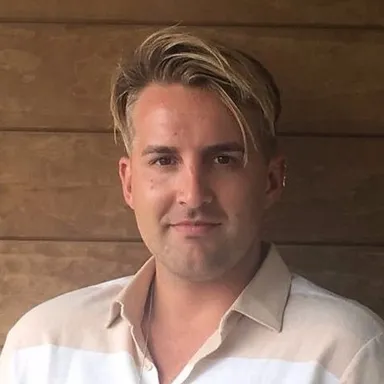
Chris Hemmings
Chris Hemmings is a therapist and coach who specialises in working with men. He’s the founder of Men’s Therapy Hub, a directory of male therapists for male clients. Before training to be a therapist he was a BBC journalist, writing and making documentaries about men, masculinity and mental health. He’s also the founder of M-Path, who go in to schools across the UK speaking to students about what it means to be a man.

Hosted by Andrew Pain
Andrew Pain is a Mental Health & Resilience Keynote Speaker who speaks from lived experience on resilience, burnout and workplace wellbeing. Host of the Men on Show podcast, author of the book Honestly, Man, and a TEDx speaker. Member, International Coaching Federation, and Mental Health First Aider trained.

Never miss an episode
Candid conversations with everyday heroes – ordinary men doing extraordinary things.