Men on Show · Episode 52
How to build dynamic communities for men and why they matter with Matt Grisedale
- 22 October 2025 .
- 37 min .
- Hosted by Andrew Pain .
Matt Grisedale is a community builder driven by one simple belief: people are better together.
Andrew hosts this podcast. His own keynotes are on burnout, resilience, imposter syndrome and difficult conversations.
Key points of the episode
- The culture he was pulled into 4 years ago. (and why that was a great thing) .
- "The way men are seen is the same, but the way they are has changed" .
- How masculinity is likely more complex than we have been led to believe.
- How the community started and the massive team it serves.
- The commitment- never ask "Are you ok" unless you really mean it.
- The service he offers, and what goes on at these incredible groups.
- The simple and profound bottom line.
- His recommendations on community building.
- A pithy ending message.
Men on Show shares lived experience and honest conversation – it is not medical or therapeutic advice. If you're struggling, you don't have to cope alone.
Samaritans: call 116 123 (free, 24/7) NHS: 111
Full transcript
Read the whole conversation
A complete, verbatim transcript of this episode – every word is the host's and guest's own; the topic headings are ours.
Welcome to Men on Show, the podcast, Candid Conversations with Everyday Heroes. Join Andrew Pain as he interviews fascinating guests, ordinary men doing extraordinary things. If you love the show and you think somebody could benefit from hearing it, why not tell them about it by giving it a share on social media? Oh, and at the end of the podcast, if you can leave us a five-star rating and a review, it really helps us more than you know, and it gets this important message out to more people that need to hear it the most. Right now, enjoy the next episode.
Hi, my name's Andrew Pain, and welcome to Men on Show, another fantastic episode, this time with Matt Grisedale, Senior People Champion at Eon Energy. And I'm so excited to be talking to Matt, particularly about some of the stuff he's doing there within Eon for men, men's communities, what they have set up there. We've had a lot of community builders, as you'll know, on this podcast, but all of them doing stuff externally, voluntarily within the community. So I'm really looking forward to unpicking that and really trying to draw out the lessons that we can learn. So Matt, thank you for giving up your time to be here. Welcome to the show.
Thank you for the honour. I'm a little bit excited to be here. It's good to talk about the stuff that we're doing. So I'm all in on this stuff.
Moving into men's wellbeing work
Cool. So just to start with, you're a senior people champion, you're building a community in one of the largest energy suppliers in the UK, supporting men's well-being. If someone had told you 15 years ago that you'd be doing that today, would that have felt fairly obvious to you, or has there been some major transition that's brought you into this work?
Definitely not obvious. If you'd have asked me five years ago, I wouldn't have even seen this as a thing. So I was pulled into an opportunity around four years ago to work with a diversity team, who looked after culture and people safety. And it was that job that kind of showed me. So I always knew I was passionate about this stuff, and I always knew that I wanted to do something with it, but I didn't know that those jobs existed.
And it wasn't until I was pulled into this role that I actually got a real taste for it and realised, oh, hang on a minute, that's what I'm passionate about, that's what I love doing. And I got a chance to kind of dig into all the different types of diversity topics. Loads of stuff around kind of people development, all that kind of stuff. And it really just, it just became, you know, that perfect fit when you find that job, when you're like, yeah, this is me.
So, so yeah, five years ago, if 15 years ago, not a chance, even five years ago, I would have questioned it. But now I'm in it. I absolutely love it. Brilliant.
And what do you love? What's the thing that really, when you think, I just so love this job, what is it? What's the most enjoyable?
Read the rest of the transcript Collapse transcript
What do I love most? I think it is the, for me, it's just that seeing the, seeing that the sparks and seeing people just like have that clicking point and that turning point of going, ah, right, okay, now I understand that a little bit better. I kind of started this journey working with our Embrace Network, which is our racial inclusion network. And the first part of that was kind of seeing people understanding, ah, right, that's how, that's how, when I say that, it affects people.
That's how, when this happens, it can come across as racist. I kind of get that kind of stuff. And seeing that kind of tickle over people's heads was that first turning point. And then the stuff around the men's health stuff, just getting people talking about it, and seeing people go from really guarded to a place where they're able to open up, where they feel safe to open up. Those are the bits. I think it's those little moments that really, really do it for me. And there's so many of those that it just builds into that real kind of job satisfaction, I guess. Cool.
So thinking about men's well-being, we've had quite a year, I feel, 2025. Obviously, we had the government's announcement that they'd be launching a men's health strategy end of 2024. They've been seeking evidence to help them shape that strategy through 2025. That sets a bit of a marker. We've had the Netflix Adolescence series, of which, on the one hand, from my perspective, is a fundamentally flawed plot, an absurd plot, but which has got people talking about men and boys.
Nonetheless, it was a big deal this year that we've had the publication of The Lost Boys Report, Gareth Southgate's outstanding Richard Dimbleby lecture around the crisis facing particularly young boys. We hear so much in toxic masculinity, misogyny, teams going into schools to tackle the scourge. Do you think there is a crisis here, are men and boys in crisis, or are we all just getting ahead of ourselves with this?
Men are seen the same, and have changed
It's a difficult one. I mean, there's definitely stuff there, there's definitely stuff happening, and there's definitely problems. It feels like a lot of these problems are of our own causing. So the way in which masculinity is viewed is very stereotypical of how masculinity was, and masculinity has changed dramatically. It's not the same as it was when dad went to work and mum stayed at home and looked after the kids, and that was the only things that happened.
Those were the only two options. The world has changed, men have changed, and the way men have changed. So things like stag do's aren't exactly the same anymore. Not everyone is all about going out and getting absolutely hammered and then tying someone to a lamppost. People do things in different ways. So whilst I get there is stuff out there that's leading into problems and causing crisis of assault, I think probably the main issue is that the way in which men are viewed has stayed the same, but the way in which men are has changed.
Yeah, agreed. So in a way, yeah, I mean, you've put it beautifully there, actually, that the way men are seen has stayed the same, the way men are has changed. Because I feel like I see enormous change. I've mentioned it in other episodes. I'm 51 now. So I remember when England, I'm a passionate football fan, when we got knocked out the World Cup in 1990, semifinals, Germany knocked us out. Gasquin had been brilliant in that tournament.
He cried. And it was front page headlines. It was a major deal. But today, if a sports, male sports star cries, it's just be considered normal. So I feel like as a 51 year old, that things have changed. We are talking about mental health more easily, perhaps than we were. I still feel like the provider stereotype remains. I feel like there's a bit of a tug of war in the sort of, we're trying to be modern men, but it's quite difficult sometimes.
We know that we should speak out, but often people don't want to hear what we have to say. We don't want to offend anyone. So for me, men have changed, but we haven't quite found our way. And I'm not sure that the world has quite found their way with change men. Would you agree with that or anything to add to that?
I think you're right. I think we have, on the most part, changed, but change is scary. So there's a lot of people out there that, although they understand that there's change, they want to change, they're not necessarily ready to step outside of that, of what they consider their norm, which is why it's so important to have those spaces where men can just be men in a way that is true to them, I suppose. So what works for one man isn't necessarily going to work for another man.
We're not all one cohesive group that all act and think in the same way. It's a variety of different people, and that's the really important thing. The stereotype, and stereotypes are always really quite damaging, but the stereotype is all men are the providers, all men go to work, all men don't talk, all men don't cry, and that isn't the case. Some men do cry, some men don't cry, some men do work, some men don't work. There's so many different facets to it. It's just, yeah, it's what it is, of course.
And I feel like if I think about myself here as a man, we're more complex. We're not just these sort of cavemen. You see, I, more so than my wife, the slightest thing that's emotional in a movie, I'll be weeping my eyes out. But then I love football, drinking beer, diving, like if you look at my hobbies, they'd be more stereotypical male, my chin at bar, my weights that I do. But I'm a very emotional person at the same time.
There's a very, some people would say, I don't like the word soft and hard, because I think it really has great implications, but there is a very soft side to me. So for me, men are more complex, maybe more masculinity is more complex, and we've given it the way that we've seen it. And as you say, every person, every man is so different. What would you say, Atty, in the role that you do, what would you say are the main struggles that you see among the men that you support and interact with? And maybe even not only what are the main struggles, but what do you see as the causes of those struggles?
How the community started in a remote workforce
So I suppose if I take it back to the start of the community, it was four people individually who had had this idea that there was people within their teams that just weren't talking, weren't able to talk, but really needed that safe space to do it. And one of the biggest problems that we found when we came together was that we have this huge workforce. There's about 8,000 people in the UK. The team I work with is our Net Zero Delivery Teams.
That's the people who are opening customers' homes for InSmartMeters. 2,000 of those people are meter operators. And 21 of those people are female. So you've got a huge amount of people in that list that are guys. They tend to come from kind of dad does the job, his dad does the job, the son does the job. It's a really family driven kind of setup. So what we were finding was that these people were growing up in similar conditions, growing up in the same way, so having those same role models.
But then add to that the fact that they're remote workers, so they're all separate all the time. When they get together, it's generally for a team briefing. There's half a day of important stuff that you need to know and let them say it. We found that these people were the ones where they weren't having that space to talk. They needed to come to somebody and say, we were finding these problems across multiple different areas where people were just facing that final kind of burnout, that boom.
No, I've snapped because that's it. So we were trying our very best to kind of build that into it. And that seems to have been the thing that's kind of had the biggest initial impact, is getting people in a space where they can talk. And I honestly thought that was going to be so difficult to start with. I thought, you know, we're not going to get anybody talking. But within kind of the first few calls that we did as a team, we had multiple people calling.
We had over subscription for our calls. We had people just begging to come and talk and listen. Hearing somebody say how they're feeling, and what's happened to them, has kind of triggered that movement in somebody else to go, whoa, wait a second, it isn't just me that's feeling this way. I'm seeing it across multiple people. So I think that's been the problems that we found when the people just weren't talking and there wasn't a space to do it. And that seems to be kind of turning that corner now.
I'm not trying to lead, sort of put words into your mouth there. You've made me chuckle slightly because I've literally just put out a social media post today. It goes as World Suicide Prevention Day on Wednesday about how I feel like this myth that men don't talk is obviously such nonsense. We know that two-thirds of men that died by suicide reach out for help in the months before their death. The explosion of talking communities for men across the UK.
We talk all the time. So let's get rid of that myth first and foremost. And so am I right to think from what you've said that actually your experiences at Men Talk, what has helped them, what perhaps men needed was that they need that space in which they feel safe to talk. Is that about right?
It's the psychological safety, and that's what's had that biggest kind of impact is making those spaces a space that is entirely free of judgement, that is entirely free of repercussions. You can say what you want to say, and you can say if something's annoying you, if it's making you mad, you can say that, and there's no comeback whatsoever. It's just building those places where people feel safe to do that. I think with EON in general, as a business, we've done a really good job of starting that work and making people feel that they are generally quite safe in terms of their ability.
And we have a number of different initiatives that kind of do that in different ways to get people to do that. But the men's piece was still just that lagging piece in terms of how do we get in there, how do we kind of up and up to everybody.
Word of mouth and meaning it when asking
Okay, so you started, you didn't think so many people were just piling wanting to talk. It would take off as quickly as it did. But the first thing that you did was to sort of create a space, communicate that there was a space, inviting people to talk. How did you build on that? What specifically did you do that you feel has had such success so that so many people have joined in with the activities that you've got?
And honestly, I think the biggest success has been word of mouth. And people giving that positive kind of, oh, have you heard of this? We've done this. I'd really like you to go along and see one of these things, go and talk to different people. And then just living the values that we're actually trying to build into it. As a group that created this community, we made a commitment to each other that we would only ever ask people, are you okay, if we genuinely meant it.
If we didn't mean it, we weren't allowed to ask it. And likewise, if someone asked you, are you okay, we also made a commitment that we'd be really honest. And I think that's been a really big, big thing. I know that I haven't met people, first to first, who have had on calls, and they've said to me, you okay? And I've gone, actually, no, I'm not today. I'm really struggling with this, this and this. And we've had a good half an hour conversation.
We've gone and got a coffee, gone for a walk, kind of talked about what it is. And likewise, the other way around, I've seen people on the calls and I've gone, how are you? All right. And they've gone, I'm not actually. Okay, let's go and have a chat. Let's go and see what's going on. Let's go and sit down and talk it out. Or we can just sit and be quiet if you need to be quiet.
We can do whatever you need to do. But it's just having that space, living those values, and then the word of mouth that people come in to us and say, actually, I've really enjoyed it. And these are the people that I'd like to bring along. It's been the biggest bonus for us.
I love that commitment to not ask unless you really mean it. Because I know I've been guilty in the past of asking someone if they're okay, because I feel like I should. And privately, I really hope they are, because I ain't got much time to hear about it if they're not. And if they're not, please keep it brief. Please don't just go on and on, because I've got a schedule to adhere to here. So I like that kind of checking in with yourself before you ask. It's almost like make sure if they say they're not, you've then got the time to spend. Otherwise, don't ask.
Yeah. If you're gonna ask that you don't mean it, it could be model imaging. So that's why we made that commitment to just say, because we do it all the time, don't we? And I don't know if it's just a really British thing, that everyone just says, you're okay? Yeah. And that's it. That's just the standard passing by of people. But I think it was just such a missed opportunity to have that really deep conversation with somebody if they need that help.
What the community does, and listening circles
So what does your community look like today? What does it do? Like the details of kind of, well, how often does it meet? How does it function? Can you tell us a bit about that?
Yeah. So as a kind of a group or a steering committee, if you like, we meet weekly on a Friday, and we kind of talk about what's going on, what's been happening, anything that's big in the week that we need to cover, any kind of ongoing stuff. And over time, I think that will reduce to less regular, so we might go for a monthly. But we're still kind of in our really early stages, and we want to keep that momentum at the moment.
We also have kind of, on the back of that, we have our internal page, which is shared with colleagues across Eon. So that is a place where we share kind of stories that are important, stuff from across the business that's happening, that's really important to the topics we're talking about. But also every member of our steering committee has a blog within that, and each person's kind of big on different stuff. So for me, it's probably one of the mental health stuff that I talk about.
And I talk about kind of struggles that I've had with stress and real, real depressiony stuff and kind of feeling like I just wasn't enough at points. I talk about kind of the journey into fatherhood and how that, how that affected me and how that was so different. And then we've got other people within our group who talk about kind of fitness and getting out there and kind of what different things you can do. We have people that talk about general health topics or things like your over 40 tests that you're supposed to go and get with the doctor and how easy it is to do that and different ways that you can get that done.
Books that people should read, kind of podcasts that they're listening to, different music that people use on runs, things like that. There's so many different resources that you can kind of tap into that we just wanted to make it something where there is stuff that anyone could grab onto and kind of use if they need to. And then we also have, at the moment, we have a monthly listening circle. And it's different things that we talk about, but they're really quite open where we just allow people to come along and bring what they want to bring.
But really at the moment, we're kind of just, the really nice thing at the moment is that it's not just men talking about men's problems. So we've ended up having quite a few females come along and say, you know what, I'm really struggling in how I connect with my 15-year-old son because he's really struggling with this stuff. And then people willing to give kind of that help and that support and advice on this what happened with me or this is what worked for me, this is how I've done it in the past. So we're having some really kind of lightbulb moments, I think, from the content we've got already and then the listening circles that we do.
And are they in-person, the listening circles?
We did a couple in-person. What we found was because we've got such a wide range of people, in-person ones didn't seem to have the same impact. So we tend to do those as kind of a thing on teams or the Zoom style thing where people can come along and then they're welcome to come on camera, not come on camera, they're welcome to talk, not talk. But it was kind of just offering up to as many people as possible.
Opening a men's network to everyone
And from what it sounds great, the initiatives that you have in place, it sounds like from what you're saying, that people are really, really getting into it, using it, it's growing. You mentioned the word of mouth. Have you experienced any real challenges where you're like, you know, if you're an organisation where you don't have a lot on the go at the moment, for men and you're looking to create a men's community, we tried this, you should really be aware. Are there anything that you feel like, actually this didn't go so well, and these are the things we've learned from it?
I think that the very start of what we tried to create was, was problematic, is probably the easiest way to put it. At the time that we were looking at this, it was around the same time that, I think it was Manchester Uni had had protests about a men's group that they created. There was other stuff going off that kind of was talking to that kind of patriarchy, that toxic masculinity vibe that was going on. And I think our initial discussions were, that it was a men's network.
And that was where we probably had the most trouble. And we had to kind of really, really think about what it was we were trying to create. And it's not necessarily a men's network. So it's not exclusive to men, but it is a network that talks about men's mental and physical well-being. So it is geared towards kind of that discussion about men's stuff, and about stuff that's going on with men, and it's to help men to come to a place where they can talk.
But it's also for anyone else to come along and learn, to come along and bring their perspective, to come along and kind of understand the different ways of doing it. That was a big shift and a big change, especially from going into it going, initially, I want to create somewhere where men can talk, to actually go, well, actually to do that, I need to create somewhere where everyone can talk, where everyone can come and learn about stuff about men's health, about men's physical and mental well-being. So I think that the initial kickback was on that kind of, it's an exclusive men's network, should that be the way forward?
Yeah, and I've definitely picked up from sort of well-being leads, DEI leads that have created men's communities, that there's been a hesitancy, a treading carefully, a concern, actually, we know we want to do something, but will people think it's a return to the old boys network? We don't want it to be that. We need to be careful in how we communicate that. So that's interesting. I do think the variety, though, is really important, in that I know for me, when I open up most easily is when I'm having fun, I'm enjoying myself.
So if I'm thinking about men's communities out there, instinctively I'm going to think about, you know, like the community I'm part of now, we play football on a Friday evening, we go for beers afterwards, not for very long, but we meet for a social every quarter. Because we're quite a big community for all the big games, there's always some of us out there. And because I'm part of this community, and because often I'm either out with the guys that I know, or we're out for beer, having played football, I just find it really easy to talk very openly within that environment.
And only, in fact, this Christmas just... Well, last Christmas, quite a long time ago, we had a guy who actually in the pub said, I don't want to be here anymore. And he was tearful in the pub, and we sort of were able to support him then. People checking in on him through Christmas, sort of taking turns to really check, make sure he's okay, and does anything. So for me, that's easier than sitting in a room talking.
For me, I get bored and fidgety very quickly, very, very easily. So I probably would do an online talking circle more easily in some ways than sitting in a room. If I'm sitting in a room and it's coffee and biscuits, I'd rather have a beer in my hand in a pub. So I guess we're all different. Have you been able to create that kind of variety, or is that still a work in progress?
There is definitely some variety to it. I think in terms of what we talk about and how we do stuff and how we engage with people, there's huge amounts of variety. So we've just been out to Germany to go and talk to great colleagues about what we do and how we do it in the UK. And that was all of our networks there. And it was the first time the Mentality Network has been invited to one of those sessions.
So we got to go and kind of discuss with people, kind of how we do stuff and what we do and why we do it. But I think that the really nice bit about this is that, although we don't have kind of doors, let's go to the pub and let's go and do it, because we do have people scattered across the country, so it's really difficult to get everyone together in one place. But even though we don't have those kind of go to the pub kind of bits, we don't have the let's go out and play pool kind of stuff, we do still, whenever you see somebody, it just feels like a really good community.
So whenever I see anybody who I've met on any of the calls or anything like that, and I'll say hi to them and check in and see if they're okay, I feel like we're having really genuine conversations. And that's a lot of the feedback I get back, and there's stuff where we can just find people that you just instantly click with anyway and you find that fun, that laughter anyway, and you'll do that. But it feels like there's a lot of those people within this group.
A lot of those people who have attended our calls, a lot of those people who are reaching out and saying, hey, I need a little bit of help, I need to talk about something. They're doing that from a really genuine place, and I feel like there's a really, really good connections that we're making.
Making a difference, and loneliness
Yeah. Well, certainly we've found in our football group, we have subgroups now. There's a badminton subgroup of guys. I'm not really very interested in badminton, so I'm not in that subgroup, which is completely fine. So I think what's wonderful about communities, as long as they're not strictly controlled and they can just be almost this kind of fluid, open thing, then things I imagine will just occur. There'll be certain smaller groups that then do this, and that, and when we allow that, and allow some groups to be for a season, some will die, some will continue and flourish, but we're not trying to control it.
I think that's really important for communities. What are you striving for with the group over the next three to five years? Do you have particular aims for it, or is it much more, look, with this, we're just letting it kind of flow, and working with it on a much sort of month by month, rather than having some kind of three or five year aim?
Yeah, I think when we first started it, we were like, right, we need to do this, this, and this within the next three years. But actually, as a group, when we talk about this stuff, when we've got to actually the bottom line of it, the bottom line is that we just want to make a difference. So as long as we're continuing to make a difference, then we're happy. And if we stop making a difference, then we need to reassess and see where we're going and see what's changed and what's happened.
But at the moment, it feels like we are making a difference. We're regularly having new people sign up to calls, new people join our online network and kind of share their stories, talk about what they want to do. We have people come into us saying, I really want to get involved. So at the moment, I think there isn't some grand plan of how we do it. The grand plan is to make a difference, and it feels like we're doing that at the moment.
Great. And I mean, just a few more things I'm really just interested. The guys that I appreciate, the group is open, and it's really interesting. A lovely anecdote, I suppose, that you have women attending the listening circles, and they've got a 15-year-old son, and seeking peer support in the challenges they're facing. Do you find, as the guys that interact, is there like a typical challenge that they are reporting at the moment? What are the kind of things guys are saying?
I suppose if I had to kind of group them, probably the biggest one that we find is that kind of that loneliness. That there's loneliness and that kind of that just... And we all get it all the time, but kind of those imposter feelings of just being, am I good enough? Those are the two biggest ones that we kind of get. And it's not until people voice them and other people go, yeah, I also question whether I'm good enough.
I'm constantly, and I do it all the time, I'm constantly sat there thinking, someday someone's going to find out that I'm an entire fraud and I can't do what I do, and then that's going to be it. And then I have other moments of pure clarity where I'm like, hang on a minute, I'm actually quite good at what I do. And that sounds really big headed, but it's not coming from that place. It's just coming from that kind of that confidence of going, yeah, I'm good at what I do and it does make a difference. But there's plenty of days when I'll just go, is this really working? Is this the right thing? And someone's gonna find out and I'm gonna end up wherever.
Yeah, well, I mean, imposter syndrome, I know global research says 70% of people struggle with it. My research says 85%. And I do think loneliness is one of many common causes of imposter syndrome, where people, I know I had an experience of chronic loneliness years ago when I was at university. There was a design quirk in the building, the halls of residence. And so that's a bit of a longer story. I'll spare you the details now, but I was chronically lonely.
And what that meant was I would often think, I don't belong here, I'm not good enough, I'm a fraud, I'm unlikable. And it then becomes its own sort of vicious circle, because then you could say, well, you're at university, just reach out. There's loads of societies. But when you think you don't belong, you're unlikable, you're less likely to reach out with the same confidence. And then your mind's spinning anyway, saying, well, people will reject me. So then you're looking out, if you did go along to something, you'd be judging that group so critically.
Any little sign that shows you're an imposter, you're going to seize on that. You see? See? What's the point of me even trying? So I do think kind of that whole loneliness and imposter syndrome can go quite close together. But it's interesting that you, you know, loneliness, you say, is one of the big, big challenges that we're facing. Obviously, people struggle with that. But there is research. I know, for example, in America, the number of people saying they haven't got any close friends at all.
It was something like, I'm trying to get my percentage now, it's tripled. It was 5% of men. It's gone up to 15% over the last 30 years. What do you think is driving that sense of loneliness?
Well, there's a couple of things, really, I think. Number one, the big one, is COVID and how we've changed since that, I think has driven a lot of deeper falling into that kind of loneliness stuff. But also that just not having those safe spaces to talk about how you are and how you feel, having people saying things like man up, those things kind of push people back down again and push people into a space where, okay, I'm not allowed to talk about my feelings.
And if you can't talk about your feelings, then you've still got your feelings. That helps people push people further and further into that kind of hiding away, which then further exasperates that loneliness. I think it's just, there's a lot of things leading into it. But I think for me, the biggest ones are kind of still that stuff around the traditional view of what men are. And COVID has got a lot to answer for.
Lost community spaces, and finding your people
Yeah. So typical stereotypes, COVID. And if I can add this in, but it's more of an encouragement and underlining how important the work you're doing is. For me, we've also lost a huge amount of physical community space. 16,000 pubs have gone in the 21st century. We've lost half of our nightclubs since austerity. Lost 70% of youth funding since austerity. Hundreds of youth centres have closed. I was reading only the other day that the council just sold off a raw bow of Greenwich and Croydon, particularly over two billion quid's worth of public assets, from schools to boxing clubs, gyms, and equestrian centre.
These are all places where people would meet, form community, get to know people where they would then feel safe. And so, for me, the loss of those spaces, as well as COVID and some of these old stereotypes, means that the work you're doing is so important at EON, not just for EON, but the wider community. It's really fantastic work. And is there anything you would say, just to kind of wrap this up, for any organisation that's not yet where they want to be with sort of forming communities and getting stuff going, particularly for men, but not exclusively? Is there anything that you would recommend for them as a starting point?
Yeah, I think my recommendation is find your people that are passionate about things, find your people that are passionate about networks, about a particular topic, and get them to help you to build this stuff. You can, with the best intentions, try and build a community for any topic whatsoever. But if you don't have a passion for it, you don't have people that are passionate about driving it and understand the problems, then it's just going to fall flat at its first hurdle. It's just going to become a tick box exercise. So yeah, find your passionate people, find your champions, your superstars, and bring them into the story early on.
Finding Matt, and a last message
Brilliant. I love that as a piece of advice. And have you got a sort of a message of encouragement? If you could sum up in a couple of sentences, just a message of encouragement to those listening to the podcast, what would you say?
I'd say reach out to people if you need it, and don't be scared when people reach out to you.
Love that.
Love that.
That's a lovely way to end a really interesting podcast. And you've shared some practical stuff. You've shared the journey of how you've got to where you are. I like the fact that you've got quite an open sort of plan for the future. I guess you probably would, but I was interested. So thank you. Is there anything else you want to add before we close off, Matt?
No, I just thank you so much for the chat today. I've really loved it. It's really good to kind of talk about this stuff. And every time we have one of these conversations, whether it's on a podcast, whether it's for a phone call, whether it's by email, however it is, there's always that opportunity for it to touch somebody somewhere and to make a difference for somebody. So I really appreciate the chance to do that.
Thank you. And very, very last thing, how do people find you if they want to connect with you? What's the best place?
LinkedIn is the best place for me. You can just search me up, Matt Grisedale.
Brilliant. Thank you so much for your time. It's been a pleasure speaking to you.
Thank you, Andrew.
Thank you for listening to Andrew Pain's Men on Show. If you could leave us a five-star rating and short review, it would be really, really appreciated. It helps us get this important message out to more people that need to hear it the most. See you on the next episode. Thank you for tuning in.
About the guest
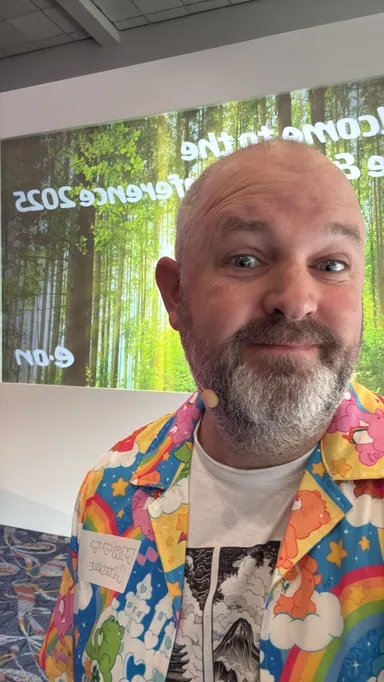
Matt Grisedale
Matt Grisedale is a community builder driven by one simple belief: people are better together. He’s spent his career bringing individuals, organizations, and ideas into harmony – creating spaces where collaboration feels natural and everyone has a voice. With a gift for connection and a heart for impact, Matt transforms gatherings into movements and conversations into lasting change. His work reminds us that strong communities don’t just happen – they’re built, one relationship at a time.
Hosted by Andrew Pain
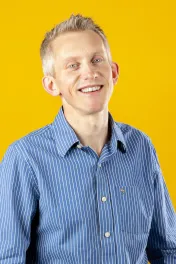
Andrew Pain is a Mental Health & Resilience Keynote Speaker who speaks from lived experience on resilience, burnout and workplace wellbeing. Host of the Men on Show podcast, author of the book Honestly, Man, and a TEDx speaker. Member, International Coaching Federation, and Mental Health First Aider trained.
Never miss an episode
Candid conversations with everyday heroes – ordinary men doing extraordinary things.