Men on Show · Episode 8
Men, Boys and Education with Dr. Alex Blower
- 8 November 2023 .
- 34 min .
- Hosted by Andrew Pain .
I’m delighted to welcome Dr Alex Blower to Men on Show.
Andrew hosts this podcast. His own keynotes are on burnout, resilience, imposter syndrome and difficult conversations.
In this episode
About the conversation
Key points of the episode
- The importance of emotional intelligence and the invaluable support he received.
- How he adapted (not that well!) to fit in!
- The challenges - similar and different that we face today.
- The "ideal man" and it's not that hard to achieve!
- His vision for the future.
Men on Show shares lived experience and honest conversation – it is not medical or therapeutic advice. If you're struggling, you don't have to cope alone.
Samaritans: call 116 123 (free, 24/7) NHS: 111
Full transcript
Read the whole conversation
A complete, verbatim transcript of this episode – every word is the host's and guest's own; the topic headings are ours.
Welcome to Men on Show, the podcast, Candid Conversations with Everyday Heroes. Join Andrew Pain as he interviews fascinating guests, ordinary men doing extraordinary things. If you love the show and you think somebody could benefit from hearing it, why not tell them about it by giving it a share on social media? Oh, and at the end of the podcast, if you can leave us a five-star rating and a review, it really helps us more than you know, and it gets this important message out to more people that need to hear it the most. Right now, enjoy the next episode. The next episode.
Hi, my name's Andrew Pain, and welcome to Men on Show. I am delighted to welcome Dr. Alex Blower to Men on Show, currently based at Arts University Bournemouth, working as a researcher and professional in widening access to higher education for the last decade. Alex writes regularly for national and international publications, with a focus on increasing university participation with groups who are at the sharp end of educational inequality. Alongside his day job, Alex is a founder member of Boys Impact, a national network of educational practitioners working to address the disparity in educational outcomes for boys who are eligible for free school meals.
He's also writing a book, which we'll hear more about, exploring masculinity, inequality, and social mobility in education. So I'm really excited to have you on the show today, Alex. Welcome.
Thanks, Andrew, absolutely delighted to be here.
Growing up, school and trying to fit in
Great. So Alex, I mean, just starting out, growing up, who sort of inspired you and how did they inspire you?
That's a bit of a tricky one, to be honest with you. I was reflecting a little while ago, actually, on kind of all of the formative experiences that have led to me doing what I'm doing. And it would be hard to pin it down to a single individual, really. But what I would say is it's probably a number of relationships with people in my life that I was very close to, who have taught me a great deal on what it means to, and the importance of things like emotional intelligence.
I've put myself in other people's shoes. Kind of growing up, my experiences, I didn't always have the best time educationally. And I think the support that I received from different people at different points on that journey was absolutely instrumental. And for me, in my current work that I do now, and the goal that I'm working towards with relation to helping young men in education and beyond is certainly something that I, I'm very passionate about because of my own experiences.
So I wouldn't say there was particularly one individual who kind of shone out as a particular role model, but rather being incredibly lucky to have a series of close relationships with family members and friends that have supported me and really kind of laid the foundations for what I do now.
Sure. And so in terms of some of those more difficult experiences that you had educationally, you mentioned that they were sort of behind some of your passion today for tackling educational inequality. Are you able to elaborate on what some of those struggles were?
Read the rest of the transcript Collapse transcript
Yeah, absolutely. So hometown is a small town in the West Midlands. It's got, you know, it's fair share of challenges, socio-economically. And growing up, I was, what I've later realised, was a young carer, essentially. I had close family members that struggled significantly with issues related to mental health, issues related to addiction. And there were some significant things that happened that had a profound effect on me, essentially, as a young man. It led to me towards the end of primary school developing very, very acute anxiety, which resulted in me missing about three years of formal education, kind of in school.
I wasn't able to attend, you know, every time I was in an environment that felt unsafe. I panicked because I was really worried about what was going on at home because I wasn't there. So kind of subconscious kicked in and my fight or flight. And I just tried to get home basically as quickly as I could. With, again, the support that I mentioned from close family members, educators at the school, then after a couple of years, I was back in kind of full time education and attending school regularly.
However, I'd missed kind of a key important bit within that, which was the opportunity to make friends, you know, and build those social circles. So when I went back to school, I found myself as not only a bit of an outsider, but in a position where the things that were important back at home with family, like, you know, empathy, emotional intelligence, quite often I was engaging in conversations with adults who were, you know, mental health professionals and all of those things, because of my own experiences, weren't necessarily the tools that made you a cool kid or the attributes that made you popular.
In fact, quite a lot of the time, it was the opposite of those things. So I devised my own kind of cunning plan to fit in, which was to engage in behaviour that meant that, I guess I was less at risk of being bullied, of having the mickey taken out of me at school. So I started getting into fights, started smoking, drinking, doing a whole lot of nefarious stuff that I'm not particularly proud of looking back.
But what that meant was at the age of 14, then I got expelled from my high school, and I moved to another one about six miles down the road, which was in a very different type of town that was a lot more affluent. You know, everybody at that school wore blazers and ties instead of a polo shirt and a jumper. And it wasn't conversations around kind of what are you going to do when you leave school in terms of a job.
All of a sudden people were talking about sixth form and university, and it was just an entirely different world, where again I felt kind of on the peripheries, but in a very different way. And I think the formulation of those experiences together combined with what I later learned when I did make it to university, really set me up to explore, not only explore and understand why those things happened and trying to kind of contextualise them, but also kind of lit within me a passion to make change for other young people that might experience inequality in a variety of different areas.
But being a young man and experiencing those things as a young man, then it's been a particular focus of mine to try and do better for other young men that might be navigating those kind of challenges now.
The Being a Boy project for young men
So what are you doing today, Alex? What are you working on at the moment?
So my day job is Access and Participation Manager for a university on the south coast of England. Within that, we run a whole range of different projects and activities designed to support access to creative educational opportunities for young people who might, because of their backgrounds, experience and representation in higher education. So that can be a real mix. We work with groups of young people that are currently in care. We work with young people from armed forces families who might experience a lot of mobility and different things going on that impact upon their educational experiences.
We do a lot of work with alternative educational provision and youth and community organisations with a view to supporting those young people to access resources, whether that be socially, in terms of the network and people they know, or culturally in terms of the educational opportunities, facilities that they have access to, to support them to develop orientations for the future in education and work that align with them being happy, healthy, and well-rounded. The area of work that I've got particular focus on is boys' attainment, boys who are eligible for free school meals.
So we run a project called Being a Boy, which mobilises a range of different creative tools to support young men reflect on what being a boy means to them kind of down here in Bournemouth in 2023. We run workshops in creative writing, dance, drama, fashion communication, acting, and it's with a view to providing a platform to hear from the real experts through a creative medium on their experiences. So the kind of foundational principle of that area of work is to amplify the voices of young men who might be experiencing marginalisation in education and learn from them telling us what some of those challenges that they navigate are.
Because within all this, I've had my own share of challenges, but when I was young, the internet wasn't really a thing. We had a dial-up modem and didn't have a mobile phone until later on. So although there might be elements of similarity, there is so much that's different for these young people now. And I think society could be a lot better served sometimes by listening rather than assuming.
Whether men and boys are struggling more
We hear so much, don't we, about our men and boys struggling. I'm really fascinated, given the work that you do, on your thoughts about that struggle. I mean, only recently I was reading that there was some proposal that there would be teams of practitioners going into schools in London to sort of tackle the scourge of toxic masculinity. I mean, do you think men and boys are struggling? Do you see that they're struggling more now than they were before? And if so, why?
Yeah, I think there's elements of it because of the world that we live in now, where it's more visible. We've seen the rise of influences and influencers perhaps that are talking about being a man and masculinity in a way that is potentially damaging and harmful. Gender inequality is well documented. We still have horrifically high rates of domestic abuse, sexual violence, gender pay gaps that are linked to society and gender inequality and the relationship between men and women.
I think the difference for me when we're talking about young men specifically and boys specifically is the framing of these issues. Quite a lot of the time, then it's seen as very oppositional. It's seen as a conversation which is either through a focus on men and young men, then it's unfair on women who might not be in receipt of that activity because the focus is on men, or on the other side of a debate, you have growing discourse around men potentially feeling pushed out, which either of those sides of the coin I wouldn't necessarily align with fully.
I think there's a reason that's based in evidence as to why people feel that way. But for me, there's an author called JJ. Bowler who wrote a very good book that talks about masculinity called Mask Off. And what JJ. Bowler says basically is the way that society is structured at the moment, it's a double-edged sword. So the inequality and the systemic things that lead to reproduce this gender imbalance in terms of pay, domestic labour, violence and all of the rest of it, that structure is the same, but on the other side of the sword, which cuts both ways, is seeing exceptionally high rates of suicide in men, that's seen increased rates of homelessness, that's seeing disproportionately high addiction and substance misuse, that's seen disparity in educational achievement.
It's not two separate issues, it's the current system and society that we live in that is perpetuating both of those. So the same system that is putting men in a position of relative advantage with regards to the relationship, gender balance between men and women, is the same one that is also feeding and causing these issues that are specifically likely, more likely to affect men. So they're one and the same thing. And with working with young men to tackle some of those things that are more likely to impact upon them to do with their mental health and wellbeing, education, then we are contributing towards changing a system that makes the system better for everyone. Adult men who are happy, healthy, well-rounded in good relationships are great for everybody.
Andrew Tate's influence on young men
Yeah, everybody wins, including their mothers, their daughters, their partners, their sisters. Everybody wins. Yeah, I absolutely agree. And you were talking, you did mention sort of influences and influencers. And of course, you know, one of the most noted influencers, I suppose at the moment you would say, is Andrew Tate. I speak to a lot of parents who tear their hair out over the Andrew Tate thing. I haven't seen some of his interviews. I struggle to see really, how does a man like that have so much influence?
I was talking to a father only the other day who his 18 year old son is very vocally in favour of the Andrew Tate narrative. And this father doesn't quite know how it's happened because he's been a liberal father. He's not sort of shoved it down his son's throat. He's just kind of, it's been a liberal loving household and kind of like, how has my son become so ingrained in the Andrew Tate influence? So I mean, to me, the question, again, you'd be a good person.
I'd be really interested to get your insight on this. Why do you think Andrew Tate is so influential? Or from what you see among the young boys, is he actually that influential or is it just a media storm about Andrew Tate? What are you seeing at the moment with the boys you're working with?
Undoubtedly, it has an influence. I think you would be extremely naive to think otherwise. I guess my thinking around it is that what Andrew Tate's message, discourse offers are things that are appealing for young men to some greater or lesser extent, obviously. Otherwise, there wouldn't be such an interest or a following of the narrative that Andrew Tate's peddling. What I would ask is, where are our alternative visions of masculinity and being men? Where is the hopeful future, the healthy, happy future, that is the alternative to the harmful narratives that Andrew Tate is engaging in and with the audience?
And how are we engaging with those narratives as parents, family members, educators? How are we encouraging a understanding, critical conversation regarding some of those themes and narratives that are raised? Are we doing that? Are we speaking to young men about what being a man that they will be proud of being in the future looks like? And are we doing that in a way which isn't, isn't automatically through our mode of thinking, making an assumption that these young men are predators or, you know, misogynists in waiting?
How can we engage in a conversation that celebrates the richness and diversity of experiences I think that's a great way to bring together the experiences of young men and ways of being young men and create a narrative that is hopeful for the future, that gives a vision of the road down the line, which is positive, which is something that isn't bleak, I think, you know, that is something that is overall beneficial for society as well. And I think that's the real challenge, because within those conversations, if we're looking at it from an evidence-based way, where we're really serious about tackling some of these challenges, then it's complex and it's messy and it's difficult.
And if you aren't bothered about social justice, equity and equality and societal good within visions of the future or answers around what being successful looks like or happy looks like as a man, then you can construct a very, very simple narrative, which I believe you see in the likes of Andrew Tate. And a simple narrative is far easier to discuss, I would say, and also far more uncomplicated to deliver than the actual difficult work that's needed, which is going to be coming from people who are working in universities, in schools, policy makers, people working in charities, to devise a future for our young men that is full of hope, that is pricing empathy and compassion and care as things that young men should be proud of, displaying if they're young men, and older men, if they've become fathers, et cetera.
Whether the term toxic masculinity helps
Yeah, because the words there, you mentioned compassion, you mentioned hope. I can't help but wonder where there is quite a focus on toxic masculinity, whether that as a phrase doesn't help matters. I mean, I identify myself as a liberal, but do wonder whether some of the language used does actually push men into that, our young men into that Andrew Tate narrative. I remember only this, a few days ago, I was talking to a teacher in a school that I've been delivering at, and we were just sort of chatting afterwards about the phrase toxic masculinity, and they no longer use that term in their school when they work with their young people, because they see it as sort of a shaming and offensive term. What are your thoughts about the term toxic masculinity?
For me, I would certainly relate to some of the things that you just said there, Andrew, but I think also what a term like toxic masculinity does is it presents one form of masculinity, one way of being a man and says that's toxic. You haven't got any options there. There's not different ways in which you can be a happy, healthy, well-rounded man. There are different ways and displays of masculinity and it's different and it's nuanced depending on who you are.
Yeah, you could be a professional footballer who liked nice cars and was very careful with regards to their fashion and the way that they dressed and their hair. Equally, you could be a man who works as a carer in a nursing home and a whole host of different ways of being a human being besides. I think with terms like toxic masculinity or saying a problem with masculinity, what you're not allowing in the conversation is any space for those different ways of being a man.
There are all different versions of masculinity or masculinities that are all equally valid. And what it does is oversimplifies it and sets up those binaries, which I think are contributing to some of the difficulties which you discussed in your question.
Boys excluded from school and GCSE results
And looking at some of the data, from what I understand, roughly three times as many boys are excluded from secondary schools than girls. Why is that, do you think? And what do we need to change within the education system in order to bring out the very best in our young men?
It's complex. And there's an awful lot going on, no matter which angle you look at, I think, Andrew. If you look at socioeconomic inequality, if you look at issues related to mental health, if you look at issues related to peer pressure and teacher expectations and the ways that young men are potentially engaged with, with the classroom, all of those hold elements of a key to changing the education, well, in the case that you were speaking there, the exclusion of young men from mainstream education, but although that figure is particularly stark, it's not limited to there.
And if we look at where I'm located in the county of Dorset, then in 2018-19, so kind of pre-pandemic, 17% of young men who are eligible for free school meals achieved a grade nine to five in GCSE, Maths and English. So essentially, less than two in every 10 of those young men that were experiencing those socioeconomic inequality would get the GCSE grades to go on to a level three qualification. That could lead to, say, future participation in higher education or a level three apprenticeship course.
So it's not just necessarily with exclusion, but to do with a lot more than that in relation to GCSE attainment. And the difference between young men who were eligible for free school meals and those who weren't was significant. And it was also significant for girls as well. Those gaps were huge. What you saw with the girls is usually the baseline percentage, if you like, was slightly higher. But the gap between the girls that were eligible for the free school meals and those that weren't was even bigger than for the boys.
So there's an awful lot going on that's in the mix. It's not just a conversation around masculinity. It's how that intersects with things like socioeconomic inequality, which cause significant implications for the amount of opportunities, learning experiences, social networks, opportunities for kind of things that might be related to character education that these young people have access to, you know, experiencing.
Men as midwives and HEAL jobs
Yeah, interesting. Really, really interesting. And, you know, I guess in summing it up, there's no one magic solution. It's complicated. There's going to be an awful lot of work that's going to be required coming in from an awful lot of directions, requiring an awful lot of resource to really get to the heart of these issues and make progress. I saw one of your posts on LinkedIn. I've got to be honest, it made me chuckle about men wanting to be trained, wanting to train to be midwives.
And it made me chuckle because my third boy was a home birth, and there's always a midwife on the scene when you have a home birth. And there was a knock on my door, which wasn't unexpected, I was expecting a midwife. But when I opened the door, what wasn't expected was there was a bloke on my doorstep. He had stubble on his chin announcing he was a midwife. And I remember I had to really do a bit of a step back and a recalibration, are men allowed to be midwives?
Is he likely to be competent? He's a man. And of course, he was a fantastic midwife. And the question for me, we know about the HEAL jobs, the Health, Education, Administration, Literacy jobs. There is talk in Richard Reeves' book of Boys and Men of how we encourage men into those jobs. Is that something to encourage men into the HEAL jobs? Do you get involved in any of that? And is there something that we can do as fathers to encourage our children to look at HEAL jobs in a way perhaps that they haven't before?
Yeah, I think it's incredibly important when we look around at society and the balance in workforces. You know, there's for a long time been drives with getting more women into STEM-related subjects, and we haven't necessarily seen that same level of activity, as you put it, those heel professions. For me, something that is really important, I think a lot of the time when people talk about, you know, that gender balance in employment and professions, it's because if you have more male teachers, then, you know, there's going to be a male role model there, which will automatically mean that those young men who are in the classroom are more likely to succeed.
That's not something that I necessarily subscribe to, purely because I haven't seen any evidence, you know, in a lot of academic looking in research to support that that is the case. However, something that I think greater balance in gender representation across the workforce has is a real power for kind of transformation in society, because what's the subtext if we are encouraging men into kind of, you know, there's health and education related, or, you know, early years professions?
What we're essentially saying is, for men, care, compassion, empathy are all attributes which are legitimate and celebrated, all attributes which you can be proud of possessing and mobilising professionally as a man. And when we look at, you know, going back to those mental health statistics and the high rates of suicide, having more men that have that emotional legacy and emotional literacy, if you like, or care, compassion and emotional intelligence is something that is an inherent good for society.
I'm currently working at a creative university, so we don't do much in the way of health care and education, but I am a huge advocate for the young men that we've got studying undergraduate degrees on, say, our fashion branding and communication courses. And any kind of learning that isn't as traditionally associated with a masculine occupation, if you like. So it's something that I'm a big advocate for, but not necessarily for the reasons that a lot of people might jump to.
Finding Alex, and a last message
And so how can people find you and connect with you? And, you know, I've got to take the opportunity. Your book, tell us about your book and when's it coming out?
Yeah, so I'm on where it's X now, isn't it? Rather than Twitter, but I'm on X. My tag on that is edu-detective, E-D-U detective. I'm on LinkedIn as well. One of the things that I'm currently working on is a national network, as you mentioned at the opening of the show, Andrew, which is of educational practitioners across the UK working to set up a series of regional hubs to better support young men in education who are eligible for free school meals.
So those hubs are partnerships between schools, universities, youth and community organisations, and we're just at the start of that journey. We recently had a conference in Manchester, which gave us a real energy and momentum with it, but it's something we're very much looking to grow. So I'd ask anyone who might be interested in getting involved in something like that in their local area, please reach out. But the book is a mix. So it's a mix between my work and learning that's taken place with the young men who have been excluded from mainstream education at my university at the moment, because we've done some research with them alongside the workshops.
It's learning from my own PhD research and my doctorate, which was in inequality and education in the black country in the West Midlands with young men, exploring how intergenerational experiences of inequality influenced the likelihood of forming future pathways into education and workers' expectations, and then my own personal experiences as well. What I'm hoping to do with the book is make accessible a lot of the complicated conversations that go on with regards to inequality and education and masculinity in academic circles to a much, much wider audience, to really shine a light on what it means if we stop treating young men as individuals that float free of all of these other inequalities and things going on in their life that they might experience, and instead shine the light on the relationship between those things and them.
You know, it's not a fluke that my grandfather had significant mental health issues, died early. My dad had, you know, issues with his mental health as well, and other issues alongside that. And from a young age, I, you know, had my own things to contend with, with anxiety. Those things are reproduced and entrenched across generations, and I think to move this conversation forward, we need to start exploring more about why that's happening.
Yeah, thank you. And just if you had one final message to encourage our boys, particularly in the work that you're doing, what would that kind of one final message be?
I think who you are is worthwhile, and who you are should be celebrated. You've got huge potential to do a whole host of wonderful things that should never be restricted based on what other people think you should be doing. You should have the freedom to express yourself however you want, to talk about whatever you like, and we need to find better ways to help you do that.
Fantastic. Thank you so much for your time. Some really, really interesting insights. Alex, been a pleasure speaking to you.
Thank you for listening to Andrew Pain's Men on Show. If you could leave us a five-star rating and short review, it would be really, really appreciated. It helps us get this important message out to more people that need to hear it the most. See you on the next episode. Thank you for tuning in. can can
About the guest
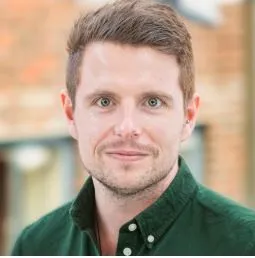
Dr. Alex Blower
I’m delighted to welcome Dr Alex Blower to Men on Show. Currently based at Arts University Bournemouth working as a researcher and professional in widening access to Higher Education for the last decade, Alex writes regularly for national and international publications, with a focus on increasing university participation with groups who are at the sharp end of educational inequality. Alongside his day job Alex is a founder member of Boys Impact, a national network of educational practitioners working to address the disparity in educational outcomes for boys who are eligible for Free School Meals. He is also writing a book which explores masculinity, inequality and social mobility in Education.
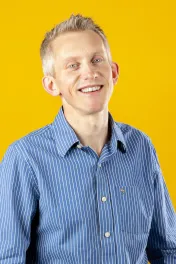
Hosted by Andrew Pain
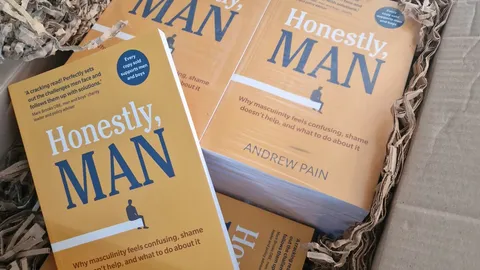
Andrew Pain is a Mental Health & Resilience Keynote Speaker who speaks from lived experience on resilience, burnout and workplace wellbeing. Host of the Men on Show podcast, author of the book Honestly, Man, and a TEDx speaker. Member, International Coaching Federation, and Mental Health First Aider trained.
Never miss an episode
Candid conversations with everyday heroes – ordinary men doing extraordinary things.