Men on Show · Episode 6
Men, Frostbite and Adventures! with Nigel Vardy
- 25 October 2023 .
- 30 min .
- Hosted by Andrew Pain .
Frostbite in Alaska Appendicitis in Greenland Near Drowning in Borneo Rope Failure in the Kumbu Reported missing in Annapurna Would you go climbing with this man..???
Andrew hosts this podcast. His own keynotes are on burnout, resilience, imposter syndrome and difficult conversations.
In this episode
About the conversation
As for links - www.mrfrostbite.com or type my name into the web.
Key points of the episode
- How simple and cheap thing from his childhood inspired him.
- How one moment in childhood shaped a belief that we do not experience the reality of life enough!
- A terrible mountain accident - do not underestimate frostbite!
- How he had to relearn simple things, like walking - to get back to his life of adventure.
- How the 9-5 will never come calling!
- How he was inspired by an American doctor (that looked like Santa Claus!)
- His thoughts on the influences on men today.
- His inspiring message for life.
Men on Show shares lived experience and honest conversation – it is not medical or therapeutic advice. If you're struggling, you don't have to cope alone.
Samaritans: call 116 123 (free, 24/7) NHS: 111
Full transcript
Read the whole conversation
A complete, verbatim transcript of this episode – every word is the host's and guest's own; the topic headings are ours.
Welcome to Men on Show, the podcast, Candid Conversations with Everyday Heroes. Join Andrew Pain as he interviews fascinating guests, ordinary men doing extraordinary things. If you love the show, and you think somebody could benefit from hearing it, why not tell them about it by giving it a share on social media? Oh, and at the end of the podcast, if you can leave us a five-star rating and a review, it really helps us more than you know, and it gets this important message out to more people that need to hear it the most. Right now, enjoy the next episode. The next episode.
Andrew Pain, our welcome to Men on Show, and I'm delighted to have Nigel Vardy on the show today. Some people, for their introductions, they might highlight awards, employers, academic qualifications. But for Nigel, we have frostbitten in Alaska, appendicitis in Greenland, near drowning in Borneo, rope failure in Khumbu, reported missing in Annapurna, which sounds like a list of must-do activities by the time you're 50. Nigel, it's an absolute pleasure to have you on the show.
Thank you very much, Andrew.
Childhood hill walking and a sailing lesson
So, Nigel, just to kick things off, growing up, who inspired you with this adventuring spirit that you have? And we'll hear more about that. Was it just somehow in you, or was there something or someone that inspired you?
I think it's a mixed bag, really. My parents were very big into the outdoors. My father's side of the family were into farming. So I spent a lot of time outside day and night, rain or shine, having a thoroughly good time, because I was with my dad and the family, and it's the best thing in the world. And also, my mum and dad were big hill walkers, and we used to go, I lived just on the south side of the Derbyshire Peak district, and we used to go into the hills basically because it was free.
And we hadn't got that much money, and it was a cheap day out, but you spent time with your family, you walked, got fresh air outdoors, open skies, you know, flew your kite, ran around, threw yourself in a stream. And it really spawned from there, and I've never really stopped. I don't think I've ever really grown up.
I love that. And we never should really completely grow up. I think life would get too boring if we did. But as a younger man, is there like, when you're looking back, is there like a really memorable adventure that you had where you're like, wow, that was like amazing. I need to do more of this.
Read the rest of the transcript Collapse transcript
Yes and no. And the reason I say that is, when I went to comprehensive school, we used to do outdoor pursuits as part of the curriculum. It was perfectly normal in school time. And when I speak to audiences, I tell a story, and it's not really till I've got to this age, I realise how particular that moment was. And when I was learning to sail on a local reservoir, I'd be about 14 years old with a couple of friends, and the woodwork teacher at the time, because there was no such thing as guides in those days, a teacher took you, and we went and learned to sail.
And when we're young at that age, we all want to be the fastest, biggest, you know, whatever there is. And we tried to sail this boat so fast that then we realised we didn't know how to stop or turn the thing, and we ended up putting it in the water. And you're thrown into a reservoir. Now, these are well before the days of dry suits and, you know, we had an old pair of jeans, an old jumper.
We did thankfully have a buoyancy aid. And we tipped in the water, and the woodwork teacher comes along and sort of smiles at us from the safety boat and goes, it's cold, isn't it, in there? And of course, we're freezing. Yeah, of course it's freezing, it's cold. You'll not do that again, will you? And it's that moment that stuns me, because in my personal view now, we do not let people experience the reality of life early enough.
That for me was a massive reality check. If you mess about, you'll end up in the water, it's freezing cold, you don't like it, so let's learn how to do it right, and let's not do that again. We're perfectly safe, but what we've done is learnt a life lesson instantly at 14, and that stayed with me, and I'm now 54, and I can still remember that moment to the letter today.
Learning from failure, then Mount McKinley
Yeah, you know, it's as a parent, I mean, I've got three boys under 11, and I have to, it's a real conscious discipline to not be a helicopter parent. I definitely have that in me to want to come in and hover and ensure they don't fail, but actually, we should let our kids fail, shouldn't we? And experience that for themselves.
We learn more from failure than success, and that's part of the thing, that we need to fail, you know. Let's not fall 150 feet off a cliff while we're doing it, but we need to learn to fail, because if we only see success, then all we'll chase is more success. If we understand what failure is, we might just find reality.
Yeah, no, no, I love that, I love that. And I guess sort of talking about things that have gone wrong, maybe that leads us nicely into the thing that went wrong for you, on Mount McKinley. I know you had a life-changing accident there. Can you tell us sort of more about that, kind of what happened and how that unfolded?
Certainly, I mean, I was out there with two friends, and we're all reasonably, well, very competent mountaineers. And we've met through Operation Rally, which was something I was involved with, as was Anthony, one of the chaps, and Steve was one of Anthony's friends. And we put a team together to go and climb on what was called McKinley, they've now called it Denali, on a route called the West Rib, which is pretty technical, quite hard-going. And we had 17 days of fabulous mountaineering because we have to make the decisions and the choices.
We have to put the effort in, get up, sort the gear, nothing's done for you. And we got for the summit day to make a summit attempt. And the weather just had other ideas. And it was okay when we started. It wasn't till we got on the summit plateau that it absolutely binned in quite horrifically at 60, 70 mile an hour winds. And we're told at a windchill of about minus 60 centigrade. And you're three very small dots in the enormous landscape.
And this is where those lessons I learned, and we all learned, the three of us, when we were younger, came to the fore. So we need to take decisions now. We're going to freeze to death if we don't get off this mountain quickly. We're massively exposed. We're at 6,000 metres. It's minus 60. The tents are 2,000 to 3,000 feet below us. What are we going to do? And Steve was getting tremendously cold. I mean, really horribly cold.
And we just took a decision that going down wasn't possible. There was no way particularly to go up. And so we dug ourselves into a snow hole and there was a crevasse sort of crapped in the ice at the time that we could open up and get in. And we spent the night in there. And I'm not going to say, you know, it was warm, but the wind is a killer. Anybody will tell you, you know, you can have a lovely winter's day.
The sun's out. You can stand in your shorts until the wind comes. And then it's bitter. And we spent the night in there just trying to tell silly jokes, stay awake, hug each other, get through the night. I did send an emergency call to the rescue services. But we didn't really understand what effect that would have. The next day, we took a decision after being in this hole overnight that we're all pretty beaten up and we need to get back to the tents.
And Steve made a remarkable recovery, but I went the other way. I actually was quite severely frostbitten. And then it was the sort of, somehow we need to get Nigel down to safety. And the next sort of 20 odd hours of trying to walk out the best I can, falling over, the lads helping me. And then we took a decision, or Steve and Anthony took a decision that this just wasn't happening and that Steve would go and get help.
Anthony would stay with me. And a few hours later, a helicopter actually brought Anthony and myself from 6,000 metres individually off the mountain on a cable lift. And we made the horrible thing, the assumption, that, well, Steve's got to help. He's found somebody. Somebody said, right, we know where your friends are. We'll get them off. What we didn't know is Steve never did get to that help. He took a big fall, broke his legs, spent another night on the mountain, and he wasn't brought off till the next day.
And then we're all taken down to hospital, Anthony and myself the night before Steve, in varying states of disrepair. And the long and short of it is I lost all my toes. I lost the ball on my left foot, both my heels, the tips of every finger, nose, and a section of my left cheek were all either fell off or were amputated due to severe frostbite. And I was just 30. And that's when the next stage of my life appeared where I had to learn to walk again, write again, do all the things that we do, and to get back into expedition mountaineering and travel, which is what I've been doing ever since.
Keeping busy, and getting back to the mountains
And during that night, I mean, I presume, there were moments where you really thought, hang on, we're not going to make this, we are doomed. Were there moments where you really thought all hope was lost, or did you always have that hope that we will get rescued, we will get through this?
I would say neither. We kept ourselves busy. People will tell you, anybody that knows me, I'm very busy, I never stop. People do like it, people don't like it, that's just the way life is. But we kept ourselves busy with what we might now call short-term goals. What can we do? How can we make the situation better? Can we tell a silly joke? Can we do this? Can we do that? And it helped the time pass.
Now, we didn't look at watches and stuff, because we've got loads and loads of mountaineering gear on, but the time passed through. Now, if we'd sat there dwelling on it, yes, we'd probably gone into the, well, this is it, boys. But we didn't. And though it was never a rescues coming and we're all saved, it was. What can we do next? How can we get out of this? What can we help ourselves with? You know, I was always brought up with the old phrase of God helps those that help themselves.
What can we do to help the situation? And though we knew that message had got through, but it was very garbled. We had no idea the rescue effort that would be put up. And subsequently, of course, we were rescued. But we didn't know that at the time. And we didn't really know that until the helicopter popped out the clouds about half a mile in front of us, literally moments before the rescue began.
And in hospital, you mentioned obviously the amputation, the loss of toes, fingers, some of your face to frostbite. What was sort of going through your mind and how did you get yourself through, you know, that reality that you're 30 now, how did you get yourself back into adventure? I mean, was there ever a point where you thought, oh, do you know what, like with what's happened and these changes, I think I'll just stick to being in an office and play it safe? I mean, did that ever cross your mind?
No, I did. I was always determined I wanted to get back in the mountains. And again, these pivotal moments in your life, an American doctor came out of retirement actually to see us, absolute splitting image of Father Christmas, this gentleman. And he'd served in the Korean War where there'd been a lot of frostbite, and he'd learned his trade there as it were. And he came, oh, only a couple of nights after we were flown back. And he looked at me and he said, well, Mr. Vardy, you'll be back in the mountains again.
At the time, I'm in shock. I've got drips and epidural lines in me and all the rest of it. And again, it's not till you look back later that you realise what a statement that was. And though I've worked in an office for years, my real world's outside. And I have never thought, well, this is it. I'm going to take up stamp collecting or whatever it is. I, from day one, was, they've taken my fingers off.
How do I learn to tie knots and use climbing gear? My toes are gone. I will stand and walk. How do I transfer that into climbing? And if anything, I was badgering the doctors to say, come on, when can I go to my bike shop and buy a new bike again, when can I do this, when can I do that? Now, don't get me wrong, at one point, after a very, very big bout of surgery, I would have very, very happily taken my own life.
No two ways about it. And if I could have walked, which I couldn't, because I was full of drugs and things, and if the window had opened, I would have, I was about three or four floors up, I'd have just rolled out. I didn't. And not only because of the fact that I couldn't move, my mind thought about this, and it basically said, now listen here, lad, this is not doing you any good, and you're 30 years old.
Now pull your socks up, sort yourself out, get on with life tomorrow, even though you're not going anywhere, you have to change your mental outlook. And also one or two of the nurses could see that I was depressed. And it's a difficult conversation now because some of them were really, that's so awful, Nigel, and we're really surprised with you. And others were basically giving me the biggest kick up the backside of my life, telling me to get on with it because sympathy will get you nowhere.
And all this sort of flow of these things, I basically just said, right, that's it, battery's on, flame on, let's go and let's do something. And I've never stopped.
Work today, and losing fingers and toes
Yeah, and tell us about your work today. What do you do today and what's driving you today?
Well, since the incident, which is just over 24 years ago now, I've actually remained in electrical engineering and I've been there for 38 years in the utility industry. So initially I dug people's streets up and put electricity cables together when I was younger, moved on to field engineering, and now I actually sit in a control room and control the energy flows around parts of Britain. And some of that's purely because of my injuries, the skills I have, it fits, and it's been a good, stable platform.
But on top of that, I'm still doing lots of international travel. I speak to audiences across Britain from Key Stage 2 to senior management about the lessons and how we can bring those to the fore. I speak to people about apprenticeships, because I went through an apprenticeship, and of course travel and get out a lot myself. And occasionally, I even sleep. Love that.
And so, that's wonderful. I know you're a renowned speaker, and certainly at the end, we'll make sure you share how people can hear more about you and learn more about you. Just out of interest, I introduced you as sort of a frostbitten in Alaska, appendicitis in Greenland, near drowning in Borneo, rope failure in Khumbu, reported missing in Annapurna. Which would you least recommend out of those, do you think?
Again, a very interesting one to answer, because trust me, I would love to have my fingers and toes back. I can't run, I can still walk, but I can't run. And things do get fiddly when you've got stubby fingers, and I'm getting a touch of arthritis in my left hand these days. So trust me, it would be great to have those back. The other side of it, however, is I have learned so much out of this.
And people tell me, though you're the same old Nigel, just the drive and the energy that comes out of this is unbelievable. Now, if I could bottle that and sell it, I'd be very, very rich. Because so many people have said to me, you drive, your motivation is so wonderful. But would I have that unless I'd been through the injuries? I mean, I can't even answer that myself, but I think it's probably, I couldn't. All the others didn't physically damage me.
Mentally, of course, it was pretty scary. But then again, when you're mountaineering, if you're feeling too comfortable, it's probably not a good thing. So try to do the frostbite, but don't lose the limbs, I think is the answer.
Men in crisis, and role models
Excellent. That's a very, very good answer. I like that a lot. And moving on with the work you do, the adventuring spirit that you have, this real positivity that comes across, a cast iron determination to get out there and experience life, which comes across. Thinking about men and boys today, we hear so much about men who are struggling, men who won't talk, the tragic national suicide statistics here in the UK. Three quarters of people who die by suicide are in fact men. We hear so many stories about toxic masculinity. In your view, are men in crisis? And if so, why?
We've got a lot of things to look at here. We don't talk enough and people tell me that all the time, even though I speak or whatever else. And certainly when the incident actually happened to me, my sister came to see me and she obviously knows me incredibly well. And she could tell that I was bottling just buckets and buckets and buckets and buckets up of pressure. And lots of that didn't come out for weeks, if not months.
And I have found being in the outdoors my release. We do need to take a look at how everyone is perceived, I think these days. And you've only got to look on social media that we have role models that I just don't think are role models. And we have influencers who I wouldn't, as my grandfather would say, pay them with brass washers. We try to bombard young boys now, and girls, with an immense amount of, this is what we think you ought to do.
This is how you ought to look. This is what you should do with your life. And we almost don't give them the choice. We've got court cases going on at the moment with certain people. We've got sports stars that are on multiple million pounds a week, and yet they act irresponsibly, and these are the role models for the future. And to me, it's terrible. My role models were realistic people I knew. My dad, one of my grandfathers, people around me, occasionally something on television, but I wasn't bombarded with, this is how you should look.
This is what you should aspire to. And when I work in lots of schools, you'll talk to youngsters today, what would you like to be? And it's all media, it's all celebrity, it's all unrealistic. And the more unrealistic we are, the more lost they will be. And again, I'm not pointing fingers at anybody, but there's barely any men in there. I work in lots of schools where, I go in the staff room for a cup of tea, and I'm the only male in the school.
Again, I'm not saying that's wrong, but when you're an eight or nine year old boy, and you want to talk to somebody about something, you might want to talk to a man about it.
Yeah, well, in fact, the statistics on primary schools is that 15% of primary school teachers are male, 35% of secondary school teachers are male, and less than 4% of nursery workers are men. And I mean, I agree that there is, if we're thinking about men and boys, or young boys in this instance, their mental well-being, their emotional welfare, their development, we have to find a way to get more men involved in education. I fully agree. The other thing you touched on there with social media, you actually, I was just thinking, I'm a passionate Arsenal fan, and I remember growing up, you know, the heroes that I would have looked at, David Roe Castle, who's now sadly passed away, as an older teenager, Ian Wright was a great hero.
On the football field, but I knew nothing of his life. He didn't have any influence over me. I didn't watch his every move on Twitter and all his posts. All I knew about Ian Wright was really him on the football field. Whereas I suppose today, all of the sports stars, they've got their Insta accounts, their Twitter accounts, you know, their every move, they themselves are posting on social media. And I suppose that means they have more influence, because our young people are seeing so much of how these stars live their lives. So I suppose they have more influence, don't they?
Sports stars, risk and the outdoors
I think everybody does. We've only got to think of people that, I mean, take the Cardassians for an example. Fake is the word I'd use personally, but people look at them because they see that they've got this lifestyle they may choose to try and emulate. They've got money. It's not something I would personally think is a realistic outcome for people. I'm a big sports follower, but in other ways, I like cycling, tour cycling and such things.
And just as an example, one of the great things I've found with that is people work together. They'll work as a team to help each other. They'll not stand on a pedestal and say, hey, look how good I am. And I think it was interesting when you opened this podcast when you said most people come at you with their achievements. I'm the best at, I'm the top of, I've done this, I've done that. And I usually, well, I just come from the other end.
Because I don't learn a lot of people by what they've achieved. I learn from a lot of people where they live, what they do, what they've failed at, how they've got on. And one story that sticks out for me being a cycle lover is on the Tour de France last year, the leader, Vingard, actually was being chased by one of the other guys, and they actually had a crash. And the great thing was, rather than, do you know me, I'm the winner, I'm going to make this, I'm going to take this stage, he slowed down for Pagache.
He shook his hand, he made sure he was OK, and then they resumed cycling. And when you watch something like that, that yes, I'm in the lead, but this is my greatest competitor, but he's also my friend. And we can be competitors together, we don't have to go, I'm much better than you, I can do this, I can do that. We can be friends, work together as well. But it doesn't get the exposure, usually, of things like boxing, football, because that's where the money is. And it seems to be the money and the desire for money that drives so many people these days.
I suppose in terms of the adventuring spirit, the stuff that you do, when we think about the world that our young men live in today, they've had Covid which shut a lot of things down, people got used to being shut away. We've got a very sort of health and safety focused society that has shut down the opportunity for risks and trying to risk for yourself. We've got the scream culture, a more sedentary lifestyle, massive loss of green space over the last 10, 12 years due to something around 2 million acres I was reading about.
So I guess a lot of these things have shut down the opportunity for young men to work together, play together in non-structured activities, sort of take risks for themselves.
To a degree, I would agree with you. There's still, you know, I think there's still plenty of room out there, and there's still plenty of things to do. The biggest thing, of course, is choice and desire. You've got to make the choice that it's something you want to do. And as I say, when I was little, my mum and dad were big into the outdoors, so when you're six you go wherever your mum and dad go.
And the ability to just run around a field at that age and play and get stung with nettles and all the rest of it is there. But of course, I've never grown up in an inner city. I've always grown up either in the countryside or on the edge of a town with fields in front of me. But also, we've got to sort of be led by people who choose to lead. If we're only going to see, I want to watch this thing on TV, you've only got to see some of the adverts I see on television at the moment.
It's time to stay in and watch TV. Really? We were never created to sit in front of a box. We were created to go out there and be hunter gatherers. And the more we plug ourselves in, frankly, I think the worst it gets sometimes, because we sort of pull ourselves away from society, by choice almost, because we're on the phone or we're doing what we do, rather than engaging with people and, you know, having parties, going to events where there's loads of people around, and taking sometimes those risks, as you say, getting out on the bike or going out for a walk or getting to an outdoor centre.
It really does, opportunity is a big thing and choice is the other. We've got to have the opportunity to do it and decide it's for us, rather than it being forced upon us, because we'll never like it then. Or some people just generally are techies. Computers were about when I was 15, we had ZX81s and Spectrums and we all worked on those. It doesn't mean we didn't get outside as well.
Practical steps, and a message for boys
Yeah, I mean, there's so much wisdom in what you're saying. Moving forward, how do we help men and boys to be the best version of themselves? What can we do, practically speaking?
I've always said lead by example. And if we have good role models locally, our own family, if we're lucky enough to have good role models and all these sorts of things, then we can emulate those good points. The difficulty is trying to work out good from bad. How I perceive bad, because everybody will perceive different things in different ways. So we've got to start when they're young. We've got to give them the opportunity to do things, try things, experiment with things, because that's the best way of learning.
No time of sitting behind a screen or reading a book will give you that sensory experience of what was it like to go down a cable runway and fly through the air? What was it like to go down a cave or to cycle a bike? We need to give them that, because not only is that a great sensory experience, but it's good for your physical and mental health. We all know how good being in the outdoors is for mental health.
And I've worked with some Key Stage 2 only recently, and I can see the difference in these children from the children before COVID. And I was really shocked, the difference. So we need to get them into groups of people together as groups, rather than trying to segregate them all the time. And as I noticed with this group after COVID, they argued more, or they didn't make eye contact. Because for two years before that, that just didn't happen.
They didn't have that exposure to large groups. So we almost need to disrupt them, to work out why these arguments appear, why they don't use the eye contact, and get them together. And then naturally, hopefully, of course, that will set them up for life. Because we learn so much when we look. So much. It will make the biggest difference to everything you do.
That's really insightful stuff again. If you had a short message for our young boys today, what would that message be?
Go out and find your life. And go out and make the choices for your life. Nothing is set in iron and nothing is set in stone. But unless you go and try things, and work with things and other people, you'll never know where life can take you.
That's brilliant. Well, look, Nigel, thank you so much for your time, for your thoughts, for your story. It's been an absolute pleasure to have you on the podcast. Thank you again.
Thank you for listening to Andrew Pain's Men on Show. If you could leave us a five-star rating and short review, it would be really, really appreciated. It helps us get this important message out to more people that need to hear it the most. See you on the next episode. Thank you for tuning in.
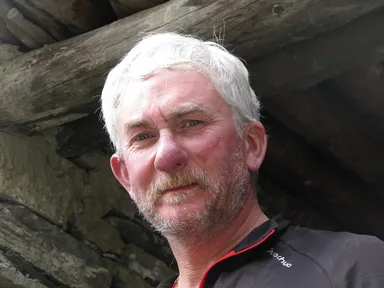
About the guest
Nigel Vardy
Frostbite in Alaska. Appendicitis in Greenland. Near Drowning in Borneo. Rope Failure in the Khumbu. Reported missing in Annapurna. Would you go climbing with this man? Some people call him brave, some call him mad. To face the thin air at high altitude takes a bit of both, but to Nigel Vardy, there is nothing like being on a high mountain. Losing limbs to severe frostbite would put off all but the few, but to Nigel it was the springboard to climb, achieve and conquer. Over the past 30 years he has climbed across the world, set mountaineering records and spoken to schools and businesses across Europe. He continues on life's adventure, forcing new boundaries and new experiences every day of his life... As Nigel says - “I don't want to die in an unused body…”
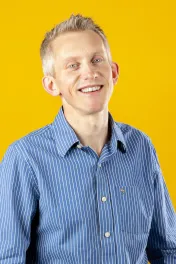
Hosted by Andrew Pain
Andrew Pain is a Mental Health & Resilience Keynote Speaker who speaks from lived experience on resilience, burnout and workplace wellbeing. Host of the Men on Show podcast, author of the book Honestly, Man, and a TEDx speaker. Member, International Coaching Federation, and Mental Health First Aider trained.
More from Men on Show
Keep listening
Never miss an episode
Candid conversations with everyday heroes – ordinary men doing extraordinary things.