Men on Show · Episode 43
Allyship and men: why it's a powerful, two-way process, NOT a fluffy woke term! with Daniele Fiandaca
- 19 March 2025 .
- 47 min .
- Hosted by Andrew Pain .
Daniele Fiandaca is founder of Token Man Consulting, an inclusion and diversity consultancy which specialises in engaging men and senior leaders with I&D and inspiring them to become inclusive leaders and agents of change, creating workplaces that are truly inclusive and diverse.
Andrew hosts this podcast. His own keynotes are on burnout, resilience, imposter syndrome and difficult conversations.
In this episode
About the conversation
Prior to his career as an inclusion and diversity consultant, he worked in advertising where he was head of innovation and managing partner at Cheil Worldwide, CEO at Profero, co-founder of Creative Social and has won numerous awards including a Gold Cannes Lions.
Key points of the episode
- His challenges growing up… and as a man.
- How he found a side of himself he didn't really know existed.
- How shifts are happening but nowhere near far enough, and how some women do not have the tools to deal with a man showing his feelings.
- How men need allies from all walks of life to be on their "journey".
- A proper definition of "allyship" .
- Practical definition of allyship.
- How the system is damaging men significantly.
- "Bravespaces" - topics that men may not normally talk about.
- How you can make a difference to someone's life so easily.
- Can women be allies for men?
- The current (March 2025) in America and his take on it.
- How he is breaking stereotypes (one nail at a time!)
- A new definition of "manhood" for the modern day.
- A message of hope for the listeners.
- And the importance of self care.
Men on Show shares lived experience and honest conversation – it is not medical or therapeutic advice. If you're struggling, you don't have to cope alone.
Samaritans: call 116 123 (free, 24/7) NHS: 111
Full transcript
Read the whole conversation
A complete, verbatim transcript of this episode – every word is the host's and guest's own; the topic headings are ours.
Welcome to Men on Show, the podcast, Candid Conversations with Everyday Heroes. Join Andrew Pain as he interviews fascinating guests, ordinary men doing extraordinary things. If you love the show and you think somebody could benefit from hearing it, why not tell them about it by giving it a share on social media? Oh, and at the end of the podcast, if you can leave us a five-star rating and a review, it really helps us more than you know, and it gets this important message out to more people that need to hear it the most. But right now, enjoy the next episode.
Hi, my name's Andrew Pain, and welcome to the podcast Men on Show. And I am delighted to have Daniel Fiandaca here on the show. And is that how I pronounce your surname, Fiandaca?
Fiandaca, and it's Daniele.
Daniele, Daniele, Fiandaca. What a fantastic name. I like that as a name, I love the surname. The reason that Danielle is like, Daniele. I have to write that down. I've got a brain like a simp. So, Daniele, the reason I've got Daniele on the show is he's the founder of Token Man Consulting. It's an inclusion and diversity consultancy, trying to really bring men within the diversity, equality and inclusion space, encouraging them to be change makers. Daniele is a trailblazer.
I've always wanted to be known as a trailblazer. I feel like I'm not quite there yet. No one's yet described me as a trailblazer, but name, I'm not just saying that. You were named, I'm just checking my notes here, one of the top 50 trailblazers in gender equality in the UK. That is fantastic. Management today's top 30 male agents have changed. No one's ever described me as an agent either. I'd like to be an agent and a trailblazer. But Daniele, welcome to the show. It's a pleasure to have you here.
Thank you. It's amazing to be here.
His parents, and his brother's death
Cool. I want to get on to the fabulous work, really important work, particularly in today's environment that you're doing on Ally ship. But it's always important to me to understand a little bit about yourself growing up. The question I always ask fellows when they come on to this is, well, what inspired you growing up? Is there somebody in particular that inspired you? Was there someone that you looked up to as a really positive role model? If so, who was that and what do they do for you?
Read the rest of the transcript Collapse transcript
Yeah, it's a really good, it's a really interesting question. I have to say it's really cheesy, but I'm going to have to say my parents simply because my dad's an immigrant, came over to the UK with nothing. My mom comes from a working class family, and I was in a Catholic school, being Catholic. And one day they took my parents into a classroom and said, we can't give him the education he needs, because I was too fast for the class.
I mean, I can't. And they said, we really do think you need to put them into public school. So I watched, and so I went to a boarding school actually from eight to 13 with my brother. And I just watched my parents work just every hour, just to give us that privilege. And they have, my work ethic comes from them. And I couldn't have been in a more loving, caring family if I wanted to. So I think that's really what I looked up to, and it really shaped what I did.
I do remember when I got my first paycheck, I gave it to my dad to say thanks. And I should really have given it to my dad and mom now that I look at things. But my dad was the breadwinner, but my mom was so important within that.
Yeah, yeah. That is amazing. What an amazing and lovely thing of you to do with that first paycheck. I can't imagine there's many of us that will go and give our first paycheck to our parents as a mark of respect. Say something about you, actually. That's incredible. Just that one step. Do you recall growing up, any particular challenges, things you struggled with, that now looking back, you would put down to being a male?
The answer is probably not, to be honest. I think, I mean, listen, there's no doubt if I look at where I got to, when my brother died 14 years ago, and some of the challenges I had around grief, there's no doubt that that was driven from being a boy, becoming disconnected from my feelings, even though I had loving parents. Society tells me that I shouldn't show my feelings, disconnect from my feelings. So I think it's until I started doing therapy about four or five years ago, I think I really had a challenge with being connected to those feelings.
So the answer is yes. I mean, in being a boy and becoming a man, you know, I work and live in a society that doesn't put stereotypes, puts us into boxes. And I think to a certain extent, and probably one story I think is quite interesting as well is, you know, it also, a lot of the time, what I see is men, men act as they do sometimes because of the context they're in. So just to give you a very good example, I ran agency.
So I used to work in advertising. I was a CEO of an agency. I ran an agency for 10 years. And also I was the head of innovation at a, I was a head of innovation at an agency called Chow. But when I started Token Man, so I actually started Token Man 10 years ago as a platform to support men, I went and did a panel, my first ever panel under Token Man. And I did it with the head of the Fawcett Society, the woman that wrote the book Lean Out, which was kind of a response to Sheryl Sama's Lean In.
And I remember just being so scared. This is the man talking about gender equality and the challenges women face. And at the end of that panel, a guy came up to me, he's become a really good friend. A guy called Hilary Gallo, and he just said, I want to give you my book, which is called The Power of Soft, because you have the power of soft. I can tell you now, no one that I've worked with in my career, in my agencies would say I had the power of soft.
And so for me, it was really interesting. It needed me to come out from a quite high-pressured, stressful, you know, building, very positive building a business, to actually find a side of myself I didn't really know existed.
Men showing feelings and whether it has changed
That is very interesting, because obviously we're going to talk about allyship, and I want to get into that. But I suppose this is linked to it, the sense of, you know, men not being able to show their true feelings. I feel like, just from my perspective, that that has changed a lot. If we remember the World Cup 1990, Gazza's tears were such a big thing. It was national front page headlines, Walkers Crisp's Create an Advertising Campaign, out of that thing.
Today, it's like normal. You see it all the time, and sports stars crying. You imagine the Prince's, Diana's funeral. I mean, it was just, it's awful. It looks like, for me, it's like child abuse, watching them following a coffin, not able to have, in their moment, a grief dad's arm around them. They had to walk in, what? Separately. What are you talking about? Yet today, those same boys are talking, real advocates for mental health. So do you feel, I feel like it's changed, but do you feel it has?
I think you're overestimating the change that's happened. I mean, I speak quite a lot about my brother and losing my brother on stages. And, you know, it happened to me last year, and a guy came up to me and said, you know, my dad died two weeks ago. Thank you for sharing that. I've just realised that I was hiding the fact that I was crying to my kids. You know, I was ashamed of it, and I've realised now that that was wrong.
I'm going to go back to them tonight and I'm going to tell them that they need to cry, I need to cry, and that's part of the process. So I think you'll be, I think you're overestimated the change that's happened. Yeah, and I see it a lot. And I also see it's really interesting, we're talking about allyship, because I think allyship works, it needs to be for everyone, right? We also need allies from the women in our lives, the other men in our lives, you know, we need allies from the people non-binary in our lives.
We need allyship from everywhere. It's just, you know, equity just means certain groups at certain times need more support than others, and we need to recognise that. But I know, I know, I can tell you now, some of those men that I work with, they will talk about, as they got their journey, starting to share their feelings with their other halves, they're in heterosexual relationships, and the women just can't deal with the man on the other end, showing their feelings, you know, really struggles with it and kind of tries to put it down and tries to shut it down, because actually, they just don't sometimes have the tools to actually have a man showing their feelings.
So I think we're so far away from where we need to be. And you're right. I mean, things have shifted. I'm part of a number of men's group, including one called the Man Dem. And the conversations they have, they're mainly young men between 20 and 30, obviously, same age as me. But the conversations, the openness they have in that WhatsApp group with complete strangers just astounds me. It just blows me away. So I am more positive.
But at the same time, we have to recognise there's a person called Andrew Tate that is having a significant impact on men. So, you know, because I think men aren't necessarily on that route and that journey, they aren't necessarily being able to support around them to go on that journey.
Defining allyship, and who needs support
Okay, well, let's talk about allyship because you're doing tremendous work in that space. And I know if I was just doing a workshop for, I don't know, let's say I was doing a workshop for the NHS, a range of professions coming in. If I then did a poll, how many of you know what allyship is and could correctly define it? I mean, some of the clue is in the name. But actually, a lot of us, there's still some confusion.
I typically hear that term in relation to men being allies for women for their suffering. Men shouldn't be, toxic men shouldn't be bystanders. We need to, and it's something quite active. I have another view of that term, which I'm happy to share, but you are the expert in this topic. It is your work. So please, how would you define allyship to those listening to this podcast, who they've seen allyship in the title, because it will be in the title, and thought, well, what the hell is that? I'll have a listen. How do you describe it?
If I'm going to make it really simple, allyship is supporting those that need it, who need support. It really isn't as simple as that. I mean, the standard definition, which we built on, I don't like the standard definition, but the standard definition is helping people from historically marginalised groups, which will tend to be people different to you. That's the standard definition. I run a male allyship programme. I'm really proud of them because both cohorts have come up with a definition, which is women, historically marginalised groups, and anyone that is struggling right now.
That and is really important because that and tells us as men that we need to support other men who might look exactly like us, who might just be struggling because they've just had their second child and they're struggling with not being able to sleep, they're struggling because they're going through a round of redundancies at work, they're feeling really stressed, they're the breadwinner, and actually they need support from those around them, and so we need to step in.
I think for me, well, if I look at the work that I do in the workplace, the reason I've kind of focused on women historically marginalised groups is because if we look at the workplace, it is women historically marginalised groups that have far more barriers in the workplace than me as a white, straight, neurotypical, cisgender man without disabilities. So that's just a reality. The barriers are real, the barriers, and we talk about, a lot of people get defensive around the word privilege, but the word privilege, a lot of people think privilege are the things that you have as opposed to the things you don't have.
Well, actually, privilege in the workplace is all about the barriers you don't have, and there are significant barriers for women and other historically marginalised groups. When I say historically marginalised groups, I'm talking about LGBTQ, I'm talking about people with disabilities, I'm talking about people with different ethnicities, I'm talking about neurodivergent. Everyone has barriers that I never had, and that's the point. The point is that because I've never had them, and also because I spent a lot of time in the in-group, so the in-group is the dominant group, I never saw them, and that's what a lot of people don't see.
So people that tend to use the term woke as an insult. One, don't understand what the word means, it just means being awake to other people's challenges. Why wouldn't you want to be awake to other people's challenges? But the reason they use it is because they're not awake to other people's challenges. So they don't understand why this stuff is important. So it's really ironic when I hear people saying that. I really, it just, unfortunately, I don't use this as an insult, but it just shows a level of ignorance because they don't understand why we do the work we do. Yeah.
Reaching out, and recognising responsibility
I mean, I love that as a definition. I think you've made that very clear. I suppose only to add to what you're saying, I read a book called Humankind by author's name Ingrid Bregman, I think is the name, but the book's Humankind. It's a really interesting book. It is a he talks about Nelson Mandela and how he reached out to one of the leaders of the Afrikaner movement in the build up to the South African elections, when the Afrikaners were mobilising, there was going to be a bloodbath.
What he delivered to bring that down to a place where he was able to reach out, form relationship with formerly his oppressor was a master class, as I see it, an allyship in that he had this clandestine meeting. He served this Afrikaner tea. He knew about their history. He knew their language, could speak their language deliberately. And the first thing they talked about in that clandestine meeting was the challenges that the Afrikaner people have faced historically and how that shaped them.
And this guy, Constantville Joen, was the key, one of the key figures in the Afrikaner movement, was so blown away by Nelson Mandela's ability to reach him. And for me, that story as a guy is allyship where, as well as supporting others, it's reaching out, understanding their journey and really taking time to go, well, I don't know. I'll never know how it feels to be you, because I'm me and you're you. But I can learn about what, like the allyship, the question I always hear, why do the immigrants want to come to Britain?
Why don't they stay in France? And then the people that ask that question, they don't get any further than that question. They just get very angry about it. But if they went and spoke to those immigrants and understood that English is a universal language due to colonialism, so of course you're going to go to a country where you speak the language, your mother country, and a lot of them see Britain as their mother country, because you don't understand. So for me, allyship is about a reaching out. Does that sit with you as well as a thing?
Yeah, I think it's about recognising your responsibility and also recognising your influence. So I think for me, it's understanding. You know, I have white privilege, I have male privilege, in certain contexts, I'm going to just caveat that male privilege comment. And I'm privileged. And so for me, it's about understanding what can I do to help shape change. I think the reality is though, not every man's in the place right now to shape change. And I think, you know, that's what some of the narrative, I think, is really jarring for some people, because they're like going, you're asking me to be my ally, but I'm really struggling right now, and I'm not getting any support myself.
That's why I mean, that's why I'm talking about allyship needs to be for everyone. So if we look at the UK, for example, the white working class men who have been historically marginalised and should be included by the EDI movement haven't. And so they have been let down. And so, and while that anger, I don't agree with where that anger comes from, but how it comes out and it doesn't mean we don't have to, we don't have to at least pay attention to what's happening and actually go, okay, what support can we give?
So I think for me that's, and when I do the moral leadership course, we do talk about the need for men to support other men. And I think on international men's day, I've been at two years now, I've just made my own little campaign. It hasn't got very far, but only a little campaign to get more men to tell each other they love each other. Because, you know, it's amazing. There's a brilliant video, I think it's from New Zealand, where they get men for the first time, they capture them telling each other that they love each other.
And it's just, you know, just the reactions and the, you know, are you okay? Is everything okay? You know, is everything okay? You know, real worry for someone when they do that. But I think that comes down to that feelings bit. You know, we have to, we have to correct. And I think that's what, and I think I saw something around the fact that if you think about feminism, feminism has given, feminism has given women the ability to get together over the last 50 years and really build that kind of sense of belonging and purpose that men just haven't had.
And so what's happening now is that as the world shifts and men don't become, you know, someone said to me, I ran a workshop this week, actually, because it was a together space. And someone said, I'd like men to become non-reliant on women in the same way women have become non-reliant on men. And I thought that was such a brilliant, insightful piece. Often we can be defined by what we've done in our career, who we're with, what we've done.
And actually, we need to have that sense of purpose in ourselves. And I think I had, and I've got a complete blank now, we had a very, Susie Allback, a very famous psychoanalyst spoke at one, I run an event called Masculine to the Workplace every year on International Men's Day. And she said something that's really stuck with me, because I see it the whole time. And she says, I see too many men on stilts who are hollow inside.
What she was talking about is men who get to that senior level in companies, work really hard to do it, given up a lot, sacrificed a lot, in most cases, family, and time with that family. And they get to that position and they go, I've been focusing on the wrong thing. This isn't what really defines me. And that's where we get middle life crisis. That's where we get that crisis of confidence, because you can't get back that time you missed with your kids as they grew up. You're just not going to get it back.
Privilege, and how the system damages men
Yeah, I mean, and I would say, just coming back slightly on a few things that you've said, not to come back in the defensive, but just to kind of add to them, I think when we talk to certain groups of men about privilege, that's very difficult for them to hear. Like we know when it comes to areas of deprivation, you're 10 times more likely to go to prison if you live in an area of deprivation than in the most affluent area.
You're twice as likely to die by suicide if you live in areas of deprivation than areas of affluence. There are some groups of men that find that very hard to hear. When we talk about the patriarchy, toxic masculinity, privilege. I believe that within the group that is men, there has been a historic privilege and still is on many levels. But within that group that is men, there are groups who are hugely disadvantaged. For me, allyship is, as you say, reaching out to all groups that need support.
I think that's a beautiful definition of it. But tell me about the work that you're doing, because it really inspired me, challenged me, made me ponder. Some of your work is quite innovative. You were talking about a nail salon. You were talking about wearing dresses. You were talking, you do workshops. So tell me what you're doing. Tell me why you're doing it and what that impact is.
So I do a number of things. I'll talk about hardest nails in a minute. I'm actually learning to become a nail technician at the moment. And I just think painting your own nails is really hard. So I had an event this week. So I only really had the energy and time to do one nail. But I usually have them fully painted. So I do probably the best thing to do is I basically work with corporates and I do three things.
I help them to better engage men. So one half of what I do is inclusive leadership. So I do a lot of inclusive leadership work. There's six month programmes and that's everyone. That's not just focused on men. That's bringing everyone through that programme. But then I think the other 50 percent I do is focusing working with men. And so I really help clients get away from just saying to men, become better allies. I think the challenge with saying now we're talking, focusing on male allies, they came out again in that workshop this week is by saying we need more male allies, we're suggesting that the fixing of the system that we're doing doesn't benefit men.
But it does. And that's the thing that we need to shift is get to understand that the system is broken for almost everyone. When I say almost everyone, it's not broken for the oligarchs. They're quite happy with the system right here. But beyond that, the system is damaging men significantly. We just need to look at the suicide rates. We just need to look at, as you say, the number of prisoners there are. I think the system is broken and we need to fix that system, and everyone is being impacted in some way by that system.
And the only way we're going to change it is together. But what's happened within organisations, they've just gone, men, you need to be better allies. And so when you think about, so Ipsos did some studies two years ago, I think now, and they looked at, they found that 53% of men in the UK think gender equality has gone too far and is now discriminating against men. Okay, that quote comes from ignorance because I work in companies every day.
And while it must be frustrating that all of a sudden women are getting promoted at the same rates as men, it's at the same rates as men. Yes, before, you're used to as a man having that privilege of that increased percentage and that's gone and that feels like something being taken away. But all we're talking about is a system that's more fair, respectful and actually delivers better results to those men. So if you're saying to one of those men that's in that 53%, you need to become a better ally and you don't spend the time actually understanding their issues, supporting them, you're never going to bring them on the journey.
So that's why it's no coincidence that all the studies I've done, everyone will say no more than 40% of men are active allies in their organisation. Well, when you've got 53%, I think gender equality has gone too far, it's no surprise, right? There's that 7% that you probably can convert. So I help companies bring men on the journey by supporting them and inspiring them and recruiting them. So supporting them is recognising that men have their own issues, men have their own challenges.
So a lot of those issues are societal. So if we look at, and you know, anyone listening to this? Now, I love your question at the beginning, what did I experience as a man? And I talked about feelings and the emotions and some of the damage that did initially through my grief process where I did medicate without going into details, but I did medicate, I did do the normal thing of trying to cope through drugs and alcohol.
And the reality is that was because I couldn't, I didn't want the pain to come in. I couldn't deal with it. I couldn't handle the pain. And so it took me to open up, to go on my own journey. And so, you know, again, if anyone's listening to this, do come, I do Brave Spaces. And again, coming on to the support bit. So I run Brave Spaces specifically for men. And I do that for free as well.
So I do one a month and I do Brave Spaces around topics that men wouldn't normally talk about. So in the corporate space, that might be being a father in the workplace, that might be becoming a better partner, that might be becoming a better ally, that might be becoming more comfortable with being uncomfortable. So I've obviously got my workplace ones, but outside of the workplace, I do things. My next session at the end of March is Navigating Grief.
I've then got sessions coming up. I've done sessions on sex and intimacy. Sex and intimacy was fascinating. There was five of us on it, five strangers. I had men talk about things they'd never ever told people before. But David Chambers, who's a brilliant man in this space, do look him up. He just said, you do realise that what you've just created is a really intimate space for these men. So he just made us. I purposely called David in because David is a specialist within sex and intimacy, and he works a lot with men on that side.
But he just completely repositioned and redid what I saw as intimacy. Intimacy was always attached to sex, and actually intimacy is so much more than that. So we do have to create that kind of spaces where men can be intimate with each other, and actually can care for each other and support each other. So that's mainly what I do on support. Then inspire really is the training. So obviously, I do a lot of that training through the inclusive leadership work I do.
I help people. But I think the biggest thing, probably the most thing, the thing I'm proudest of is I've actually developed a male allyship group coaching programme. It's 14 weeks, seven sessions. I've now had 24 men go through it. And it's really hard for me to say. But the feedback I get is brilliant. But what I love about it is I get to watch in real time as those men shift. And that's the most satisfying thing in the world.
And it's the same with coaching, to be honest. Coaching, I get that same buzz, is you can really see. And that's what I say to everyone. I know there are some people that are probably struggling right now and go, I can't be an ally. We can all be allies. Doesn't matter where we are in our lives. You can make a difference to one person's life so easily. Even just telling them on a certain day at a certain time that you really love them and appreciate them may completely change that day. It may change the trajectory of the week. That week may... So I think we can all have a positive impact on human beings every day.
Women as allies, and painting his nails
Yeah. One question I sometimes get asked is, because I talk about the role of men's communities. I've had some fantastic male community builders on this podcast, from Men in Sheds, Grieving Pine, Poppabiloaks Club, and there's a couple of others whose names now escape me. We've done quite a few episodes. But was well, can women support men? Can women be allies for men? There's a fantastic example of a high-level furniture company that I delivered to last November on Men's International Day, and it was the Women's Network.
They promoted the talk I was doing for men. They were the ones that went out into the warehouse, not pleading, but talking with supervisors saying, we want you to release the men for this session. This is important. Please do not make it difficult for the guys to leave the shop floor. The numbers were amazing, all because the Women's Network were being allies for men. And I feel like women have a massive part to play in supporting men, and we should therefore also.
And as I said to those that were there on World Menopause Day, guys, get yourself a lot, get involved, you know, your sisters, your wives, your partners, your female colleagues, you know, the Women's Network here have done you proud, and it's time for you as well to do them proud as well. So I feel like it is a two-way thing. It's a cross-cultural, cross-gender term. I think the work you're doing is amazing. I didn't know before the podcast that you do those different things in the way that you do.
Tammy, I want to talk about the events in America and how that perhaps affects your work, how you see that. I think that's important. The thing, you paint your nails, you sometimes wear a dress, you've got a nail bar, you're learning to be a nail technician. And this is just like, I know for me, like, what do I want to do? I want to go and play football, so I do. I want to dive off diving boards, have my diving lessons.
They literally, it does something to my soul, diving off those boards. I had a bad day yesterday. I was saying to my wife, actually, I'm struggling mentally this week. I feel like I've lost my mojo. Come back from a diving lesson. I've actually learned to dive backwards now for the first time. I was like, I feel amazing today because of that. She is my ally because with a busy household, she knows how important that is. She supports me in that work and all of that.
But those things that you do, those active steps, painting your nails and things like, do you do those because you feel driven to do them? You want to do them? Do you feel that's part of your personality? I've got a male friend who enjoys sometimes dressing up as a woman, sometimes dressing up as a guy, depends what day it is. Do you do them as a symbolic gesture? What drives you in some of those initiatives?
Now, I've won a Scott twice. I've got a brand new one, which I'm waiting to do. I'm working out the first event to do it in. I do it because I want to break stereotypes and show how ridiculous these stereotypes are. It's as simple as that. So, Sam Conniff-Allende is a good friend of mine. He wrote the book Be More Pirate, and he wrote a post a year and a bit ago. He just wrote a blog post about an experience he had.
And he basically went to a Harry Styles concert. His daughter convinced him to get his nails done because Harry Styles does get his nails done, and a lot of people get his nails done. He got to Sunday night, he had fun, he got his nails done at a nail salon. And then he said to his daughter, can you take them off for me? She said, I can't take them off dad, they're shellac. And so he got stuck with them for a whole week because he was so busy.
And he just said it opened up so many conversations that he just didn't expect. And so he wrote a little post saying, I mean, he called it Harder's Nails, and he just wrote this post saying, is this performative nonsense, or was there something in this? And he said, if anyone wants, and he didn't write a press release, right? This kind of fake press release around this movement. And then it just, it was just a blog post.
And so last year, not the year before, so not last Christmas, the Christmas before, I'd read that blog post. I'd got a call with Sam, and it took us five months to get the call in. But I said to him, well, Christmas is coming up. I said, okay, I'm going to paint my nails for a week. I'm going to, I really loved it. I told him, I called him because I love this idea. I want us to do something with it.
But I can't tell you what I want to be in until I paint my nails myself. And I did it. And it just firstly, it didn't make me feel uncomfortable, but it did, there was a tiny bit of uncomfortableness. But you did notice that people were reacting to you differently. It did open up really interesting conversations around masculinity. And the reality is it gave me a real connection. I think the real killer for me, it gave me a connection with the young girls, the young women in my life, my nieces, my goddaughters that I didn't know.
I've now been to nail salons with my niece, with my goddaughter, and just sitting next to her, I had a conversation that I wouldn't normally have. And so for me, just that itself has been amazing. But what then happened is, we did a beta test, and those beta tests, I think we had 14 men that came on board in that beta test. And what was quite, something quite amazing happened actually, is we actually had three bisexual men out of that 14.
And if you think about the world, bisexual men, you don't meet that many. But at one point, all three were speaking together, and I went, wow, isn't this amazing that we just pulled these people together? And I also had feedback from gay men saying, I love what you're doing, but I just let you know, I'm just not confident of doing it because of just fear and being scared of what might happen as a gay man. You know, whatever happens, if I get challenged in a pub, I can still say, it sounds horrible, but I can still say I'm straight.
And unfortunately, they will be more understanding, right? So, but for me, it just shows that, you know, I did wear a skirt in Pride, believe it or not. I wore it in Pride. I went with a child line, I had a child line t-shirt on. My wife is a child line council. I'm very proud of her. Within one week, I was being called a paedophile on Twitter because I was wearing a child line t-shirt, I'm wearing a skirt.
So the level of hate, and again, you know, so we're not, we aren't asking men to paint nails to be better allies to women. We're not doing that. We're actually asking men to paint their nails to be better for themselves and other men. And what I mean by that is open up real meaningful conversations. You know, one guy has only told, hasn't even painted his nails, he's already told someone he's having a conversation, and the guy's going, oh, why do men need to dress as women?
And I'm like, what's that got to do with dressing as women? Why do you want to put me in this box? I can't put polish on my nails. I mean, it is ludicrous, but what we're also doing is then using that to open up other conversations about where we're putting boxes. So not showing our emotions. Men still struggling actually to take the primary caregiver role at home. And when we talk about gender equality, and that's why International Women's Day is important.
But International Women's Day, I will still say, is also about fixing a system that damages men. And so for me, the work that I'm doing, I'm not doing the work to help women marginalise. I'm actually doing the work to help humanity. Because we have a system at the moment that's broken. And so through a small thing like getting men to paint their nails for one week, it is opening up their minds to being more comfortable, being uncomfortable, being more curious, open up conversations, actually thinking about masculinity, actually thinking about mental health.
I mean, nails are actually quite a nice way of, they're quite therapeutic. You go to a nail bar, you spend half an hour, 45 minutes an hour, it's good for your mental health. So, for me, I'm training to become a nail technician. My mum wants me to open a nail bar, and it's really interesting, I do so much stuff. It's really interesting, I've had a practice relationship with my mum, because she doesn't support most of the work I do.
This is the first thing she's got excited about. She wants me to, yeah, really, she wants me to, and she, and so for me, she said, well, she started talking about nail bars, and I didn't do it. I didn't, in my head, there was nothing, there was no nail bars in my future. Might be a one day pop up in somewhere, where as a man, I come in to allow people to come in. But, you know, she's now put an idea in my head, who knows, who knows where it will go.
But I think the reality is the quality, and if anyone wants to do, go to my LinkedIn, and we'll also give you links. But just the feedback we've had from the beta testers about what it's done for them has been phenomenal.
Trump and DEI in the UK
Yeah, if it starts conversations, that is great. Tell me, because I'm conscious of time, I wanted to talk and sort of end here really on where we see DEI going. We've had the rollback in America with the Trump administration, and I'm sure there'll be many twists and turns in the next four years and maybe more. Do you see that affecting DEI here in the UK? Do you feel like here in the UK we're saying, well, stuff Trump, we know it's, or is it making people here doubtful?
Do we need to copy America? Is Trump right? Do we need to move in the right direction? What do you think has been the impact for you? What do you see?
I think the first thing I'm going to have to say, everyone, we have the right to disagree, but Trump is not right. Trump is not right about many things, but on this one- I didn't hear you on that. No, I know you do. But I think the reality is Trump is, he has always been successful at creating disconnection divides and he's created an even bigger divide. And so this is his modus operandi. He's focused on this one area.
The damage that's being done to the trans community, in particular right now in the States, is heartbreaking. He is killing people. The amount of the suicide rate for trans people is so high. And what they're having to go through in the States is horrendous. I mean, it just breaks my heart. But it's affecting almost everyone that comes from historically marginalised groups. Women's rights, reproductive rights are under attack. There's so much damage he's doing. Is it affecting here?
I can tell you, I lost a piece of work last week because of Trump. So it was an American-led company. They're not allowed to say the word allyship anymore. It's been banned. You will not believe just some of the stuff and the fear.
In the land of the free, allyship has been banned.
It's been banned. It's been banned within their company. So as if you think... It is, I know, totally. Actually, funny enough, there's a website that tracks around the world countries, and it has definitions of what democracy and autocracy is. America has moved away from being democracy under their definitions, which is really interesting. So I think it does impact, and I said it last time when he was lasting, and when he first came in, we were like, when the world is changing, sometimes you get those people that don't want it to change come back and hit back.
That's what we're seeing with Trump. He is one of the most, he's very intelligent, he's an intelligent man, a clever man, very manipulative man, but he is so ignorant. It's unbelievable when it comes to these areas. He just doesn't understand these things. What happens when people don't understand them, they fight them, they fight them, it's the grief curve, right? What was I doing when I was not wanting to get the pain in? I was fighting, I was fighting that pain.
I just didn't want to accept that my brother was gone. And it's only, you can only create change when you start going to that depression, actually going, okay, things have changed. The world is so different now than it used to be. We live in a world where women don't depend on men like they used to. Our roles as men used to be that kind of provider, that saviour, that's not our roles anymore. Our roles are actually to work, to create a system that is good for everyone, to work with women, to work with non-binary people.
So I think everything has shifted for men, but what we don't necessarily have is enough men being role models or providing that voice. It was really interesting to me, as someone said to me, what's really ironic is the men are the real role models. By definition, and not shouty, this look at me, they're very humble, so they're very quiet. So we have to find ways to put a spotlight on those men, get those men to come out of the shadow.
Yes, I totally, being humble is an amazing quality, but we do need those men to step up and actually so we can see a new generation, see a new type of man that is forging a path and being successful on that path. I think for me that success is really important. And when I say success, let's be really clear, part of what we need to do as men is redefine what success is. Because for too long, we've been defined by material goods, we've been defined by success in our careers.
And actually, listen, I talk about it a lot on LinkedIn, but me and my wife are childless, not by choice. So I don't have kids, it's why I can do what I'm doing. Would I be doing what I'm doing now if I had kids? Probably not, I just wouldn't have had the time. So my Token Man is kind of my child, that's why I put a lot of my investment in, because I do see a world that is not fair and is damaging also almost everyone.
And it's been a joy for me to connect with men in a way that I never connected before. And that's both my friends and actually watching some of them on their own journeys has been incredible, but I really do see it, the power of letting men be their true authentic selves. Josh Connelly, I'm using Josh Connelly's quote. He's a brilliant resilience coach. I love Josh. But I interviewed him about three years ago and he said, it's not about fixing men.
It's about giving them the space to be their true authentic selves. And as I said, I worked in a workplace where I had to be this hard nosed EO. And then all of a sudden I came out and I was able to be much softer. And so for me, that second bit is who the true me is.
Finding Daniele, and a last message
So to finish, if you could give a message of hope to people listening to this podcast, sum it up in a couple of sentences, how would you encourage people?
I would just say, listen, the world's changing really quickly. I understand for some men that can be very confusing. It needs, it actually needs a lot of work on yourselves. And I would just say, lean in, lean into everything that's happening around equity, diversity, inclusion, if you're in your business, lean in. And in the short term, it might just be listening more, getting a better understanding. But also within that leaning in, make sure you're okay. So I always say the same thing to men.
If you're not okay, you're not in a position to be an ally. So look after yourself. I'm a huge advocate of therapy. It had a massive impact on me. Being able to afford therapy is a privilege. There are other things like Andy's Men's Club. Men's circles are really powerful. Find something that, one, you're investing in yourself and your well-being, both physical, mental, social. I'm going to put those three. But also then, if you're ready, start leaning in and working out what your influence is, and then go, okay, how can I use that for good?
Cool. That's brilliant. I like that as a nice way to finish. How can people find you? Last thing.
tokenman.org, LinkedIn. I post every workday now, which is quite a commitment. But I'd started it last year and I've just tried to keep it. Harder's Nails, I would just go to my LinkedIn post. If you type into Google Harder's Nails, you won't find us. We're still relatively new and there's quite a lot of other businesses called Harder's Nails. But go to my LinkedIn post. You'll see it on the top left straight away. It's signed posted. That's the word I was looking for.
Look, Daniele, thank you so much for your time. It's been an absolute pleasure talking to you. I knew it would be. It's been great having you here. Yeah, thank you and hope you have a great rest of the day.
Thank you, mate, and you. Take care.
Thank you for listening to Andrew Pain's Men on Show. If you could leave us a five-star rating and short review, it would be really, really appreciated. It helps us get this important message out to more people that need to hear it the most. See you on the next episode. Thank you for tuning in.
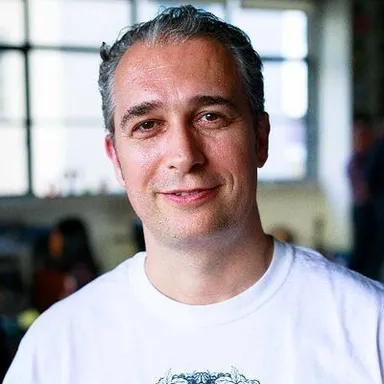
About the guest
Daniele Fiandaca
Daniele Fiandaca is founder of Token Man Consulting, an inclusion and diversity consultancy which specialises in engaging men and senior leaders with I&D and inspiring them to become inclusive leaders and agents of change, creating workplaces that are truly inclusive and diverse. Clients include BNP Paribas, Channel 4, Colt, Flutter, HSBC, Merlin Entertainments, Monster Energy, Ogilvy and Wavemaker.
Token Man Consulting was born from Token Man, an initiative he co-founded nearly a decade ago to engage men with the gender equity discussion. He is also co-founder of Masculinity in the Workplace, one of the few I&D events that is dedicated to engaging men and inspiring them to become better allies and agents of change.
Previously he was co-founder of Utopia, an award winning culture change business that creates more inclusive, more entrepreneurial and healthier cultures for clients. Utopia’s top-to-bottom, boardroom to factory floor approach had clinched household names including Alexander McQueen, Coca-Cola Europacific Partners, Google, KP Snacks, Nestlé, Pepsico, Rolls Royce, Spotify, Unilever and Universal Music.
He was named one of Management Today’s Top 30 Male Agents of Change, and most recently, one of the Top 50 Trailblazers in Gender Equality in the UK. He has also co-authored a number of best selling books including Creative Superpowers: Equip Yourself for the Age of Creativity.
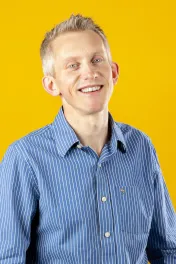
Hosted by Andrew Pain
Andrew Pain is a Mental Health & Resilience Keynote Speaker who speaks from lived experience on resilience, burnout and workplace wellbeing. Host of the Men on Show podcast, author of the book Honestly, Man, and a TEDx speaker. Member, International Coaching Federation, and Mental Health First Aider trained.
More from Men on Show
Keep listening
Never miss an episode
Candid conversations with everyday heroes – ordinary men doing extraordinary things.