Men on Show · Episode 56
How to deal with uncertainty, when the outlook is bleak and it's not your fault with Steve Judge
- 25 February 2026 .
- 45 min .
- Hosted by Andrew Pain .
Steve Judge is an award-winning international keynote speaker, twice world champion paratriathlete, and the author of Don’t Lean on Your Excuses and GOLD.
Andrew hosts this podcast. His own keynotes are on burnout, resilience, imposter syndrome and difficult conversations.
In this episode
About the conversation
Or, Linked In
Do reach out. He wants to help.
See his TEDx Talk here
Key points of the episode
- His early inspirations in his life.
- His take on modern day influencers.
- The near fatal accident in 2002.
- How he found his fighting spirit based on the diagnosis of a doctor.
- His difficult yet ultimately victorious healing journey.
- "The Progress Principle" .
- No such thing as "normal" - drop the comparison!
- His take on contemporary masculinity.
- How he manages burnout.
- Sleep. And its profound importance. Not just length but quality.
- A message of hope.
Keynotes
Steve describes how he manages burnout and why sleep matters; Andrew's keynote on preventing burnout at work gives teams habits that actually work.
Steve's story is one of turning setbacks into stepping stones; Andrew's keynote on imposter syndrome and setbacks gives attendees a toolkit to process setbacks with confidence.
Men on Show shares lived experience and honest conversation – it is not medical or therapeutic advice. If you're struggling, you don't have to cope alone.
Samaritans: call 116 123 (free, 24/7) NHS: 111
Full transcript
Read the whole conversation
A complete, verbatim transcript of this episode – every word is the host's and guest's own; the topic headings are ours.
Welcome to Men on Show, the podcast Candid Conversations with Everyday Heroes. Join Andrew Pain as he interviews fascinating guests, ordinary men doing extraordinary things. If you love the show and you think somebody could benefit from hearing it, why not tell them about it by giving it a share on social media? Oh, and at the end of the podcast, if you can leave us a five-star rating and a review, it really helps us more than you know, and it gets this important message out to more people that need to hear it the most. Right now, enjoy the next episode.
Hi, my name's Andrew Pain, host of the podcast Men on Show, and I'm delighted to bring another esteemed guest to the podcast, Steve Judge, a very much acclaimed, globally sought after speaker who, following a near fatal car accident that left both legs crushed, you defied doctors' predictions that you would never walk again. And I'm just looking at my notes here to become a twice crowned world champion in paratriathlon. That is amazing. Steve, like me, I have to say this, is a fellow TEDx speaker.
Always a pleasure to speak with a fellow TEDx speaker. And do check his talk out on YouTube. If you check out Steve Judge, I think the TEDx event was Sheffield Hallam, I seem to recall. He's the author of two books, Don't Lean on Your Excuses, love that. And GOLD, which helps readers unlock their potential. So Steve, it's an absolute pleasure to have you on the show.
Welcome to the show.
Wow. Thank you very much for the intro. I think we're pretty much done. We summed up everything. See you later, everyone.
Yeah. We're here.
Thank you very much for the invite. It's been great.
Read the rest of the transcript Collapse transcript
Role models, real people and influencers
Yeah. In fact, do you know what? You just made me do a thing. I just doubly checked that I am actually recording this because there will be a podcast episode where we record it and I didn't press record, but it is recording, which is good. So I saw you last November. We spoke at the same event and I was blown away by the way that you told your story first and foremost, but also your story as well.
It's not often I say that because I like you, I see a lot of speakers. So I do want to talk about the accident that you had and the impact on your life. But just growing up, do you recall before the accident, anybody that particularly inspired you or who maybe as a guy growing up, you looked up to as a positive role model?
I think there's lots of people. I think I can remember. So you have to say what comes to your mind first, because that's the answer you're looking for. Daley Thompson in The Looking Pigs, the all-rounder, nice guy, whistled through the anthem, everybody liked him. So people like that. But I never had real posters on the wall or anything like Smash Hits magazine or anything like that. It was really just generalisation. Apart from, I guess, and this might be an obvious answer, is probably my older brother, because he's like two years older than me.
And my dad, of course, I mean, I say of course, you know, not all families are like that. But yes, my dad inspired me for many reasons, for who he was, for how he dealt with things. He was an engineer, I became an engineer. He went through trauma and didn't give in that tenacity, that dedication, commitment. He was a referee at a very high level. So he did a lot of sports and kept fit and went for runs.
So he was into scouting and anyway, et cetera. So many things that, you know, I probably just took for granted, but he passed away in 1998 and I miss him. And I've only got what I learned from him up to 1998. He was 59 years old. Now whether or not he could have given me any more information and support, probably, because I was only about 23 years old. So I was just coming into adulthood and that's sometimes when you need that father figure.
I mean, nowadays, I guess you can YouTube the answer or Google the answer, but it's really nice to get it from somebody that you know and trust. So I've missed that section of it, of him, but he still inspires me to this day for what he did do in the time that we were together, I would say. Yeah.
Yeah. And you know, it's amazing to say, you're not the first guest, actually, to have said Daley Thompson as someone growing up. But when I grew up, see, Daley Thompson was an athlete and active, I'm 51. But I feel like, you know, when I think about some of these sports stars for me, for me, I used to love the A-Team and BA. Barakas, but how did he inspire me? Well, I only ever saw him once a week on the A-Team.
He didn't have a social media feed trying to directly sell to me and get me into his following. So all I knew about BA. Barakas was he had big muscles, and that inspired me to do some weight lifting. So it wasn't bad stuff. When I think back, my actual role models were real people, like my dad. Not that I really thought about it in that depth at the time, but thinking back now, they weren't influencers, people that didn't actually know me. They were people I knew and trusted. That's clearly the case for you as well with your dad.
Just add on to that, people who may be inspired by influencers now because they think they know all about them. They don't, do they? They just get to see all the good stuff, and that's the whole point. This is a different rabbit hole that we can go down some other time. It's a façade, what we see on social media and what influencers portray. Much as they say they're authentic, unless you're watching them 24-7, you're never going to get the real authenticity of those influencers. So real people is always the one to go for, I would suggest.
The car accident in 2002
I've got a saying on social media, because sometimes I get, you look at everybody else on LinkedIn, they've got a book published, I've got this going on in my head that I've got a book coming out this year, so all I see is everyone else publishing the same book. But actually, people's social media bits, it's one of three things. Best bits, fake bits, or exaggerated bits. And I do it too. I like to think I don't exaggerate, I like to think they're not fake, but they're definitely my best bits.
And so for me, that's how I kind of reassure myself, go, Andrew, Andrew, whoa, relax. But yeah, it's challenging sometimes to separate out what's real and what's not. So tell me about the accident. I don't want to just talk about that, but if we start there, tell me what happened, just to sort of set the scene if you can for those listening in.
Sure, absolutely. So 2002, driving on the outskirts of Sheffield, which is where I live, rainy day, and my car lost control. It hit a patch of water, an aqua plane, lost control, and I crashed into a pole that was at the side of the road and bent my car in half. Now, I wasn't speeding or dangerous driving or anything like that, it was just an accident. And that's vital really, going through the rest of the journey because I had nobody to blame.
Not me, no other drivers on the road or anything, it was just an accident. Anyway, my legs got crushed. It took them about an hour and a half to cut the car apart, dragged me out of the wreckage, along with what was left of my legs. Emergency dashed me into the hospital. Have a look at me before I went into the operating theatre and an operator on me to save my legs.
At that point, did you feel some kind of agonising, horrific pain? Did you not feel anything? Did you have any indication that this is bad, or were you still don't really know?
A bit of both. Luckily, I knew it was bad because I couldn't get out of the car, and that's the first thing I tried to do. Get out of the car, walk away, brush myself down because it's a bit embarrassing. Everybody's turning up, all the blues and twos and everything like that. I don't want that, but I couldn't get out, and I was reaching down to feel my legs to see how bad they were, and luckily I couldn't reach how bad they really were because I probably would have gone into shock.
And as a first aid, I know that that's what can kill you. You can die through shock, as well as many other things, blood loss, et cetera. But yeah, my left leg had been wrenched apart at the knee, so the four ligaments just ripped out. My right leg had been partially amputated, which means the tibia bone, which is the bone at the bottom where your shin is, a section of bone had been knocked out, about four inches had been knocked out.
So you got the top of the leg and my ankle, and just skin holding it all together. Luckily my legs had been crushed, so the blood wasn't flowing out. But yeah, they actually brought the amputee team to the site to amputate my leg while I was in the car, but they couldn't get in, they couldn't get close enough, so they said I would have to amputate it when he gets to hospital. So we'll leave it as is.
So they took me and my bits of leg all the way to the hospital and rushed me into the operating theatre to save my legs and save my life.
Wow. So then you come round.
Being told he may never walk again
So yeah, it took about eight and a half hours, I'm told. I came round, felt terrible, had this massive metal cage on my right leg holding it all together. My leg seemed shorter than I remembered. My left leg was just in a plaster cast. And it's around this time when the surgeon was doing his rounds and he came over to my bed and he said, how are you feeling, Mr. Judge? And I said, I'm not good, I'm in so much pain, I'm disorientated, I don't know what's going on.
And that's when he said to me, he said, well, look, we did manage to save your legs, but I'm afraid with the severity of the injuries that you sustained, there is a chance that you may never walk again. And that was a real catalyst moment for me, a real fight or fright moment in a way. As in I could have just given in and just rolled over in bed and gone, okay, I'll never walk again. Or I guess this is where the anger comes in.
I was really angry that somebody had said that to me because they didn't even know who I was. I hadn't assessed the situation. But I guess this is the fight. And I was at that point thinking, I'll prove you wrong. I'll show you what I can do. And it's not like a Rocky montage. I didn't leap out of bed or anything. I was literally trying to survive, just trying to drink water, just trying to eat food, just trying to maybe sit up in bed, just trying to breathe.
You know, but that was my goal. And I talk about goal setting a lot. My goal at that point was to survive. And then the journey goes onwards from there through rehabilitation.
So I feel like, because I'm trying to put myself in your shoes, I feel like, excuse the pun, but I feel like, yeah, I can see that if that happened to me, probably the shock you've given that news, you just want to survive and live and just get through it. But I feel like, and maybe correct me if I'm wrong, that probably the darker, tougher times would be in rehabilitation. Because I'm imagining, like, you've got periods where it feels like, hey, I'm making, oh, I feel like I've made some recovery.
And then you feel like, no, I haven't, I imagined it, then it's four steps back. Then you have a really bad month and lots of pain. So when were the darkest, darkest times for you in terms of your mental health around the accident? And how did you get through those?
I think you're absolutely right. I think there were many dark times. And I openly admit that I like being a little bit ignorant, as in very positive, positive mindset. As in, so when I woke up, I thought, right, here's the start, let's move onwards from here. I will get out of bed, I will stand again, I will walk again. But as I started going through rehabilitation, I realised how hard it was going to be. Physio after physio, more operations, just trying to, I had to grow my leg back by four inches, as in I had to twist nuts and bolts on my cage to lengthen my leg, and that just left a gap in my leg with no bone in it.
I then had to grow the bone back, which took a year and a half, and I had to grow it back by standing on it and walking on it. And as I had to stretch my leg out, all the ligaments were really tight. And so, because of that, I couldn't straighten my leg. And you need a straight leg when you're standing or walking, otherwise you will walk with a limp for the rest of your life. This is what I've been told.
You walk with a limp for the rest of your life, that would be bad for your knee, for your hip, for your back, for your shoulders. And not, okay, I get it, I get it. What do I have to do? This is more physio. So I was doing so much physio on my right leg, trying to get it straight, so I could weight bear and walk. And after three months, I failed. I couldn't do it. And I said, look, I know I need a straight leg.
What else can I do? They said there was a Plan B, but you might not like it. I said, I haven't got a choice. What's the Plan B? And they said, it's another cage on your leg. So you've got a metal cage right around the bottom of your leg. We've got another one at the top of your leg and then a bar between the two and give you a spanner. I had the operation nightmare. I woke up screaming.
They plied with me with more morphine to stop the tears and stop the screaming because it's a bit embarrassing because they'd straightened my leg during the operation to give me a head start, which was lovely.
Anyway, so that's painful then. So you're screaming because of the pain.
Seven weeks of hell in rehabilitation
Yeah, just woke up screaming out of, you know, and then I had seven weeks, seven weeks of hell. What I mean by that is I had this spanner, so I could twist the nuts and bolts as much as I could, but then I had to put up with the pain, so straightening my legs, so stretching my ligaments. If you imagine, you know, touching your toes, but actually forcing yourself and holding it forever, you know, and there's no release or anything.
It just hurts and hurts and hurts and hurts. Anyway, you probably get the gist. The thing is, is that that was about a year after the initial accident, and so much that had me moving around a little bit, independent a little bit, even driving a car a little bit with a bent leg, now with this double cage on, all of that was gone, so I couldn't walk around, I couldn't drive the car, my independence had gone, I was in so much pain, I wasn't sleeping, and this is a year.
So a year anniversary, you can't help but think where you were a year before, and I thought when I was fit and healthy and running and all sorts and look at me now, I'm still in a wheelchair, not only still, but I've gone back into a wheelchair, like you just said, I've gone backwards. Not only that, because it was a year anniversary, my company that I was working for, they contacted me and said, Steve, it's been 12 months now, you're clearly unable to come back to work, we're really sorry, but we're going to have to end your employment.
And I remember writing in my diary, I feel that I have no purpose. And I don't think you can get much lower than that. So that was one of the darkest times, the seven weeks, especially at the beginning, when I just, I felt like I'm backwards, lost my independence, lost my work, lost my purpose, where on earth was I going? And I remember crying, but it was different kind of tears. It was, I couldn't stop. As in, every time I held myself back and pulled myself together, it just built up and it just exploded like a volcano over and over again.
Throughout the day, throughout the nights, just probably the pain, probably everything going on, but I just couldn't stop. And I would say that's probably the lowest point that I've got, especially through the rehabilitation stage. So you asked me, what did I do about that? And I think the first thing I did was I wallowed in the mud, you know, hippo time, as my friend Paul McGee talks about, as in sometimes when you're in a dark place, you need to just be in that dark place.
But it was on the, about the fourth or fifth day. I remember, I remember seeing all the physio exercises or the equipment and my charts. I'd always made charts about my progress and seeing, you know, graphs and everything. And that was all collecting dust. And I hated that. And I remember catching a glimpse of myself in the mirror and I was unwashed, unshaven. And I hated that. And I hated who I'd become. I was just lying on the sofa doing absolutely nothing.
And I hated that. I'd always been like pushing myself and working through the rehabilitation and the journey. And now I wasn't doing any of that. And I hated it. And so that really shocked me into action in a way. And again, not a Rocky montage, as in the next day, I clean my teeth. And the next day, I had a wash. And the next day, I had a shave. And the next day, I started doing a little bit of physio again.
And just step by step, bit by bit, I started pulling it all back together. And I think the message that I learned here was, because I'm always talking about who you want to be, where do you want to go, look to the future. Don't think about what you don't want. Think about what you do want. Sometimes, sometimes things are so bad that you need to think about where you are. And that will anger you and frustrate you.
And you might be jealous or envious and that's okay. Only a little bit though. Let's say 20%. The 80% has got to be what you want to achieve. Absolutely have a vision, have a goal, work towards that. But sometimes you need that kickstart, you need that catalyst, you need that moment to go, I'm not happy here. And that's what I did and that's what it did for me. And that's how I managed to pull myself out of it.
Started the rehabilitation again, started twisting the nuts and bolts. And eventually, you know, I did get my legs straight and I did grow the bone back and I did stand again and I did walk again and I moved on. But none of that was easy and that was probably the lowest part through rehabilitation.
A couple of reflections. The only time I've injured myself playing football was I really badly went over and rolled my ankle. So my whole side of my foot went this deep dark purple. I couldn't, I was off football for about four months. I've never actually broken a bone all the time I've been playing football. But the healing, the roll of the ankle was painful, but the absolute most painful time was when my body started to heal from it.
I'd wake up in the early hours in searing pain. It was like someone was pulling my tendons. And so I suppose sometimes if we've, for those of us that haven't experienced a serious injury, actually the pain following the injury while our body's repairing it is often going to be worse than the actual injury itself. So going through that, having that, and there must have been a battle in your mind. I will walk again, I won't walk again, I will walk again.
This is hopeless, this is fine. And that is really hard. Did you have any, so you've shared to some degree how you had a wash the next day, you cleaned your teeth, you started to do the basics in looking after yourself. And I know when I've been in my lowest points in my life, there's something in me that kicks into gear of some rules that I then set myself. So when my first marriage broke up and I was in a really low point, I moved out to a bungalow, it wasn't sure clear where things were going to go.
I'd been a victim of domestic abuse for years. The first thing I did was brought a weights bench. I was like, I need to have some rules around alcohol as well, because otherwise I'm just going to drink myself into oblivion. So it seems to me that one of the things you did in those darkest moments was just that basic looking after of yourself and the fundamentals. Is that right?
Looking after the basics and writing a diary
I think it is. Yeah. I mean, I've heard other stories where people say they tidied up. I think there's something in that, because living in a mess or being in a mess, you just think everything's a mess. I think it reflects what's going on inside your head. So it's the fundamental, the basics of tidying up your environment, but also tidying up yourself. Having a wash, having a long shower, having a shave, just getting some fresh air, getting some in your lungs. I think that's really important and it is the basic stuff. And also it's probably the easiest stuff.
Yeah, yeah. What about, did you have any self-taught, maybe you did, maybe you didn't. Did you have any, when you were battling with stuff, when you felt like you'd gone backwards, you then had your spanner and a lot of pain, and that's like a year now after the accident. Was there any self-taught stuff that really helped you?
I'm just trying to think. It's a while ago. I'm not that old, but it was just like, developed and there wasn't much on YouTube and stuff like that. I guess there would have been the old podcast. There's always books out there, but I wasn't really into reading self-development books. So the answer in a way is no, but bizarrely, I did a lot myself, and I didn't know that I was doing it at the time. But what I did, and this started way back in hospital was I started, I used to write a list of what medication I was on and what I did.
I wanted to see some progress, which meant after a week in hospital, I could flip back a few pages and go, well, I know it's bad now, but a week ago it was even worse. So I am making progress and I needed to see that I was making progress. This might come back from when I used to do running. I was always looking at my running times. I wanted to see that's getting faster and faster and faster seeing progress.
So I started writing a bit of a diary. That developed into more of a constant diary every single day. People might call it a journal, but there wasn't that much. But then, because they actually have it in 2002, we bought this thing called a digital camera. I know, it's just been invented. So we could take photos. Sadly, not many videos that would have been better. We took one or two, but mainly photos. So again, I could see my progress.
I could see my leg getting longer and longer and longer. And that's amazing to see. I could see me standing up out of the wheelchair. I could see me on the Zimmer frame. I could see me walking on crutches. And that was really important. So the progress, the self-taught, the positivity, the mindset was me. I was doing it. And I still got these diaries. I kept going for about three years with these diaries. They're amazing. And not only have they got like, you know, a few diary entries and photos, but I started writing poetry.
And when I say poetry, it's nothing big. It's just maybe words on a sheet. It's stuff that I'm getting out of my head and putting it on the page. Was it for other people to read? I don't know. Probably more for me to read. But just things like that, listening to music, something that would make me move forward, maybe, you know, reading a bit of poetry, nothing major, but all those things helped me. And I don't know why I did that, but I think that is a real moment for me to do that and help me in my progress.
The progress principle and identity as a man
Yeah, well, if I can sum it up, but do cut across me and add to this. Number one, that the progress principle, which we now know is based on 12,000 diary entries, a piece of research, 280 people, where they had to journal each working day and they had to also, as well as saying how they were feeling as the day went on, they had to describe each day one thing that made the biggest impact on how they felt that day.
And when researchers poured over these thousands of diary entries, spread across these nearly 300 people, spread across weeks and months, they realised that the thing that made the biggest difference to how people felt was when they felt they'd made a piece of tangible progress on something that was important to them. And so out of this came this idea of the progress principle, where for ourselves and encouraging others, we should be looking for specific progress, logging it, celebrating it much more than we do, because we've had time to do that.
But I think that's really important, the progress principle, definitely. I was going to say something else, then coming back to what you've just reflected. The other thing you just sparked me, we got a guy that came on this podcast a while ago now, Shocker, he was a former rapper, and he was sectioned several times after his rapping career fell flat on his face, and it wasn't what you're expecting. One of the things that he learned to avoid being sectioned, was when he's going into a bad time to lean into his creative talents.
So he starts writing rap music. He knows, he said this on the podcast, as long as I'm writing rap music, even if no one's listening to it, I know I'm going to be okay. So it feels like to me, whether you knew it at the time or not, you've lent into your creative talents such as they are, and just doing that alone is important. And of course, you've really been, you're another piece of evidence as to why the progress principle is so important, so key.
What about your sense, your identity as a man? Let's just shift the conversation very slightly. So for me, a big part of how I see myself as a man, is definitely wrapped up in my physical abilities, being able to spend time with my boys, playing football with them, coaching them a little bit. As I do, I play football myself. Until recently, I've been having diving lessons off the diving board. I see myself as fit, healthy, in good shape for my age of 51.
That's really important to me as a guy. I may not be capable at DIY. I'm really not. I'm rubbish. But physically speaking, I'm not an expert at anything, but I'm pretty capable at most physical sporting stuff. So, did that accident affect the way you saw yourself as a man at all? Or was it just more about, not really, I just wanted to walk again? Or was there deeper stuff going on there?
I think for... I wanted to stand again and walk again, but the question is, why? Why do I want to stand and walk again? It sounds like a really strange question, but I was engaged at the time. I was just about to get married. So I did actually get married in a wheelchair and a Zimmer frame. And so the natural progress after that is to have kids. And I was like, as a man, I want to be a supporter.
I want to be a supportive husband, a supportive father. And I didn't feel that I could do that as a man in a wheelchair or on crutches. So my why was very much, I want to be fit and healthy. Because one, I want to be supportive, but then I want to do more than that. Like you, I want to play with my kids in the garden. I'll be running around playing chase or playing football or taking cycling or taking to the swimming pool and things like that.
I don't want to be a burden. I don't want to be a hassle. So I think my why was very much about the family orientation as well. I don't think it necessarily put pressure on me. It was just maybe I'm a little bit old fashioned, but that's just how I wanted to be and that helped me to keep going. So my goal throughout this phase was very much to get back to normal. I didn't want, I was getting sick and tired of people asking me how I was or what happened there, why are you on crutches, why are you in a wheelchair, or what's going on with your leg, why are you walking with a limp?
Oh, sick of it. I just wanted to blend in to society, wear long trousers and nobody asked me. So yeah, to get back to normal. When I got to stand again and walk again, I was very different to what I was before the accident. I now did have a bit of a limp. Visually, you can see the massive scars and it looks awful. And a slight disability in both legs. So I suddenly realised at that stage, because I've done as much as I could, I had no regrets, I realised at that stage that there is no such thing as normal.
And this is a big message that I share to all audiences, to stop comparing yourself to others, to your friends, to your family, to work on it, to celebrities, influencers, everybody's different. And you have to start thinking about what you can do rather than what you can't do. And I wanted to make sure that I could do as much as I could, with the fitness and the support. I can even do DIY as an engineer. So I'm ticking a lot of boxes here, but I wanted to make sure that I could do that as much as I could.
And I got to that stage and it was really good to get to that, but not compare myself to how I was before the accident, because that time is gone. And I think you get more used to this as you get older. When you get into your 50s and your 60s, things are harder to do and slower, and you go, yeah, that's because I'm old. Don't forget, I was 30 at this stage, so I still saw myself as not old, but now I was being restricted and I didn't like that. So I pushed through that and I pushed myself physically so that I didn't look disabled.
Men in crisis and the media
Yeah, interesting. I see a lot of, obviously, you will have done yourself. There's a lot of headlines around men and masculinity. Is there a crisis, are men in crisis? What's your take on that? Do you, when you think about your friendship network, I'm assuming there are guys among that, when you think about the conversations you have, well, what's the general vibe you're picking up from the guys that you know? And what are your thoughts on sort of masculinity today? Are men lost? Have we lost our purpose? What's going on here? Or is it just the media whipping up a storm in a teacup?
Well, I guess up to a point, it is the media. I think we're more aware of everything that's going on. I think there's a massive transition over the last 10, maybe 20 years, where it's okay not to be masculine all the time. You can be more open about it. So you've got that openness, authenticity, mixed with the media, shouting loud about it. So people are allowed to do it now, and it's very visual. And so I think people are trying to cope with that.
And it's change, isn't it? So people are going through change, we're seeing change. I don't think it affects me that much, or I don't think my friends, but I guess, I'm quite ignorant on all of this. I just like breeze through it. So yes, I guess I do know more gay people, or trans people, or mixed, you know, sex people, bi people. But I just go, oh, okay, okay. And then just move on. I don't really think too much about it.
Whereas 20 years ago, 30 years ago, we were like, whoa, wow, how interesting. But I think, you know, I've moved on. Other people, however, have not. And whether they're old fashioned, or just can't get their heads around it, I don't know. So there are still a lot of conflict. There's a lot of conflict out there, and people have got to deal with that. But like I said, for me, sometimes I was always like, my head's in the clouds in a little bit, or I've just like accepted change and moved on. I don't know.
Nature, nurture and boys and girls
Yeah, what do you, because obviously you've raised a boy and a girl. You've got a son and a daughter now. They're both grown up. And I've raised, I've got two grown up daughters now, and then I've got three boys age. I have to remember this. I always get this wrong. My wife's like, how can you be getting your own children's ages wrong? I'm like, yeah, but their ages change all the time. I mean, I could never keep up with it.
So they're currently 12, 10 and seven. And for me, this argument of, is it nature or is it nurture? Their behaviour is very, very different from my daughters. On similar, you could look at similar scenarios and their behaviour is so different. And is that to be expected? Is it nature? Is it nurture? Do you have a view on that? Have you ever pondered with your partner, your wife, I think, she's your wife, on those differences? They ever been very clear to you?
So, yeah, I'm divorced now, been divorced for 10.
Oh, okay, I didn't know that, so yeah.
Something else in common. But, so, it might sound like I'm sitting on the fence, but I do think it's a bit of both. And maybe that's the correct answer, who knows? But Nature Nurture, I think there is something, it's bizarre, I find it, how I believe that I brought my son and daughter up pretty much equally the same, but they are very different. And I know Susanna, my daughter, goes to ballet and does dancing, but that's because she likes to.
We did try to take my son there, he didn't want to, we tried. My son played rugby, so I asked my daughter whether she wanted to, she says, no, absolutely not. I did as a father, I tried to coax them that way. There's things that they do do the same, like they do swim, they do a bit of cycling, they do a bit of running, they do scouting, a big lot of scouting. So I feel that I've treated them the same, yet they've grown up very differently because their DNA, because of nature, because of just who they are individually.
I think you can coax them a little bit through nurturing them if you really want to. But again, I'm not, I'm just, I'm literally been throwing opportunities at them for 20-odd years and seeing which ones stick and just supporting them in what they want to do. And they do stuff and I'm really pleased with that. If they were doing nothing, I don't know what I would do. I'd like to like, you know, give them a bit of a kick up the arse or something.
Luckily, I haven't had to have that option because they're doing stuff themselves. But I think, you know, they are influenced by me. You know, they spend a lot of time with, you know, their mum but also me. We're having 50-50. And, you know, I'm blowing my own trouble here, but I'm very inspirational and very motivational, very go-getting, very positive mindset. It's very active. I've got my own business. I'm very driven. And so they see that all the time.
You know, downstairs on the kitchen wall, we have quotes. There's so many quotes on it. Every time I come across a really nice quote, I get my black Sharpie and I write up literally on the wall. So subconsciously, they're getting that in their head every single day when they see it, or don't see it when they just walk past it. So you've got that going on. So they've become who they are because of a little bit of nurture as well as nature. So yeah, bit about you.
I mean, it actually can be a surprisingly controversial topic. For me, I'm in full agreement with you. I think it would be bonkers to say, oh, well, no, it's just purely nature driven. Of course, they're going to pick up on messaging that comes through from me, from the media, school, teachers and all the rest of it. But yeah, there's something for me where, you know, my daughter's never once asked for weapons from Father Christmas. Yet last year, my then nine-year-old genuinely and in all seriousness asked for a meat cleaver, a sword and a knife so he could reenact his Lord of the Rings battle games with his brothers.
And it's literally fighting. In fact, this Saturday, I got back from shopping from Aldi, loads of bags, got to put them in the kitchen. I couldn't get in the kitchen because there were strings, bits of string going at all angles because they created their own ninja assault course in the kitchen. So I now couldn't get, I couldn't unload any of the shopping. And whereas, it's not my girls were active, they still are active, but they very rarely had physical fights unless there was a reason.
Whereas my boys just fight all day long. I mean, it's just... It's just never-ending. So for me, I think there is something very different. And for me, I'm quite passionate in when we think about school, education, what we should expect for our boys. It's not wrong to say, actually, we can expect different things. It's released a burden on me to say, at the dinner table, my boys are like cavemen and I just despair in their table manners and as they work in progress.
Yeah, but my daughter is at the same age like the queen, like royalty. So I think for me, it's a mix of both. But I'm always interested when I talk to parents of both boys and girls as to what their experiences have been. And you generally repeat what I generally hear and what I agree with. Tell me, a final topic I just want to touch on. There's so much we could talk about. But you are clearly, from your own admission, with those motivational quotes in the kitchen, I mean, that is a man who walks his talk.
You're clearly very driven. You clearly have high standards. The things you've achieved since the accident, the fact that you've come through it, you've rebuilt, you have your own business, you're a speaker. So you have these high standards, you're very driven. You're doing a job that you love to do. So how do you manage burnout? We know that burnout is still a very prevalent thing. Rates of burnout remain absurdly high when you think about how much awareness there is around burnout.
So how do you manage burnout? So you can deliver on what you need to without being overwhelmed. Are there any tips you could offer other people who are driving themselves very hard and listen to this podcast?
Burnout, exercise and sleep
I think we had a conversation last week, didn't we, about this? And I think I got thinking about it and I think, do I suffer burnout? Now, I had a mental health episode two years ago, but that wasn't burnout, definition of burnout, that's conflict there, but burnout for me. So I don't think I burn out because I know what's right to do, as in I work really hard and I spend far too much time in front of this damn computer, hate it, but I will take myself out for a walk around the field, which is really nearby.
More than that, I will go for a run, more than that, I will go for a swim, at least once a week, more than that, I will go for a bike ride or something, because I know how important it is. Sleep, sleep is so important. I've always known that, but I read a book probably about 10 years ago, and it just really opened my eyes about how important it is. It's like a superpower that so many people abuse, and maybe you can tell I'm a little bit frustrated with people that abuse it, and they stay up late, and they go, no, I'm all right.
I'm a night owl or something like that. You know, you're abusing your body. It's really, really important, sleep. So I go to bed at like half nine, 10. I'm not perfect. Sometimes it's half 10, 11, but no later than that. And then I am up early. Because I set my alarm. It's at half five, I get up.
So what do you, so sleep, maybe there's something in that. Let's just unpack that briefly. I mean, I personally was getting by on seven hours sleep a night, but I find I'm so tired. I could literally, one of my wife's great frustrations with me, one of many, no, she hasn't got that many, is it will sit down to watch something in the evening. And within 10 minutes, even if it's really good, I'm fast as a, I mean, it's clearly not enough sleep because I could literally just fall asleep standing up.
I do get my seven hours, but I did, so are you aiming, I might, my goal for this year is seven and a half or maybe eight, I mean, is that where you're aiming at? What would you say to people sleep wise? What should they be looking at?
Okay, everybody's different, I get that, but if you listen to the professionals, who know they're talking, it is about seven, seven to eight hours sleep that you should be getting, but it's not only the length, it's the quality, it's the quality of sleep that people are getting wrong. So it's no caffeine in the afternoon, bio-ins have it in the morning, but the afternoon, at midday, should be no caffeine. Alcohol, okay, a little bit, you know, we all have a bit too much, but not too much.
You donk out, but it's not good quality sleep. Your room should be fully dark, no light at all, no distractions, the bedroom is for sleeping and other mouthful things. Not television, not social media, turn your phones off, things like that. There's lots of things you can do to get good quality. I was listening to a podcast the other day, and it's very much about routine as well. Going to bed at the same time, waking up at the same time.
There's so much to be said about that. I do the best I can, I'm not perfect. This is one of the things I've learned throughout my journey, is to be authentic. I would say I'm an 80 percenter. Much as I seem like I'm amazing, I'm doing all these things, I don't do it every single day. It might look like that on social media, but I'm not a 100 percenter, I'm an 80 percenter, which is not so bad.
It's all right that I'm not a 60 percenter, but some days I do do things 60 percent or 40 percent. I drink too much, I go to bed late, I don't read a book every day. My goodness me, I don't even get any fresh air sometimes, but most of the time I do. And that most of the time takes me up to the 80 percent. So my sleep is good. I think that's really important for what you've talked about with burnout, getting the balance right.
So drinking water, fresh air, sleep, all of these things, recognising. There's a quote that I use a lot in my talks and I learned it when I was an elite athlete because I saw that some of my friends weren't at the start line and I was absolutely gutted for them. I was like, where's Jake? Where's Luke? And they said, they're injured. Have you not heard? And I was gutted for them because I knew how important this race was, you know, the championships or something.
They were injured. So I needed to make sure that I didn't get injured. I needed to make sure that I did the whole injury prevention thing. That meant the warming up, the warming down, taking a day off, think about my nutrition, thinking about my injury prevention is the strangest thing, because you don't see any results, you just don't get injured. And you get to every single start line. And that's what I did throughout my elite athlete's journey.
I got to every single start line and then I could compete. Now, how does this relate to people in everyday life or even my life now? I love doing the thing that I do as a motivational speaker, running my business. The only way I can do that is to keep fit and healthy. So it's really important for me to look after my wellness, my mental health and my physical health. So it's part of taking action. So wellness is very much about taking action so that I can keep taking action.
So I got to make sure I almost like put it in the schedule. I got to get fresh air, I've got to drink water, I've got to get sleep. It would be nice too. That's not good enough. If I want to keep going every single day and not burn out, then wellness has got to be quite a high priority. And I'm sensible that because I love doing my business. It's all about knowing what you love and what you need to do to keep doing that. Yes, the lead generation, the marketing and the money and the cash flow and the wellness. The wellness is really important and people don't always know that.
Finding Steve Judge, and a last message
Yeah, no, love that. And I would just add, I find it easier. I have my chin up bar, my chin up routines. And every other day is a chin up day. But if I don't put the bar up in its place at the beginning of the day before I won't, I just won't do it. I just can't be bothered. But if it's there staring at me in the face, I'm more likely to do it. And I do bits of footwork for my football at home.
If I've got all the tins already set out in the kitchen before I start work, then every time I stop for a brew, of course I'm going to just dance around the tins a little bit. But if they're not already set out, I'll do it later. So for me, I think some of it is also setting up yourself at the beginning of the day. So you're more likely to do this stuff. I love what you've shared there about sleep, fresh air, how in a way, action breeds more action, and you've got to look after those fundamentals.
If you could give a message of hope, just to wrap up the podcast now, just before I ask where people can get hold of you, because I think that's important. If you could just sum up the podcast with it, or just in general, if you could just give a two-sentence message of encouragement to those listening to the podcast, what would you say?
I think it's to reiterate what I've mentioned already, because I'm really passionate about those. Maybe I'll shove a third one in. But yes, when things are dark, then it's not always about where you want to be. It's where you are at the moment and take steps from there. I think the other one is that if you can't get to the start line, you can't even compete. And your mental and your physical health is about taking action so that you can take action.
Great. Love that. That's a brilliant way to wrap up a really interesting conversation which I've thoroughly enjoyed having. How can people find you just before we absolutely hit stop record?
Just Google me, Steve Judge, or you can go to my website, www.steve-judge. I'm all over social media like a rash. So, LinkedIn, Facebook, Instagram, even TikTok. I don't really use TikTok. LinkedIn is probably the best one business. But I think what I want to reiterate here is, if you want to reach out to me, great, do that. I'm here to help. I want to help people inspire, motivate, empower people. If you got a question, ask me, I will answer. So, yeah, I look forward to speaking to your audience at some point, Andrew.
Yeah. Please do reach out to Steve, anyone listening to this. As someone that's heard him speak, he's an absolutely fantastic speaker. I think that's come across anyway on the podcast, but it really is worth booking. So thank you for coming on to the podcast. It's been a pleasure having you on.
It's great. Thank you very much, Andrew.
Thank you for listening to Andrew Pain's Men on Show. If you could leave us a five-star rating and short review, it would be really, really appreciated. It helps us get this important message out to more people that need to hear it the most. See you on the next episode. Thank you for tuning in.
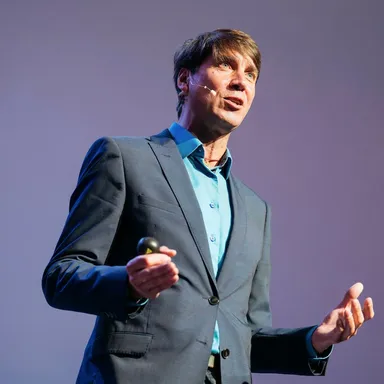
About the guest
Steve Judge
Steve Judge is an award-winning international keynote speaker, twice world champion paratriathlete, and the author of Don’t Lean on Your Excuses and GOLD. After a near-fatal car accident left doctors saying he might never walk again, Steve defied the odds – turning setbacks into stepping stones and becoming a two-time Paratriathlon World Champion, representing Great Britain on the global stage. His compelling journey from wheelchair to world champion and beyond now fuels powerful keynotes and workshops that inspire audiences to overcome barriers, unlock their potential, and pursue meaningful goals with courage and clarity. A TEDx speaker celebrated for his resilience-centred messaging, Steve has worked with organisations including Rolls-Royce, Toyota, NHS, HSBC and the University of Edinburgh, helping individuals and teams turn challenges into achievement.
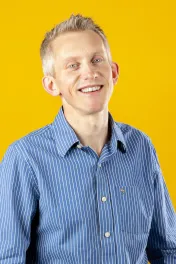
Hosted by Andrew Pain
Andrew Pain is a Mental Health & Resilience Keynote Speaker who speaks from lived experience on resilience, burnout and workplace wellbeing. Host of the Men on Show podcast, author of the book Honestly, Man, and a TEDx speaker. Member, International Coaching Federation, and Mental Health First Aider trained.
Never miss an episode
Candid conversations with everyday heroes – ordinary men doing extraordinary things.