Men on Show · Episode 59
Liberating Masculinity: why people pleasing pleases no one and how to stop it with Sam Adams
- 8 April 2026 .
- 35 min .
- Hosted by Andrew Pain .
Sam Adams is a men and masculinity coach and trainer with over 20 years experience.
Andrew hosts this podcast. His own keynotes are on burnout, resilience, imposter syndrome and difficult conversations.
Key points of the episode
- How he avoided conflict and confrontation.
- How he became a people pleaser.
- How he realised he was being inauthentic… and how he has worked through it. And his health has improved.
- How he learned to value himself.
- The key that is the breakthrough for most men.
- The 4 core emotions.
- Liberating masculinity.
- Masculinity's overreach historically and the healthy balance we seek.
- Why men are struggling.
Men on Show shares lived experience and honest conversation – it is not medical or therapeutic advice. If you're struggling, you don't have to cope alone.
Samaritans: call 116 123 (free, 24/7) NHS: 111
Full transcript
Read the whole conversation
A complete, verbatim transcript of this episode – every word is the host's and guest's own; the topic headings are ours.
Welcome to Men on Show, the podcast, Candid Conversations with Everyday Heroes. Join Andrew Pain as he interviews fascinating guests, ordinary men doing extraordinary things. If you love the show, and you think somebody could benefit from hearing it, why not tell them about it by giving it a share on social media? Oh, and at the end of the podcast, if you can leave us a five-star rating and a review, it really helps us more than you know, and it gets this important message out to more people that need to hear it the most. Right now, enjoy the next episode.
Hi, my name's Andrew Pain. I'm a host of the podcast Men on Show, and I'm delighted to welcome another esteemed guest to the podcast, Sam Adams, the founder of Liberating Masculinity, a trustee for the Association for Male Health and Wellbeing. He's a coach working exclusively with men with a passion for the outdoors and getting men out into nature. Sam, it is a pleasure to have you here today.
Yes, likewise, Andrew. Thank you so much.
Learning that conflict is wrong
Cool. So just when we were talking about the podcast and we were sort of exploring what we might talk about, you mentioned that you were someone that sort of as a younger man, you avoided conflict. And that's certainly something I can resonate with as a younger man. Just don't pack that for me, will you? Because I'm sure there are listeners here where they know whether it is their partner, whether it's conversations at work, whether it's maybe even their kids.
They know that they're in situations where they should say something, but they avoid conflict. So tell me, was there something in particular that happened that meant that you tended to avoid conflict, or was it just part of a natural characteristic at that time?
A bit of both. Certainly in my character, I'm about justice and balance, and I enjoy finding solutions. But let's jump straight in the deep end. In my childhood, there was a lot of conflict. It wasn't handled well. And as a very young boy, I was exposed to scary forms of conflict. So right there in a sort of traumatic experience of early childhood development, I was exposed to conflict being done badly. So I created a decision and a framing of conflict is wrong.
Deep down, right, I would be avoiding conflict on the surface, but underneath it, it was driven by this belief. Conflict is wrong. Conflict is evil. Conflict isn't okay. I should do everything I can to avoid confrontation and conflict and everything else linked to that energy of rubbing against and conflicting.
Becoming a people pleaser
Yeah, and I presume, therefore, I am presuming, so correct me if I'm wrong, but my recollection of when I was someone that would always avoid conflict, particularly in a former marriage, but I can't just blame my ex-wife for that because it was definitely in me anyway. For me, some of why I avoided conflict was I was a late developer. I went to quite a rough, comprehensive school and I was never bullied because I was really good at staying out of trouble and talking my way out of trouble.
So that trait was in me and then I married someone that was violent and abusive and it got worse. But what I found was, as someone that avoided conflict, what went hand in hand with avoiding conflict was being a people pleaser. That was absolutely in me as a trait. Did you find the same that sort of the one thing led to the other?
Read the rest of the transcript Collapse transcript
Yeah, I think so. And I think that's the case for many of the men I see and work with. We've avoided conflict. We think it's wrong to be a type of man who is dangerous at worse, is conflictual. So then what do we become in opposition to that? Something called the nice guy. Mr. Nice guy, people please is a key part of that. I would always put my opinion below others. What do my children want? What does my wife want?
Maybe a bit of work, but it's mainly in the family. What do others want? I wouldn't even ask myself what I want. I was so used to swallowing that idea of I'm important, or what I want matters. No, quite the opposite. I would be a kind, very kind, lovely bloke, but I wouldn't assert my needs.
Yeah. No, absolutely. I can definitely resonate with that. And so I suppose as a guy, someone who didn't really voice your needs, someone who was just really out to please everyone else and avoiding conflict, what was the practical impact of that on you as a man?
A mixed bag again. I think there was much benefit because I meant I had a lot of friends. People liked me. I was likable, popular. My career was able to move in certain ways. I did all right at school and uni. And I didn't have a lot of bad experiences in my teen years and early career. I was always dodging the bullets and just quite happy. I got married young, had kids, my first child when I was 30.
So things seemed to be going okay, at least on the surface. But why I say it's a mixed bag is because under the surface, I wasn't happy because I wasn't expressing what I wanted. If there was an inauthenticity about me. So bubbling away was what I would now call resentment. I resented myself ultimately, but it may have leaked out and blamed my children or my missus. Yeah, why can't I get what I want? Ranging from how the dishwasher's packed to where we go on holiday.
Loads of examples. I don't want to do our parenting like this. I don't want to manage our budget like this, but I never spoke up. So, yeah, I was unhappy deep down. I wasn't living the type of lifestyle that was right for me.
Boundaries and learning to value himself
Yeah, and I suppose it then leads to, and it certainly did for me, quite extreme levels of stress because I would agree to things that I knew were wrong. I would agree to things that I knew we couldn't handle. If my ex-wife had said we're going to buy a piano, but I felt we didn't have the money for it nor the space for it, why are we buying a piano? I would have just sort of nodded my head and gone along with it, but internally, I would have been tearing myself apart of how the hell are we going to be able to afford this?
Whereas today, if my wife said I want to buy a piano, I'll be like, where are we going to put it? Can we afford it? Should we go secondhand if it's really something that you want to do? It's not something I particularly want, but okay. So I feel like I've still got the ability to compromise, but because I know where I'm going much more, I voice my opinions without fear, it's taken a whole bunch of stress off my shoulders, because I don't get talked into doing stuff.
I will compromise, but I don't get talked into doing stuff I know is inherently wrong. Do you feel that's where you're at now? And if so, what's been the change for you? What's enabled you to get to that point, so you're no longer a people-pleaser and conflict-avoider?
Yeah, yeah, I've definitely moved through it. I'm glad to say and relieved to say. I just wanted to add one other thing in. The body manifests the unhappiness. It certainly did for me. I started getting migraines because I was constantly suppressing my agency. I started getting tension headaches, migraines for 15 years. And it wasn't until I worked some things out, which is where this question is moving towards, that my headaches stopped. And it took a long time, right?
15 years is ages. So what did I do to get to that place of expressing my voice, being willing to have conflict? I think the starting place for me, Andrew, was to learn to value myself. And to say, Oh, actually, I'm worth something. Deep down, there was another voice, like a demon on the shoulder, saying, You're not worthy of saying your opinion. You're not worthy of participating in an adult dialogue around a piano or a dishwasher or holiday planning.
So I had to do forms of therapy and group experiences, coaching, healing work to understand, actually, I'm worth something. So because I'm worth something, I'll put my neck out. And I'm willing to take the risk of a bit of conflict because that is inevitable as we work through life. And it's worth it because I'm worth it.
Yeah. Interesting. Yeah. I suppose for me, I had a wake up call when I got divorced. In the, it was the best decision to be made. I was married to someone who was violent and abusive, and now I could start again. But I didn't want to be someone that just repeatedly got married and got divorced. I want, and I realised for me, and I wanted to sort out some level of how I do boundaries as a person.
And where I got to with that was that it's okay to roll over on certain things and be really almost flimsy on certain things. Because it's good that you have an easygoing side. You don't lose that. But also I need to be flexible, but not a complete pushover. And it's okay sometimes to put your foot down a little bit, compromise, but you'd not roll over anymore. And then it's okay also to be absolutely rock steady rigid.
There's nothing wrong in being rock steady rigid and saying this is how it will be. No thank you because of this. Yes, I will do that. And then you follow through because you're rock steady. And for me, understanding that you need those different types of boundaries kind of helped me. It was okay as long as I've got a suite of those boundaries. Actually, that's what makes someone dynamic and interesting. And for me, being able to practise that outside of an abusive marriage and just starting again really helped me.
And it kind of then fed into work and things like that. How did you, I want to talk about liberating masculinity in a moment. You talk, for you, it was about you learn to value yourself, which I get that, and that's really important. I suppose I did as well through thinking through my boundaries. That was a really important part of it. I suppose there could be some listeners saying, well, that's great. I learned to value myself.
I kind of know that, but how do I do that? How do I make a start to learn to value myself? Maybe there's someone listening that they know there are people, please, are a conflict avoided. They want to change it. They recognise they don't value themselves. Maybe they're really here. What you're saying, they feel, well, that's kind of me. How did you learn to value yourself?
Four core emotions and a scorecard
There are different ways to get to that point. And I think the key one that most men seem to benefit from is developing an awareness of self. So generally, stereotypically, men are less connected to their internal world, their emotional world. We're external. So we'll get frustrated with the dishwasher or the budget or the how something beyond self. What I invite men to do is slow down a bit before getting angry or blaming or switch changing for your game in or reaching for your phone is take a breath, have a pause.
How am I? And then learning about yourself by generating an emotional vocabulary. Then you know what you're dealing with. It's almost like doing an analysis at work, doing a risk assessment or something like that. Do an audit of your well-being. Then you can work with that. So I teach four core emotions. A lot of men haven't been taught emotional literacy. So there's the whole spectrum of grief, sadness, despair. There's a whole spectrum of anger, rage, frustration.
There's a whole spectrum of fear, anxiety, nerves, butterflies. And then there's a whole spectrum of joy and fulfilment and satisfaction and happiness. That's a starting point. If men can connect in with this internal landscape and understand themselves better, that helped me massively. I was emotionally illiterate for the first couple of decades of my life, and I had to learn some of those skills to help me then value myself, get over those migraines, and eventually build a happy new relationship.
I love that. I love your four spectrums and the way that you've kind of just outlined that. Just as a point of... You could have someone listening to this thinking, well, I'm going to take 10 minutes out each week, but where do I start? What am I going to think about? Like, you've given there a little model of that spectrum, maybe learning, thinking about, well, where do I experience these emotions? What do I exhibit when I experience these emotions?
Just that as a starting point. I think, for me, I wish I'd had that, actually, at the time, because it sounds really useful, that spectrum. For me, it was about literally thinking about, well, what am I good at in terms of my traits and characteristics, but then within them, I suppose, there's a blessing and a curse. I talk a lot about blessings and curses. So for every skill that I have, how does that benefit me, and how does that help the wider society?
But also, what's the flip side of having that skill? And that helped me just to start, and understanding is a process. You don't just learn to value yourself in one aha moment on a campsite somewhere overnight. You might have a good feeling. It might be a good thing to go away and make a start, but it's a bit of a process and a journey, isn't it? It's gonna take some time. But starting to think through, either using your emotional spectrum, maybe just even as simply as thinking about your skills, but understanding that within them, there's blessings and curses. That's presumably at least a starting point.
Absolutely, both of those. And if there's a man listening who likes the emotional spectrum, I invite you to do a weekly or daily score card out of 100. What's your joy score? What's your fear score? What's your anger score? What's your grief score? Weekly is too much, because emotions change daily, sometimes faster than that. So it's in that moment, where am I on this matrix of emotional? And then knowing yourself, the second step, Andrew, where I went with this whole bigger process, because it's not simple, it's a bigger journey to value oneself.
We're overcoming things that we should have got in childhood. We should have got so much more love and bespoke care that was right for us. Our parents did the best they could, but our parents always inevitably let down their children. And that's trauma. I believe trauma is universal. Every human has trauma, because we come from parents who did their best, but in a way let us down. The emotions that I'm talking about in this matrix of emotions are windows towards something that needs a bit of attention, like physical pain.
I'm feeling some emotional pain. Let's call it grief. I'm feeling depressed. That's a form of sadness. That's a window to something that isn't working. Like my migraine, to a window to something. At first, I thought it was dental because it was in my mouth. Then I thought it was optical because it was in my eye socket. Then I went to a sports masseuse and a chiropractor. Eventually, the window I realised was in my psyche, my soul, and I had to talk it through with a therapist to realise, ah, through the window, I can see some unhappiness.
I don't value myself. Let me try and fix that. And there's hundreds of ways to fix that. But that was the starting point, knowing myself through those windows of emotional intelligence.
What liberating masculinity means
Interesting. So talk to me about liberating masculinity. You're the founder of liberating masculinity. I suppose to me there's two questions there. One, what does the phrase mean to you, liberating masculinity? And two, what is it? What's the purpose? What do you do? What does it achieve?
Yeah, so quite simply the two words, liberate is about freedom and permission. It's about stepping away from restriction, oppression, the confines or jail. Masculinity is a form of being to help us understand ourselves. It's in men and women. I believe stereotypically it's in, there's more of it in men. It's about wanting to fix things. It's about order. It's about structure. It's about control and clarity. It's about precision. So many of those masculine and often male traits have been oppressed.
Not forever, by no means, because in the past, it was quite the opposite. Masculinity went too far. It overreached. And what we had was systems of complete control, colonialism, slavery, the Industrial Revolution and the Enclosure Act of the 18th century, destroyed communities, destroyed the fabric of society, broke up families. That's the overreach of masculinity. So today in 2026, what we have is a negative reputation or concept of masculinity. We think, I believe in our Western society, that masculinity is inherently wrong.
So we then prefix it with words like toxic. What that does to the average bloke, and part of our early years is growing up thinking, something's wrong with me, something's wrong with my instincts. So we suppress them ourselves, as well as are given messages through the media and education that it's wrong to be masculine. In response to that, we end up being quite nice guys, quite feminine guys, soft, fluid, conflict avoidant. So liberating masculinity tries to address that imbalance and say, yeah, it's good to be to have softness and trust and surrender and go with the flow and be flexible and dynamic, spontaneous and generous, and also be masculine.
Let's be both. So I want a mature masculine conversation with a mature, healthy opposite, which we could call the feminine. Let's have both of these in equal measure. That's, for me, healthy individuals and healthy society.
What Liberating Masculinity offers
Thank you. I love that as a description. So tell me, what do you do? What's the purpose of liberating masculinity? Where are you going with it? Why do you set it up? Tell me about that.
So this business I've built just in the last couple of years, I've been doing the work on and off for 20 years now, Andrew. It's my anniversary, so I'm celebrating that. And this latest iteration, liberating masculinity feels like the sharpest edge yet. And I exist to equip other men with tools, practical tools that would have helped me 20 years ago. When I made mistakes relationally, sexually, financially in my early career, coming out of school, university, I wish I had tools to give me permission to be in my masculine as well as in my feminine.
So liberating masculinity is like a tool provider. I run courses, training, I write, and I speak about these topics that are practical tools, say a praxis of identity, so men can understand, ah, I give myself permission to try this a bit. How can I do conflict well? How can I parent better? How can I be more disciplined and put down social media and get on with my task list, finish decorating the bedroom? Whatever it is that I've been procrastinating about, masculinity is the thing that could help with that.
Discipline, drive, perseverance. So that's the business. Yeah, we run events, coaching groups, free events every quarter. I've got one coming up at the end of March. Men gathering to talk, unpack these ideas, to give permission to be masculine together.
Why men are feeling lost and struggling
Amazing, amazing. So, so that I understand it, so that anyone listening, thinking, actually, I could do with some of this, you are teaching men skills to help them navigate life, really, as men, whatever it may be, whether it's social media issues and procrastinating, whether it's parenting, relational issues. So, you're giving them specific skills and tools to help them as men. You're doing that through coaching groups, which I presume they pay for. You're doing it through some free events, where presumably they come along for free, and some of them may join the coaching group, or maybe not.
The events that you do. And when you're coaching men, obviously you work exclusively with men. What are men saying to you? Do you see a common trend, or a few common trends, as to why people get in touch with you and get involved, either at one of your events or through your coaching programme? What's the kind of message you're getting from guys at the moment?
Everyone's got their own unique story, and I like to emphasise that there's more than one way to be a man. I'm not here with the prescriptions, and this is the only way. It's unique for you. But if I had to draw a trend, it is men are feeling lost. If life is a journey, let's use that analogy, navigating through the ups and downs, marriage, divorce, children, employment, redundancies. There's so many ups and downs, and we really understand that when we reach midlife.
When I work with late teens, younger men in their 20s, there tends to be a bit more of a naivety. Everything's possible. In our 30s onwards, we realised that's not true. Things are not going the way I wanted them to. My career, my relationship, my dreams are suffering. So there's often a pain point there. A man's going through a transition. Career, relationally, those two are common, but it might be age. I'm turning 30. I'm looking at my next decade.
I'm turning 40. I'm turning 50. I'm building up a bucket list. Time's running out. I'm on my second marriage. I can't see my kids. I'm estranged from them. So something has happened, and he is missing where he was, and he's not sure how to get back there or to overcome the hurdle on his journey. So he's looking for some support. It might be just some new mates. He's looking for some practical tools that we've already talked about, and he's looking for some hope.
Is there any hope for life? Because it can feel hopeless. Economically, politically, things seem to be going to shit. So my work and many other men doing this work are offering a sense of hope and possibility to overcome personal and collective challenge.
So men are feeling, you use the term there, feeling lost. Why, if you could sum it up in a minute or two, with anything like that, that's a big statement to make. So there's not going to be one reason alone why men are feeling lost. But do you think for you, are there some key things? Because immediately I'm thinking, well, if men are feeling lost, how do we help them to feel found? So in order to do that, we've got to understand why they're feeling lost and what we can do about it. What are your thoughts on that? Why are men feeling lost? And how do they get found?
So this is a metaphor. I don't think many men are really saying, I'm lost.
I understand. Yeah, but in terms of why they are struggling, maybe, maybe that's a better word. They feel that they're struggling. Why are they struggling?
Yeah, the lostness is my angle on it, my analysis. Sure, sure. So yeah, men are struggling because we haven't been shown the way. I believe in past generations that were decimated by the industrial revolution and this urbanisation that destroyed the fabric of rural society. We were shown the way by the grandfathers and the grandmothers. They would be rites of passage to say, you were a boy, now it's time to man up and become a man. Upgrade version two of self.
That doesn't happen now. It is bypassed. So you have to become an adult quite young. I certainly grew up too quickly to cope with certain things. Or we never grow up and we become some boys in men's bodies. So if there was a rite of passage, that would give a framework to create meaning. And if someone's lost, what do we need? We need a compass or a map. We need a practical tool to help us find our way home.
Home being valuing self, home being happiness, joy, home being a sense of stability and regulation of the nervous system. So these tools of masculinity, these personal development and well-being events offer a compass to help a man navigate. It's not a fix, but it's a tool that can then, he can then keep working with that tool. I can keep navigating my life. I've got a compass.
Where the conversation on men is going
Great. That makes sense. Thank you. That's really, really helpful. And what do you think about the future now for men? We've had a huge amount of discussion about men, certainly over the last year with, of course, the Netflix series Adolescents, Gareth Southgate's outstanding lecture on why young boys in particularly struggling the launch of the men's health strategy. We've even had Lord of the Flies come through. I'm not a fan of that book at all for a whole host of reasons. But where do you think the conversation is going for men, and where does it need to go to create the best outcomes for men and boys?
I'm encouraged, Andrew. I think things are going better than they have done for the last 20 years. There's a mainstreaming of men's personal growth. It's becoming much more common. Thousands and thousands of men are now meeting weekly to practise a check-in. How are you feeling out of 10? This is great. It used to be a fringe thing, very fringe, alternative healing circles, slightly hippie. Now it's much more like, oh, how are you doing? Yeah, I'm all right.
I'm able to use a bit more emotional literacy than my father could. Yeah. Where I want it to go is it keep mainstreaming, it becomes much more a normal part of being a man. But it doesn't stop there because at worst, we can become quite egocentric, hedonistic, just it's all about my feelings. My wish is that that emotional intelligence, then, is catalysed, alchemised into action. I know how I feel. I've taken care of my feelings. I'm doing all right, actually.
I'm quite stable. All right, so what am I going to do out there in the world? How can I build an ethical business? How can I make money to provide for my children? How can I make a bit more money? How can I care for my neighbour who's isolated and lonely? How could I contribute to a local volunteer organisation or a global issue? Environmentally, politically, there's conflict out there. So we start by looking down at self, sort out my emotional challenges, then lift the chin up and look beyond self. What action am I going to take out there in the world? That's going to create a legacy that's better than the one I got.
Yeah, no, I love that. I'm a real firm believer in the gift of having individual choice, which comes through being alive and having choices. And you could say, well, I'm privileged, so I've got more choice than those that don't have a privilege. That's absolutely right. But there is a gift. We have individual choice, but we also have community responsibility. And so in making my individual choices, for me, it's important to balance that. You have to find that balance for me.
So I love what you've said. That's resonated. If you could give a two-sentence message of encouragement to those listening to the podcast, it's been a really interesting conversation. The work you're doing at Liberating Masculinity is amazing. I'm going to get you to, in a moment, to say how people can find you and get involved with that work. But if you could give a two-sentence message of hope to those listening to the podcast, what would you say?
Finding Sam, and a last message
I would say your masculine instincts are not wrong. Your masculine instincts are quite the opposite. They're good, healthy, needed, essential, valid aspects of being human. And the world is calling out for healthy masculinity. Women, children, the planet needs boundary keepers, needs people to protect, to bring control and order and temperance to the sins of the past. Let you be the man who can change the narrative around masculinity, because the world needs it and it's in you already.
Amazing. I mean, what an amazing way to end the podcast episode. Completely inspirational and fantastic quote to wrap this up. So before we end the podcast, I'm sure there'll be people listening to this that wanna get involved, that wanna get in touch with you. So whether it's your coaching group, whether it's the outings, the events that you do that are free, whether it's getting in touch with you on LinkedIn or wherever that is, how do people get in touch with you? Just tell us, that would be really helpful.
Yeah, quite simply, liberatingmasculinity.com. And that takes you to all sorts of links for my free monthly events, social media. I'm quite quiet online, but there's the gateway, liberatingmasculinity.com.
liberatingmasculinity.com, love that. Okay, so you know, anyone listening to this, get in touch with Sam, doing some incredible work. Sam, thank you for giving up your time for this episode. It's been an absolute pleasure having you on the show.
Thank you.
Thank you for listening to Andrew Pain's Men on Show. If you could leave us a five star rating and short review, it would be really, really appreciated. It helps us get this important message out to more people that need to hear it the most. See you on the next episode. Thank you for tuning in.
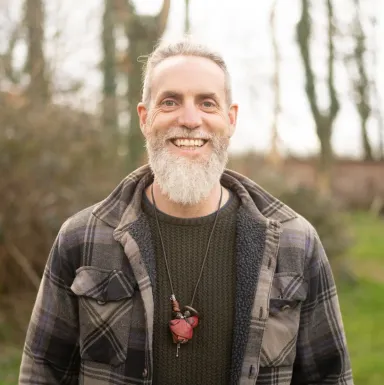
About the guest
Sam Adams
Sam Adams is a men and masculinity coach and trainer with over 20 years experience. He runs regular events to support men to develop the tools they need to navigate life's ups and downs. Sam is a father, based in Somerset, although spent much of his childhood in Africa. He is passionate about healthy masculinity and also runs a local garden landscaping business.

Hosted by Andrew Pain
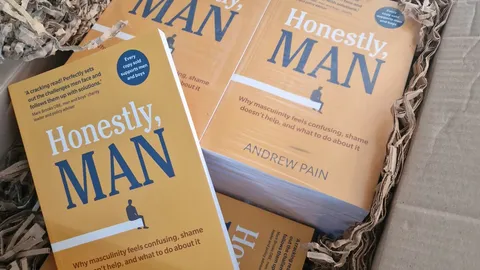
Andrew Pain is a Mental Health & Resilience Keynote Speaker who speaks from lived experience on resilience, burnout and workplace wellbeing. Host of the Men on Show podcast, author of the book Honestly, Man, and a TEDx speaker. Member, International Coaching Federation, and Mental Health First Aider trained.
More from Men on Show
Keep listening
Never miss an episode
Candid conversations with everyday heroes – ordinary men doing extraordinary things.