Men on Show · Episode 55
The Relentless War on Masculinity and How to Stop It with David Maywald
- 11 February 2026 .
- 51 min .
- Hosted by Andrew Pain .
David Maywald is father to a son and daughter, husband, board member, volunteer, author, and passionate advocate for boys and men.
Andrew hosts this podcast. His own keynotes are on burnout, resilience, imposter syndrome and difficult conversations.
In this episode
About the conversation
Here are links:
David Maywald at LinkedIn: https://www.linkedin.com/in/davidmaywald/
Personal profile at X: https://x.com/DavidMaywald
YouTube channel: https://www.youtube.com/@davidmaywald4173
David Maywald’s book The Relentless War on Masculinity is available from these distributors (and others): https://books2read.com/trwom
Amazon product page for the book: https://www.amazon.co.uk/dp/1764339703
The book has over 100 five-star ratings across Goodreads, Amazon, and other readers: https://www.goodreads.com/book/show/244119645-the-relentless-war-on-masculinity
Celebrating Masculinity at Facebook: https://www.facebook.com/CelebratingMasculinity/
Substack for Celebrating Masculinity: https://celebratingmasculinity.substack.com/
TikTok videos: https://www.tiktok.com/@celebratingmasculinity
Or Google "The Relentless War on Masculinity"
Key points of the episode
- UK Vs Australia, who is further ahead in a balanced debate on men's well being.
- The remaining pockets of resistance in Australia.
- The momentum behind writing the book.
- The second wave of feminisation.
- The mixed response to the book.
- The 4 Horsewomen of modern feminism.
- Some forward thinking parenting tips.
- Gamma bias- what is it?
- A beautiful philosophy .
Men on Show shares lived experience and honest conversation – it is not medical or therapeutic advice. If you're struggling, you don't have to cope alone.
Samaritans: call 116 123 (free, 24/7) NHS: 111
Full transcript
Read the whole conversation
A complete, verbatim transcript of this episode – every word is the host's and guest's own; the topic headings are ours.
Welcome to Men on Show, the podcast, Candid Conversations with Everyday Heroes. Join Andrew Pain as he interviews fascinating guests, ordinary men doing extraordinary things. If you love the show and you think somebody could benefit from hearing it, why not tell them about it by giving it a share on social media? Oh, and at the end of the podcast, if you can leave us a five-star rating and a review, it really helps us more than you know, and it gets this important message out to more people that need to hear it the most. But right now, enjoy the next episode.
My name's Andrew Pain, host of the podcast Men on Show, and I'm delighted to have David Maywald here, who is the author of The Relentless War on Masculinity, Will It Ever End? That was published in November last year, so I'm really interested to unpack some of the key strands of that book. And also, Dave, I actually think you're the first Aussie I've had on this podcast who is resident in Australia. So I definitely want to get your take on how things are out there when we think about masculinity and some of the discussion around gender. So I'm really excited to have you on the show. Thank you for being here.
It's great to be here, Andrew. I love getting your videos and your content. I'm sure you've got plenty of fans down under. I wouldn't be the only one residing down here. And I think you're right. I sense there are some pretty substantial differences between Australia versus England and the UK. I'd probably say we're a few years behind in terms of having a sensible, measured balance debate. I get the sense that there's probably a bit more entrenched institutional gynocentrism here in Australia, and that we need to look to England and some other parts of the world.
Balanced debate in the UK and Australia
It's interesting, because obviously we see some headlines over here from Australia that seem quite extreme. I mean, I do see a similar theme here in the UK, but I think there's a more organised pushback. So for example, for listeners, the headline from the Australian press a few years ago, I know they were talking about it on Sky News and a few others, where there was the bold statement of, how do we stop this kid becoming a monster on a photograph of a nice 11-year-old boy?
And of course, there was some pushback that I picked up on in Australia, but I mean, I'm staggered that that was published. I can't see that would be published in the UK now. And we had that incredible story a couple of years ago, at a mixed secondary school, or however you term, my view of secondary school is kids, we go into secondary school from the age of 11 up to sort of 18, but where they were made to stand up the boys and apologise to the girls in the assembly for all previous historical abuses and injustices.
And again, that story made it over here. And we do have a situation now where, partly because of Adolescence and Netflix series, there's been a bit of a knee-jerk reaction. So we have things like teams going into schools to tackle the scourge of toxic masculinity and misogyny. But actually what I see are teams going into schools, talking to boys in a balanced way about masculinity. And I think there's enough organised groups here on the ground calling for balanced debate.
Do you feel that that is lacking in Australia? Do you have that coordinated response? Or do you find that the groups that speak up for men and boys are quite disparate?
Well, my view is that those two examples, the front page of the West Australian and that example from the school are somewhat extreme and not necessarily representative of the broader community, particularly amongst parents and amongst sensible centrist people in Australia who love equally their sons and daughters and want boys and girls and young men and young women to have opportunities. There is a part of the media and parts of government and parts of universities and education that are quite heavily progressive and that are feminised as well.
If you only listen to the vested interests and some of the groups that are clambering for government money, yeah, they're not necessarily representative of the broader population. So yeah, I guess I don't want to draw too much from some of the examples we see coming out of the UK because I don't think we always see what's typical or representative either. We tend to see the extremes.
So when you say maybe that you would look to the UK or that maybe Australia is a couple of years back, where do you see the differences there?
Read the rest of the transcript Collapse transcript
I'll give you the example of International Men's Day, which has really taken in the UK, for example, to have a hundred or so advocates at 10 Downing Street on International Men's Day for a reception. I just can't see that happening here in the next five years or so. We do have a national men's health strategy. Which goes back to 2020. It covers the decade from 2020 to 2030. But it really needs a lot more work in terms of implementation and funding and rigour to see that delivered.
Because we do have a bureaucracy that, like I said, is quite feminised. It's quite focused on female empowerment, and not really that interested in boys education, and the substance of men's health, addressing suicide prevention, and so on. The other things I'd point to, the Center for Policy Research in Men and Boys, and the work of the All-Party Parliamentary Group on issues affecting men and boys, and those four reports that were issued going back a couple of years ago, they were phenomenal.
I've shared those with many people, not just in Australia, but in other places, and pointed them to them as being exceptional policy work, where there were consultations with stakeholders, with experts, where there was real attempt to gather evidence and craft policy that was acceptable to the centre. It wasn't extreme policy, it was pretty basic stuff like schools should be boy positive as well as being girl positive. I mean, this isn't radical stuff, it's pretty basic stuff about, okay, if you're going to deliver health services, let's deliver services that men want to engage with, that they can engage with.
Let's deliver suicide prevention that's targeted to the most vulnerable and highest representative groups. So, like I said, I've shared those APBG reports, I've referenced them and spoken to them many times. And I think we're still a few years away from getting a peak body like the CPRMB established in Australia.
Men's networks and resistance from HR
Yeah, and it's interesting because obviously clearly there's the right policy work going on. From what you've said, what's representative is most Australian people in the sense would not be thinking, you know, would be quite, would be very critical of the quite extreme examples that we started this conversation with the boy in the press and the apologising in school. So it feels like to me, from what you've just said, the foundations are absolutely there for you on International Men's Day to have a hundred people invited to be a real thing.
I wonder whether it is just that issue of a little bit more time. I mean, International Men's Day, from my understanding of it within the UK, hasn't just sort of taken off out of nowhere. It's grown and grown and grown. And it is becoming a much bigger and bigger thing. As a speaker, I'm really busy on International Men's Day. And if you look at the amount of organisations doing something or other, sometimes it's getting a speaker in, sometimes it's just buying cakes for the men in the organisation.
But when you look at the amount of organisations that are looking to market in some way, it's like 800, 900 really decent size organisations. So to me, it feels like there is a bit of a momentum within the media, on social media, within businesses and organisations, which I think is really important. I'm seeing more and more organisations saying, oh yeah, we've got a men's network. It's just started. We had a women's network for years and we wanna match that with a men's network. But you feel you're just behind that curve at the moment. Like so in organisations in Australia, would you know whether there is that same push for men's networks?
Probably not. The best expert to talk with. Someone like Ragony, he interviews regularly. Would be able to speak to that much more fluently. My sense is that it's the real exception and rarity to have had that. There has been, within, say, construction and some of the typical male-dominated sectors that have high suicide, there has been work done, really good work done, listening to consultants, having sessions, thinking about targeted responses. But once you get into the CTV corporates, to government, to, like I said, universities and others, you'd be brave to suggest a group for, you know, for men or a men's group or other things.
In some cases, I've heard those being laughed off. You know, I've heard really deep resistance from HR. And like I said, most of those organisations are still in female empowerment mode and they haven't got to the point of genuine equality for gender equality. They're still focused on the female half of gender equality.
What prompted the book, and gynocentrism
Yeah, and I do think there is this notion, which I firmly believe in, that we can continue. There are, of course, injustices and disadvantages that women and girls face, and we can continue to work to address those, whilst also looking at some of the injustices and disadvantages faced by men and boys. One of the loveliest organisations I worked with last year is a big furniture manufacturer, and they've got a very vibrant, active women's network. And they're doing work with their men now, all of it initiated by the women's network, saying, why have we got a network and not the men?
The men need a network, and it's been really initiated. The men are now saying, oh, that's great, actually, we will do something. But it's been initiated by passionate women wanting to be allies for men. And that's a wonderful, wonderful thing to see. So let me just talk a bit about your work. For listeners that are unfamiliar with your work, was there some kind of thing that was the catalyst for you writing your book that came out last year? I want to talk about a few of the themes in your book. What prompted you to write that book?
So I've been passionate about the education of boys and young men for 30 years. And I was blessed to have a son and a daughter just under a decade ago. And then I finished a 20 year career in investment management in finance. And I was in a position where I could sort of redirect into another field. I took up a couple of board roles doing delivery of services in nonprofits and community space. And I was hearing a lot of things in conversations one on one where people were sharing their thoughts and feelings and they were talking about their concern for their sons in school and the concern that health services weren't adequate for the needs of males.
I was hearing about suicide prevention in different spaces. But a lot of those people just weren't able to speak up publicly. They'd say things quite happily over coffee, but they'd never say that on stage or comment, say on social media to say the same thing. And it became clear to me that there was a big gap between the private discourse and the public discourse. And I was just in a fortunate position to be able to address those issues, talk about some of those discussions without being vulnerable to be targeted.
And I felt the obligation actually to do that because there were so many men in particular who were sitting on heartfelt stories and strong opinions that were evidence-based and they were being cancelled and they weren't being listened to. And like I said, to help Australia catch up and move to this positive social outcome quicker, I felt an obligation actually just to get in the space and put some of this stuff out there and prompt a bunch of conversations, which it has successfully done by writing the book. Yeah.
And you talk about how you've moved from androcentrism to gynocentrism in Australia. Just for people listening, thinking those terms, I feel like I know what they mean, but what do they mean? Talk me through how, number one, quickly what those terms mean, but how have we shifted from one to the other? What's the reality of that in life in Australia?
So, andro refers to male and gynoc refers to female. So, androcentric is centred around the interests and preferences of males. Gynocentric is centred around the interests and preferences of females. It's sort of like a mindset. So, if you think back to the start of the 20th century, when a lot of countries were expanding the franchise to women, and then second wave feminism after World War II, there were huge changes there in opening up education, careers, professional opportunities, equality of pay, discrimination, and so on.
That shift took us from androcentric state in most of the English speaking in Western countries. In my view, it took us to close to equality in the 1980s. And interestingly, in the 1980s, it was when quite a few university systems pivoted from being male dominated to female dominated. So in 1982, women outnumbered men in US colleges for the first time. And since then, it's just been a one way street. In Australia now, there are 64% more female graduates than male graduates.
And it's four decades into this era of feminisation in a university system. Now like parts of the UK and parts of the US, young women in their 20s earn more per hour than young men in their 20s. So the second wave of feminism has been incredibly successful. It took decades and it eventually got there. And I think you were alluding to this before about International Men's Day. It's not just overnight. I mean, this is incremental. Each year builds on the last year and it expands and broadens and deepens.
So over time, you know, we went from what I saw as equality in the 1980s to what I refer to as cultural gynocentrism. So broad spread preferences for girls and women making the parts easier, opening up education and pathways into careers and encouraging financial independence. And then in the last 10 or 15 years, my sense is that it's hardened into what I refer to as institutional gynocentrism. So this is changing the laws, making appointments, changing the mission statements of organisations to be anchored around female empowerment, to have dominance of executives and boards that are very strongly committed to that as a mission for their organisations. So that's where I think we are now. And the book is a prompt to ask, will this continue and for how long?
How's it been received, would you say? Quite well.
The book's reception, and writing for parents
I thought there'd be a lot of negative pushback and there has been some, you know, some nasty reviews and other things. But actually, the Overton window has shifted a lot in the last 12, 18 months. And instead of really sharp nasty personal attacks, there's been quite a lot of thoughtful engagement. I've had lots of five star reviews as well. Lots of really thoughtful responses from mothers of sons. And from grandparents as well, both grandfathers and grandmothers.
And obviously, a lot of men have welcomed the book because they have thought and felt many of the things that I'm articulating. And particularly, I've given a voice to a broader perspective, not just one or two grievances, but I've really tried to put this together into a overall narrative and come up with solutions, recommended changes that we can make for education, health, suicide prevention, relationships and so on.
Yeah, and it's a lot. The questions are complex and there's so much to that topic of masculinity. And I found, my book comes out this year, that the challenge of creating something that's easy to read, because if it's too academic, you're massively narrowing down the number of people that are going to read it. So it's got to be readable, but then you are going to get criticism from academics saying that you've simplified this and you've simplified that, but also trying to cover the really important things, but there's so many of them.
But to do that, you've got to go into some depth, but you can't skate over these things, but what do you miss? It's been a real challenge trying to really kind of hone down on the key points. Did you find that a challenge yourself?
It did, because my natural inclination is the research and the analysis. So I put down over 100,000 words in my first draft, and I looked at it, and I realised I've been writing a book for me, you know, for my predilection to go into that detail. But I got some really wise advice from a multiple published author, and it really convinced me to frame my book for busy working parents, because me and my wife, we have jobs and board roles, and the kids and everything else.
We just don't have time to read a dry 400-page book. As much as I love Ben Hines' book, you know, it comes from an academic perspective, it has a narrow audience, like you say. After, you know, going to great detail, what I realised was I needed to really simplify and distil and have a narrower scope because I wanted to have more impact than just a narrowly read book. And I wanted people to better read it within three hours, you know, to pick it up and not have to labour through it for weeks and weeks.
So that was the audience I was thinking of. It was the busy mum with kids, the busy dad with kids, the busy working parents who are pretty tired at the end of the day. And they're going to struggle, you know, with chapter after chapter of really dense, heavy text.
The four horsewomen of modern feminism
And we'll come back to the parent thing shortly because I'm interested in your, obviously, passions around boys education as well. You are a busy working parent, so I want to get a few top parenting tips from you. But in the book, you described the four horsemen of modern feminism. Tell me about those four horsemen.
I go on the four horsewomen.
Four horsewomen, of course, yes.
So it is a play on the classic line. The four are misandry, gamma bias, gynocentrism, and gaslighting. And I guess when I was thinking about why hasn't the men's movement taken off, why has third-wave feminism, fourth-wave feminism, why has it been such asymmetry, such longevity to the women's movement, to female empowerment, to feminism? I was peeking out these common tactics and behaviours and traits that were really pushing back against men, even being able to speak. And it's really interesting in the press in Australia, misogyny always gets talked about.
There's always misogyny this and misogyny that. And as soon as you ask a question about the gender pay gap, you're a misogynist yourself. I mean, it's always misogyny, misogyny, misogyny. There's very little recognition of misandry. But when your eyes are open, you see it everywhere. And when you ask the objective question, how much misogyny is there in comparison to how much misandry is there, there's a lot of both if you go looking for it. I see men being triggered by misandry all the time.
We've got some real characters in the Australian scene who've been big perpetrators of that as well. Gamma bias is one that you might be familiar with. It comes from Martin Seeger and John Barry. It's a hypothesis. It's a hypothesis about different reactions and responses to exactly the same behaviour when there's a male protagonist versus a female protagonist. They expand it to have this aspect of magnifying or minimising. If a woman does something good, that will be magnified to all women do good things.
And this woman always is a positive character. Whereas if a man does something good, it will be minimised. It will be odd up with the exception or most of the time he doesn't care about other people. So it's a question about whether the perception changes when the sex of the protagonist changes. So if you can't decide your response until you know the sex of the protagonist, then it's highly likely that you're displaying gamma bias. If you're completely neutral to the sex of the protagonist and you judge people exactly the same, regardless of their sex, then you will have very little gamma bias.
So what it proposes is we can measure this. We can differentiate between people or organisations that have very large gamma bias, where they see a big difference between male and female protagonists, and we can identify individuals and others who have a very narrow gamma bias. So it's a very interesting observation, and I sense that often.
Gamma bias and misandry
Coming back to the gamma bias, I suppose it's a little like in the press over here in the UK, if a male teacher, let's say he's in his 30s, a married male teacher has sex with one of his 15-year-old students, it will be called out for what it is, and it will be a monster, it's rape, it's abuse, and those words will be very clearly used. Whereas if it's a female teacher having sex with a 15-year-old student, the headline will just be that the teacher had sex with a 15-year-old student.
In some cases, in some papers, it will almost be described as almost as doing him a favour kind of a thing, but it would be treated, it's the same crime, but treated very differently, very different language. I suppose that to me is sort of indicative of gamma bias. And the other thing for me is this, and do correct me if I'm wrong, this sort of almost refusal to play at the really good behaviour of men, if you're talking good and bad behaviour, but unlike the example being for me when the British cave diving, some of the best cave divers in the world went to Thailand at great risk to themselves to rescue those boys trapped in a flooded cave.
It was an all-male team, but you're never going to see a headline around manpower, these men do, these men can. There's no reference, I mean, the story was covered, of course, but there was no reference made to the fact that it was an all-male team. And so for me, that's gamma bias, where, yeah, so the good stuff is kind of underplayed, that it's male. When it's bad, it's really beefed up. Is that, that's your reading of it?
Yeah, that's right.
Yeah, yeah, interesting. And what are the other two? You mentioned as well, the first one being misandry, where obviously misogyny is where language behaviour that is hateful towards women. Misandry is language or behaviour that is hateful towards men. And the pushback that I get is that, yes, misandry exists, but it's not as damaging as misogyny. When we look at the number of females killed by male perpetrators, that's misogyny driven. Misandry doesn't kill anyone, will be the usual pushback that I get.
And we had an interesting case. I don't know if you followed this. Labour politicians here in the UK several years ago tried to put forward a motion that would see misogyny as a formal hate crime. But there was no mention of misandry. Now, that in the end, at the time we had a conservative government in power, they kicked it out, not due to any other reason, that they just felt that it would be difficult to police it.
But what my view was, if that got through, then technically if an 18 year old boy mouths off something hateful, an 18 year old girl at college, he could be charged with a formal crime. But if it came to light that it was preceded by her mouthing off some hateful misandry stuff, she would be okay. She would be all right. She might get a little, we maybe shouldn't have done that, but he would face a formal crime. So for me, real lack of equality there, that potentially misogyny was going to be a formal hate crime, but misandry wasn't even part of the discussion.
We know from surveys and other evidence that there's lots of online and offline abuse and bad behaviour by girls and young women towards boys and young men. You know, on that point on misandry, there are some very passionate advocates and activists in Australia who believe that the high suicide level for males is a response to misandric legal system, family courts, to gynocentrism in institutions and so on. And it's one to two orders of magnitude higher than women being killed by intimate male partners.
It's, you know, it's two and a half thousand versus fifty or a hundred. Like it's much, much higher. So it depends on whether you're talking about direct or indirect and systems versus individual violent actions, because we know that men are stronger. So there is always going to be a difference in violent crimes, because there's such a big, big, big impact. So, yeah, I think there are lots of different ways that conversation could, could sort of have pluses and minuses or think about different perspectives to it.
Gaslighting, the pay gap and male victims
So we've got Miss Andre, we've got Gamma Bias, we've got Guinness Centrosome, and the fourth horsewoman. Just tell me briefly before we start talking about parenting and the way forward and happier things, let's just tell me how do you see the gaslighting being played out?
Most people know about being gaslit and gaslighting, and I think some women's groups have done quite a good job of describing how women and girls in some cases have been gaslit themselves. But a lot of people haven't really turned that around and thought about how boys and men have been gaslit for decades. For example, I was talking about the responses to questioning the Gender Pay Gap. Well, this is a sensible discussion and arguments to be had about how you calculate the difference in financial value placed on different types of work.
We got to the point now where in some councils, the mostly female desk-bound employees want to get paid the same amount as the men going out on, you know, yutes and trucks, fixing in all weather, picking up garbage, you know, remote from their homes, all these sort of things. They want the best of both worlds. They want more pay, but they also want to sit behind their desk in comfortable air conditioning or working from home. They don't want to be out on the front lines of interacting with difficult, unpredictable circumstances.
And I think a lot of guys have just turned away and not really thought through and not engaged. When they voiced their perspective, it's been shattered down or they've been labelled or they've been put in a box and not listened to. I don't think a lot of guys really comprehend just how systematic the gaslighting of men, not just by women, but by media, by institutions, by sometimes men in power. And it is quite prevalent. And I've specifically put a name to each of these four and gone into detail and given lots of recent examples.
In fact, you would have seen many of the examples are from 2025. I cross all four of the tactics that I talk about. They're still being used. They're still very prevalent. Once you understand what the four are, I see each of these four every day and they are incredibly prevalent. And I think the first part of responding to them is naming them and identifying them. And then it's speaking up, just calmly, just identifying them, calling them out for what they are and pushing back and saying, this isn't acceptable. If this was done to women in the way that's being done, it would not be acceptable. It's not acceptable if it's being done to boys and men either.
Yeah, I like to feel that I see the best in people and situations. I think sometimes, so we've got a situation here in the UK where we have a strategy to tackle violence against women and girls, but not one to tackle violence against men and boys. So as a former victim of domestic abuse and it was a violent relationship, technically in the eyes of the law, I am a victim of violence against women and girls. I would be class.
Had I secured a conviction, my data would have been as a woman, even though I'm a man and my perpetrator was female. When I've tried to get to the bottom of this, is it gaslighting? So I had a guy on the podcast actually, he was like at the centre of when the strategy to tackle violence against women and girls was created and implemented. And it's not that his view was, it wasn't that anyone was being gaslit, it's just men just weren't really thought of or even really discussed, it just kind of went through.
And I think for me alongside, I do think there is some deliberate gaslighting. I also think there's some just general thoughtlessness about men and boys, almost like this just subconscious overlooking of men and boys. And I do think about this sometimes. You mentioned the gender pay gap. It's the one topic I won't talk about when I go and talk on men's mental health as a public speaker, because it's just too divisive. If I had that in the line up of things that I cover, I'm never going to get booked, I'll be out of business straight away.
And as you rightly say, we have a situation here where I live, where the council are having to spend millions and millions of pounds in terms of a gender pay gap dispute. For the simple reason that you mention that classroom assistants, a certain grade of pay, want the same pay as generally the men that go out on the lorries, picking up trash and rubbish and everything else. The argument being, yeah, but the problem for the council is, nobody wants to be in jobs, so they have to pay more to get people to do those jobs, whereas they got enough teaching assistants, they got quite a few.
So there is that also element to supply and demand for some of the male jobs that are higher paid, so there is that issue. My frustration with the gender pay gap, and maybe this is a gaslighting, maybe it's an overlooked thing, is that I know of plenty of women just within my own circle. So I'm not talking about a large research programme that I've carried out here, but who actually have said by their own admission, if I could stay at home and raise the children, and my husband's salary was enough, that would be my ideal scenario.
I don't want to work, I only work, because it requires both of us to work because of the cost of living. And yet you never hear those voices within the gender pay gap discussion. There is a group of women whose voices are not heard. And so how common is that? I don't know. All I'm saying is it's within a circle of friends, maybe it's just a middle class thing, maybe it isn't. But for me, there are voices missing from that gender pay gap. Maybe it's a gas-lit thing, gas-lighting thing, maybe it's just people being overlooked, maybe it's just habit of what we want to listen to, pay attention to.
I agree. I've heard some of those voices. And my sense is that they're becoming louder and louder. That some of the women in that situation were stigmatised themselves. You know, when they expressed that, their female colleagues and some of the female friends made them feel bad about voicing that, as if they were traitors to the movement, as if that wasn't an acceptable choice. But that's the bizarre thing, that feminism celebrated choice until those choices pushed back against particular strands of female empowerment.
Well, just coming back to that issue of male victims, I sense that that's more gynocentrism than gaslighting, because it emphasises female interests and traits, preferences over male. And I think one of the landmark achievements of 2025 was Rootledge publishing their Guide to Male Victimisation in Intimate Partner Relationships, which is three female editors, I think it was 33 contributors across five continents, incredible richness in the data that they're drawing from. You know, it refers to male victims of intimate partner violence going to police stations and being not taken seriously or laughed out of the police station, which is horrendous.
If you genuinely care about gender equality, that should never happen. So I sense that there's gynocentrism, there's aspects of gamma bias in there as well. But I think one of the other subtle reasons that some feminists and some women might want to continue calling it violence against girls and women is they're trying to discourage males from reporting. They actually don't want male victims to report. So by stigmatising them even further, by calling them, you know, basically saying, you're a girl or you're a woman, you're a pansy, you're weak, you're, you know, you're being dominated by a woman.
And I think they're clinging on to that partly because they're trying to dissuade and stigmatise males from reporting because when the data is there, decision makers and policy makers can actually do something about it.
Boys' education and what parents can do
Yeah, the noise is getting louder. And I think the view, I am not an expert, but when I'm talking to people that run charities, survivors charities, I think the view is it will change. It has to change. Most women's organisations also think it's bonkers because actually it would be helpful to look at how victims of violence are women and girls, how their situation, there will be similarities to some of the challenges they face, that men and boys face, and there will be differences.
So in the UK at least, in a male strategy, there will be a real focus on knife crime because the vast, vast, vast majority of victims of knife crime are males. So you'd focus on that more for men and boys, much less so for women and girls. So most women's organisations, I would say, can see that it makes sense. But in order to create two strategies, separate strategies, that requires work, it requires funding. Initially, it requires some changes, and maybe those changes would unsettle certain organisations.
Certainly the data for violence against women and girls would suddenly come down because you take out all the men and boys. Then there might be some media saying, what's just happened? Because a lot of people don't know that that is the state of affairs. Let's talk about some positive things. Obviously, you are a parent, a working parent. You have a passion for boys education. Let's talk about solutions here. What needs to happen within boys education? This conversation is quite active in the UK.
There is an acceptance that boys are behind girls in just about every subject, barring maths, particularly boys of working class background. So, what for you? I'll just add to that. All I remember at school is being bored. Like, I was lucky. I had a mum and dad at home who did some home tutoring. So, because I've never concentrate at school, I couldn't, but they'd help me at home and I was able to come out with okay grades.
But the only thing I enjoyed at school was performing arts, being on stage. Maybe while I'm a public speaker today, I wasn't good enough to go on and be an actor and a singer. But those moments, we did a musical every year, they were like the highlight. I mean, I remember those. Even probably if I've got dementia in my 90s, I'll probably still remember those moments. They were just amazing and extraordinary. But the rest of school hated boring. So what can we do for boys? There is a problem here. What's the solution?
But like I mentioned, I really found a lot of value in the APBG report on boys' education, which did listen to teachers and senior administrators. Also, the Boys Impact Conference, I saw that was held a few months ago. There's a much richer infrastructure around boys and male education in the UK from what I can sense compared to what we have in Australia, which essentially we've had the feminisation of teaching. So 18 percent of primary school teachers are male now, which is an all-time low.
We've had the curriculum shifted towards being more friendly or more supportive or more empowering of girls and young women. We've got assessment types and styles, which suit the innate strengths of girls in the classroom. We've got culture in some schools, which is really very heavily focused on female empowerment at the expense of any interest in supporting boys and young men. So there are many different aspects here that have been shifted in the same direction over the last 30 to 40 years, all shifting towards accelerating girls through the system.
We've got to the point where boys are a year and a half behind in literacy at Year 9. It's not an issue. It's not a crisis. We've got 43 percent more boys who failed to complete Year 12 than girls, and no one really cares, no one comments about that. We've got, as I said, 64 percent more female graduates from our universities than male graduates, and it's not a front page story. So I got an op-ed in the National Newspaper of the Australian in October last year, and it was specifically on boys' education, in school education.
So it wasn't even really thinking about universities. It was really talking about how can we shape that school, classroom and playground environment to be friendlier to boys, to how can we accept that there are some typical differences in physicality, in testosterone, in interests, in strengths. That's not a big thing to say, okay, there are some typical preferences and strengths in girls. There are some typical traits that are pronounced in boys. Of course, they overlap, just like height.
There are some tall girls and some short boys and whatever, but there is clustering. And that op-ed that I put out, it got 900 comments and 400 shares and like, there was so much interest in it because like I said, virtually no one else in Australia is promoting or talking about this or advocating for boys and young men in education. So, there are some pretty basic things we can do about giving boys more physical activity, allowing them to self-select and choose in terms of content.
For example, as a parent, I'm really actively involved in the school. We've been to the libraries, we've asked about what really appeals to boys at different ages. And I've been delighted that our son has found lots of different things that he loves to read in the school library and the community library. And also that our daughter finds lots of things that she enjoys reading. Parents are a strong advocate, they have to speak up. I've encouraged dozens of mothers and sons to speak up and advocate for their boys.
The teachers and the principals need to hear this. They need to hear that parents care about, are interested in, are following, because they need to hear a lot of voices asking for those things to be done. When you've got a system that is so preferential to girls and young women, they need to hear that from hundreds or thousands of voices to give them the will, the gumption to actually respond and shape an environment. It can start with just putting up a couple of posters that are positive about boys, and that celebrate things that boys love.
It could start with celebrating International Boys Day on the 16th of May. There's a basic one. Even International Men's Day could be celebrated. I know some schools have started to look at that. I think there are a lot of learnings from the all-boys schools as well, because they champion how boys learn. They respond, and they have incorporated that really deeply into their culture and their ethos. Some families find that that's the right solution for them, for their boys, weren't being really catered to in a co-ed environment, but that their boys have thrived in an all-boys environment.
That's really, really interesting. And as a parent, what can we do? Well, what can the average parent do? If there's one or two things that we should do to connect better with our boys, is there something that you're really passionate about recommending?
Educate yourselves. Look for the podcasts for the speakers, the writers, the thought leaders, the influencers, who are strong advocates and champions for boys. And listen to what they're saying. Listen to the questions they're asking and the suggestions that they're making. And have a think about whether they do apply to your son, or to the boys in your class, or the boys in your school if you're a principal. They might apply to some boys and not to others.
They might apply to some year levels more than others and at different ages. Ask some serious questions. Do we need pre-literacy for four and five year old kids? Because a lot of boys at that age probably aren't going to be ready or take much interest in academics. There are some countries who delay that, you know, seven or eight years old. So educate yourselves, be an advocate for your son. He needs to see that you're there taking an interest.
Read to them, find content that they love. I've dug out books, you know, like The Hobbit and Never Ending Story. I've gone back to some of the classics and my son's loved them and I've loved reading them to him. It's strengthened our relationship. So be there for your son and let's build a boy positive environment in education that responds to how boys learn and what they enjoy and what they're really good at.
Finding David, and a message of hope
Love that. My boys are big fans of The Hobbit and Lord of the Rings. In fact, they probably come out of that now, but there were literally two years where that was their life. The Hobbit and Lord of the Rings, literally that's all they watched, all they read, all they listened to. Every game, every bit of Lego was Lord of the Rings and The Hobbit. So yeah, I definitely got a soft spot for those books. Just to conclude, there's two things. If you could some sort of create a message of hope, just two sentences, how would you encourage those people listening to this podcast?
Well, the careful readers of my book have realised that it's not about conflicted outrage, it's about healing and it's about how men and women are complimentary to each other. It's celebrating the beautiful dance of femininity and masculinity and what it can do together. That kids benefit from both, they need both, and we can work together in much better ways that are socially beneficial.
Fantastic. I love that. The very last thing, where can people easily find you and your book?
So, you can find me on LinkedIn, David Maywald. If you search for The Relentless War on Masculinity, David Maywald, you'll find all your local sources of books. It's less than 150 pages, so you can literally read it in under three hours. There's an audiobook, which I've narrated, which is three and a half hours, and there's also the ebook. If you want to download it straight away, Amazon and other places will download that to you. You can get cracking on it straight away. And thank you so much for a really fascinating, awesome, interesting conversation.
It's been an absolute pleasure having you on the show. Thank you so much for giving up your time. I wish you the very best in the year ahead.
Thank you for listening to Andrew Pain's Men on Show. If you could leave us a five star rating and short review, it would be really, really appreciated. It helps us get this important message out to more people that need to hear it the most. See you on the next episode. Thank you for tuning in.

About the guest
David Maywald
David Maywald is father to a son and daughter, husband, board member, volunteer, author, and passionate advocate for boys and men. He worked for two decades as an analyst and Portfolio Manager in the investment management sector, and is qualified as a Chartered Financial Analyst. His extensive studies include two degrees, an Honours thesis, and the Boardroom Mastery program with the Australian Institute of Company Directors. David has served as Chair, Treasurer, and committee chair, with governance contributions to twenty organisations during the last three decades. He founded the Awards for Men in Leadership in 2023, and launched Celebrating Masculinity in 2025. His recently released book is called The Relentless War on Masculinity: Does it Ever End?

Hosted by Andrew Pain
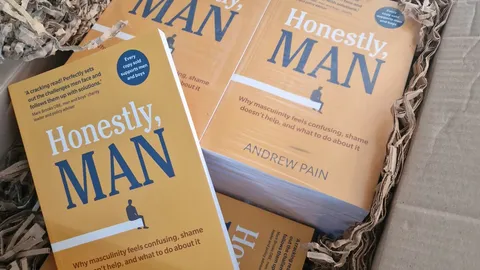
Andrew Pain is a Mental Health & Resilience Keynote Speaker who speaks from lived experience on resilience, burnout and workplace wellbeing. Host of the Men on Show podcast, author of the book Honestly, Man, and a TEDx speaker. Member, International Coaching Federation, and Mental Health First Aider trained.
More from Men on Show
Keep listening

Never miss an episode
Candid conversations with everyday heroes – ordinary men doing extraordinary things.