Men on Show · Episode 57
Empowering men to stand tall: why it matters and how to do it with Stephen Hall
- 11 March 2026 .
- 48 min .
- Hosted by Andrew Pain .
Stephen Hall – Psychotherapist and Founder of Stand Tall Stephen Hall is a UK-based psychotherapist and founder of Stand Tall Therapy and Stand Tall Empower CIC.
Andrew hosts this podcast. His own keynotes are on burnout, resilience, imposter syndrome and difficult conversations.
In this episode
About the conversation
Mentioned in the podcast Ben West - Reasons to Stay.
Key points of the episode
- How he had no male role models in his early life, and what he was healthily obsessed with.
- The violence he experienced at the hands of his Mum, and the resulting experience from it.
- The challenges he faced with his identity, and his default back to the understandable narrowing of his perspective and shutdown.
- How he did not have the vocabulary to talk about it, or the skills to process his trauma, nor the community as it was interconnected with the job role that he left.
- What pulled him back from the brink of suicide.
- What empowered him to set up Stand Tall and Empower.
- The gap he hopes to fill in the "marketplace".
- An interesting take on Chi Kung and how he utilises it.
- A simple breathwork exercise.
- The activities on the retreats he hosts.
- The typical issues the men he works with struggle with.
- His vision for Stand tall and Empower.
- On parenting.
- A pithy message of hope that is much needed.
Men on Show shares lived experience and honest conversation – it is not medical or therapeutic advice. If you're struggling, you don't have to cope alone.
Samaritans: call 116 123 (free, 24/7) NHS: 111
Full transcript
Read the whole conversation
A complete, verbatim transcript of this episode – every word is the host's and guest's own; the topic headings are ours.
Welcome to Men on Show, the podcast, Candid Conversations with Everyday Heroes. Join Andrew Pain as he interviews fascinating guests, ordinary men doing extraordinary things. If you love the show and you think somebody could benefit from hearing it, why not tell them about it by giving it a share on social media? Oh, and at the end of the podcast, if you can leave us a five-star rating and a review, it really helps us more than you know, and it gets this important message out to more people that need to hear it the most. Right now, enjoy the next episode.
Hi, my name's Andrew Pain, host of the podcast Men on Show. We have another fantastic guest. I'm so delighted we've got Stephen Hall with us. Therapist, former teacher, founder of Stand Tall Empower, community interest company. I'm really looking forward to hear more about that. Stephen does a lot of work supporting men's well-being and their mental health. It's a real outdoor approach, so I want to hear more about that. He's a speaker, writer, has his own lived experience of child abuse, trauma, and coming to the point of suicide and how he then worked his way back from that is going to be really interesting to me in this episode. Stephen, it's an absolute pleasure to welcome you to the podcast. Thank you for coming along.
Thank you very much for having me, Andrew.
No male role models, and violence at home
Cool. So just to get wet the appetite, get us started. When you look back at when you were growing up as a boy or a teen, do you recall anyone who particularly inspired you?
Yeah, it's funny with me because I didn't have any male role models in my life at the time, but what I would actually do is immerse myself in books, and I was really obsessed with adventure stories. So as a kid, it was really Biggles, that I was really excited and I read, well, devoured everything. Then maybe as I got to about 11 or 12, I started, well, I guess I saw myself as a bit of an intellectual.
But it was T. Lawrence that really inspired me, and I was absorbed by the seven pillars of wisdom at that age. I think both of those guys were men who were doing something bold and adventurous. There was that sense of escape, the sense of adventure that I was drawn to. I think that probably that was because I didn't feel that way inside, so it was a form of escape for me. The tree at the bottom of the garden was a place to escape to, but also it was somewhere that I could escape to in writing.
I think for Lawrence also it was, I was drawn to his inner conflict, that sense of not really belonging, about being a bit confused about his identity, and he didn't belong to either the Arab culture or the English culture. And so for a boy who didn't feel like he belonged and didn't feel safe at home, there was somebody there who got it.
I know you talk about your experiences of childhood trauma, domestic violence, and is that linked to why you felt you didn't belong?
Read the rest of the transcript Collapse transcript
Yeah, yeah, very much so. So I think growing up within that sort of environment where my father left when I was a baby, because he was abused by my mother. And so I didn't really know him growing up, but I was then the one that received the violence from her. So she took it out on me. It wasn't the case for my brother or sister. And so really very much, I was, I felt that I was the one that, where there was something wrong with me.
And so it meant that I became quite hypervigilant. I was very good at reading the room. And I learned how to survive. I guess, because I learned how to stay silent. I was very good at holding my breath, shutting down, associating. And maybe that was also why I was drawn to reading. Because that gave me an escape.
And did you see it as your responsibility to protect your siblings, or did they just not need protecting for whatever reason?
They didn't need protecting. It was a strange one for me, because I felt that I was the one that was getting all of the anger, certainly the physical anger. Yeah, that was all directed at me.
His dad, dissociation and a breakdown
Did you see, and when you were experiencing that, did you have any contact with your dad, or any respite from this really tough situation, from what you're saying, being abused by your mum? Did you have any respite from that? Did you see your dad at all?
No, no, in fact, I wasn't. He made the decision when I was about three or four to stop contact. And talking with him about that really last year, if it was the first time that we spoke about it, I came to realise that actually he did that because he felt it was the safest thing to do for me because of the way in which my mother would react before and after those meetings. But he didn't realise that she was transferring that anger from him to me when he wasn't around.
And so I didn't actually see him from when I was about four until I was 14. And I saw him once because my sister wanted to change her surname and I said I didn't want to do that without having met him. And the backlash from my mother was so great that it was then I won't see him again. And so it wasn't until I was an adult.
And when would you say the violence stopped?
Probably when I was about 14, 15. And I guess physically I was bigger.
Interesting.
And do you feel as well as you described the sense of not feeling like you belong, how else would you say now that that impacted you?
I think it was absolutely fundamental to the way that I behaved. So because I didn't feel safe in the environment, I learned to shut down. I never really relaxed. So actually dissociation became my norm whenever I was in a situation where I felt uncomfortable, where I felt challenged, and certainly around raised voices. I would just close down. And so that became my modus operandi. I couldn't sit with my back to a door because I needed to be able to see the exit. I needed to be able to see people coming and going. And that's how I learned to survive.
And so, I mean, that sounds completely harrowing. And I'm so sorry that you have been through that. Was there then a particular trigger? Because I know in some of your work, you obviously you talk about suicide. You talk about coming to a point of contemplating suicide. Is that linked to the abuse in some way? Or was there like a different trigger that took you to that point?
You know, I mean, it is interlinked. I think really that it was both a trigger and a build up. It was a bit of both. So the trigger for me was losing a sense of purpose, losing a sense of identity that I dissociated with my work. And it was, I burned out from a job. And I made the decision to, I had a complete breakdown, made the decision to leave that role. But alongside that role, I was also leaving a big part of myself and a sense of identity.
And then, and I didn't have the skills to talk about it. I didn't have the skills to manage it. And so I went back to my safe place, which was inside myself and shut down. But what that meant was that I had a narrowing of perspective. And at the same, but what then happened at the same time as that was that it opened up a whole can of worms around my trauma from the past and the things that I'd never discussed, never talked about, never thought about because I'd box them neatly away.
It just started bubbling up and started affecting me. And so it was a combination of the trauma from childhood and then a sexual assault, which happened when I was in my early 20s. Both were hitting me in the face and I was forced to try and manage them, but I didn't know how to. And so because I couldn't verbalise this, because I couldn't process it, I didn't have the skills to do that, my world just closed in.
And because my job was also my community, it also meant that I had no access to, really to other people. And ultimately I started believing that the world would be better without me.
Fatherlessness, and what pulled him back
So what, in fact, we'll come back to what pulls you out of that, because I'm interested in that kind of, what stopped you from following through, where you were beginning to head with those thoughts that society is better off without you, what changed. But just before we do, I mean, I presume as well, not only have you had that trauma, first the assault, but then going back further through your childhood with your mum and her violence and abusive behaviour towards you, you've also been fatherless for those formative years.
And obviously we read a lot about boys who are fatherless. And we've actually had Joel Shaljean from Lads Need Dads on the podcast some time ago, where the research is really clear that where boys don't have an active father in their life, the impact on their behaviour, their attainment levels at school, and so on and so forth is really significant. So do you feel that now? Do you feel that actually a lot of your struggle with mental health was to do with fatherlessness, being not having a dad? Did you really feel that?
I didn't feel it at the time because I didn't know any difference. It wasn't really until last year, and I was on a retreat and doing some shadow work on this retreat, and it came to doing a piece of work around my past. And I thought that we would be exploring something in relation to my relation with my mother. But actually, it was my relation with my father, was the piece of work that came out. So when I stepped forward to explore this part of my past, it was actually that sense of abandonment that I felt, and coming to terms with what became a really visceral experience of being abandoned to my mother by my father.
Yeah. Yeah, interesting. So what was it then, coming back to that question that I was going to ask, what was it at that point of contemplating Serious Idol and feeling like actually, I'm just better off, the society would be better off without me. What changed that? Was there like a single moment or a single person, or was there like more of a gradual journey back from the abyss?
I think in the first instance, the first time when I was on the edge, it was my kids that pulled me back. It was a stark realisation that I wanted to be there for them. I think recognising that I didn't want them to grow up without a father around. And the very idea that they wouldn't receive another hug from me was too much. And so I think that was what pulled me back in the moment. But I think as often then happens with suicide, it's not just a single time, it's not just a single instant.
And unless you're able to process and to regulate again, unless you're actually dealing with the underlying issues, it's something that will circle back again. And I think what I found subsequent to that was that it was other people reaching out, other people telling me that they were glad that I was here, other people saying to me, ex-pupils of mine getting in touch with me and saying, this is what you did for me. I remember this time and I just wanted to let you know the impact that it's had on me.
So at a time when I couldn't see what value I had, it was really tough, but it's something that held me here. Because there was just something to hold on to.
Connection, and pupils reaching out on social media
I mean, I'm really interested in this because you have children in your life. So that was something that gave you a reason. And I know actually, I mean, I've not been at a point of suicide, but in my darkest times, probably when I was divorced from my ex-wife who was abusive and violent, and then the whole family caught stuff with the kids, there was an absolute nightmare. But having those children meant that I just had a reason to not give up at any point.
So I'm interested. But also, pupils have reached out to you saying people reach out to you. So it feels to me that sort of being connected in community, being connected with people was actually key to you coming back from the business. How did the pupils know? Had you put stuff out on social media or?
Yeah, it was, it was, I guess, they, some of them knew because I worked in a boarding school at the time. I was a housemaster and I left the role as a housemaster. And then I went back into teaching again. So actually, although they weren't aware of the, as the first time I was going through it, they weren't aware of the suicidal. Feelings, they were very much aware of the challenges that I was going through. And so that was public knowledge.
And it was only after the second time that I felt suicidal, I ended up getting sectioned, which in itself was a pretty horrendous experience. But when I was in hospital, I put something on social media. I put something out on Facebook about being in the, feeling isolated, being in the hospital there. And I think I put a post on about making my bed and learning how to do hospital corners with a flat sheet. And it was from that, and it was that point when I had a flurry of contact from some pupils who I had either been a tutor for or I'd taken on expedition. Yeah, so it was, and I can, I distinctly remember still the exact people who reached out to me at that moment.
The thing I love about this as well, we will move on because I want to talk about Stand Tall Empower, but the thing I love about this is, you know, and I'm the first to whinge and whinge about social media. I'm the first to be in favour of a ban on social media for under 16s, although I do think we need to, if we're going to take away with one hand, we need to give with the other hand and reinvest back into youth funding as we used to.
Otherwise, you've got to give them something to do instead. You can't just take this thing away that takes up so much of the time and say, oh, just get on with it then play among yourselves. But I am interested, this is a good news social media story that shows the positive side in the, I suppose, in prior to social media, you wouldn't have had those people, you couldn't have just put a post on Facebook and then all your ex-pupils are like, wow, he was a great guy in reaching out to you in that way.
And for me, that's a lovely thing. Actually, there is some good to some of these social media platforms that when you're struggling and you reach out in the right place, in the right way, actually, you got a lot of lovely real support. That's really good to hear.
Yeah. Yeah. Yeah. And I do think it can be really useful to hold on to those examples. And I think there's a classic one at the moment, very much in the same line, with Ben West's Reasons to Stay project and his page. And the social media response to that has been incredible. To just encourage people to write a letter, to go on to a website, and just to say this was my reason to stay. And that felt really, really powerful, because I wrote my letter at the weekend.
And it felt really empowering to do that. Because it felt like it was coming back full circle, and that I was doing something for strangers, that had been done for me when I was really struggling.
Why he set up Stand Tall Empower
Yeah, that's really powerful. So that's Ben West's Reasons to Stay website. So check that out if you've not heard that. I actually hadn't heard of that before, so sometimes I get behind on that. I'm always a couple of weeks late to the party. So thank you for mentioning that. So let's talk about Stand Tall Empower. It is your community interest company. I want to find out what's behind that, what you get up to. So what inspired you to create it? Tell us about it.
Yeah, so I guess what inspired me to set up the set up Empower and the CIC, was that I was already working as a therapist outdoors. So my approach to therapy is walk and talk. And I work predominantly with men outdoors in nature. And I've been part of men's community groups for quite a long time, both online and in person. And I really wanted to do something in this space, which was different. I've been part of men's groups that are men's circles and seen men open up and talk in those.
But I've also been on retreats with groups of guys who through spending time together, involved in action, being with guys in a way that breaks down the barriers and just allows them to drop the mask. And so I chatted with a mate of mine who was also a therapist, who was also working in the well-being space. And we came up with this idea of an event that was based in the woodlands, combining walking in the woods, walking in the fells, connecting to the nature and to the environment, but also giving an opportunity to connect back to oneself and connect to the rest of the community.
And I guess it was driven by an inspiration that traditional services aren't reaching enough men and they're not working for a lot of men. And so I wanted to be able to offer something that was different. And so the CIC model felt that it would give me an opportunity to do that. I mean, I was a teacher for decades. So working with groups of people again felt really important for me. But to put guys in an environment where they can be challenged, where trust can be built, where men get to feel their feet on the ground and tune in to themselves. We do breath work. We do Chi Gong.
Chi Gong.
Chi Gong and simple breathwork
Chi Gong. Chi Gong I see as being like a tactical nervous system training. It is built on Eastern philosophies. But really, it is slow meditative movement. And it's a way of connecting to the body through the breath and through meditative movement. And so for me, this is a way of helping guys who might struggle, for example, with meditation, or might struggle with breath work, to combine it with movement and give them an opportunity to help them to feel grounded and tune in to their breath and reset the nervous system. Yeah.
Interesting. One of the most stressful times of my life was the family courts. I had many years in the family courts. And I would have said I'm rubber-shit meditation. I just like, I try and focus on what I'm supposed to focus on. And then my mind just drifts on. So how are we going to do at the weekend? And I can't focus. And then I feel completely lousy that I can't focus. But I heard about breath work too.
And it's like breathing deeply from your diaphragm. I know that I've been in choirs and been on stage in one guise or another. But what helped me was just like, and I don't even know really whether this is how it should be done. But it did help me because I just worked on this basis. I read it somewhere that you breathe in for seven, hold for four, breathe out for seven, seven, four, seven, bowing seven, four, seven, that's easy enough to remember.
And I don't even know if that's now scientific. I can't even remember where I read it. But just having a simple technique that I could do, I could probably, if I was working on a building site, just do it like, I don't need a yoga mat particularly. But having to think outside the courtroom and the barrister's there, I mean, it's a really adversarial place to be. Seven, four, seven, and I would just do this breathing and it made such a difference to me.
So for me, like breath work, meditation, I kind of know it's important, but I like to have like little easy techniques that anyone, even a Wally like me could do. Is there like a real simple breath work or that you suggest to people? Imagine I am on a building site right now. I've just got my 20 minutes off to listen to this podcast slightly longer. Is there something that you would recommend that said builder could do? Yeah.
I don't think there is a single one that works for everybody. I think it's very much around finding what works for you. But I do think around counting it can be really helpful. I will often get guys to start with three, four, five.
Okay. Interesting.
Simple idea. But that idea of breathing in slowly through the nose, from the diaphragm and counting to three. Counting helps you to focus. Holding for a period of time, that brings some control back over it. So you're calming down the nervous system. I am getting things under control here. Breathing out for a longer period of time will slow down the nervous system. So it will calm down the autonomic nervous system. So it will engage the parasympathetic. And so this idea of kind of starting with something simple, but then you can extend it. You can play with it.
Yeah.
So it might then become four, six, eight, or extend it for however long you want to.
But yeah. So when you say extend it, so you start with three, four, five, and then as you get used to that deep breath work, you can extend the period of time, like you say, the amount of seconds you're breathing. Yeah. That makes.
But also you've got something to come back to, so that when you are really heightened and really anxious and really feeling on edge, you've got a base to come back to.
Yeah.
Yeah.
Now that makes sense.
Because what you don't want to do is add that stress to the system.
So you're walking with guys.
Retreat activities, and the issues men bring
So we're walking, yeah, walking, walking, connecting. Yeah. So connecting with nature, connecting with the environment. So we'll do a solo walk through the woods. We'll come back and we'll do some fire building. So fire building from scratch. So that idea of a fragile process of building a fire, being really patient with it, and that if you blow too fast, it will go go out. If you don't add enough fuel to the fire and then it won't build.
So the idea of spending some time on turning these, these simple tools into fire. And then each guy, each of the guys, each of the pairs will bring their fire to the fire pit and will produce a larger combined fire. And we'll then cook over that fire and share our meal together. And then we'll do some breath work in Chi Kung practice, cold water exposure. So we'll go for a dip in a lake or a river. One of my favourite parts.
I'm five foot nine, but I'm only about ten stone, a very slender build. So I don't have a lot of body fat on me. And without trying to sound my own trumpet here, what I do have on me is muscle because I do a lot of working out. But that's worse for cold water. So I'm really struggling with tough water. I really do. So I mean, that sounds really amazing. And where do you do this stuff?
In the Lake District.
Oh, absolutely beautiful place.
Inspiring landscapes.
So what, and then the guys that take part, there's the guys that you work with. Typically, what are the issues that they are struggling with? Why are they coming to you? And what are they struggling with? Are there any particular trends or themes that you've noticed?
I think, I mean, when I'm bringing these guys together within the Empower events, they're coming from similar backgrounds. So there might be guys who are coming from addiction recovery. There might be a group of guys who are veterans or working for Blue Light Services. So, there's a lot of stress, burnout, a lot of historic trauma underlying the issues and the coping strategies that they're using, often a sense of disconnection, either from themselves or their environment. Loneliness is a massive part of that, a massive challenge around it.
Guys who've isolated themselves or feel really isolated from communities and they tend to be the common ones and not too dissimilar really from the sort of challenges that I see with the guys that I work with one to one. I would say the top three things that in my one to one therapy work are around burnout, loneliness and isolation and maladaptive coping strategies, which we can also turn as addiction. But a lot of that is as a result of historic trauma. So they might not come to me with that presentation of, I want to work on my trauma history, but actually it will come through.
Yeah, interesting. So not having the right coping strategy in place, social isolation and burnout. Do many talk about not feeling understood as men? I pick up on stuff in the media, as I'm sure you do, about sort of masculinity in crisis, masculinity being rewritten, masculinity this, masculinity that. Do many talk about the impact of that narrative on how they feel about themselves, or is that not such a topic that people are talking about at the moment?
It is there, but it's not something necessarily that guys will feel comfortable talking about. And I think the reason for that is that the media narrative around toxicity is too strong. And therefore, there's that sense of guilt and shame. And therefore, we won't talk about that. And so it's allowing the conversation to unfurl. It's allowing guys the opportunities to explore what actually it means for them to not feel that they have to, if they are feeling really frustrated and they've got anger building up, that anger isn't bad and I have to suppress it.
Anger itself isn't bad. It's the presentation of it. It's the way that that presents, it's what you do with it that matters. So we can talk about these issues without having to talk about them.
Suicide, economic stress and community
Yeah. That makes sense. That makes sense. And so we know when it comes to suicide, if we come back to that, three quarters of people who die by suicide in the UK are men. And obviously, we should never lose sight of the fact that a quarter of people, therefore, are women. It affects people as an issue. We know that funding for men's stuff, men's causes, and they're not exactly funding magnets, really, are they? So how do we reduce suicide?
Is some of that what you're doing, giving men an outlet that's separate from traditional therapy? What else can we do within society? What else? People listening to this, maybe they want to do something, they're worried about the men in their lives. What can we actually do to reduce suicide? Because for all the awareness that we have, actually, the numbers of suicide just seem to be increasing. They don't seem to be going down.
It's not shifting, it's not shifting. The only thing that's really shifted is who's at the top end of the age spectrum that it's affecting. I think it is never a simple topic and there's never one single simple solution to it. And I don't think we can ignore issues around economic stress. A huge proportion of the men who died by suicide are either under financial pressure or are unemployed or both. So, I think that's a, there's that social aspect that really does need to be addressed.
But I think one thing that is evident in so much of the work that I do is around community and connection. If we feel connected to ourselves and we feel connected to other people around us, then we've got the reasons to stay. We've got those reasons to be here. And so, for me, it's about, and it's part of what I'm doing with Empower, it's about creating male spaces that offer something more than just a place to talk.
Yeah.
And so, those organisations that I see as having the biggest impact are the ones that, yes, offer guys the opportunity to talk and to be able to express what it is that they're feeling and what it is that's worrying them, but it's not the mainstay of it, that there are other ways of doing that through activity. And so, you combine it, you look at men's sheds, for example, where guys are busy doing things, and they're shoulder to shoulder rather than face to face. You give guys the opportunity to, there's a men's pie club, and they've got...
Community spaces, and feeling part of something
I heard about that in the Northeast.
They're amazing in the Northeast. You've got Space Northeast as well. They offer things like yoga, and they offer walks, and they do boxing and all sorts of other activities. But what you're doing within any of these things is bringing guys together, giving them something to do, and they are seeing other people like me having conversations where they no longer feel isolated because some of the same topics are coming up again and again and again. I'm able to connect with somebody who's also been through a divorce, who's also been through the court system with their kids and struggled through that.
So, I no longer feel on my own in these circumstances. I feel a part of something bigger than just myself. Once we can provide that for guys again, because those spaces used to exist and they've dried up, but once you get guys into those spaces, then you give them opportunities to start to feel that they belong.
And that's absolutely spot on. You've got sparked me on so many things that you're saying, because in the end, it was really connection that pulled you back from the brink and those comments. The Reasons to Stay is a really interesting way of just connecting online. As you say, you've got different men's communities springing up, which we do need. We're actually continuing to lose community spaces as councils, try and sort their debt piles. They're selling off community spaces.
The problem is getting worse, not better. And so the work that you're doing is so important. It is so important that men who are struggling have an offering other than just sort of sitting in the counselling room, which wouldn't inspire me at all, but they can walk, talk, make stuff, the fire building, connecting with nature. It's so important we have these outlets. And I mean, I was actually talking about it today in a post. I didn't even think it was...
I was talking about my football community, and then I realised how actually amazing it is because they were literally playing. A guy put it around at our local schools. Anyone fancy a kickabout? Literally about five of them would just jump us for goal posts on these local fields. There's loads of dog turds all over the place. But four or five years later, there's 40 of us playing on a pristine pitch. We've definitely saved a life that we know of.
When we've talked about what it means to us, it's a lifeline for so many of us. Even if we're not in crisis, still a lifeline. It means that I know loads of people on the school run. I go into Aldi, there's always a football, one of my football buddies in there. Every time there's a big game on Sky, there's a couple of pubs that some of us will be in. We play football, it's a great spirit.
That will never be a rep. No one's going to set up a company or replicate it. It's just a local group of guys. I think my encouragement, based on what you're saying to anyone listening to this, is join a community because they're out there. And or form a community as well. You could start small. It might never grow beyond four or five people, but maybe it's not supposed to. Maybe that's fine. It works as it is. But just do something to connect because we have lost these spaces so we do need to replace.
Yeah. And I think you're right there. Because what that's an example of is somebody just sharing something they love doing. And so rather than trying to create something which seems really, really difficult and really challenging, let's start from that point. I'm going to do this, who else wants to come along and give it a go?
Yeah.
And it's offering that invitation to other people. But also you're not putting too much pressure on yourself.
Yeah. I think that's a really important part about pressure though as well. I mean, I would say, obviously, I talk about men's mental health, men's well-being and I've often thought I should start a community. And then I thought, actually no, my place is in this community. I didn't start, I didn't found it. But I put a lot of energy into it and that's my place. That's my tribe and I recruit guys into it. So I think just finding a community, joining a community, but also understanding if there is another community out there, communities need people to get on board and help them grow.
And talking of growth and moving forward, your vision for Stand Tall Empower, you've mentioned, I think, you're looking to do a series of events. Is that your vision for the next couple of years? Is it just to really get it started, get the events happening regularly? Is that the plan for you for the next couple of years?
Plans for Stand Tall Empower, and parenting
Yeah. So the plan is really to get it started and get it underway, to really build connections with other organisations in the area, collaborate with other people who are doing similar things, so running joint projects together. So the community becomes stronger. To build up it up so that it becomes sustainable. So I'm running corporate events on a pay it forward basis. So profits from those mean that I'm not reliant on grant funding, for example, which is increasingly difficult to get.
And just turning it into something that is making a difference in the Northwest. And reducing isolation, in reducing suicide rates. Barrow and furnace, for example, the suicide rate there is twice the national average. Huge issues around that area. So if I can have some influence on reducing that by creating opportunities for guys to come together and to help them to manage their mental fitness, then that's really what I want to be doing.
I want to finish with two questions. First, you were a house master. You had a really difficult time as a team for reasons you've explained. Particularly when we think about fathers and sons, it could be some mothers and sons as well. But if you could do something as a parent, what would your piece of advice be to best support your son's emotional well-being? What can parents do on a day-to-day basis?
I think that first of all, recognising that your son, your sons don't need protection. They just need a father who's able to be there for them to show their own emotions without shame. Hugs and lots of them. My son's 19, we still hug every day. Twice a day, I don't think there's enough. I don't think the boys receive enough physical touch and connection. So I think maintaining that is really, really important. And time. Spending time together shoulder to shoulder, going on adventures, showing him how to regulate his anger. Showing him that you don't need to, there are healthy and unhealthy ways of managing your anger. And empowering, that can be really empowering.
Yeah, yeah, it's really good advice. And I know from my own family, that where the boys are all kicking off, my habit that I'm trying to get better at in 2026 is to not be shouting over the noise. Because as a parent, you just, the bickering wears you down. You try and shut it down as quickly as you can, rather than trying to unpack it, because unpacking is really hard. But actually, yeah, that's something for me to work on. So thank you. Good, good advice. And if you could give a sort of a two sentence message of encouragement to people listening to this, a message of hope, what would you say to them?
You're never alone. No matter how isolated and lonely you might feel, there are other people out there who have been in that place and have found purpose and meaning again and found connection to others. So believing in that.
Fantastic. That is a brilliant way to end the podcast. So all there is for me to say, because I love for people, particularly if people are local to the Lake District, or just want to connect in with you and your work. How do people find you?
Probably Linkedin is where I spend a lot of my time connecting. I've got a weekly newsletter on that, Men's Mental Health Perspective, and I try to post regularly about men's mental health, men's mental fitness issues. I'm also, I am on Instagram, Stand Tall Walk Tour on Instagram. Although, I think probably I've stepped back a little bit, rather than getting drawn into the need to post regularly on there. But yeah, I do have a presence on there as well.
That's uncertain. Obviously, for anyone connecting with Stephen, Stephen Hall's, the spelling of your name is, I reckon there's probably quite a few of you on LinkedIn, whereas for me, very few people have my surname. So presumably, they punch into LinkedIn, Stephen Hall.
Stephen Hall, therapist.
Therapist, that's probably the thing that's going to identify you. So do anyone listen to this? Do connect with Stephen. I've seen these newsletters actually, and they're really good. There's some really good written stuff there. So for anyone with any interest in this topic, I recommend you subscribe to it. Thank you for your time on Men on Show today. It's been an absolute pleasure speaking to Stephen. I wish you the very best.
Thank you, Andrew.
Thank you for listening to Andrew Pain's Men on Show. If you could leave us a five star rating and short review, it would be really, really appreciated. It helps us get this important message out to more people that need to hear it the most. See you on the next episode. Thank you for tuning in.
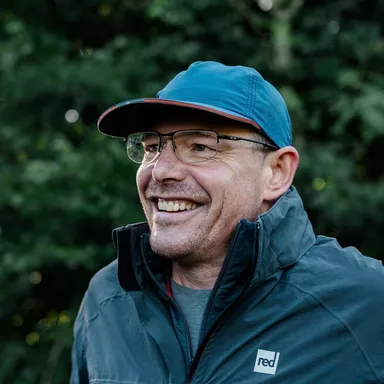
About the guest
Stephen Hall
Stephen Hall – Psychotherapist and Founder of Stand Tall
Stephen Hall is a UK-based psychotherapist and founder of Stand Tall Therapy and Stand Tall Empower CIC. He specialises in working with men under pressure, supporting them to build emotional resilience, reconnect with purpose, and strengthen their mental fitness. Drawing on lived experience, body-based practice, and nature-informed approaches, Stephen brings a grounded and honest perspective to conversations about masculinity, burnout, trauma, and growth. His work focuses on helping men stand tall in their lives rather than simply survive them.

Hosted by Andrew Pain
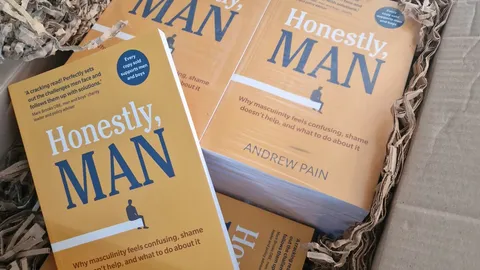
Andrew Pain is a Mental Health & Resilience Keynote Speaker who speaks from lived experience on resilience, burnout and workplace wellbeing. Host of the Men on Show podcast, author of the book Honestly, Man, and a TEDx speaker. Member, International Coaching Federation, and Mental Health First Aider trained.
More from Men on Show
Keep listening
Insights
Read next

Never miss an episode
Candid conversations with everyday heroes – ordinary men doing extraordinary things.