Men on Show · Episode 54
Why the narrative on men and boys has shifted, and where's it going next! with Ally Fogg
- 28 January 2026 .
- 1h 0m .
- Hosted by Andrew Pain .
Ally Fogg is a British writer, journalist, and commentator based in Manchester with a long track record of engaging with social and political issues, especially relating to men and boys.
Andrew hosts this podcast. His own keynotes are on burnout, resilience, imposter syndrome and difficult conversations.
In this episode
About the conversation
Association for Male Health and Wellbeing (AMHW)
The Association for Male Health and Wellbeing (AMHW) is a UK-based national membership organisation dedicated to strengthening the male health and wellbeing sector. As a registered charity, it brings together not-for-profit organisations, academics, and professionals to foster collaboration, share best practice, and drive positive social change for men and boys. AMHW’s mission focuses on building supportive networks, advocating for fair policy environments, and promoting constructive public dialogue about the issues affecting male health and wellbeing. Through partnership, advocacy, and community engagement, the charity aims to ensure that men’s health matters not just to individuals but to families, workplaces, and wider society
Key points of the episode
- How it all started and the gender politics of society.
- Who he was a voice for.
- The history of the emerging male health and well being sector across the UK.
- The slow progress from the Government.
- The tenets of what he practises.
- How a complete picture of men's health and well being, creates a healthy society.
- Gender inclusive policy and its importance… and where it exists and where it doesn't.
- The flashpoint in 2016.
- Where we are now in 2026.
- How the current situation is unsustainable.
- How much more support is needed.
- How you cannot secure men's health and well being if women's health and well being is compromised, and vice versa.
Men on Show shares lived experience and honest conversation – it is not medical or therapeutic advice. If you're struggling, you don't have to cope alone.
Samaritans: call 116 123 (free, 24/7) NHS: 111
Full transcript
Read the whole conversation
A complete, verbatim transcript of this episode – every word is the host's and guest's own; the topic headings are ours.
Welcome to Men on Show, the podcast, Candid Conversations with Everyday Heroes. Join Andrew Pain as he interviews fascinating guests, ordinary men doing extraordinary things. If you love the show and you think somebody could benefit from hearing it, why not tell them about it by giving it a share on social media? Oh, and at the end of the podcast, if you can leave us a five-star rating and a review, it really helps us more than you know, and it gets this important message out to more people that need to hear it the most. Right now, enjoy the next episode.
Hi, my name's Andrew Pain, host of the podcast Men on Show, and I am absolutely delighted to have Ally Fogg here on the show, sharing his insights and expertise. Ally is the chair of the Association for Male Health and Wellbeing. It's the UK's largest alliance of organisations supporting the wellbeing, speaking up for men and boys. And also, and I'm interested in this, I know in your former life, and we'll talk about this as we get started, you were also a writer for The Guardian, tackling quite tough topics from domestic abuse, fatherhood, family calls. Really interested to see how that panned out with The Guardian. So, Ally, welcome to the show.
Thank you. Hi, Andrew. It's good to be here.
Writing on gender politics and fatherhood
Yeah. So, I mean, rather than going all the way back to the beginning, you were a journalist for many years, writing in The Guardian.
I have to say, I'm going to interrupt you there. I still am a journalist.
You still are a journalist.
Read the rest of the transcript Collapse transcript
I got my passport anyway. I still am.
Do you know, I had the funniest, I had the sneakiest suspicion you'd given your role for The Association for Male Health and Wellbeing, like chair of that. That's probably going to take up a lot of your time. So, being a journalist is still how you apply your trade. What sort of provokes you speaking though about the issues around men and boys? So, you talk about domestic abuse, you talk about fatherhood, family courts. What started that? Is that like a lived experience or was it just a point of interest? Did you have a friend go through something tough? Where did that all begin?
Yeah, actually all of the above. Okay. I mean, I could probably go back to my earlier life and I was always interested in the politics of gender. So, as a good lefty student in the 1980s, I read a lot of feminist literature and thought about the issues around at the time. I always consider myself at the very least pro-feminist or feminist sympathiser, put it that way. I never felt very comfortable about the concept of a male feminist, an issue maybe for another day.
But I was coming out of that ideological political background, and as I was writing for The Guardian about issues of politics and society generally, issues relating to gender politics, and particularly male health and well-being, male survivors of abuse, male survivorship from sexual violence, male victims of domestic violence and abuse as well. These issues were coming up more and more. And I kind of fell into a niche that no one else was really filling at the time.
Particularly as you go back, there was a period of about 10 years between about 2005 and 2015, when there was a huge explosion in professional blogging. And it was the time of what they originally called Web 2. Do you remember that back in about 2005? Which is where the web developers, with the arrival of broadband and all the rest of it, they realised that people could actually interact with the internet, with the content that was in front of them.
So for newspapers, they suddenly had this whole new world where they could publish an article and then readers would respond and engage with it and build communities around. And there was a period of about 10 years between newspaper editors realising that they could do this and discovering that they couldn't make any money out of it. It took about 10 years for that to play, work its way through the entire life course. But over that time, I was writing for The Guardian and a lot of other publications as well.
And there was a lot of women's issues brought up and a lot of overtly feminist, feminist identifying journalists and writers putting women's side of view. And particularly where that kind of crossed over with or impinged upon male victims, male health and well-being, men's mental health, boys' education, all of these issues that are coming up. And nobody else was really talking about that. And so from someone coming from a broadly leftist perspective, and with a lot of opinions and thoughts about these things, I think I just provided a voice and a view that no one else had.
But around the same time as well as that, like all of us, I've been either directly or my friends have, I've lost friends to suicide and people I've known to early deaths from addiction and violence as well, all of which were absolute tragedies. I had, like all of us, I've had my own issues, my own mental health, and my own identity as a man and how it feels to be a man in the 21st century. And I was wrestling with these.
And then very importantly to me, in first in 2002 and then in 2008, I became father to one and then two boys. So I was father to sons. And I was thinking a lot about the world that I was bringing these boys up in and into. What kind of lives they would have, what kind of futures they have, what I needed to do as a father to give them the best help and support they could through that.
But also what I could do to the world, to make the world a better place for them to grow up into. And to a very large extent, that focused a lot of my thinking about this stuff. But yeah, when you asked me at the beginning, was it this or was it that? Or was it this or was it that? The answer was actually, yeah, it was all of those things. And that's kind of where I ended up.
Writing for The Guardian and its editors
So at The Guardian, I always, again, I'm sort of political persuasion, I'm to the left of the centre, I suppose. But I do regard The Guardian, it feels like a bit of an anti-male newspaper. So how did you find writing for The Guardian? How was that received within both the readership Guardian, the people that tend to pick up the papers, and also the staff, your editors? Did you face barriers in speaking up for men and boys?
Yes and no. The first thing to say about The Guardian is it is many things. It's a large and complicated enough organism that it can incorporate a lot of different viewpoints and a lot of different agendas. It doesn't just like to push its own editorial line, it likes to provoke debate and it likes to provoke engagement in customers and it likes to get clicks and get sales. And all of those different agendas can sometimes contrast with each other.
I think there was a definite change in The Guardian with the change of editorship, which again happened about 2015, 2016. As I said before, I think the main factor there was that basically the bubble had fallen out of the professional blogging industry. And they changed from Alan Rivesberger at the top to Catherine Viner. And there was a bit of an ideological change came with that, but that was probably less of a factor than just they massively scaled back on the comment is free blogging platforms that they were doing.
So all of these things were happening at the same time. But I think what people see with The Guardian is whatever it is they don't like. If you are on the right, generally speaking, leaving gender out of it, if you're broadly on the right, you look at The Guardian and you see Owen Jones and you see a bunch of radical woke lefties saying like mad, pro-Corbyn, pro-Hamas propaganda or whatever. If you are on the left, by which I mean the genuine left, you look at The Guardian and you see a bunch of absolute sellout, liberal mainstream establishment views which actually stifle any kind of radicalism and general left opinion.
And if you are actually in the centre, if you are one of the people who writes at The Guardian, you are probably constantly infuriated by the people from the left who are doing the things you don't want to do and people on the right who are saying things that you don't want them to say. And it's all a bit of a mess. So what I found was some editors and some colleagues who were incredibly supportive and friendly and helped me along the way.
There were other staff there, including editorial staff, who clearly didn't like me. So whether I would get a piece commissioned, or didn't like my idea, it's not personal. Whether I would get an idea commissioned on any one day or not wasn't really according to the editorial line of The Guardian. It was depending who was working on the desk that day. And often the media, like any other industry, often comes down to actually really quite banal trivia.
There are no grand conspiracies going on. People who think The Guardian are pursuing an agenda against men really don't understand the politics of The Guardian. They will publish people, they will publish journalists who undoubtedly have an agenda against men, and they will publish journalists who feel profoundly disagree with them. I think it's quite striking now in 2025 that when my very good friend Mark Brooks and Richard Reeves launched the Center for Policy Research into Men and Boys, and they appointed a Board of Trustees, or they recruited a Board of Trustees, they actually included two Guardian or Observer journalists, and a BBC journalist as well on the Board of Trustees, all of whom are there because they are looking for solutions to the very real issues facing men and boys.
And they're not, you know, they weren't people like me either, when I'm talking about, you know, who is it? Will Hutton, former editor of The Observer was one of them. And I can't remember, one of the really quite pro-feminist women columnists, I can't remember which one, of The Guardian. So, you know, there are people will constantly surprise you, and The Guardian will constantly surprise you. But the short answer is it's a much more complicated and incoherent beast than most people imagine it to be from any side.
Men and Boys Coalition and International Men's Day
Interesting. Interesting. Now, thank you for sharing. It's really, really interesting. So, tell me about the Men and Boys Coalition. Why was that started? How did that start?
Yeah. Well, actually, I'll go back to one organisation before that slightly. Around 2012, between 2010 and 2012, I was writing all these articles for The Guardian about issues, including men's mental health, about male victims, about boys' education, and so on and so forth. And because of that, I was invited to go and speak at a conference down in Brighton. It was organised by a chap called Glenn Poole, who was then running the, I think, Men's Health Network, they called it, in Brighton.
Glenn is now down in Australia, where he's the CEO of the Australian Men's Health Forum, and he's lived there for about 10 years now. But back then, he organised this conference. I went down there, I heard Glenn talk, I heard Mark Brooks, Mankind Initiative talk as well. We swapped phone numbers and email addresses and began chatting to each other and getting to know each other a bit more. One of the things that came out of that was our determination to promote International Men's Day in the UK.
Now, at the time, International Men's Day was, we call it the punchline years. It had been brought in, it was originally founded in Trinidad. When it first began to be mooted and discussed in the UK, the only response you got was, at best it would be mockery or indifference or amusement, and at worst you would get active real hatred and abuse and hostility. The idea of International Men's Day was really quite hot button back in 2010, 11, 12.
I had been writing in The Guardian about why we actually might need an International Men's Day and why there would be ways that we could use the occasion and the event to really make a positive difference to the lives of men and boys, to support the large growing charity sector that was emerging at that time. So we were beginning to see men's sheds, for example, we were beginning to see a variety of grassroots mental health, men's mental health projects coming up.
There was an increasing awareness of male suicide. It's always been a severe, people use the word epidemic, which suggests that the graph has shot up. It really hasn't. There's always been a massive societal problem with male suicide, but that began to be recognised at that time. Likewise, the fact that boys had been falling behind girls in education at that time for about 15, 20 years, and nobody was talking about it, that was in the radar as well.
So what we did is we got together and decided to form a little committee with one purpose, one purpose alone, which was to promote international men's day in the UK. And over the next four or five years, we actually had a lot of success. I talk about that as it was a bit like pushing a boulder down the hill. And it felt like most of the work like we gave it a little shove and then stood back and like, wow, things are happening.
Because within a few years, you had TV stations like Channel 4 did a night of international men's day links between all their programmes talking about men's health and suicide prevention. You had Loose Women on ITV becoming Loose Men for the day. And then shortly after that, by I think 2016 was the first time there was an international men's day debate in the House of Commons. Very, very controversial at first. And then with each year that went by, it kind of became more and more established and accepted as an important thing.
And the number of events, we run the UK Men's Day website, and we went from recording sort of 50 or 100 events in the first year that we did it, to 400, 600, 800, as the years went by. And all over the country, there were schools, there were churches, there were workplaces, there were mosques and synagogues, pubs, you name it. Like people were organising events to talk about male health and well-being. And like we think about it in terms of like giving the boulder a shove, but modesty aside, we were the ones that were pushing that boulder down the hill.
And so, around about 2016, we looked at everything that had gone on. We also looked at the further massive expansion in the male not-for-profit sector, charity sector. So, by this time, by 2016, you were starting to see Andy's Man Club was starting up. Top Club, I think, hadn't started, but would do shortly after. And all around the country, there were just like these incredible new projects were springing up. And you had organisations like, they're now called We Are Survivors, Survivors Manchester, Ronda Duncan Craig, another very good friend of mine who was very involved in all of these committees and organisations we're talking about.
They had begun in 2008 with one desk and no funding, and Duncan ran it himself on a shoestring for a few years. By 2016, they were expanding massively, as were lots of the other equivalent projects around the country. So there was this real growth in our male health and well-being sector that we were seeing. And what nobody was doing was really helping support them and helping them connect them, and joining these different dots into one coherent movement, a loose movement.
So we began to do that in 2016, we were particularly led by a colleague called Dan Bell. We created the Men and Boys Coalition to be a unified front, if you like, and a networking hub for this emerging male health and well-being sector across the UK. And it did pretty well for a few years. But when we began in 2016, we wanted it to be as accessible and as low-bureaucracy and as easily managed as possible. We had a very easy process for people to join.
Basically, we sent some emails saying, can we join your coalition? And we said yes, or we would send somebody else an email, would you like to join our coalition? And if they said yes, then they became a member and they stayed a member, and it was as simple as that. There was no formal relationship between the coalition and its membership. So we were able to do a lot with that structure, but then as the years went by, it became increasingly clear that it wasn't...
While it was maybe an appropriate structure from where we were at the beginning, it wasn't a structure that would allow us to infinitely grow and really establish ourselves in the way we wanted to be. So having, amongst our achievements, we continued to promote International Men's Day as one of our lead projects. We inaugurated the National Men and Boys Awards, which we've now done onto our fifth, happened recently. And we represented our sector increasingly in parliament. We did a lot of lobbying of MPs.
We built relationships with civil servants, the Home Office and so on and so forth. And so amongst the many bits of work that we're very proud of, we pushed very heavily, pushed the agenda for a parallel and appropriate male victims strategy to remove men and boys from the violence against women and girls strategy, which is something your listeners will probably have heard about before. But we've got this absolutely absurd situation in the UK where male victims of domestic sexual abuse and other intimate crimes are classified as victims of violence against women and girls.
Consequently, that's not just a kind of misleading and arguably offensive characterisation. It means that the strategy that is supposedly, that is nominally providing the infrastructure for support for male victims and survivors is not designed with our needs in mind, with the male sector in mind. It's designed around the situations and circumstances and the needs of female victims. And then the men are just tacked on at the end as it own applies to you too, but it doesn't.
So we pushed that forward heavily. And although it wasn't what we wanted, it resulted in us being persuading the Home Office to publish. First one in 2019, their first male victim's position statement, which was the first government document that actually acknowledged the male victims existed. And in any meaningful sense whatsoever. And then a revision of that in 2022, which expanded it much more and began to get into issues such as the needs of fathers, who are also victims of domestic abuse or sexual violence.
And then that was again, we're now into 2025, revised again. So we now have full acknowledgement, we're still not where we want to be, but we have full acknowledgement from the government of the full scale of intimate offending against men and boys. So we have done all of that, we achieved a lot. What we didn't have was a really clear, coherent, legal structure and a relationship with our members. And we didn't have a real clarity on what it was we actually stand for and we actually believe in. And that is where the Association for Male Health and Wellbeing, which was launched in 2025, came in.
Membership, an AGM and a six-point charter
So that's a rebrand of the Men and Boys Coalition, but it is a structure that you can hold together a bit more tightly, legally. So, yeah, so it's pretty much the same, but more organised.
Yeah, exactly. I said doing the same job, but with quite a different shape. So the key difference is we are now a formal membership organisation. So our members can vote me off at the AGM if they don't like the job.
I'll remember that. I'll remember that.
You'll remember that. Yeah, absolutely. Bear that in mind. So, you know, when we get to our first AGM, which will be at the end of 2026, all of our trustees, including the chair and the officeholders, will all stand down. And if we want to put ourselves up for re-election, and of course other people can stand as well. So if we are behaving in ways that don't represent our member, there is now a democratic mechanism whereby our members can hold us to account.
We didn't have that before. There are practical issues, like if somebody is paying us a nominal fee for an individual, probably 25 pounds a year, we then have a legal relationship with them. And if, for example, a funder comes along and looks at our list of members, there's absolutely no dispute as to whether somebody is or is not a member. Or one of the problems we had with the coalition was that we would have organisations that would join in 2017 or whatever, and then they'd maybe close down a year or two later, but we wouldn't hear about it.
They wouldn't necessarily contact us to say, we're no longer in business. So they would still appear on our list of members and we would claim to represent 180 organisations or whatever. And then a funder would come along and look at the organisations we claim to represent. Say, hang on, that one's been out of business for two years, that one doesn't exist anymore, and so on and so forth. So that wasn't clear. But probably much more important and I think more interesting is we now have a six-point charter which says quite clearly, this is what we as an organisation and all of our members believe.
And it creates, if you like, an ideological identity for where we stand. And to save you the question, I will talk you through what those are, because I think they're quite interesting. I will do this off memory, so if it all goes skew with, then I'll have to go and rapidly consult a bit of paper. But I think it can probably, I've been through it enough times, I can probably do it off by heart now. Our first one is that securing male health and well-being is essential for a healthy society.
Basically, it means that if you want to deliver politics, if you want to deliver social policy that keep everyone, men, women, the economy, the social services, public services, you want to keep them all running, then male health and well-being is essential to that. Our second point is that issues of male health and well-being are all interconnected. So, for example, if you want to talk about male suicide, you're not going to have a proper understanding of the issue and you're not going to accurately come up with solutions if you are not talking about, for example, male patterns of addiction, if you're not talking about male patterns of homelessness, if you're not talking about male patterns of criminalisation, if you're not talking about men's mental health more generally, if you're not talking about family breakdown, if you're not talking about educational and career crises, and you could talk about any one of those and you would have to connect it to all of the others.
So what we are saying is that if you are an organisation that is engaged with, for example, mentoring of boys, teenage boys, unless you're also understanding teenage patterns of gambling addiction. If you're not understanding teenage patterns of relationship abuse, then you're probably not going to be doing a very good job. So basically, all of our members, who all of their own specialties and all of their own interests, all have a vested interest in all of the activities of all the others.
Because fundamentally, what we are doing is we're all addressing issues of male health and well-being, and all of those issues are connected to all of the others. Does that make sense?
Gender inclusive policy and the Men's Health Strategy
Yeah, I like that. And I like the fact it's not a competition actually.
Everybody is complementing each other. That's a really good way of putting it. Yeah. And we all depend on, our own success all depends on the success of our colleagues. So we have to support each other if we're going to do, meet our own objectives, whatever those may be. Our third one is that we believe policy solutions should be gender inclusive, whatever appropriate. What that means is that if you're dealing with an issue like homelessness or health, you won't need the same policies for homeless women as you do for homeless men.
The reasons why women become homeless might not be the same as the reasons why men become homeless. And so if you want to address the issue of homelessness, it is not enough to be gender neutral about it. You have to be gender conscious and gender sensitive and what we call gender inclusive. So you have to include issues of gender within your thinking in any approach to policy. And a really good example of that happening is the Men's Health Strategy, where we had until 2020, we had a National Health Strategy.
We had a National Health Service and none of it was gender based at all. In 2020, they came up with a National Women's Health Strategy that was designed to address issues that are specific and relevant to women but not men. And that's great and we supported it and we actively, we applauded that when it came along and we continue to applaud it and support it to this day. Our argument was that what then became much more clear was the urgent and pressing need for a men's health strategy to sit alongside it.
So we have now accomplished that, it's now been delivered and the fact that we now have an overarching health policy and then within that, we have a women's health strategy and a men's health strategy. That's a beautiful example of gender inclusive policy. A really perfect example of where we don't have that, is the one I mentioned a moment ago of crimes of abuse, where we have an absolute mess, where a gender inclusive policy should be. And it becomes really interesting when you think about things like education, or you think about issues like imprisonment.
There's a really, I think, quite fascinating, slightly depressing pattern in political discourse of the last 15, 20 years, where we've got a gender ex- or, no, we've got a gender inclusive approach for women prisoners. Like, you know, we have a very, very gender conscious discussion, debate within politics, within the media about the gender specific needs of women in prison. Like, why they ended up in prison? What kind of abusive histories they had? What kind of mental health problems they've got?
What's going to happen to them when they come out? What's going to happen to their children while they're inside? All of these issues are discussed with a very, very gendered lens until you talk about the 95 percent of prisoners who are not women, and suddenly the issues of gender just completely vanish, and no one wants to think about why it is that men are more than 20 times as likely to end up in prison as women are in the first place, and that gender discussion does not happen. That's a really good example of where we would like to see a more gender inclusive lens applied to policy.
Male victims of domestic abuse and a strategy
Yeah, because for my own experience as a former victim of domestic abuse, when you look at the data, it's not, I don't think it's, I think it's helpful to say actually male and female survivors, depending on the relationship, could face similar and different challenges. When women leave abusive relationships, they're in more danger at the point of leaving or just after they've left in terms of homicide. But for men, they're much more likely to be the victim of domestic homicide when they're still in that relationship.
Once they've left, so of course, they're going to need, in terms of supporting male and female victims, how that looks is varied, and that's okay to say that and point that out. I like that word, gender inclusive, but that means, so go on.
No, within that specific case, there's a really good example, which is people will often look at the rates of prevalence of domestic abuse. You look at the ONS statistic or whatever kind of survey you want, and you find like 36% or 40% of victims are male, and then they'll look at provision of shelter accommodation, and they say, well, 98% of shelter accommodation is for women, not men, and say if men are 40% of domestic abuse victims, then they should have 40% of shelter places.
But then actually, you look at the experiences of male victims of domestic abuse, and there are risks and it's not zero, but they are less likely than women to be financially destitute at the point they're leaving the relationship. They're less likely to become homeless. They can happen and it does happen. And so it's not necessarily the case that where you've got 40% of this, you also need 40% of that. What men might significantly need is massive amounts of psychological and social support to target suicidal ideation, which means you talked about risk of violence.
The number of people we lose to suicide following a relationship breakdown, including violent relationships, it all gets very complicated according to whose perpetrators and whose victims and whose both and all of that stuff. It all gets very messy. But the bottom line is that a man who leaves a toxic relationship is a very, very high risk of suicide. So that might be the support that male victims need, and it's very different to the type of support that female victims need.
And now within that, of course, there are men who are made homeless and end up in the streets, or they end up in homeless shelters, which are entirely inappropriate. So actually finding the appropriate types of need for the person affected is exactly what we're looking for here. And it's not enough just to be gender neutral and say, well, if women get that, then men should get it as well. Actually, there are things that men need more, and there are certainly things that women, female victims need more.
As well, and it's about actually having the mechanism to be able to identify what those are and come up with appropriate policies that will meet the needs of both.
Yeah. So before you go on with the, before you talk about it, because you've got some more points here.
I have a million, three so far.
Three. Just before you do, going back to the absurd situation that we have, where there's not a strategy to tackle violence against men and boys, they're all lumped in with the women and girls. Do you have any confidence with the current Kirstam administration, the Labour government, that that will change? Because I feel like when he, Kirstam, I think, said something quite final, didn't he, on the Minister for Men idea. He's really booted that into touch now.
That's gone. He's been very clear about that. Do you feel that for creating a strategy that tackles violence against men and boys, do you think there's hope of something changing there, or do you think actually for now, this just ain't going to happen?
Male victims and the violence against women strategy
I think there's a really important lesson we learned from the Men's Health Strategy campaign, which is you can think you can go for years and years and years having absolutely no prospect of something happening, being delivered. It feels like you're banging your head against a brick wall. You will be getting told by people, you've got absolutely no hope of delivering this, you're wasting your time even asking for it, you'll never get past the politicians. And then out of nowhere, something clicks, something changes.
And then suddenly a politician says, oh, yeah, we're going to do a Men's Health Strategy now. And our experience over the last two years, as people who have been campaigning for this for years, we're like, where the hell did that come from? And there's a really fascinating detail here, which is it genuinely seems that what happened is that somebody, somebody either, maybe for his Christmas, somebody gave Web Streeting a copy of Richard Reeves' book. Yeah. Because when Web Streeting first announced that he was, before he became, before he was in government, so when he was still in opposition spokesman for health, he made the announcement that the Labour Manifesto would include a Men's Health Strategy.
Richard Reeves congratulated it with him, and Web Streeting got back to him to say, yeah, actually, it was your book was one of my biggest influences. It might be somebody just gave Web Streeting this book for his Christmas. He read it, and suddenly he changed his mind. And it can be things as trivial and unexpected as that. So often you think you're banging your head against a brick wall and nothing will ever change. We have, on this specific question, we have probably just passed a key moment again in that the government has just relaunched the tackling violence against women and girls strategy.
They did it literally two days or the day that parliament broke up for Christmas. I was furious about it, because apart from that, I still had my Christmas shopping to do it, and an enormous list of admin to do for the association. And then just on my final week out of nowhere, the government not only dropped the new tackling violence against women and girls strategy, but a whole new what they call explanatory note about male victims, which is an accompanying document that we had to go through and respond to in detail.
All I wanted to do was peel some spuds and do my Christmas shopping. But that landed just before Christmas. We're now only now just kind of reading the fine print of it and getting to grips with it. But that is now in place. It is one of these refreshes of the tackling violence against women and girls strategy, that a change will come. So this time around, it hasn't happened. What has happened though, and this is probably a really important thing for people to understand, is that we first started campaigning on this almost exactly 10 years ago.
In 2015, 2016, the first flash point for us was the Crown Prosecution Service published an annual report, which was accompanied by press releases and loads and loads of media coverage. They said the top line headline was, last year, 103,000 women and girls were victims of abuse, or there were 103,000 victims of violence against women and girls, last year. And being the pathetic nerd that I am, I was sitting going through the data tables of the CPS report, and I was adding up how many women and girls had been victims of rape and sexual assault and domestic abuse and human trafficking and all the rest of it.
And whatever I did, I couldn't add it up to more than about 73,000. I mean, there was like 19,000 victims, the exact numbers, but roughly about one in six of these 103,000 were just entirely unaccounted for. So I then had to go beyond the published report to the appendix data tables and buried in there, and what I mentioned no where was the fact that about one in six where gender was known, about one in six of all victims of violence against women and girls were actually men and boys.
I then got on the phone to Mark Brooks and Duncan and all these people said, did you know they were doing this? And they were like, well, not really. No, nobody ever told us. And we pieced it together and we talked to everyone. And nobody had ever been informed. And from our side, the male survivor and victim sector, no one at the government had ever said, by the way, we're calling you violence against women and girls now.
Nobody had said, by the way, we're going to tack you onto this strategy. They just did it without telling it. And it literally took about five years before, like literally any of us found the evidence for this. That was 10 years ago. When we first started talking about this, it's not just that people said it was a good idea or it was justified or they gave it. People point blank denied it was happening, including politicians. We would go to our, you know, we would write to our MPs.
We would talk to ministers. We would touch people within the home office and say, when did you start classifying male victims as victims of violence against women and girls? They say, oh, we're not doing that. What are you talking about? I said, well, no, you are. You literally are. Look, look. And we would have to persuade them of what they were doing because it was never announced as a decision. There was never any awareness. And like some bureaucrat in the home office, so the minute it was now the Ministry of Justice, it would then have been the home office.
Some bureaucrat just kind of started doing it without even telling anyone they were doing it. There's nothing in Hansard, there's nothing in any select committee meeting. The UK never signed any international treaties to say this is what they were going to do. None of that. They just started doing it. And it literally took us years to even find out because they never bothered to tell us. So from that point, we then had a period of probably six, seven, eight years where we were just awareness raising.
We were writing to MPs. We were doing the go to the APPGs. We were trying to talk to the media. We're getting a few, you know, the occasional item appearing in the newspapers or broadcast media saying, you know, this is happening and it's a bad thing and it's unfair. And that's why it was in 2019 that the government was the first to, after they've been doing it for nearly 10 years, 2019 is the first time the government actually put in black and white, yes, we are doing this and came up with some sort of lie, very unpersuasive explanation as to why they were doing it.
You know, just because we talk about violence against women and girls doesn't mean we're forgetting about male victims. Well, yes, it does. Anyway, so that was happening. Where we now are, sorry, I've gone way off the rails here, but where we now are in 2026, 2025, 2026, there is widespread acknowledgement and awareness, not only that this is happening, but also that it's a problem. So in the tackling violence against women and girls strategy, which did not give us what we wanted back before Christmas, but it did have a paragraph that attempted to justify why they were doing it and saying why.
We acknowledge that there are campaigns and calls for a parallel male victim strategy and removing it. We don't think that's a good idea. We don't basically, I'm paraphrasing, but we don't think it's worth the effort with what they actually said. But that is now in black and white, and we have now got the arguments in front of us. Everybody knows what's going on. They're being put under more and more and more pressure to justify it and explain it to themselves, to the public, to the media, to their colleagues.
None of which was happening before. And kind of all of that is a process that had to be gone through before we actually get to change. Now, we are... It seems to me, my colleagues, that the situation as it is cannot be sustainable. It's just nonsense. It's so obviously absurd. And everybody you talk to about it says, yeah, that's obviously absurd. What we'd like to see is a kind of nested set of strategies that cause something like gender-based violence.
And within that, you've got the tackling violence against women and girls strategy as it is. And then just sitting there, it doesn't have to be the same size. It doesn't have to be the same depth. It can just be like, you know, these are the bits that apply just to men. And these are what we're going to do for men. The biggest problem we've got at the moment still is that everything that the government, successive government, it's not about one party.
Everything successive governments have done for male victims has been, they've produced position statements rather than dynamic strategies. So they haven't said, right, this is what we're going to do. This is where we're going to get to. These are our objectives. And this is how we're going to quantify and test whether or not we've reached our objectives. It's just this is what the situation is at the moment. This number of men are victims of domestic abuse. This number of men are victims of sexual violence.
These services are provided and these services are provided, and we're going to fund this and we're going to fund that. But none of it is what we call dynamic. It's not allowing for any change and it's not setting themselves targets. And it doesn't have any dedicated approaches to both reducing or eradicating intimate violence against men and boys. And it doesn't have any dedicated pathways and objectives for where they want to get to. So we are being categorically underserved and failed by the system it is at the moment.
When will it change? Honestly, it could be another 10 years. It could be another 20 years, or it could be next year. Something could happen, and suddenly there could be a switch. It's really hard to say. But what I can say is that the situation has changed significantly and it's continuing to change as the years go by. Yeah.
Male suicide provision and a public health lens
In a way, you've summed up, we will complete the points, but you have summed up some of the questions that I wanted to put to you in that the conversation is developing, it's evolving, it's a really positive that that's happening, but there's obviously a lot more work to do. Even like in terms of a dynamic strategy, the men's health strategy that was launched that Wes Streeting announced was obviously great. But what surprised me when you start looking at the finer details of that, was just the pitiful provision for tackling male suicide.
It's something like three and a half million quid over three years, which would barely buy you a two bed flat in London, let alone do anything UK wide. There's obviously a long way to go, but you're sounding positive, you sound chippy, you sound like you're confident this really is going to be not necessarily a fast moving train, but certainly one that progresses.
I think all we can do is keep the wheels turning over. And we're not a vast glittering, lavishly funded campaign organisation. We can't throw endless reserves of resources at lobbying. All we can do is play the hands we're dealt, but also keep the conversation alive. You know, we would love there to be much more support from, if you like, across the men's health sector. You know, like, don't want to get into names, but we've recently had exchanges with Movember about how involved they should be.
Now, I'm very happy to say that they have shifted quite a lot in the last few years in terms of their approach to policy and their engagement with policy and strategy issues. As far as we're concerned, male survivorship and male victimhood is absolutely a health issue. I mean, you can look at the statistics of the impacts on physical and mental health caused by any kind of trauma, but particularly childhood trauma, adult sexual violence, adult domestic abuse, have absolutely devastating consequences on people's physical and mental health.
More in some research would say it's worse for you than smoking, it's worse for you than drinking, it's worse for you than taking almost any kind of drug. It really is an incredibly serious concern, and as we know, it affects millions and millions and millions of men. So we would like that to be very much part of the mainstream health conversation as well, which it isn't, it's mostly still thought of as an issue of crime and justice and punishment.
How do we sentence offenders? How do we use the police and that kind of thing? And actually, we would like to have much more of a public health lens on that, but that's a much bigger issue. So there's a lot of capacity to expand within our campaign at the moment. A lot more people could be involved. And we would love an awful lot more politicians to be more vocal than they are at the moment. They're still very shy.
I think a lot of people are really worried that speaking up on behalf of male victims and for the need for a male victim strategy somehow diminishes or takes away from the importance of the tackle of as a female and girl strategy. Our view is that it does exactly the opposite of that, but that's still an argument that we have to win.
Charter points on diversity and women's health
Yeah. So tell me, I am conscious of the time on our podcast and your time. So just succinctly, if you tell me the points four, five and six, that would be useful.
Some of them are related to what we just said. The fourth one is that we must support men and boys in all their diversity without regard to race, ethnicity, culture, faith, sexuality, gender identity, all of those things. Basically, as far as we're concerned, if you only support some men and boys, then you don't actually support men and boys. So we understand that these issues are intersectional in the jargon, and we will always oppose all forms of racism, homophobia, and other forms of discrimination.
Hopefully, that one is relatively self-explanatory, it doesn't need a whole lot of footnotes. I'll go on to our fifth one. Actually, our fifth and sixth are related, and they say that we are also opposed to all forms of sexism and sex discrimination, gender discrimination. The actual wording on our charter just says that we oppose all forms of sexism and gender discrimination. If you want to be specific, that means we oppose misogyny, we also oppose misandry. And we're unashamed about talking about both of those, unafraid of talking about both of those.
And finally, related to the previous one, we consider women's health and well-being sectors to be our friends and allies and have our support. We will always, you know, I think the actual wording is, where there is conflict or perceived conflict of interest between ourselves and women's issues, we will always seek to resolve that amicably without ever sacrificing or compromising the needs of our members and the men and boys they represent. So basically what that says, we will always begin from the assumption that women's groups, people working on women's welfare, women's health and well-being, whatever, you can call them feminist groups, whatever, but it's much broader than that.
We will begin from the assumption that we are on the same side and that we want the same things as they do and that we want to work with them on our shared objectives. From time to time, things will come up where it's either perceived to be or actually that we are in conflict with each other. What we need is not the same as what they say they need. We will attempt to work on that constructively and amicably and see if we can come to a compromise that we can all live with.
Basically, what we're saying there is that we might not always be on the same side as feminism or the women's sector, but we're not at war with them either. We are pursuing our own objectives and our own goals, and we believe that male health and well-being, women's health and well-being are intimately interconnected. Men and women share lives, they share homes, they share workplaces, they share communities, and you cannot have, you cannot secure male health and well-being where female health and well-being are compromised and vice versa.
You cannot secure female health and well-being if male health and well-being is compromised. And in a practical sense, where that becomes very pressing is in issues like male violence against women. It can be quite a difficult thing for our sector to discuss. We are absolutely unequivocally proud to say that if you challenge and reduce the brutalisation, the neglect, the hardship experienced by men and especially boys, then one consequence of that will be that levels of violence against women and girls will come down.
Because violence doesn't happen in isolation. Violence happens as part of a complex dynamic of brutalisation and trauma and psychic damage, for want of a better word. And so, you know, the idea that we had a big difference of opinion that we have with with Jess Phillips and the Labour Party at the moment, is they say they want to reduce rates of violence against women and girls by 50% within 10 years. Laudable objective, we could not be more supportive of that ambition.
That's a great thing to do. If you want to do that, one of the very first things you should do is tackle violence against boys. We can start by banning physical punishment and smacking, which we all know has got a huge, huge, huge correlation to later violence and violence in later life. If we talk about the general brutalisation of boys and the amount of violence in boys' lives before they are 10, before they are 16, before they are 18, whenever you want to pick an arbitrary number, you can significantly reduce the amount of violence in everyone's lives by beginning to tackle some of the brutalisation in male socialisation.
And it absolutely makes me despair that the likes of Jess Phillips and Yvette Cooper, who are coming up with these laudable ambitions, actually won't look at one of the few solutions, which we know has got an evidential basis for saying, if you do that, it will produce the results, or some of the results, that you want to see. But they're not prepared to comprise that, or they're not prepared to go with that line of thinking, because they're following an ideological approach, rather than an evidence-led one, but that's something we can't do.
But we repeat, as far as we are concerned, the health and well-being of women and men are inextricably connected, and you can't put them against each other. It is not a zero-sum equation. It is a positive-sum equation, that if you improve the health and well-being of men and boys, you improve the health and well-being of women and girls, and vice versa.
Yeah, one of my mottos when I'm speaking is that every pound we invest for men and boys is actually a pound for the women and girls that love those men and boys, and vice versa.
Even if they hate those men and boys, they'll still get the bit of it. But yeah, because it's not just about, obviously, if a family is hit by male mental health crisis or male addiction or male suicide at the ultimate sharp end, then that's devastating for everybody involved in that family and everybody understands that. But it is much deeper than that. If you have a male colleague who is struggling with his mental health, with addiction, with suicidal ideation, that's going to affect everyone in his workplace.
It's going to affect everyone in his community. It's going to say, yeah, the idea that you can just isolate it off and silo it, and this is an individual personal problem. It's not all of these are problems for everyone. Whether they had direct contact with that person or not.
Finding Ally, and a last message
So it's been positive. I feel like obviously what you've achieved is really positive. The six pillars that you've just underlined. Thank you for that. That's really, really helpful. And particularly for those organisations, individuals listening to this, that may be thinking, well, we probably should try to join The Association for Male Health and Wellbeing. It's useful that you've been really clear on that. How do people get in contact with you? How do I, if I want to join The Association for Male Health and Wellbeing, maybe I've got my own mail talk group, maybe I run mail retreats. What do they just get in contact with you, Ally?
The easiest thing is to go to our website, amhw.org.uk, and you will find there pretty much on every page, there's a panel that says, will you join us? Please join us. Please join us. If you go to our website, you won't miss that. And technically, our process is that membership goes through automatically, and then at our first board meeting, the board will rubber stamp all applications. If there is someone who comes, who does not, let's say, they're demonstrably not in keeping with our charter, then we reserve the right to refuse membership.
But generally, people have to really work quite hard to come under that category. So yeah, what we will say is we are a membership body for the sector. So we accept memberships from organisations, from academics and from professionals who are working in the sector with quite a wide interpretation of what that means. We will happily take donations, member the public, but we're not a mass public membership organisation. We are a specialist organisation for people working in our sector, and that's what gives us the strength that we have. So bear that in mind, but other than that, we'd be delighted to hear from you.
And can you give me, just to sum up, just to finish really the podcast, on a positive note, although I feel it's been positive in what you've shared, if you could give a two message, a two message, what I'm even saying, a two sentence message of hope to those listening to this podcast. How would you encourage people in a couple of sentences?
The landscape for male health and wellbeing has changed beyond all recognition within the last 15 years. It will change again beyond all recognition over the next 15 years. If you want the landscape for everybody working to support male health and wellbeing to look different in 15 years time than it does now, first of all, it probably will, but also you can make a real tangible difference. There are all kinds of doors opening all over the place that just need to push. So never be afraid to dream of what we can achieve if we work together.
Lovely, that's a wonderful way to finish. Ally, thank you so much for your time. It's been a pleasure speaking to you and I wish you a positive and productive 2026.
Thank you very much for the opportunity. It's been a delight to speak to you and your listeners. And the same back to you and all of you.
Thank you for listening to Andrew Pain's Men on Show. If you could leave us a five star rating and short review, it would be really, really appreciated. It helps us get this important message out to more people that need to hear it the most. See you on the next episode. Thank you for tuning in.
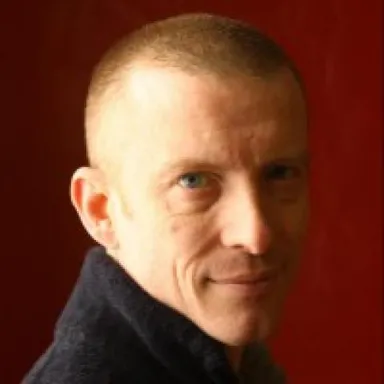
About the guest
Ally Fogg
Ally Fogg is a British writer, journalist, and commentator based in Manchester with a long track record of engaging with social and political issues, especially relating to men and boys. He has written extensively for major outlets including The Guardian and The Independent, covering topics from gender politics and public policy to broader cultural debates. Over more than two decades in media and activism, Ally has been deeply involved in the men’s health and wellbeing sector, co-founding and leading initiatives that aim to improve support and conversation around male health, family issues, and social policy. He serves as Chair of the Association for Male Health and Wellbeing, helping steer its development as a national membership community in the UK.
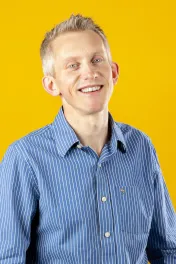
Hosted by Andrew Pain
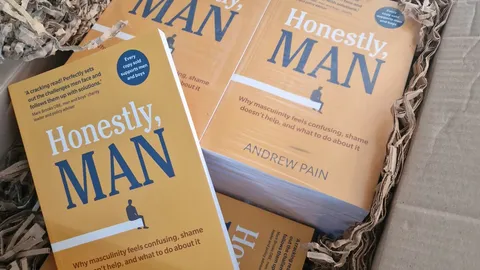
Andrew Pain is a Mental Health & Resilience Keynote Speaker who speaks from lived experience on resilience, burnout and workplace wellbeing. Host of the Men on Show podcast, author of the book Honestly, Man, and a TEDx speaker. Member, International Coaching Federation, and Mental Health First Aider trained.
More from Men on Show
Keep listening

Never miss an episode
Candid conversations with everyday heroes – ordinary men doing extraordinary things.