Men on Show · Episode 46
How to nurture boys into healthy, young men, without banning social media! with Richard Pomfrett
- 30 April 2025 .
- 54 min .
- Hosted by Andrew Pain .
From his website: In 2013, following many years of working with local young people through martial arts Richard Pomfrett created ‘Stay Safe!
Andrew hosts this podcast. His own keynotes are on burnout, resilience, imposter syndrome and difficult conversations.
In this episode
About the conversation
Since 2013 Richard’s passion for his work as pushed him to continually evolve and shape ‘Stay Safe! Workshops’ to fit the needs of young people today. It is through these specialised and unique sessions, that we aim to educate as many young people as possible. Raising awareness and passing on vital skills and knowledge at key stages in their development and helping prevent them from becoming part of the future dire statistics.
Key points of the episode
- His growing up experiences and influences.
- How he loves what he does, working with young people in schools, and how contrasting his school experience was.
- How some school situations still to some degree affect him now.
- How martial arts became a part of his life.
- The anti-bullying and peer mentorship programmes he runs in schools.
- How Andrew Tate and so much more have influenced teenage boys.
- The age that boys begin to be influenced by social media.
- The biggest online influence problems.
- The impact of the 2025 series "Adolescence" .
- How the "Incel" movement and Tate are not connected at all.
- The best time to chat with your kids about online influences.
- His thoughts on the Australian Social Media ban .
Men on Show shares lived experience and honest conversation – it is not medical or therapeutic advice. If you're struggling, you don't have to cope alone.
Samaritans: call 116 123 (free, 24/7) NHS: 111
Full transcript
Read the whole conversation
A complete, verbatim transcript of this episode – every word is the host's and guest's own; the topic headings are ours.
Welcome to Men on Show, the podcast, Candid Conversations with Everyday Heroes. Join Andrew Pain as he interviews fascinating guests, ordinary men doing extraordinary things. If you love the show and you think somebody could benefit from hearing it, why not tell them about it by giving it a share on social media? Oh, and at the end of the podcast, if you can leave us a five-star rating and a review, it really helps us more than you know, and it gets this important message out to more people that need to hear it the most. Right now, enjoy the next episode.
Hi, my name's Andrew Pain, host of the podcast Men on Show. I'm delighted to have another brilliant guest with us, Richard Pomfrett. Welcome to the show. As a former martial arts instructor, he's got over 25 years of experience working with children, young men in particular, young people. The founder of the Stay Safe Initiative, a community interest company which was set up for the purpose of educating, protecting young people. Based in the Southwest, collaborates with schools in the Southwest.
Been doing so since 2013, addressing key issues in schools, such as bullying, online safety, supporting schools to develop effective peer-to-peer mentoring schemes. He is the driving force behind Boys to Men, which I really want to get into today as well. It empowers boys and young men through mentoring and training to develop their emotional well-being and their critical thinking skills. Something is so important in today's environment. I'm really looking forward to getting into your work and of course talking about the mega-series Adolescents that everybody's talking about, has been talking about. Richard, welcome to the show.
Thanks for having me, Andrew. I think we just stopped there. That introduction pretty much said it all. I don't think I can beat that.
Growing up and role models
Oh, well, no, that's good. Well, I'm glad I pretty much covered it. Got it in the right order. So tell me about yourself growing up. What do you recall growing up? Was there anybody particularly that inspired you as a kid?
I suppose the obvious answer here, and I'm assuming lots of people do, would be my parents. That's quite often the obvious answer that people go to. And yet, to some degree, I would say, yes, my parents had a big impact on my life. I had a fairly normal upbringing brought up by two supportive parents. But it's not the first time I've been asked this question. So I think I'm going to give you a little bit more of an authentic answer if that's okay. And what I mean by that is I'm going to bring you back to me as a child when I was asked that question as a teenager. You're okay with that, Andrew?
Yeah, yeah, yeah, of course.
Read the rest of the transcript Collapse transcript
So this is a story that my dad has reminded me of multiple times. Going back now, probably, this was probably about early 80s. So I was born in early 70s, I'm 51. And I think this was probably about in the early 80s, my dad had heard an interview or something on the radio, and it was about role models. And the article that he was, the show that he was listening to, basically said that, and I don't know exact percentage, but when boys are asked who their role models are, a large percentage of the boys in this survey or study said their dad, their father.
So my dad thought, well, I'm gonna put that to the test and ask me. So I was at home one day, I must have been probably about 12 or 13. And my dad asked me that exact question. So he asked me, you know, who inspires you? Have you got any role models? Hoping that I would instantly say, well, obviously it's you dad. So my first answer, unfortunately, wasn't that. It was, oh, Daly Thompson. Now for the younger listeners that may listen to the show, they may not know who that is, but a very famous English decaf athlete.
And that wasn't the answer that my dad was looking for. So it was, oh, okay. So then he said to me, okay, Daly Thompson, right, okay. Well, forget about public people or sporting icons. How about people in your family? Again, prompted me to hopefully say dad. So then my second answer was, oh, well, obviously that will be Uncle Phil. And that it actually was my cousin Phil, but he was a lot older than me, so I always referred to him as uncle.
And so my dad never got the answer that he was hoping for. But yeah, absolutely, my parents played a big part in my life, but yeah, other family members and all, and obviously sporting icons. So yeah, that's my more authentic answer.
Yeah, I so remember Daley Thompson, because my dad was really into athletics, so that was the one thing that we'd all watch together. Like I remember those old style Olympics kind of, I was a 74 baby, so sort of the early 80s. Yeah. Oh, and you're looking back now. I mean, I can see it in my life, as several things that definitely shaped how I grew up. So by the time I got to a man, these things had affected me.
Can you look back or do you look back on your teams and think, well, actually, there were challenges that I particularly faced because I was a guy. Did you look back and see any challenges in particular that you can reflect on?
School struggles and boys' concentration
Yeah, oh, absolutely. I mean, ironically, I spend the majority of my time, and we'll get on to this later. I spend the majority of my time, my days working in schools with young people, which I absolutely love. But my own school experience wasn't so positive. So I struggled quite a lot in school. I'm dyslexic, only diagnosed as an adult. So as a result of that, I really struggled academically in school. I was quite good on the creative side of things and sort of like the sporty side of things, but academically was a big struggle.
I was also quite shy and quite a shy and secure child. So having that struggle in lessons and not having the confidence to ask for help in a lesson in front of my peers, that obviously in many cases led to me making poor choices in school. I quite often thought that it would be a lot safer for me to act out and potentially get kicked out of a lesson than run the risk of getting asked to read in front of the class or come up to the front and write on the blackboard.
So that meant that my school journey wasn't that great. Like I said, I really struggled. I enjoyed the social aspect of school, but even that, it was a little bit fractured. I was probably one of the only person in my friendship group that wasn't into football. I was quite sporty, but football just wasn't my thing. And I was the only one at my friendship group that had no interest in football. Plus I was completely crap at it, and that's probably had an impact.
So the lunchtime kick around was always a little bit of a struggle. And that quite often led to me feeling rejected, feeling being the last one to be picked, you know, when it was like the picking teams, or being impacted by people having to go at me for not controlling the ball properly. So that had a big impact on my confidence. And I think even now, even now looking back on that, even when I'm in social situations, certainly with unfamiliar men, and obviously football quite often does come up, even now that sort of impacts me, feeling like, oh, it brings me back to school.
So yeah, all of them things, I think, compounded. And, you know, there's, as young men, I always felt like I didn't have the confidence to ask for help. And so yeah, that definitely had an impact, I think, growing up.
Yeah, interesting. Yeah, I mean, for me, I was very much a late developer, but I was reasonable at football. So I didn't get bullied, but I knew my place in the pecking order. And that sense of almost feeling slightly helpless, because I knew that there were guys who were much tougher, a lot of very, I was quite a rough, comprehensive. And that definitely shaped how I then grew up as a man, some of the choices I made.
I used to really struggle to concentrate, whereas I now look back and think, you know, that boost of testosterone that we get as young men, as we go through puberty, it's no wonder really that I spent my life daydreaming, not wanting to be in the class, not being able to concentrate.
Oh, absolutely.
When, you know, I do wonder about the efficiency of our education for young boys as it currently stands. I mean, I know that's for another, not for the remit of this conversation perhaps, but when you work in schools, do you see that as a challenge in terms of boys' concentration in particular?
Yeah, I mean, absolutely I do. Now, obviously, I'm not a teacher and I'm not spending... My sessions are not like your typical classroom setting. They're very engaging. They involve lots of interaction. So I probably draw out the best side of things, but absolutely, you know, boys cooped up in that classroom environment, sitting down, expecting to listen, concentrate, I think is a bit of a struggle for lots of them. Yeah, absolutely. Like I said, for me particularly, my sessions are a little bit different to that. But yeah, I get the struggles, certainly for teachers.
How martial arts became part of his life
And what drew you into martial arts then? Because I know that's a big part of your life. Obviously, we're going to get on to your work shortly, but I'm just curious, was there a trigger for that?
Yeah, absolutely. So as a young person, I was a massive fan of boxing and always wanted to join a boxing club. Unfortunately, something I didn't mention earlier, but I wasn't into football. But as growing up as a young person, certainly a child and going through my secondary school age, ages, I was quite heavily into swimming and spent a lot of my time in a swimming pool and anyone that's done swimming or certainly at a high level.
And I got to quite a high level competing nationally. Most of my time was either swimming before school, swimming after school and swimming at weekend. So I had no spare time. So even though I was a massive boxing fan, that was like a real hobby of mine. I never had a chance to take up boxing, which I always wanted to, but swimming sort of dominated my younger years. So when I stopped swimming, it was probably my sort of mid to later teenage years, it was about 14, 15.
I then had a bit more free time. So a few of my friends, we joined a local kickboxing club, and I was instantly hooked. I instantly fell in love with martial arts. And then from that point, I spent the next about 32 years training in various styles from kickboxing, boxing, karate, went on to learning and teaching Wing Chun Kung Fu, and then also grappling sports like Brazilian Jiu Jitsu and stuff like that. So yeah, that really was a massive passion, and that's definitely shaped me growing up as a young man for certain.
How did it shape you? What did it do for you?
So I think it's just that environment allowed me to certainly growing confidence really being surrounded by obviously it's a very mal-dominated, it was at the time, quite a mal-dominated environment. So being around lots of men at various ages, obviously it's a really, it's a very respectful environment that you spend time in. It taught me work ethic, certainly made me feel comfortable in my own skin, having the freedom, I think, to sort of drop the ego and the, you know, the stereotypical masculine performance or mask that we quite often feel we should, you know, we should wear.
And as I said, just being around them, sort of like all age groups of men that are humble, that are respectful, yeah, absolutely. I think that proved a massive impact in me and provided lots of life lessons that I was learning subconsciously at the time.
I, because growing up, because I knew my place physically in the pecking order, there were times where I was very skilful at negotiating my way out of trouble at school, and those skills definitely saved me from getting a beating on a few occasions. There were times where I did wonder, if only I was a fourth Dan at Black Belt Karate fourth Dan, I could kick their butts. And I wish that, there were times I wish I could sort of have the skills to take on three people at the same time.
How did you do as a youngster, you fantasise about these things, you see Bruce Lee films or whatever, Steven Seagal films. Have you ever had to use your martial arts in like outside of the gym and training?
So fortunately, not that often. I think one thing that you gain from martial arts, and by the way, Andrew, you're not the only one that had them thoughts as a young person. You know, I definitely did. And I think every man that will listen to this conversation has probably had their visions. I think what I found for martial arts is that, and anyone that has ever trained in any kind of discipline, I think one thing it does teach you is it usually means that you're one of the less likely people that's going to engage in physical altercation.
It definitely sort of grounds you and gives you a realistic opinion on violence and how vulnerable we are. So, it's probably prevented me from getting into lots of situations, which in turn has supported me. There has been a couple of times where I have had to use it outside, and if I hadn't have had them skills or awareness, physical skills, then I could potentially have got hurt. So, yeah, it's come to my aid a couple of times, but fortunately, there hasn't been that many times that I've had to use it.
So, that's always a positive. My martial arts instructor always has said to me that the ultimate goal with learning martial arts is that you'll go for your whole life never, ever having to work out if you're actually good at it. But if you are good at it, that gives you that little bit of advantage if you need to. So, that was always my sort of approach.
How Stay Safe started
So, martial arts to young people. You've got your Stay Safe Initiative Boys to Men. Just tell me how those slowly evolved and tell us how they're different as well, because both pieces of work obviously are really important.
Yeah, so, again, like we've just been talking about martial arts, this all came from martial arts. So, at the time, I was living down in Cornwall with my family. I'm not from Cornwall. You can probably tell from my accent. I was born and bred in Essex, and had a young family in Essex. And then I moved to Cornwall. It was in 2007. And I was living down in Cornwall with my young family, and I was a martial arts instructor.
So, I used to teach adults and children in my classes. And I quite often, certainly from working with children, I quite often had parents that would bring their children to my martial arts class for one or two reasons. One, they were having issues in school, they were potentially getting bullied, or the parents were fearful that they would be targeted by bullies. And most of them, having your vision earlier, Andrew, thought that getting them into martial arts, and that will be in the environment that will solve their problems, toughen them up and help them to become bully proof, and that powerful child at school.
Now, obviously, for some children, it was for me, martial arts can have a massive impact, but it's not for everyone. It did for me, because I wanted to be there. Now, lots of parents that were bringing their children to my class, they wanted them to be there, but the children, that just wasn't really their environment. They didn't really thrive in that environment. And I would end up having conversations with parents a month later, a few weeks later.
How's Billy getting on? And I would always have the same conversation. You know, they're doing well, but they don't really want to be here. I mean, you want them to be here, but this isn't really the best environment. And as a result, this would end up to, very shortly, these children leaving. Now, this happened multiple times. And this led me to think, well, actually, we've got a bit of a problem here. We've got lots of kids coming from the local schools where I was based, coming to me because they were having issues in school.
And I wasn't, you know, for lots of them, I wasn't in a position where I could help them. So this led me to speaking to a few of the local primary schools, speaking to some of the local school heads, and sharing this issue with them. And this led to me to speaking to them and saying, look, you know, would you be happy for me to come in to school and talk to some of your year groups about bullying?
We had like a little anti-bullying programme within our children's course anyways, and I developed that a little bit. And it was met with, yeah, absolutely. So I did that a few times. They went really well. Even though looking back, they were in comparison to the programmes that we have now, they were pretty rubbish, I have to say. But, you know, they went down really well. Schools then said, you know, can you come back? And very quickly, this ended up being, I ended up getting invited to other schools.
And I suppose over the course of like two or three years, I ended up working with schools, lots of schools across the county. Then set up Stay Safe. We was under a different name at that time. We was called Stay Safe Cornwall. That involved into Stay Safe Workshops. And then it involved into the Stay Safe Initiative that we are now known as. And it become a full-time job. So I was running anti-bullying workshops with children in schools of all ages.
This then led us on to developing some peer mentoring sessions where we helped schools. We trained children up in schools to be peer mentors as a way of promoting the messages that we covered in our other work throughout the year, so the school could run with that themselves. Then, and again, this is like a real organic process, really. At that point, going back, probably would have been about 2010 now, 2011. At that point, children's online lives really started to grow.
We obviously, we talked about cyberbullying and the online world in regards to being unkind in our anti-bullying workshop. But at that point, children's online lives also started to grow, with the rise of gaming and social media and mobile phones and all these sort of things. So we then started to get schools say to us, you're doing some great work with bullying. Would you be happy for us to, would you be happy to come in and do a little bit more targeted work about a broader look at the online world?
So again, listening to our school's needs, went away, developed some programmes, looking at the online world. And then, yeah, started delivering workshops in schools, both primary, secondary schools, helping children stay safe online, helping them to have positive online lives. And then in more earlier years, so going back probably about three or four years ago now, again, the same schools that I was working with. And this has sort of led all of our work. We get asked, we go back, we go away and look, and then we come back with some ideas.
I started getting schools contacting me that I was already supporting with online safety, certainly secondary schools, saying, oh, we're hearing like a name that's coming up quite a lot with our boys. And you'll probably guess who that name is.
It's first name Andrew, is it? Second name?
Yeah, that's the, yeah, exactly.
Because you make sugar, something to do with sugar. Oh, that's Tate and Vile, sorry.
Andrew Tate and boys at secondary school
Yeah, exactly. So we're hearing this sort of Andrew Tate character mentioned in schools and the boys are sort of, you know, saying some quite worrying things. Would you be happy to come in and have a chat with some of our lads about people like Andrew Tate? Well, they just thought it was only Andrew Tate at the time, which I did, and again, these are schools that we were sort of supporting already. But this gave me the opportunity to come in and work with smaller groups of lads.
And the initial goal was to talk to them about online influence. And again, help them to think critically about these messages and where these messages come from. But it was, it became really evident really quickly that I went in there to talk about online influence and people like Andrew Tate. But it became evident really quickly that actually there was a lot of, a much bigger problem here that boys were dealing with. Which is one of the reasons why he was so popular, I think, for them.
So through the conversation I had with boys, I was hearing things like, you know, when I asked them, what appeals, you know, what do people like Tate do for you? What do you find so polarising? You know, we'd hear things, I'd hear things like, you know, well, people think we're a problem, and no one cares about us. We get treated differently to girls. And, you know, this Andrew Tate figure, like he understands us. And it was a real eye-opener for me.
It was like, wow, actually, you know, I've gone in to talk about this person, an online influence, but there's a lot more going on with boys, which I was at the time a little bit...
And how old are these boys? Because obviously, when we've been listening to you saying, starting with primary schools, we're now hearing the word Andrew Tate. So the boys that you're talking to saying that they feel like the world's forgotten them, they're a problem, how old are those boys? I'm presuming, I'm making the assumption here, that you're not talking primary school boys.
Well, at the time, it was secondary school. So these conversations... How are what year groups secondary school? So it was 7, 8 and 9, Key Stage 3. They were the year groups that I was asking to come in and talk to these groups to start with. Yeah. So that then prompted us to think, actually, there's a little bit more of an issue here, through conversation with schools. And again, this is how it's always worked out for me and my work is, okay, there's a problem here.
Let me go away. Let me sort of have a little look at this. Think of ways that we can tackle this. Work out a few programmes, come back to the school, trial them, run them, get feedback, develop them. So that's that evolved into us developing our Boys to Men programme. And it started with Secondary, but that instantly led on to Primary schools then. As time's gone on, so maybe a year later, quite often what I find in my work, what happens in Secondary school today, I then find out these conversations, these things impact Primary school maybe next year.
So social media, online influence, there's a natural progression. So it wasn't, it didn't take that long for them Primary schools. So actually we're seeing some sort of like some misogyny, we're hearing lots of misogynistic things. We're worried about this Andrew Tate figure. So then it prompted us to develop programmes for Primary as well. So now we work with this particular subject. We work with all year groups.
Okay, so I'm interested in terms of online issues. So I recall with my boys, once they hit sort of year five and six, so you're talking nine, 10, now their peers are starting to get phones and access to social media and things like that. So I'm assuming that for the vast majority of boys, Andrew Tate and the incels, who do of course very different things, you're not talking about them at eight or nine, but maybe as they start getting exposed to social media, potentially as they move transition from primary to secondary school, then potentially they are potentially being exposed to this kind of narrative.
But how prevalent really is it? Because I mean, and I can only sort of talk from parents that I know, and lots of people are worried about Andrew Tate. But when they go and ask their boys at age 11 or 12, they might have heard his name mentioned. They don't really know what he's about. My 11-year-old, I was explaining the incel movement to him the other day, only because he asked, because he heard me talking about it, wouldn't have a clue what it is.
What's the bigger problem here online? Is there a danger that in some ways, we're getting very worked up about Tate's influence, although I understand his influence is on the wane, it's declining, and we get very worked up about the incel movement through the Adolescence series, which we'll discuss in a moment. But is that really the issue? Are there bigger issues than that in terms of online issues?
Online content and a Netflix series
I think obviously Andrew Tate, it's a much bigger problem than just Andrew Tate. He's just one name. Now, his name does obviously pop up in our sessions, certainly for when I'm in secondary schools, and we talk about the kind of content that they see online. We talk about who they follow, who they listen to, and his name does come into the conversation. But it's more about content. It's the algorithm will feed them content. And that could be anything from these fitness bros that are telling them they've got to be ripped and have six packs and all look like ass.
It could be people telling them how they should dominate a relationship and control women. It could be that you've got to have this like extensive daily routine or morning routine before you go to school. It's very broad. And, you know, it's yeah. I mean, obviously Andrew Tate is the name that everyone knows. But that's just a name. You know, when I talk to when I talk to boys in primary school, they will talk about everything from Youtubers, you know, your KSI's and your Twitch streamers to the kind of content that they see online.
And they're usually better off describing that content than actually knowing who's delivering that content. As in, you know, just the narrative that runs through that content. But yes, definitely not just Andrew Tate. It's just the content that they see and the impact that has on them growing up that's more of a concern, I think.
Because what do you think about, I mean, obviously the Netflix series Adolescents has probably created more conversation around young boys in the last month or so than I've seen in years. I mean, it's just like everybody's got an opinion on it. Everyone's very worked up about it. I was out for a footy social. I play football on a Friday and we have a social every quarter. It's about 20 of us. Everyone's very worried about it. What do these emojis mean?
And any sort of conversation that actually, adolescence is drama, not a documentary, with a completely implausible plot line, is taken quite almost angrily defending it. I mean, what the problems that you see portrayed in adolescence, 13 year old boy feels rejected by girly likes from a stable family, gets involved in the incel movement, goes and murders the 13 year old girl, and it's the outpouring of that, that is the basis of the show. I mean, to me, it's the most implausible plot when you look at the research that you could possibly imagine.
But from what you're seeing from parents, your work with schools, how likely is that? Should we be worried about our boys at 13 years old becoming part of the ins... Or are there bigger things we should be concerned about?
Definitely bigger things that we should be concerned about. I mean, obviously that show has, you know, the impact has been, you know, it's been amazing. Now, obviously looking at, and you've mentioned it, it's a drama. It's not a documentary. So from the drama aspect, you know, I watched it, I loved it. I thought it was extremely captivating the way it was shot. This sort of like one-shot take thing. I thought it was powerful. I thought, you know, I really enjoyed it, but it is a drama.
It isn't a documentary. And I think lots of people, I think even it was, you know, the prime minister even, you know, mentioned it was a documentary when he talked about it on TV. I watched it with the view that actually, this is a great opportunity to shine a light on boys and young people about the issues that they face, the struggles that they go through. And I thought, actually, the result of this, it could be really positive.
It's going to open the conversation. It's going to make people that work with young people. It's going to make parents. It's going to give parents the opportunity to maybe have a few more open conversations with their children about their lives and their insecurities and their struggles. But that hasn't happened. I think as a result of this TV show, it's scared a lot of people. It's made people make rash decisions. They're talking about potentially showing this programme in schools.
I've got no idea what the basis, what the outcome would be from that, what the positive outcomes would be from that. It's worrying everyone. I mean, just as you mentioned this, the link between a, I think it was 13, a 13-year-old boy watching content online, and obviously Andrew's tape name was mentioned in that, the link between that and the incel movement, and then a violent crime to a young girl is just so far from reality. It really is.
There's just a massive gap between that. When we look at knife crime with boys, the 13-year-old is just not, they don't dominate the statistics. And the older age groups that do, it's generally male or male violence as well. So I just think the link that they made has just worried a lot, a lot of people. And I don't think it's, it hasn't promoted the messages that I was hoping it would promote, if that makes sense.
Yeah. I mean, as a parent, I understand that in terms of, there's a brilliant researcher. I mean, there's not many researchers on the Intel movement, because of course it's such a new thing, but William Costello obviously is the name. I mean, he's got to be really chuffed with his choice of PhD.
Oh, he's been on literally every podcast.
If ever you were going to choose, I think I'll do this topic as a PhD, and then like three years later, the world goes mad about your topic. I mean, what are the chances of that? So he'll be very glad, whatever prompted him to do that. But it is good research, and things like when he mentions the number of men, young guys in the Intel movement, that are actually autistic, really, really on the autistic scale. So he talks about how they are more danger to themselves than others. And of course, we say, oh, the Intel movement and Andrew Tate and the Man of Sphere, but actually the Intel movement can't stand Andrew Tate.
He said that they're not linked at all. Exactly. Yeah.
Online porn and parents being involved
So I feel like for me with Adolescents, it was a brilliant series like you. Me and my wife, there were a lot of aspects that we struggled with. I think in episode two, their portrayal of teachers either as blundering idiots, or as angry ogres. For me, I know plenty of teachers. I don't specialise in schoolwork like you do, but I do do work in schools. All the teachers I meet are very switched on. Absolutely. Maybe struggling and under resourced, but I felt it was a very disappointing portrayal of teachers.
I'd be furious if I was a teacher, frankly, having watched that. That's how I'm portraying my profession. And so I think that I had a lot of issues with the show. I don't know how you feel about this. So for me, like, and other parents listening to this, I personally, as a podcaster and from my own experience as a dad, would be saying to parents of the 11 to 14 to 15 year old, they shouldn't just be left in their room on technology.
It needs to be a public place where they're on. They need to, when they're up in their rooms, not have their technology up there with them. Because the bigger problem is online porn, which most of them will have watched, which actually, if young boys get addicted to online porn, then their tastes will become more extreme because that's what happens. What they expect from a relationship will get weirded and warped. When I say weirded, I've just made that word up, but it will become warped, it will become more strange, because that's what happens.
Then, because their tastes become strange, if they are then in a relationship, and then that young girl raises an issue, a concern, maybe she tells her mate it will be all over social media. And so for me, online porn, the danger of guys expecting things of girls, which are just not appropriate for that age, the danger of guys just becoming addicted to porn, and then not actually going out and doing fun stuff that would help them to connect with women, for me, it's a much bigger danger.
It's much more prevalent. Most of our... Would you see that as well, or do you think I'm over doing it on online porn, and maybe I should just rein it back in a bit? That's not the key issue.
I mean, it's obviously, it is an issue, but it's not the only thing. I mean, obviously, all children are different, all their online activity is different, and they will be influenced in many ways. So I think the problem is, and that show, it did touch on it. Jamie, he's in a bedroom, he's on, I think it was a laptop in the show. Parents are not really sure what they're doing. And that is a concern. And I do lots of work with parents when we look at supporting their children in their online lives.
And children left to their own devices, they're going to be on their devices all the time. And if you're not there to supervise, you're not there to have conversations. So the advice that I give to parents is, it's all about understanding what your child does online. It's all about understanding the online world, being involved, being curious, playing an active role in what they do, go on this journey with them, the earlier the better. I work in primary schools with children that are very, very young age, that have already started to have quite big online activities.
And if parents can get involved then, that's the best way to start these conversations. I always encourage parents to talk about boundaries and acceptable use, build this sort of like flexible framework of appropriate use online, and encouraging them to use the online world in public parts of the home, not tucked away, locked away in their bedrooms with devices. Obviously, there's a safety aspect there. If they're not there, you don't know what they're doing. You don't know what they're watching.
You don't know who they're speaking with. You don't know who they're connected with. So obviously, that plays a massive role. But when I talk to parents, I try to highlight something else. If you can encourage our children to access the online world in public parts of the home where you are around them, you now get to talk to them about it. Who are they watching on YouTube? Who are they gaming with? Who are they connected with?
And that allows you to enter that world with them and go on that journey with them and have them everyday conversations. I think for lots of parents that are not doing that at a young age, certainly at a primary school age, what happens is when their children get into their teenage years, certainly later teenage years where then the parents are more aware of some of these more potentially worrying things like online porn, like what they are watching on social media, what are they doing, what are they sharing, who are they doing it with?
They quite often feel like, now that's the time to have these conversations with them. And having three children myself that are all either in their late teens or early twenties, I know from experience that trying to have a conversation with a 15 year old about online porn, when you've never spoken about their online life before that, is gonna be an interrogation, you're gonna be shut out of the conversation, it's gonna be really hard. So what I try to do with parents is play an active role from day one, talk about what they do, talk about who they watch, game with them, watch with them, play with them, talk about it.
That allows you to have these everyday conversations about the impacts of what they see and do online. And it may be low level at the start, but then that allows you to then have that conversation in a more of a serious age appropriate way when they get older. And it could be pornography, it could be how they interact online when they're having a relationship. What are they sharing images of themselves? And again, these just become normalised conversations that if you don't do it at a young age, it's really, really hard later on in life.
Yeah, I think that's right. I think often we just leave our children to their own devices up in their rooms because we're tired.
And just hope nothing goes wrong.
And we're tired, they're tired. If all is quiet, thank the Lord for that. I can actually get on and chill and actually it takes effort to go up into the room or it takes effort to say, no, it's down in the kitchen. That's where your phone lives down there. And remembering that we pay for all this stuff. So we should expect to be able to spot check phones. But like you say, if you suddenly start trying to spot check a phone at 15 and never did before, I'm not gonna go down very well, but if you start, that's the expectation and it's reinforced again and again and again, and you're more likely to be able to make that challenge when they're 15.
So much easier.
Banning social media, and the Australia trial
They're not, yeah, yeah. Do you, what do you think about a ban on social media? We see this being trialled in Australia. Be interesting. I'm glad they've taken that step so we can see how that would play out potentially. Do you think that's, I mean, are you all so interested, are you open, I feel like I'm open minded. I feel like I want it banned, but I feel like if the lessons from Australia that come back are really positive over the next few years, maybe it's something we should look at. But do you disagree with that? Do you think that's the wrong approach?
Again, I'm open minded. With all these movements, I generally find myself in the middle. Now, I get the thought process, you know, by banning, and this is reasons why they're doing it, you know, the mindset is if you ban social media, you are going to take, you are potentially going to take away some of these risks. So, you know, you could potentially think, well, okay, the harm that they may see online, the content they may see online, and there are lots of harmful content that children can be exposed to on social media, that could potentially take that away.
When we look at, you know, bullying and online hate, grooming and, you know, inappropriate contact from people they don't know, they are all connected to social media. So the thought process is, you know, get rid of social media, and that will take all these problems away. The problem is all of these things happen in other areas of the online world. Banning social media isn't the same as banning the online world. And the online world is a massive part of all of our lives, including our children.
It's how they communicate with their friends. It's how they, it's where they spend time for enjoyment, you know, gaming, socialising, being entertained. The, you know, this all happens off social media as well. So banning social media doesn't mean that these things are not going to happen. They can get exposed to all of that content. They can get exposed to all of these risks in other areas of the online world. And it, moving social media will just move the problem somewhere else.
And I don't think it's the long term solution. You know, phones are here, technology is here, social media is here. I feel it's so, it's far more beneficial to educate, help children build, you know, digital literacy skills, help them build like really well-needed critical thinking skills, help them build resilience, help them navigate the online world. Because that allows them to build skills, taking things away, whether it's banning phones, banning social media, this prevents them from learning how to use this, this part of their life effectively.
And it's not going to go away. So my fear is that you restrict, you remove, you take away, and then you give it to that child when they're, I think Australia is at 16. They haven't got the skills then to navigate that world. They're at a deficit, they're behind. I think it's much easier to introduce technology in a safe, appropriate way. Now, this is not going to happen in every household, but I'd like to, in an ideal world, it would be, allow them to use the online world, supervise them, talk to them about it, help them build skills, help them navigate it, have these conversations about what they see, how it impacts them.
And then it's done slowly. It's done with them. Then eventually when they get older, they can then navigate it on their own. That, I feel, is the more healthy approach. Because social media is only one aspect of the online world.
Yeah, because I suppose if you imagine a world where social media has been banned, where smartphones have also been banned. So they've got their 2G old style Nokia. That's what you've got, whether you like it or not. For me, the other issue is we know that birth rates are falling. So children have less siblings than they used to to play with and hang. There is a loneliness problem, partly caused by a seriously declining birth rate. So we know that's an issue.
We know that both parents generally of a household are working. If indeed it's a single parent, that single parent will be working. So immediately, if you compare with 50, 60 years ago, before we had phones, before we had social media, they would have had more of a family to do stuff with, that would have meant if you take that stuff away, they've still got some stuff to do. When I think about the impact on youth funding, in government for youth funding since austerity, the loss of hundreds of youth centres, the loss of thousands of youth workers, 50, 60 years ago, take phones away, which of course we didn't have social media, there was stuff to do, places to go.
So for me, the concern, I suppose, if we just ban social media for under 16s, under 18s, we ban smartphones for under 16s, under 18s, there does then need to be some other stuff that comes into place, given that birth rates are falling, given that the youth centres, there's far less stuff to do than there was before. And so for me, I don't know how I feel about a total ban. To me, I find that quite appealing to hear as a parent on the one hand, but I feel like there's a whole bunch of other stuff that would need to be addressed at the same time for that to work. Otherwise, as you said, it's how people, how many people connect, spend time just to take it away, got to replace it with something.
Bans, doing it in secret, and age limits
Yeah. And, you know, for lots of children, this is a real pot, you know, the thing is we get taken away by headlines and things that we see online, you know, it's coming from the online world, which is ironic, you know, and it's easy to think that, you know, children online, that they're all going to be seeing, you know, that they're all going to be seeing really harmful content, they're all going to have mental health issues.
If for lots of children, and I work with thousands of children in this area, you know, lots of children, the online world is a lifeline for them. It's a positive place. Now, obviously, things go wrong, and that can happen offline as well, but it can be really positive. It's how they engage, it's how they connect. And for lots of children that may struggle socially in the offline world, that could be someone that's neurodiverse, that the way they communicate face to face is a little bit harder.
Again, that online interaction could be a lifeline for them. And just one more point before we move on on that is my other fear is that when you ban and you restrict, well, that doesn't mean it disappears. That means they're not allowed to do it, but that doesn't mean they may not do it in secret. And the problem with that is if you ban things and take things away, children will find a way. And that means that they could be using social media without their parents knowing, and they could be accessing things without their parents knowing.
Because they're not doing it, parents won't think they are doing it, so they won't have conversations about it. And that means that if something happens and the child is online in secret, you know, they've smuggled a mobile phone or they're accessing platforms that they're not allowed to use, then if something goes wrong, then if they find themselves being impacted by what they see, they're not gonna seek help. You know, and I hear this a lot in schools, that, you know, I'll be told off, I'll have this taken away, or I'm not really allowed to be doing this.
That means that that child is then gonna suffer in silence. And that's also a massive fear of mine, is that if they do find a way, and that way ends up leading them into situations where they now feel uncomfortable, or even like they're in danger, well, they won't go to the adults in life to seek help. And that's a massive concern, it really is.
Yeah, and this is my cynical side coming out here. I actually think because parenting styles have changed, and parents don't want their children to be upset, deal with hardship and all the rest of it, probably more so today than ever, I think even if it was banned, parents would just capitulate if their kids begged them enough. And then the parents whose kids don't have it, they'll then capitulate, because they won't want their children to be the only ones that don't have it.
So in theory, there's a ban, but actually parents have completely facilitated a way around that ban anyway, by putting their own, and parents will do that, and I see that in our kids' schools, there is this kind of, it's not that, we have not bred snowflakes. Our youth have really difficult stuff to deal with that I didn't have to deal with, but I think parenting styles today are a bit snowflake-y, if you compare perhaps where they were. I don't know whether you see that.
Yeah, absolutely. And again, most of the social media platforms are 13 plus, so WhatsApp, TikTok, you name it. Most of them are 13 plus apps. Okay, so that means that children in the early year in secondary school and all the primary school age groups shouldn't be on these platforms. They all are. So already, you know, I work with eight-year-olds, believe it or not, Andrew, I work with eight-year-olds that have got Snapchat accounts and that are on TikTok.
Wow. I work with nine, it's definitely by the later year groups, year five and six, loads of them are. They're all on WhatsApp. So already this idea of a ban, it already is not working because they're technically too young. So again, it's just like, you know, parents are already allowing them to use these things at a much younger age than that's already stated. So raising that age, it's not going to work.
Finding Richard Pomfrett, and a last message
That's interesting. So Richard, I mean, you do some amazing work with Boys to Men, with the Stay Safe! Initiative, predominantly in schools at the moment in the southwest of the UK. For the amazing work that you do, how do people get hold of you? What's the best way to have a conversation with you if they want to find out more about your work?
So there are two websites. So we've got our Stay Safe! Work, and that would be our sort of anti-bullying work and online safety work and mentoring training. They can find us through the Stay Safe! Initiative, all one word, .org.uk. That will take them to our work. And our Boys to Men work, which again is our programme that's focused with boys, primary, secondary school, and later years, higher education. They can find that information from boys with a Z, hyphen two, .org.uk. So yeah, Boys to Men and Stay Safe! And obviously, my name, Richard Pomfrett on LinkedIn, is generally where most of our work is promoted.
Brilliant. And in terms of just concluding the podcast, on a positive note, we've talked a little bit about the work you do, some of the challenges you're seeing online, adolescents, of course, social media ban, all these juicy topics that are being banded around in the media. If you could sum up a message of hope for people listening to this podcast in a couple of sentences, what would you say?
Oh, right. Okay. A couple of sentences. So, okay, let's split these two sentences into, I'll give one to adults and one for young people. So I think my message to adults would be, don't underestimate our young people. They are our future role models and our future leaders. They are very switched on. They're not all influenced by what they see online. They can think critically. And my job when I work with boys, certainly boys, is to really help with that.
So yeah, don't underestimate them. And I think for young people, my message would be, spend time with people that you feel comfortable around. Be yourself and remember that the world is a better place with you in it.
Lovely. I love that. What a lovely way to close the podcast. Richard, I mean, I'm so grateful for your time, for your insights, for the work that you're doing is amazing. Thank you for being a guest on the show. Wish you the very best moving forward.
No problem. Thanks very much for having me, Andrew.
Thank you for listening to Andrew Pain's Men on Show. If you could leave us a five-star rating and short review, it would be really, really appreciated. It helps us get this important message out to more people that need to hear it the most. See you on the next episode. Thank you for tuning in.
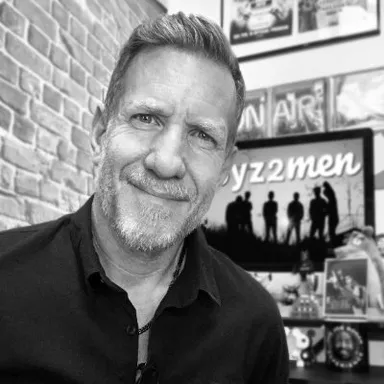
About the guest
Richard Pomfrett
From his website:
In 2013, following many years of working with local young people through martial arts Richard Pomfrett created ‘Stay Safe! Workshops’. His vision was to help educate and protect as many young people as possible on the subjects of bullying and staying safe in their community. It was by starting off working closely with a handful of local schools, that gave him the opportunity to develop and create such unique and effective programmes for both.

Hosted by Andrew Pain
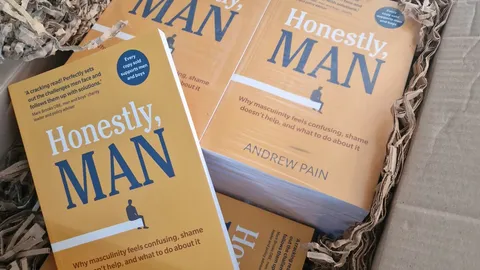
Andrew Pain is a Mental Health & Resilience Keynote Speaker who speaks from lived experience on resilience, burnout and workplace wellbeing. Host of the Men on Show podcast, author of the book Honestly, Man, and a TEDx speaker. Member, International Coaching Federation, and Mental Health First Aider trained.
More from Men on Show
Keep listening
Insights
Read next
Never miss an episode
Candid conversations with everyday heroes – ordinary men doing extraordinary things.