Men on Show · Episode 45
Why the motherwound stops men from growing up and realising their profound potential with Rick Belden
- 16 April 2025 .
- 42 min .
- Hosted by Andrew Pain .
Rick Belden is a poet, author, artist, and men's coach, and a respected explorer and chronicler of the psychology and inner lives of men.
Andrew hosts this podcast. His own keynotes are on burnout, resilience, imposter syndrome and difficult conversations.
In this episode
About the conversation
Find him on Instagram (rickbeldencoaching), Bluesky (rickbelden), and TikTok (rickbeldencoaching).
The Huffington Post article he referenced during the podcast is called "Men and the Mother Wound" and it's available here.
Key points of the episode
- Unpicking the "mother wound" .
- How he modelled himself on other people thinking they were more than him, but realised later they were doing exactly the same thing!
- How he did not have a father he could talk with about anything.
- How "back in the day" is somewhat romanticised.
- How he wanted to make money to get out of the house, and to prove to his Dad he could do dangerous work like them. To prove he was a man.
- How eventually he moved into IT but was still unhappy.
- How men are desperate to be heard!
- Why men in their early 20's are having trouble getting their lives started.
- How your relationship with yourself is the most important thing.
- How men are shamed when they try to follow the new advice of "open up and be vulnerable"...and why this needs to change. Fast.
Men on Show shares lived experience and honest conversation – it is not medical or therapeutic advice. If you're struggling, you don't have to cope alone.
Samaritans: call 116 123 (free, 24/7) NHS: 111
Full transcript
Read the whole conversation
A complete, verbatim transcript of this episode – every word is the host's and guest's own; the topic headings are ours.
Welcome to Men on Show, the podcast, Candid Conversations with Everyday Heroes. Join Andrew Pain as he interviews fascinating guests, ordinary men doing extraordinary things. If you love the show and you think somebody could benefit from hearing it, why not tell them about it by giving it a share on social media? Oh, and at the end of the podcast, if you can leave us a five-star rating and a review, it really helps us more than you know, and it gets this important message out to more people that need to hear it the most. Right now, enjoy the next episode.
Hi, my name's Andrew Pain, and welcome to Men on Show. And I'm delighted to have another fabulous guest. From a bit further away than normal, we have had guests from America on the show before, but not for some time. Rick is from across the pond, he's an author, he's a poet, he's an artist and a men's coach, exploring men's issues, masculine psychology, and recovery from trauma. The thing that I really want to unpick today is this thing called the mother wound, which I've never really heard of, I must admit, till I met Rick.
But Rick's done some research on this. I was doing some great work on the mother wound, and I think it's actually the more that I've learned about it from speaking to Rick and then looking into it a little bit, the more it's like, wow, actually, that's a really important topic. So I'm really excited to delve into this topic. Thank you for giving up your time, Rick, and welcome to the show.
Thank you, Andrew. I'm happy to be here. I'm happy to have the opportunity to chat with you about this topic and whatever else we get into. Brilliant.
Male role models and growing up
So just to sort of start with, growing up as a guy, in your formative years, do you recall now looking back that you faced any particular challenges, that looking back, you're like, yeah, that's because I was a guy. I faced these challenges and it was difficult because I was a guy. Was there anything that stands out to you?
I think that it's the same thing that a lot of men from my generation might say, which is that there were some pretty tight constraints about what were expected of us as we traversed that territory between boyhood and manhood. So that very sort of treacherous territory known as adolescence. Many of us didn't have a lot of guidance and a lot of help. So what we had to do was observe the older male role models, maybe fathers, uncles.
We had some male school teachers, coaches, and then whoever was around in the media, whoever was around in the movies, whoever, you know, musicians we liked and things like that. And so, and peer support. So basically, I know that I modelled a lot of my ideas and my narrative about how to become a man by watching my other friends my age, who I thought were more charismatic or more athletic or more interesting or more confident. I didn't know at the time that those guys were having the same struggles I was, and they were also basically mimicking other people, and just trying to put on the best performance that they could.
So I think that was, I've always felt like there's a lot of pressure to be good at sports, and be built a certain way and look a certain way. And that's an ideal that a lot of boys cannot attain, whether it was back in my day or whether it's now. So I think that was one of the biggest challenges, and I didn't have a father that I could talk with about anything. So I was constantly observing and trying to pick up cues from the environment, whether it was around me or out in the world, to try to formulate some idea and some concept of what I'm supposed to be moving into.
Yeah, because I think sometimes we can romanticise a little bit how it was back in the day. On the one hand, we say, well, family structures have changed. Both parents are working now in a way that perhaps was not so common 40 or 50 years ago. Smaller families now, we see that birth rates falling, so less likely to have siblings around, less activities here in the UK as a result of austerity. Youth fundings take such a hit.
So we have the closure of youth centres, the loss of youth workers. And so we can always look back at 40, 50 years ago. We would say, well, today is a real lack of role models. It's far less male teachers than there was back in the day. But actually, what you're saying is back in the day, when you were growing up, you felt for you there was a lack of role models.
Read the rest of the transcript Collapse transcript
There were men around, so I was fortunate because I had extended family on both sides. So I had uncles who were, they were great in their way, but they were very closed down. They had, they had, they were following the path that was given to them. And even that long ago, there were a lot of social dynamics that were shifting. And those guys, my father's generation, they were struggling. So for example, at one point, my mother wanted to get a part-time job because for the two children she had at the time, me and my younger brother had moved out of elementary school.
She didn't have much to do. And they got into gigantic fights about that because he felt, number one, he was very controlling, but we'll set that aside for the moment. He also felt that it was his sole responsibility to support the family. And he was working two or three jobs and just barely getting by. But even with that, I think he felt like if she has to go out and make money, that's a bad reflection on me as a provider and as a man. I'm failing and I don't want to feel that way.
His father and a sawmill
Oh, wow, wow. And I was going to ask actually, you talk about motherhood, and obviously we'll get into that. How would you describe your own relationship with your parents, with both of them, your mom and your dad?
My father, he's a blue collar guy, so he worked in a factory. And he was terrifying. He had a lot of anger issues. He was extremely volatile. And I was scared of him all the time. He was verbally and psychologically abusive. He was physically abusive at times, although the threat of physical abuse was more common than him actually doing it. So I loved him dearly. He was the parent that I felt the most... I wanted to bond the most with him, but he was unavailable to me.
He was just really emotionally unavailable, just a real unhappy guy. And so my mother was very interested in me when I was a baby. And as I got older and more babies came, she became less and less interested in me. But she was the only parent that I really could have conversations with. She was the only one I could kind of rely on for emotional support. And so I had this real sort of sharp dichotomy between the two of them.
I had my father, who I wanted to be like him, more than anything in the world, and I wanted him to like me more than anything in the world. But my mother was available and gave me the feeling that I was safe with her. Like she was the good one and he was the scary one.
Yeah.
And that as a dynamic, what did that do for you sort of growing up then as sort of into a man? Was it that that gave you an interest in psychology or did that come later for you?
Well, as I got older, as I got into my teens, I became probably earlier. I started to become determined that I was never going to be like my father because of the way he had treated me. And I also decided that I would never have children unless I was 100 percent sure that I wouldn't do the same thing to them. So as I moved into adulthood, I was a very bright student, and I had offers for scholarships for college and everything.
But all I wanted to do was make money so I could get out of it. So I took a job at a sawmill after high school, and I worked there for a year and a half. And one of the reasons I took it is because I wanted to prove to my father and my blue collar uncles and grandfathers that I could do hard, dangerous work just like them. So that was part of my idea of how I can prove that I'm a man.
Get a dangerous job and make almost no money, and then they'll recognise me as a man. It didn't work. It didn't make any difference at all. But that was part of my rite of passage. And so I found my way to Texas, and I gradually found my way into college, and I wound up getting a computer science degree and going out and working in information technology. But I was so unhappy still. And I was like, I got away from that horrible family situation that I grew up in.
I moved halfway across the United States. So I solved the problem, I thought. But what I didn't understand at the time is I brought the problem with me because it was so internalised for all those years. And that's when I started thinking, oh, there must be some sort of answer here. There must be some way for me to understand what's going on inside me, what's going on inside my mind. And somewhere along the way, I thought, oh, psychology, that sounds interesting.
And then I started looking into it, and I started to do some self-teaching. And I hooked up with a couple of older men that were helping men in that way with psychological approaches. And then I went, oh, wow, this is something I absolutely need to know more about.
Men who want to be listened to
And is it mostly men that you serve today through your psychological work?
Yeah, it's 90%.
90%, and in which case, given that you support men psychologically, emotionally in terms of dealing with trauma, what are the trends that you're seeing? Are there any particular trends that you're seeing from the men coming to you? What are they saying? What challenges are they reporting?
Well, there are some age-specific differences. Because I work with men from, I probably worked with men from 20 or 21 years old up to 70. So stages of life have an impact. But one of the things I've noticed over and over again is, these guys are just dying for somebody to just listen to them. Just listen to them with some curiosity and some genuine interest, without trying to steer them, without trying to problem solve for them, without trying to shut them down, just let them talk.
And it doesn't mean I have to sit there silently, because I don't. I want to have a collaborative conversation with these guys, because that's really two things, I guess, Andrew. It's like, they need to be listened to. They're just dying to be heard. But they also want to have someone engage with them conversationally around their inner lives, right? The things that really matter to them, that there's really no space to talk about out in the society.
And some of them have wives or girlfriends, but it's a disaster for both parties if a man just leans completely over on a wife or a girlfriend as his only confidant. Because for one thing, that's a job nobody can do for very long. And for another, there are things about a man's experience that a woman can respect, and she can be empathetic, and she can sort of imagine her way into it, but she can't relate to it, and understand it in the same way that another man can.
And vice versa. I mean, you know, I'm helpful to the women that come to me, but I am under no illusion that I can actually fully inhabit their experience. I can't.
Yeah. So I hear what you're saying, that obviously individual challenges vary depending on the age. That makes sense. I imagine a grandfather is going to have somewhat different challenges if he's retired and trying to find his new way in life than someone that's just started work or a new father. But what you're saying that you see as a common thread, so tell me if I'm wrong, is that there is a real desire from the men that you're listening to to be sincerely listened to and heard and engaged with having been listened to. That's what you're saying.
Yes. In other words, have a meaningful conversation about the things that are of intimate importance to them. It can be all sorts of things. It can be their childhoods. It can be their feelings of inadequacy at work. It could be a lot of men feel, there are a lot of guys who have positions of authority in the workplace. And when they go home, they just feel like a complete idiot. They don't know how to transfer their skills, their leadership skills from the workplace into the home environment in a way that actually is functional.
And so, yeah, as you said, it varies a lot. I mean, I have a lot of guys in their early 20s that are having a real hard time just getting their lives started. And that's...
The start-up costs for young men today
Why is that? So, why is that so hard? Is it the cost of living makes sort of the milestones quite difficult? Owning a house, owning a car is actually going to cost quite a lot, and actually the cost of living has gone up. Is that an issue, or is there a different challenge there?
Sorry, I think that's definitely an issue. I mean, the startup costs for a young man of 19 or 20, or let's say 22, now, as compared to what they were for me, it's just a completely different universe. So that is part of it. But a lot of the guys that come to me are coming out of family systems that were disrupted by the wars, and they did not have a father around, or their relationship with their father was sporadic because they were in different parts of the country.
And, you know, I'm not here to slam single mothers, you know, at all. But at the same time, it's very difficult for one person to do a job that really is a two-person job. And the absence of a father is felt. And that's, I think, that's a big factor.
Where the mother wound term comes from
So tell me about the mother wound. Describe to us, because for a lot of people listening to this, they probably haven't heard that term before. So, describe to us where that term comes from, how you stumbled across it yourself, what it is. Give us a bit of a summary, if that's okay.
That's perfectly okay. I was thinking about this before our conversation, and I was like, where, when and why did I start using this? And I thought, well, are there earlier references to this? And I couldn't really find too much. There's a guy named Michael Gurian, if I'm pronouncing his name correctly. I have an article that was posted from him back in 1995 called Motherworked. And that is in my archives of all the stuff I collected. That's the oldest thing I could find that was basically in the lane that I'm talking about here.
And then I found one other one from 2011 that he was calling the mom wound. And so, there are some precedents for it, but most of them were about mother daughter relationships. When I first got into what was maybe still is called men's work back in the late 1980s and early 90s, the focus was on something that was called the father wound at the time. So basically, the injury in terms of your psychology and your emotions, and your development from having a disrupted or non-existent or abusive and neglectful, whatever relationship with your father.
And that's where I was at the time. That's what I felt like. That's what I felt I had. And so I heard a lot of discussion about the father wound. And as I worked through that over the years, I started to become aware that there were some issues with my mother as well. And I thought, and I got into it, and I thought, well, why doesn't there, why don't I ever heard anything about the mother wound?
It's like, I think that's a real thing. And so I started writing about it and posting some stuff on social media. And people started asking me, you know, men would chime in, they go, where can I find out more about this? And I thought, I don't know. And so I wrote an article called Men in the Mother Wound for Huffington Post that was posted nine years ago. And to my knowledge, that's one of the first things that I'm aware of.
I'm the subject of the mother wound as it applies to sons rather than daughters. And so that's a little bit of background. What I like to do, Andrew, is just read you the definition that I used. It's a little bit technical, but that's okay. We can take it apart and talk about it. But I like to get it out there because other people are using that terminology now, and I want to be clear about how I'm using it. True. So I'm going to read just for a moment here.
That's good.
This is the very beginning of that article. A mother wound may be thought of as an injury to the psyche of a child, resulting from significant dysfunction or disruption in relationship with a mother. In some cases, it is the result of a mother's absence or unavailability due to death, illness, adoption, or other circumstances that dramatically separate the child from the mother. But more typically, a mother wound is a complex of injuries to the child's psyche received over many years, often as a result of the mother acting consciously or not out of her own woundedness.
One of the most severe kinds of psychic wounding occurs when a child's primary function in the relationship is to be used by the mother to meet her own narcissistic needs.
How the mother wound affects men
Interesting. So, yeah, so the mother, so I'm just going to paraphrase my understanding. Yeah. So the mother injured herself may have narcissistic tendencies, so needs the adoration from the child, which doesn't change. I mean, it's not appropriate anyway to need your child to adore you as a parent at any age. And because of that need for adoration, the relationship is just a bit messed up. Yes. And then there is the other side of a mother wound where the mother may not even be present due to, as you say, death in some rarer cases, I suppose the mum's walked out, although it doesn't often happen.
So that's a good description. No surprises. I suppose in the description, that seems straightforward. The people that express that they could have a mother wound, or what symptoms do you see? How does this play out? How does this affect? I mean, you say, particularly with men that you work with, what is that doing to men, practically speaking?
Well, a number of things. The first of which might be, it makes it, if you have this and it's not resolved, it makes it virtually impossible for you to stand on your own as a man. You can't really grow up, because in that sort of enmeshed relationship that I just described, not the one where the mother is absent, but the one where the mother has basically been sort of overwhelming, and has kind of subsumed your identity as a person, you can't really grow.
Nobody can really grow into an adult without separating from their parents psychologically. You have to do that. And in a lot of these kind of relationships where there's a mother wound, the son feels obligated to the mother to take care of her feelings. He feels responsible for her feelings. And so, for example, you might have a man who's married, and he's having a problem in his marriage because his wife feels like she's not the top priority.
That whenever mother calls, he just drops whatever's going on with her, and he focuses on that until that's over. A lot of these men have problems in terms of boundaries in their relationships with women because they were raised with a mother who violated their boundaries constantly and didn't consider their boundaries to exist or be valid at all. And so it conditions the boy to take kind of a subservient position when he's in a relationship with a woman.
And that doesn't work. You each need to have your own position and you need to maintain it. And it can be really difficult for a man to understand what his feelings are and what his needs are in a relationship with a woman if he comes out of that kind of earth, if he's still got that kind of active mother-woman situation going on. Because he's not accustomed to his needs being important in a relationship with a woman.
He's not accustomed to being able to express them. And in a lot of these situations, the boy gets parentified, right? So either the mother, either the father is gone, or the mother is in a difficult relationship with the father. And she basically meets the emotional needs that her husband's not meeting through the son. And so the son comes out of into adulthood with a sort of a unconscious understanding that he's responsible for a woman's feelings. And he is supposed to make sure that she's always happy, never upset, and he kind of has to convince her that he can do a good job of caretaking for her emotionally, and then just setting his own needs aside and kind of forgetting what they are.
Do you find with the mother wound in your work on it, presumably you share your thought that you've been published in the Huffington Post, you're saying, how have other counsellors, therapists, thought leaders, psychologists, responded to that term and what you're saying? Because I mean, I'm just making a suggestion here, but I know there's definitely been a reluctance, probably still is in the UK, around something that could be seen to be critical of women, particularly mothers. You can be critical of fathers, plenty of that going about, but you might want to tread a bit more carefully if what you're saying could be conceived to be critical of mothers. How have you found people respond to the mother wound? Have people embraced that as an idea, rejected it, rubbish it, ignored it? What have you found?
I think it's coming into more sort of acceptance conversationally. When I started posting about mother wound stuff online and on YouTube, there wasn't much of anybody else talking about it. And now, if you do a search on mother wound on Google, on YouTube, and even mother wound for men, you're starting to see more hits on it. So I think there's more and more of a willingness on the part of just regular people, men and women, to take a look at this, and see if maybe this is a factor for me as well.
As far as, I can tell you I did a call-in show, a live call-in show, the biggest station in Jamaica a few years ago. And the host was watching social media during the interview, and it was just lighting up with people saying, you shouldn't talk bad about your mother. This topic should not be on the radio. So, there are some cultures where, and I know because I work with men internationally, it's like there are some cultures where it's a lot more difficult to even bring it up as a possibility.
But again, I think things are starting to shift a little bit with that. I'm not saying it's like catching on, or like it's a turn into a big thing or anything like that, but I think people are starting to get more of a sense. And I think some of that has to do with a greater sort of understanding on a part of the general public of both narcissism and trauma. And so people who are, I think people who have some familiarity with those concepts find it a little bit easier to consider the possibility that, well, maybe either parent is capable of operating in that way and leaving me with that kind of damage.
Whether research on the mother wound would help
Yeah. And when you look at it practically, yes, we know, for example, suicide is something that is rightly talked about. It's completely tragic. Here in the UK, three-quarters of people that die by suicide are men. But that still leaves a very significant proportion of people dying by suicide as women. We know, I was reading some stats, statistics around the number of people suffering from premature, well, they died of premature death due to alcoholism. And you're three times more likely to die from a death, a premature death from alcoholism as a guy than a woman.
I can't remember the exact figure. The number of women, though, that died globally from alcoholism was really high. Surprisingly so. And so these women are out, they are mothers, they're somebody's mother in many cases. So for me, it's quite, it sounds quite normal. Sounds, it's surprising that it's taken until the mid-90s for there even to be a reference to it. And to me, to be able to talk about it openly and think, well, is this a thing?
And get some research really done of large samples would be a really good thing. And is that where, for you, what do you want to see in the next five years for the mother wound? Are you looking for a really big piece of research to take place on it, for it to be recognised in the States? Is there a particular aim you've got over the next five years?
Well, I'm not a clinician, so research is not my area. I think if research were done, it would be helpful, because for a lot of people, they feel more comfortable if they see that as a foundation. For me, I would like to just continue to see the conversation open up, so that men feel more willing to consider whether you want to call it a mother wound or whether you want to call it whatever you want, to consider that there could be aspects of their childhood relationship with their mother that are negatively impacting their capability to be fully who they are as men.
I mean, to me, that's the ultimate sort of tragedy, is if we could be talking about mothers, fathers, whatever, if you had some sort of deficiency in your childhood in terms of parenting, and you never recognise it, and you live a significantly smaller life because of it, to me, that's a massive tragedy. And I know, even way back in the day, 30 plus years ago, I had friends who would tell me, look, your parents did the best they could.
And I said, I know, they did the best they could, and they hurt me. And I'm an adult now, and if I want to have a proper, full adult life, it's my responsibility to look into it and resolve it as best I can. And so, when we talk about mothers, part of the programming for men, I'll say, in general, and certainly for men in Jamaica, based on that experience I told you about, is sons are supposed to protect their mothers.
That's part of our job, is the son. We're supposed to protect her. We're not supposed to put her in a position where she could be criticised or where her success as a mother is less than 100 percent. And this is what a lot of men do. They'll rationalise it and say, well, dad wasn't around, like in my case, dad was like a scary maniac or whatever. I mean, there's all kinds of things you can say. Dad was at work all the time.
She did the best she could. Dad had anger issues. She did the best she could. And that's what I did for years. And the problem, Andrew, is like, I could not get fully functional as a man and as an adult just by focusing on the damage that my father did. I couldn't get all the way there. I had to start looking at the damage that my mother did, which was more subtle. You know, I often compare it to, you know, the father wound stuff is like up above the surface of the water.
You know, it's kind of easy to see. It's kind of easy to navigate. The mother wound stuff is way down in the depths, and it's murky and it's dark, and there's weird creatures down there, and, you know, you get tangled up and things, and it's a very different type of project to take on. But for me, I just, you know, I reached a point where it's just like, man, I've done, I'm not saying my father issues, my father wound is completely resolved.
I don't think it ever will be. But I got into a real state of diminishing returns for that in terms of trying to improve my life and improve my relationship with myself. And this is one of the things that these kind of mother wound, father wound, parental wounds, they really screw up your relationship with yourself. And I tell clients right from the beginning, it's like my number one priority is to help you to understand and progress and develop your relationship with yourself.
Because if you don't have that in pretty good shape, it doesn't matter what's going on on the outside. And that's one of the things I learned in my case, and that's one of the reasons why I prioritise this in the work I do with men. Because an unresolved mother wound will really, it just sort of skews your relationship with yourself, because you don't really understand yourself as fully as you need to, to operate efficiently and effectively as an adult.
Moving forward for society
But how do we, I appreciate it's quite a complex question, with probably many layers to it, but how do we move things forward then with the mother wound so that we've made progress? If we could change one thing, what would we need to change?
Are you talking about societally, or are you talking about as individuals?
Well, give me an answer for society and individuals. Can you do that?
You're a tough guy. So I think just in terms of society, I think what needs to happen is to begin to cultivate some openness to exploring this topic, just to explore it. It's like it doesn't mean that you have to even be in agreement with it. It says, can we open a space where we can just consider it and talk about it without people freaking out and saying, you know, well, you're obviously a misogynist because you're talking about bad mothers.
It's like that's completely unproductive. And some guys, some people might be, but that doesn't mean that it's inherent to any sort of exploration of the topic at all. The other sort of societal piece for me is like, and this is one of my pet peeves, men have been getting the message for 10, 15, 20 years now, open up, be vulnerable. And the problem is that when men do that a lot of the time, they're shut right back down.
They're shamed, right? They're told to get over it. They're told to go grow up, sack up, you know, man up, go solve your problem. And then those guys just shut right back down again. And they're like, well, I'm not going to do that again. You know, so in terms of society, I think socially, culturally, we need to back that up with some supportive action rather than just haranguing and lecturing men that they need to be more open, they need to be more vulnerable. Where? Tell them where they can go do that and who they can do it with. Yeah.
Finding Rick, and a last message
Okay. So that's society. Good answer. I like that. And I mean, I would imagine that one of the best things that someone could do listening to this show thinking, well, maybe actually this mother wound thing, I've never thought about it before, but that might explain a few things. I mean, the first thing that individual should do is make contact with you. And in a moment, if you can give your contact details so they can do that, that would be good. Is there anything else just as a good place for someone to get started individually to make progress?
Well, not to make it all about me, but I would recommend that they read that Huffington Post article, Man in the Mother Wound. I think that's an ideal starting point. And then visit my YouTube channel and watch some of my other video discussions about this topic, because I have a bunch of them out there. I also have a dedicated website called maninthemotherwound.com, and that has links to all my work as well as links to all the other work that I could find on the topic.
So you can start to educate yourself, get more familiar with the topic, see what else I have to say about it, see what maybe other people have had to say. You know, read the Michael Gurion article from 1995, that's linked on my site. Get an idea of how this is being presented. And then if you feel like it's something that you would like to pursue or like to explore or you have some curiosity about it, contact me or if you can find somebody else that has a specialty in mother wound work, contact them and see if you can have some conversations and get some assistance with it.
Because a lot of what I do around this work, and a lot of what, again, back to what men need, men need some framing. And they also need to learn how to, they need someone to help develop a roadmap, right? So that it's not just a matter of like, okay, we're just gonna throw you off a cliff into the unknown, and you should find your way out. It's like, well, that's one way of doing it. But it can be a lot more effective, and a lot more productive, and a lot less unpleasant if you can find somebody like me that has been working in this area, both individually and professionally for a long time, because I can help, I or somebody like me, can help you kind of develop a framework and the vocabulary and the concepts that you need to actually move into this, because I'll tell you, Andrew, like one of the hardest things about, I've seen mother wound work that I did, other men, there's a lot of grief.
Like if you're going to really get down to it, you have to be able to say, I'm never going to have that mother I wanted, and you've got to be able to feel it. And for most men, when they start to feel it, there's going to be some grief there, because there's a little guy inside who's been waiting the whole time to have the mother he wanted. And that's another thing that will steer men in bad directions in relationships, at work, in life.
If you have a little boy inside you who is still waiting and hoping to have the mother that he needed and he wanted, he's going to be punching buttons and pulling levers. You're not even going to know about it. So that's a lot of the work is to get in touch with your younger selves who are still waiting and still hoping and help them understand that it's not going to happen.
That's great advice and I understand it's going to probably take some time and some something that you just fix in a quick session and then it's job done. And for anybody going on to Rick's YouTube channel and you do watch his videos, do give them a like, do give them a comment. It all helps with the algorithms. Do subscribe to his channel. Your website, is it rick.belden? What's your website address so people can contact you Rick?
You are getting very close. It's rickbelden.com. So rickbelden.com. My coaching website, which is just about the coaching part, is rickbeldencoaching.com. rickbelden.com is my master website. It has links to all my work and everything. And I do want to, you made a really good point about this too. I just want to add quickly, Andrew, it does take a while. But, however, it helps if you just approach it kind of at your own pace. So like, it took me, I don't know, it took me several years to really kind of get up to it.
And one of the things that happened was I had a counsellor, a female counsellor, I was working on, I'd go in there with dreams I had, and she would help me to get a better understanding with the information and the dream. And she would consistently say, what do you think about the way your mother is behaving in the stream? And I'd be like, I don't know, my dad's being a total jerk, you know? And she just very patiently kept at it until I started to develop an openness and a curiosity about like, well, you know what?
Actually now that I think about it, maybe this isn't everything I was told it was. Maybe there is something I need to look at there. And then I started to realise, oh my god, I hate talking to her on the phone, you know? And it just kind of built from there. But I guess what I'm saying is, you don't have to charge into it like you're running in the jungle with a machete in your hand. I don't recommend that, you know?
It's more of a kind of like the space programme in the United States in the 60s and 70s. Can we get a satellite to go? Can we get a man's... But you didn't try to go straight to the moon. That's not a good idea.
Yeah, no, that makes it. Just to finish this off, Rick, it's been a pleasure talking to you. It's always interesting to delve into a new topic, to delve into phrases that I've not really heard of. So it's been a pleasure having you on the show. If you could give a message of encouragement just in a couple of sentences to anybody listening to this show, what would you say?
If you have the feeling or the thought that perhaps your relationship with your mother is hindering you in your life as a man, you don't have to stay that way. You can actually get some insight. You can develop some new ways of looking at things. You can work through some stuff psychologically and emotionally, and you can get into a better place where you have more freedom, and you feel some sense of emancipation and separation from this person, who was very important to you when you were a child, and you absolutely needed for your survival, but you don't need her for your survival anymore.
Okay. Thank you. That's great. Well, look, Rick, it's been a pleasure having you on the show. It's been a pleasure speaking to you. Really interesting topic. Thank you for coming on to the show, giving it your time, and I wish you the very best for 2025.
Yeah, you as well, Andrew, and thanks again to you for having me on, and thanks for everybody who's listened.
Thank you for listening to Andrew Pain's Men on Show. If you could leave us a five-star rating and short review, it would be really, really appreciated. It helps us get this important message out to more people that need to hear it the most. See you on the next episode. Thank you for tuning in.
About the guest
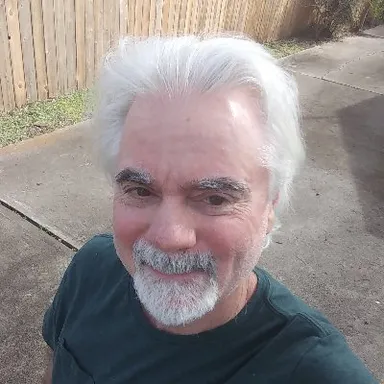
Rick Belden
Rick Belden is a poet, author, artist, and men's coach, and a respected explorer and chronicler of the psychology and inner lives of men. He helps men who are feeling stuck get their lives moving again by drawing on over 35 years of experience with men's issues, masculine psychology, and recovery from trauma. Rick is also one of the foremost experts on the Mother Wound in men. As a men’s coach, he has worked with an international clientele that includes hundreds of men of all ages and various backgrounds in 30 states in the USA and 23 nations worldwide.

Hosted by Andrew Pain
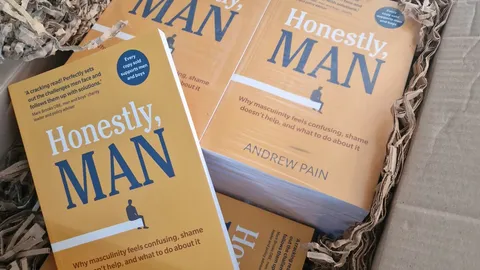
Andrew Pain is a Mental Health & Resilience Keynote Speaker who speaks from lived experience on resilience, burnout and workplace wellbeing. Host of the Men on Show podcast, author of the book Honestly, Man, and a TEDx speaker. Member, International Coaching Federation, and Mental Health First Aider trained.
Never miss an episode
Candid conversations with everyday heroes – ordinary men doing extraordinary things.