Men on Show · Episode 37
From Gang Member to Mentor: How I broke the cycle and why it's never too late to get out with Anton Noble
- 11 September 2024 .
- 37 min .
- Hosted by Andrew Pain .
Anton Noble is an Urban Youth Specialist in Gang culture and Youth violence.
Andrew hosts this podcast. His own keynotes are on burnout, resilience, imposter syndrome and difficult conversations.
In this episode
About the conversation
Anton’s purpose and drive comes from his passionate desire to share the love, grace and mercy which he has himself received and to give this away to the young people he meets with, so it might instigate change in them as well. Anton leads the GYM (Guiding Young Minds) team in the Midlands.
Key points of the episode
- His early upbringing and what he thought was "normal" in his house, was not.
- How his parents divorce affected him and his siblings.
- His entry and the reason for it into gang culture.
- What gang culture was like for him.
- How easy (or not) it is to get out of gangs.
- How he got out and why.
- Transitional moments - " I don't belong, but I can't leave" .
- How some people can see something in you that you can't.
- "Hurt people hurt people" .
- His organisation and the work he does.
- A wonderful short, inspiring conclusion.
Men on Show shares lived experience and honest conversation – it is not medical or therapeutic advice. If you're struggling, you don't have to cope alone.
Samaritans: call 116 123 (free, 24/7) NHS: 111
Full transcript
Read the whole conversation
A complete, verbatim transcript of this episode – every word is the host's and guest's own; the topic headings are ours.
Welcome to Men on Show, the podcast, Candid Conversations with Everyday heroes. Join Andrew Pain as he interviews fascinating guests, ordinary men doing extraordinary things. If you love the show and you think somebody could benefit from hearing it, why not tell them about it by giving it a share on social media? Oh, and at the end of the podcast, if you can leave us a five-star rating and a review, it really helps us more than you know, and it gets this important message out to more people that need to hear it the most. And right now, enjoy the next episode.
Hi, my name's Andrew Pain, host of the podcast Men on Show, and I'm so excited this week to have Anton Noble on the show, founder of the organisation Guiding Young Minds. He's a specialist working in gang culture and youth violence with his own lived experience himself. He has five years working as an outreach advisor, qualified youth mentor. He's a speaker advisor, recognised as one of the UK's leading mentors within the field of gang prevention and gang culture.
He featured in the Channel 4 documentary Britain's Young Drug Runners, which won a best documentary award in 2019. And crucially, overall, he supported the Holyoaks team in a county line story. And listen, if you're working, getting drawn into soap operas to help with the development of their stories because of your expertise, that is a absolute quality stamp. Anton, welcome to the show.
Thank you for having me, Andrew.
Growing up at home, and his parents' divorce
Cool. So just tell me about yourself growing up, Anton, as a boy, as a young man, what was life like for you?
So I grew up in a two-parent household. My family are Jamaican heritage. I have an older brother, a younger brother, and a younger sister. We got brought up in a Christian family, so it was very, very cultural. However, a lot of things that in our household that I believe was normal wasn't normal. And my parents obviously had a horrific upbringing, well, my mom did. And some things that happened in her life came to us, which my older brother and myself then started adventurising because we didn't get validation or love at home. So we seeked validation and love elsewhere, which led us in situations where we've had comebacks and challenges in love.
And when you say things, you grew up, obviously for most kids, what we experience at home is our normal. But you realise now that they weren't normal. What kind of specific things, is there anything specific or tangible that you can recall?
Read the rest of the transcript Collapse transcript
Just lack of lack of love, no attention, not coming to our gains or achievements that we did, praising us, just doing things to make them happy. They were really supporting us in our school, education, that kind of thing. And they have spent more time at work than with their kids, all that kind of stuff.
So they were very driven, would you say, as parents from your experience?
sometimes I feel whatever was happening at home between my parents, they went out to work for a distraction, and they entertained other children and other kids. Obviously, my mom was a specialist carer, and my dad was an engineer. So my dad did a lot of work. My dad's a good person. My mom was a good person, but they both had their issues in the marriage, which led him to divorce, and that's where things started spiralling.
How did divorce... So that's where it began. How did that divorce... How old were you when that happened, and how did that impact you?
I was 11 years old.
Right, that's the same age as my eldest boy now. And how did that divorce impact you?
It impacts me a lot because I got brought up in a Christian way, where when you get married, you get married once, and you're married, you're married all the time, you stay faithful, you're committed when things go wrong, you work it out. So that's all I knew. And then when they divided and split up, it impacted my emotions. And I don't think they really spoke to us about it. They just got on with it. And I feel that they didn't care. They didn't care about us. They cared about what they were going through. And that's where I think me and my brother, especially, my older one, got affected.
Joining a crew at 13 and 14
Yeah. Yeah. And is that when it sort of started for you getting involved in gang culture, or did that come later?
That came... No, yeah, that came later. That came at a time when I was going through, so I was trying to find myself. And I started going around different kinds of people who I liked. And I would go around good people, people that were opportunities, people that were popular, hard. And I found my place in people that were popular, had respect, bullied people, or just the people that everyone looks at. And I hanged around with older people. I was the youngest.
Yeah, how old were you at that time?
So at that time, I was 13, 14. So most of my brother's friends, I would hang around with. And most of my friend, the oldest friend that I had was 25 when I was 13, 14.
Right. And is that how you started to get involved in gang culture then?
Yeah, I think it was more as a friendship thing. We didn't see ourselves as a gang, but obviously other people did. But we started getting recognised as a gang when we did music. So I used to be in a music crew. We used to call it crew, but obviously these call it gangs. But yeah, we used to rep our area, which was in Coventry, which was Potters Green. And we had a lot of conflicts with other areas.
But back then, we could still go to certain areas, but we would get trouble from. And then it started increasing where we couldn't go to other areas in Coventry, which we had to roll in a group. And that's where I feel this generation in Coventry has got it from our generation. But they just stepped it up a level.
Life in the crew, then and now
And how would you say, I mean, obviously, I'm interested in your experiences of gang culture or crew culture. How have they stepped it up? How is it different today?
I feel with us, we still have respect. Like, if we wouldn't go to your house, and we wouldn't go to trouble mums or fathers or siblings if they're not involved, these kids will trouble anyone that's, and who you're a part of, just to hurt you. So they'll throw acid at your mum. They will smash up your dad's car. They will kick your little sister over off the bike. To us, that's morally wrong. We wouldn't do that. And these kids don't have the moral and values that we have. And that's the sad thing. Their conscience is, most of their conscience is dead.
Okay. And I'll come back to that. I might actually make a note of that now. I'm interested in that as to why. I want to explore that. So I'm just going to jot something down there from what you've said. Tell me, though, about your life in the gang. What was life like? Was it violent? Was it scary, exciting? Was it all of those things? Tell me about life.
I think my friendship group were a group where we all had a part to play. So me, personally, I was an observer. I would watch her. I would watch everything that happens. So anyone that looked odd, that came out of the area, I would spot very quickly. I was also a person that was very loyal. So if someone got hurt, I would join in. And I wouldn't run off. Even if I was scared, I wouldn't run off.
And I was a person that was... I would put my foot in, but I know when to put my foot out. And some of my friends weren't that kind of people. There was friends that I knew, if I was with them, I'm going to get in trouble. And there's friends that I was with that I knew that would stay out of trouble, but would stick up for themselves if they had to. Those friends, I would be around more when I want to be around different people.
I wouldn't go with a friend that just causes trouble. But you're still my friend, but I wouldn't go around him so much that I put myself in a situation when I don't want to be in a situation.
Healing and getting out of the crew
And was there like a bit of an adrenaline rush, a sort of a thrill for being out there, being a watcher, being needed, being loyal? presumably, your crew members were loyal back. Was there like an adrenaline buzz where it's actually an enjoyable time in your life?
Yeah, I feel that they were my friends, and when I needed help or speaking to them, I could speak to them. Anything that was going on, I could speak to them. But as I've grown up, there are certain things I didn't speak to them about. And I feel at that time, whatever I was going through, any trouble or how my mental state was, they were the medicine at that point. But as I started healing myself, they started falling off.
Okay, interesting. So at what point did you get to where you were like, I need to heal myself? I want to heal myself. And was that the point where you started to move away from your crew?
I found myself changing. I found myself that I was trying to please people, but not myself. So I made my identity in a such a way that comes as people will be attracted to them and like, instead of like doing something that I like to do. And I felt that my behaviour and how I presented myself started replicating what they would do. And you can't... I started growing mentally and educationally in myself, that you can't be around the same circle and try and think different. You have to be around people that think different. So it challenges what you were used to.
I love that. That's so important, that you can't be around the same circle of people and think different. I like that. As you evolve and mature, there will be some groups that you have to break free from in order to be the person you want to be. That's what you're saying.
Yeah, yeah, yeah, yeah. I said behaviours and habits. Yeah.
And I wonder how many people in that crew sort of do want something different, but can't see beyond the crew or they don't want to, they're afraid of change. And so they just get stuck, not necessarily because they even want to consciously be there, but it's what they know. And as you said, unless you break free. Do you think most people like want to be part of it, are validated by it? Or do you think some people just get trapped in it, and then they just don't see a way out?
No, there's people that are in it, and they can come out of it whenever they want. It's more of a friendship. It's more of a thing where, if something happens, someone gets hurt in your family, or you need help with it, and then you got the friends where they're just the tagalongs, and they're not really a part of the crew. They're just there to make the numbers. They are the ones that it's hard for them to get out, because they've never been a part of it, and they know too much, which makes them dangerous.
So those kids that get involved with things like that, that's when they get more of the drama than the one that's the core group of the gang. They could come out whenever they want. They just get told, if you're stepping out, you're stepping out fully, no half-heartedness, or working with someone else. It would be like...
So there's always the opportunity within a gang to say, I'm going to go and get a job. I'm going to go and get a job. This is kind of... You're a great bunch of people, and the gang would accept that from the members of the group.
Yeah, it's not like... Obviously, there's a lot of culture coming down here in the UK now, so they're bringing their cultures, what they do in other areas and countries, to hear it in the UK. But British ones, I know some very hefty gang members that weren't now, no altruism. And then I see some ones that weren't rated, still in it, because they feel like they can't get out of it, because they'll get bullied, or they're scared because they've done too much. Yeah. And it's all a mental state. If you can't see yourself out first, you can't get out.
Transition out, and what others saw in him
Yeah. Yeah, no, that makes sense. You have to actually have that vision of being outside. Is it, I mean, by the time you made that decision mentally, had you had enough dealings with the police by then that getting another job is actually quite difficult?
Yeah, so I've got a criminal record with the incidents that I've done. And to be fair, every job that I had, they all liked me. So a lot of times I knew the people or my parents knew the people and they gave me a chance. So me personally, I never really had to beg or get rejection. Every job that I've went for, I got. But there were people that was in my situation, didn't. And they had the challenges of rejection and going back to what they know, where no one does reject them. And it's scary to step into a new world that you ain't done for years.
Yeah. So do you, would you say, for anybody that's thinking about what, how do we help people, how do we prevent gangs, and how do we bring people out of gangs, out of unhealthy friendship networks, however you would term it. Looking at your experience from what I've picked up so far, it was kind of like, it feels to me, like a gradual maturity and just growing, where in the end, you're sort of becoming a bit incompatible. Is that right? Have I understood that right? Or was there like a standout moment where you're like enough?
I had moments where I was transitioning, and that's the key, transition. And transition is where I'm finding out that I don't belong here, but it's hard for me to leave here. And, but the blessing was a lot of times when I was out with my friends, and I was in certain places or situations, I always had someone, a stranger, saying to me, you don't belong with these, all the time. And at the start, I used to ignore it, but when it happened constantly, I thought, nah, that's some higher calling, saying I'm not meant to be here. And sometimes your friends hold you back, sometimes your friends don't want you to heal or grow, because they're needed when you're sick.
That sense of people telling you that you don't belong, like, looking back now, like, but maybe it was fate, maybe it was a higher spiritual calling. Is there anything that you would say logically that actually, yeah, I can see now why people said that?
Yeah, because sometimes people can see the protection in you when you can't. And sometimes people can sense the aura, even though you're around people that have bad aura. And if people still feel that they can talk to you and approach you to be themselves, that means they picked up something that you ain't picked up when you're around other people. And sometimes your friends know that you're a good person, but they try to corrupt your character to make you like them because they're hurt as well.
And if you be different, it will make you see their errors, and they don't want you to see their errors or their fallings or their weakness. Where I, vulnerability came my strength, and my strength came my weakness.
Setting up Guiding Young Minds
Yeah, interesting. So you start trying to create a life outside of gangs. You mentioned, obviously, through your parents, through various connections, you didn't struggle in terms of employment, even though you have a criminal record. What are you doing today, Anton? I mentioned in my intro that you're the founder of Guiding Minds. What's that all about? What's that trying to achieve?
Yeah, so just to pick up, every job that I've had, it's always led to this. So the job that I had before when I left school, I used to work in the gym, and I used to PT people, but I used to PT and support young people and adults that were high risk. And so from that, I then went into a care home. I was a resident worker, and I worked with high-risk trauma kids that were in gangs or exploitation.
And then I also worked in a college in the gym, supporting the young ones. And then I went to a victim support service in Northamptonshire. And from there, I created Guiding Young Minds. And Guiding Young Minds was created in a gym where I used to work. That's why it's called gym. And I believe that there was a gap in the market because no one would want to work with gang members, and they saw gang members as a threat.
But I saw them as me, and saw them as victims of those situations that they're making over people victims, and the cycle needs to break. And I saw a gap, and I took it. And yeah, Guiding Young Minds is a service that works with young people and adults that are involved in gang violence or victims or perpetrators of it. And we're mentors and therapists to support the trauma and violence.
So mentors and therapists supporting victims, but also supporting gang members themselves in presumably befriending, mentoring, trying to encourage them out of that situation, if I got that right.
Yeah, that's great.
Why today's young men may be more violent
Yeah. And I mean, thinking about your comment, picking up on it from earlier, that some of the gangs today, sort of their conscience sort of is not there in a way that yours was. Is that definitely, so you mentioned how your crew, you wouldn't set about someone's parent, someone's sister, you wouldn't go and burn their houses. I'm presuming that there were fights in the street. It was violent and rough out there on the streets, but between rival gang members only, whereas you wouldn't attack their families, but apparently they do today.
We hear a lot of about toxic masculinity and violent youths, and what's going on? Do you think the generation of young men in particular, young people, but in particular men, do you think they are more violent and have less conscience than before? And if so, what's happened? Why is that?
I believe that the young generation's trend is the more you do bad is the more accepted, and the more popular you are, the more people get scared of you, the more friends you have, because every child wants to be friends with you, because you're the baddest person. And bad has come good, and good has come bad. And morally, a lot of parents morally support these bad ones, because they'd rather their son not be a victim and be protected than be a victim and be hurt. So there's a lot of parents that support it, and because they live in crisis, a lot of parents get help from their children doing wrong.
Financially, do you mean?
Yeah.
Yeah.
And this is the pull where parents, where you see a child go to jail, you always hear the parents say, what we're going to do now? We needed that, even though their child was at risk of dying. They still, because sometimes parents' needs comes greater than the risk of their own children. And it's hard, it's hard, because the life that we're living in now, the meat ends, and to keep up with what's happening. And children these days have got pressure.
The pressure is, if they don't have something, they're poor. So they put pressure on the parents. The parents can't afford it. And some kids love their parents where they don't want to even say to their parents, can you get this? So they get it themselves.
Yeah. So for me, the reason I hate the phrase toxic masculinity, there's a lot of reasons why I don't like that phrase. But I also think that if we think of men and as you rightly say, gang victims, they are victims themselves. The reasons why our young men might be in gangs, they might be violent is self-protection because they're living in areas of deprivation where they need to be in a gang. They may be under pressure in terms of just the cost of living crisis.
As a family, we know that last year, three million people reached out to a food bank. 15 years ago, that three million number was 26,000. I mean, that is a staggering increase. And so we have incredible inequality because in the same period of time, the wealth of the UK's wealthiest people collectively has tripled in that same time. So we have very unfair system structures. For me, why are our young men toxic, if you're going to use that word?
Well, you look at the impact of austerity. We've lost a billion quid's worth of funding for youth. We've lost a billion quid's worth of services over the last 10 years, resulting in the loss of hundreds of youth centres, the loss of thousands of youth workers. So for me, the reasons why our men, our young men might be more violent and have less conscience today, those reasons are complex, in my opinion, and varied. It's harder for working class children, leaving school, to have a job unless they are well skilled up.
There aren't lots of menial jobs that you can just get like that with no qualifications. But 60, 70 years ago, there were. Are those the things that you would agree with, or would you say, look, Andrew, you're missing something here? The reason why there's so much violence is this. Is there another reason?
No, I think you're correct, but I would add to it in a way where there's a lot of kids using a lot of drugs. There's a lot of mental breakdown mentally, and there's a lot of things that have been undiagnosed in your people, and it's not cool to have a diagnosis so that they've been medicated or been even seen to learn what they have. And also that there's a trend, and there's a trend on social media that the technology has increased so much, where these kids have got the ability to find anything in their hands, and to find where someone lives in their hands, to create a lot of money in their hand. They've got so much power and great power comes with great responsibility, as Spider-Man says.
Social media, music and critical thinking
Yeah, and actually, you know, the reason why, and I do a lot of this exploration in my own speaking work, I do a lot on men's mental health. If we explore why are men and boys struggling when we look at the variety of data that suggests that we are struggling, I do think social media is a big part of it, a big part of possibly why the conscience of people has gone a bit dead, why perhaps we're more morally corrupt.
Partly, I think that there's comparisonitis, so never before we had everybody else's good bit shoved up our noses in the same way. So we think we absolutely, in fact, not only should we have those things, if we don't have those things, then we're not cool, we've lost streets, so we've got to have those things, but those things that we expect are actually quite expensive. And of course, as you've said, with social media, you've got like influencer culture, you've got dark voices manipulating people.
There's a lot of people that are hurting, but then along come these voices and organisations that really play on that hurt and twist it. And I do think, at what point do we say, enough with social media, we need to, we can't get rid of it, but we're gonna need to really do something radical.
What I say to a lot of people is, it's not the gadget or the item that's evil or bad. It's what we do with the gadget that makes it evil or bad. So it's us. And I always say to your people that if I hold a knife now, I've got the choice to do bad or good, to make the knife come bad or good. So it's me. So even with social media, social media can only come and corrupt minds if it's pushed on a person or it continues to come out, which that means that it's not the platforms and the software that's created to keep showing these things to kids is part to blame.
And these big companies, big organisations. And that's why I always say to police when they always go on about the social media stuff. There's greater powers that play. And as we know, scientifically in our minds, if you see something often and hear it constantly, and there's a music to it, your brain automatically takes it in whether you like it or not. And this is why violence has increased because of drill. Drill comes as a melody. A melody brings words, words stick in your head and create you to do things without you even knowing.
Having anger from a music that someone else has put in music that you adapted without even knowing. And this is why I always say to young people, you've got to be careful who you listen to and what you're hearing constantly.
Yeah, yeah, I listened to a speaker, Sir Michael Winslow, who used to head at Ofsted, and he now advises the government on how to reform. He's got some great ideas of how to reform Ofsted. I hope they come up. But I remember him saying at the end of his speech, you know, one of the biggest challenges with our young people, in particular social media, is because of social media, more than ever today, we need to teach our children and young people to think critically, to critically analyse what they're looking at, to question it, to fact check it.
And I thought that was quite insightful. And you're right that it's not the tool. A knife isn't bad. A knife can cut a cake, so you can share it with your neighbours. Not inherently bad in itself, but just as you rightly say, it's the tools. So maybe it's not about we need to ban it. It's more about we need to look at where these harmful platforms are and get a lot more serious with tech, which requires bold government, I suppose.
Yeah, and a lot of young people think there's a lot of young people doing bad, but there's a lot of young people doing good. Yeah, and sometimes when you feel alone and you're scared to do good, and all you see is bad around you, you lose confidence. So it's better to call one of them than be against them. But if they realise that there's many people in the same situation that are being good with whether the other side likes it or not, they will start understanding that it's not just me going for it. And then that's when it multiplies where people want to be good.
Role models, and earning trust
Yeah, I think that's absolutely right. I think as well that the media have something to blame in the what's going to sell newspapers or sell stories is the bad news, the shocking news. What they're not going to put on the front pages of their headliners and young people help each other in a really cool project. We don't showcase that stuff enough, and we perhaps really should. Maybe that's something we can all do, is get better at lifting, giving airtime to the really good stories of stuff that's happening.
I always thought back to the all-male diving team that went to Thailand that rescued those boys from that cave. They were all older men who performed an extraordinary rescue at massive risk to themselves. They could have gone to jail, had that been messed up, but they still went and did something truly heroic. But none of the UK media was talking about boy power, this man does, this man can. They wouldn't dare celebrate, yet we should, we're depriving our young men of role models, of people they can look up to.
And I think perhaps that's something our generation can do much more of is celebrating these cool stories. Like celebrating the work you're doing with Guiding Young Minds. That's a really cool outcome, given your history.
Yeah, yeah, it's, as I say, when I go to prisons and a lot of them, when I speak to them, they always say, Oh, was it hard? Was it hard? It wasn't hard for me to get into places, because I know how to conduct myself around people. But what was hard was when people don't trust you. And at the time when I was doing MedTorrent, I had to have teachers and police around me first before I spoke to the kids, because obviously on my record, there's violence on it.
So they have to trust me first before I could see the kids. And a lot, not a lot of people, how it tell when it went through what I went through. But at that time, it was hard. But now I see it wasn't just me go through it myself. I was actually making a way for other people to go through it. So now, in all factors here, and culturally, many people that came from my background or the worst, that easily go through it now.
And sometimes, you have to carry and open the door for other people, wherever you like or not, and it hurts. And then you start reaping what you sow. You see the outcome, and I'll see good people coming through. No, they ain't got qualification, but they've got the power to have qualification on the street cred where kids will listen to them. And it's powerful.
Closing message and getting in touch
Yeah, hugely. I mean, so inspiring talking to you. And I realise, you know, the aura that you have is I can just see the impact, the credibility that you have in reaching out to people in this position, in going into prisons. I mean, I would imagine you're a hugely impactful speaker. If you could give like a two-liner message of encouragement to young guys listening to this podcast, what would you say to them?
You never went too deep to make a change.
That is, love that. I absolutely love that. sometimes when I ask the podcast guests this question, I get sort of quite a long paragraph. sometimes it's short, but that has to be one of the best, most insightful, yet highly concise, encouraging messages I've heard. You never been too deep to get out and change. And that's a really great way to end the podcast. And the very last way to end the podcast. How can people make contact with you? What's the best way of getting hold of you, Anton?
So you can contact Guiding Your Minds, or doi.guidingyourminds.org, or you can contact us on our Instagram, Twitter, Snapchat, TikTok, and YouTube at Jim Intervention. And there's always someone on our social media platforms, and you can also call us by phone as well. And we have got a 24-hour phone line that you can see on our website when you go on it. If any of your personal adults in need of help, we're there to help.
Brilliant. Anton, it's been an absolute pleasure speaking to you. I know how busy you are as well. So thank you so much for giving up your time for Men on Show. It's been a pleasure having you here.
Thank you for having me.
Thank you for listening to Andrew Pain's Men on Show. If you could leave us a five-star rating and short review, it would be really, really appreciated. It helps us get this important message out to more people that need to hear it the most. See you on the next episode. Thank you for tuning in.
About the guest
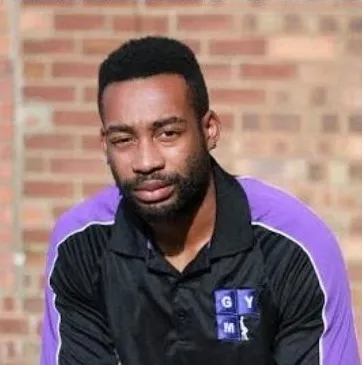
Anton Noble
Anton Noble is an Urban Youth Specialist in gang culture and youth violence. He has his own ‘lived experience’ in gangs, and having broken free from his past himself is now acknowledged as one of the UK’s leading mentors working with young people caught up in gangs, serious youth violence and exploitation. As of this episode’s release in September 2024, he had over 5 years of experience as an outreach worker and qualified youth mentor. Anton is also a motivational and transformational speaker, advisor, mediator and Gang Exit Strategist. He won the Most Inspirational Male Role Model of the Year in Northamptonshire 2019 and featured in the Channel 4 documentary ‘Britain’s Young Drug Runners’, which won a best documentary award in 2019.

Hosted by Andrew Pain
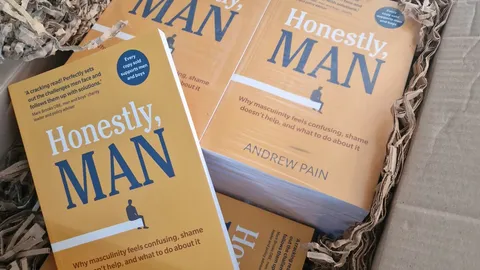
Andrew Pain is a Mental Health & Resilience Keynote Speaker who speaks from lived experience on resilience, burnout and workplace wellbeing. Host of the Men on Show podcast, author of the book Honestly, Man, and a TEDx speaker. Member, International Coaching Federation, and Mental Health First Aider trained.
Never miss an episode
Candid conversations with everyday heroes – ordinary men doing extraordinary things.