Men on Show · Episode 36
Men, Parenting and Mental Health with Scott Mair
- 28 August 2024 .
- 1h 6m .
- Hosted by Andrew Pain .
From Scott's website: Scott Mair, is an expert in paternal mental health and parenting.
Andrew hosts this podcast. His own keynotes are on burnout, resilience, imposter syndrome and difficult conversations.
In this episode
About the conversation
At the forefront of change, Scott works at a national and local level, advocating for greater father inclusivity and emphasising the vital role fathers play in family dynamics. His initiatives include the successful establishment of fathers’ support networks, leveraging his military background as an Infantry soldier to create a specialised network for fathers on the frontline. Scott extends his consultancy services to health organisations and the corporate sector.
Key points of the episode
- Busting the myth of men not talking.
- How he puts a positive spin on his past in the present.
- His time in the military and the adjustment on leaving.
- How parenthood can be isolating, and solutions he offers.
- How Family Solutions came about, and what it offers.
- Understanding the Fathers Journey.
- Permission to be the Dad you want to be rather than the Dad society says you "should" be.
- His work with special educational needs people.
- How an "unspoken expectation" about Dads may make it harder to engage.
- Stats: 1 in 9 people are stay at home dads, 16% of solo parents are Dads.
- Burnout and parental guilt.
- His work with local authorities and city councils.
- Different pressures on Mums and Dads in relationships that have split up.
- How some Dads feel the system is against them.
- How 15 or 20 minutes of quality time can do a lot - and the thinking outside the box to achieve it.
- What's next… and an encouraging message.
Men on Show shares lived experience and honest conversation – it is not medical or therapeutic advice. If you're struggling, you don't have to cope alone.
Samaritans: call 116 123 (free, 24/7) NHS: 111
Full transcript
Read the whole conversation
A complete, verbatim transcript of this episode – every word is the host's and guest's own; the topic headings are ours.
Welcome to Men on Show, the podcast, Candid Conversations with Everyday Heroes. Join Andrew Pain as he interviews fascinating guests, ordinary men doing extraordinary things. If you love the show and you think somebody could benefit from hearing it, why not tell them about it by giving it a share on social media? Oh, and at the end of the podcast, if you can leave us a five-star rating and a review, it really helps us more than you know, and it gets this important message out to more people that need to hear it the most. And right now, enjoy the next episode.
Hi, my name's Andrew Pain, and welcome to Men on Show. And I'm delighted to welcome today's guest, Scott Mair, a former infantry soldier, but now working for Fatherhood Solutions, passionate about raising awareness and improving standards for dad's paternity, mental wellbeing for fathers, all that good stuff. And I'm really looking forward to getting into kind of what you're doing at Fatherhood Solutions and everything going on with that. That's my dog going crazy in the background. She'll calm down soon. So Scott, welcome to the show.
Thank you for having me. I'm really looking forward to this conversation.
Childhood and his parents splitting up
Good. So I mean, Scott, if we start at the very beginning, sort of growing up, what do you recall growing up as a child?
Yeah, my childhood was probably the same as a lot of people, nothing spectacular. And the work that I do did start from my own experiences. And my mom and dad broke up. And when I was quite young, and my dad then left and there wasn't a lot of contact from sort of about the age of four or five till 10, pretty much was the first real contact that I remember. And then the relationship was holidays, maybe seen at the summer time, not having that regular contact.
And there are a lot of the main memories, and it's not always criticism. We're not here to sort of dig out or criticise our parents, but we do learn how we make do think differently from the experiences that we have. And I definitely learned the father that I didn't want to be and the relationship that I didn't want to have with my children, and it helped me shape the one that I've been able to develop. So that's the main thing from my childhood.
A lot of football, a lot of riding bikes, and school was okay. You know, it was pretty standard, but it was mainly the lack of relationship. And I know we may talk about father figures, male role models, those sort of things. And that's the one thing that does stand out. I didn't really have that person to shape things off or that confident to go to. And as teenage years became complicated, I met my wife, Sarah, when I was 16.
We've been together ever since. So until that point, I never really had anybody in my life that I would say was someone that I could confide in, that I felt that I could completely be myself around. So I think a lot of my childhood, like lots of people was trying to figure things out, masking a lot of emotions, which is why I do the work that I do, because I've learned the hard way by not talking about how we feel, by sort of bottling it up and trying to do that self-soothing where we're quite bad, I think men at this is that we sort of retreat to be on our own when we feel a little bit vulnerable, and we think things are wrong.
And I definitely did that as a child, and there's a pattern that I've seen re-emerge, and trying to break that by creating spaces where men can come and talk and share. And one thing we'll say quite a lot today, I'm sure, is that they say that men don't talk, it's not true. It's an absolute myth, and we just need them to have the permission to be vulnerable and the platforms to do it on. And they will be able to talk and confide.
It's just having those platforms and getting men to them. And that's definitely something I've learned. So my childhood, there was times where it may have been slightly complicated and slightly negative, but I've always tried to put a positive spin on that. I have the relationship I have with my children and I do what I do professionally because of it. So I try and look at the positives.
His dad leaving and the hurt
Yeah. I mean, did you see your dad at all? So when did he sort of leave your life in that way? Well, I just open, if we just go back a little bit onto that.
Read the rest of the transcript Collapse transcript
Yeah, that's fine. So I was originally born in a place called Bellshill, which is Lanarkshire in Scotland. And we moved down to England when I was sort of four or five. My mom and dad split up quite quickly. And then my dad left. And I've only recently spoke about this, to be honest, that one of the things that I remember quite vividly, I don't have a lot of memories as a child for whatever reason. But one of the ones that I do have was, I remember him leave.
And we've never really had this conversation. And we're in contact now. But I remember watching him walk up the road. And I've spoken to quite a few people that have had parents that have left, remember it quite similar. And it was the, he didn't look back. You know, and it was almost like you could just watch them walk out of your life. And that's the bit that I struggled with for a very long time, because it was the, what did I do?
You know, your relationship might have brought down with my mom, but why did you leave me? What is wrong with me? What's caused you not to want to be around me? And that is something that, second inferior complex, that I think sometimes still raises its head now. But it was, I took it very personally. I know that I work with dads, and there's always two sides. And I think we sometimes don't always see both sides in that situation.
And there was a reason why he left. And when I look at the relationship I have with my boys and the amazing memories we've created in the front, we're just back from a week at the beach in Bournemouth. And the things that we get to do is that he missed out on that as much as I missed out on him. And I think that's probably maturity or growth that I see it that way. But for a long time, you know, I was quite bitter, but it was around about 10 was the next memory.
He had gone to live in Spain. So it was some holidays. I went out to see him and we spent some holidays together. And then that repeated for a few years after that, sort of into early teenage years. And we might catch up the odd time he was back in the UK or, but it was a few times a year that I would see him, his sister, my aunt, I'm very, very close to, she's more like my mum than my aunt.
She's sort of been that person for me. And she sort of stepped in a little bit to fill that void ever so slightly, because he obviously wasn't there, but he's a very good friend. You know, we can have friendly chats and discussions, and we can go and do things together, and we could go and watch the football, whatever it might be. But that intimate sort of father son relationship, when you're struggling or got complications or want advice on parenting, that really wasn't there.
And I think that that strain goes back a lot further than when I started to have children myself, and we just never really healed it. So healing those relationships when there has been long periods of time or there is gaps in how we see or interact with our parents, again, is part of the work that I tried to do, particularly being a military man, we miss quite a lot. You know, we're away quite often working with fathers that have been incarcerated that are then trying to rebuild that you can heal.
You've just got to acknowledge each other's side of it and sit down, have difficult conversations sometimes. And I think that's something that maybe myself and my dad are probably guilty of that we never really did that. And we just sort of tried to move on. And I think you sometimes can't when there's that sort of hurt or that sort of breakdown in relation, you can't just move plastic, you've got to deal with it. And again, it's all things that I've learned to try and put into my daily parenting with my children and the fathers that I work with. So I hope that answers the question. It was a bit long.
Joining the infantry and leaving with injuries
No, no, that's really interesting. Talk me through the military, growing up as a kid, did you sort of always want to be a soldier outside, outdoors, adventuring, or was there like a moment where you certainly thought, oh, I know, I'll go into the military?
A little bit of both, really. Yeah, Andrew, I think I knew I wanted to serve. I didn't know quite what it looked like. My wife Sarah and I were discussing this last night when we were talking about some of the questions we might discuss today. And my mom went to see a psychic when I was younger. And the psychic said that I would be in uniform of some sort. Couldn't tell her what sort, but just that I would serve and I would be in uniform.
And that was always something that I thought I would do. But it was the police originally. My sort of first love was to be in the police. And I'm 42, I was 42 this week. So anybody similar ages with me, right, I remember there was a TV show in the 90s called The Knock. And it was Customs and Excise. But it was like the Hollywood fight, Customs and Excise. And I remember watching that TV show. And that was sort of the thing that I wanted to do.
So it was more arm response kind of terrorism. That was where I thought I would go. I was at college when I met my wife, Sarah. So we were both 16. We were doing a uniform service course. We both wanted to be in the police at that point. There was a few complications. My mom, my stepdad, after my mom remarried. And it was just, there was a little bit of steering. And it was originally the Air Force.
After I decided it wasn't going to be the police, because I felt that my wife and Sarah could go away, be together, get married. We got married at 18. And when I first applied, I was only 17. And I did the entry exams for the Air Force. And what I wanted to do originally was either the fitness instructor or police in the Air Force. And you had to be 18 at the time to do more. So as I've walked out the careers office, what they do know is they have it all in one place.
But back then, they had separate ones. And as you walked out the Air Force, the army was right in front of you. And there was a recruiting sergeant standing outside smoking. And I almost looked a little bit annoyed because they'd said, you've passed, but you can't do it for six months. And we got talking, and the next thing I know, I was joining the infantry. So that was never really part of the plan. I just got so on it very well, I think.
And don't regret it. It shaped me. And there's lots of things that I'm very proud of in terms of my service. And what I learned, to be able to become a man, serving your country is something that I am incredibly proud of. I left the military with injuries. And so it wasn't choice to leave. You know, I was almost forced to leave. Struggled with that for a large period of time, because the military, it's not something that you do.
It becomes who you are. And that sort of loss of identity, trying to transition back into being a civilian, took me a while to readjust, particularly when with injuries, you're different. You've got to do things different. You've got to adjust twice because you're adjusting physically and you're adjusting mentally. That bit took a little bit of time. I found that very difficult. I was very fortunate to have amazing support from my way of Sarah. But I enjoyed it.
The military was fantastic. I've still got friends now. I mean, I joined in 2000 and left in 2005, and I still speak to the guys that I went through training with in 2000. And friends that I sort of met along the way and guys that we serve because you do things together that most people will never experience. And it does create a brotherhood, which is a little bit maybe overplayed, but it's true. And that relationship is incredibly important, and it's a different type of friendship.
And again, one of the groups that I do for dads is for serving fathers to help them with relationships with their children and to create that network where they can speak to other dads that are trying to do it from a distance when they're deployed or on training or getting posted. And it's just trying to help all fathers and from different sort of aspects, facing different challenges to one, be parents, but to surround themselves with other dad friends, because that's one thing that we tend to see in lots of reports.
Statistically, we'll tell you that 20% of new dads feel completely isolated in that first year after having a baby. Now, that is magnified if you're the first one within your friendship group, because then you no longer offer to that group what you did before. And you can't do tuesday night during the pub or saturday at the football. And if you do, if you can do it, you may not want to because your priorities have shifted. And your friends maybe don't understand that.
And it was mapping that out and speaking to dads and seeing lots of similarities that when I left the military, I mentioned that transition was difficult. People understand that. They even sympathise with it, to be fair. But when you become a parent, you go through a very similar change. You go through that shift and that loss of identity that we're a bit uncomfortable to talk about, because you should be so grateful that you're a parent. And that's not saying that people aren't.
It's just a big shift and it's a change. And when you can't speak to the people that you would have compared to them before, you do become very isolated. So it's trying to create networks where there is other dads that are going through it. They may not be from the same background as you, but they're navigating these similar sort of waters. And it's just having people to talk to that I think makes parenting much easier when you have people to talk to.
Fatherhood Solutions and dads in pregnancy
Yeah. And I mean, we'll come on to parenting, obviously. But without children, if I had a friend who was absolutely battered by sleep deprivation in a really bad way, I'd have just been like, well, just get the kid into a routine. There must be some stuff out there. Just get them into a routine. As a parent now, having gone through horrific sleep deprivation, we tried every trick in the book. And I think if you're the first in that friendship group, there's a whole bunch of stuff that actually until you've had kids, you just don't see or can possibly commiserate with at all.
So yeah, I want to get onto that. I suppose that's not a bad segue into that. So I want to talk about fatherhood challenges and all that kind of stuff. You work for Fatherhood Solutions. Tell me about Fatherhood Solutions. What are you trying to do? What are you doing on a day-to-day basis?
So yeah, Fatherhood Solutions was pretty much set up in collaboration with an organisation called IPIP. Now, IPIP have worked with public health for a while on a lot of different areas in maternity. And we were introduced, the lady, the managing director of IPIP were introduced by a mutual friend. I talked about the way that I see fatherhood, which I'm sure we will discuss as we go through this conversation. And some of the plans that I had, and those plans were creating pathways for dads to get support.
And particularly during the pregnancy, what we call the perinatal period, which some people haven't heard of, and it's not insulting to clarify it, but the perinatal period is pregnancy up to the baby's second birthday. So anything in that period is classed as perinatal. So if you're looking for support, even if it's mental health support or just financial or emotional support, is in the perinatal period, it's perinatal support. So it was trying to create that early support for dads.
And to one, their own emotional well-being, two, to build relationships, bonding and attachment with their child, how they can interact with the child, the benefits of just doing the things that we sometimes take for granted, talking to the baby, as you're sort of dressing them by explaining what you're doing, you're communicating, you're exchanging language, you're interacting with them, and there's so much that will develop in that child. In terms of the things that we take for granted, of how we interact with the baby, the benefits to that, so talking to them, engaging with them, smiling at them, as you walk past them, just to interact with them, to look at them, to let them connect with you in that same way, has so much development benefits to them.
But we don't promote this to parents. We definitely don't do it with dads. So, Familyhood Solutions pretty much came about with trying to give that education. I'm surprised we've not mentioned this yet, because it normally starts much sooner. My wife, Sarah, and I have got seven boys, which we normally get a few eyebrows raised at. And it's what I'd learned along the way. Lots of different complications. Three of my boys have neurodiversity. One of my boys shouldn't be also diagnosed with autism.
So, there's a mixture of autism and ADHD. There's been complications in school. One of my boys was bullied. There's lots of different things that happen. And like every family, you go through challenges, and it was having spaces where dads could get support for that was really important. But really, it was taking it back to the beginning and involving them during the pregnancy, because recent research that I did as part of Father Solutions with a friend of mine called Mark Williams was looking at the father's experience.
And in the surveys and the polls that we did as part of that research, between 80 and 87 percent of dads are not asked at any point during the pregnancy how they feel or any concerns that they have. Their opinions are not asked during the pregnancy. So what tends to happen is that they distance themselves ever so slightly from the conversation because they don't feel they're involved in it because nobody asks their opinion. The language that we use is fundamentally important.
And we know we're trying to be inclusive as a society, of all families and all parents as we should. But when we introduce the terminology partner, partner is the relationship to the person that's giving birth to the baby. It's not the relationship to the baby. So what we tell dads or partners, and same-sex couples from the beginning, is that you're an inferior parent. Because we can't even address you as your relationship to that child. You're only there by proxy as a person who gives birth to the child, which is the person that we really want to speak to.
So they're not engaged in the language that they identify with. They're not asked if they've got concerns or how they feel during that pregnancy. And they start to disengage very, very quickly. Then what happens is you've got, dad don't engage, deadbeat dad's not interested, don't come to appointment. And it's how do we shape that? And what we do as an organisation is not just treat the pathways for dads and have the support for dads, peer support, group sessions, meet up, education settings, but also working with professionals through training, mentoring, and coaching so they understand the father's journey, what it looks like, what some of these barriers may be, why this dad might not engage, why he's finding this pregnancy difficult.
If he's got his own complications, his own history of breakdown in relationship may come through the care system. He could have problems of addiction, he could have problems of anxiety. All of these things that are shaping his journey into the relationship. And we focus so much on the one thousand and one days, those early years and the development of the child. And for the children to have the best possible start in life, we need to support both parents to give that to the child.
So that is what we're trying to do as an organisation, is to work across the boards. It's not just NHS, it's local authorities. It's working with the third sector. It's working with the private sector. I've mentioned about the militaries. Everywhere where you will see parents, and particularly dads, which is what I specialise in, is trying to help services understand, employers understand, but also giving the dads the tools to, and not all of them will want to parent in the way that I will mention as we go through this call.
I'm very, I don't like the term hands-on, because we don't say hands-on mom, we just say hands-on dad. I'm a parent, and I interact with my children appropriately, and that's the way that I see it. And I do skin-to-skin with my babies. I've got a granddaughter from my eldest son in the house. All of my boys interact in a loving, nurturing way because I believe we can. We're just told that we maybe shouldn't or that we can't.
But that doesn't mean that every dad wants to, and I accept that. But what we've done for far too long is because some of them wouldn't want to, we assume that none of them do. And that's the bit that's unfair. So as an organisation, all we're trying to do is give services, the tools to engage with dads, and to give dads the permission to be the dad that they want to be, not the one that they think society tells them that they have to.
Yeah. So just to clarify, you've got seven boys.
I thought you'd come back to that. Yeah. Yeah, seven boys.
Dads overlooked at appointments and school
See, I've got three boys, and some of the stuff that you're mentioning around, and I think we don't do this enough as a society. I think there is growing awareness that in those baby years, it's quite tough. But I think there is an expectation that, yeah, but when they go to school, they're at school from nine to three, life gets a lot easier. But there's the inset days, the sick days, like you say, the being called into school days.
There's the days that we get increasing amount of days where it's a parent at school day, like they're doing a lesson and the parents expected to go in for a sort of a needlework session. And that's all great stuff. But we've found that after school clubs, because some people say, well, just extend the days, stick them in after school club. Well, I may or may not want to do that. But if I, let's say that's the way that I need to survive in order to juggle my job, they're often over subscribed.
If you arrive to pick up your kid late, you get heavily fined on an incremental basis the later that you are. And the challenges go on well beyond well beyond when that child is a baby. Out of interest for you, what are the biggest challenges? You're doing all this amazing work. You're working with dads. You've got your own lived experience with seven boys. What are the points of biggest challenge? And what are those biggest challenges that fathers are reporting to you?
Yeah, really good question. And from my own experience, for everything you've just described, that I'm pleasantly fortunate that we home educate our boys. So a lot of those extra complications, it might give us different complications, but a lot of the ones you've just mentioned, we don't have to face them. We did. My two oldest boys were in the school system, but now we home educate. But a lot of the challenges are, a lot of what you've just described is, the fact that we're often seen as the back of a parent, and the second rate prize sometimes, even when we do try and interact.
So for example, I do a lot of work with special educational needs and send departments, because I mentioned that my father was a holotism. But speech and language on how they can engage a little bit better with the dads who come to the appointments. What we hear is dads don't come, or they may come once and then they don't come back. Or they're not made to feel particularly welcome, because it's the... And this isn't criticism, Andrew, this is observations from my own experience in the groups that I run, is that dad will come to a speech and language appointment, for example, and they will look past him.
Is mom not going to join us today? You know, it's that the assumption that he can't possibly do this by himself. And it's the same with school. If there's an incident at school, sometimes the first person they contact is mom. I've worked with quite a few dads who have said that because of shift pattern, which lots of parents will be able to relate to, you will use night shift and day shift as child care. It's the only way to survive in some areas.
So if you've got one parent that does nights and one that does days, the one who is available during the day, which is sometimes dad, will be doing a lot of the pick up and drop off. If there's an accident at school, the automatic default is you ring mom. And it just seems to be that even when they try to engage, they may feel difficult. I've mentioned the perinatal period. That is where so much of it starts.
And it's trying to get that engagement in the beginning. If they're looking for any sort of support, we don't want to make this all about emotional well-being and mental health. But when we're working with services, and this is for dads and for services, if a dad is finding the pregnancy difficult, there may have been complications. There may have been a difficult journey in, so you may have had previous loss, you may have had IVF journeys, you may have a history of going back a lot further than this pregnancy, that's just making it a bit more worried.
We see higher rates of anxiety in dads during pregnancy than we do depression afterwards quite often. Because of the fear of the unknown and lack of engagement, where do you go? Who do you speak to? And even working with services, if there's no pathways or support to send dads if they are struggling, then you can understand why they don't ask that question at such an alarming rate because what do you do with that problem? If that dad is struggling and you've got nowhere to send him, what do you then do so you can almost understand why the question is not asked?
So a lot of these problems start from the beginning. Because of the poor mental health, they struggle to attach and bond and build that relationship with their child. There's lots of stuff that we could discuss, but it's not necessarily relevant. But in those first few months, there's quite a few windows where baby and dad can start to interact and bond. The dads that are struggling miss those windows because they're depressed or because they're anxious. So the relationship can become a little bit delayed or a little bit fractured, which adds to the guilt and how they may feel from mental health or emotional well-being point of view, which creates that sort of spiral.
And then we hear, obviously, dads don't engage, or you've got the dad that goes to A&E. I've got seven boys, as you've mentioned, and as I've mentioned, we go to A&E a lot. We were there a few weeks ago, my son decided to fall off a rope swing and break his nose off, he went to A&E. And as you sit there and you see parents interacting, but because we've got so many boys, we are there a lot.
Sometimes we're just walking away when they say, take a seat on a first-name basis. But you watch the dad sometimes come in, and I've experienced this, and I'm sure with children, you've experienced this, is I don't suppose you know your daughter's date of birth to your dad. Or I don't suppose you know if your son's up to date with his inoculations. It's not the fact that we have to ask the question, it's the way in which we ask that question.
It's the assumption that he won't know these things. The only time that you don't really see it in that same way is when they ask if there's a social worker involved. They don't ask it in the same way, because the assumption is the dad will know if there's a social worker because he's part of the reason. It's quite often how it's seen, and that's how dads feel. But those other questions, it's asked in a way that you won't know that.
And don't get me wrong, there'll be some times you go to A&E in an emergency, if you've got a child that's really hurt, you forget your own date of birth, and you forget where you went to school, let alone your children. So it can happen. So it's okay that we have to ask that question in that, but it's just the way in which we ask it, and the assumption that dad doesn't know these details, that creates a lot of these barriers, a lot of these difficulties, trying to see friends.
We don't overly socialise, and particularly as men, we don't have big groups of friends. So that's one of the areas. Sometimes dads that come to the groups say, it feels like the only friends I have are the husbands of my wife's friends. And we only really socialise where we stand awkwardly at dinner nights, or when my wife pops around to see a friend on the way back from test, goes popping for a coffee. And we just sort of stood there talking, and we talk about the car and how the car is running.
We ask about work, and we might try and find some common ground on football, and then we're out of questions. And that's what a lot of dads will describe. It's like, we don't really have that three o'clock in the morning, friend, that you can ring when things are really bad. And that you said about when you're up at night and you sleep deprived, and I've mentioned that there may be a tree. You know, I thought I knew sleep deprivation to like kids.
I didn't. And it does impact on things differently. And having those people to ring sometimes, when you're struggling, women are better at that. We know that statistically. And so having those people that we can confide in and seek advice from is an area that struggle. Trying to juggle it at work, because you will have it where it's, oh, my daughter's got the orthodontist. Can I finish half day on Wednesday? Well, can't mom take them? Well, that is sometimes the response to that question is, it should just be mom that does that, which is wrong in this day and age.
Particularly when we know, statistically, one in nine stay-at-home parents is no dad. And 16% of sole parents in the UK are no dad. So there is more dads involved in the day-to-day, hands-on primary parenting. But we still assume that these things will be done by mom, because there is a lot of pressure. There is a lot of the parents in law school are moms. We know that, but it's because it's sometimes made difficult for the dads that do want to, to be able to, they are penalised if they want to go to ancillary appointments.
They sometimes have to go unpaid. Now, in the current climate financially, it's very difficult to take an unpaid day off work right now, to go to an appointment where you may be seen as that secondary parent, you may not be engaged with. I work with dads regularly, and drew that will be sat outside the appointment. They don't even go in. So it's like we took a day off work paid to go and sit in a waiting room and not be spoken to.
I may as well be at work. But then if they're at work and not at the appointment, they criticise. Sometimes during the pregnancy, if they want to go to every appointment, they're controlling or coercive because they're always there. And they're sometimes stuck between, I don't know what this modern man is and masculinity and whether it's toxic and where do I fit and what's okay and what's not okay. So it's a very complex question to answer. But I mean, the lead of a lot of the barriers is, how do I find that time?
How do I protect and provide for my family? Because that is first and foremost, what many men will see themselves as. And that's not misogynistic. That's just the way it is. We do see ourselves as the one that protects our family. Something that I say quite a lot, and some men might disagree with me, but I don't think so. I don't think many will. If somebody breaks into my house, Andrew, I'm not sending my wife, Sarah, downstairs.
You know, it's my job to protect my family. That's how I see it. That provided a bit. We know that has changed, because two parents have to work no more than ever before. So there is a shift in what we see in sort of terms of gender norms, but gender norms, sorry, but we are programmed to want to protect and to want to provide, so to be able to give our family these things. How we can show and express our love is sometimes in giving and acts of service.
That's how we express ourselves quite often as men that trying to provide the best that we can is really important. Then we've got to work on the relationship. Then we've got to work on our own mental health. Then we've got to try and find time for the children. Then we've got to deal with the guilt that comes of not doing all of them in the right order or forgetting them wrong sometimes. And in the workshops, the stuff that we talk about is that it's trying to give that permission that it's okay, as long as you can have open conversations, even with children, age appropriately, that I've got to focus on this right now.
This is work, this project, whatever it might be. I'm really, really sorry. We will do this afterwards. And then you try and carve out that time rather than being stuck between wanting to be at home with the kids and trying to be at work, and you're stuck in that bit in the middle, which is where we get overwhelmed quite often. It's just trying to be, I prioritise where I am now. It's like this balance, this work-life balance.
I don't really buy into it. I think it's more of a circle. And that sometimes we have to prioritise different parts of that circle at different times as long as we can communicate that. And depending on the employer, some people don't have that luxury. But if you do have to maybe carve out time for an appointment or a procedure, whatever it may be with your children, you make that time up. And it's trying to find that balance in having conversations.
And I know to some people, they'll say, my boss would never let me do that. But for the ones that can, or the ones that work from home or flexible working, there is ways in which you can try and find that you prioritise the time that you have, because it is that overwhelm. And that burnout, which I know you're going to bring up in a few minutes at some point, that's where that stems from, is that we don't know where we're supposed to be prioritising, and we just get crushed, we get stuck in the middle.
Financial pressure and paternity leave
Yeah, and certainly, I mean, financially for me, when I think about the challenges I've found as a dad, it's not because, I mean, I'm a leftist, liberal, modern man, but for me, when I've been the dad, babies come along, there isn't weeks of fully paid paternity leave. We've got one of the stingiest quotas for, I think it's two weeks, statutory paid, isn't it? And so you've got a baby that's come into the house. Your wife isn't gonna be working.
She might be on maternity leave, depending on whatever. If she's gonna take a longer term maternity leave, that's gonna have a hit on her career. So some hit on your finances. So of course, as the father, who's not breastfeeding, you're going to go out to work and work really hard and try and make sure you can maintain your job, even if you're sleep deprived, and push for promotion because you've got a family. It's not because you're a misogynist, but you're working with what you've got here and under pressure.
And so I think for me that I felt like I should be at home more and be more of a dad, but I felt like I should be out working for the family because financially, this is the time we really need me to be out working. And I found that exhausting. I found that really exhausting. And bearing in mind, it's harder than ever to provide. We're in a cost of living crisis. But there was some research.
I'm sure it's Richard Reeves book of Men and Boys, where of heterosexual women that were surveyed, this sense of what would they look for in a future male partner, provider was like right there at the top of the list, as it was 50 years ago, 100 years ago. But society has evolved and it's harder to be that provider. So for me, that's a difficult challenge for guys. They know they should be, they want to be more supportive, but they've got to keep bringing home the bacon or whatever phrase you want to use.
That for me was difficult. I wanted actually to take the foot off a little bit at work, off the pedal, off the accelerator, so I could balance it. But I felt financially the pressure was on. I need to keep delivering for my family. And then that creates this habit where you then are away from the kid stuff. Mum can take care of it. Mum's on maternity leave anyway. And it can then set up these bad habits.
And I think employers are perhaps a little bit better at that, but still struggle with school sports day, nativity play, unless you're someone like me working for myself or working from home. I think that is a challenge for employers. You've got another thing, a dentist appointment this time. Your kid's off sick this, that you know, it's really hard. It's really hard. Tommy Thruser Burnout, I know you mentioned that on a LinkedIn post. Have you suffered that yourself, would you say, parental burnout?
Parental burnout and carrying guilt
I think if we're honest, and if we look at what parental burnout is, which we will discuss now, anybody listening goes as a little dive into it and reads it. I think we've all experienced it at some point. And because there's too much to cope with sometimes, and there's not enough time in the day. And we only have so much headspace to give. And most parents listening, I'm sure will have experienced this. And I definitely have.
Is that you will have so much going on at work, and you'll be trying to balance things. And then the engine goes on the car, and you've got to try and figure out how are we going to get that done? How are we going to get to work? How are we going to do all of this stuff? And then the kids want to go and play in the garden, and they're asking you to do it. You know you just don't have that capacity.
It's just not there. You're just at capacity. And it's the... When they're asking you and you're saying no, and the little lip drops and the head drops, and they turn around as they walk off, and that really guilty feeling, and sometimes you'll force yourself to go and do it, which is with the natural reaction. But then there's other times when we've gone past that, and they're trying to talk to you, they're trying to ask you for something, and it's like, I just can't, I just don't have the capacity to listen, to interact, to have this conversation.
It may be with your partner. Your partner may be asking you something, and it's just, I can't talk right now, because I'm just done. You know, there's a lot going on at work. So that is where we are looking at sort of parental burnout. It's that absolute exhaustion. It's the tiredness that sleep doesn't fix. You know, it's just that this is just too much, and it keeps coming. And people will say that the difficult challenges only come when you're already going through a difficult challenge.
And I suppose there's some truth to that, and some people might disagree with this next name. But I think they always come. It's just when you're at your most vulnerable and you're most burnt out, they're just harder to deal with. You know, it's not that they only happen. You know, it's a bit like if you broke your toe, and then sod's law, if you're going to bump something on the door, it's going to be that tall.
It's not always the case. It's just you're going to realise it because it's already saw. And it's the same when we're burnt out. When we're emotionally, physically trained, we've got so much going on. And then we carry a lot of that guilt. And again, not everyone would agree with me. I know this. But we can explain that. There's nothing wrong with having that conversation with our children. Of all ages. Age appropriately. Because it's not bad for them to realise that you're not just ignoring them.
And that they're not the priority and they're not input. There's a reason why you can't do this today. That's good for them to understand that. I don't think it's a bad message for them to sometimes know that we can't always drop everything that we're doing because they want to do something. And that sometimes they have to wait and other people priorities will sometimes come first. Not wrong with that. It's not a bad lesson to learn. But we feel that guilt.
And especially when you mentioned about some of the challenges that dad's mentioned, and I know this is a little bit later on, but when you mentioned about me having seven boys, the biggest challenge was going from one to two. And I always like to talk about this because I know lots of parents will probably be going through or have experienced it. Because you've then got to shift everything and split it in half. So you've now got to find twice the time, twice the attention, twice the love and the affection.
And you don't think you're capable of it because you see how strange you already are. And I know there will be people listening to this that have got one child that thinking, I can't do this again. How can I possibly duplicate this? And that is something that comes up quite a lot with dads. And it was two, three, four, five, six, and seven for me were never as hard as going from one to two. One to two was the biggest transition by far because you're trying to split it.
When there's other siblings, and I know some people again, I'm going to say this a lot today because some of what I say, it's not necessarily controversial, it's just the way that I see parenting, is that they will interact with their siblings. They will be able to play and do things together, which takes a bit of that pressure off. When you've only got one child or sometimes two, you've got more commitment to keeping them occupied and finding activities to do.
When they've got other siblings, they can sometimes filter off. As we've got quite a big age gap from top to bottom, but it's pretty much every two years all the way down. So they can take some of the pressure off us, we're very fortunate, so it's easy for me to sit here, because I've got a 21 and 18, a 15 year old in the house, that can help with a little one sometime. But that's what burnout is, there's just, we're trying to balance too much.
It's very complicated, it's very difficult. You've mentioned the cost of living crisis. Everything is more expensive, there is more strain, there is more stress. Social media adds so much extra layer of pressure that when I did my first two children, because of my age, didn't have social media, and I'm so pleased. I'm so pleased as a young first-time and second-time father that I didn't have that added layer of what everybody else is doing. And we still fall to it sometimes.
I remember my wife, we mentioned about the police. A few years ago, she came home and said, I'm going to be a special constable, so voluntary police officer. And I said, okay, great, because I always felt guilty that when I joined the army, she didn't join the police, so she never got to do it. And I carried that for a while, I always felt a little bit guilty, because I always thought she would have been an amazing police officer.
And so she went back, so she was training on weekends. So it was just me and the boys. And one of my boys, I mentioned about the autism one morning, he said, he wanted microwave chips for breakfast, right? And now you could sit there and think it's not very nutritious. Maybe I shouldn't agree to this, but it had been a long week. It was Saturday morning. I was doing something else with his little brothers, and I thought, you know what, is it the end of the world?
And again, some people wouldn't necessarily agree with this. But it was, we'll have microwave chips. So he had microwave chips, and then because he had it, his brother wanted it. So we ended up doing a few packs of microwave chips. And they sat eating them and we're watching Disney movies. And as I've gone through my phone on my Instagram account, I seen this, like dad blogger. And they've been out in the garden, they picked fresh flowers from mum, and they'd made breakfast, and him and these children were sat eating fresh avocados on toast that they'd helped him make.
Now, young Scott, as a dad, might have felt terrible, you know? But a little bit wiser in older Scott just sat there and thought, fair play to you, mate, you know? But that ain't me today, because I ain't got it. So that social media, I think, does sometimes add an extra layer of pressure that does push to that burnout with the perfect house and everything's tidy and the kids are happy. They're all doing all these different sports five nights a week, and everybody's making things balanced.
When I work with parents, particularly younger parents, don't compare your highlight reel to somebody else's movie, because that's what you see. You see a snippet of what they're doing, and we compare ourselves to it. And that unfortunately does. And there's a lady, Runtown Mum, her name's Shelley, on Instagram, and I met her a few years ago, and she talked a lot about burnout. She was the one who opened my eyes to it. And she did a lot of blogs and a lot of posts and articles on how social media can play a big part in the pressure that we put on parents.
And I'm not criticising it because it wasn't for social media. I wouldn't be doing my job because that's how it started. So it is a double-edged sword in that way, but it's just, there's a lot of extra pressure, a lot of extra advertising on parents. And I think that that does feed into what is already an extremely difficult job that we underplay and we undervalue just how incredible we are as parents and the things that we do and the jobs that we have.
Even the jobs that we have when we're fixing toilets, we come home from work on a difficult day and the kids have brought the toilet, and you're plunging in the toilet and then you're going to come downstairs and make dinner and then the dog's weeding the hall, and you're going to go and clean that up. And this is all before you've sat down, you're just in the door. And then you've got to do the shopping, then you've got to take them to sports or take them to activities after school, whatever it may be.
We do an awful lot as parents and then when we find it difficult, we're very critical in ourselves. And I think when we look at the burnout, it's a natural progression and we go through it sometimes. It's just being aware. It's okay to find it difficult. It's a very difficult job.
Burnout, rage and social media comparison
Yeah. Do you know, sometimes I speak to people where either their kids have grown up or they've not had kids. And you know, when they go home from work, will they go home? Like, they go home? Like, I go home from work and the list of real jobs begins. I mean, I go to work for a rest. And if I've got the kids, you know, I come home from school run, I feel like I've done a day's work already after the school run.
So a lot of what you're saying around a burnout definitely resonates. And I found myself yesterday. I mean, I'm quite, we've been quite stretched. I've got a quiet period coming up because it's August. I really need it. I'm probably on the edge of burnout. Because yesterday, I found myself being irrationally angry. I've got an event coming up at the end of August, and I couldn't book train tickets. And my car had got blocked by my bank for some bizarre reason.
I don't know why they blocked it. But it took me like about an hour to book these stupid train tickets. And I was so irrationally full of, I was in such a rage by realising that. Because I've got all the tricks in the book to calm myself down, obviously with the work that I do. And yet, and I'm quite a calm person, but burnout, parental burnout, burnout in general, pushing myself too hard because of all my responsibilities, means that with things like buying train tickets, and it just took far longer than I expected.
Normally I'd be like, oh well, a bit frustrating. But I'm in an absolute rage. And I think that's where it sort of comes out for me a little bit, that I need a bit of a break. And I really do. Well, a few thoughts. I found it hardest going from two to three, children wise, because I always understood, this sounds very mercenary here, I always understood the value, the investment of going from one to two kids, because of actually the first year is really tough, but then as number two, as long as the age gap's not too big, they then entertain each other.
But for me, going into three, brought a level of chaos that sort of tipped me beyond what I felt I could cope with. And so for me genuinely, that was much harder. And my encouragement to a parent listening to this with one thinking, can I cope with two? During COVID lockdown, my boys were seven, four and one. Because seven and four year old had each other, they loved lockdown. They had friends at school who either have no siblings or whose siblings are the other gender, and there's a massive age gap, who were bored, who were lonely, who were desperate to go back to school.
The parents were worried about their wellbeing. My boys had an absolute blast. They loved lockdown. They wanted lockdown to go on because they entertained each other all day, every day. And so for me, that's the value of going from one to two. It is hard, but it is an investment. That's how I see it. It makes it so much easier. The social media thing, I mean, yeah, I think it's probably, it's given us more resource in comparing our lot with parents 40 years ago.
But the comparison thing is really, really hard. I try to commiserate that everyone's stuff on social media is best bits, exaggerated bits, or fake bits. And that kind of helps me. But I have to talk myself through that. Everyone always seems so happy, at a beautiful restaurant, everyone's smiling. No one's posting footage of their kids bickering. The food was crap. I spent all this money on a meal, and it was disappointing. Kids wouldn't even sit to the table.
Why do I even take my kids out? No one posts stuff like that. And I feel like there's not enough real life on social media. So all of what you're saying really commiserates with me. Out of interest, do you see much? I think one group of fathers, and parents, parents face this, but for me, one group of fathers that get left out of the conversations on fatherhood as a group of fathers. We know about new fathers, for example.
There's increasing conversation around extending paternity leave, which I see is a really good thing. It won't solve all problems. It's a good step. We need to change attitudes. We need to create more support for fathers at all levels and stop seeing fathers as some kind of add-on. The other group of fathers, I think life is really tough for one. I've been there, so I understand some of this. There are fathers that don't live with their children and are either in the family courts battling it out or it's not at family court level, but they're having to tread a very careful line.
Even if access is shared, they're still trying to tread a careful line because they don't want it to go pear-shaped and get dragged through the family courts. Do you do much work with fathers that are not the sort of the full-time resident fathers for their kids?
Dads who live separately
Yeah, so we've got quite a few different elements to Father Solutions as a project. What tends to happen is that we will be commissioned by local authorities or by city councils to build different types of pathways. That's one area that lots of local authorities are trying to offer more support to. And so it's definitely an agenda topic for sure. So we do have quite a few dads that will come through. They face very similar challenges. So within the team, we do have experts that are in co-parenting, which is a term that we use more often, and how to do it effectively, but also the things not to do in the conversations and the arguments to not get dragged into it, and the way in which to not send that message because you're upset at what's being said or what's happening.
And how to try and do things with the best interests of the child, but also protecting yourself in case you do end up in that court procedure, that you can say that you followed the line correctly. It gives you more chance than the tip for tap back from text messages. And trying to have that element of respect. No, the reason I bring in experts to do this is I've never had to call parents. So it would be very insulting of me to try and tell somebody how to do it.
I can give advice on the relationship. And I do, like I said about the special educational needs, quite a few of the sessions that I run specifically for dads, there'll be dads that only get their children at weekends. So they're not necessarily involved with how the school are treating that autism or ADHD. They may not have that same sort of relationship. So they don't know how to help the child when they have that meltdown or when they are sensorily overloaded.
And it sometimes becomes a little bit confrontational because they don't know how to deescalate it because they're not around them all of the time. So there's lots of challenges that we don't think about. They don't always get involved with school. For example, it's very rare. There is some schools and I might get corrected. And if anybody's listening that can correct me, please contact Andrew and pass it on. There's not always a procedure for schools that will send out a report card to both parents or end of year reports if they live separately.
So there's sometimes just kept ever so slightly on the peripheries. One thing that comes up quite a lot from dads when we talk about this is that they don't always know what's happening during the week at school, if they're not in the home where the child lives. So if they pick them up on a Friday, for example, now any kid does this, we know that. And what did you do today? Nothing. I always go, all right, that's it, conversation dies.
And what moms tend to be statistically a little bit better at is that they can then dig a little bit more because they know a little bit more what's going on. Now people will say that dad should make sure that he knows what day P is or what's happening or what's going on in the school. And but sometimes they feel that they're a little bit more removed from it. So that's why that conversation stops. So they don't get to have that.
Well, I know it's science week. So what did you do today? Or what did you do for PE.? Or when is world book week? What do you want to go as? Whatever it might be, we know that mums will get that information a little bit better. So the dads that are struggling with that relationship a little bit more, they pass that over to mum because they're seen as the primary parent. And then that puts more pressure and more load on mum, which they can come a little bit resentful for.
And it just seems to go, swings back and forward. And if the relationship is not great, because let's face it, people don't break up that want to be together some very often. So there's normally a breakdown in that relationship. And it's hard to keep the child's interests at heart. This is what the dads tell me. They find it really difficult. They don't feel that they particularly know them. But from the question that you've mentioned, if there is a breakdown, so say we have casework or social work involved, and it's probably going to end up at court in that manner, which we're obviously trying to prevent where possible, is that we don't speak to the dad very often.
We work with caseworkers that will be dealing with a family and have never actually had direct contact with the dad because they're just seen as the issue that predates the problem. And it's almost like when there's a breakdown in a relationship, whatever that might be, and sometimes it is extreme, is that we look to provide support for the remainder of the family. So say that is mom and children. And we look to offer support where we can, but we risk assess that we don't offer that same support.
Now, whatever that reason is, it's called that problem. There's an underlying issue if he's aggressive or he's saying he is violent. So there is alcohol or drugs or that there's always an underlying issue for why people end up there. We don't support that, we just condemn it. And we don't offer that same support. But then that's the same man that will be a deadbeat dad, didn't fight hard enough for his children. But what lots of dads will say is that the systems, it feels like it's against them at times, they can't get that same sort of support.
And so it is very, very difficult for them to sort of do that. So what we try and do is work on smaller moments to time, on how you can build that relationship, being better with your time. And I think this is a message for all parents. I don't claim to be father of the year, God, anything but, and I'm not perfect, I make mistakes, we all do. But we are quite time poor as parents in general, it's human being, no really, with work commitments and stuff.
But we're also quite wasteful of time. And we're on our devices a lot. And I think that we think we've got less time than we do sometimes. And when it's trying to, oh, I haven't got enough time, but 15, 20 minutes of complete focus on your child will do a lot. There'll be a lot you can achieve in that short period of time. And then you can go, it's when we're trying to watch TV, talk to them, be on our phone, and we're all distracted at the same time.
That doesn't serve anybody. So with small children, and even if you've only got a Saturday or a weekend with them, the work that we do with dads is to get down on the ground and interact with them, and play with them, and give them your undivided attention. 15, 20 minutes, half an hour, they'll probably wander off anyway, and go and do something else. But they've got your focus. You're not in your phone, you're not in your laptop, you're not watching TV, you're not distracted.
And if you're making dinner, for example, so you've got them at the weekend, involve them in the making dinner. So that everything that you have to do, you involve them. And one of the things that we do, which is going off topic, but it is relevant, is that if we're teaching counting, number recognition, shape recognition, with small children, take them shopping if you have to go shopping, and use that as part of the process. And then the same when you're loading it back into the house.
Or if you're a workman that's got to unload these vans at the end of the day, because some little tall rag may break into your van. Is that as you're bringing them in, what colour is it, what shape is it, you count them in. So anything that you have to do that you can't get out of, involve them where you can. So you do get that time. So they're benefiting, they're learning, you're getting quality time together.
And if it is something that you enjoy, so if you're probably of an age similar to me, that we remember Haynes manuals, that every car had a Haynes manual, and it would be the manual that told you how to do everything. So Mini had one, Land Rover, whatever it may be. If you're teaching your child to read, and you're comfortable as a mechanic with a Haynes manual, then you read the Haynes manual. If you're trying to teach them to count, then you can count bolts off the car.
You can have them sat in that car and talking, some interacting while you're doing work on it. So if you've only got them for short periods of time, it doesn't mean that you can't do the things that you like. It means that you can incorporate it with it. So dads that do have limited access, but it is on a decent relationship with the birth mother, for example, is there is things that you can do in that short period of time, that doesn't mean you can't have that relationship.
Just got to think a little bit outside the box a little bit more. But yeah, try and tour the line, get the advice that you can. There is people, anybody that is experiencing this that's listening can contact me through you. We do have specialist advisors that can offer support on access, but it is just trying to do what's right, not always taking it personally, which is hypocritical for me to say, because I've not been there. And it is just trying to put the child's needs first.
Taking it personally in family courts
I think there's two good bits of advice there. I think not taking it personally, it feels very personal when you've got Kafka's social workers that feel like they're against you, that might write quite sweeping reports, yet never actually really met you, or if they have, it's for a very brief period of time. And it's pretty much based on what mum's saying. And bearing in mind, of course, parents can play the family courts. There's no penalising of parents that lie.
You can't get done perjuring the family court. So parents lie and manipulate and get a rough deal. But this is focused on dads. So I'm just, in terms of dads, I think it feels like it's against you. And I think the other thing of really trying to, I use the word even squeaky clean, that you absolutely steer clear of getting drawn into arguments with mom, putting stuff in email that you may later regret. And just to give an example of how difficult these things can be, I remember when my daughter's, it was before they got moved by the family courts to live with me.
And so we were having a contact weekend, and my daughter at that time was 10, I recall. And we were having a bit of a heart to heart before bed, as we tended to do during contact weekends. And she asked me this question, which I knew at some point in her life, she would ask one day. I just hoped it would be later on in life. But she was asking it, and I was like, oh man, what am I gonna do with this question?
So she said, daddy, why does mummy always lie? And we weren't yet in family court situation. And I was like, because the problem is now with that question from my own selfish perspective. And I explained this at the family courts and got absolutely battered for even having a selfish perspective. But if I'm not gonna lie myself, if I say, well, mummy doesn't lie, that itself would be a lie. If I say, well, yeah, that's really hard.
She does, you know, I struggled with it too. Then that is alienating language for which I could be in a lot of trouble at family courts. I could just say, well, mummy loves you. And that's what's important. And try and duck the question, which was my first response, which I tried to just avoid her very rational, heart to heart question. And she said, well, I know she loves me, but why does she always lie? And so it was really hard.
How does, and this is where I'm sort of talking about fathers that maybe don't have contact, maybe they're not in relationship anymore with the mother. These questions can emerge, and they're really hard to deal with. That's the added pressure on top of finance and providing maintenance. And maybe you've got a new relationship, and how does your new partner get on with your child? And how does she co-parent as a future step-parent? This is all difficult, but a lot of the conversation that occurs is tough.
And knowing how to answer that is really, really hard. Because the courts, and I'm digressing slightly, but they expect you to mediate and cooperate, which is not easy to do if the other person has abusive tendencies, destructive tendencies. You can't mediate with someone that has destructive tendencies. I've tried it, been there. And so I answered the question, really saying, I made the point that everybody lies a little bit. I might exaggerate on the side. And she again, but why does mummy always like, she makes stuff up.
And so I showed some honesty that I also found it really tough, but we need to, mummy loves you. But the fact that I agreed with her and had some discussion, honestly, around that point, I got battered for in the family courts. And so I think it's really important that we have resource for parents in that situation. How do they co-parent whilst not saying stuff that's going to bite them on the nose later in the family courts?
And how do they co-parent so they don't hurt their children as well with the children's best interests at heart? These are very, very tricky, tricky questions to answer. It's great to see that Fatherhood Solutions has got that covered. You've got the experts. You've got people that can help, because having been there is really, really tough being in that situation. So tell me, just because we've been chatting a while, I mean, I could just chat to you all day about parenting. What's next for Fatherhood Solutions? What's the big aim? Can you sort of summarise that in a paragraph?
Putting fathers at the forefront of decisions made, the impact on them and their children, we will continue to do that work on a larger scale. And we're already operating in a few different areas on the country. We'd like to take that further. And all aspects of parenting have support for dads where they can be involved. In all decisions that are made from conception rate up to the child turns 18.
Finding Scott Mair, and a last message
Brilliant. And just how do people find you, Scott, if they want to get in contact with you? You do such brilliant work. What's the best way to get hold of you?
On social media, if you tape in Fatherhood Solutions or Scott Mair, on Instagram, Facebook, LinkedIn, Twitter, or the website, Fatherhood Solutions.
And give me a final message of support. And let's aim this not just for men and boys in general, but dads in general, because that's been the focus of our conversation today. Can you give a message of encouragement? If you could give any message of encouragement, there's a couple of sentences for dads at the moment. What would you say?
I use it a lot. Is that for them to be the father that they want to be, not the one that society tells them to be. And I like to add to that, that we are sometimes told how we have to father, and what our role is. And if we want to do it ever slightly differently, we want to be more loving and nurturing. There's nothing wrong with that. And that, you know, we do an incredible job.
We have so much benefit to our children in terms of how we interact with them. What they will learn from us is so important. We will teach them more than we believe is important. The things that we take for granted, the rough and tumble play, the fact that we will sort of throw our child up in the air and then catch them. We push boundaries, and we teach them to reach for the stars and to push those boundaries because we encourage them to.
We let them claim that tree a little bit higher. Statistically, we know that dads will get children to come off stabilisers quicker on bikes because we will push that boundaries. And we sometimes see it as tough love. It's not. It's encouragement as long as we do it in a nurturing way. So there are so many benefits. And the last message is something that, again, I hope most people agree with. It's something that's really important to me is that we sometimes believe we have to have all the answers very early.
We don't, we're continually learning. Our children will tell us what they need from us. What we have to do is learn how to listen. And depending on what relationship you want with your adult children, will be the way in which you develop that relationship over the first 14, 15 years. Because what will happen, the child will pull away at 14, 15. We tend to hold on to them. And I believe that we should allow them to go and find a little bit more of who they are and explore where they fit in the world.
And at 18, you get them back. Now, you can either have the friend, which I believe we can be friends of our children. Some people don't, I genuinely do. And we've got that 14, 15 years to figure out what that relationship looks like and develop and learn together. We don't have to have all the answers and it's okay. If sometimes we have to tell our children, I don't know, but we'll figure it out. Because what that instils is the child that will, when things go wrong, it's not, oh my god, what's my dad going to say?
It's, I'll do my dad, he'll know what to do. And that is what I want from my children. I want the latter rather than the former, and I reckon most dad would agree. So give yourself some slack. You've got time to figure it out, and it's your relationship with your child, and you get to shape that with them, nobody else has any input.
Brilliant. Scott, it's been an absolute pleasure speaking to you. Thanks so much for giving up your time. So much rich insight there. Do keep up the good work. Thanks for being on the show.
Thank you for having me.
Thank you for listening to Andrew Pain's Men on Show. If you could leave us a five-star rating and short review, it would be really, really appreciated. It helps us get this important message out to more people that need to hear it the most. See you on the next episode. Thank you for tuning in.
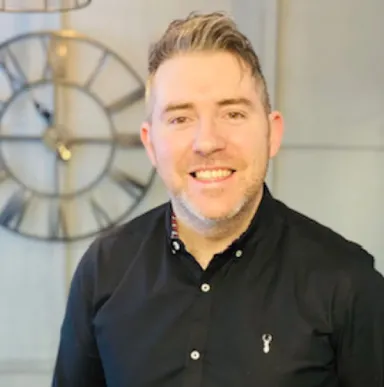
About the guest
Scott Mair
From Scott's website:
Scott Mair, is an expert in paternal mental health and parenting. Navigating the uncharted waters of fatherhood, Scott provides invaluable insights into the often overlooked intersection of paternal mental health and effective parenting. He seamlessly combines professional expertise with a compassionate approach, drawing from his own lived experiences and the evidence base to offer a comprehensive guide for fathers facing the challenges of parenthood and those seeking to support them.

Hosted by Andrew Pain
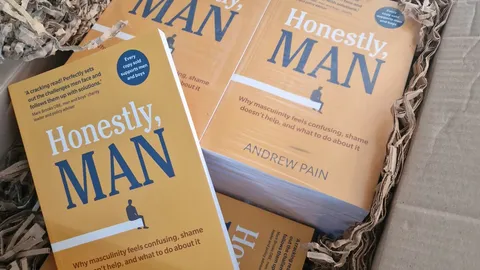
Andrew Pain is a Mental Health & Resilience Keynote Speaker who speaks from lived experience on resilience, burnout and workplace wellbeing. Host of the Men on Show podcast, author of the book Honestly, Man, and a TEDx speaker. Member, International Coaching Federation, and Mental Health First Aider trained.
Insights
Read next


Never miss an episode
Candid conversations with everyday heroes – ordinary men doing extraordinary things.