Men on Show · Episode 29
Men, Fatherhood and the Gender Pay Gap with Jeremy Davies
- 22 May 2024 .
- 59 min .
- Hosted by Andrew Pain .
Dr Jeremy Davies is Deputy CEO of the Fatherhood Institute, a UK charity working to build a society that values, prepares, and supports men as involved fathers and caregivers.
Andrew hosts this podcast. His own keynotes are on burnout, resilience, imposter syndrome and difficult conversations.
In this episode
About the conversation
A passionate believer in the transformational power of involved fatherhood, Jeremy is a former journalist, who joined the FI in 2006 after completing a Masters in Research and a PhD about gay fathers' paternal experiences and practices. He has a son, now 24.
Key points of the episode
- How his childhood was idyllic and free and easy, but it became harder as he got into his teens.
- How Boy George on Top of the Pops was a huge cultural moment!
- How there is seemingly less freedom today on rules, but more on restrictive gender stereotypes.
- How he felt that no one was really talking to him or supporting him as a Dad, because of the "boxing in" of men.
- How he posited that gay men were "redoing" fatherhood… And how their sexuality was the least "interesting" factor in it!
- Looking at fathers as a risk AND resource.
- How the current services can be somewhat biased.
- What causes the gender pay gap.
- How men are hard wired to care.
- How the media love a black and white story.
Men on Show shares lived experience and honest conversation – it is not medical or therapeutic advice. If you're struggling, you don't have to cope alone.
Samaritans: call 116 123 (free, 24/7) NHS: 111
Full transcript
Read the whole conversation
A complete, verbatim transcript of this episode – every word is the host's and guest's own; the topic headings are ours.
Welcome to Men on Show, the podcast, Candid Conversations with Everyday Heroes. Join Andrew Pain as he interviews fascinating guests, ordinary men doing extraordinary things. If you love the show and you think somebody could benefit from hearing it, why not tell them about it by giving it a share on social media? Oh, and at the end of the podcast, if you can leave us a five-star rating and a review, it really helps us more than you know, and it gets this important message out to more people that need to hear it the most. Right now, enjoy the next episode. See next episode.
Hi, my name's Andrew Pain, host of the podcast Men on Show. And I'm delighted to have Jeremy Davies with us today. And I just love his LinkedIn profile headline, which I'm gonna read for you verbatim. Writer, researcher, dad, working to create a society that better supports men as fathers and caregivers. There's no waffle at all. It just says as it is. I absolutely love that. Delighted to have you on the show. We'll be talking about fatherhood, of course, today, which I'm so excited to get into. I'm a father of five myself. There's no more coming. I've had the opp, but that's from another show. So Jeremy, welcome to Men on Show.
Thanks very much. It's a pleasure to be here.
Growing up in Cheshire in the 1970s
And the first question I always ask my guests is sort of going back to the beginning. Do you have any particular memories growing up, good or bad, that shaped you as a young boy or as a young teenager?
Gosh, I mean, it's a long time ago. I grew up in a little village in Cheshire in the 1970s. So yeah, it's aeons ago now. I suppose I had a kind of, looking back, it was quite a free and easy life. You know, we roamed around as kids and sort of headed home when the sun started to go down. So in a sense, it was probably quite idyllic compared to lots of children's lives these days. But I think at the same time, it was also a period where there were lots of very restrictive ideas about gender.
So, you know, boys don't cry. All of that stuff, I think, was quite prominent in the way we were brought up. I also think my parents, which was quite typical of people from their background, they both came from kind of working-class backgrounds, but were part of that generation who were able to go to grammar school for the first time. My dad went to university, which was quite unusual for people from his background. And so I think they had quite strong expectations of us as kids.
And I think although it wasn't intended in that way, I think we probably sort of felt that quite strongly. So, yeah, there was lots of good stuff, but at the same time, I think I always felt a little bit of an outsider, in a way, to the culture that surrounded me. And so I have lots of memories of that free and easy childhood. But at the same time, I think especially once I got to the teenage years, I, as I say, I felt like a bit of an outsider.
And so I suppose things for me, if I think back to like landmark moments, I remember things like the Queen's Jubilee, street parties and things like that. I remember Boy George appearing on top of the pops. That was like a huge cultural moment. And I guess other stuff like sitting alone in my bedroom, doing that teenage thing, listening to the Smiths on the John Peel show. So quite a lot of sort of solitary pontificating. I remember quite a lot of that going on.
Just picking up, it's interesting. On the one hand, you describe the child back in the 70s, it being free and easy, roaming around. You had more freedom than children today, yet with more restrictive ideas around that freedom. Whereas today, it seems like there's less freedom to roam. And most parents now know exactly where their children are on their iPhone trackers and the like. But maybe, hopefully, slightly less restrictive ideas now around the boy, doesn't come, you know, boys don't cry. I'd like to think that's changed. Do you think that's changed from what you've seen?
Read the rest of the transcript Collapse transcript
I hope so. I hope so, and I do think so for lots of kids anyway. I mean, I do think a lot of the thinking around gender is still there, probably. But, yeah, maybe a bit less so. And I feel I certainly feel like, you know, children now have access to a whole world at their fingertips in a way that we didn't. So that thing of kind of working out who your tribe is and connecting with people who, um, are like you. I think, you know, kids these days can kind of circumvent their context a bit more easily than was the case back in the day.
Role models and drifting into media
Yeah. And you mentioned Boy George. You said when he came to Top of the Pops, it was a huge cultural moment. Was Boy George, do you look back at him as like a role model? Was he someone that you looked up to? And if not, was there someone else that particularly inspired you as a male role model?
I mean, I wouldn't say he was a role model for me. I think I kind of yes, I kind of looked up to him in a way because he was so kind of out there and at the same time felt so human. I think that's why he was such a big cultural thing was because, you know, he looked so different. But at the same time, when he spoke, he was very engaging. He kind of owned himself and his identity and was funny.
And so, yeah, I wouldn't say he was a role model. I have thought about this. I don't know that I really had role models in a classic way. I mean, I think I was surrounded, obviously, as most people are, there were plenty of men in my life, you know, my dad, my grandfather, other people in the family. And they were all, there was something a little bit sort of distant about most of those men, if I look back, not much child focus in the way they lived their lives.
They did what was expected of them, which was to be providers, you know. And for example, like my dad was a provider. He also was quite a keen sportsman, so he played a lot of cricket. So when I think back, I remember the endless kind of weekends that were based at the local cricket club. And we kids would be there, sort of running wild, really. And so it was like we were there, but not really with them in a sense.
And I feel like that was probably a fairly standard thing in those days. I don't know how many dads play cricket these days. I feel like not so many because it's such a time consuming sport. It feels like it's a bit incompatible with the way we do fathering these days. And that's probably a good thing. And I also remember my mother there with all the other mothers, they're making sandwiches and what's that. I mean, it's like something from a different age. I feel like probably most of the women hated it as well. Yeah.
Yeah, interesting. I mean, you started out in terms of career wise in the world of media. What drew you into that? How come you went first into media?
I mean, I was kind of, I had no idea what I wanted to do. When I went to university, I think I ended up drifting towards the media basically, because I was getting quite positive feedback from a couple of my tutors about my writing. So I studied history. I wouldn't say I was particularly gifted as a historian, but I could string a sentence together, you know? So I think it was that as much as anything. It was like, OK, so I can write, so therefore, what might I do?
Journalism was an obvious choice. So yeah, so it was that. I mean, I feel like at that stage in my life, I also had, there was a probably slightly pretentious idea in my mind of wanting to do something worthwhile, not really knowing what that was. But in some way, I think I felt that journalism might be a route to doing that. I suppose, and in that respect, just going back to sort of male role models, I remember reading John Pilger's book at some point and being super impressed with him.
So obviously, I never ended up going down the sort of war correspondent route. But I guess there was a sense somewhere in me that through writing, one could have a go at changing things.
A PhD on gay fathers
And your PhD you did in fatherhood at University of Manchester, 2004. So what was behind you doing that PhD? And what were your findings? What were you trying to research particularly?
I mean, I suppose what was behind it was becoming a father myself. And I think, like many men, being confronted by the boxing in of men in terms of caregiving. I think that came as quite a shock to me, the extent to which as a man I felt ill-equipped as a father and unsupported. I felt like nobody was really talking to me as a dad. And I found that quite a shock and something that I wanted to sort out for myself, really, more than anything.
But also I could see that it was a phenomenon that might be interesting to explore. And I guess having worked as a journalist for quite a few years by that stage, I think I felt probably the need to do something with a bit more meat to it. So, you know, not just as a journalist, you often, you know, you'll get to look at a subject, but it's very quick and it's in, you know, you've got X number of words, and it needs to be done by such and such a date.
So the idea of kind of immersing myself in something was appealing. And so I suppose I wanted to look at gay fathers, because it felt like they were potentially finding new ways of doing fatherhood. I suppose that was the idea, was there's this bunch of men who are kind of on the margins of society in a way, and they're doing this thing that is branded as female, really.
And just to clarify, when you say gay fathers, you're referring to two men together in a couple raising a child, rather than a gay father that may be in a relationship with a woman.
Well, it was a mixture, actually. In fact, it was probably more the latter. So there were a few dads in my sample who were adopting or were like a donor dad. But the bulk of them actually had become fathers through straight relationships. And a few of them were kind of like the stepfather figure, if you like, in a gay couple where there was a child from a previous relationship. So it was quite a mixture. And I mean, you asked about my findings.
I suppose really what I found was that actually the least interesting or relevant thing in the whole story was these men's sexuality. What really united them, more than anything, was both the commitment to being an active father and the experience of doing that in a world that sets up parenting fundamentally as a female pursuit. So, they were operating in this kind of very gendered space. And yeah, so I guess that was really the crux of the story, if you like.
Yeah, and operating in this space and within your PhD, I'm trying to find the right words to say it really, but do you feel that what inspired you was the challenges that they experienced operating in this space? Or was it more that they were absolutely smashing their role in a good way in this space? And you're like, what's their secret here? What have they got there? So, what was it that really?
I mean, I think what I expected to find was, I mean, the title, my title, which came, which was my pitch, if you like, at the start, was Gay Fathers in the UK, Rewriting the Fatherhood Handbook? Okay, so that, if you like, summarises what I expected to find. And it kind of isn't what I found. What I found was something much more messy than that. And quite a lot of the men were kind of looked not that different from a straight dad.
Sometimes they had what I would consider quite traditional gendered views, for example. So it wasn't. I had expected this group of men to be sort of really owning and pushing forward a sort of, I don't know, a progressive agenda, a sort of, you know, different version of fatherhood. They were just as kind of messed up and muddling and sort of performing or comparing themselves to a sort of traditional model of masculinity as most fathers might, you know?
The Fatherhood Institute and stereotypes
And so, then the Fatherhood Institute came. What was the purpose? What is the purpose behind the Fatherhood Institute?
What is that all about? So, the Fatherhood Institute started in, well, it's 25 years ago now. 1999 is when that started. So, I wasn't there at the start. I kind of stumbled across it when I was doing my PhD, and I ended up becoming part of the organisation, having done some sort of freelance writing work for them. So, I suppose it was set up. The Institute was set up really as an attempt to fill the gap in the national conversation around parenting.
So, researchers had been working on fatherhood for a while. It was still relatively new as a discipline. But, you know, there was research out there about... that kind of was mapping out father's importance, why they matter, what they do, and so on. So I think it was partly driven by that and driven by a kind of understanding that actually men around the country were becoming more involved as hands-on fathers. There was a clear disconnect, I think, between that phenomenon and our growing understanding of fathers and what services were up to.
So the policymakers and the family services that surround us at that stage, and I would say still today, hadn't caught up. So it felt like there was a gap there that needed to be filled where one would build and communicate the evidence base to the people who need to know that stuff. So the politicians, the practitioners, the people who worked in Sure Start centres at that point, midwives and so on and so on.
What specifically are you telling them? What's your research finding and what are you communicating to people in those roles about fatherhood?
So I suppose, I mean, our work has evolved over the years, but I mean, fundamentally, the key message is fathers are there, fathers are involved, and we need to be working in ways that enable those fathers to do the best job they can, because that's good, not just for them as men, but for the women who love them, for the children who love them, and also for society in general. So I suppose our mission, if you like, is to create a society that values, prepares and supports men as involved fathers, and kind of to fight the negative stereotypes that are still very common about men as fathers, which still shape our culture.
And those stereotypes are about things like, men are not interested in being involved in caregiving, we're a bit useless and cack-handed, we're absent, we're all down the pub or on the out playing cricket, like my dad actually was. So it's about all of that, I guess.
And I suppose, added to that, in terms of a lot of the general narrative around men and messaging of men in the media, I know there's a programme that came out, it received a lot of complaints, a number of months ago on the BBC, about the family courts and the terrible situation many women find themselves in, where children are forced into contact with abusive fathers within the family courts and how the family courts are a mess, which they are.
But the whole programme was really about abusive fathers manipulating the family courts. There was no balance within that programme yet, but what about the fathers that are blocked from contact and they're loving figures? What about some of those mums, it will be a legitimate concern, some of those mums, they will be fake allegations made up because they're bitter about the breakup and whatever. The point for me was within that programme on the family courts and parents, there was no balance at all.
Mums are being bashed by the family courts, dads are manipulating them. This is a mess. And so for me as well, there's added to the general narrative about men being absent, deadbeats, hapless fathers, more interested in the pub than anything else. There's also that element that many men are violent, abusive, not fit to be a father, which of course is just so wrong. There are abusive men in society just as there are abusive women. So for me, there's that aggressive, violent narrative about men that's not helpful as well.
Fathers as a risk and a resource
Yeah, yeah, yeah. I agree. I mean, you know, I think it's important. I suppose we at the Institute work with a whole range of different professional groups. So, you know, social workers, people who work in early years, education, midwives and so on and so on. And, you know, rightly so, safeguarding of children and women is a priority for them. Our perspective on that is that, actually, if you're serious about safeguarding children, that's the very reason you should be getting really good at engaging with fathers.
Because you need to be able to spot the bad apples, if you like. And the only way of spotting the bad apples is to look at fathers as a whole, and get good at engaging with them, and understanding them, respecting them, but at the same time, where necessary, challenging them. And so, yeah, I think, you know, the way we talk about that with social workers, for example, is to talk about the need to look at fathers as a risk and a resource.
And, you know, that risk might, yes, you know, in a small percentage of cases, that risk might include risk of violence. But, you know, the risk may also include just like somebody being not safe with their children because they don't have the confidence and competence, if you like, the skills to do that stuff. But that doesn't mean that they're an evil man, you know. Sometimes that means if you did some really basic work with them, you could support them to be perfectly safe with their child, in which case that work needs doing.
And that's absolutely central to what you as the professional should be doing, rather than what is so often the case, which is the service clusters around mum and kind of ignores him or makes broad brush assumptions about him. We hear often, you know, midwives, for example, when we ask them to estimate how many children are born to couples who are together, you know, at the time of the birth, what percentage of couples are together in a relationship.
Many midwives and other professionals will wildly underestimate how many are together, because we have this kind of notion that there's like legions of single mothers out there who, you know, the moment the pregnancy test turns blue, the men just disappear. It's not true. We also have the assumption that, you know, when families separate, the men just disappear. Again, not true. So I think that there's a lot of sort of negative stereotyping that goes on, and that's a big part of what we work on in our training courses.
And what do you think you're most proud of in terms of the Fatherhood Institute and what it's achieved? Is there anything where, and then maybe there's a few things where you say, do you know what, because of the Fatherhood Institute, this has happened and we're really pleased about it. Is there anything that you would be particularly proud of?
Well, paternity leave exists. I can't claim it 100% as ours, but we were instrumental in getting that introduced in 2003. Paternity leave is nowhere near as good as it should be, but it does exist. So I guess that's a tick for us as an organisation. There are lots of small ways in which I think we have managed to get fatherhood on the table in key policy and practice documents. So, for example, partners are now talked about extensively in the guidance that sort of governs, if you like, maternity services.
That never used to be the case. So, in the antinatal and postnatal guidelines, there are lots and lots of references now to the need to engage with partners. They tend to be resistant to use the term father, so it gets kind of framed as partners rather than fathers. But, you know, the principle remains, I suppose, that, again, not down purely to us, but we've been in the room and we've kind of helped the fact of us being there and in the room helps remind people that this side of the equation matters too, I suppose.
So because of that, we now have a tool with which to hold services to account. And so the effect of that is to change the narrative. Okay, so I would say, you know, it's quite difficult to pin down specific achievements because so much of this is about small things that, when you add it up, represents a change in culture. And I think, you know, there's a long way to go with all of this. But we've made some very good strides and our evidence reviews are cited very widely now. And so all of that contributes to this sort of drip, drip, drip effect, if you like, of opening the doors to new ways of thinking.
The gender pay gap and parenting
So picking up, and that's great. And I mean, and I was a beneficiary of Paternity Leave. I have been so I'm very grateful to you. I should offer my extended thanks. It's not much. Well, and I want to pick up on it because we hear a lot about the gender pay gap. It's sort of patriarchy based. It's something that I think that the feminism movement is still across about and would feel there's a lot of work to be done.
And rightly so, there is a gender pay gap. But I was reading some research, quite a big piece of research in the States that where they compared the pay between parents, men and women, particularly, there's a gender pay gap about 35% outrageous. That's not right. I fully agree. Not enough women in leadership roles. I fully agree. But when they compared the data for men and women with no children, the pay gap plummeted from 35% to a staggering 0.8% virtually, virtually.
So they're still there. It's still there, but it's absolutely minimal. And so I hear quite a bit about actually the gender pay gap is a parenting pay gap, principally. There are actually men and women in the same role, work in the same hours in Western society, and not pay different amounts of money. The issue comes back to parenting. Women are making that hit. But of course, it doesn't end at a year when they then go back to work because the kids got school runs, if their kid will get sick and it's the women taking the hits, so their careers are going back.
And so what I have heard is that by doing more work on paternity leave, that not only is good for fathers, for children, we know the evidence, as you will be very aware of, is that fathers are so important to their children's development. So the gender, the equalising paternity leave is good news for women in that it makes it more likely that as a couple, that couple can afford the hit. Good news for dads, good news for children.
And maybe something that both the feminism movement and men's rights activists could agree on, probably agree on for different reasons. But actually, is that your reading of the gender pay gap, that principally it's a parenting pay gap?
I mean, I think I've seen estimates that about 80% of the gender pay gap is due to the motherhood penalty. So I think in essence, I think you're right. What causes the gender pay gap is the different career paths that men and women drift into, in most cases, when they have children. So at the end of the day, when you have a child, or especially if you have a series of small children, that introduces an issue, doesn't it, for a couple, in terms of the time required to look after that child.
And even if you're buying in childcare, if you like, there's still a certain amount of time and work involved in kind of organising and managing all of that. And so what happens under the current regime, if you like, is that we have a parenting leave system that makes it crystal clear to families who's going to take the responsibility for doing all of that. And guess what, folks? It's mums. We've got a massive, like we've got the biggest, we've got the most gendered parenting leave system in the world with pretty much, you know, one of the least generous provisions for fathers also within it.
So 52 weeks leave for mothers and two weeks leave for fathers. It's not surprising that we have a gender pay gap because that is how most families are approaching the issue of who's going to look after the kids. And of course, the more children you have, the more the damage is done with child number one. And then it just keeps going.
Paternity leave for dads
Because I did a talk on men's mental health, and there were some questions and answers at the end. And we were talking about how less than 4% of nursery workers in the UK are male and that men don't go into these kind of jobs because the salaries aren't good enough. And there were some women in the group, in the audience, whatever you want to call them, in the crowd that I was delivering to, cross that men need to get used to work.
And that's okay. But if you picture the scene of a male nursery worker married to a female lawyer, and that female lawyer has real maternal instincts, she has to go back to work after the baby is born. And maybe if she's got maternal instincts, that's really painful for them as a couple. If you imagine that scenario, the guy now, he can't really afford to feed the family as such. Wife needs to go, or partner needs to go back to work, but she really wants to be at home because she wants to enjoy her children when she has them.
The guilt that he feels. These are complex situations, but it comes back to this, can we do more with paternity leave? I know Channel 4, Abel and Cole, John Lewis, these kind of organisations have equalised parenting leave, which is quite a bold statement. Do you think the British economy can cope though? If this was a question put to an economist, is this a disaster for British business, and therefore it will never happen, so let's stop talking about it? Or do you think it's realistic that we can bring that in without crashing the economy?
I'm not an economist, but yes, I do think it's entirely possible. I think it's a question of what our priorities are as a society. I personally think this is a really important issue for governments to get a grip on. And I don't think I'm alone in that. You know, there are lots of surveys telling us that parenting leave is a key issue. There was a survey done a couple of weeks ago by working families on a survey of parents in marginal constituencies.
Around two-thirds, if I remember rightly, of those parents said that this issue would be something that would affect their vote in the coming election. So this is not like pie in the sky stuff. I think this is very real for families, especially those on lower incomes. And I think, of course, we can't step straight from the system that we have now to a super well-tax-funded Scandinavian-style system where both parents get many months of leave paid at 80, 90% of salary.
What we're calling for right now is six weeks well-paid leave for dads in the baby's first year, so equivalent to what mothers currently get. Even that wouldn't be a perfect system, and it wouldn't take us beyond halfway up the league table when you compare different countries' systems, but it would be a big improvement on what we have now. And, you know, I think it's really important this, because at the end of the day, we educate our girls to go out and make their way in the world and have a successful career.
And then when they have babies, what we basically say is, OK, that's it. Your career can go down the tubes, and we as a state are going to just sit and watch that happen. And at the same time, what we say to men is, your caregiving doesn't matter. What you are is a provider. And so we're going to give you the absolute bare minimum. We're going to allow you two weeks off when the baby arrives. We're going to pay it at a rate that's lower than the national minimum wage.
That tells you how much value we're putting on it. And then you're off, mate. Go back to work. I think it's just not good enough in 2024. It's not what people want. And if you think in terms of, you know, as a society, where do we want to get to? What do we want to achieve? It's very clear that fatherhood, and especially early fatherhood, is hugely important to children. It's also a really transformative experience for men that is about getting in touch with your caring instincts.
I think this bit of the equation is something that doesn't get talked about very much. Which is partly because, as I was saying earlier, there are all these sort of stereotypes about men not being interested. It's like this kind of men are from Mars, women are from Venus idea. So we have this idea that women are kind of natural caregivers and men are something else, you know. The research does not support that. And in fact, the research shows that when men are involved as caregivers, especially with infants, we can see the chemical changes that happen inside them, which are really not that different from what's happening inside a mother when she holds a baby.
And it's all about the oxytocin, the drop in testosterone levels and so on. Basically, men are hardwired to care. And that shouldn't come as a surprise to us, really, because as a species, we've survived for all these centuries. Of course, the species would not have survived if only 50% of them were capable of caring. So it makes sense that men can do this, are just as capable as women of doing the caregiving. And we need to give them that opportunity.
I think that's what men want. I think a growing proportion of men, especially the younger ones, are seeing that and understanding it and wanting that, and kind of wanting a work-life balance that supports that. We're not all into that idea of the only thing in life is economic success and getting to the top and all of that stuff. No more than women are. Yes, we want successful careers, but part of success, part of the way we define success these days, is the ability to have a good balance between work and looking after the people we love.
You know, it's a very human thing, and I think that's where our governments need to go in their thinking. So we shouldn't just be thinking of this in pounds, shillings and pence. It's bigger than that.
The media and a black and white story
And I suppose, adding to that, for me, there's change, a systemic change at government level, the amount of paternity leave that could be available to men so men can embrace this caring side. I read an article in The Guardian, which to me, I was quite disappointed to read. And for me, what also needs to change is the narrative about men, which is so often that men are deadbeats, looking for the excuse to go to the gym or whatever.
And the article in The Guardian was reporting on those men that do take their parenting hit as such, but are using the time off to wander off to the gym, bob the kids off on the grandparents. Poor mother's gone back to work, and actually now she's completely, she's got the work going on, she gets home, she's still got all the housework to do. And it was a bit of a mickey take about men. And I was disappointed, though, within that article, that there wasn't balance, that there wasn't a story about guys working really hard to make it lovely for their female partners.
There wasn't a story about the couple where mum has had to go back to work because she's the bigger earner, she doesn't want to, dad feels horribly guilty, he wishes he could give his female partner what she wants, which is to be at home. There were no stories like that. And so for me, I think government level, there needs to be change, like you rightly say, but also so that men actually take extra paternity leave, should it become available, I think more needs to change in the narrative about men, which we've alluded to, which you yourself alluded to.
I agree. I mean, I think the media loves a black and white story. You know? And it's like at the moment, it seems the only way we can make sense of these gender inequalities is to frame the women as victims. So we just we focus on the mom who's doing all the unpaid childcare and carrying the mental load and whatever. And that is true for many women. But what we don't hear so much about is the challenges that working fathers deal with and also what they lose from being the sole or main breadwinner, which is what they are in most couple families.
And there are mental loads that come from that too, you know? So, I mean, as an example of this, the other day we were involved in a phone-in show on LBC. And one of the guys who called in was this man called Hussein, who it was so moving listening to this guy. He worked as a chef from 10:30 a.m. until 10:30 p.m., six days a week, right? He saw his children once a week, effectively. There was only one day where he was able to spend a decent amount of time with them.
And he had three weeks holiday per year. And he was talking about how when he saw his children, he felt like they were basically strangers. He just didn't know how to be with them because he hadn't had the opportunity to spend time with them in their formative years. And the other men that he worked with, he was saying, were in a similar boat. And that's literally the first time I've ever heard men's stories told in that way in the UK media.
It's just not a story that we tend to hear. The reason that story happened was the presenter of the show, who's called Ben Kentish, understands this issue. I know he does, because I've been on his show before. I don't know if he's a father. I'm assuming he is, but he's like a young guy who really understands fatherhood. In this show I'm talking about, he did a really fantastic introduction, where he really framed the story extremely well.
And he'd seen an opportunity to do that story because Rishi Sunak a few days before had made some comments about having missed out as a dad from being prime minister. So he took that opportunity, and out of that came this amazing, powerful interview. And in recent weeks and months, there have been a couple of other examples of youngish men, journalists, owning this story, really understanding it and covering it in a really successful way. There was a guy called Christian Johnson at the BBC who did a really good package with Pregnant Men Screwed about parenting leave.
Richard James at iNews, who wrote about how he has gone part way and gone part time after the birth of his daughter. There's a really good guy called Paul Morgan Bentley at the Times who actually has written a book called The Equal Parent about his experience of becoming a father with his husband. So I do think there's a problem in the media. I think this black and white sort of mother as victim story needs to not just be the only story in town.
And I think part of how we change that is we need the younger generation of journalists, not just men, men and women, who are living this. We need them to kind of get to grips with this story. And as you say, start to change the narrative a bit. So I think it is happening, but it's a slow process.
Finding Jeremy, and a last message
I love that. I'm going to steal that as a quote. The media love a black and white story. Coming to the end of the podcast, there's two things I'm just going to briefly ask Jeremy. First of all, how do people get in touch with you and find out more about your work? What's the best way of getting hold of you? If anyone wants to further this conversation with you or seek your advice or help, how do they get hold of you?
Well, you could start off with the Fatherhood Institute website, which is fatherhoodinstitute.org. You'll also find us on LinkedIn, Facebook, Twitter or whatever it's called these days. And what's the other one? Instagram. So yeah, we're on all of those. And so you could get to me through any of those. You can also sign up for we do regular newsletters. You can sign up for those on the website. So yeah, come and have a look.
Brilliant. And to round us off completely, if you could in one or two sentences give a message of encouragement to the men, young men and old boys, people listening to this episode, what would your sort of two-liner be? A message of encouragement?
Keep doing what you're doing probably. I think most men do a pretty good job as fathers, and many of them do it in quite difficult circumstances, and with, as I've said earlier, not very much support. So I think the key thing for men, and this is where the struggle is, the key thing to understand is that time is what you're looking for. You need to spend time with your children. So whatever way you can find of doing that, have confidence in yourself that what you're doing is bringing benefits to your kids, because time is the most important thing you can give them. It's through spending time with them that you learn how to be a sensitive and caring parent. So you can't do that if you're not spending time with them.
I think that's a brilliant, brilliant ending thought for the podcast. Whether you're helping with the homework, you're putting them to bed, you just wish they'd just hurry up and get to bed because you want to get downstairs and get on with it. Actually, that time is precious for their development, for your development, for the connection and all of that. So that is a wonderful way to end what's been a fascinating podcast. Jeremy, it's been a pleasure having you on the show. Thank you so much for giving up your time today.
Well, thanks very much for the opportunity.
Thank you for listening to Andrew Pain's Men on Show. If you could leave us a five-star rating and short review, it would be really, really appreciated. It helps us get this important message out to more people that need to hear it the most. See you on the next episode. Thank you for tuning in.
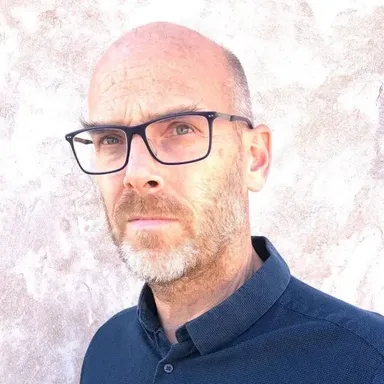
About the guest
Jeremy Davies
Dr Jeremy Davies is Deputy CEO of the Fatherhood Institute, a UK charity working to build a society that values, prepares, and supports men as involved fathers and caregivers.
Jeremy leads the organisation’s communications and policy work, including the FI’s 6 weeks for dads campaign for a better statutory paternity offer for all UK fathers; manages funded research and impact projects, including collaborations with universities, like the PIECE (Paternal Involvement and its Effects on Children’s Education) study; and develops evidence-based resources for family practitioners (e.g. the Engaging Dads toolkit, with the Royal College of Midwives), and for fathers (e.g. Becoming Dad, with the Mental Health Foundation).
He has led the development of ISAFE (Improving Safeguarding through Audited Father-Engagement), a social work training package undergoing a randomised controlled trial in seven English local authorities, and is now part of a project to bring Fathers for Change, a US one-to-one therapy intervention for men who have used violence against their co-parent and/or children, to the UK.

Hosted by Andrew Pain
Andrew Pain is a Mental Health & Resilience Keynote Speaker who speaks from lived experience on resilience, burnout and workplace wellbeing. Host of the Men on Show podcast, author of the book Honestly, Man, and a TEDx speaker. Member, International Coaching Federation, and Mental Health First Aider trained.
Insights
Read next



Never miss an episode
Candid conversations with everyday heroes – ordinary men doing extraordinary things.