Men on Show · Episode 38
How workplace bullying nearly broke me and the journey to recovery with John Sidebotham
- 25 September 2024 .
- 58 min .
- Hosted by Andrew Pain .
John Sidebotham BEM FCILT, Programme Manager – Mental Health & Wellbeing, Route Services, Network Rail to give him his full title!
Andrew hosts this podcast. His own keynotes are on burnout, resilience, imposter syndrome and difficult conversations.
In this episode
About the conversation
He is a wellbeing leader – Equity, Diversity & Inclusion Champion - Mentor – Coach - Author. John has worked in the transport sector throughout his career, starting with coach operator and holiday provider, Shearings, before consultancy, Centro (now Transport for West Midlands) and Network Rail. He sees kindness and compassion, coupled with diversity and inclusion, vital to success, enabling fresh ideas to be brought in to challenge existing thinking, creating innovation and opportunity. His passion for wellbeing was ignited through a journey through clinical depression. He is firmly of the belief that where we celebrate difference and uniqueness in a caring environment, where ideas can be shared without judgement in a safe listening environment, then this drives safety, performance, and innovation, whilst keeping us all as well as possible. An environment where we can flourish. Amongst other things he hosts a daily wellbeing call each weekday, open to the railway industry. One of John’s favourite quotes is: “Educating children to have more compassion is the single most important thing we can do to transform the world.” Dalai Lama & Archbishop Desmond Tutu, from their book, “The Book of Joy.” He believes this to be vital for our adult lives too, whether at work or in our home lives.
Key points of the episode
Men on Show shares lived experience and honest conversation – it is not medical or therapeutic advice. If you're struggling, you don't have to cope alone.
Samaritans: call 116 123 (free, 24/7) NHS: 111
Full transcript
Read the whole conversation
A complete, verbatim transcript of this episode – every word is the host's and guest's own; the topic headings are ours.
Welcome to Men on Show, the podcast, Candid Conversations with Everyday heroes. Join Andrew Pain as he interviews fascinating guests, ordinary men doing extraordinary things. If you love the show, and you think somebody could benefit from hearing it, why not tell them about it by giving it a share on social media? Oh, and at the end of the podcast, if you can leave us a five-star rating and a review, it really helps us more than you know, and it gets this important message out to more people that need to hear it the most. Right now, enjoy the next episode.
Hi, my name's Andrew Pain, and welcome to the podcast Men on Show. And I'm delighted to welcome John Sidebotham to the show today. In his current role at Network Rail, he's the Wellbeing Lead Equality, Diversity, and Inclusion Champion. He's a coach, mentor, author. And I'm just gonna read some of his prizes, a variety of awards. I've got the notes here. The Chartered Institute of Logistics and Transport's Award for Excellent Diversity Champion 2020. He's been awarded the British Empire Medal in the Queen's 2021 Birthday Honours List for his services to wellbeing at Network Rail.
A finalist in the Rail Wellbeing Live Wellbeing Hero Award, both for 2021 and 2023. Also finalist for the westminster Alumni Awards 2020 in the Social Impact category. The list goes on. John, we're very honoured to have you on the show today.
Thank you very much. Thanks for inviting me on. Great to be here.
Who inspired him, and losing his dad
Cool. I always start, John, with a question around who inspired you? Looking back as a younger guy, maybe as a teen growing up, were there any particular role models now that you're like, wow, yeah, they really did something for me, inspired something in me?
It's a great question and I was thinking about it before today's session. I was like, who had inspired me? I'd have to say my parents and my gran, and my dad worked in the transport industry, worked for British Rail, then he worked for something called National Freight Corporation. I suppose that ignited my interest in transport, which is where I work. But had an approach of giving back and caring for other people. So that's a fantastic foundation.
My mum suffered from rheumatoid arthritis and that sort of prevented her from working. But before that, she'd been in the head in a grammar school. And I think they sort of inspired me and my gran particularly, you can do anything you choose to do. You can put yourself out there. I hadn't really thought about some of the things my gran had done. Until much more recently. So my grandfather, amongst other things, had run a number of businesses, including car dealership.
And this is before the Second World War, right? And she saved some of the stories, like she was part of collecting vehicles from, so this was in Scotland, and she'd come south and drive vehicles, new vehicles back up to Scotland before the motorways and stuff. And I think, actually, that was pretty remarkable. That's not really the norm, and it makes me think, actually, whatever you want to do, you can do. She was a graduate of the Glasgow School of Art, and was a fantastic artist. So between them, I felt loved and supported. And in my mindset, if you could apply yourself and you found your passion, you could make things happen.
Yeah, amazing. Yeah, and do you think, looking back, there were any challenges you particularly faced growing up which impacted your sort of sense of masculinity and being a man? I know for me, for example, I was quite small for my age. I was always the shortest in the class, or if not the shortest, one of the shortest. And I definitely shied away from trouble sticking up for myself just because I felt like I couldn't. Those were things that I felt challenged me. But was there anything for you either emotionally or physically that you felt actually this definitely impacted me growing up and my sense of being a man?
Read the rest of the transcript Collapse transcript
The biggest thing that impacted me was my dad became seriously ill when I was 14, 15 and spent nine months in hospital and died. The school I went to, it shows I'm an ancient person. We did O levels, not GCSEs. We did some O levels a year early. So four O levels we did a year early. I passed two of them relatively well and failed to. We got one of them the following year. And I was sort of present, but not really there.
Physically, I was in school. But losing him was really impactful. And in essence, I changed my friendship group over the following sort of 18 months. And you probably do that as a teen anyway, but I felt quite distant from my peers because of what we as a family had gone through. Did it affect my view of masculinity? No, I probably thought I had to step into some of the role that he had. And it was really an exceptionally tough time.
And I don't think I really properly dealt with it until actually I was off work with depression in 2018, 2019, where I took time to... I've just stopped and went through a whole load of things. I became the age that he was when he died. And it's quite a moment when you become older than your parent and that he went too young. But yeah, that was a big thing. I sort of threw myself into my studies subsequently.
And so I went on to do my first degree and subsequent degree. And then into the world of work, and I didn't really give my self-chance to grieve properly. So big things like that can massively affect us. And it was interesting, I used to cut myself after he died. And I probably did it for about 18 months. And I think that was just to feel. I felt quite numb, really. And in that time, there wasn't the sort of support, I think that there is now an understanding around mental health as there is today.
And when I hear stories about families going through similar situations, and I'm really encouraged to find out that they're being supported, say, by Macmillan nurses, and they're getting counselling. I think I had a week off school, and I just expected to go back, and I had a chat with a teacher, how are you, John? He was just meant to just get on with it. You might be there, but you're somewhere completely different in your mind.
Self-harming, and how his well-being work began
How did your family deal with, I mean, as we would refer to it today, you mentioned you were cutting yourself. We'd refer to it today as self-harming.
Yeah.
How did your family deal with that?
They didn't know. Right. They didn't know. I hid it. It wasn't something I did to sort of get attention. I did it because I was hurting myself. And yeah, a friend at school noticed the marks on my arms and said, how do you do that, John? I just fell off my bike. I said, my mum noticed the marks. And we'll hear the same story. I just sort of got too close and I came off and went through some bushes. Okay.
So you did that. I think you said for 18 months.
Yeah. What?
And in order, because you felt so numb, it was about feeling something. What changed? What stopped that?
I think it's just the grief process. You know, it's not a linear journey. And you have all sorts of different emotions that go with them. I just no longer felt that need. So the grief is there. I don't think I probably dealt with it until many decades later, actually. But the grief doesn't overwhelm you to the same extent as it does in those early moments. And certainly you're quite... If your peers haven't gone through something like that, you feel quite distant from them.
And it was just developing new friendship groups and getting into A-levels and stuff, and sort of what you do in post-school, I think just shifted my perspective. And actually, my mum was really struggling and sort of had the increased mobility problems and basically through my A-levels was largely bed-bound. Wow.
So through your A-levels, you're dealing still with having lost your father.
Yeah.
Your mum is bed-bound. You're assuming some of that responsibility that your father would have had.
Yeah, yeah. I mean, yeah. It was just it was a it was a real about this quite a lot to deal with, I guess. And actually, she died at the end of my first year when I was doing my first degree. So, yeah, she went she went in to have surgery, the problems with her knees and actually got septicemia.
And do you have it? Do you have any sort of siblings?
I do.
Yeah.
Yeah.
And did that bring you together, you felt as siblings?
Probably not. Probably more the opposite, actually.
More of the opposite, yeah. Because you're dealing with it in different ways?
I think so. I mean, I think if you look back now, with adult eyes, maybe you'd approach it in a different mindset. And there's a different approach to the grief that you're going through. And we're very sort of different people and different approaches to life. So it's just, isn't it right or wrong? But we know we're not particularly close. And there's sort of a sadness on that, but I'm at peace with it.
And do you think, obviously, in caring for your mum when she was bed bound, is there any link to that in terms of your well-being work and your heart for well-being? Because obviously, you move into the transport industry, you mentioned that there is a family link there. But what was it that sort of created that passion for well-being? Was that some of it, some of those experiences? What do you think it goes further back?
Some of the experience of what you've gone through, your lived experience in your life's journey will fit how you are. You never know what's going on for other people in their life outside of work. And I think showing some empathy for colleagues is a wonderful thing to do, because you just don't know what people are facing, whether it's a relationship breakdown, whether it's a ill health diagnosis, whether it's financial worries. People come to work to do a good job in my experience.
And if somebody is not quite on top of their game, it's rather than putting them on a performance improvement plan, just actually listen, find out what's going on and what you can do to try and support them. But no, I never really thought I'd get into well-being. I was sort of interested in connecting people in place. And so my first degree was around social and economic geography. And I was encouraged by my lecturers to do a master's degree.
And I got funding to do that in transportation, planning, and management. And the idea was just connecting people in place and how you do that effectively. It just sort of interested me. And I sort of fell into working for a coach and bus tour company, and then into transport modelling. It's something called Joint Data Team is now part of a company called Montmartre Donalds. And then for an integrated transport authority, and then into Network Rail. Yeah, so now I hadn't really seen well-being be my thing.
But I think I probably have shown empathy for those who work for me and with me. And I think that's a good thing to have in place in enabling high-performant teams, and actually celebrating difference and uniqueness is something that's been with me for quite a long time. So the team I had with the Integrated Transport Authority was probably more diverse and was a norm in that organisation. And I just appointed people I thought were going to be the best for the roles or showed the aptitude from a variety of different backgrounds, ethnicities, faith, beliefs, and for me that helps to drive innovation, helps to drive performance.
Bullying at work, and going off sick
And so tell me about with bullying, because you mentioned, I know in your background, when we've had conversations before, bullying has been a big part of your work experience. Not that it's happened lots of times, but you have experienced bullying in the workplace and that had an impact on you in a previous role. And certainly as a topic of all the podcasts that we've done here on Men on Show, not explored bullying as a topic. So just tell me about the nature of the bullying and how that affected you.
Well, the thing to remember with bullying is it's never your fault. It can happen to anybody at any age, in any setting. So it can happen to you at school, it can happen to you at college, at university, it can happen to you in the workplace. It can happen to you within your family. It can happen to you within your friendships groups and it can happen to you in work. And I've certainly seen and witnessed poor behaviours in the workplace.
And I'm sure I've demonstrated behaviours which haven't been the best. You know, when you're up against a deadline, you might put undue pressure on those around you and you may not be, you may not even like yourself very much when you look in the mirror with them. But yeah, I worked with somebody relatively briefly for about six months. I was asked to lead a team, the previous incumbents had sort of left in a bit of a rush.
I said, would I take on this sort of activity? And they go, yes, yes, I would. And I sort of became aware of why they'd left and issues within the team. I worked with somebody who was exceptionally demanding. Which isn't a fault in itself. But whatever I did and whatever my team did was never good enough. So it might have been all right for our customers, and they were certainly happy with what we were doing. But for this individual, it was never good enough.
So they'd do things like, we had something called Programme Board. They, on occasion, dialled into the meeting silently, and then would criticise me to an open plan office afterwards. So they'd clearly been present. They'd come up to me with a place in one of our offices, there was one large office in Milton keynes, a place called The Street. They'd come up and tell me how much they wanted me to leave with expletives and why didn't I and my whole team leave.
And you'd go, well, thank you for your feedback. I'll keep that in mind. But inside, when you get that, you sort of die inside. It wasn't unusual. It started being work for, I don't know, I think, morning, if not before, on the travelling down from Boone International. You start getting very demanding emails. And then when you got into the office, why haven't you done what was in the email, which is just practically impossible. They'd sort of sit by you and criticise stuff you were doing on your laptop.
So I was managing sort of multi-million dollar projects. I'm quite an experienced individual who's had senior roles in the industry over many years. And you think you should be able to cope with this. And the thing for me was I just ended up working really long hours. And the things you might naturally do to look after you, you sort of stop. So I sort of reduced the socialising I was doing. I like to exercise, so swim, cycle, run.
I sort of stopped doing that. Play the violin, and I find that something I can just lose myself in. And I stopped doing that. I started drinking more than I was comfortable with in the evening, just to try and deaden what was going on. My wife knew there was a significant issue. But I didn't want to talk about it, because then I got no break from it. It's just like you bring it home, it's always there, and I'd work in the evenings and stuff.
And then you get to a point where you look at that email, you re-read it 15 times, and it's not going in, you're just overwhelmed. And I remember one day I sort of got to the chemists, to pick a prescription up for my wife, so I got to the chemists about 10 to 7, so going to Birmingham International, there's a couple of junctions down the M42 towards home, called in to the chemists just before they shut.
And the chemists do I've known for years, because I was your lovely wife, John. I just felt like the first kind of thing that had been said all day, and I utterly lost control of my emotions. So guys don't do that, do they? In a store full of people, and I felt utterly embarrassed and apologised and sort of stumbled out of the store and showing my state of mind, the next day I went in again to apologise.
Why was I doing that? And I did a repeat performance, which is probably the best thing I could have done, because I literally stumbled in a dream out of the store, and the camera was just delightful with me. And I was going by some of my car and I was thinking to myself, this can't go on, I need to do something. What am I going to tell anybody? I'm just losing my shit, basically. And I got into the car, I followed the GP, practised and made an appointment.
And went to the tea, didn't book any particular GP. I happened to see this lovely guy. I thought, well, what am I going to say? And I just talked about what was going on in my life, talked about what was going on at work. And when you're going through it, you just think it's you. This is just me. There's something wrong with me that I'm getting this. And I should be able to cope with it. And he goes, I see it all the time.
I see it constantly. The people of your age, people of younger, people who are older. And you know, it's not your fault. But it was year end, and he's like, you need to be off, John. It's like, I can't be off. I've got somebody on long term sick. If I go off and they come back, they're really vulnerable. They're going to get what I'm getting. And I'll just go off and never come back. I go up to the end of your account, I've got a little glib of this for my customers.
And he goes, you no need to be off. Firm me when you're ready. So I struggled on for another three weeks. And I always like to take the stairs. And I took the stairs to the office. I think we're on the third floor. Maybe it's the second, I can't quite remember now. I couldn't breathe when I got to the top and I thought, you're having a panic attack. And I actually got to my desk, then phoned.
They got another GP's appointment and left early to go to it. I wasn't having a panic attack. I'd got bronchitis, that's why I couldn't breathe. But the thing is, you're not looking after yourself and you become more vulnerable to infection. So when you look at your absence data and you think that people are off with colds, flu, it may well just be stress-induced. If you look at our absence data, our biggest absence is non-declared. And then it's followed by mental health and it's followed by MSK.
So really interesting to sort of look at what people are putting. And I was very reluctant to put depression on my absence notes. And my GP says put respiratory infection as I went off. And that cleared up and it was about three months into me being off and I thought I'd be off for about three weeks. And he goes, you're going to be off for a long time. And for me in my head, three weeks was a long time.
In his head, it was like, no. So three months in, he goes, we know you can't put respiratory infection because you haven't got that. And in my head, I needed to be strong when I came back to work. So I was a member of a gym at our office at Millkeens and I joined a local gym. Then I was thinking in my head, I need to be strong. I had a routine of running 5K on a treadmill, did 5, 10K on a bike and then swimming almost on a daily thing.
So clearly you can't do that with the respiratory infection. I thought, you know what, I need to be honest. I have got depression. Let's put that on the note. I was sort of liberating to do that. The person I worked to never phoned at the time, that meant was agreed. They might have phoned early in the morning, middle of the day, end of the day. So it might have agreed to call at 11. It was never at that time.
And you felt like 10 to hooks when this call is going to take place. And I thought, stuff this. I'm not dealing with this individual. So I escalated it to the next tier. And I sort of encouraged a meeting with them. And you should have regular touch base. If this happens to you, then you're off. Let's make sure you've still got the contact with your employer. And we had regular meetings. And the suggestion was I should just meet this person on my own.
And I've gone a lot. I'm not well. And I was fearful I might just come out with something. I go, stuff your job. I've had enough of it. I walk. And I need it. And now I'm with me. And I took one of my community buddies, sort of phoned me up, would you join me in a well-being meeting at work? And they very kindly did that. And, yeah, supported me through that journey. The business knew there was an issue with this individual.
One of my team resigned with no job to go to, and this individual thought it was a fantastic thing because they weren't delivering. But they used to be able to deliver. I'd known them for a long time. They were just broken. And this lovely guy, he just said, I'm resigning, I can't cope. I'm not accepting your resignation. Think about it. And I gave him a month to reflect. And at the end of the month, I was like, no, I just can't come back to that.
One of my peers wouldn't actually come in to our office because he couldn't bear it and worked out of the office in London and told me he thought he was losing his mind. But he wasn't. He actually became a COO of the business servicing the organisation I worked for. But you could just think it's you. You can just think it's you. And you need to draw a line. The business told me they wouldn't take action unless I put a grievance in.
It's like, but you know there's a problem. You know there's an issue. I like to keep records. And I've actually got a detailed spreadsheet of all the interactions I've had with this individual. When stuff that was done in private and stuff that was done in public. And I used that as part of the grievance process, which takes a long time to work its journey. And I'd actually come back to work and it still hadn't closed off.
However, it was fairly soon closed off. And the stuff that was done to me in public was validated by other people. And the stuff that was done to me in private, I was told I was believed, but they couldn't evidence it. So enough of the grievance was upheld. The person hasn't got demoted from the role they were in. And my hope for anybody who's behaving in that way is they learn from how they were. And if they have partial with people, they're not only hurting themselves, they're hurting those people around them.
And actually, when you kinder, it releases oxytocin, which enables you to build trust. It stops telling me as the end points of DNA unravelling, and it strengthens your vagal tone. I think it's really fascinating. I read a fabulous book by Archbishop desmond Tutu and the Dalai Lama called The Book of Joy. And they talk in it, the thing we can do to transform the world is to educate our children to be more compassionate. And what you do to the vagal nerve to take it to the gym is to practise compassion.
And for me, if we're able to practise more compassion in the workplace, it could be utterly transformational. And where we bring empathy into the workplace, genuinely care for each other, talk about those bigger things that impact our wider lives, normalise conversations about our whole lives. It creates an environment to thrive. It drives safety in a safety-critical organisation. It drives performance. It drives innovation. Why wouldn't you do it? So, that's how I fell into my stuff on well-being, really.
When I came back to work and I was off for 12 months, my GP thought it was too early. And I thought, if I don't go back, I'm not gonna come back. I was moved teams and I ended up working for a fabulous lady called Jacqueline Young, who has fabulous emotional intelligence and shows empathy. And she encouraged me to do some talks on stress and anxiety. I think I've done three and I had a one-to-one with her.
And she said, these talks you're doing, John, here he comes. You come back to work too soon, you're not really a great fit. Perhaps you should think about looking to do something else. That's the narrative in your head, Roger. You don't need anybody else to criticise yourself. You can do it really well to you. You said, I'm getting fantastic reports from what you're doing. But we're getting the people who are already bought into them. We need to get to other people.
And she asked me to do it too, in all hands, cool. So it was a very crowded meeting room, in an office we had outside Euston, and it was relayed on cameras elsewhere. I'd got some fantastic slides, you know how you do. And the IT let me down, so I did it with no slides. I already thought, I'll just tell my story. So I sort of talked about what I'd gone through, what I'm trying to do to look after me, the self-care, and that includes taking antidepressants.
And at the end, I thought I got a standing ovation. And I got loads of people reaching out to be saying, thank you for doing that. I've been on antidepressants for years, and I've not felt, oh, you've talked about this in the place. I've felt such stigma. And I thought, we've hit on something here. And we need to do more of it. And so I expanded the sort of talks I was doing, the breadth and spread of them, and some stuff I was doing on social impact.
We like to support particular charities, and the charity in that programme we were engaged with was Railway Children. We do fabulous work in the UK, India, and Tanzania. And I thought we should do something more than just raise money. So I engaged their leadership team, and we helped rewrite their strategy in India. We worked with one of our delivery partners, Cognizant, to do IT training for staff in India. And in the UK, we're engaged in British Transport Police and Train Operating companies, and a safeguarding project they were doing, supporting really vulnerable young people.
But the pandemic started, and Jackal's Night, and such as it's called. We've got about 1,000 people in our team. We treated everybody, whether you work for Network Rail or one of our delivery partners, as part of the Network Rail family. So we've got people working for us in India, in South Africa, all over the place. And we thought, if we're going to wait for HR to deliver something, the pandemic might well be done. And we thought, pandemic is going to last maybe three months, eh?
It'll be done, that's it. Why don't I put in a daily well-being call? So, yeah, I was like, I can do that. So, 12 to 12.30 from 20th of March 2020, we started doing a daily well-being call, well, I did, and decided to theme it on ways to stay well. There are five ways to well-being established by the New Economics Foundation back in 2008, which is connecting with each other, moving a bit more, taking notice of being in the moment, staying curious and giving back.
So, that was my theme, and I created a few slides and a safe space for people just to check in with each other. Then I thought, you know what, I need some different voices. So, I started to reach out to a spread of different people, both internally and externally, to do other topics. So, we did things like on domestic abuse, where women are the victim, and then people reached in and go, what about us? What about men?
So, I did some sessions with mankind, and we're talking about where men are the victims of domestic abuse. testifying, breast cancer awareness, on stress and anxiety, on the importance of listening, the importance of seeking help, on urology health, on getting catholic awareness, sepsis awareness. Anything that's a little bit edgy that we wouldn't talk about, I'll do it. I've done a whole load of stuff on gambling harms. I just had a sense that we employ 40,000 people and 70,000 in our supply chain.
There will be issues. You see the adverts absolutely everywhere, and it appears to be just fun. Foxy Bingo, do it with your mates, it's great. What if you're gambling to get out of an issue?
Something like 80% of online accounts belong to men gambling accounts. I think it's that 80%.
Gambling harms, and GAMCare sessions
Just exploring this a little bit further, I happened to have some friends, believe it or not, I have some friends who work in banking, and a couple who work with a major high street bank, who didn't need complaints. And they said the biggest issue on controlling debt with people is haemorrhaging cash through gambling, and also chat lines, and through relationship breakdown, and where people are going to get help. And I happened to have a call with somebody else who works in Wellbeen in Cumberland, in a local authority, and they engaged Beacon Counselling Trust, who do gambling harm support, and I got them to do a session for me.
And most of my sessions, right, there are between about 35 and 85 people on the calls. Often a lot more. I've had 450 on one dealing with pension health, and I've had one on dealing with men's health, where I've got over 600 on the call, which is absolutely fantastic. But this, I've got three people. Wonderful Singaporean lady, who I know quite well, and two colleagues who work in India. I go, disappointing. Perhaps the stigma. But hey, the main session is recorded.
So the recording goes out, an initial cascade of 3,000 people. And then I managed to get some wording into payroll. If I can get to people, one way of doing it is everybody opens their basement. Everybody has a look. So I got some reference to GAMCare in there. And then I ran some sessions with GAMCare. And they were all well attended. And I found out with one of those, we did one on gambling on young people.
Discovered it was an issue certainly with our apprentice community. And there was a former apprentice came on and shared about how it wasn't unusual in heshoe Cohort for to be asking to borrow money to go out for drinks on the night they were paid because they'd already lost the money. So now we've got GAMCare come in and thought to all of our new apprentice cohort. We've got them going into our delivery units, a whole different sort of face-to-face setting, as well as doing online sessions for all of them. Thank you.
Bullying can happen to anyone
So let's just rewind a little bit because we've covered so much stuff, which is great stuff. But let me just summarise what I think I've understood. If we start with the bullying, I think there's some incredible rich insight there that I just want to summarise for our listeners. I think the thing that stood out to me that I can relate to in a former abusive marriage, my perpetrator was female, was this sense and you seem to be expressing this, that it's my fault that I've done this, that I'm stupid and that becomes your way of thinking.
It's amazing how that spreads. I generally thought I was a bumbling fool anywhere and everywhere, except for the very few times I was maybe away on a stag do that I'd got away to, people would say you're different. I was different because my abuser was not with me and I became. So you become someone else over time. What struck me was just the impact on you. You were talking about how you used to do all this stuff, played the violin, all this sport you used to do, you used to really look after yourself and that stopped.
The impact on the bullying was not just emotional. You weren't just a bit stressed about it, got a bit of that Sunday night dread of the week coming ahead. It actually changed how you looked after yourself to the point where you got bronchitis, but at the root cause being bullying, which I think is quite interesting for organisations, how seriously we take bullying. Listen, this is not just some people being a bit stressed here. Your staff could go off with bronchitis and be off for months if you have a bullying leader and that's not uncommon.
It struck me as well that there was quite a widespread impact. So you're a bullier if we call that person a bullier. I know I've just made up that word. It wasn't just you. I imagine there's some cases of bullying where one person is picked on. Maybe there's a personality clash and it brings out the worst in the other person. But there's also those that bully where that is their default position. That is how they lead.
That is how they interact. I imagine the person that bullies you at work is probably quite bullying within their family, within their friendships, it's just how they do life and that's quite a broad impact. It interests me also that you kept silent about it. I'd like to think with a lot of the well-being stuff, mental health awareness, certainly in our schools, that kind of emotional well-being. There's a lot more awareness, but you didn't want to tell anyone about it.
You kept it in, you kept in, you kept churning it around in your mind, not very helpfully because you've got this bullying narrative going on and you're keeping it in, but you use the words of how liberating it was for you to say, actually, I'm not off due to a respiratory infection. I'm off with depression and how much that was a leap of courage, but entirely liberating as well. And so just encouraging people if you are, if you feel like you're in a situation and your narrative is going, everyone else is going to think I'm stupid.
I'm so stupid. I probably deserve this, but there's a part of you that knows it's not right. Do take that leap of courage. I know myself. It's incredibly liberating to say, actually, this happened. This has been happening. Suddenly, the power that that thing has over you, its grip starts to weaken because you're starting to talk about it. Be honest. For me, there's so much that you shared within your account of being bullied. I would just add the final thing that really struck me, and you make the point how it can literally happen to anybody, anywhere, and there was a good friend of mine when I did my TEDx talk on domestic abuse that I'd not heard.
He's a good friend, but he's just one of these friends I'd lost contact with. I hadn't seen him before five years. When he saw my TEDx talk, it just was out there on social media somewhere, he actually messaged me to say he'd been at the point of suicide because of the emotional abuse suffered in his relationship with his female partner. But what was interesting about that was this guy is six foot five. He's built like a tank.
He's a lawyer. He's got his own legal practice, and his partner at the time was a very short lady, partially sighted, not in good physical health. If you saw them side by side in the street, who's the perpetrator, who's the bully? You'd never have it that way around. And so, I think your point that it can literally happen to anyone. And when I've seen bullying in the workplace, there's one case that really strikes me, and it was two females.
The female being bullied was a robust, confident, about 5'11, broad-shouldered, highly experienced, being bullied by a trustee in her early 70s. And in terms of size, it literally can happen anywhere, to anyone. And just being open to those dynamics, I think is really important. Being open to our human biases as well, as we look at things, I think is really important. One thing I wanted to touch on, just bearing you're conscious of time, obviously, you work at Network Rail, you're doing loads of amazing well-being stuff, predominantly male workforce, although not exclusively.
I'm not sure what the percentage is. Maybe you can share that with us. What do you see as the main challenge or challenges, maybe there's one or two, that your male workforce face at the moment?
Mental health challenges in a male-dominated workforce
It's a great question. I think there's probably many, many challenges. So yeah, in terms of our workforce, it's about 19% female in certain teams. So when I worked for Jacqueline, our team was very evenly mixed between men and women, and very, very diverse in terms of ethnicity, faith, beliefs, and neurodiversity. But that isn't a network rail norm. There are a lot of people who maintain the track, making sure that everything runs effectively, and fundamentally male. The suicide rate on our industry is 1.6 times the national average, and I think in our front line is higher than that.
I actually get people to recognise that they need help. We all need a bit of help sometimes. It's really vitally important. People, how they are in different ways, I think is a key challenge for us. I'm really pleased that we've got a fantastic partnership with Samaritans, and I managed to get Samaritans' logo onto PPE. So it's just, it's on the shoulder, and that's just encouraging people to have those conversations. We've got constant change. This is very, very unsettling for people, and making sure we've got good self-care arrangements in.
Just normalising conversations on mental health. You know, we're not meant, we're not very good at asking for help, and we're not very good at going to the doctors. I've done a few sessions with Blue Ribbon Foundation, a lovely guy called Jonathan Prince, and he shared with me, men are much more likely to die from potential avoidable causes than women. 28% of men die from avoidable conditions from heart disease compared to 70% of women in England and wales.
And coronary heart disease kills far more men than women, one in three men compared to one in ten women. And men dominate seven to ten years earlier. And research suggests men go to the GP half as often as women. And it's interesting, is it a male-dominated workforce? We've got a voice, right? So every four weeks, I host a loose men panel discussion, getting guys to open up about their feelings. Somebody came back to me, having done that, and going, thanks for doing it, John, because I've lost my voice.
I've really lost my voice. I'm an male-dominated business. And it's like a relationship breakdown, access to my kids, all of that. And loose men help me have a voice. That's sort of fantastic. And so just dealing with the complexity of society as it is today, all the noise from social media that's around today, then these are big, big challenges for them. How do you navigate that? But just getting guys to realise we all need a bit of help sometime and just to open up.
And we bottle things up too much. And you might think it's never going to be you that has suicidal ideation. So one in four of us will have a mental health issue in any given year. I never thought I'd have suicidal ideation. I probably have low mood most of my adult life, but managed it in the ways I described with the violence. It was like exercise, playing my violin, having a good friendship group. But yeah, what are we doing to look after ourselves?
So you'd see that as probably the biggest challenge that you see among your men is being honest about the challenges they face, getting help, and managing kind of mental health. Would you say that was the big, just so that I understand?
Managing mental health is such an important thing to have on your radar, and recognising we all do need help, because men just don't have spirits. Like, I don't know about you, I'm really grateful I got a sat-man in the car, because I just stopped him asking for directions. It just seems like a really hard thing to do.
Men asking for help, and finding community
Do you know, that's never struck me. I've always been the first to ask people for directions. I don't mind. I'll ask anybody for directions. I just don't want people to feel nervous if I'm slowing my car down, that, you know, if that makes sense. But like, I'll ask, I'll stop and ask anyone for help. I really don't mind at all. That's never been in me. And I think there is, and I wonder, so I saw a lady who runs a speaker group for speakers, and all her intake this year were female.
And there was this big thing on her Facebook stream. Oh, well, men don't like asking for help. Men don't like asking for help. And there was this kind of fairly negative stream about our men losing ambition in the speaking industry, our men scared. Like, what? I'm in a speaking group where everybody's a man. So men obviously do our own thing to ask for help. So I think, I wonder whether sometimes we imagine that men don't like asking for help. But do you think that's true? Do you think that's urban?
I think we probably get to the point. So I was in crisis when I asked for help. And the choices are, basically, you do something extreme to yourself, self-harm, or you actually ask for help or you actually don't know quite where it's going. And, you know, when we're already sick, it's hard to remember our doctor's advice and getting help earlier, I think, is an important thing. And I've just done it totally, so. He got cancer deosophagus.
He was caring for his wife, who had got dementia, and he'd been losing weight, and he was putting off seeing the doctor. He knew he had an issue, and probably looked after as properly he should have been. But by the time he actually went and got a diagnosis, it was too late. From diagnosis to death was six weeks. And I think that isn't an unusual thing for men. And just encouraging us to open up, talk is a great thing.
So there's some fabulous groups, like Anderman Club, set up by Luke Ambler and his mother-in-law, following the death of Luke's brother-in-law, Andy, who lost his life to suicide. And just encouraging guys to talk. And two things are off the agenda in their groups, which meet on a Monday night at seven o'clock, and there's an online group as well. They don't talk about religion, they don't talk about politics. And they follow a sort of set script, just encouraging men to open up.
Yeah, and I would add to that, you know, there's men in sheds, there's over a thousand sheds across the UK. There's the grieving pint in Bristol, which runs in a similar thing, not really scripted, but where guys meet in pubs to talk specifically around mental health stuff and share. There's a lot of groups that have emerged in the UK, which is a brilliant thing, seeing men organic. The Proper blokes Club in London, that's walking groups. I have a men's football group.
We're not gone national or anything, we're just staying as we are now. But encouraging men to find community. There are some men that really like that talking group, Setup and others. I'm happier in a pub, and I'll talk as openly as you want. I prefer to do something. But encouraging men to find something. these groups are emerging everywhere. It's a brilliant, brilliant thing to see. Do you think though, and just coming back to this point of going to the doctor, some stuff I was reading, I think I was reading the research, where the point being made was it's not that men won't go to the doctor because they don't want to ask for help.
It's that for many men, they don't want to feel like they're a burden to anyone else. For many men, they're so focused on just working and trying to manage a job, and maybe parenting, but they actually almost haven't got the headspace. Maybe men aren't so good at juggling a lot of things in their mind at one time, like we can focus on a few things. But then that extra thing of well-being, self-care almost feels like another thing to add to this list, and many men feel very worn down. Maybe it's not a fear of asking for help, but just life stuff, the daily grind.
Putting off the GP, and taking a list
I think that's a really, really fair comment. So, you know, I sort of fell into, I call myself the accidental well-being lead, and I fell into doing what I do because of being off with depression and then being encouraged to do some talks on it, and it sort of overtook my day job. So I do all this stuff, I've done stuff on prostate cancer awareness with Prostate Cancer UK, with Urology Foundation, and I've been meaning to get a PSA test.
I've been meaning to do it for three years. I actually got it done in January, and I've got fairly low energy, and I thought, actually I've done some stuff on andropause. I've probably got low testosterone, right? So I just test my testosterone. I think the GP goes, yes, and they ran some other bloods. PSA was fine, testosterone, Shearings just laughed, there's nothing wrong with your testosterone, John. But I just felt like I got no, just like no oomph.
But your B12 is just really, really, really low. You need injections. And now I have injections every three months. I didn't know, but I just put that off. It took me three years from being 10 to getting that appointment to actually being seen. Another colleague that I deal with regularly, we both do stuff on well-being. He was the same. So January, he had a well-man thing done with Bupa and found out he caught more heart defects, more multiple.
And he's just like, but he's when he saw his cardiologist and he said, you're getting a bit out of breath. And he goes, well, yeah, a little bit more than normal. It's like, well, going upstairs, I know before I came here, I just said, I just run a 10k run, and I just swim 1500 metres. And then I cycled home after doing that. It's like, oh, yeah, you've actually got some really, really serious issues. And he's just gone through keyhole surgery to fix these things and is currently off sick.
But we've both been putting this off for a long time. And it's literally, oh, my little list of things here. And I just haven't done it. And his was the same. And yes, you're right, it's life sort of gets in the way. He's like, oh, and perhaps just need to invest in ourselves a little bit more and you're not burdened to go and see a GP, just talk something through. And actually, if you go into the GP, the important thing is clear what you want to talk about and do a list. Because as soon as you step into that doctor's surgery, it's left your head. So I definitely-
That's really good advice.
I do a little list on my phone. So these things are going to raise. And it's just, just take that with me.
A message of hope and encouragement
Great. That is good advice. And in fact, on that, just to clarify, you know, we're coming to the end of the podcast. Can you just, in a couple of sentences, give a message of, if you could give a message of hope, encouragement, if you could say one thing to the men listening to this podcast, what's your two-liner message of encouragement?
Oh, wow. One would be just be still enough to listen to your inner voice. Because sometimes we're so stuck in being human doings, we forget about being human beings, and our body will be telling us something. It might be screaming something to you like who I work for. John, don't take that role because there's an issue there and your body is saying, yeah, it may look a really interesting thing, but what's that inner voice telling you?
Just be still. And in that, just know what your passions are and just follow those, be true to them. But just be kind, be kind to you and be kind to those around you. It's great for our physiology. It's great for building connection. I'm blessed that I'm godfather to a lovely young man called Felix and Henrin. And their dad said to me, I'm so proud of my boys because they're kind. And I thought that was fabulous.
They've both done magnificent degrees in great universities. And it wasn't like, oh, they've done physics at such and such university, and done this at this other university. What my friend is proud of is his sons are kind. I think that's, it's a good message about how we should try and run our lives. And what we want to leave is our legacy. How do you want to change the world? And you may not be accepting of everything that's going on.
You may not be able to change everything, but you can make a change in your bit of the world. And that might just be giving somebody your time. It might be letting somebody out in traffic. It might be randomly buying somebody a coffee. It might be you've got a passion about a particular charity, like Samaritans or Railway Children or M&D Association or the Urology Foundation or anything like that. And you might give your time or your money to that. Yeah, just be kind.
Brilliant. John, thank you so much for your time. So much insight there. Really appreciate your honesty in talking about some difficult topics and particularly reliving what you went through in terms of bullying and some of your experiences growing up with your mum and dad and losing them. And thank you for just opening up. Really appreciate it. It's been a pleasure having you on the show.
It's been a pleasure being on the show. Thank you so much for asking me up.
Thank you for listening to Andrew Pain's Men on Show. If you could leave us a five-star rating and short review, it would be really, really appreciated. It helps us get this important message out to more people that need to hear it the most. See you on the next episode. Thank you for tuning in.
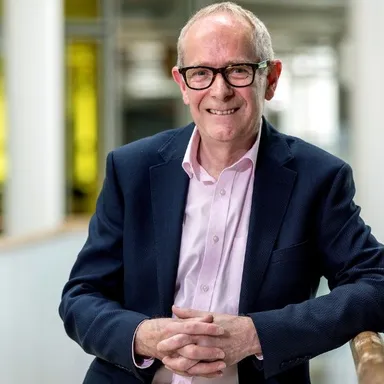
About the guest
John Sidebotham
John Sidebotham BEM FCILT, Programme Manager – Mental Health & Wellbeing, Route Services, Network Rail to give him his full title!

Hosted by Andrew Pain
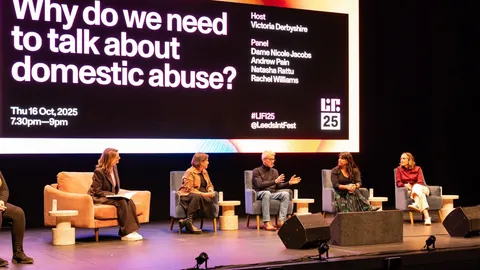
Andrew Pain is a Mental Health & Resilience Keynote Speaker who speaks from lived experience on resilience, burnout and workplace wellbeing. Host of the Men on Show podcast, author of the book Honestly, Man, and a TEDx speaker. Member, International Coaching Federation, and Mental Health First Aider trained.
Never miss an episode
Candid conversations with everyday heroes – ordinary men doing extraordinary things.