Men on Show · Episode 60
Why So Many Men Are Burning Out with Dr. Geoff Arnold
- 17 June 2026 .
- 27 min .
- Hosted by Andrew Pain .
Dr Geoff Arnold is an HCPC-registered Clinical Psychologist with almost 20 years of experience working within the NHS.
Andrew hosts this podcast. His own keynotes are on burnout, resilience, imposter syndrome and difficult conversations.
Watch
Watch the full episode
In this episode
About the conversation
Away from his professional life, Geoff is a keen outdoorsman, a skilled craftsman, and a devoted father, bringing the same authenticity, curiosity, and grounded perspective to his personal life as he does to his therapeutic practice.
Key points of the episode
- How it all started for him, and how it was originally his third choice of career.
- His work today and who he serves.
- How criminal offending is not justifiable but explainable.
- How generally men have more chance of harming themselves than others.
- How a lack of green spaces is a problem. And its links to mental health.
- Clarity on burnout and a useful definition.
- What to do if on the road to burnout.
Men on Show shares lived experience and honest conversation – it is not medical or therapeutic advice. If you're struggling, you don't have to cope alone.
Samaritans: call 116 123 (free, 24/7) NHS: 111
Full transcript
Read the whole conversation
A complete, verbatim transcript of this episode – every word is the host's and guest's own; the topic headings are ours.
Hi, my name's Andrew Pain, host of the podcast Men on Show, and I'm delighted to have another brilliant guest, Dr Geoff Arnold, HCPC-registered clinical psychologist, over 15 years in the NHS, recently started two new businesses: New Meaning Psychology, which offers individual psychological sessions, and Get Your Mind Outside, which focuses on using the natural world to reduce psychological stress and improve wellbeing. I always like to do this, Geoff. I always like to say something other than the main bio. So he is an avid reader of history, so a fellow history geek. And I presume you like Horrible Histories?
Well, my son's just about getting into them, but yes. Avid reader when I was a kid as well.
So good. And bushcraft enthusiast, which I would imagine, given the way the world's going, those could prove to be very useful skills in the years to come. And you love anything to do with adventuring, which is why you're on this podcast.
Yeah, I love outdoor life, like being outside. You know, there was a running joke once that if I could run away to the woods and disappear, I would live in a small hut and be with nature.
Why he became a psychologist
Sounds nice. Well, we're going to be getting into your work, and we're going to be talking about burnout particularly, and that is a big area of interest for you. So I'm just curious, though, a clinical psychologist: when's the moment where you think, oh, I know, I'm going to become a psychologist? Is it like a gradual awakening, or was there like a moment where you knew you wanted to do that, and when was that?
It's funny you ask that question, because I don't think it was a calling. I think actually at one point in my life it was my third choice of career. I originally wanted to be an archaeologist, and I wanted to go out field digging, and I wanted to go and explore history, and I can't remember why I decided not to do it, but I, you know, fleeting 16-year-old who changes his mind all the time. Then the dream was an astrophysicist, but I couldn't do the maths, so that cut that career out.
And I was doing a psychology A level at the time, and I'd picked up a psychology A level, started reading some of the books, and I had a really enthusiastic teacher who was just fantastic, and he got me really inspired, and I was so interested to hear about the psychology of how people work, you know, what makes human beings tick, you know, why do they think in the way that they think. And I remember one exam we were doing, and it was on giving evidence in court and how witness characteristics would change the outcome of the court case, and I went, this is absolutely fascinating, and I love it.
So I started going down that route and picked it up as my degree, and just sort of fell in love with it. And when I qualified, just found out I was quite naturally good at it. I don't want to blow my own trumpet too much, but I found it quite easy to talk to people and listen to people's difficulties and problems, and I suppose I've always been that sort of person amongst my friendship group. So it's sort of the joining of two worlds, really.
Read the rest of the transcript Collapse transcript
Trauma, offending and poverty
That's brilliant. And in terms of your work today, who do you serve? Because as a clinical psychologist, I imagine there's lots of different areas you could go into. So is there a particular group of people that you serve today?
Yeah, so I specialise in trauma, especially PTSD and complex trauma. So people who have really gone through some of the worst events that we can think of in human life, you know, bereavement, abuse, struggles and harms that they've come to over the course of their life, and continue to live with some of those difficulties and continue to experience things like flashbacks or reliving of those events. So I specialise with those people. And also I've spent most of my career working with offenders, so people in the criminal justice system, you know.
And you usually find those people, although they've done a lot of harm to other people, have also been really harmed themselves by a lot of people as well. So it's this real, I suppose, contention between helping the people have been harmful.
Yeah. And I presume, so data that I was reading, that 95% of people in prison are men. So I'm assuming if you're working with offenders, the vast majority of those are guys. And I'm presuming, so I was reading some other data that was saying that you're 10 times more likely to be an offender if you've grown up in one of the most deprived postcodes in the UK than if you've grown up in the most affluent. So do you see that same link with the offenders that you work with, actually, where the journey started to becoming an offender, that more often than not it was poverty and all the disadvantage that goes with that?
Definitely. I see it routinely when I was working with people in the criminal justice system. You know, a lot of the studies you're referring to, so things like adverse childhood experiences, is really common within the population. Yeah, so there is a trajectory. There's, you know, people can only go through so much and cope with so much. And I often think about a lot of offences are down to finding a pathway when you feel left by society, or you don't know what else to do, or you've never been taught how to regulate your emotions.
So it's not to say offending is okay, but it's to say it's explainable, and we can understand it through that lens. When we begin to think about people and their journeys towards offending, it just gives us more thought about why that's happened.
Yeah, because I mean, as a speaker, so mental health, men's mental health, those two things are obviously my world now that I'm just passionate about. And to me, if we're going to make progress in improving the nation's mental health overall, and also specifically men's mental health, a huge part of that equation therefore is dealing with poverty and how we help deprived communities, communities of deprivation, whatever the correct terminology is, to move out of that place. I mean, that's surely a key part of moving the dial forward on mental health.
Yeah, definitely. I don't think we can just locate the problem within the individual. I think we have to look at ourselves in the mirror as a society about why do certain people take that pathway, because it can't all just be located within bad people, or whatever we want to call them as a society. You know, there's reasons for it, you know: struggle, strife, poverty, living through abuse and harm in people's lives. And I think that has a real impact on the decisions people make, the choices that they're faced with.
And I think for men often, you know, aggression will be one of those things, but also aggression to the self. So men are far more risk of suicide than they are of actually hurting somebody else, interestingly, in terms of that risk.
Green space and getting men outside
Yeah, because the other thing with areas of deprivation is we know that they have less green space. That's like a European trend, that's not just a British thing. And obviously your work is about getting outside, so tell us about that. What is that new project about? Get Your Mind Outside, that's the organisation. And is that linked? Do you, so I'm assuming that's linked to sort of seeing getting outside, green space, nature as improving wellbeing. So tell us about that.
Yeah, and I think the idea originally came from working in prisons and secure mental health facilities, because they're probably impoverished in terms of green spaces. You know, they're often quite urbanised, deprived locations. And so the same is true for a lot of people who live in Birmingham or any major conurbation in the UK. You know, a lack of green spaces is a problem. There was a recent study that came out that showed that your distance to a green space, they could almost accurately predict the level of mental health distress within those groups.
So the further you were away from a green space, the more likely you were to develop a mental health issue. And I think that was so fascinating for me, in thinking about what does green space bring us? You know, it brings us peace, it brings us calm, but it also brings us connection with a wider world, existential issues like where is my place in the world. You know, it brings soothing, it brings comfort. It takes us outside of our, you know, day-to-day living environment as well. So I really want to get people outside and accessing psychological therapy as well, structured psychological therapy, whilst in that space.
Yeah. And I am definitely seeing a lot of movement in terms of men's counselling. There's some men doing some great work in this space where, rather than just traditional therapy with the guy in a counselling room across the table, they're doing sort of walk and talk out in the park. They're doing side by side. I heard about some paddleboard counselling days. I thought, that's fantastic. I'll be well up for that. Well, I don't, I'm not particularly at the moment in need of counselling, but if I was, I'll be on a paddleboard. That sounds great. So is that what you envisage? Is that what you're trying to do? Or is your focus slightly different in what you're trying to create?
Yeah, it's that similar sort of focus, I would say. And there's something around, sitting with a lot of men in therapy, what I realised is that you sit in this very intimate space and you're asking somebody, tell me about your deepest, darkest harms, tell me about the awful things that have happened to you, tell me about the awful things you've done to other people. And there's something so aversive to that, there's something that feels really threatening.
And, you know, men are far more likely to drop out of therapy; they're less likely to see a whole course through. So I thought to myself, there's something here around the spaces we use in order to talk to men, the differences between men and women. Now, I think there's a lot of similarities, but I think there's also differences, at least a social level. And if I know about myself, it's sometimes those informal discussions you have, those chats you have alongside doing something else, minute-by-minute conversations that don't feel as threatening.
And I remember when I was working with somebody once, and they clicked in that we were doing something therapeutic, and they suddenly realised, they jumped up like a rabbit, and they were just like, are you giving me therapy? And I was like, it wasn't my intention to, but yes, I suppose so. And, you know, it was just that there was a bit of an awakening for it about, okay, what is that that suddenly feels threatening when we call it therapy, or when we do it in an environment that feels like a therapy session?
Yeah, because I mean, when the only time I've had therapy was several years, when I was back in my former marriage, which was violent and abusive, and I went to therapy to try to get the answers of how to be a good husband, because I thought the reason the abuse was happening is because I was such an idiot, basically, and if I could stop being such an idiot and a loser, then everything would be better. So I proactively sought counselling, because I thought it would give me the answers.
And where I lived, in that part of France, it was just some females, counsellors, in a traditional therapy room. But I sometimes look back and think, do you know what, if there'd been a guy and he did some kind of walk and talk, and then maybe halfway through the walk, for me – I know you couldn't do this with everyone, because some people, introducing alcohol into their counselling intervention is probably not ideal – but for me, to have gone for a walk with a guy, had a beer and then walked back, I wonder how much more that would have opened up.
I often felt like, on that counselling therapist's chair, I didn't really know where to start, what to say. So I wonder whether part of why getting guys outdoor, getting them moving, is just it can then sort of, the words can kind of tumble out. Because we do talk, but tends to be in the pub, where we're feeling comfortable, where we're at ease, or another setting.
Yeah. And I think there's so much studies that point to women just generally have larger social networks. They have more connected social networks. They probably feel more at ease within a social frame. The research around men is that doing something alongside with men tends to open more doors to those types of conversations, towards thinking about what those things are. And I think for men as well, what's the naturalistic aim of therapy? You know, how do you have an organic conversation that doesn't feel forced or under a spotlight?
How do you have those more typical conversations that you'd be having day to day, by weaving some of that psychological therapy inside, to get people to think about, okay, what are you reflecting on there? What have you noticed about yourself? What are you thinking?
His new businesses, and what burnout is
Well, I think it's very exciting that you are part of this movement. We know that, percentage-wise, I think it's about 75% of therapist counsellors at the moment are female. And of course, for some men, that's fine, to be counselled and find therapy with a female or male, wouldn't matter. But I think it's great to see a growing movement of men into that space. It sounds exciting. Is your organisation up and running at the moment?
We're in a very early, embryonic phase. I think I'm coming up with some of the practical realities of life, like asking the council's permission to use local parks, and insurance, so I'm still in those phases at the moment. But all the sort of business ideas are there, all the therapeutic ideas are there. I'm also doing some work as a director with a CIC as well, called Ember Path, which is also launching as well, which is specifically focused at men as well, and that's working with a local bushcraft expert. So we're trying to get these things set up, you know, just finding bureaucracy in life.
So, and aside from that work, another big thing that I know you're interested in, that I want to talk on today, and people that listen to the podcast will know this, a thing I am very interested in, I talk about this in my wider work as well, so, is this topic of burnout. I love the topic of burnout, because I don't know whether you agree with this, but some people, they say, I'm feeling a bit burnt out at the moment.
It's like, you ain't burnt out, mate, you're just a bit tired. Other people, they say they're burnt out and they're off work ill, they ain't coming back anytime soon. Other people, they're proud, they like say, oh yeah, I burnt out a couple of years ago, burnt out. It's like it's a mark of honour. A true man burns out. True grafters. So what do you make of burnout? You're a clinical psychologist. Is burnout a real thing? How do we define what it is?
I'm throwing a few questions at you. You can pick, you answer whichever ones you want. Is it just a reflection, actually, we're the snowflake generation, and we just need to sort of pull ourselves together, as we would have done 60 years ago, carry on regardless? What are your thoughts on burnout?
I'd first of all say, yes, it is a real thing. As with any diagnostic term, I think there's always an issue with what fits within a diagnosis and what doesn't, and having criteria that's too strict or too loose makes diagnosis worthless. So I think when we're talking about burnout, of course people are burnt out. Of course people experience significant psychological distress from their work, their occupation. But I think even to a more extent, we need to think about social lives, and we need to think about home life, and how all those factors combine towards someone's psychological health, and that burnout, and the stress that they feel, you know.
And I would see burnout as an overwhelming level of stress in which the usual psychological processes break down. It's not as simple as saying, I feel stressed with my work.
I like that. Just repeat that again. An overwhelming...
Oh, you're testing me now for what I said. I think... what did I say?
An overwhelming breakdown of...
Psychological processes.
Psychological processes.
So the normality of a person's life and psychological processes begins to break down. It no longer functions or works in the way it once did.
Because the World Health Organization official definition – sorry, I should say – says that it's chronic workplace stress, which I don't feel is helpful. I think it's chronic stress. It's a buildup of chronic stress to a point of total overwhelm. But the triggers could be home-based or work-based. And I think some of the confusion, when I talk about burnout and when we explore burnout as a concept with those I'm talking to about burnout, is just that actually the triggers are varied, and to define it as workplace stress is unhelpful.
You could be burnt out because of parenting and work, or you could be burnt out because of work, loneliness, long hours, neighbours from hell, so you're not sleeping at all. There's a whole range of stuff. But as you rightly say, it's where the psychological processes break down, because it has built up for so long. Do you think, therefore, that burnout is worse now than... Do you think we've just found a new term for something that's always been there?
So everyone's saying they're burnt out, but actually the same number of people today are burnt out than probably were 30 years ago, 40. Do you see it as something that's getting worse?
Whether burnout is getting worse
Yeah, it's an interesting question, because I think there's a reality to all of those answers, which is, first, I think in terms of coping, in terms of how we cope compared to our ancestors, and I don't think it's that we're poorer at coping. I think, you know, if we think about the history of human beings, and even just thinking about my grandparents or that generation, you know, 50% of the UK population used to smoke. Drinking was, you know, something that was seen as the social norm.
You know, people, you know, did those things more regularly as a way of coping. And, you know, the silent generation, you know: keep calm, you know, don't talk about things. It doesn't mean it wasn't happening. They were just coping in a different way. But I think it also leads into, like, how does society currently function? You know, we live further away from our relatives than we ever have done historically. You know, we don't see people as much as we used to, due to how work takes place, and it's family networks aren't the same as they used to be.
So I think that's a factor. And the final factor I really think of is, how is modern society set up in the workplace? You know, there's a culture of being constantly switched on, you know, active stress constantly, lots of competing demands. And as the world gets slowly more complex, the tasks within it get more complex, and the workload gets more complex, and people don't have the time and capacity to close off, shut down. Or, as you said earlier and alluded to, is that people are plate spinning. You know, there's a demand in lots of different pockets of their life.
Yeah. And we were obviously comparing, both leaving our homes for this recording, we were both walking out of houses where our kids were fighting. And just that, 50, 60 years ago, there'd have been a responsible adult, probably the mum, but it could have been the dad. But you had a responsible adult whose main role was to look after the home and the kids and all the stuff that goes with that, which I now appreciate. Whereas now, typically, both parents, if they're together, they'll both be working because they have to.
And if they're apart, they'll both be working and juggling kids. And so it is, to me it feels like burnout is not evidence of a snowflake generation. I don't think we're more privileged. In some ways we have more of our disposal, but, we have more convenience, but then we have more pressures in other ways. That's how I see it. And we have more, I think, in terms of existential threat, in terms of environmental, climate, and fear, you know.
That, for me, has grown and grown. It was never really something I was worried about as a teenager. There were rumblings that all was not well, but now it's just so in your face how bad things are. And so for me, I don't see it, I think that's what you're alluding to, people are under a different kind of pressure, I suppose, to the pressures we face.
Yeah. And I think, you know, we live in a rolling news generation as well, that, you know, the world's troubles and strifes are constantly there. You know, I think there's a disconnect between people. I often think about my level of social time. It's very hard to connect with friends or see people outside of work, or, you know, in other places in my life, just because of the different demands and strains that are there as well. The other thing I always think of in this point is that often people are guilty of rose-tinted glasses for the past as well.
You know, when we often talk about snowflake generation, and I think of the words declinism, which is our rose-tinted view of the past as being, you know, it was brilliant, and it's nostalgic, and it was warm and friendly and cosy. Actually, the statistics would show something different, that, you know, actually violent crime was a lot higher in the 70s, and, you know, like, murder rates were higher, and crime just generally was higher. So, you know, I think we also need to be honest about the past, and that it's not that this is a snowflake generation, it's a generation that's dealing with its own set of issues that just happen to be different to the past issues of our ancestors.
You know, my grandparents dealt with the war. You know, my parents were dealing with economic crises in the 70s and declining industrialisation in the UK. I think each generation has its strife, its worries, its challenges, the things that it faces.
Advice on burnout, and a last message
So Geoff, one thing I know the listeners will be keen to know, you're a clinical psychologist. There might be people listening to this that are thinking, actually, I'm on the road to burnout, or I am burnt out, I am at my absolute wit's end, I don't know what to do, I'm overwhelmed. So what would you recommend that they could do? There are a couple of things, quick and easy things that someone could do if they find themselves in that situation.
Yeah, I think the first thing I would say is share it if you can. Talk to somebody who you trust in your life, you know, thinking around how, you know, problem shared is a problem halved. I think that is an old adage that goes well, about sharing some of the struggles we go through. And especially for men, you know, overcoming fears of being weak or being vulnerable, sharing it with someone else where you can, I think, would be really important.
The second thing I would talk about is self-compassion. So one of the therapies I do is called compassion-focused therapy, and something it talks about is we often say these things in our minds that we would never, ever dream of saying to other people, you know, calling ourselves an idiot or stupid, or, you know, all the horrible things we can say to ourselves in our own head about our failures, our achievements. So self-compassion thinks about how would we talk to ourself.
And it's not about self-pity, and it's not about just giving ourselves reassurance. It's about being compassionate with ourselves, talking about our struggles, our strifes: what do we need in this moment? Because probably criticising ourselves more isn't going to help us in the long term. It might help motivate us for a tiny bit, but it's probably going to make us feel worse and more vulnerable in the long term.
Excellent, excellent advice. I mean, it's been an absolute pleasure having you on the show, our 60th podcast episode, which is why we're here recording in person. Where can people find you beyond this podcast, if they want to reach out to you, they want to find out about your work outdoors? Maybe they want to get involved with that. They want to reach you as a counsellor, as a psychologist: how do people find you?
So I've got a website for New Meaning Psychology, which is www.newmeaningpsychology.co.uk. Get Your Mind Outside, we'll have a website launching in about June time, so we'll be there. Hopefully we'll get some advertising going on platforms like Facebook, you know, some of those platforms, to help us get going.
Brilliant. And to conclude the episode, if you could give a two-sentence message of encouragement to those listening, what would that be?
Really good question. I think reminding yourself that you matter, and that you have intrinsic worth just by being a person.
Love that. You matter, you have intrinsic worth just by being a person. That is a fantastic way to finish what's been a really interesting conversation. Geoff, thank you so much for being on the show. It's been a pleasure having you on.
It's been an absolute pleasure being here.
About the guest
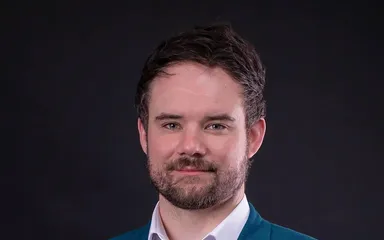
Dr. Geoff Arnold
Dr Geoff Arnold is an HCPC-registered Clinical Psychologist with almost 20 years of experience working within the NHS. He is now launching Get Your Mind Outside, an innovative outdoor therapy service that combines the restorative power of nature with evidence-based psychological support.
Geoff specialises in helping people recover from trauma, including complex experiences involving abuse, neglect, and adversity. His approach draws on a range of therapeutic methods, blending body-based practices, cognitive therapies, and nature-based interventions to provide a holistic pathway towards healing, resilience, and lasting wellbeing.
Passionate about the connection between people and the natural world, Geoff believes that meaningful recovery involves engaging both mind and body. Through his work, he helps clients develop greater self-understanding, emotional regulation, and a renewed sense of connection with themselves and their surroundings.

Hosted by Andrew Pain
Andrew Pain is a Mental Health & Resilience Keynote Speaker who speaks from lived experience on resilience, burnout and workplace wellbeing. Host of the Men on Show podcast, author of the book Honestly, Man, and a TEDx speaker. Member, International Coaching Federation, and Mental Health First Aider trained.
More from Men on Show
Keep listening
Insights
Read next
Never miss an episode
Candid conversations with everyday heroes – ordinary men doing extraordinary things.