Men on Show · Episode 35
Men, Rap Music and Getting Sectioned with Shocka
- 14 August 2024 .
- 42 min .
- Hosted by Andrew Pain .
Shocka is a Tedx speaker and a talented music rap artist.
Andrew hosts this podcast. His own keynotes are on burnout, resilience, imposter syndrome and difficult conversations.
Key points of the episode
- A close misunderstanding of football :) .
- How he grew up in a stigmatised area of London, and the tension between the police and the people that lived on the estate.
- How he thought it was "normal" .
- How he used to want to be a footballer.
- How much talent is in Tottenham, and the depth of the lyrics.
- How pain births creativity - including in music.
- How rap was "woken up" and birthed in him.
- The twists and turns of his career story.
- His difficulties with mental health on occasion.
- How to get started in a practical sense with self love.
- Forgiveness for self and others. Celebrating small wins.
Men on Show shares lived experience and honest conversation – it is not medical or therapeutic advice. If you're struggling, you don't have to cope alone.
Samaritans: call 116 123 (free, 24/7) NHS: 111
Full transcript
Read the whole conversation
A complete, verbatim transcript of this episode – every word is the host's and guest's own; the topic headings are ours.
welcome to Men on Show, the podcast, Candid Conversations with Everyday Heroes. Join Andrew Pain as he interviews fascinating guests, ordinary men doing extraordinary things. If you love the show and you think somebody could benefit from hearing it, why not tell them about it by giving it a share on social media? Oh, and at the end of the podcast, if you can leave us a five-star rating and a review, it really helps us more than you know, and it gets this important message out to more people that need to hear it the most. And right now, enjoy the next episode.
Hi, my name's Andrew Pain. welcome to the podcast Men on Show. Another fabulous guest today. I'm so excited to introduce Shocka to you. A Tedx speaker, rapper, that is so cool, and legend who is Shocka. Do you know, we've not yet had a rapper on this show, so I feel very, very privileged to have you here today and open up some of your thoughts and insights, of course, on your own journey of masculinity. Shocka, welcome to the show.
Thank you. Thank you, Andrew, for having me. I appreciate it. And thank you for me letting me be the first rapper on your show too.
Yeah, first rapper, although not the first Tottenham fan. I have, as an Arsenal fan, I have had a few Spurs fans on here, but we tend to get along just fine.
I'm not a Spurs fan though. I'm not a Spurs fan.
Oh, you're not a Spurs fan?
Read the rest of the transcript Collapse transcript
No, I'm an Arsenal fan. I live in Tottenham.
Okay, that is dangerous, dangerous. Wow. I know.
I live in Tottenham, but I'm an Arsenal fan.
Growing up on Broadwater Farm
You're an Arsenal fan. Wowzers. So you're a man of courage as well, which is wonderful. So take me back to the very beginning. Growing up as a boy and a young man, what was life like for you in Tottenham?
Tottenham, especially my area. I'm from Broadwater Farm. I don't know if you've heard of that area before, but it's extremely notorious. And it had like a bad stigma around it for years. There was a riot that happened in my area in 1987, I think it is. 86 or 87, and a police officer got killed. And so ever since then, there's always been a hostile relationship between the people that live on the estate and police. My estate has constantly got police coming through, for no reason sometimes.
They're just constantly patrolling. So I saw a lot of things that I shouldn't have seen at a young age in my estate. It's only when I got older, I realised that it wasn't normal. I thought everyone saw that. I saw shootings, I got shot at a close range. I saw stabbing. There's all these different things that I thought, oh, everyone's seeing this. And then it's only when I got older, got around different crowds, and I was sharing my experiences, and I could see them look in their face, and I was like, oh, your upbringing wasn't like that too.
And I realised that I had a completely different upbringing. But yeah, so it was pretty harsh. I saw a lot of things. But at the same time, I had a lot of good times too, a lot of laughs, a lot of good times. That's why I learnt my rapping ability coming from Tottenham. There's a lot of talent in Tottenham, sceptors from Tottenham, wretch 3-2s from Tottenham, Sway, Adele. Yeah, so a lot of talented musicians are from Tottenham.
So I was around that. So no coincidence that I caught the music bug being around it. So that was a good plus. Football as well. I used to love football. In fact, I thought I was gonna make it in football. This is actually my second career. I thought my first career would have been football, but I just happened to be around playing football at a time where the opportunities wasn't like how it is now. So there wasn't much opportunities for me when I was younger, which was really sad. I would have loved to have made it as a footballer.
Tottenham's talent, and how pain births creativity
That's amazing. Why do you think there's so much talent coming out of Tottenham on the music scene? Is that coincidence? Do you think there's a reason for that?
That's a good question. I have no idea. And I've noticed something about Tottenham Talent too. We're very deep lyrically. So I don't know. To be fair, the lyrical deepness might come from our experiences. Because our experiences are so like, as I mentioned to you, the shootings and stabbings and the riots and the history. So that might be a reason that makes us want to dig deeper lyrically because we have so much to say. But in terms of why there's so much talent, I don't know. I feel like there's talent everywhere, but like, I'm not sure. I couldn't answer that question.
I would say as a kid growing up, I grew up in quite the opposite, quite a privileged middle class background. And there were no particular challenges that I particularly recalled growing up. And so I definitely wasn't deep as a teenage. I was quite shallow, you know, I just did as I was told, got my grades, did my musical instruments. I wonder whether that pain or whether chaos.
I was just about to say that. That was the next thing I was going to say. I was going to say, I think pain births that. Pain definitely births that. Pain makes you want to find a different outlet to express yourself. Hence why everyone turns to music. Pain births creativity as well. You want to get creative to find ways to get around your pain. The pain of being broke, the pain of a relationship, the pain of losing a loved one. All sorts of pain births different forms of creativity. So I think pain is a beautiful thing. It can be a very beautiful thing.
On the flip side, yeah. So I guess, I mean, we're unpacking this without any research. It's just what we're feeling. For me, pain also births substance abuse, bad habits, you're trying to escape. But I guess some of us, our response to pain, it could be luck, it could be on who's around us, could be due to our mentality. We seek to escape that pain in sort of more positive means like music, football, sport, and maybe that then gives us a driving force that we might not have without it. Well, we've got very deep.
Sometimes we see the effects that the pain has had on our family members or friends in a negative way, and that makes us want to choose to find a different way. So you know how you can substance abuse? Sometimes there's a lot of people in my area that had parents that were strung out on drugs. So they dealt with their pain in that way, and then the child makes a decision, makes a constant decision that I never want to go down the path that my parents talk, and they decide to use creativity to fight their pain.
So it depends, it all depends on what you see. I think what you see is extremely important. What you see does shape a lot of like what you talk about in the path you go down.
Role models, and rap as poetry
And maybe as well, I think, and this can be due to look, the people that you then hang around with. If you are around people that can nurture sort of you within that pain, and push you towards more positive channels, and encourage that, that's obviously going to have an impact. Yeah, I mean, do you recall, I mean, growing up in Tottenham, you wanted to be a footballer. Were you all sort of role models that you looked up to? Were they footballers? Were they musicians? Do you recall any particular role models?
They were musicians. The role models I looked up to were all musicians at that time. I looked up to... I took role models within my area, or just in life at the time.
Just in general, the people that influenced you could be in your area or wider than that?
The people that influenced me outside my area was also musicians as well. I remember really getting into Kano. I don't know if you know who Kano is, but he was the artist from East London. He was incredible, and he was really young when he got his record deal. So that was inspiring to all of us. He was like 18 years old, which is unheard of. And then I had an artist called Chipmunk from my area, who was like 16 years old when he really took off.
So that was even more groundbreaking. Then I had an artist called Retch32 that was right in the corner. I wrote about him in my book. I dedicated the whole page to him in my book. He really inspired me because I got to see his success up close. When you see someone's success up close, it does something to you. It really does something to you. It's okay to see someone's success through a screen. I've been watching Will Smith my whole life.
I'm sure you have too. And I've seen him achieve all these great things, which is inspiring. But when you see your best friend pull up in that new car, or you hear they're a millionaire, or they're just like, Rex V2 was just great. He's not my best friend, but I saw him a lot in the area. And when he went number one in the charts, it did something to all of us in the area. We was like, this is possible. Like, Rex is bad. So he was a big role model.
But again, I guess it points to within the pain and the difficulties that you face within the area that you lived in in Tottenham. Having that person in your network be successful, show a really, you could do this, that had quite an impact. And is that what drove you then into your career in rap as you started out? Or was it early? Did you always know you had a talent for rap? Or was it, because sometimes there's these, and I will round the question off in a minute, there's this argument about nurture and nature. And was rap something you always had in you, something you were always working at, or was there like a light bulb moment?
That's a good question. I think it was always in me, but it just needed to be woken up. Because from the moment it got woken up, I haven't stopped. And it's been that thing 20 years ago. That's a long time. 20 years nonstop at it, nonstop. So like it was always in me. Someone just needed to wake it up. From my first lyric that I wrote and the response I got, I think that's what drives a lot of artists, is that response.
When you go into like a cipher, I'm sure you know what a cipher is, where like there's a circle of artists and each one is saying their rhymes. When you say your rhyme and like it shuts down the whole cipher, everyone's going crazy and everyone starts again because of your rhyme. That is enough to like, that is enough to inspire you for like the next 50 years. It starts from a cipher, people going crazy, then it goes to like talent shows, then you win a talent show, then it goes to like, so it goes from a cipher to a talent show, to studio, then you go to a studio and record your first song, then it goes to radio, your song gets played on radio, then you get a record deal, and then you're a superstar, like that's how the, and then you start making money, and then that's the steps that like we all take.
So I'm literally on the last leg of that step. I'm like the making money part now. I've done all, I've done every single step I just mentioned to you, so.
Ah, amazing. You know, we just watched myself and my wife, the musical Hamilton about the Founding Fathers.
I've heard so much about it. I haven't seen it yet, but I heard it's incredible.
It's really, really good, really, really good. And so much of that is rap. And what struck me watching that is that, you know, I can't remember the person that wrote Hamilton, but this rap, the stuff, it's like, it's like the best poetry I've ever heard. And I guess you, you rappers, I say you rappers because I'm not a rapper at all. You're like amazing poets, aren't you? The, your grasping of language and being able to so quickly come up with the next thing where there's the pattern, the rhyme. It's an amazing talent, an amazing talent to have.
Yeah, yeah. It's a beautiful way to express yourself.
Yeah.
So yeah, go ahead.
Marvel's rise in two years
Yeah, so your music starts taking off. You were part of Marvel at first. Yes. How did that take off? What happened?
So I joined Marvel in 2008. I was in a group before that. But then that group broke up, and I joined Marvel, which was three of us, me, Double S and Vertex. And in the space of two years, we blew up. It happened really quick. At the time, I didn't understand why it happened, but now going back, I get why it happened, because we was unique, we was a breath of fresh air. There were so many little variables that make sense, so why we blew up so quick.
At the time, I didn't get it. I was just in it. But now I've had time to really study my journey, I can see how it happened. So in the space of two years, we blew up. And we was on Chipmunks Tour, we was on Skeptus Tour, we was on Tour of Diversity. Remember Diversity, the group that won British Got Talent? We toured with them, which was like an arena tour, 8,000 a night, which was unheard of.
You're talking about a kid from Tottenham performing to 6, 7,000 a night. Yeah, it was just amazing, and things were just blowing up for us. We was in the studio with Rihanna, Drake, all these big, fast, talented creators. Not in the studio with him, but brushing shoulders with him, Amber Rose. It wasn't happening really fast. And then we signed a record deal to this label called Risky Roads. And they were really big in the urban scene, in our scene anyway.
And the guy that runs Risky Roads got some money poured into him as investment, and he chose us to sign. So he signed us, and we brought out this single, a single called We Know, I'll never forget it. On the 10th of the 10th, 2010, was the day that the single was meant to come out. And we had high hopes for the single because of the promotion we put behind it and all of this stuff. And the single came out, and it didn't do the greatest. I don't want to jump too far into the story because I know you've got other questions.
Yeah.
But that's the brief story to how Marvel got together.
How? I mean, and that's sometimes, you know, I mean, on a much smaller scale, because I don't put the individual effort into each post that you would have put into that single. But sometimes I put something out and I read it, I check it, I'm pretty sure this will land and flow as a post and nobody likes it. And you're like, oh.
Now, imagine having the pressure of a whole label behind that post. But sometimes it's just you. You can even delete the post and say do you know what? This post and delete it.
I've done it a few times.
So have I. Now imagine having a label that put money into you and they're paying you to make that post work. And now you've got to go back to them and explain why the post didn't connect after you told them how good the content is. And now you've got to go back and say, I'm not sure what happened. They just didn't like it and they don't want to hear that. And you end up getting dropped. And that was the first thing that I realised I wasn't so good with, was pressure, because before that, remember I told you those two years that we blew up?
We were just doing things the way we wanted to do it, releasing the way we wanted to release, talking about what we want to talk about, swearing here, swearing there, editing where we want to edit, doing our own covers. And when the label comes in, they pick your single, they tell you what to do. Do you know what I mean? Everything changes. They tell you what you're predicted to sell. You're like, sell. We just put music out and see if people like it.
Then they're telling you, no, you might have to do 20,000 first week or like. And then I realised, not to jump into your questions. Actually, I don't think you asked me a question about this, did you? But I realised how important a father is. Because I was raised by a single mom and I was like so baby, then pampered and spoiled. When I got into that situation with the label and I started feeling pressure and having to deal with stuff in a manly way, I didn't know how to because I've never had that before.
I've just been raised by a woman my whole life. So like, and I realised, oh my god, that's where father figure comes in because they give you that stern posture and they teach you how to deal with adversity and they tell you to get back up. If my dad was around and I told him I lost that record deal, he would have told me brush off his shoulders and go again. And do you know what I mean?
He would have given me stern advice, whereas my mom would have given me the feminine version of that advice. And like, we would have cried together if you know what I mean, because of my mom. So like, yes, stuff like that made me realise, now I get older, I realise how important a father figure is.
Why their first single did not land
Yeah, and that's a really, really interesting reflection. And I've interviewed a few guys on the podcast that do a lot of stuff within sort of the field of fatherhood and the importance of dads encouraging sort of measured risk taking, encouraging a healthy pushing of boundaries. Because with much higher levels of testosterone in our system than the equivalent age women, we have a little bit more of that innate risk. We would just biologically, and we're talking about general trends.
So that's interesting. Was there a reason? Because it doesn't really, I'm just curious now. Was there a reason that you can look back on, on that single you thought it would fly? I mean, I feel like maybe you started to answer it. Maybe you were confident about that single because your rise had been rapid. But do you think it didn't blow, it didn't land because it had been messed with by the record label?
Or do you think there were other reasons? It wasn't actually messed with by the record label. I was just giving an example how record labels can come in and change in life.
Okay.
But in our situation, we got given full creative control. We picked the single and everything. The mistake we made was the single that was blowing up for us, that got us into that situation. We never released that as a single. We just put that out. So basically, we picked the wrong single to be the single. And I didn't realise that. I just thought, because you've got a fan base, they're going to buy anything that you release, not knowing that they're humans too.
So if they don't like it, they're not forced to mess with it. I mean, there's some Eminem fans that will say, Eminem, this wasn't the one. I love you, but this wasn't the one. And that was one of those situations for us. We picked the wrong single. The single we was meant to go with, we didn't go with. We went with a more poppier sound. And I think we kind of was pressured and influenced by the industry.
At that time, you needed poppier sounds to get on the radio, come from where we came from. It's not like now where Stormzy, a six-foot black guy with a go-to, him talk about Theresa May at the Brit Awards and get away with it. At the time that we came out being three black waves from Tottenham, you had to be as polished and as mainstream as possible.
That's interesting.
So we was going through that pressure as well. I think if that same single came out today, it might have been received completely differently. Also, another thing that worked against us is that was our first single. You rarely blow off your first single. It usually takes three or four. So what the label should have done is given us another opportunity, because we had a whole album. That's what made me go deep into depression, is the fact I knew that there's a whole album of music that we're not getting to release, do you know what I mean?
It's like me judging you off one painting, and you've got a whole paintbook, and you're thinking, no, I've got 50 more, let me show you some more that you might like. And I'm like, nope, don't want to see anymore, no more chances. So it's really heartbreaking.
Yeah. Or even, I mean, there's so many analogies. It's like the debut footballer who has a dreadful first performance. He's crap then, we won't use him again.
That's a great analogy.
Stickability, and a book nobody would publish
Of course they're going to use him again. I wonder whether today there's more awareness. There's so many brilliant books out there. Matthew Seid's Black Box Thinking, Angela Duckworth's book on grit, that really underlines the importance of stickability, which includes a record label saying, yeah, that didn't work, let's try a different approach. We've signed them up, we might as well. That kind of approach. I'd like to think that's people who are a bit more understand that success takes a bit more time now. I'd like to think that.
Yeah, definitely, 100%. Me and my friend talk about this all the time. I feel like in 2024, there's literally no excuses for nothing anymore. Everything is out there. Everything. I was having this, have you heard of Restless Lectintron before?
No, I've never heard of that.
It's basically when you get this kind of fuzzy feeling in your thigh, it's a horrible, it don't hurt, no pain at all, but it is a horrible, annoying feeling. And I had it, and I spoke to my doctor about it, and my doctor had no clue what it was. And then I typed it into Google and said, horrible, fuzzy feeling on your thigh. And it came up with everything about it. That's how I knew that it's called Restless Lectintron.
And it told me everything about it. And I was like, we really have no excuses in this day and age. If you want to learn something, go learn it. If you want to do something, go. All the examples is out there, literally.
Yeah. And you also remind me the story of John Tool, who was, I don't know if you've heard this true story. Actually, he felt it was his destiny to be an author. He tried, he tried, and he tried. He really was passionate about it. First book came out, convinced it would be a big success called The Confederacy of Dances. Nobody would publish it. He tried, he couldn't get a publisher. In the end, he fell into such depression, and we're going to go there in a moment in our discussion, that sadly he took his own life in 1969.
But 12 years later, his mum finally found a publisher for that book. It won a Pulitzer Prize, sold over a million and a half copies. It was hailed as a literacy masterpiece.
Oh, my goodness.
And so I think understanding...
Can you please tell me his name afterwards and everything so I can do research into it?
John Tool, T-double-O-L-E. It's... If you write in author John Tool, Confederacy of Dunces, the story is there.
That could have been my life. Literally, literally that. That could have been my life. Literally. The only difference I did was like I just stuck around.
Being dropped, and the first depression
Yeah. Well, tell me, well, look, tell me. How did you got dropped? That must have been absolutely devastating.
Yeah. Devastating.
What did that do to you?
Got dropped from the label and immediately, that was my first doubt of depression. Immediately, up until that point, I didn't know what depression was. I heard the word my whole life. Obviously, we all hear that word flying around us, but I had no idea what it was, what it meant. I was far from a depressed child. I was one of the cool kids. As I mentioned, I'm my only child. My mom spoiled me. I got all the clothes I wanted. My house was a games house. Everyone comes to Shocka's house to play Dreamcast, PlayStation. I had all the game consoles. I was just the coolest kid alive.
And you were good at football as well.
And I was good at football, good at music. The girls loved me. I was fresh to death with my clothes. I had the best trainers. I was just winning. And obviously life was like, no, no, no, we've got to slow him down. We've got to show him some lessons. And then lost that record deal. And when I lost that record deal, it was like, it made me realise that I could lose because I started thinking that I was untouchable, that I just can't lose.
And that was my first reality check, that, oh my God, I can actually lose. It's possible. I just lost the deal, me. They had me in their office telling me, they don't want me anymore. So I feel like most of my first depression was a lot of ego to it because of how I came up. Just winning, winning, winning, winning. It's that I always use this example. It's like Floyd Mayweather. He's got 50 and 0 to his record.
He's won 50 times boxing, lost none. If he loses one time, it will be so shattering compared to that boxer that's lost four or five times already. It's nothing to him. To Floyd Mayweather, he might not recover from that one loss because he just won't believe that it took him all the way to 50. He would have preferred to get that loss earlier on to get over it. Why would he take me all the way to 50 to give me that one loss?
And that's how I felt. I was winning, winning, winning, and then lost the record deal, and then I went into deep depression. I went into isolation first. That was the first time I got withdrawn. I wasn't really a, now, it's funny now, because I'm a really instinctive person. But at that time, going into isolation was unheard of for my friends, family, especially for my mom. She'll come home from work and see me in the house, not doing anything.
Go out, come back into work, come back in, see me not doing anything. Go somewhere, come back, and I'm still in the house. And she just had to ask me one day, she was like, what is this? Is this how your life's gonna be? What are you doing? And I don't know if you've got any black friends or African friends. African parents put a lot of pressure on you to be great in life. That is one, like, if you can ask any black person, they'll tell you, like, our parents put a lot, they have a lot of pride and high standards.
So like, they put a lot of pressure on you. And I was, my mom did well, though. My mom never really put that much pressure on me. That was the only period where I don't think she put pressure on me, but she just couldn't stand the sight of me being at home all the time. It's like, do something, you know what I mean? And then I had a big breakdown. I went out one day, I went to my friend's house, actually.
I speak about this in my book. I went to my friend's house and I was trying to communicate what I was feeling to him, but he just didn't understand it. And I left his house, went back home and I just exploded when I got in. As soon as I saw my mom's face, I don't know why that, I don't know what that triggered, but it triggered something. And I just exploded. I was shouting. I was trying to break stuff in the house.
And I had an uncle that lived upstairs with us. He came from Nigeria. He was staying with us. He was a doctor in Nigeria, lucky enough. And he came downstairs and heard the commotion and told my mom to call an ambulance. They started having a mental breakdown. My mom didn't even know what that was at the time. The first thing my mom did was call a pastor in Nigeria to pray for me. My uncle came and said, we need to get him an ambulance.
He's having a breakdown. The ambulance came, restricted me, took me to this place. I didn't go into that because I had a breakdown. It was late at night, so they couldn't take me to the ward. They had to wait till the next day. So they took me to this holding room. And I thought I died. I mentioned it in my book. I thought I was dead. I was like, where is this? Like, oh my God, is this the afterlife?
What's happening there? And then in the morning, the doctor came into my room, said, your family is still here. When they came out, when they took me to my family, I was still like in the same state that I was in. When I got, when they brought me in, and they was like, you got to take him to the hospital, and they took me into the ward, and that's how I got sectioned for the first time. I was there for five days in the hospital called St. Anne's.
And what, what was that like those five days? Can you recall? Is it all a bit of a blur now? Or can you recall?
Being sectioned, and his mom's cancer
It is a blur, but there's some glimpses that will never leave me, but it is a blur. Those five days felt like an eternity. It felt so long. Even when I say five days now, because I've done longer than that in there. The longest I've done is two and a half weeks. But when I think of those first five days, it felt so long, because there's nothing to do while you're in there. That's why it feels so long.
It's not like there's actually like now, I can go for a walk, I can do this Zoom with you, I can call my best friend, I can watch Netflix. While you're in there, you can't go outside. It's a privilege to go outside. You've got to be at a certain state of recovery before they start taking you outside. And even when you do go outside, it's like a monitored walk. So the only thing you've got in there is TV.
And I didn't even have a TV in the first place I got sectioned. I only started experiencing television in the second and third time I got sectioned. But the first time I got sectioned... Oh no, there was a TV actually, because I remember watching the Alexander the Great movie. Yes, sorry. But I didn't take notice of the TV like that, if you know what I mean. Apart from that...
When you think about the importance of being outside to someone's well-being and recovery, is that still the case today, do you think, being sectioned? I find that extraordinary that if someone's had a mental breakdown such that they've been sectioned, surely getting them outside, or have I missed something?
You can do, but it's not as free.
Right.
It's not like you can't just get up and go outside. You've got to book it. I think you get like one or two times a day, if you know what I mean. It's not like you can just get up and go outside. And I think you have to be at certain levels mentally. There's certain people that I remember I saw in my ward, the last time I got sectioned, that they can just get up and go to the shop.
But it's either because they've been there for so long, or because they're always be charged for their use of the motel place mentally. But apart from that, you can't just get up and go outside. The way I can just, we can do the rest of this interview outside now, I can just leave. But in the hospital, you can't do that. There's nothing to do.
Because they're looking out for you.
There's nothing to do in there.
Yeah. Because they're looking out for your safety, I suppose it's a-
Yes, exactly.
They don't want to injure you.
And they don't feel like you're fit enough.
No.
Yes, exactly.
So you mentioned that you were sectioned several times. So this obviously, this whole experience, how long, so from the first time you were sectioned to the last time you came out of being sectioned, what kind of period of time are we talking about here?
So the first time I got sectioned was in 2012. The next time was in 2014. I was getting sectioned every two years. I had this like two-year curse for some reason. Like, I don't know what it was, but my friend used to, I always say this, that my friends used to have this joke saying like, yo, December's coming. Because there's every December, I don't know what it was. After that first December, it never was the same.
And December will come and like, it will just trigger something. And then first time was in 2012. Then I missed one December, then 2014, then I missed 2015, then 2016, that's when I had to say, hold up, we've got to do something here. Because you can't be going two, two years for the rest of your life. You're only like 1920, like this is ridiculous. And even my doctor said it to me. He said, you've got to figure something out.
And he was right. So that's when I started doing the work that like a normal patient wouldn't necessarily do. I started watching documentaries, I started reading people's journeys, I started trying to find other people that's been sectioned. And I found this community of people on Instagram and I started hearing other people's stories and it really healed me. And I started doing all this work. So from 2016 to 2022. So I got sectioned, my last time was two years ago, it was 2024 now, two years ago, I got sectioned, 2022.
But from 2016 to 2022, six years, I was really good. I was just cruising through life, like literally like killing it. I did my TED Talk, sold out shows, I did the Paralympic advert, I got signed again, everything was going to move. Six years of going to move. And then my mom got cancer in 2020. And that's when everything went down again. 2020, they gave her a year to live. She fought, 2021, we went back to Nigeria to see our family.
She wanted to see her mom, went to see our family. Then 2022, she passed, which was two years ago. 2010, she passed. And then I got sectioned, she passed in February, I got sectioned in April, two months later. So she passed in February, the funeral was in March, then I got sectioned in April, it was all back to back. And then, yeah, and then two years later, I'm back here on the podcast with you. So it's been great. It's been, I've been building myself back up ever since then. Yeah. Wow.
Purpose, writing a book, and the future
What does that do when you are sectioned now? Is it, do you feel relieved to be sectioned? Do you feel like I'm back here again? What goes through your mind?
That's how I felt the first two times. When I got sectioned the second time and the third time, I've been sectioned four times. When I got sectioned the second time and the third time, I felt like, oh my God, I'm back here again. How? How do you start analysing your whole life and seeing how you got back there? The last time, two years ago, remember I told you there was a six years in between. Because I did so much work within that six years, and I was already a mental health advocate.
Remember the first three times I didn't have the title mental health, I didn't even know that existed. This time, I was a mental health advocate. I was helping people with their mental health issues. So I knew exactly what to do with this sectioning. And also my auntie did a game changing move. She gave me my phone. All the other sections, I've never had my phone before. My auntie gave me my phone. Hence how I wrote the book.
I wrote all the poems on my phone while I was there. I took pictures, I took videos. I did all this stuff on my phone that helps me now. So when I did that ITV documentary last year, they used all the videos and pictures I took. So everything I did while I was in there served a bigger purpose. So I kind of was like aware. I knew how to transmute my pain into like something positive by that time.
The first two times I didn't know how to transmute my pain, so I literally just went through the real pain of it. The last time I knew exactly what to do, I was like, right, write a book. This moment is like golden. So every moment was golden to me while I was in there. So I knew what to do. So I didn't really feel like a section of the last time.
And really you underline the importance of having a purpose for people, guys particularly, something that drives you, something that gets you up, something that you can believe in that stops you dwelling hopelessly on your situation, but thinking about it and writing and some kind of creative outpouring, that's just so important. That sounds like that's been an important part of your recovery.
It is. It is the most important part, because it gave me a future to look forward to. I feel like that guy that you mentioned, John Tull. John Tull. I think his situation, the reason I relate to it so much is because he couldn't see ahead. I mean, nothing's working. So whenever he's thinking of his book career, he can't see what can happen. And I've been in that place where I'm looking ahead and all I could...
Same as him. All I saw was suicide ahead. All I saw... I've never mentioned this before in a podcast actually, but all I saw looking ahead was like, I'm going to kill myself because there's nothing for me to do. So when I come out of here, that is only a matter of time till I end it. So now when I'm doing all this stuff that I'm doing, I just laugh to myself sometimes and I think, wow, whenever I look into the future now, I can see so much stuff.
I've just started my second book. I'm like a quarter way through it and I can see that book being published. My album comes out on the 10th of, you remember how I said 10, 10, 10? Was when we brought out that single. It's crazy that my debut album is coming out on the 10th of October this year. So imagine that day, 15 years later, I'm releasing again on that date. So all these beautiful stuff is happening for me.
And it's like, that's why I want my story to be a testament that if you hang in there, you never know what's ahead. Because I wish I could have said that to, what's his name?
Yeah. Yeah. Yeah. No, absolute.
Yeah.
Self love, and the steps to start
And how do you just a couple of things. I know in your TED talk, you talk about the practice of self love.
Yeah.
How do you get started practically with self love? What can you do?
Self love. So that whole TED talk and the song, I actually wrote a song called self love. Remember I told you I got signed again? It was from a song that I wrote called self love. And that whole idea was birth from a book called You Can Hear Your Life, which is a book from Louise Hay. I don't know if you know who Louise Hay is. Yeah. Yeah.
I've heard her.
And she wrote a book called You Can Hear Your Life. But then, because I'm a visual person, I went to YouTube and typed her name in, and that was like heaven to me. All her videos are there, and I can actually see her face, I see her speaking. And she spoke about self-love in a way that I've never heard before. She said self-love is not buying yourself, it's part of it, but it's not buying yourself things, and soaking your toes in bubble baths, and going on restaurants.
She said self-love is your internal conversation. That is the biggest part of self-love, how you speak to yourself. If you can get that right, if she said it's not easy, but if you can work on it every day, and get it better and better, she goes, you'll be unstoppable. Because that's all you're doing for your whole life anyways, is talking to yourself. So me having this conversation with you now, I'm just sharing the ideas that I've contemplated upon with myself, but just with another human.
So if you can make that dialogue of you really good, you'd be okay wherever you go. And she goes, that is true self-love. And then she was right. Since I started working on my internal dialogue, everything has shifted. I don't know what it is about the universe, how it responds to it, but it just knows that you've done it. Like something clicks in the atmosphere somewhere and says, he's got it. And then like an email will pop up here and you get some of the messages you're saying, Shocka, this person is looking for you.
And I'm like, what is going on? It's that magic. So yeah, your internal dialogue is where self-love starts. And like that starts by... So basically, let me give you the steps, because I know you want clear steps. There's a guy called Brad Lee on Instagram, and he gives five steps on how to improve your self-image. And I think he's genius, and I'll always share it. Just in case he doesn't want to share it, I'll keep sharing it for him.
He says the first step is forgiving yourself. That's step one. Forgiving yourself and forgiving others. Forgive yourself for every mistake you've made in your life up until this point. And forgive others for any mistake they've done against you. So you have to have a clean slate, clean spirit. That's step one. Then step two is stacking up your small wins. We don't like to do that. Some of us only appreciate the big, big wins. But when you stack up small wins, it gives you more confidence because your mind starts believing you're a winner.
And that's what happened to me. I got the TED talk, then I sold out my show, then I got signed, and I started believing I'm a winner again. Instead of like, if I was waiting for the big wins, I would have got the TED talk and thought, nah, not big enough. Didn't really get paid nothing. It doesn't mean nothing. Then I would have sold out my show and thought, there's only 100 people, Ed Sheeran is doing 50,000.
Do you know what I mean? And you're undermining the small wins. After you do the small wins, the third one is getting more knowledge and more information. And that's exactly what I did. Even though I was winning, I started getting books. I was never an avid reader. If you go to my room now, I've got tons of books. I've got books in that cupboard behind me. I've got books everywhere. I've started learning and studying from people that lived this life before us and got it right.
We're not the first people here and we're not the last. And those are the three, four steps that he mentioned. And that is those steps to get yourself image right. And once you can put those steps into practice, you just start flying. So I hope that helps your listeners and they really take those steps seriously. But that's what I did and that's how I got back to this point.
Finding Shocka, and a message of hope
And that's a brilliant way really to end the podcast. Often I ask my guests to give one message of hope to the listeners who are, you know, particularly this is aimed for men and boys. You've given that. Is there anything else you want to share as that message of hope?
What else could I say to add on to that? No, I think everything was in there. I was just saying, work with you in a good way. Make it as healthy as possible. Yeah, I think everything was in there. Everything they need was in that, that segment.
And before we completely close off, I like that as a framework. What I would say that has helped me with my self-love is acceptance, actually not of myself particularly, just of some things that are true about life. So I accept that everybody's social media stuff is exaggerated fake or their best bits. I accept that. I accept that success takes time. But as a generation brought up with ridiculous technology and Amazon next day delivery, I accept that I'm more impatient than I might have been 40, 50 years ago.
So there's things for me that I've had to, I used to battle in my mind and get so angry about, but now I accept these things about life that are true. That has helped me to, I'm still ambitious, but it's helped me to understand that my ambitions will take time. Sometimes I have to go on the back seat because I've got other stuff going on and that's okay. But I can be okay with it because I accept these things about life.
So that for me has helped as well. I'm happy you said that because in my book, I've got something called the three S's, which is self-image, which I talk about, self-love, which I talk about, and self-acceptance. So those are the three. So you're right on it. So you're on the right track. You're good. I don't need to worry about Andrew. Yeah, you're good. So those are the three S's that you're doing already.
It's been a pleasure, Shocka, having you on the show and the absolute last thing for you to say, how can people, if they want to book you as a speaker, as a rapper, they just want to connect with you, to find out more about you. Where's the best places to go to connect with you?
Instagram. How did you get me, Andrew? Was it Instagram? It was Instagram, right?
I think it was.
Yeah, it was Instagram. Instagram is the best place. I'm always on Instagram. That's my office. So just shoot me a DM and I'll see it, unless I get mega, mega famous and I can't check my DMs anymore. But until then, just shoot me a DM and I'll definitely see it.
So tell us now your Instagram handle for anybody.
Shocka underscore artist, S-H-O-C-K-A underscore artist.
Brilliant. And I'll make sure anyway in the description for this podcast, we'll have some of those links. So anybody that wants to connect with Shocka, those links will be in the description. Do look out for them. Shocka, it's been a pleasure having you on the show. Thank you so much for your time.
Thank you for listening to Andrew Pain's Men on Show. If you could leave us a five star rating and short review, it would be really, really appreciated. It helps us get this important message out to more people that need to hear it the most. See you on the next episode. Thank you for tuning in.
About the guest
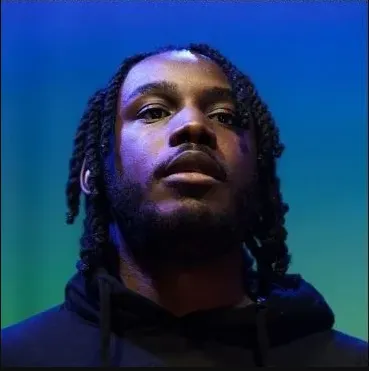
Shocka
Shocka is a Tedx speaker and a talented music rap artist. Here we chat to him about his life and career.

Hosted by Andrew Pain
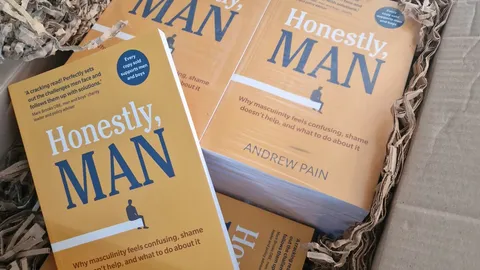
Andrew Pain is a Mental Health & Resilience Keynote Speaker who speaks from lived experience on resilience, burnout and workplace wellbeing. Host of the Men on Show podcast, author of the book Honestly, Man, and a TEDx speaker. Member, International Coaching Federation, and Mental Health First Aider trained.
Never miss an episode
Candid conversations with everyday heroes – ordinary men doing extraordinary things.