Men on Show · Episode 34
Men and Neurodiversity with Jonathan Macdonald
- 31 July 2024 .
- 1h 5m .
- Hosted by Andrew Pain .
Jonathan Macdonald is a fascinating, dyslexic, neurodiverse and brilliant man, whos passion is creating an education revolution for girls aged 11-18.
Andrew hosts this podcast. His own keynotes are on burnout, resilience, imposter syndrome and difficult conversations.
In this episode
About the conversation
Here he chats with Andrew about many aspects of his life, his knowledge, passions and how he got to this point.
Key points of the episode
- A philosophical perspective on his early life experiences.
- Reflections on his relationship with his brother.
- How it was as a mixed race child with white (adoptive) parents.
- His counter experience of "racism" as a mixed race person that experienced white privilege!
- His thoughts on education for neurodivergent people… and the application of NLP (Neuro Linguistic Programming) to help (fascinating).
- His stroke recovery and how he did it as a dyslexic.
- His core positive beliefs… and a positive message for all.
Men on Show shares lived experience and honest conversation – it is not medical or therapeutic advice. If you're struggling, you don't have to cope alone.
Samaritans: call 116 123 (free, 24/7) NHS: 111
Full transcript
Read the whole conversation
A complete, verbatim transcript of this episode – every word is the host's and guest's own; the topic headings are ours.
Welcome to Men on Show, the podcast, Candid Conversations with Everyday Heroes. Join Andrew Pain as he interviews fascinating guests, ordinary men doing extraordinary things. If you love the show, and you think somebody could benefit from hearing it, why not tell them about it by giving it a share on social media? Oh, and at the end of the podcast, if you can leave us a five-star rating and a review, it really helps us more than you know, and it gets this important message out to more people that need to hear it the most. And right now, enjoy the next episode.
Hi, my name's Andrew Pain, host of the podcast Men on Show, and I'm delighted to welcome Jonathan Macdonald to the show today. Jonathan is like a fount of knowledge on so many different things. He's had such an extraordinary life with so much insight, so varied insight. I don't even know where to start with your bio really. So all I would say, he's a powerhouse, he's founder of SocialMeToo, Potency Unleashed, and we're going to certainly talk about those.
I'm looking forward to getting in to those. But an advocate for mental health, knew our diversity with his own lived experience of dyslexia. I found out today that Jonathan, you were adopted, your mixed race adopted into a white British family. I'm interested maybe if we open that up as well as a topic. So welcome to the show. Thank you for coming on. And just to start with, tell me about yourself growing up as a boy. What are kind of the standout memories for you, good or bad? But what were the standout memories for you?
Growing up adopted, and his older brother
So we're going to talk about the adoption element. But what was certainly true is that, so we're talking about adoption, talking about this book, The Primal Wound. Never felt traumatised or wounded about being adopted, always knew I was adopted. However, I wet the bed until I was five, and I remember wearing nappies to primary school. So it's interesting because this is reflection. Now I'm over the half century. This is reflection. You look back on these things.
And my dad, who's now 88, said to me a couple of years ago, oh yeah, we had to have a specialist OT because your legs didn't work. And it transpires that for the nine months I was in the children's home, I didn't get picked up. So one of my ventures, the outsider perspective, is not just a set of words next to each other. I have always considered the majority of people in the world as other. I now find my tribe with ADHD, dyslexia, dyscalculia, anyone on the neurodivergent spectrum.
I can find a way to speak to them, but I've become depressed about my ability to change anyone else. So with respect to childhood, I think that that disconnect where you would normally be on your mother's breast or being held or picked up or played with, I think that that disconnect allows me a level of independence that other people would struggle to muster. So that's a memory.
Interesting, interesting. So some major possible downsides to that lack of connect with your biological parents, being in, you mentioned the children's home. Downside, obviously, your legs weren't working properly, emotional disconnect. But perhaps longer term, something good that's come from that is you have a level of independence that maybe others would struggle with. It's an interesting way of looking at it. What was it, you know, being adopted, are you consciously aware of that as a young, a child, that your parents are not your birth parents, but other children live with their parents generally, that are their birth parents? How aware of you? How aware of that are you?
I was always aware because I don't look like them because they're white and I'm mixed race. So it was always explained to me from the earliest time that I could process language that I was adopted and that I was chosen. And there's an interesting dynamic with my older brother, their natural son, and he rejected our mother very severely, and he's rejected me pretty severely, like so. In eight years, since I stopped picking out for Christmas, because we had a tussle for which I'm responsible, but since I've stopped picking him up for Christmas, in eight years, he's phoned me twice.
So I, on reflection, because dad said, oh yeah, the reason blah, blah, blah, doesn't go on with mom is because of X, Y, Z things she did. And I thought, okay, we could have that argument. Why is it the same for me? And now with perspective, I understand that he rejected her because I stole her from him. And he was not given the information about why I was adopted. And there was a lot of prenatal and birth stress, high levels of cortisol flowing through the presenter.
And this is a man who is perpetually in a state of anxiety and stress, and he doesn't know why. There's no point telling him now. So my task, dad said to me, don't tell him. I said, fair enough. So my task is to protect his narrative.
Okay.
Read the rest of the transcript Collapse transcript
So that's a memory.
Being mixed-race, and meeting his birth mother
And how was it for you as a mixed-race child at school? Did you find you were accepted? Did you find that there were racial issues? Were people picking on you? Or did people pretty much accepting? And it was fairly easy going.
So I'm a child of the 70s. I remember seeing in the distance a national front rally march through the town where I live. And my CV, not that I'm ever going to go for a job with anyone else again, but my CV, the first line is, as a mixed-race child, growing up in a white family, my experience of racism seems different from many. Maybe I'm lucky, or maybe there's an inherent difference. Now, this is another thing that only comes to you on reflection.
First of all, the bravery of my parents to adopt a black mixed-race child in the 70s. I was one of only two people of colour in my primary school. But you see, in order to take the meaning that you're being discriminated against or experiencing prejudice requires that the stories of how that's occurred throughout history, because it is the case. We see in every country, far-right parties, anti-immigration parties coming out. So the current unpopular is one of colour.
It used to be no Irish, no blacks, no dogs. Then we voted out of Europe, so we weren't happy with white migrants. So it's an interesting thing because I, so I used to run motorcycles, we'll talk about my accident that I had maybe. But I used to ride this bike called a Honda Fireblade. It was the fastest production bike at the time. It was coloured like a tiger. I was wearing a legal crash helmet with an illegal visor, an illegal exhaust pipe, pulling power wheelies pulled over by the police.
Now, at that point, they don't know what colour I am. So I got off the bike, immediately take off my helmet, take off my gloves, and go over to them and look them in the eye and say, I'm really sorry, I've just changed the chain and it's really talky and I don't know. Now, I got away with not murder, but at least nine chargeable offences more than once. I mean, this is something, until I had my accident, I used to ride around like a maniac.
And every single time that I encountered the police, they were absolutely lovely, charming, funny. And how can that be? because if you're one of only two people, so I think the joke is a black currant in a rice pudding. If you're one of only two black people, and prejudice and racism, racism, beg your pardon, is objectively true, which it is for everybody else. But for me, I've wandered through this world with white privilege. because if people are odd with me, I go, oh, you're being odd. I don't go, oh, you're being racist, or you're discriminating. I just go, yeah, right, mate, whatever.
And I don't go. Is that because you grew up in a white family?
Yes, because all of my extended family are white. There was a level of education. There's a level of not poverty that you get in more ghettoised areas like Tottenham. The irony, my birth mother lived less than five miles away for 30 years. So, yeah, you look out of a head where no story of their history is about them being discriminated against. So you cannot, you could create it, I suppose, if you're really into it, but you wouldn't, I don't think. I didn't.
If you met your birth parents, have you?
I did. I met my birth mother. It was a, I'm the product of an extra marital affair. So there was no father in the picture.
Right. Are you in relationship with her now? How was that for you?
It was good. Yeah. Met her in 2018. She gave me a couple of dog tags that I wear with my African name. So I'm half Nigerian, half Spanish, and I'm called Igosa, which means in God's time. And unfortunately, she died a couple of weeks ago, having been in a vegetative state for two years. So, and, oh, no, you don't know this yet. So I've had a bunch of strokes as well. She had a bunch of strokes. My half sister had a bunch of strokes. So, yeah.
Dyslexia at school, and growth mindset
Is that a hereditary thing? Yeah, interesting. Yeah, clearly. You talk about dyslexia on your social media profiles. How did that affect you at school? So I'm picking up, you see, that although you're a mixed-race child in a white British family, you were at school, you were very much in the minority, but I'm not picking up that you saw yourself as a victim of racism at that time. You didn't really experience that. You have white privilege, although your skin is not white. I get that. Was dyslexia a problem for you at school? Did that make challenges or were you well supported? Did you even know you had dyslexia?
No, because in the 70s, it wasn't a thing. Yeah. So there was a report card. Excuse me. There was a report card that said, can't spell or punctuate for toffee. One saying loads of great ideas, but can't get them down into a narrative. My dad used to say, you've got verbal diarrhoea. So I exist in the world, and it's only because... So I found out about my dyslexia much later on by accident, but the qualities that dyslexic minds have manifest in a tremendous energy, because what we have going on inside our heads is often 20, 30, 50 times what more neurotypical brains have.
So, I've gone through life, and people have said to me, Oh, Jonathan, this is my problem. And I've gone, well, I see what you're showing me, but thinking that they could see them too. And I only now understanding that it is a massive imagination creating different versions of the senses as they're received to create different perceptions. And that's how dyslexics solve problems, because there's no problem.
I mean, I like to think we've come a long way at understanding neurodiversity, and not about making exceptions in a way, but how to get the best out of people, how to create the best conditions so people can thrive, whether they're neurodiverse or not. So how can the education system best support people with dyslexia, would you say, from your own experiences?
From my own experiences, I will nudge back gently on the idea that we're doing the best we can. So let's try and compress this into a few speaking points. You've heard of growth mindset, yes? So teachers in schools, I was telling them about this 17 years ago, but about eight to 10 years ago, people started talking about. And teachers and support staff were told to tell children, oh yeah, the more you think, the better you can be, you can become smart.
Now, I volunteered in the primary sector for 12 years. And let me tell you, what they do is a thing called streaming by seating. So they have a table of kids that they consider stupid. They've got a couple of tables of kids in the middle, and they've got a table of people they call, what do they call them? Top performers or some title. And then what they do is, they teach the perceived abilities of the children.
Now, number one, the unknown and unspoken beliefs of the adults surrounding children produce the results that you receive. So I'm not saying that people are evil or malevolent in their application of what they know. What I am saying, however, is that what they know lacks such perspective as to be laughable. So, growth mindset, you can get better. The whole of education and society and life and everything at every level is fixed mindset. You get this grade, you get that grade, you're...
It's all about measuring against other. It's nothing about challenging yourself and beating yourself and becoming a better, stronger person in the things that drive you. It's all about measuring. Now, with regard to dyslexia, so have you heard the phrase learned helplessness? Yeah. Okay. So you take a lot of people that struggle with your system. Now, let me explain again why they are so utterly, utterly just misinformed, would be what I would say if I thought I could inform them.
Unable to conceive of is what I think is the truth. So to teach spelling, reading and speaking, they use phonics. And in primary school classrooms, they have letters all going around the wall. They have groups of sounds all going around the wall. Now, British English is a nightmare because we have three or four times the words of most other languages, because we've stolen them from everywhere, and we don't spell things the way they sound. So for speaking, phonics is the perfect tool.
For spelling, it is so bad as to be a joke, but it's not a joke because these children get told a system by the adults, and then they apply that system and get wrong answers. And what does that tell them? It tells them they're not good enough. It tells them they're not clever. It tells them they're struggling. And then they give them, Oh, let me help you. The facts of the matter is that, so I am a NLP, Neuro-Linguistic Programming Practitioner, Master Practitioner, in fact, and there is a NLP spelling technique.
NLP is the study of modelling. So, NLP people will study good spellers, and they found that good spellers always see the word in their mind. Now, I was trying to find out why dyslexic secondary school kids had great, amusing, funny, great characters, but when they had to write down and read out what they've done on the weekend, it went from, I went to the park, and this is a specialist secondary education school. And I went, shit, you've got dyslexia.
And it was in the process of finding out how to teach them, that I read in this other woman's books, five accounts of a thing I'd written in my own book five years earlier. And I went, oh, I failed English. And I went, oh, I couldn't spell for toffee. And I went, oh, I hated education. And then I went, oh, I'm dyslexic. So then the first thing I do when I'm given any new knowledge is run, number one, a series of several thousand thought experiments, but I also then experiment on the technique.
And the technique is absolutely sound. You just have to train your neurology to do it. So I unfortunately only pick this up at the end of my voluntary experience. So I've only coached 18 children with dyslexia. And once you go over meeting someone, so you have to meet and show an interest and find out about the child before you get into anything. Once rapport is established, I can train a child to spell a word, any word, in 90 minutes.
And the technique is so powerful. So basically what you do, you start with simple words like dog. And you go to them, picture a dog in your mind. They go, yeah, okay. Then I go, okay, now open your eyes and tell me where your dog is. Now, NLP understands that looking up, one way is recall, one way is construct, but it's not the same way for every child. That's where you always calibrate, but you find out where it is in space.
And then you take the word dog on a yellow post-it note written in capitals, and you find out where in space your piece of paper and their image exist. And then you go take a little picture, and I go, you got to make the noise. You take away the paper, and you say spell it, and they spell dog, but dog's easy. So you do a couple of easy ones, then you go, okay, there's, I'm looking at a book at the moment called Extraordinary Women in History.
So extraordinary for a primary age child is a extraordinary word. But what you do is you get them to think of a picture that associates with extraordinary. Put the word in there, get them to look at it, get them to take a picture. It's fun. It's just we're taking a picture, take the paper away. They can spell it first time every time. And then what you do is you go, what's your favourite colour? And they might go blue or purple or pink or whatever it is.
You go, okay, make the letters in that word, that colour. And you can see them because it goes from recall to create because they have to create that representation of the letters. So you see their eyes move. And then you go, what's the last letter of that word? I go, one before that, one for that, one for that, one for that. They can read the word backwards because they're looking at the picture. Yeah.
Dyslexia in boys, and seeing pictures
And is dyslexia, is that more common in boys than girls? I know that obviously as young infants, boys' brains develop at a different pace to girls, boys make up 70% of late talkers. But as infants, at least, girls' communication skills, as a trend, tend to be ahead of boys. And then of course, I'm imagining here, so I'll just paint the scene here. But therefore, boys typically struggle more with some of this stuff, like the phonics, the writing, the spelling.
But then of course, as we grow into teens, and we've covered boys in education a few times on these podcast episodes, but as teens then we have some 25 to 30 times more testosterone in our system than equivalent age girls. So just being still in a place of learning in a classroom is impossible, whether there are girls there or not. Just the energy. So it feels to me that is education is particularly difficult anyway for boys. But is dyslexia higher among boys and girls? Do you know what the percentages are? I must admit, I don't know what the percentages are.
I don't know what the percentages are. So in my experience of speaking to women in various entrepreneurial roles, I read out, may I read this little note that I check with people? So I'll use the word neurodivergent and then reveal afterwards. So the mental function that causes neurodivergence is a gift in the truest sense of the word and natural ability and talent. It is something special that enhances the individual. Neurodivergence don't all develop the same gifts, but they do have certain mental functions in common.
Here are the basic abilities all neurodivergent share. They can utilise the brain's ability to alter and create perception. The primary ability, create perception. So we just talked about. They're highly aware of the environment. They're more curious than average. They think mainly in pictures instead of words. They're highly intuitive and insightful. They think and perceive multidimensionally, using all the senses. They can experience thought as reality, and they have vivid imaginations. So let me just ask you a question. You're looking at me, we're doing this interview. Other than this, what else do you see in your head? In you, as a person, or just in your head?
In my head? I mean, talking to you, I see someone who's very, very alive, energetic, animated, good, high levels of passion.
What else, though? What else? Thank you very much, by the way. But what else do you see in your head?
Well, I see an I'd Maiden t-shirt, which I quite like, because I used to like Heavy Metal.
Very good.
I like what you're wearing.
Very good. I did pick out the trooper. It's from my age, basically. Okay, great. So the way you answered that, and it's not a be all and end all, but the way you answered that is the way many people would answer it. They talk about what they see, and they talk about representations that they understand from what they see, the meaning of it. If you ask a dyslexic, so the only reason I know this is because I had six strokes, the last one wiped me out, I had to rebuild my consciousness, and I had to do it from everything had gone.
I couldn't even see light came in, but I couldn't get the muscles to work. So everything I had to learn again. And because I'm dyslexic, what I do is I see pictures in my mind. So you take a wiped out brain, like a dark empty void, and then you start building lights, and energies, and pictures. And basically what I started to do, and I comment on this throughout my book, I started to go, yeah, it's like there's three or six spheres of, like I see the scene six times over, but not just that, there's a thing called submodalities.
So you could go from complete blackness, through black and white, through colour, to super saturation, to colour out. You could, there's a Volvo advert, not anymore, that shows the scenes round bends and twists and turns in the road that you don't see. So I can make one of those. If you ever seen, I say can make one, I have one running always. Have you ever seen 3D animation software where you can, you take shapes and you build them up. So Homer Simpson is a tube, two circles, an M.
Okay.
Yeah. So I can do, I say can like I choose to. I have one that's continuously deconstructing and reconstructing and reconfiguring what I'm looking at. I've got one that's like the ends, it's called pointillism, but that's like the ends of fibre optic cables. There was a light for the house that you could buy in the 80s with wavy light fibre optic cables with different coloured lights going in a bit. So I see the scene, but swaying as dots, that I've got one that's liquid, I've got one that's gas, I've got...
Oh man, yeah. So I started on three, I now have 18, and I have 18 because in order for my brain to function through what is basically a severe brain injury is by extraordinary focus. So the focus to hold them in place, to be aware of what they're doing, and to nonetheless construct and move through the still world requires mental effort. Essentially, everything is fluid. And I didn't realise that most people experience what they experience. There is no other.
For me, everyone else is at best a sixth of my thinking. So, boys, girls, who knows, who can say most dyslexics are not aware enough of their own thinking. Give you a quick example. Sorry to speak so much. Lewis Hamilton won the British GP yesterday. No, he hadn't won it for three years. Three years ago, when he won it, he had a 10-second pit lane penalty. He came in at the front of the field, 10 seconds in the pits, came out of the back of the field.
Ten seconds separated the top 15 drivers in that race, and he came from the back of the field and won. And I wandered into... I wasn't even watching it, I saw it on the news. And I wandered into the gym the following day, and I went, is Lewis Hamilton dyslexic? And no one knew. So I came home, typed it in, Lewis Hamilton's dyslexic. Now, I'm an advanced driver, police trained, or the IDDR, and there's a thing called the system of car control, and it's all about perception.
And when I'm driving, I'm using eight mostly. So, yeah, I'm using eight in the different configurations. So I know that my perception of the information about driving is coming to me from various different perspectives. I think everybody must do this, because when you drive through a gap, surely you produce the pictures of the outside of your vehicle to know if you can get through the gap. I would have thought maybe not, but basically that's why Lewis Hamilton is a brilliant driver, because he's running on potentially multiple versions of reality.
Pictures, phonics and memory champions
If I drive through a gap, I'll just instinctively think, can I fit through that or not? I won't be picturing things.
So how do you know?
Well, you don't really.
Okay, fair enough.
I either think you could get a tank through that, or I think you can't get through that. And it's more of a gut-based thing where, yeah, I definitely don't work with those pieces. It's interesting you say with the whole phonics way that we learn to write language and learn about our language, that picture-based stuff is so much more powerful. I wonder how much more powerful picture-based stuff would be for kids that are not neurodiverse, actually.
I think you'd like a perspective on that.
Yeah. Yeah. And then we'll move on because there's something else I want to keep your brains on before. But give me the perspective on that for sure.
Perspective on that. So those attributes I read out from the book called The Gift of Dyslexia in that book. So I read that out to all neurodivergents, and all neurodivergents usually have at least four out of the eight. In the book, it goes on, talks about how our education system is about verbal reasoning. So you learn to read out loud at first, then you're told to read in your head. And so therefore, the way you process the world is limited to how fast you can understand words, which when they're sped up artificially, is about 250 words a minute.
I see movies, reconfigured movies, re-edited movies, all real-time, that trying to compress that down into a stream of one set of words, for a neurotypical, it's a nightmare. It's like a torrent. And it says in the book, the visual thinking is between 400 to 2000 times faster than verbal reasoning, which is everyone that currently thinks they're clever because they've got a degree, MBA, PhD, whatever it is.
Yeah, it's interesting because Yanja Wintersol is one of the world memory champions, and most of the world memory champions, when they are, they're given 600 random digits to remember in like 10 minutes. So how the hell are they going to do that? But they've got codes, well-rehearsed codes, where the digits become incredible pictures that mean something to them, stimulate their emotions and senses. And it's why when they then recount the 600 digits, the ridiculous amount of digits they've learned in 10 minutes, when they, if you see a world memory champion, they never do it very quickly because they're now translating back all these pictures.
And so they'll say two, four, it's really long, they don't rush it, but they get it absolutely bang on the money because they learn with pictures. So the world's best memory champions. And so perhaps that's something we should be teaching more. I mean, I'm not a fan of phonics. Seeing my boys struggle with phonics, not a big fan. They're not neurodiverse from what I can see, and they do okay at school, but it is very confusing, definitely.
Tell me about your work today. Let's get on to that. I've really been interesting talking to you about dyslexia. It's not really a topic we've particularly covered in any depth on Men on Show. Well, what are you working on today, and what drives you today?
His five core beliefs, and Potency World
So essentially, the last time I tried to change the world, which is essentially the only thing I'm ever interested in doing, because being motivated by money or sex or power, whatever, may have it, have it all. I don't want it. I'm not interested. What I'm interested in, so I was explaining this to a guy at the gym this morning. I have five beliefs. I have other beliefs that are transient, but I have five core beliefs. Equality, free will, the needs of the many outweigh the needs of the few.
Every day is a gift, and children are spectacular. And that's how I filter the world. Now, looking at the world as it is versus my belief systems, they're quite far apart. So potency.world is my main project, and I've decided to, having volunteered in primary education, dispense entirely with secondary school. It is a new education design, and it is designed to create neurodivergence and maintain neurodivergence. So now, this website talks about me and tells me about how much I charge.
This website is about the project I'm going to create. This project is not to be sold off as an IPO. There's no $50 million payoff or 100 billion, or have any billions you get from selling off. It's not about technology. It's about the operating system of the human brain. Education is pitiful, and I'm really sorry that so many people try so hard to make something wonderful out of something so restrictive. And it doesn't help people, it doesn't help teachers, it doesn't help employees, it doesn't help employers.
In fact, the only people that seem to be helped by education are the providers of it insofar as they're paid for their efforts, however misguided. So what I'm doing now is I have defined my price. My price is determined by my value. That value is that in less than 15 minutes, I can just rip apart anything you're doing. At the best you can do, maybe an hour and do it better, because it's just such a practised routine now that you look at something and you go...
So is Potency World, what are you doing for the education sector then? Are you troubleshooting what I have?
No, no, no, I'm not touching it. I'm not interested at all with any of it.
So what's the work you're doing with Potency World?
So Potency World is an education revolution for girls between 11 and 18. We're obviously here on a men and boys show, but basically girls suffer their biggest drop in confidence as they move from primary to secondary school. So I'm thinking, oh, apply me, that's a real shame. And then you start thinking about how the world is for a young girl, and they suddenly become aware that they're very sexualised, that they're judged very much on their appearances and their popularity, and they're conditioned to be people pleasers.
So that unfortunately limits our world, our species, because it basically women hold back, stifle, then repress themselves. And the education system, which is, oh, I'm at this mark, I'm on this grade or this grade or that grade, it just creates anxiety and no useful skill whatsoever. So I am the living demonstration of what's called neuroplasticity. I had a complete wipeout, left hemisphere, right side, pons stroke, if people want to look it up, P-O-N-S, capitalised. So I am the outcome of what you can do with the brain, if you apply yourself, and I am going to apply that to these girls, and that will make their brains operate in a different way from anybody in education. And when I say different, I mean, vastly superior.
How schools fail boys, and girls' confidence
I mean, I think the education system definitely needs some major attention in how we deliver it. I suppose my concern, I mean, I think anything for girls and women, of course, is absolutely crucial. And I think absolutely, I can see that there would be confidence issues. I wonder how much of the confidence issues one might blame on social media more so even in the education system today or whether they're just a fairly toxic mix as it is for girls today.
I think it's a fairly toxic mix. I mean, part of what we're doing in these academies is that we're controlling the broadcast and social media. So we'll have our own broadcast media and social media companies and the idea is to change the narrative. because the narrative inside people's heads is what they experience in the world.
Yeah. I definitely think what we do know, there's some things they must be doing right because girls outperform boys in every subject at school, from primary through to secondary, barring maths. In fact, number of graduates now, 57% graduates are female, only 43% are male. So I do feel that if anybody is struggling at school, it's the boys, the education system fails the boys. But I think as it stands, yes, we need to put measures in place for our girls and for our boys as well.
Look at, well, why is the education system, how would it be failing our girls? How can it be made better for girls? How can it be made better for boys? Bearing in mind that biologically, we're different, so we have different needs. How would you run a school, a mixed school that reaches out and supports the best outcomes for girls and for boys? That's a big ask. It's a big ask.
It depends on what you mean by the best outcomes.
Best outcomes in terms of confidence, in terms of cohesion between the genders, in terms of those kids, boys and girls coming out of school, feeling happy about themselves, positive about their future, not feeling like they're being lost, forgotten that they hated school, that the girls and boys look back at school and think, I had a good time. It was fun. Had some fun.
Yeah, yeah, that would be really nice if they could do that. But given that, so there's so much to unpack. So, oh man, there's so much to unpack. Okay, so from the age of four stroke five, children are conditioned to, like Pavlov's dogs, arrive at their workplace half an hour early, accept complete authority and control without question, to be determined whether or not they can go to the toilet, to be shouted at, screamed at loudly by adults overbearing, to get an hour for lunch and then go back to the grind, to expect additional work unpaid in your own time.
That, my friend, is a completely broken system for boys and girls. This is my attempt to produce 500,000 differently wired brains that as this civilisation, as we can all see, it's slipping off a cliff. It might not be the end of the human species, but I think we're at the precipice of society, civilisation in this current form. So my concern is creating the humans for the next civilisation. And I was being interviewed by a friend of mine about this, and she asked me why only girls?
I said, it's a 10-year project to prove the point about education. But obviously, when I'd roll it out, roll it out for boys and girls. So once my idea is proved, it will create change at several different levels in society, and then people will either choose it or not.
So from your experiences as a guy, and we're seeing some encouraging signs for me. For me, men and boys have been largely forgotten from a lot of the well-being, diversity, inclusion, equality space. I'm really excited. Melinda French Gates, a known philanthropist. Her latest round of funding that she's announced, at last she's announced some initiatives, funding initiatives for programmes for men and boys, very much in the minority. But it represents a step change. Even the Labour Party are talking about a men's health strategy, which is quite surprising.
Usually the voices speaking up for men and boys come from the right of the political spectrum. It's great to see it's coming from the left. People are catching up. We need to do stuff for men and boys. What can we do for men and boys? How do we help men and boys to be the best version of themselves? Just thinking about yourself as a man and within society, what practically can we do to create a better world for men and boys?
Approaching women, and men's vulnerability
So it's quite lucky that I've had recently a moment of serious self-reflection with regard to approaching women. There is talk, I don't know what they're called, in-sales, I think.
The in-sale movement.
The in-sale movement. You've got Andrew Tate, who I've never actually listened to a word he said, but he's been arrested for X, Y and Z. You have this pornography in the presentation of everything, especially sexuality, and you have boys still being raised. It's better, but still being raised without emotional intelligence as a key component. Now, boys at 5, 6, 7 are as emotional and great and as lovely as girls, but we hammer out of them the ability for self-reflection, and we hammer out of them the ability that crying is a good thing.
Now, I won't share it on this, but it was an X-factor audition. This girl comes on, she's really timid, she rocks out this number, the crowd goes wild, they're on their feet, the judges are on their feet, she's not finished the song, she belts up another four bars, this amazing voice, and then breaks down in tears because she's never had that feedback before, and it is so amazing. And I blobbed like a baby because I'm so happy for her.
But it is also true that strokes break the bit of your system that inhibits your emotions. So I could laugh hysterically, I can cry hysterically, and I'm quite happy to do both. Many men are not. So I'm lucky in the fact that on three occasions in my life, I've had to be completely reliant on someone to feed me, to wash me, to wipe my backside. So I've had the ability to learn humility, and then the nature of trauma gives you a level of self-reflection that most people, many people struggle with.
There's a thing called confabulation, where we'll always make ourselves out to be the winners. So in answer to the question, I had spoken to these three women in the gym. When I'm in the gym floor, I've got my headphones in, don't want to talk to you, nothing. When I go down to the steam room in the sauna, I'm at my most energised throughout the day, and I had been in the habit of starting these mass conversations about this and that, and really holding court, being a sort of, you know, for sliterative conversations.
And then I had this chronic moment where I went, ah, because I'd never got to a woman on the gym floor with her headphones in to start a conversation. And it not occurred to me that most people spend the sauna and steam in quiet. So I said I was going to apologise to 33 women, to men that I speak to in the sauna. And they went, oh, no, don't do that. Oh, no, you're stupid. And I said, no, I want to do it because what I've done is it is my male entitlement, the inherent belief that I can go up to a woman anywhere, anytime, whether she's shown me interest or anything and starts a conversation.
Now, this is not even chatting women up. This is about understanding that unfortunately, women are being killed, murdered and beaten by men and in ever increasing rates. So from a woman's perspective, when they look out into the world, at least half their brain is thinking about threat detection. They're worried about is this person a threat to me? So for boys and girls to have a better experience, for men and women to have a better experience, men can open themselves up from holding inside their emotions, their core, their vulnerability.
And as they can speak about those things. So I was chatting with a guy I went to school with the other day, having a stroke affects your ability to get a hard on. And I said, yeah. And he goes, oh, I'm having that problem too. And he said, I've never admitted that to anyone before. So I find that when I speak to men and I expose my soft underbelly, it's there everywhere in all of them. So the gap between where we are now and where it is a better world, the reason I'm starting with the girls is because when the girls are not manipulated by our society to feel less than, what they'll ask of the men or women that they partner and date with is, they'll ask of them more than the majority of women who are educated differently.
And in that way, it brings up the consciousness level of both. It's like social mobility. You support women, and the whole of social mobility goes up. Melinda French Gates you were talking about in her book, The Moment of Lift, she's talking about farm grants and things of that nature. And they're always given to the men who sit around, 85% of the farmers in the world are women. And they weren't being targeted at all. So I think it's true that men can feel isolated or put upon.
And those feelings are internal. because when I apologised to these two, three women, they then engaged me in conversation about some very deep, personal, traumatic things. And we had a really good conversation.
Yeah.
So, yeah.
It's an interesting one, isn't it? And it is a huge challenge. And, you know, on the one hand, research shows that women are attracted to confident men. On the other hand, and we picked this up working with boys, teenagers, there is an increasing fear of approaching girls for being seen to be, what will they think of me? False accusations. You know, so of course, there are many women who suffer horrendously at the hands of men, and there are women as well where false allegations is not unusual.
And so my concern as well is you have a group of women who are traumatised by what they've experienced. You have a group of women that very much play on that narrative. You have a group of guys who don't really know how to approach women anymore, made worse by the fact that they're on their PCs more than they would have been. They're not out socially as much as they would have been. And I feel sad for both genders in terms of where we are both at.
And I do agree with you that being more vulnerable, talking about your feelings is really important. I think about with my boys, we try and rate how they feel about the day, whatever number that was each day. Let's try and pick apart why a six, not an eight. Oh, well, maybe it was an eight because this happened to that. And we try to unpack things, but that takes time as a parent. Often I feel like I just can't be bothered to do it, but I remind myself it's really important.
Unpicking their fights that they have, taking time as a parent to be present. What does your stoppiness look like? What does somebody else's stoppiness look like? This kind of, that takes time. And I think as people, we often feel that we don't have time. We're busy on our phones as well as adults, setting a terrible example to our children. And so I do think at the heart of this, whether you're someone that really passionately advocates for women and girls as a priority, or you're someone like me that passionately advocates for men and boys as my priority, where we can agree is actually psychological safety, being open and vulnerable is absolutely crucial.
We need to teach those skills to our boys and our girls. And I think we need to have these open debates around privilege that allows men the space to say, I don't feel I have a privilege and says, okay, well, I want to listen to that. I think that's so important as well. I think we have a debate today where people are afraid of saying something in case of offending someone else. And I think as well that sense of being able to debate things respectfully, yet openly, we've lost some of that with social media. And I think that's important too. That's just my own thought.
Phones, social media and parenting
Okay, okay. So yeah, I would definitely agree with that. And as you refer to phones, I'll show you the way that I am unaffected by social media. And that is by having a phone like that.
Love that phone.
So the bottom line is, yes, parenting takes time. And no, people are not busy. People are spending their time sucked into the world in the palm of their hand. Now, NLP eye movement cues show that when you're looking down to either the left or the right, you're either processing internal feelings or having an internal conversation. So you've got the majority of the population with their head down. So they're having internal conversations or internal feelings while looking at an idealised version of the world.
For boys, listen, I got eye buds buying porno mags when I was 11. So for boy, and that was like you used to, you know, had to go top shelf for the rest of it. Now you've got a world where a boy who has interests as we all have sexually that start, you know. Look, for example, in primary school in the 70s, we used to play a game where the girls would sit on the bench with their skirt up and the boys would sit under the bench looking at their pants.
And that was like seven year olds. Now it's just a game, but it's a game based on, you know, we are designed, obviously, homosexual and lesbian couples have a different way of approaching this, but we're designed to be attracted to each other to reproduce. So just a quick check on your false rape allegations. They say it says four percent. So it is an issue. But I think that the fear mongering as trumpeted by a forage or someone else, you're not allowed to say this or the other.
You have to cancel culture. No, if you express an opinion, and then if you're presented with different information, you can either revise or defend that opinion. That's not council culture. That's not not being able to speak. I say all sorts of things, terribly deep personal things. And people haven't cancelled me. In fact, this is an idea of why women need help more than men. Connection to the post, she said, I haven't admitted this part of my personality.
I'm a Palestinian. I've got family in Gaza. I commented on the post. I said, yeah, okay, it's very difficult because we supply Israel with weapons, including illegal weapons like cluster bombs. I said, so I put in the post, it's very difficult for us to take a position on these conflicts, not even specifically. I said, but when it comes to 300 to 1 death ratio, I think you're getting towards a genocide. Then someone jumped on beneath that and attacked the woman.
But talking about genocide, when she had not at all even slightly. So the woman wouldn't even attack the person who made the comment over attacking another woman. So that's the reality for women. They're built in this fragile cage of appearance and popularity and people pleasing, and they attack each other and don't support each other. So there is fundamental work to be done with parenthood.
I mean, I get attacked by guys when I talk and I have done around my experiences of domestic abuse coming out really, really cross that I talk about it. And it's more palatable if I say, well, the vast majority of victims of domestic abuse are actually women. But I'm not going to say that because it's not statistically true. The greater proportion are, but not the vast majority. And it's uncomfortable. And I think because of social media, we are used to seeing our own narratives that we generally connect with because the algorithms pick up on that.
And so we're less exposed to other people's opinions, which means that debate, we are angrier. It's harder to consider the alternatives. I think maybe we'll finish on this, but I think your phone is brilliant. I have a rule on my phone, because I'm all over social media. I really have to be. Data mobile and Wi-Fi off as my standard operating procedure. It only goes on in scheduled slots. So if I need to call the Uber driver, it goes on. But once the Uber driver arrives, it's off. That's standard procedure.
Good man.
Then I also have as a backup, because I found myself addicted to TikTok. I will just say this. I have something called OneSet. Now, it's a free download that you can have on. It's free if you want it just for one app. If you want it across all your apps, it's about $8 a month. Every time I go on TikTok now, even in my scheduled slots, it's not often now because it's in scheduled slots, I'll have this, my phone blanks out, and a message says, take a deep breath.
Take a deep breath. And then it says, do you really want to go on TikTok? It tells me how many times I've tried in the last 24 hours and gives me another option again. Do you definitely want to go on? And then I'm like, nah.
Not really. Yeah.
So there are things like that that have helped me, but I think that does then create time that you didn't have before. I think the less exposed you are to social media nonsense, the better. And I'm encouraged for girls and our boys that schools are really clamping down on phones and social media, which, you know, we've talked about education, that the problems within it, but most teachers I know are passionate about doing a good job.
Absolutely, yeah.
A one-sentence message of encouragement
They themselves are restricted within the system that they work. To finish, just can you give me a one-sentence message of encouragement to the guys listening to this? What would you say to them?
I say, guys, women and girls are as interested in you as you are in them. I've always maintained that a good-looking girl could be wearing a potato sack and she should still be a good-looking girl. For me, I find beauty. So for example, Beyonce is a very beautiful woman. I get her beauty from her eyes and her smile. Just that. I don't care about body bits. So go up and speak to women. Practice makes perfect. Genuine conversations and interest in someone else opens discussions.
And once you've tried a few times, and maybe been knocked back, but then take that moment to reflect about what you could change, you will find that your progress through life and relationships will be phenomenally changed from staying in the corner, or watching porn, or believing that women don't want to talk to you, or believing anything that is fear-based. We are a loving species.
Amazing. Fantastic way to finish the podcast. Jonathan, it's been an absolute pleasure. Thanks so much for giving up your time.
Thank you for having me.
Thank you for listening to Andrew Pain's Men on Show. If you could leave us a five-star rating and short review, it would be really, really appreciated. It helps us get this important message out to more people that need to hear it the most. See you on the next episode. Thank you for tuning in.
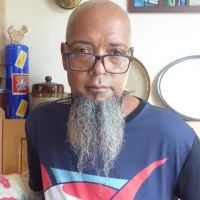
About the guest
Jonathan Macdonald
Jonathan Macdonald is a fascinating, dyslexic, neurodiverse and brilliant man, whose passion is creating an education revolution for girls aged 11-18.
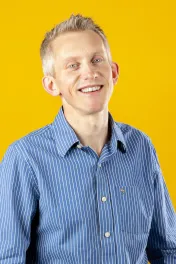
Hosted by Andrew Pain
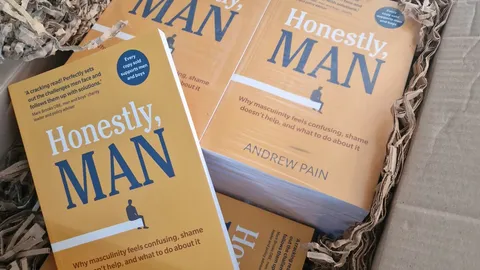
Andrew Pain is a Mental Health & Resilience Keynote Speaker who speaks from lived experience on resilience, burnout and workplace wellbeing. Host of the Men on Show podcast, author of the book Honestly, Man, and a TEDx speaker. Member, International Coaching Federation, and Mental Health First Aider trained.
Never miss an episode
Candid conversations with everyday heroes – ordinary men doing extraordinary things.