Men on Show · Episode 33
Men, Gambling and Addiction with Josh Munns
- 17 July 2024 .
- 35 min .
- Hosted by Andrew Pain .
Josh Munns is originally from London but hemoved up to the East Midlands to change his life around and get the support and help he needed in my battle with addiction.
Andrew hosts this podcast. His own keynotes are on burnout, resilience, imposter syndrome and difficult conversations.
In this episode
About the conversation
He has an amazing story to share to those who are wanting to make a change in their life’s and to just share to those so that they can see there is hope out there.
Key points of the episode
- His life as a kid. And how his parents relationship affected him.
- How his Dad's problems caused him to grow up very quickly.
- How he had hardly anyone to talk to.
- How he felt he had missed out on the "fun" stuff like alcohol, weed and gambling.
- The progression from cocaine to crack and heroin.
- The beginning of how he turned his life around.
- How gambling is marketed as very "male" and "macho" .
- How it becomes addictive.
- Advice for carers for people with a gambling addiction.
- His podcast which shares lived experience.
- The importance to him of giving back.
- Podcast Spotify/Apple/Amazon - "Recovery Talks 27/7" .
Men on Show shares lived experience and honest conversation – it is not medical or therapeutic advice. If you're struggling, you don't have to cope alone.
Samaritans: call 116 123 (free, 24/7) NHS: 111
Full transcript
Read the whole conversation
A complete, verbatim transcript of this episode – every word is the host's and guest's own; the topic headings are ours.
Welcome to Men on Show, the podcast, Candid Conversations with Everyday Heroes. Join Andrew Pain as he interviews fascinating guests, ordinary men doing extraordinary things. If you love the show and you think somebody could benefit from hearing it, why not tell them about it by giving it a share on social media? Oh, and at the end of the podcast, if you can leave us a five-star rating and a review, it really helps us more than you know, and it gets this important message out to more people that need to hear it the most. Right now, enjoy the next episode. The next episode.
Hi, my name's Andrew Pain, and welcome to Men on Show. And I'm delighted to welcome Josh Munns to the show today. Josh is a podcaster himself, recovery support worker, and with his own lived experience of addiction. We're really gonna be looking at masculinity, men, addiction today, I'm really looking forward to getting into it. So Josh, welcome to the show.
Hi, thank you. Thanks for having me, Andrew, I really appreciate it.
Growing up with a father who had depression
Yeah, no, it's great to have you. Tell us about your life growing up. Kind of what was your life like as a kid?
So with myself, so originally I'm from London, and me growing up as a child, I had a really good upbringing. I had the mother and the father. If you, as I always use the term, is if you walked past me as a family, you wouldn't normally think there's anything wrong. We was a good, happy family. We had what we needed, we had a good house. My mom and dad had a good job. They brought us up really, really well.
And then, but behind that, as they say, behind closed doors, there was a lot going on, especially with my parents, seeing constant arguing. They just, they weren't happy in their relationship. And me growing up as a child, it was quite hard to understand what was going on. It just, I knew it wasn't right. I just didn't understand it. But I still had a mother and father in my life. There was a lot of people that when I went to school, I was the only one in the class that had parents.
And that was quite, it was quite weird, but at the same time, I'm going home and I'm seeing arguments all the time, and it just, it didn't make sense. And I knew something wasn't right. And then from then, from seeing them arguing, obviously I was the youngest of two, so I had two older brothers, and they moved on in life. They got happily married, and it was only me now left in my household. So by this point, growing up probably to the age of 16, I'm now starting to see a lot more things that are going on that a child, because I was still a child then, didn't have to see.
And that was my father suffered really badly with depression. And at this point, I'm starting to understand about depression and understand that there's something not right. And I started to see things that my dad were doing that weren't correct. And he tried to commit suicide. And from the age of 16, that was really difficult to see. You know, I'm starting to see my family getting broken down. My mom doesn't know what to do. And the reason why we found out why my dad went down that route, he just wasn't happy in himself.
He wasn't happy in the relationship with my mom. And we then found out that he was searching different avenues to move on from my mom and speak to other women. And it just all got on top of him. And yeah, I constantly, I used to come back from school and he was basically on house arrest. You know, he couldn't leave the house because he was constantly going out, trying to commit suicide. And he was always found at the train station all the time.
And me as a child, I used to come home and I used to see my dad's not there. So I just have to go and find him because my mom now is the only person that's bringing money in the household. So, and that was really difficult. So I lost a lot of my education through having to look after my father. So like I said, going back to what it was, if you saw from the outside, if we're going out for a coffee as a family, you wouldn't think anything's going on.
But as they say behind closed doors, there was a lot going on. I didn't know who to turn to or what to say. I just dealt with it. And it made me grow up very, very quickly because I had to look after my father for quite a long time. So yeah, that's like a brief, yeah.
Did you have anyone looking back that really looked out for you? Do you think, is there anybody through that tough time that you would lean on or was it you really just alone in your space?
Read the rest of the transcript Collapse transcript
I, so as a male, I very struggled with talking. I, you know, and that was mainly because I grew up seeing my dad was like that. He never used to speak a lot about anything. You know, if something was wrong, it was like man up, sort it out and just deal with it. So I didn't speak much to anyone, but there is one person that I would speak very little to, and it was my nan, because I always used to get dropped off at my nan and granddad's.
And this is another thing I started to realise, things were going on at home. I'm being dropped off at my nan and granddad's on a regular basis now, and it was mainly on the weekend. And it was very little bits I used to speak to my nan about. So it was like I was talking in subliminal messaging to her without actually being direct about what's going on at home.
And do you think, so you were 16 when this started with your dad, trying to take his life. I mean, is he around today or?
He is around today. Thank God, yeah, he is around today. Sadly, he left, left my mum. So it was only me and my mum now at this point. And yeah, he left and he remarried and left my mum with a lot of debt, a lot of stuff. So again, that was really difficult. So now it's just a son and a mother. My two older brothers have gone and I'm kind of like, right, I need to be the man of the household and look out for my mum because my mum's the only one that's been bringing the money in the house.
So I'm now thinking, right, I've got full reign to do whatever I want. I haven't got a male figure to say no to me. I can do whatever I want now. And that's when I started to go on the route of being naughty, as they say.
Wrong crowds, drugs and gambling
So what does that obviously, yeah, you're sort of lacking a really strong, positive male role model at home. Or a huge amount of trauma. I mean, when you really think about it, looking back, you know, if your dad's not at home, you're going out looking for him. He's at train stations. You don't know if he's going to be alive or whether he'll have taken his own life. I mean, that's a huge, to deal with that on a daily basis, the fear, the uncertainty.
I mean, that's just, that's massive. That's really tough, really tough. Did you know, did you then suddenly get into a certain crowd of people that led you into addictive behaviours or what then happened?
So yeah, when the father figure has left my household now, and it's just me and my mum, as I said before, I just felt like I've got full reign now. I'm the man of the house. And I then started to mix in with the wrong crowds. And because now, you know, I'm looking from before as a child, I was the only kid in my school that had a family. And now I'm that kid that hasn't got a stable family.
And I'm looking at all these other lads and girls that are doing these particular things, which is staying out late, not going home, you know, smoking the odd cigarette, smoking weed. And I'm thinking, do you know what? I'm now verging over to that point. And that's when I started to realise, hold on a minute, you know, there's alcohol, there's smoking weed. This stuff is fun. I felt like I missed out on all of this stuff, you know, and realistically it wasn't, I wasn't missing out on anything.
I was going down a bad path, and that path left me to get into gambling. It led me to getting into drugs, and it led me to getting into alcohol. And at the time, in that moment, I would honestly say to you, I felt like it was amazing, you know, because it numbed whatever I was going through, trauma, that I didn't realise at that point it was trauma, mental health. I didn't realise it was mental health then, and I was just damping it down with all these things.
What came first? Was there like an addiction that came first, and then the others went on from there?
Yeah, so it was the drugs addiction for me that really I grabbed hold of desperately because I felt at the time it was my partner, it was my saviour, because I didn't have to feel the way I did. So if I took this particular drug, it would make me feel on top of the world. And that's what I thought at the time until when I stopped taking it, when the days I wasn't taking it, I was starting to feel like I was before, before I took it. So then I was starting to realise, hold on a minute, I just need to keep taking it so I don't have to feel the way I did.
Yeah, what was the drug, if you mind me asking?
So I was on cocaine, and then I progressed on to crack, and then I progressed on to heroin.
And within that time, was there, I know you mentioned, we've talked about alcohol gambling. Did that come with that, or was that after the heroin and the drug addiction?
That really kind of came with it, to be fair, because with the gambling side of things, that's more of a fun thing to do at the time. Seeing all these amazing little fruit machines in pubs, because obviously now I'm drinking now, realising that I could put an odd couple of quid in, and nine times out of 10, I always did win something. It wouldn't have been massive at the time, but I was always winning something. And again, I grabbed hold of that because it felt good. It felt like I was winning something. It feels amazing. It feels amazing.
Yeah. So I mean that, how do you keep up a drug habit and a gambling habit? Were you working at the time, or where did the money come from?
So at the time, before I became a raging addict, and as well, I didn't realise I was an addict. I was doing it the odd weekend here and there. So I did have a job at the time. So I was getting a monthly wage, and it was a good wage, you know, until it got to the point where I was powering through my wage packet, through drug addiction, and through gambling. And then when I run out of that money, I would then rely on my mom to fund my habit.
And she got to the point where she locked off, and said, I can't do this anymore. And she had to tell me, enough's enough. And she had to tell me that I needed to leave the house. And then things progressed even to the worst scenario where I was now homeless. I was living in, you know, in bin sheds. I was living in crack houses. And I was doing anything I can to fund my habit and to fund my lifestyle.
A bin shed, then Carpenters Arms in Loughborough
Yeah, wow. And how did you, I mean, how did you get out of that? I mean, did you stop one and then the other? Like, what happened? Was there like a big eureka moment where it's like, I've got to clean my act? How did that, I mean, because you sound like that, I mean, it's a really bad place to be in. Homeless, addicted to crack, gambling habit. How do you come back from that?
So, really, Andrew, I'll be brutally honest is, I was in, obviously on this route now for 15 years, 15 years of in and out of, so I was in jail, trying to go into rehab. But throughout this whole process of 15 years, my attitude was, I'm not ready to stop. I still wanted to do it. No one could tell me to stop. I had to want to do it. And it took me 15 years to do that until one day, and I'll never forget, and it's quite, you know, a strong picture that always is in the back of my mind.
And I look at it as a positive now. And I was living behind a bin, in a bin shed, and it was myself and another gentleman. And we both had our last hit for the evening. But I had £20 left in my pocket. And I remember I reached out to somebody and I said, I can't do this anymore, and I need to stop. Because I had no socks on, I had shorts on, and it was a really, really cold, cold night.
And somebody said to me, look, if you can get to this place, which is this, you know, this centre that helps you out, get back into track. And if you can get there, then we'll help you. But you've got to want to have to do it. And by this point now, I waited for this gentleman to go to sleep because he relied on me a lot, and I relied on him a lot to help each other out, to fund our habit.
Because we was obviously shoplifting a lot of the time to fund our habit. And he went to sleep. And I remember I stayed up for hours, and I was starting to get ill as well. And I just packed all my stuff. And Andrew, I left that bingehead and I ran so quick up the hill to go to the train station, to get on the next train, to travel to this place where I could go and get help.
And I used my last 20 pound. Now I would have got drugs with that, but I kept on to that for dear life, because I was like, I need to stop this. I can't do it anymore. I'm, you know, it's gonna end my life.
Yeah, wow. And what was the place that you went to? What was the organisation?
So it was called Carpenters Arms in Loughborough that I went to. So it is a rehabilitation centre. They help you get, obviously get off the drugs, but then they had like a sort of a form of a programme. So they helped you with your drug addiction. They helped you understand and help you with your addiction, with gambling as well, and help you with your finances and stuff. But it was quite a long process. And it was a real painful process, Andrew.
It wasn't easy. At this point, like I said before, at this point, I wanted to stop doing it. I wanted to change. I just couldn't do it anymore. So when I went there, they opened their doors, and it felt like they opened their big arms and just gave me the biggest squeeze and was like, it's going to be all right. You know, we can do this because you want to do this, we will help you.
Gambling adverts and men drawn to it
And talking about like reflecting on gambling, you know, I love sport. I don't really bet on sport, but you see the Ray Winston on Bet 365, Harry Redknapp on Bet Victor, sort of very sort of manly men, you know, that have played tough characters, fronting up these gambling companies' advertising campaigns. And obviously the gambling companies know what they're doing. They're playing predominantly to a male audience. I think 85% of online betting accounts are held by men. I think something like 95% of betting accounts where they're big spenders are spending more than five, 10,000 pounds a year are men. So why do you think gambling is such a thing for guys?
I don't know what it is about it, but it's like you said, it's funny you should say that because thinking now, even with the adverts that I see, it was always a male figure on there, but it's something about it that just draws you to it, to go, do you know what? This looks really good. And the way they pull it across, it's especially with it being the male, they just make it look really good. It's a man thing to do.
Just go for it, do it. Put a tenner on, you'll be all right. And they just make it look very attractive. And I don't know what it is about it, but it makes me, it always made me, especially when I had my phone in my hand, it's just to guard, you know, I'll have a look. And the first thing I would see is obviously the advert or the page and it'll be a celebrity on there and it will be a male. So you saying that now is just reminding me like, yeah, that's every single time I used to see that all the time.
I mean, I've heard it said that men, you know, they can be trauma-based. So obviously you just want to escape your world for a bit and almost enter a bit of a fantasy world. And, but I've heard as well that men perhaps in our biological makeup are more drawn to sort of the impulsiveness, risk factor, that kind of side of it plays with our natural nature. What was the gambling for you? Was that a mix for you? Was it like an escapism? Was it a morale booster, that sense of excitement? Is that what it gave you?
Yeah, so a lot of the time, it would definitely be my escape place. It would be my, I would think at the time it was my safe place, because if I had an argument with an ex-partner, all the time I would come storming downstairs, I would get straight on my phone, I would go on a gambling site, and I would zone out. And I mean, let's say I would get on it at nine o'clock in the evening, I wouldn't get off it until about two in the morning.
And every single time I'll put a tenner of time in, and I'll be like, I'll just put that extra tenner in, and I should win this time. I'll put an extra tenner in. And there is sometimes, Andrew, I would win. There is sometimes that I would win quite a big, large amount of money, but nine times out of ten, I would put that money back in, because I'm like, I'm going to win the jackpot. I'm going to try and win the jackpot. And it never did happen.
Getting help for gambling and advice for parents
Yeah, so gambling, you've gone to the carpenter's arms that presumably helps with sort of drug addiction. Were you able to tackle all three addictions at the same time, or was that... How do you do that?
So with the drug addiction, they really supported and helped me with that. With the gambling side of things, it was still very, it's still, I'm still going through a process with it at the moment. I'm not gambling anymore, but the process they kind of helped you is helped you understand about why the impulse, like you've said, there's quite a powerful word in it, the impulsive behaviour. Because as an addict anyway, I've got a very impulsive behaviour.
I won't just do it once, I'll do it twice, I'll do it three times and I'll keep going. So they helped you understand and made you realise about, you know, you don't need to be that person anymore. And they kind of go through the stages. And then whenever you start to feel like you're going to be impulsive like that, then you'd reach out to somebody, aka a trusted person that you can speak to. Which is what I have at the moment now.
Somebody that I speak to on a regular basis was, you know, a big time gambler, but he goes to a service, like a 12-step programme for gambling people. And he kind of helps me understand about, you know, why I kept doing what I was doing.
So if you had two pieces of advice, one for someone that was struggling to give up gambling, but wanted to, and one for maybe a parent or a partner supporting someone with a gambling addiction, how would you advise, best advise both of those different people in those scenarios?
The advice that I would say to somebody that's like a parent or somebody that's going through gambling is to not fund them. Because I was always getting away of getting funded all the time by my mum for a period of time, you know, until she said to me, no. And yes, I found other ways and means, but I'm glad that she'd done that at that time. Because if she kept funding it, I would still be in it today, and I wouldn't be talking to you today, Andrew.
I would still be in that mess. So it's saying no, and just dropping in nice little hints of where there is the best place to go to get the support and help. But there is many different other avenues. You can go down, there is the 12-step programme for Gamblers, which is a fantastic programme for anyone that wants to have a better understanding. They do have support and advice for parents or partners to understand it a little bit better for what they're going through. Because yeah, from my point of view is don't fund them, because you're still enabling them to carry on doing what they're doing.
Recovery Talks and giving back
Yeah, yeah. Now that's interesting. And in terms of your Recovery Talks, you run your own podcast. Yeah. Tell me about Recovery Talks. What's that all about?
So Recovery Talks 24-7 is a platform for people to come on to share their lived experience. Now, when I talk about lived experience, it's about anyone that may be on drugs or lived experience of recovery through mental health. So I make it very much of a platform for people just to come on to share their story. You know, and I always like to make it aware, you know, people aware that they're not the only person that's going through that, because sometimes it can be a lonely place out there, especially when you're in your room, and you've got no one to speak to.
So I'm just trying to make it a platform for people to just, you know, to the podcast app for people to go on to and just listen, because I've been in them places where it's been very lonely. And I just thought if I knew that there was a podcast out there, that I could listen to somebody sharing their life story, and I can relate to it, it probably would have saved me and probably would have reduced my time of addiction. Of 15 years.
Yeah, interesting, interesting. And you're a recovery support worker now, supporting people, is that with drug and alcohol addiction?
Yes, yeah. So I support people that are going through that. So I'm in a drop-in centre at the moment. It's called The Falcon. And it supports people that are either going through homelessness or are, yes, you know, currently still a drug addict or an alcoholic. And we just try and give them the best support that we can. And it is, you know, it's the best thing that I can do because I really believe in giving back because throughout my whole life, Andrew, I took so much away from the community, so much away from my loved ones. I feel like now is the time to give back.
Men keeping problems secret until they lose everything
Yeah, that's right. And do you, are they mostly men that you support? Is it a mix?
Yeah, so there is a mix, but sadly, Andrew, it is a lot of men that are coming through that place a lot compared to women. You get the odd one or two women come in, but a lot of them are men. And I've noticed myself quite recently, a lot of men are coming in and they've struggled with gambling. They struggled with, you know, wasting their money away on gambling sites and it's then brought them to being homeless and then brought them to drugs.
So completely different to what I went through in my life where I'd done drugs first and then it went to gambling. Theirs is, you know, they lost everything. They lost their family, they lost their children, all down to gambling. And yeah, it's becoming quite regular now with a lot of men that are coming in that place.
Why do you think you're seeing so many more men coming through than women?
Do you know what? I think, like I said before, a lot of these guys is that they don't communicate, they don't talk, they just, they hit the self-destruct button, but they won't communicate with anyone when they're going through that madness, when they're going through that problem in their life. And they wait until everything's gone, and then they just kind of go, ah, you know, I messed up now, but it's too late. You know, there was one gentleman that I spoke to, and he said to me, Josh, you know what, one thing I regret is not speaking to my partner and telling her and admitting to her that I've got a problem.
I've done everything in secrecy, but he said the reason why I didn't is just because as a male I got taught not to show that, you know, to say that you've got a problem is class as being weak. So he wanted to just be the man of the household and be a family man from what he thought he would be.
So maybe part of the solution is with all our boys, as dads, as teachers, as uncles or whatever, with that particularly, I mean, it's important for all children, but particularly with our boys, that there is that encouragement to talk about being vulnerable, feeling weak, feeling like you've screwed up, being open about that and getting guys just talking normally about that. Maybe that would help more people to admit to a problem early before they've lost literally everything.
And you've still then got a reason, well, why have they got this challenge? It's not going to be plain sailing from there on in, but maybe that's a good start in terms of trying to find the problems early. I know with my boys, we try and discuss, I try and talk about something that made this, we don't do it every night, but most nights something that made them happy, something that made them sad, and something that they're worried about.
We try and do that each night because I want them to talk about stuff that they're struggling with, because I want them to get used to talking about it so that if they are really struggling as adults, they would reach out. And I wonder, is it just that? It does seem that men, we know that 85% of rough sleepers are men. We know, like I say, the statistics around substance abuse, around gambling addiction, it's so much more men. Is it just the talking thing or is there more going on there?
You are right, Andrew. It's very easy to say, isn't it, just to kind of go, yeah, just talk, but there is behind all of that. To get to that point, there is a lot more things that are going on in their life. And it's, yeah, I think with myself, I had to go through a process, and it would, you know, it's a lot more of a longer process I had to go through. A lot of other men that I speak to, we've all gone through long processes.
To try and explain how we can maybe cut it down to a shorter process, I think there just should be more services for blokes, me personally, you know, maybe, you know, more things like this, Andrew, you know, with people being able to listen to things like this, because if it wasn't for things like this, if it wasn't for these drop incentives and places that you can go to, I don't know where I would be today, but there's probably more of a deeper route to why us blokes do this.
And yeah, I don't think it is just, okay, we can talk about it, it'll be okay. There is a journey that we all have to go through, and some journeys may be more difficult than others and painful.
Men's communities, and advertising their groups
Yeah. And I am, I mean, in some ways I feel concerned, you know, I feel concerned at social inequality, rising social inequality, which I think, so therefore, whatever we do in the mental health space, the statistics around suicide are unlikely to come down. We know there's so much anxiety around political instability and an environmental crisis and all of that kind of stuff. So there's a lot of reason to feel like a bit overwhelmed and like, how are we going to make this better?
But at the same time, I feel very hopeful for some of the brilliant men's communities that we see forming around the UK, some of whom have been some of the guests on this podcast have been here, from the Lads Need Dads programme in Essex to Men in Sheds across the UK, over a thousand sheds now. Obviously Andy's Man clubs are sort of one of the more known talking, there's Andy's Man gang, there's stacks of talking groups across the UK, Men's Pie Club in the North East, Proper Blokes Club, the Walking Club in London.
And the more that we see these communities of men growing and spreading, Man vs Fat, the Football League for overweight players, men forming community, and I think that for me is key, that we have these communities, a variety of communities, because I know I don't do sort of in the talking group, it's probably not my scene really, but more something that feels more natural, like I'm forming a community with guys, that's definitely my thing. And I'm seeing a lot of, so I had a guy on the podcast recently who does retreats, and I'm seeing more and more men's retreats sort of gaining popularity, that maybe nips some of these problems, gets at them before they've become the addiction.
So I'm hopeful for some of these brilliant men's communities that we see forming that they will make a difference. Because I wasn't, definitely, I mean, maybe I'm just aware of it because I'm in this space, but sort of 20, 30 years ago, I mean, you look at when most of these groups formed, they weren't in existence 20, 30 years ago.
No, and I, the thing is as well, like I don't, like you just said then, there's some groups that you've just mentioned, I'm like, I haven't heard of that before. And there's maybe people out there that haven't got social media, and they can't see these things, because they are on social media, and people do it on TikTok as well. And it would be great, because a lot of us, we're watching TV in the evening. It would be amazing if there was a quick advert of these groups that are on, would be amazing for people to see, because instead of that, what we're seeing on TV is things to do with gambling.
If you sign up for gambling and things like that. So it's amazing that these groups are on, and it must be so difficult for people to realise that these are wrong, because you've got to really search for them. Especially when you go on Google, and you type in, I need help with this, you'll get the odd one or two very known companies, but then they'll be, you have to really search for where these places are. And it's a real shame, because these places that you've just mentioned are absolutely changing so many men's lives, and stopping that man to go further on to ruining their life, they're nipping it in a bud quite quickly.
And stuff like that needs to be advertised out there, needs to be out there, because us men need it. We've got a very short memory span, but I know for a fact if I was walking down the road and I saw an advert, I'd be like, I'll check that out. It would be amazing if all of that was out there. But unfortunately, we just don't see it, but it would be great. And if I saw that growing up as a kid and all them things, would it have maybe cut my addiction level down? Yeah, it probably would have done, because I would have gone, I need to go there.
Finding Josh, and a last message
Yeah, you'd have seen sign, and you'd have seen them regularly. Sometimes we need a few prompts. It's not the first time we see it. It's the second or the third of the time. Yeah. So as a message, just to wrap the podcast up, it's been a pleasure speaking to you. Where can people find you? Where can people find your podcast? What's the best place to go?
So if you, I'm on Spotify, Apple and Amazon. So yeah, it's Recovery Talks 24-7. And yeah, there's an episode that comes out every Thursday. And it's going to be people that have got lived experience of addiction or lived experience of gone through some form of mental health and how they've recovered through it.
Brilliant. Fantastic. And just as I always say this as a guest, as a message of hope, well, the men listen to this, if you could sum up a message of hope in a couple of sentences, what would you say?
The message of hope that I would give all the men that are listening is that whatever you are going through right now is just to be told that it's going to be OK and that whatever it is that you are going through, that there is the right support out there, and it is OK to take your time, but you're not alone, and just always to try and reach out to that person that you feel that you trust.
Brilliant. Thank you. Well, that's a wonderful message to end the podcast on. It's been an absolute pleasure speaking to you, Josh. Thanks for coming onto the show.
Thank you, NG.
Thank you for listening to Andrew Pain's Men on Show. If you could leave us a five-star rating and short review, it would be really, really appreciated. It helps us get this important message out to more people that need to hear it the most. See you on the next episode. Thank you for tuning in.
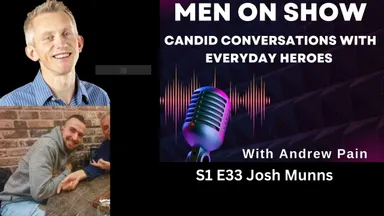
About the guest
Josh Munns
Josh Munns is originally from London but he moved up to the East Midlands to change his life around and get the support and help he needed in my battle with addiction.
He is currently volunteering his services through cutting hair for the service users in some drop in centres, he is also on a course at the minute doing a Level 2 youth course to become a youth worker.

Hosted by Andrew Pain
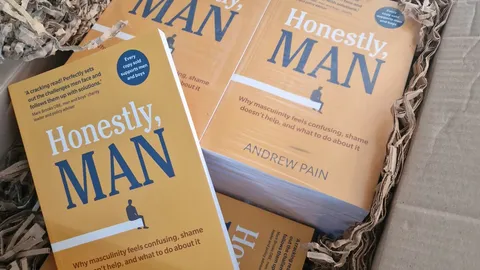
Andrew Pain is a Mental Health & Resilience Keynote Speaker who speaks from lived experience on resilience, burnout and workplace wellbeing. Host of the Men on Show podcast, author of the book Honestly, Man, and a TEDx speaker. Member, International Coaching Federation, and Mental Health First Aider trained.
Never miss an episode
Candid conversations with everyday heroes – ordinary men doing extraordinary things.