Men on Show · Episode 32
Men, and Closing the Education Gap For Boys with Andrew Hamilton
- 3 July 2024 .
- 43 min .
- Hosted by Andrew Pain .
Dr Andy Hamilton is a research associate with the Taking Boys Seriously (TBS) project at Ulster University.
Andrew hosts this podcast. His own keynotes are on burnout, resilience, imposter syndrome and difficult conversations.
In this episode
About the conversation
www.ulster.ac.uk/tbs Written evidence from TBS research that has recently been published by the UK Parliament Education Committee for their Inquiry into boys' engagement and attainment in education is also available from this link:
Key points of the episode
- His experience in growing up in Northern Ireland.
- Good relationships with his family growing up.
- How he did not know what he wanted to do while growing up (and one word from a confidante changed that).
- How at one point he truly believed he was out of his depth! #impostersyndrome .
- Why calling men "Toxic" as in Toxic Masculinity is ultimately not helpful, and a useful reframe.
- How the relationship with their educators really affects boys.
- How the relationship to their own masculinity is not explored, and should be.
- "Local Educational Ecosystems" that encourage boys to thrive.
- How more and more people are taking boys education more seriously.
- Why there is nothing intrinsically "wrong" with these boys, but the system needs to change.
- How boys AND girls need their advocates.
- Wise and final words .
Men on Show shares lived experience and honest conversation – it is not medical or therapeutic advice. If you're struggling, you don't have to cope alone.
Samaritans: call 116 123 (free, 24/7) NHS: 111
Full transcript
Read the whole conversation
A complete, verbatim transcript of this episode – every word is the host's and guest's own; the topic headings are ours.
Welcome to Men on Show, the podcast Candid Conversations with Everyday Heroes. Join Andrew Pain as he interviews fascinating guests, ordinary men doing extraordinary things. If you love the show and you think somebody could benefit from hearing it, why not tell them about it by giving it a share on social media? Oh, and at the end of the podcast, if you can leave us a five-star rating and a review, it really helps us more than you know, and it gets this important message out to more people that need to hear it the most. Right now, enjoy the next episode. The next episode.
Hi, my name's Andrew Pain, and welcome to Men on Show. We have another brilliant guest. I'm so excited to get into Andy Hamilton's story. He's a researcher, a lecturer, doing some incredible stuff around masculinity, particularly young men. I really want to get into that. He's a research associate on the project, Taking Boys Seriously, the Taking Boys Seriously project. I want to unpack some of that. But also his background in community and youth work is phenomenal. I know your PhD was in youth work and peace building, which is kind of really cool.
What a fantastic sort of topic for a PhD. So it'd be good to understand what some of your findings were in that. So really looking forward to hearing more from you, Andy, welcome to the show.
Great, thanks, Andrew. Great to chat with you today.
Growing up in Northern Ireland
Cool, so just like starting off before all this incredible work that you're now doing, tell me about yourself growing up as a young man in Northern Ireland, presumably.
Yes, I grew up in Northern Ireland. I was born in 1991. So I was born at the tail end of the period known as the Troubles, the 30 years of violent conflict. For me, I was very sheltered from that. My mom and dad grew up in a very working class area in Belfast, and I would have experienced a lot of the conflict, but then moved away to a more middle class area, partly to get away from all of that.
So it wasn't until I was a teenager and I started volunteering in a youth centre in a loyalist estate in North Belfast that I started to realise how different my life growing up was from a lot of other young men who were experiencing this constant threat of violence just within the communities that they were in. And those working class communities were much more exposed to the conflict legacies of kind of paramilitary activity and sectarian violence and transgenerational trauma.
And still today, that's the case. But middle class communities express their sectarianism in more subtle ways. And so I was a product of a education system which is segregated along kind of Catholic and Protestant lines. It wasn't uncommon for young people to have an exclusively either Protestant or Catholic friendship group. So until I went to uni in 2009, I only had one Catholic friend. But growing up was a lot of fun. I think what stands out for me is there was 13, there's 13 of us in the WhatsApp group, all male friends, really solid.
We've been friends since primary school. And still to this day, continue to meet up and hang out. And there's been lots of weddings and birthday celebrations over the last decade, which always brings us back together. So my childhood was very positive, but had that dimension of kind of being unaware of all this conflict around us.
And good relationship with your dad, also positive male role models from what you can remember.
Read the rest of the transcript Collapse transcript
Yeah, my mom and dad were incredibly hardworking. My dad would come home from work on a Friday, as soon as he could get home and hook up the caravan and would be off to another campsite for the weekend. And so we lost a really good experiences growing up, just getting away and being out and playing football with whoever happened to be there. But yeah, mom and dad were brilliant. I've got an older sister as well. And then when I was eight, I found out I was gonna be getting a baby brother. And so that brought lots of excitement, realising I was gonna be a big brother. So yeah, really, really supportive family.
Becoming a youth worker, then a researcher
So academically wise, obviously you've spent a lot of time already in academia. I mean, I'm 49, so I've had a very varied background. I'm looking at you thinking you can't be as old as me because you look very young and youthful. And all this research work that you've been doing, was there something that called you to be a researcher in this area of youth and young people? Or was it kind of always in you, something you always wanted to do? Or was there like a moment that triggered you thinking, actually, this is where I wanna go with what I'm doing?
Yeah, well, first of all, it's amazing what a filter can do on that. But yeah, so I'm 33 and growing up, I didn't really know what I wanted to do. I always enjoyed school, always enjoyed working with young people. And it was one day, my youth worker, David Cabin, said to me, you'd be a really good youth worker. And for me, that was the light bulb moment that I thought this is what I wanted to do.
And so when I look up to things, I'd be good at it. I went to a grammar school. And so one of the things was there was this high expectation that you go to university and you'd enter a career that would be a high earning job. And so my careers advisor was a bit baffled when I told him I wanted to be a youth worker. And he said, would you not just do that on the side?
And that's what I wanted to do. So I went to uni and did the community youth work degree. I found that really helped me understand more about youth work and what it was I was trying to do. And I saw myself as an educator using informal education methodologies that were really transformative, particularly for young people who were finding education very difficult. It was a way of working with young people in a way that motivated them and engaged them and helped them see their potential.
And so I never intended to then go back into academia. I was working in that youth centre in North Belfast and then a PhD opportunity came up that was funded and a few people encouraged me to go for it. And it was on the theme of youth work and peace building. I remember the first six months of doing that PhD. There was multiple times I sat by myself crying, just in floods of tears, thinking I'm way out of my depth here.
I don't know what I'm doing. And I've made a monumental mistake leaving my job as a youth worker. But I had three great supervisors, Mark, Liz and Chris, and they were constantly encouraging me and that kind of finally sunk in. In terms of the topic and the research area, peace building was kind of not that important to me at first. It was more the youth work I was interested in and exploring that more. But very quickly I realised peace building was crucial.
And actually as a youth worker, I had always been a peace builder as well. And for a lot of youth workers in contested societies, I realised peace building is part and parcel of our work and what we're doing because of our commitment to social justice and social change. And then when I finished the PhD, the research post came up with Taking Boys Seriously. And again, I was really interested in that because of my work that I've been doing in the youth centre and working with a lot of young men who were the young men who are behind those statistics of low educational attainment and disengaging from education and failing in education and all these narratives that surround them. And I was really interested in bringing a research lens to that kind of practice base I already had.
Feeling out of depth, and peace building
So what for the PhD was youth work and peace building? Just if we step back a couple of steps, you mentioned being in tears multiple times, you're out of your depth. Was that out of your depth in terms of the complexity of what you were exploring in your PhD? Or was it just out of depth in terms of, I mean, I imagine with PhD, there's just so much self-generated study and making your own. That must be probably quite lonely, I suppose. But what was the struggle that prompted you to be in that position of sort of breaking down multiple times?
Yeah, I think it was feeling directionless, not knowing where I was going and feeling like this PhD was a massive thing, and coming back to academia was a massive thing. And I felt a bit inaliquate at the time and unsure of where I was going and kind of like I was going to get found out, found out that I should never really got this. And I guess for me, growing up, as much as I had a really good childhood, I've always had quite low confidence.
And it was youth workers who started to see me and help me see stuff in myself, which moved positive things and built my confidence and built myself a sense of self. And so that, for me, was one of the reasons of going into youth work, you know?
It sounds like that doubting yourself, feeling like you're going to get found out, we know that that really kind of describes what imposter syndrome is, and you feel like you don't deserve to be in the position you're in. You've blagged your way there somehow now. It's all about to come crashing down around you. I mean, 70% of people struggle with imposter syndrome, so it's quite common. My own research suggests 85% of people struggle with it. So I mean, it's a common thing, and I guess it just shows you're normal.
I mean, that's the thing. Even the most confident people struggle with it. But in terms of your actual findings on peace building, if there were some takeaway tips that would be helpful to anyone listening to this podcast, what were your findings? How would you kind of summarise your findings in sort of a paragraph or two?
Yes, we find that there was four distinctive few points that youth workers gather around when they approach peace building work with young people. Two of them were more focused on harmonising, bringing young people together to kind of build friendships from across the lines of division. And two, which were more focused on politicising, on encouraging young people to become politically engaged and become critical thinkers. And our analysis was really the past 30 years of peace policy with young people has been focused on harmonising.
And while at the height of the fighting conflict of the troubles, that was quite a radical thing. 25 years post the Good Friday Agreement, which was signed in 1998. We should really be developing this practice a bit more and thinking about how we help young people engage in conversations that are challenging and difficult and discomforting about the future of this place and their role within it and the competing national identities that exist. And that challenge was really not a challenge that I was kind of putting from above to the sector.
It was that as well, but it was a challenge for my own practice, reflecting on the work I had been involved in. It was all that kind of harmonising stuff. And as I think back, I think of all the missed opportunities to develop that work a wee bit further and think about how young people could become more politically engaged.
And politically engaged, but as you say, using critical thinking, developing their critical thinking. Because on the one hand, I suppose we could say we want all our young people to be much more engaged, but if the vast majority of their information they get from TikTok, for example, and we know that social media has polarised debate, that without that critical thinking side, that could create a very difficult dynamic. I mean, it feels like what we receive on the media is that people are highly politicised in the United States, but perhaps not so much critical thinking when you look at some of the debate and narrative.
So with social media being such a big thing, how does one develop the critical skills of young people? Do you just get them role playing to debate? And what do you do to improve that?
Yeah, there's loads of creative methodologies that youth workers are using with young people around that. We're kind of observing some practitioners who are using this kind of fake news approach and a whole session around, like, how do you know if news is fake or real, and how do you kind of research that for yourself and come to your own conclusions? So I think practitioners are doing that all the time. Sometimes that's just through conversation and dialogue and start to challenge narratives that are kind of really embedded and helping young people to encounter people who think differently from themselves, whether that's other young people or other adults who are involved in different organisations.
And using the term politicisation, we realised was a bit contentious, but in some ways, for us, it was about reclaiming it. So politicisation can be pejorative and you just end up with polar opposites. Whereas we were kind of trying to embed that sense of politicisation as in, as you were saying, the kind of critical thinking, the dialogical approach of young people coming together collectively to kind of critique policies and practices which are happening, which are maybe excluding others, and which are maybe not very inclusive and equitable and things like that.
Why toxic masculinity is unhelpful
That's very interesting. And as a lecturer, and with your background, the research work you're doing on the Taking Boys Seriously project, which I want to sort of shift to slightly, do you think overall, you know, we hear so much around toxic masculinity, that phrase. I'm not a keen fan of that phrase on its own. Do you think when you look at the behaviour of the young men that you see, when you look at your own research work, and obviously the people that you're talking to and engaging with, do you think like behaviour of young males is getting worse? Or do you think actually it's just the media narrative is highly sensationalised? What do you think is going on?
Yeah, I think I agree with the term toxic masculinity. We find it to be hugely problematic, because suddenly young men are thinking, am I toxic or who else is toxic? And labelling people as toxic isn't gonna help bring about any positive change. Of course, there's behaviours and traits that need challenged, but that kind of labelling, especially of young people as toxic is really unhelpful. I think it's hard to say if objectively things or behaviours are getting worse or not.
I think there's always moral panics around kind of male violence and gangs and paramilitarism and knife crime and things like that. But I think that needs to be contextualised within the reality that the vast majority of boys and young men will never be involved in any of these behaviours. And that there's lots of really good preventative work going on that creates opportunities for young people to make decisions that don't involve violence. And that for those that are involved in violent activity or whatever other harmful behaviours it might be, that there needs to be really good, targeted, restorative programmes that create pathways out of those things.
In our research, we use the term appreciative inquiry. And we use that as a methodology. And it's a kind of act of resistance really against this kind of narrative around men as problematic and toxic and troublesome and violent. And we use it to say, we're only gonna look at and elevate those things that are positive and life-giving. And those cases where it's showing boys and young men an impositive light, because we're trying to swing the pendulum the other way, because it's swung so far.
I think the media and policy at times does frame overwhelmingly boys as negative and in deficit rather than positive. So that's one of our kind of commitments in Taking Boys Seriously is to reframe boys and help them see themselves in a positive light and encourage others to do that also.
Yeah, because I worked in a school actually last year. I think I've mentioned this on the podcast before in another episode where they banned the phrase, toxic masculinity, among the teachers. Obviously, if the kids are gonna talk about it, they'll talk about it, but very much of the opinion that it's like a wall builder, not a bridge builder, and also that the behaviour of their female students is as concerning to them as the behaviour of their male students.
But I suppose with the toxic masculinity phrase, our young men are going up with some of these, I mean, the absurd TikTok thing recently of, would you rather be trapped in a forest with a bear or a man and women are just off the cuff? I mean, there's a flippant response as if a woman really sat back and thought about it. Obviously, you'd rather be trapped in the wood with a man because he's more likely to save you from the bear.
He'll probably lay his life down for you and help you build a shelter and get out the woods. But I think when those kinds of things take off, and of course, the headlines were the vast majority of women would prefer to be in a forest with a bear than a man, and I think about my boys growing up, it's just not helpful. I think about the impact on them, on their self-worth, and they're trying to work out who they are.
I do hear sort of other, rather than toxic masculinity, there's organisations talking about progressive masculinity, restricted masculinity. I was talking to one chap recently on a podcast recording, it's not gone live yet, where for him, he doesn't like any of these terms, what he likes is talking about gentlemanly code. What kind of gentleman do you want to be growing up and then giving, and I quite like that, a gentlemanly code. What does that mean? Understanding, of course, that everybody displays destructive behaviours from time to time.
For me, toxic masculinity is a lazy phrase. Oh, it's toxic masculinity. It doesn't really get to the heart of what the problem is. So in terms of the Taking Boys Seriously project, what is that, what's the thinking behind it? What are you trying to achieve? What are you finding? Tell us about that project.
The Taking Boys Seriously project
Yeah, so it originated in 2006 in Northern Ireland. It was jointly funded by the Department of Education and Department of Justice here. And it was a response to, at that stage, about 20 years of data showing that boys who are entitled to free school meals, which is an indicator of poverty, have consistently been on the bottom rungs of educational outcomes. Not just in the UK, actually, it's a bit of a global phenomenon. And the research was trying to identify what practices were happening that were able to engage these boys in a way which was helping them to not just improve their educational outcomes, but improve holistically and kind of experience better outcomes in education and in their communities as well.
And the context of the paramilitarism piece in Northern Ireland was part of that as well. And that's why the Department of Justice had a particular interest in it at that stage. And the research has been going on now for 18 years. And over those years, we're identifying ways in which educators, both formal and informal, are working with boys to bring about change. And yet the backdrop is that the situation hasn't massively improved for boys experiencing what we call compounded educational disadvantage.
What we have started to find is that relationships between boys and their educators is a fundamental factor in how they experience education that comes up they get. And the other piece that we, well, two other pieces we've identified is that exploring and engaging with masculinities is something that boys don't get a chance to do in school, more so maybe in youth centres, but it's largely missing from their experience of school. And yet it's that stage of adolescent development where particularly focused on the experience of adolescent boys, where they're trying to work out their identities, they're trying to work out how to be a man and what does it mean to be a man that they would really benefit from having those conversations with adults that they trust.
There's a gap there. And the third thing that we've identified is that these kind of relational approaches and gender conscious approaches that engage with masculinities are most effective when they're embedded within an ecosystem that's making change. So one of the things that you'll hear is teachers becoming frustrated that they're being asked to do another thing, that they're being expected to solve all social issues for young people. And so we look at, well, it's not just the teachers, it's not just the schools, it's the youth services, it's the Department of Education, it's the education training inspector, it's parents, it's communities.
How do we engage all those people who surround boys and who when you speak to them, they want to have a positive impact on the boys in their community? How do we engage them in a way that can support boys to thrive, especially those boys who are experiencing this compounded educational disadvantage? So that's what we've focused on over the last number of years is trying to activate localised educational ecosystems that are supporting boys to thrive.
Really, really interesting. Yeah, I mean, certainly in schools, I was reading a piece from the Cambridge Press Assessment that, you know, in the majority of topics barring maths, boys are falling behind girls across the board. And I'm imagining that that's worse for working class white boys and possibly those from ethnic minority backgrounds as well, but they are falling behind. And it astounded me, it was a recent piece of research, that the key conclusion from that piece of research was that actually because boys are still out performing girls in maths, we need to be concerned about the impact on getting women into STEM employment.
And it staggered me that that was the key conclusion from a piece of research that showed the boys are falling behind girls in every single subject across all age groups, across the school level. And of course, I'm all about encouraging women into STEM employment. But do you think that boys' educational needs is being taken seriously? To me, that Cambridge Press Assessment, Bonafide Educational Research Organisation, that is not a piece of research that's taking boys' educational needs seriously.
Do you think that's indicative of what you see more widely? Or do you think now people are sitting up saying, hey, 57% of UK graduates are female, boys, it's 43%, men, it's 43%, the gap is getting bigger. Do you think there's a real need to do something? Are people beginning to get on board? Or do you think it's still isolated voices like yours saying that?
Boys' education and the system
Our experience is more and more people are taking boys' educational outcomes and experiences seriously. And partly that's because our research has been helping to kind of create those ecosystems of change and bringing on board the Department of Education, the Education Authority. And we recently submitted evidence to the UK Parliament Select Committee on Education that are undertaking an examination of boys' experiences in education and outcomes. And so I'm optimistic in a sense that we're reaching tipping points for change.
There was a recent report here in Northern Ireland called A Fair Start. And out of eight key areas, it identified maximising boys' potential as a particular area of focus. And it needs to stay on the agenda because for the past 30 years, nothing significantly has changed regarding educational outcomes for boys. And you mentioned higher education as well. That's another area in which a recent review of widening access and participation in Northern Ireland identified that young men from working class, well, they call it Dessal 1 and 2 communities, the top 20% of most disadvantaged communities here in Northern Ireland, young men from those communities are seriously underrepresented in higher education here.
And there's a huge retention issue once they get to higher education, that imposter syndrome thing, that cultural change of being in this educational environment is so foreign to them, and they don't have the right support in place. One thing we would say is there's nothing inherently wrong with these boys. And sometimes that's the conclusion, or that can be the feel, the unspoken feel of some of the policies and interventions. It's our systems that need to change.
And I think there's different gendered issues. So actually, when you look at free school male entitlement, it's not massively better for girls who are entitled to free school meals. They're doing a little bit better than the boys, but in general, it's only slightly better. So boys and girls both need advocates and need their specific needs to be identified and action to be taken. And Taking Boys Seriously, our primary focus, because of the evidence and because of the kind of context here within the wider UK has been around boys who are entitled to free school meals, experiencing what we call compounded educational disadvantage.
And when we're looking at the gender lens and the gender conscious piece, it's about masculinities and creating opportunities for them to engage with what it means to be a man and making sure that becomes a stronger aspect of education curriculum, both in formal and informal education sense.
Yeah, because I wonder when I think about the whole educational system, so humour me here, because I'm not an expert on these matters, of course. But to me, obviously, we know that in our schools in the UK, in the primary school, you've got, I think it's about 15% of primary school teachers are male. I know that goes up in secondary school to about 35%. So there's potentially an issue of trying to attract more gifted men into that space.
I mean, I remember when I was at school, going back a long time here, I really didn't like the male teachers. They weren't, they were either boring or just really scary, neither of which helped me to learn. But gifted men into the education sector, perhaps that's a way of moving this forward. So there's more effective male role models, relational male role models. I also think for me, the whole system of education, I'd be interested to get your take on this.
For me, the danger, I suppose, is that we do lots of small things that probably help a bit. But is there a question that actually the whole system here for boys is not set up well? If you think about when a teenager boy, I remember when I was a teenager, we will have 25 to 30 times more testosterone in our system than equivalent age girls, and yet we'll be in the classroom hour after hour. Whether we're in a boys school or a mixed school, we're still in the classroom hour after hour.
I remember being bored, not concentrating at all, but for virtually my... I mean, if it wasn't for my parents helping me at home, I would not have got the grades I did. So for me, there's some biological challenges here. Is the system that we've got really working? But then to change the system, I mean, that would cause... I mean, what does one need to do? I mean, that would cause a whole rethink. No one's gonna do it.
Who's got time for that? So I mean, what do you think of that? Do you think that to create an education system that works for boys, the scale of change is so massive that it's unlikely? So let's just focus on a few small wins. Or do you think, no, we need to go for this and create this massive change? Or do you think really the testosterone doesn't really play out? It's not a thing.
Local practice and the ten principles
Yeah, I think the scale of the challenge of changing the system can be so daunting that some people would just say, what's the point of even trying? We kind of believe, well, let's try and reframe it where every person within this system, whether you're a teacher or a principal or an inspector or a youth worker or a researcher, policymaker, everyone has a gift that they can bring to change in the system. And if everyone kind of brings that gift, then we can start to see change.
And so our research has kind of highlighted local practices which are trying something new, trying something different. So I'll give you an example in Monkstown, a place in Northern Ireland. They've got a boxing club, Monkstown boxing club that runs youth work programmes. And across the road is Abbey Community College and one schools. And each year the school identifies 10 boys who are not on track to reach the kind of government target of 5A star to see GCSEs.
So they get a split timetable between the school and the youth centre and they go there and they do three days a week there and two days a week in the school. And the teachers come over from the school to the youth centre. And they have the support of the youth workers. And during the, when we were talking to the boys, they were saying, we love it because we'll do half an hour maths and then we can go use the boxing equipment for 20 minutes.
And then we come back and we'll focus on something else. And so that works really well for them. They've had outstanding kind of outcomes in that, it is for boys and girls, but generally has been tended to be males that have been identified for the programme. And off those 10 each year over the past four years, that weren't predicted to get their five star A to C, GCSE, they've all reached that. And so the problem is that you can't then say that's a model that everyone needs to follow because it would be impossible.
But what we are trying to encourage is that kind of creative thinking. How can you link in with those community services or youth services or other providers to try something new? And just by the fact of trying something, you'll be making a difference because boys start to get the message, oh, these educators, these teachers are trying to do something that works for me. So while there's maybe those that'll benefit from a real specific targeted programme like that, I think in the wider sense, we have our 10 Taking Boys Seriously, Principles of Relational Education.
And we present those as a framework of kind of change in culture within schools and within youth organisations, which are directly informed by boys and educators telling us this is what works well to engage and motivate boys in their education. And rather than saying these principles need to be applied in this specific way, we say commit yourselves to taking these principles and telling boys that you're taking them seriously, but apply them in the ways that are most relevant to your context.
And part of that might be trying something new. It might be affirming existing practices happening. We spoke to alternative education providers and they loved the 10 principles because they said for the first time, they felt a research project was really understanding what they were all about. And it was about the 10 principles are about their motivations and their priorities in education. And they said, if these were being applied more specifically and intentionally in mainstream schools, we'd have a lot less referrals coming to us in alternative education.
So what we have as a research team is a framework that people can sign up to and then start to think about the issue and make sure it's on the agenda and kind of take creative approaches to taking boys seriously.
This framework, I'm gonna ask you to maybe just, I wouldn't expect you to share all 10 points one after the other, maybe like a couple of your favourite points briefly share. But if someone wanted to find it, is it easy to find?
Yeah, you get them on our web page, ulster.ac.uk forward slash TBS. So we can share that. But one of the things, Susan Morgan, she leads the research and she says, one of the most remarkable things about these principles is they're not that remarkable at all. They're things that are, that when you hear them, they seem like common sense. But when you ask the boys, do you experience these things in school? They say no, or they say sometimes or in some areas, but they want more of it.
So the first one is recognise the primacy of relationship. And the second one is about demonstrating dignity and respect. And these things have been developed in response to what we've been hearing boys say about masculinities as well. So they're talking about getting locked into power struggles with teachers and not wanting to back down when they're called out in class. So even if they felt and they knew that pursuing a standoff with the teachers is probably not going to end up well for them, they feel this pressure amongst their peers that they can't.
So if educators understand that a bit more, they might take a different approach. What I really like is number four, challenge and affirm masculine identities. And a lot of time was kind of taken over that, kind of thinking, how do we frame this? We want to affirm masculinities, but there are things that need challenged as well. And that's about opening up conversations about, what's it mean to be a man here? What are the messages that you get about being a boy?
And what are the ways that's okay to be a boy? I was doing an interview the other day with a boy in a school or a group of young men. And one of the questions we were asking when it was from a survey was around, what would you do if someone came to you in tears in school? And this young man just said without even thinking, I'd give him a hug. I just thought that was brilliant, that he didn't feel any kind of social expectation to do anything different from that.
But just opening up that space, others were less likely to say things like that, but starting to have those conversations. You find out things about the boys, that's what teachers say to us. You find out things about the boys that you never would have found out. And when we ask boys, the teachers take an interest in your life outside of school, the majority of them say no, no they don't. And yet these principals are kind of encouraging that, encouraging this kind of holistic understanding of educator-student relationships and rebalancing some of those power differentials that are built into the system.
Feeling seen and heard in school
Yeah, and of course that's hugely important, isn't it? When we think about not just schools, but our workplaces as well. And we make judgments about, I'm just picking a name out of the hat here, John, who's lazy or difficult to work with. And it's like actually, we don't really know what John's experiencing at home. What we, to say, well, you can compartmentalise, don't bring your home stuff to work, whatever. That's just a nonsense because of course it's gonna impact us.
So I think that's a really good starting point, full stop is to understand with many of these boys that maybe on the one hand, you might think they're a complete pain in the neck because of their behaviour, actually trying to put that to one side and rather than saying in your mind, he's a pain in the neck, more saying, I wonder what's going on for him.
Absolutely. So like when we've been doing the research and testing out these principles, we developed them from case studies with boys and educators, and then we trialled them with over 440 boys and 120 educators. And we can ask the boys what they thought about them, what the educators thought. And one young man, we'll call him Colin, he's 14, said, I learn better when I feel seen and heard. And so that created a kind of idea for us or a theme for us in the research about feeling seen, known and heard.
And it's not simple, yet it takes a lot of work. 91% of the educators that we asked around how important relational approaches are in the practice, 91% said, yeah, they are. But then when we're following that up with interviews, there was numerous teachers said to us, but it's not taught. This kind of interpersonal way of working isn't taught or valued. It's a really highly skilled thing to be able to do. And we need more of it in initial teacher training as well.
So, and the other piece just around like emotions and understanding where people are coming from. We talked about facilitating emotional learning spaces with boys and that was because 75% of the boys we asked, if you felt stressed or overwhelmed in school, would you talk to a teacher about it? And 75% said no, they wouldn't speak to a teacher. And 45% said they rarely or never get the emotional support that they need in school. And so it highlights, you know, that's boys not seeking out emotional support is kind of identified in lots of research areas.
But it's our response to that. How do we deal with that then? And so this notion of facilitating emotional learning spaces, which is like changing the culture and inviting those conversations, well, it's individually or in small groups or in classes. And we find that youth workers are able to do that in a different way. And sometimes schools find it helpful to bring youth workers in to facilitate sessions about that. And it can be hugely beneficial, then, that collaboration between schools and youth organisations.
I mean, you're doing some amazing stuff. And there were so many other questions I was gonna ask you, but in some ways, I think you've given so much rich insight anyway through the Taking Boys Seriously project. I love those 10 principles. Yes, on the one hand, quite simple, but actually each one, there's so much richness inside each one, so much to unpack if you're really making that a reality. And I know for me as a kid, as a teenager, I learn best when I'm not afraid of the teacher, when I'm not afraid to say I don't understand.
And that's partly the teacher, and it's partly the people in the class not falling about laughing, making me feel stupid. So when I feel safe, not afraid to do it. And when I'm not bored, if I'm bored, I just don't learn. The feeling seen and heard for me is probably not quite so important. If I'm entertained and not afraid, I generally will learn. And if I can see the value of it as well, I suppose that's the other challenge for a lot of young guys and ladies.
If you're in a lesson, you think, oh, how's this helped me? What, so maybe that sense of trying to make it very clear what the value is to their day-to-day lives of what they're about, what they're learning about is really important.
Yeah, one of our principles is about connecting boys learning the context and it's that piece exactly. And it's about understanding where they're coming from, but then also helping them make connections with what's the relevance of this to my life. Yeah.
Getting in touch, and a message of hope
So, I mean, I'm super grateful for your insight. I mean, I'm just, your work is just incredible. Massively, I want to encourage you in that. It sounds like, I mean, it's work, it's life-changing on such a grand scale. If you had a message of, if you could give like a two-sentence message of hope to, because people listen to this, they could be young guys or they could be older guys. So just to the male population, if you could give a two-sentence message of encouragement or hope, what would you say to the men listening to this podcast episode?
That's a lot of pressure to give an inspirational message. Seek out those people who you can be fully yourself with, because life throws lots of challenges, and in those moments, it's helpful to have people who fully understand you and you can be fully yourself with, and then try and be that person to someone else. That's what's made the difference in my life, and that's what I try and make a difference in other men's life as well, is be that person that people know that they can turn to at their lowest points, but also to celebrate successes as well.
That's amazing. Consider, I didn't, you know, I tend to put people on the spot with that. That's beautiful. I love that. What a lovely way. Inspirational, hopeful, from the heart. I love that. So thank you so much, Andy, for your time. And the very last question then, you've given us a brilliant way to conclude the podcast. A lovely message there. How can people find you if they wanted to get in contact to find out more about your work? Where's the best place to find you?
Yeah, the best place is go through our website, ulster.ac.uk forward slash TBS, and you'll find loads of information about the research there and all our contact details as well.
Amazing. Brilliant. Well, I shall certainly be doing that as well. Andy, it's been a pleasure having you on the show. Thank you so much for giving it your time.
Thanks Andrew.
Thank you for listening to Andrew Pain's Men on Show. If you could leave us a five star rating and short review, it would be really, really appreciated. It helps us get this important message out to more people that need to hear it the most. See you on the next episode. Thank you for tuning in.
Can.

About the guest
Andrew Hamilton
Dr Andy Hamilton is a research associate with the Taking Boys Seriously (TBS) project at Ulster University. TBS is a longitudinal action research initiative spanning over 18 years. The research works alongside adolescent boys and the educational ecosystem that surrounds them to transform experiences and outcomes in education, particularly for those young men faced with compounded educational disadvantage. Andy’s background is in informal education. His doctoral research investigated the multiple ways in which youth workers approach peacebuilding with young people in Northern Ireland and stemmed from over a decade of experience as a practitioner and trustee in the youth sector. His current role with Taking Boys Seriously brings together multiple research interests including equity and equality in education, gender and masculinities, participatory action research, youth in contested societies, and applied social and political theory. It also continues to inform his own practice as a volunteer youth worker with young people in north Belfast. More information on Taking Boys Seriously including a suite of research articles and the TBS principles for working in a gender-conscious relational way with boys and young men, can be accessed via our website:

Hosted by Andrew Pain
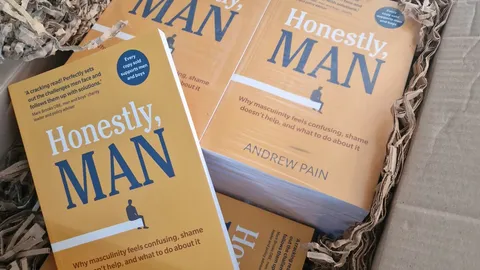
Andrew Pain is a Mental Health & Resilience Keynote Speaker who speaks from lived experience on resilience, burnout and workplace wellbeing. Host of the Men on Show podcast, author of the book Honestly, Man, and a TEDx speaker. Member, International Coaching Federation, and Mental Health First Aider trained.
Insights
Read next
Never miss an episode
Candid conversations with everyday heroes – ordinary men doing extraordinary things.