Men on Show · Episode 30
Men, Grenfell and PTSD with Ricky Nuttall
- 5 June 2024 .
- 57 min .
- Hosted by Andrew Pain .
Ricky Nuttall - Mental Health Advocate | Motivational Speaker | Former Firefighter and first responder at Grenfell Tower | Published Poet | Actor Mental health advocate, motivational speaker and public voice, focusing on raising awareness on the importance of social and workplace mental health and well-being.
Andrew hosts this podcast. His own keynotes are on burnout, resilience, imposter syndrome and difficult conversations.
In this episode
About the conversation
Media appearances including; BBC Breakfast and This Morning talking about Grenfell, his role there and his subsequent mental health struggles.
Key points of the episode
- Early influences of his life, with some contrasting experiences.
- How "normal" is not necessarily normal apart from the individuals perception.
- His theory on why people that have been through trauma are drawn into potentially dangerous jobs.
- The culture change in the fire service - in some ways… and what still needs to change.
- Grenfell. His experience.
- His experience of PTSD. Brilliantly articulated.
- An authentic message of hope.
Men on Show shares lived experience and honest conversation – it is not medical or therapeutic advice. If you're struggling, you don't have to cope alone.
Samaritans: call 116 123 (free, 24/7) NHS: 111
Full transcript
Read the whole conversation
A complete, verbatim transcript of this episode – every word is the host's and guest's own; the topic headings are ours.
Welcome to Men on Show, the podcast, Candid Conversations with Everyday Heroes. Join Andrew Pain as he interviews fascinating guests, ordinary men doing extraordinary things. If you love the show and you think somebody could benefit from hearing it, why not tell them about it by giving it a share on social media? Oh, and at the end of the podcast, if you can leave us a five-star rating and a review, it really helps us more than you know, and it gets this important message out to more people that need to hear it the most. Right now, enjoy the next episode. See next episode.
Hi, my name's Andrew Pain, host of the podcast Men on Show. I am delighted to have Ricky Nuttall with us this evening. One of the first 250 responders at the Grenfell tragedy. I want to unpick some of that with Ricky. He's a mental health advocate, motivational speaker. He's actually a fantastic poet. I've read some of his stuff, it is superb. Ricky, welcome to the show.
Hey, Andrew, thanks very much for having me on, man. I've been looking forward to recording this with you. I'm glad we finally got a date in the diary to do it.
A fractious and violent childhood
Yeah, and it's evening as well. So I've sort of, my lighting's all over the place. I normally record in the daytime. So I might look a bit unusual to the viewers list. Well, the viewers, not the listeners, obviously. Let's get straight into this. So first question, I ask all guests, just tell us something about yourself growing up. Is there stuff that really stands out in your memories as a boy, whether that's good, bad, indifferent? Is there stuff that stands out? How would you describe your childhood?
Fractures is how I would describe my childhood. I think that as you grow up, your norm is your norm, right? So you see it as a norm. And it's only when you grow up and become older and meet other people that you start to realise that everyone's had a different kind of childhood. Not everyone's had a different one to me, but we all have different childhoods. And what I have viewed as normal, other people would describe it as extremely violent.
Case in point, my girlfriend, when we first got together and we were chatting about our childhoods, she said, wow, you've had so much violence in your life. And I sort of went, well, no, not really. And she was absolutely bemused. She was like, well, you have, you've had loads of violence. And I did, you know, I had a physically violent stepdad. I moved around lots of different homes because their relationship wasn't brilliant. So there were times when I'd be living with my aunt for three weeks and I'd be at a different school for those three weeks.
You know, I tallied it up one day and I've lived in over 20 houses in my life and I'm 43. I've lived in several countries. My dad was in the army when I was younger. So we travelled around a little bit then. And I had an older brother who was nasty. He was a bully. So not only was I getting, you know, the physical violence from my stepdad, but I was getting it from my older brother as well.
So there was very little respite from that. And then when I, due to the violence at home, I went to live in London with my dad when I was 12 years old and I left a very good grammar school, I went to a very bad in a London school. And it was a completely different environment for me. I was one of six white people in the whole school. And it was just a huge culture shock. And subsequently there was lots of violence in that school as well. So yeah, my upbringing was fractious and violent.
And how do you think that violence shaped you as a, but what do you think the impact of that was on you at the time?
Read the rest of the transcript Collapse transcript
At the time, what it taught me was how to avoid violence without being violent because violence scared me. I was scared of what was going on around me. So I learned to be a bit of a clown. I learned to be funny. I learned to chameleon myself and, you know, only show the right amounts of the right bits of me. That became quite a balancing act because what effectively I had to do was only show elements of me and fake other parts of me without losing a sense of self, which for anyone is a tall order.
But for a child, I think it's very difficult to expect a child to be able to do that. But I managed it one way or another, but it definitely left me with insecurities growing up and into young adulthood, which are still things I've had to unpack recently. And it left me with a fear of violence as well, which is part of the reason I, when I joined the fire brigade, I started to box.
Okay, and the box, is that a way of thinking that you can self protect in future?
It was more a case of hitting my fear head on. The thought of violence scared me. So I thought, right, well, then I'm gonna put myself in a position where there is no escape from it and teach myself to be able to cope.
To cope. That's really interesting. And within that violence, and it sounds like beyond the violence, the upheaval, the changing of schools, the moving around of households, that has a big impact. That's really tough. That is a lot to deal with as a kid and growing up. And within that, to me, it sounds like chaos. Yes, violence, but an awful lot of chaos. Did you have any like really positive male role models within that time?
Role models, and men in riskier jobs
No, not really. I had elements of positivity from some of the male role models, but I was one of five boys. And the one, the only one that was older than me was the one that disliked me and was a violent bully. My stepdad was a violent bully. And my dad, whilst he wasn't a violent bully, he was by nature quite an aggressive man. He worked, he'd left the army by this point. And when I moved to live with him and he was then working in a prison service as a prison officer.
So, you know, he wasn't the most patient person and he was, you know, he had a very stressful job. So he had a stressful life. But I guess as an adult now, I'm always mindful of that when I'm around my son, because it isn't a child's job to pay for the stress or to bear some of the stress that the adult takes on in their job choice. It really isn't. And you know, at the time, again, it's just your norm, isn't it?
That's what this is, what life's like. And it's only when you become an adult and speak to other people and they say, well, my dad wasn't like that, or my mom wasn't like that, or do you start going, oh, right.
Yeah. Yeah. So within this, at what point did you, you've mentioned being a firefighter, what led you to become a firefighter? Was it a kind of thing where, like, as a boy growing up, they always seemed like heroes? Was it, like, much later in life where you thought, do you know what, I'm gonna go and do this? Was it the realisation of a longer dream? What kind of took you into that line of work?
I told my mom when I was, I don't remember this, my mom tells me this, but I told my mom when I was three years old that I wanted to be a firefighter.
Oh, cool. That's so cute.
And growing up, I loved Lego growing up, and when I, you know, whenever I got Lego, I asked for Lego. It was always fire stations, fire engines, fire this, fire that. My older brother, ironically, always went for the police cars and police stations, and that's where he spent a lot of his time.
So you were a fan of Fireman Sam, I presume then?
No, do you know what? I never really watched Fireman Sam. I didn't really watch any firefighter cartoons or anything for some reason. I don't know why.
He's the best equipped firefighter in the world.
I have heard this.
He lives in a tiny little village. Nothing ever happens and yet he has a jet ski, a helicopter, engines coming out of his ears.
What worries me is there's that naughty kid that lives there that always causes all the trouble and no one's thought to preempt any of it. I mean, it's insane.
Yeah, no. It's very unrealistic. We love Fireman Sam. I'm thinking about the role as a firefighter. According to the Health and Safety Executive, 96% of workplace fatalities are men. And there is this view that men are drawn to riskier jobs. Firefighting, I presume, would be one of those. What do you think draws men into these riskier roles? Do you think they're naturally, is it society, is it something in us that's naturally pulling us to the danger?
Well, from a psychological perspective, I believe, and if someone out there is watching and tells me I'm wrong, fair enough, please leave it in the comments. I've been led to believe that people, men particularly, that have come from traumatic backgrounds often gravitate towards jobs where they're more likely to come into contact with that same trauma. And I'm not entirely sure whether that's a familiarity thing. We know what this is, we know how to deal with this, so that's what we'll stick with.
Or whether it's a case of, I don't want other people to struggle when I'm, like I struggled, so I'm gonna try and help people. I wanna be a saviour for people. And I wasn't saved, so now I wanna save these people. And maybe it's a combination of all of the above. I'm sure there's a much smarter, deeper, more intellectual response in there somewhere, but.
Yeah, no, I mean, just to add to that, not contradict it at all. My understanding, obviously, we have 20 times more testosterone in our systems than women, generally speaking. And one of the consequences of having that higher level of testosterone is we are more prone to riskier behaviour. So for me, the way I see it is there's probably some just natural human biology in there linked to testosterone. I hadn't heard the trauma link before, but that makes, and I love hearing things I haven't heard before, so I'll go and find out about that.
But that is an interesting insight. Talking about being a firefighter then, and obviously this is Men on Show, and I love to talk all things masculinity. What's life like in the fire service being a man? And just to provide some context to that question, are you expected to be suffering? Is there any opening up about weakness and vulnerability? We know that psychological safety is this thing where if you were struggling with something, you could just open up and say it, and people wear their vulnerability on their sleeve. Is that the case? Was that your experience of being a man in the fire service?
I kind of joined the fire service at a time when things were changing. So I've experienced a little on either side of the fence.
Okay, interesting.
Culture change in the fire service
So when I first joined, I thought I was joining an environment that was gonna be alpha male packed, very masculine driven, all of it. When I say masculine, I mean the old world definition of masculine. Don't talk about feelings. Nothing bothers us. We never cry. We're just doing what we're doing and we're men and we get on with it. And if things go wrong, nevermind, we just get on with it. And that's what I thought the job was gonna be.
It isn't necessarily what I wanted, but I was aware that that was gonna be a package deal. If I wanna do the job I've always wanted to do, I'm gonna have to accept that that's how it's gonna be. And it was like that. However, there was a distinct undertone of insecurity and weakness in the majority of the men that still behaved that way. They were the easiest to offend. They were the easiest to upset. It's just that their upset wasn't tears, it was anger.
Their response wasn't a strongly worded email, it was violence. So it wasn't so much that they were any more masculine than the next man, it was just that they still exhibited quite archaic responses, physical responses. And then over a period of time, it kind of changed. And people started to talk a little bit more and we realised that we sort of moved a little bit away from the dark humour, banter around the station table in the mess area.
When you get back from a bad shout, there'd be a bit of banter and a bit of dark humour. And that sort of, it did still exist by the time I left, but it had largely been replaced by people checking in with each other on the back of the fire engine on the way back, or that, you know, we'd say, that was a nasty one, how you feeling, you're right. And the other guy would be like, oh yeah, that one's going to stick with me for a while.
And then you've already broken down that first boundary. You've already kicked the fence down on the, making that an appropriate conversation and an available conversation. And you've made yourself an available person to that person. So things had started to change. Unfortunately, that was all dealt with by firefighters at ground level. Unfortunately, the hierarchy and a hierarchical perspective has not changed at all. They do very, very little. They do the tick box stuff. London Fire Brigade tick boxes.
Yes, we've got mental health first aider. Brilliant. But do you give us adequate counselling? Do you make adequate counselling available? Do you support us in our mental health if we've had a mental health injury at work? Is that classed as a due to service injury? Because we have to go to tribunals to argue our case before the fire brigade will say, yes, that's a mental health injury that happened as a direct result of a workplace incident.
Whereas a physical injury, you break your leg at station, but there's no question. Everyone saw it happen. You've broken your leg at the fire station. That's a due to service injury. A roof collapsed on you in a fire due to service injury. There's no, you don't have to fight for that, but when it comes to your mental health, you do. And that's what needs to change.
Yeah. I hope that's changing in general. You know, I often think about if you've broken your leg, you've been knocked down by a car, you're off work, you'd probably get some flowers through and a get well card. Whereas if you're off because your mental health is shot to pieces, you're probably not going to get a bouquet of flowers and a get well card. But I think increasingly you would. But I'd like to think that's changing. I think awareness is growing, but you would have thought something like the fire service, they'd be at the absolute top of their game in leading the way.
Not talking about it, and a drug problem
I think it's a can of worms, Andrew. I think that's the problem. I think the problem is if you lift the lid on it and start exploring, then what you realise is 70% of your workforce is in a mess and that requires a budget and a budget they don't have. So what they do is they go, well, we won't talk about it and you won't talk about it and everyone can just pretend we're fine.
But then I'm presuming here that as we are then trying to cope with being fine when we're not, that actually the cost is double fold anyway because absenteeism, substance abuse, that kind of stuff starts to reduce your ability to perform, early retirement, this kind of stuff.
Well, yes, to a point, I think you're right. I know I've looked at statistics that state that in an office environment, that's certainly the case. The problem with the emergency services in general, I'm gonna say, but I can speak adequately for the fire brigade, there is a drug problem. And part of the drug problem is that you are given a medical once every three years where your drugs and alcohol tested and you're given 30 days notice for that test.
So if you're taking anything other than smoking weed regularly, you can pass your test anyway. There's no random tests at station so you can turn up to any fire station in London absolutely off your head on cocaine and drive a fire engine for the day. And the only way you're going to get caught is if you crash the fire engine and the police test you, which they generally don't, or if someone at your station sees you and thinks, something's not right there, I'm gonna report that.
But because of the type of job it is, what generally would happen is that person would come to you and say, maybe you should go home. And you would then take that as a sign of, I've been clocked, I'll go home. So as far as the London Fire Brigade are concerned, there's no drug problem at all. As far as any of the fire and rescue services in the UK are concerned, there's no drug problem. But if they sent testers to every single station within the first hour of the first day of the shift, they would have no fire service in the UK. That's my prediction.
Yeah, so drug issue and obviously difficult, difficult work that you're doing. And obviously we're going to talk about Grenfell in a moment and unpack that. I'm really grateful that you're not happy to do it, but you're willing to do that. Prior to Grenfell then, because what's coming across to me is this incredibly difficult job. At ground level, as you were beginning to leave the fire service, more there's guys checking in with each other rather than just sort of using dark humour to deflect what's just happened.
So prior to Grenfell, would you have described yourself as a firefighter as being in a relatively good place in spite of that job and what you're having to see? Or do you feel that, thinking back to just before Grenfell, were you already in a bad place?
I think, yeah, hindsight is a wonderful thing, right? With hindsight, well, the best way to explain this is to give you my jug analogy. If you imagine our bodies are a jug and trauma of any description, doesn't have to be fire brigade related, but any trauma is a tap being turned on. And that trauma happening to you is your jug being placed under that tap. And so your jug is now filling up with this trauma. One of a few things need to happen.
Either the tap needs to be turned off, your jug needs to be moved away, or your jug needs to, at the very least, needs to be tilted. And some of that water every now and then needs to be poured out to stop you from overflowing. So that is remove the trauma from your life, remove you from the trauma, or if it's a fire brigade related analogy, and you can't remove yourself from that trauma because it's part of the job, you have to tilt your jug every now and then.
What I didn't realise before is that I was regularly tilting my jug through writing poetry, through talking to friends, because I've always been an emotionally open person. I've never struggled to tell people about how I'm feeling. So I've regularly tilted my jug. When Grenfell happened, it was the equivalent of someone standing that jug under that tap, turning the tap on full and then smashing the jug in half. I can't move my jug until the pieces are back together.
But as I'm trying to put the pieces back together, more trauma is coming in because I'm still working as a firefighter whilst trying to put myself back together. And it became an impossible task.
The first call-out to Grenfell Tower
So talk me through the Grenfell disaster, nightmare, tragedy. You know, when you were in the engine on the way to that, you were one of the first responders. So as one of the first responders, I'm presuming as you're going to that, at the moment that you're in the engine, it doesn't appear to be a massive problem yet. Or by the time you got there, was it already like, shit, this is kicking off in a bad way?
No, we knew on our way and we knew for two reasons. One, within a minute of being woken up, we are driving out of the fire station within 60 seconds. In that time, we wake up in bed in our pants because we sleep on night shifts. So we'll be in bed asleep in our boxes. The bells will go down. We'll get up, get dressed, go down the pole, go into the watch room, have a look at the call slip, see what appliances are on it, where the incident is, what the incident is, and then look on the map to see how we get there if we're not 100% sure.
Tear the slip off, go into the bay, put on our fire gear over our work wear, get on the fire engine and pull out inside 60 seconds. By the time we'd got to the end of the road, we were on what the fire brigade call Make Pumps 12, which means I think at the time there were six fire engines there, and we were one of six additional appliances requested. So that's Make Pumps 12. By the time we'd pulled out the station, turned right and turned right again, a second message came over the, sorry, a first radio message came over the, into the appliance saying this is now Make Pumps 20 fire.
So within two minutes of us being woken up, they'd said we need six more fire engines and then they said, no, we need an additional 12 on top of those six. So we knew this fire was out of control. We knew it was spreading rapidly and we knew that people at site were already chasing their tails. The second reason I knew it was a bad fire is because we have a thing called a fire survival guidance call, which means that if you, if there is a fire and say you're in a tower block and there's a fire, you find the fire brigade and you say to them, there's a fire in my block and they say, are you affected by the fire?
If you say no, i.e. no heat, no smoke, no flames, then they will say, stay put. If you're not involved, it's safer for you to remain where you are. If you say, yes, I am affected by the fire, smoke's coming into my area or flames are coming up by my window on the outside of the building as it would have on that night, then they will say, right, can you safely self-rescue? So if the person then goes to their door, opens the door up, looks in to the lobby area and sees heat and smoke or flame, then they're gonna shut the door again and say, no, I can't self-rescue.
They now become a fire survivor guidance call. And that means that member of the control team will stay on the phone with them until they're either rescued or dead and give them fire survival guidance, wet blankets by the bottom of the door, open a window, move rooms, whatever they can, whatever advice they can give them. Now there were, I believe, 200 flats or something like that in Grenfell, I believe. No, in fact, it was less than that.
But however many flats were there, the radio message I heard after Make Pump 20 was there are now 156 fire survival guidance calls in progress. So at that point, we knew people are dying. There's no two ways about it. Yeah.
And so when you got there, you must have, your adrenaline levels must have been absolutely pumping. Do you recall just, was it just total bedlam, total chaos? Do you recall it was more methodical than that? You just knew what you had to do and you got on with it. What do you immediately recall?
I describe it as organised chaos because everyone had a job and everyone knew what their job was, but you're doing it at speed and things around you are changing rapidly. One of the things you have to be as a firefighter is extremely dynamic, you cannot go into any rescue situation with a clear idea of how this is going to play out and no ability to change that plan when circumstances change because circumstances almost always change. Whether that's a casualty's condition or a fire or the way they're trapped in a car or a lift motor room not operating properly, whatever it is that's going on around you, you have to be able to adapt quickly.
So you've always got five or six variations of a plan in your head. When we first arrived, we could see parts of the building falling down and landing on a fire engine that was parked too close. So one of the first jobs we had was to uncouple the hose from the fire engine, move the fire engine out the way and put the fire engine out because it was starting to catch fire with these bits of metal, aluminium cladding that was falling off the outside of the building onto it.
There were lots of jobs on the night. The most traumatic one being to rescue someone on a fire survival guidance call from the 15th floor. And we got outside his door. We basically had a nightmare of a journey up there. Our hose had got tangled. I had to untangle that. It was 550 degrees Celsius on the landing with no direct flame. So from the second we arrived on the landing, I could feel my wrists burning. I could feel my neck burning.
We still had no water. And then our emergency whistles went off to tell us we were almost out of air. And we hadn't even opened the front door to this guy's flat to try and rescue him yet. So we had to make a decision to leave the guy behind. We had to make a decision to not rescue him. And that guy died. We made it out. I then had to go back two days later as part of a specialist rescue team to help the police with body recovery from Grenfell Tower. And the combination of those things plus many other things that I saw on the night, that was my jug being smashed under that tap.
The 15th floor, then body recovery
Wow, and what's there? So when you get to that 15th floor, did you feel consciously, I'm not gonna make it out of this? Was it the air going off in the tank, and you're like, that is the red flag out now, regardless. Did you feel at any point, actually, I ain't gonna make this out, I'm not gonna make it out of here.
Yeah, the procedures, I mean, we were working well outside of all of our procedures. You're not supposed to go one floor below a fire floor without water. And we're on the 15th floor with flames above us, below us, and on the floor we're on with no water. You're supposed to be out of the building before your whistle goes off. That emergency whistle is letting you know you're on your emergency air supply. So you're supposed to be, put it this way, when you're at training school, if you come out of a breathing apparatus drill, like a rescue drill, and you come out, if you don't have your mask off your face before your whistle goes off, you fail.
Yeah.
I'm now on the 15th floor with my emergency whistle going off saying, under non-strenuous circumstances, I've got 12 minutes of air left. Yeah. And I'm thinking, right, we're dead. We're dead. There's no way out of this. And then your training kicks in and you're like, no, right, stop panicking. Leon's whistle isn't going off. That's my colleague that I was in there with. I can supplement his air. It's an emergency procedure, not ideal. And it means you're connected by a very short hose.
So it makes movement very difficult, but it means I'm not gonna suffocate. And as I thought, I can connect into his set and supplement his air, his whistle went off. And I was like, we're not getting out of this.
It's presumably, it was dark in there. You couldn't just skip down the stairs and go, okay, well, it's 50 blocks.
It was pitch black. As I said, we'd managed to get some water working, but that had only managed to reduce the temperature down to 350 degrees Celsius. So we didn't feel like we were burning, but we are still heating up incredibly fast. It's very difficult to explain to somebody how it feels to be in a fire situation in fire gear with additional kit. Bear in mind, we had an additional, on top of our body weight, with all of our kit, our BA sets, the hose, the battering ram for the door, all of the other bits that we had to carry with us. We were carrying around 50 kilograms of additional weight each.
That's a lot of weight, 50 kilos.
Over half my body weight again.
Yeah, just, yeah, that, that is-
And you're carrying it upstairs, in darkness, in intense heat. And that's the equivalent of someone putting, I don't know, a 14 year old boy on your back, putting you in all of your best ski wear, sticking you in a sauna, and saying, get on that StairMaster. Yeah, wow. It's exhausting. And you get exhausted quickly.
And to have to go back, I think we lose sight of that with the fire service. When we think about the responders to Grenfell, we imagine what you may have gone through, not that we can if we're not there and we're not part of the fire service, but to have to then go back as part of body recovery to what must have been a scene of utter trauma for you. That's...
It's one of those weird jobs, the fire brigade, where sometimes every now and then you'll be asked, do you want to do this? And the answer's always yes. Did I want to go back there and do that? No, no, I didn't. But did I see it as my duty to? Did I see it as, I guess, my burden? Yeah, because that's the career I've chosen. And if I don't do it, somebody else has got to. And then that's a burden they have to bear because I didn't want to do a job that I've signed up for.
I signed up to hold a pager and be part of a specialist rescue team, knowing that I may have to do something like that. So took it on the chin, went along. Obviously, when you say yes, nothing, nothing can prepare you for what you're going to see. And what I saw will live with me for the rest of my life. And you know, you can make yourself well through counselling and you can have all the support in the world. From friends and family. But if I ever close my eyes and for any crazy reason wanted to recall those images, they're there waiting.
More so than the night itself.
Yeah, because the night itself was shrouded in hot ash and darkness. The images that you can see clearly are the ones that stay with you. Sounds and smells will stay with you. But when you're wearing breathing apparatus, there aren't any smells. And there's not much in a way of sound because you've got effectively a balaclava on and then you've got your BA mask and then you've got your helmet over your ears. You know, your senses are numbed.
You can't see anything really. But the images that really stick with me are staring up at the tower from the ground after the first time I came out of it. I went in three times on the night. The first time was when we almost ran out of air and the other two times were less problematic but also didn't really manage to achieve much because the building was a lost cause, I think, to be honest, by that point.
But looking up at the building and just seeing this tower block fully engulfed in flames, it was a giant crematorium. Seeing people crying outside the building, you know, that that day, the 14th of June, it was such a beautiful, sunny day. There wasn't a cloud in the sky. And seeing the sunrise, a beautiful sunrise, as the backdrop for something so horrific is very juxtaposed, very, very strange thing to see. So seeing those things, those images will live with me forever, because they're attached very strongly and definitively to feelings. And obviously, going back for the body recovery phase, yeah, like I said, they will live with me forever.
Blame, prosecution and the Grenfell inquiry
Do you think, and I want to talk about the PTSD briefly, just on Grenfell, moving off Grenfell a little now, but just a final thought on Grenfell, just me being curious and nosy really, I suppose. But it seems like such a complicated tragedy in terms of who's to blame, the architects who worked on the overhaul of the building with the facade put up, they'd not worked on tower block buildings before, maybe they should have passed on it.
But you can understand the lure of a big job. You've got the council that signed off that cladding, but then there's something like 600 of the tall buildings in the UK that have that cladding, so they're not the only ones to have signed it off. We know that with the fire service, you were up against something that you had no idea what you were possibly up against. Because the stay in the flat policy in a building without that cladding is the correct call.
Obviously, with austerity, you're less well equipped because of government cuts. So I know there were issues with the ladders weren't long enough and equipment problems, but does that turn down to the government? I haven't even got started on all the different layers and who one could blame. Do you think we'll ever see a prosecution? Do you think there is some like a group or there's one thing that you think, no, actually, there probably will be a prosecution on this? Or do you think that ultimately, just fingers will just be pointed in all directions and we'll learn our lessons and move on?
This is my honest opinion and this is without cynicism. I think there will be one of two things that will take place. Either they will continue and by they, the government will continue to string out the inquiry, string out the findings, string everything out until the time they believe feelings would have died down and dissipated enough that there won't be riots, a lack of prosecution. Or I think they will find some middle management somewhere that will be taken care of very well for bearing the brunt and a couple of people will be prosecuted and will go to jail.
I think it's very telling that during the inquiry phase, the companies involved that were requested to attend the inquiry, which is voluntary, demanded immunity from prosecution based on the evidence they give in the inquiry for any and in any pending criminal investigations. That tells you everything you need to know. And the government granted it, which tells you everything you need to know.
Yeah.
Yeah.
Okay. Okay. I mean, I mean, I feel so cross about it. And I what I do think is if it's one of those scenarios where the government's waiting for things to die down, we know that these tragedies actually feelings don't die down. Look at the grief still over Hillsborough, for example, that didn't die down. The years that passed. So I don't think that I don't think the feelings will die down on Grenfell.
I think the Hillsborough and I'll tread carefully over around the Hillsborough thing, obviously, because I know the emotions are always fairly heightened when that's being discussed. But my understanding is that initially it was the whole of the UK that was outraged. Then it was the north of England. Then it was predominantly Liverpool and that's kind of how it's remained. And the amount of people that are demonstrating and protesting and going to court has dwindled and dwindled and dwindled over the 35-40 years that this has gone on for now.
And that's what I mean by dissipated enough. Not movements stop and everyone's forgotten about it because that will never happen. You're quite right. But there will be a level that the government deems an acceptable backlash for lack of action. There always is, there always has been, there always will be. They will have a figure in their head and they go, well, how many people are going to be banging on our door if we do nothing? X. That's few enough. Cool.
Support after Grenfell, capped at 15 sessions
Interesting. Okay, so moving on with the PTSD, how was that met? You talk about your drug being smashed. What was the support like following Grenfell for you and others, your colleagues as well?
Seemingly good. The problem is this, we're very lucky to have a counselling and well-being service in the London Fire Brigade, and the counsellors that are there are incredible. But they were seven, slashed down to three to serve the biggest fire and rescue service in the country. So you have a waiting list, and you're also told you have a maximum of 15 sessions. Now a session is an hour. So the very first thing you know when you walk through the door is I have to be well in 15 hours.
Yeah.
A lifetime of stuff. I've got to be fixed in 15 hours, or I'm facing a prospect of leaving here with all of this stuff out in the ether and no idea what to do with it. And so what you do is you take short cuts. You think, well, that's not important. I'll leave that out.
Yeah.
Then you never really fully investigate everything that needs to be investigated. My journey in a nutshell, to use another analogy, Andrew, which I want to squeeze in here because it's really relevant, because I don't want to rubbish therapy. I really don't, because it did have a place. PTSD for me felt like a dark, closed room. No doors, no windows, just darkness. That was it. Going for counselling was like someone cut a skylight into the roof and let some light in and showed me that there's a way out.
It gave me some hope. The problem was I couldn't reach the skylight. Going on antidepressants, once I got really bad and started having suicidal thoughts, I then went to my GP and was prescribed antidepressants. Now, the combination of antidepressants and counselling, the thought of that at the time made me feel horrific. I never felt that weak before in my life. I was crying all the time. I was being a bad partner. I was being a terrible dad.
I was useless as a human being, as a friend. And now I'm having someone tell me what my feelings mean and give me tablets to make me feel happy. I'd never felt so broken and so useless and so pathetic. I'd never felt less like a man. But those tablets was like someone lowered a footstool into that room. And that meant I could reach the skylight. And that meant I could climb out. And so whilst I didn't like the idea of doing those things, I didn't like the idea of needing those things in those moments, I'm so thankful for them now.
And there's a couple of things to reflect on there, Ricky. I mean, I think there's 8 million people last year were prescribed antidepressants in the UK. And that number goes up year in year out. So you're not alone or unusual. Among those 8 million people, there'll be such a range of professionals, top achievers, if you use that phrase, who need that footstool to find their way out like you did in facing different circumstances. And the second thing I was in response to the counselling, I think it's podcast episode 18, a programme that support boys that don't have a father living at home called Lads Need Dads.
And their support service, they journey with their lads. There's no six sessions, then see you later. They journey with them for as long as nine years, because that's what it requires to support those lads. And I do think with our mental health services, counselling services, given the nature of what you're talking, what you've experienced to put a lid on it at 15 sessions, it's, yeah.
Well, it makes the job impossible. Yeah. From the moment you walk in there, that you can't achieve what you're there to try and achieve.
Yeah, I was going to use the word not helpful, but I think impossible probably does nail, that sort of sums it up. Yeah, it does. It does make it impossible. And do you feel that that's how, as a man, with the PTSD and the trauma that you're carrying, do you feel that that mix, that the antidepressants gave you that footstool? What other things helped you to kind of move forward and sort of climb out and grab the skylight and working with the analogy that you've shared?
Family, and being open about how he feels
Well, I'm very, very lucky to have the family and friends that I do. Without wanting to sound arrogant, I think when you're in your darkest moments, at your weakest, you look around you and you see who's there with you. And that tells you everything you need to know about who you are. Because if no one's there, you've lived your life wrong. Because I had an abundance of people around me that were concerned and worried that didn't all do the right things.
And not all of them stuck around for the whole journey. Some would come in for a bit, get worn out by me and leave and then come back again and check in every now and then. But you know, I had a mum and a dad and a partner. And then when that relationship broke down, a new partner called Rachel and we had a very toxic relationship. It was a very difficult relationship, but it was also a relationship filled with passion and filled with love.
She was just as broken as me. And so, you know, you've got two broken people trying to fix each other. And it was, you know, like that Eminem lyric when a tornado meets a volcano. That's what you get. You know, it's and that's where we were. And my new partner now, Jenny, is a very peaceful, very thoughtful, very kind, very gentle, selfless woman. And she has helped me put the final pieces of my jigsaw back together.
Because when everyone around me is telling me, Rick, you're amazing. Look at what you've been through. And you're still here fighting. Look how far you've come from where you were. You're so inspirational. I found her and cheated her and said, you're not good enough. You are not meeting the standard. You do not get to speak to me badly. You do not get to treat that person poorly. You do not get... She removed those last few excuses that everyone else allowed me to have because of how much progress I'd made.
She held me to a higher standard. And that meant I had to reach it or lose her. And so I've reached it. And that's been the final few pieces in my jigsaw. That's got me over that last hurdle.
Amazing. So having loving family, loving friends that you've had and then somebody that you massively loved and respected, but who with that love is holding you to account as well. Those have been crucial for you. I'm just summarising, but tell me if I'm wrong.
No, you're exactly right. But alongside that, again, I'm lucky in that I've always been emotionally open. And I've never been one of these blokes who will sit there and worry about what another man thinks of me. I adopt the M&M approach to life, which is I'm going to give you everything you need to hurt me. I'm going to tell you everything, all of it. Even the stuff other people are going, well, don't tell him that, Rick.
Good. Have it all. Because then when you come to attack me, all you're going to use is one of the things I've already given you. And who does that make weak? Me or you? Certainly not me. And so because I've always done that, I was very open about my, I hate using the word, journey, but it really is a journey. Yeah. And people started to reach out to me. Hey, I saw this clip of you on a podcast.
I just wanted to reach out and say thanks. You know, you've put, you've described depression in a way that I've never been able to. So thank you for that. And it's signed a firefighter in Leeds. And then there's another one from a firefighter in Canada and America. And Australia and then police officers and then army veterans. And then normal, everyday people contacted me to say, I've just seen this clip. You might not get to read this message, but I just wanted to say thanks.
And the thing that always amazed me about that is people would message me and say, oh, you probably won't get to read this message like I'm someone. You know, like I don't have a PA holding my phone and running my accounts. Like it's me, I'm there doing it. I've always tried to, I think, I think I've got back to everybody that's ever messaged me, even if it's just to say thank you. And things like that happening around me made me realise that there was an innate power in speaking about how you feel and doing it honestly, even the bad bits.
You know, when I deliver talks, I tell a couple of stories about how I mistreated my son. And they're heartbreaking for me to have to retell. And every time I retell them, they break my heart again. And then people say, well, why do you tell them that? It was a powerful talk. You didn't need that in there. And I said, but here we are talking about it, a whole talk. And we're talking about that point. That's how important that point is.
It's important that people see me as authentic, because I am. So it's important that I don't just tell them about the successes with writing a poem being made into a film and going on SAS Who Des Wins and BBC Breakfast. They're all great things, but they're not the important things. The important things are, my son was scared of me and I took a parenting class so I could learn how to win back his trust. Now he loves me again. That's important. Yeah, yeah.
And again, just trying to, there's so much rich insight in what you've just shared. And for me, being open, being vulnerable, being vulnerable is infectious. It encourages others, it inspires others. It's actually, wow, that's really open. Maybe there's something in that. But for me as well, if you're open about something, it can't hold that same power of you anymore when you speak out and talk and share. It can't grip you. Shame thrives in silence. And so I think it's a wonderful encouragement actually, particularly to other men.
I do think men talk. We know that men do reach out and talk, but there are barriers, there are stereotypes that can make it difficult to talk in certain situations. And so for me, what I'm taking from how you've responded and how you've moved forward is just that encouragement to speak out and not be afraid of stuff that you might be ashamed about. To own it, share it, that helps others, but it actually helps you as well.
Yeah, it protects you. It prevents you from being able to be attacked by others to a certain degree. And also, it inspires hope. And before we finish recording at whatever point that is, hope is what I want to finish with, because I always finish with a little story on hope, which I absolutely love and generally...
Let's hear it. Now let's hear it. Let's finish with that, but let's go for it.
Finding Ricky Nuttall, and a last message
Well, the reason I love this is because it's a genuine experiment that was actually conducted by a graduate Harvard... a graduate professor from Harvard. And he conducted... His name was Dr. Richter, and he conducted an experiment with rats in buckets. And what he did was he took a rat and he put it in a bucket of water and he timed to see how long it would swim for. And the rat swam for 15 minutes before it gave up and started to drown.
So noted the time down. He reached in, he grabbed the rat out of the bucket and put it back in its cage. Fed it, watered it, let it recover. After a designated amount of time, he put the same rat back in the same bucket of water and then timed the rat to see how long it would swim for. And the second time around, it swam for 60 hours, six zero hours from 15 minutes. And Dr. Richter was astounded by this and he didn't see how it was possible.
And he mulled over all of his findings. And the scientific conclusion of that genuine experiment was the rat had hope. Because he put his hand in the bucket and rescued the rat before, the rat believed that that hand would come if it could just keep swimming. And so it did. But instead of 15 minutes, it did 60 hours. And that is the inherent power of hope. And we can inspire that in each other by being open, by being honest, by talking about our journeys, the things we've got right, the things that we've got wrong, the things that worked, the things that didn't. All of the intricacies about the fragilities of our lives.
That's brilliant. You know, I always conclude a podcast with two requests, but I'm only going to need to give you one request because one of those things that I finish on is a message of hope. Can you give us a message of hope? Just a two-liner, three sentences for those listening. But you've done that with that story and then just your reflections on that story. So therefore, there's only one thing I ask of you now, Ricky, which is how can people get hold of you, make contact with you? I know you are a truly fabulous speaker, fabulous poet. So what's the best way for people to get in contact with you?
Through my website, which is justrick.co.uk, J-U-S-T-R-I-C-K, justrick. Or through my Instagram, which is rickynuttallofficial, or on LinkedIn, rickynuttall.
Brilliant.
Feel free to drop me a message for anyone that's watching and wants to reach out. I'll always respond, so please feel free.
Fantastic. Ricky, I mean, thank you so much for coming on to the show and talking about stuff which is kind of more difficult and traumatic than most of us will experience in our own lifetime. Just being willing to unpack that in the way that you have. I'm so grateful for your time. So thank you. Ricky, it's been an absolute pleasure.
Thanks very much, Andrew. It's been a pleasure being on.
Thank Thank you for listening to Andrew Pain's Men on Show. If you could leave us a five star rating and short review, it would be really, really appreciated. It helps us get this important message out to more people that need to hear it the most. See you on the next episode. Thank you for tuning in.
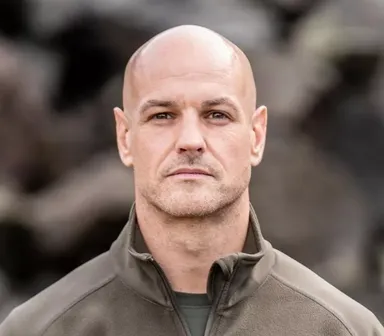
About the guest
Ricky Nuttall
Ricky Nuttall - Mental Health Advocate | Motivational Speaker | Former Firefighter and first responder at Grenfell Tower | Published Poet | Actor
Mental health advocate, motivational speaker and public voice, focusing on raising awareness on the importance of social and workplace mental health and well-being.
ManIFF nomination for The Firefighter short film. Written and acted by Ricky himself, produced and directed by Roy Khalil of Grenfell Voices. Ricky also wrote and acted the lead role for a short piece, for The Russell Howard Hour based around depression and mental health.
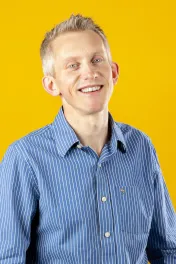
Hosted by Andrew Pain
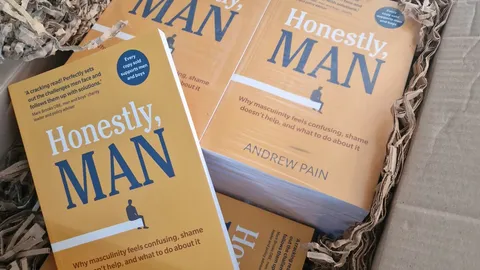
Andrew Pain is a Mental Health & Resilience Keynote Speaker who speaks from lived experience on resilience, burnout and workplace wellbeing. Host of the Men on Show podcast, author of the book Honestly, Man, and a TEDx speaker. Member, International Coaching Federation, and Mental Health First Aider trained.
Never miss an episode
Candid conversations with everyday heroes – ordinary men doing extraordinary things.