Men on Show · Episode 28
Men, Nature and Climate Change with Isaac Kenyon
- 8 May 2024 .
- 1h 4m .
- Hosted by Andrew Pain .
Isaac, a British eco-adventurer, mental health champion and international keynote speaker, redefining human endurance through world-record achievements.
Andrew hosts this podcast. His own keynotes are on burnout, resilience, imposter syndrome and difficult conversations.
In this episode
About the conversation
Key points of the episode
- How he had so many passions and interests he never fitted into a "niche".
- How he still is a "lone wolf" to this day.
- How the movie Jurassic Park was an epiphany!
- His mental health challenges and how he now handles them.
- His studying of Geoscience at Uni.
- His realisation that he could not carry on as he were - overachievement and burnout.
- How he stopped studying his degree and started studying himself!
- Why the GP smiled as he was pouring his heart out - (for the best reasons!)
- How some new practises healed his life, and his desire to understand the science of it!
- The "drug" that saved his life (and it's free and available to all of us!)
- The perfect balance of challenge to keep us mentally healthy and finding flow.
- "If the Earth is having trouble, we are having trouble" .
- Some good news about the environment (yes it does exist!)
- Some recommendations on how we can help in a small way.
- Regenerative science from the sea.
Men on Show shares lived experience and honest conversation – it is not medical or therapeutic advice. If you're struggling, you don't have to cope alone.
Samaritans: call 116 123 (free, 24/7) NHS: 111
Full transcript
Read the whole conversation
A complete, verbatim transcript of this episode – every word is the host's and guest's own; the topic headings are ours.
Welcome to Men on Show, the podcast, Candid Conversations with Everyday Heroes. Join Andrew Pain as he interviews fascinating guests, ordinary men doing extraordinary things. If you love the show and you think somebody could benefit from hearing it, why not tell them about it by giving it a share on social media? Oh, and at the end of the podcast, if you can leave us a five-star rating and a review, it really helps us more than you know, and it gets this important message out to more people that need to hear it the most. Right now, enjoy the next episode. See next episode.
Hi, my name's Andrew Pain, host of the podcast Men on Show, and I am so excited to bring you today's guest, Isaac Kenyon, tell you a little bit about him first, philanthropist, echo, adventurer, a man loving of the outdoors, got loads going on. I just would say this, he swum across the channel without a wetsuit. Anyone that can do that for me, I total respect, because when I go to the North Sea, anything in the sea, I have to have a wetsuit on.
He's rowed tirelessly for 83 hours without any sleep. And he's also rowed across the Atlantic. He's not satisfied with just rowing in a pond in the park. No, I row across the Atlantic. Why not? So Isaac, it's a pleasure to have you on the show. Oh, I know, just one more accolade here. We've got his Climate Explorer is an award-winning media house dedicated to finding climate solutions as well on top of everything else. So I can't wait to get into this. Isaac, welcome to the show.
Great, great, great intro. Lots of energy there. I don't need to keep that up, but yeah, it's a pleasure to join you on today.
Growing up a lone wolf, and Jurassic Park
I won't keep it up for the whole podcast. It's just so you know, it all goes downhill from here. But first, I mean, at the very beginning, tell me about yourself as a boy. You're doing some extreme stuff now, taking risks that a lot of people wouldn't, pushing your body to absolute limits that a lot of people wouldn't. I mean, no sleep for 83 hours, goodness gracious. Was that always in you, do you think, as a boy, that risk thing? Or did you have an epiphany later in life?
I think it was always there. So my parents would always say to me that I was a handful. As a very young child, something happened in my teenage years, things really calmed down, I quietened. But when I was probably between the age of one, two years old to about seven, I was the one that was always running off. We'd be at dinner and suddenly I'd be in a forest during dinner, in a restaurant. So I was always adventuring high energy and that kind of was me.
And then things changed as I go into my teenage years, I kind of quietened down a lot. I was always struggling to fit in. So as a young boy, I think I had so many passions and interests. I didn't really fit into a niche. I didn't really fit into a social group very well. And that was kind of challenging for me because I was, I never felt that I was in sort of a support network sort of thing at school and stuff like that.
I was seen as a lone wolf. To be honest, that's continued to this day a little bit. I haven't really fitted in anywhere, which is fine. I can obviously work with different groups, but it's from a young age, I'm pretty much the same, just slightly more wiser and I have maybe a little bit more knowledge of the risks I can take and what I can't take through experience. But I'm not much different to when I was a young kid, according to my mum and my dad.
That's so interesting. So I've got a nephew, I'm going to call him Neil for reasons of data protection. But he, my nephew is, he'd be about 10 now. And whenever I used to pick, because he goes to the same school that my boy goes to. And whenever I'd pick him up from school, it's like, where's Neil? Where's he gone? Where's he gone this time? And then he'd be like, oh, he's up on a nine foot wall, teetering on, he's always fine.
You never, he just crazy stuff. And just like always out, wants to be outside adventuring. Yeah, so you remind me, perhaps your description reminds me of Neil, which obviously isn't his real name. But so, I mean, growing up, you mentioned a little bit of a lone wolf. You had all these passions. So you, you, you didn't sort of put yourself in a box. You weren't a footballer or, you know, so maybe that was hard to get into a particular group, I suppose. Was that, do you recall a particular source of inspiration for you? A role model or something that really inspired you in those years?
Read the rest of the transcript Collapse transcript
Yeah, yeah. I mean, so when I said I was never in a bucket of such, I was very sporty, but also really nerdy. And it was only when I went to university, I started to find more people similar to me. But it was at school, you were either usually the nerdy group, like, you know, indoors all the time, studying, whatever, working, or you were out sporty, like doing sports and you didn't care about it. Really was the two.
That's probably the reason why I didn't really feel very well. And then role model wise, I guess, as a child, your first role models are your parents, really, up until, at least until you go to school. And then suddenly the teachers start to become your role models a bit. So I, you know, I was definitely getting a lot of encouragement and support from my family, but also there was, you know, obviously every family's got their thing, right?
We'll go into that on this podcast, but we all, we have some things that kind of go on to your children. And there has been some stuff like that that's happened. And so, you know, I had some early role model, I did poppy some maybe traits that weren't so healthy and great, but also taken on some really good traits from my parents.
Okay. What trait would you say you got from your parent that's really a good trait?
Tell me a good trait. I think the different, yeah, so my dad, he owned his own business. So it was very much like that sort of get up and go, you know, independence, you can do this, that positive mindset that, you know, you're going to get the work, you're going to put the food on the table, that sort of dedication, hard work, graft, that mentality of, you know, failure is, you know, a learning curve. You know, he was entrepreneur, he set up his own business.
So I think that was a really good trait. And then also he took me into the outdoors for the first time. He was the one, he's a salmon angler, fisherman. So he's taking it up the outdoors. And with my mom, on the other hand, my mom was very studious and she was very curious, very good at sort of research and she would always question me and teach me things like science and get me into that side of things.
So I think from maybe my dad's sort of perseverance and energy towards, you know, business and being successful, he's a bit competitive, that side of things. And in my mom's studious side, probably that's kind of why I ended up being excelling in sports but also selling in academia, fortunately. I did inherit dyslexia from one of them, because they both have it in different ways. So I've got dyslexia. In terms of a role model that was outside of the family, it's a fictional role model that really impacted my life.
The film Jurassic Park, if you've watched it, I was absolutely in awe of Dr. Alan Grant, which was one of the main characters. It was his passion for science, his risk taking on that island when he's dealing with the dinosaurs, the adaptability, the team camaraderie that he used to bring, he was a bit of a team leader there. So all those sort of things, those were great inspirations for me. I wanted to be a palaeontologist, that's how I got into sort of a science career.
That's why I do science today and I'm so fascinated in the science of, we'll get on to that I guess in this podcast around mental health and things like that. But the science came from, I think, that film really. Yeah.
Anxiety and tools that help
And I mean, you talk about on your website, you talk about mental health challenges. You mentioned that on your LinkedIn profile as well. What were those challenges and how did they impact you?
Yeah, I mean, the challenges that I deal with today, even right now, I had a bit of a mental health challenge this morning. But to be honest, it was recognising they were mental health challenges. There was a turning point where I recognised these are issues. And it was actually when they got out of hand to the point where I couldn't live my life properly anymore. But I realised they were mental health challenges. Although they may have been happening when I was younger before it came to a bit of a crux or a pinnacle turning point where I just couldn't go on.
So a lot of those mental health challenges for me revolve around the word anxiety. Anxiety is one of the major mental health challenges that I deal with. And it was only when it started to manifest physically in the form of panic attacks where you have heart palpitations and things like that. And to the point where because of those heart palpitations and you're so focused on not being in this state of stress, fight or flight all the time, this like constant worrying, what it started to do was just diminish everything.
So I alluded to before I was a high flyer, I guess, or at this time, I was a rocketing to the floor. Everything was falling apart. My relationships, my work, my knowledge, my sports, absolutely everything started crumbling down and I didn't know what was going on. I didn't understand it. It was despite having a fascination for science, I didn't really look at the science of the brain or how humans work in terms of well-being. I didn't know about mental health.
And I was basically going through anxiety at such a high level that started to get depressed and moving into sort of suicidal thoughts and ideation and really messy time. So mental health challenges for me have probably always been I've always been described as someone with heightened, you know, hypervigilant, always kind of looking at the problems that could come. I've always been having that worrying mindset. Despite being very happy on the surface, smiley and energetic, I am very aware of risks and they play in my mind all day long.
And you know, for instance, this podcast, I come on this podcast, I think what's the risk? You know, you might throw a question at me, I don't understand, I don't know, oh, this is gonna be so embarrassing. And then things go and I have to, over time, I've learned how to unravel that and be able to deal with that, that emotional side of anxiety and be able to calm myself and basically bring back to reality.
Is there like something that you use a tool or a technique that you found that's really helpful for you in doing that?
Yeah, I have. There's quite a few actually, tools and techniques that help me with anxiety. And specifically, it's kind of that positive self-talk, like whatever comes, you can give it your best and you know, you've given it your best. Don't worry about it. Just give it a go at the time. So that positive self-talk, instead of the negative spiral that kind of brought me into suicidal ideation, I've learned to immediately, as soon as I hear a negative thought, it's like a fire. And I'm like, quick, let's put that out.
Yeah. That's a good way of looking at it.
Yeah. So as soon as a negative thought comes into my head, I'm instantly thinking, right, turn that, because I know where this goes and I don't want to go there again. So I'm often thinking about, this period of difficulty will pass, the time is going to go into the next day, for instance, and you'll wake up and you won't even remember this. And more often than not, actually, the other things that are really effective is just kind of deep breathing, just controlling breath, breathwork.
Breathwork is so powerful in terms of the way you can kind of change the tempo. So you can be like, oh my god, this is happening. Okay, this is happening. You can completely change the way you have a perspective on the problem. And the other thing is, if I do have the racing thoughts, one thing that we'll probably get to is I change the environment. So if I'm having a really difficult time looking at the laptop screen as this email, it's giving me anxiety, this email, I don't want to look at this email anymore, I'm so done. I'll just go into a different environment, think about the email, perhaps in nature or something like that, where there's less pressures and then come back to it. Yeah.
No, really, really good, useful tips there. I love the thought of almost being there with your fire extinguisher, with sort of various solutions within that extinguisher, like breaking, I see it as like, yeah, breaking state. So you're changing location. You may literally just stand up and go and make a coffee or whatever it may be. I find with my self talk, if I try and remind myself of my own skills and strengths, I've got an internal barrister, an imaginary, but he completely rips up all of my best intended affirmations about myself.
But what he struggles to handle are grounded truths about the way the world works. So if I'm really stressing, I know I had a, I did a session to 60 senior GPs on burnout a few months ago, each of whom is more qualified than me in that room to deliver that. And I was getting a bit of a wobble, but the grounded truths are is as long as I've got something new to share, the rest of it, the rest of it doesn't matter, there'll be stuff around burnout that they're not going to know as GPs, they're generalists.
And just because they're senior GPs doesn't mean they've been exposed to high quality public speaking before. And though for me, my barrister can't handle those because they're absolutely patently true. It's not just my opinion. So I try and work with like grounded truths about the way the world, about whatever situation is making me anxious, that helps me. But other people say, no, for me, it's mantras. I look myself in the mirror and I can't do that. I don't get on with that. My internal barrister is too strong. Very well spoken as well.
Yeah. But I've seen people, they talk positively to themselves in the mirror. I get that. It's like, you can do this. It's almost that person is another person in the mirror telling you that you can do this sort of thing. And it's almost like you could probably replace that with someone else, like your partner or a friend or something, to help tell you that you can do this. But then when you don't have the mirror, what do you do? You need some tools, I think, to get past it if you don't have a mirror.
Yeah, absolutely, absolutely. And to have some rehearsed tools, I've had a couple of people on the podcast. There was a guy, Stephen Dowd, who had had paralysis due to a life-changing cycling accident. It's having those rehearsed tools to hand. So in your darker moments, they're just there at your fingertips, almost like a toolbox, but with the tools, you know how to use them and for what thing you're practising using them, so they're useful. So having those rehearsed already, I think, is important.
So tell me, you get to university, you study geoscience. What was it? I mean, perhaps it was a gradual thing from what you've just said, I suppose. I'm interested in what sort of took you into some of the endurance events that you involved with. Was there a particular moment again, or is that just because it was in you since a kid, that was always who you were going to be?
Burning out at university
It was a serious amount of crisis, actually. So the most challenging time in my life was at university in my third year, second to third year, around that sort of period of time, I was going through the depression and suicidal ideation and things. And it was that moment where I realised I cannot continue the lifestyle I'm living in this way, it's not healthy, it is destroying me, it is turning me into someone I'm not. And the lifestyle was a constant need for productivity, an overarching sort of sense of accomplishment that I needed to achieve.
I was one, burning myself out, but two also beyond burning myself out. I wasn't recognising I was burning myself out as well. I didn't see it as burnout. I just thought, this is what I've always done. It's always been like this. I've always hit those goals. And I think what I got to at university was, sometimes there are challenges that can be sometimes too big for one person. We are not all robots and we can't like churn out all these hours.
You need to go to sleep. I was punishing myself. I was working like 16 hour days and sleeping like five hours. I stopped eating properly because I didn't cook basically, because I thought that was a waste of time. I'm going to just buy junk or whatever I can get. That's fast, because then I can focus more on productivity. Drinking like four or five coffees a day, just trying to keep myself on that high energy buzz the whole time, not switching off.
And at university, when that was all kind of my main focus, and everything started to... I was like doing all this stuff, but it wasn't working and I was not happy about it. I was not enjoying life.
Woodland walks as a turning point
And good to say to God, with this productivity, just so I know, was this to do your studies?
Yeah, well, it was to do my studies, but I had goals within the studies that were just almost perfection. And I was trying to reach this unobtainable object. And I realised that, you know, I think when I was probably, I think it was in the winter months, I think it was around that sort of November time. And I was in this room and I remember just, have I even seen daylight today? And I was saying, Jesus Christ, I am so obsessed and, you know, in this tunnel thing, I'm not even taking in daylight.
And I envisioned myself, I took my, like this moment, it's still in my head, it's traumatic. But imagine pulling yourself and looking at yourself from above. And I saw myself looking at a laptop screen like I am right now, you know, doing this podcast with you. And I'm looking at this screen and I'm literally staring there and the clock is ticking and I can see this window where the daylight goes into night and then night into day and night into day.
And I'm seeing this going around and being like, is this what you want to do with your life? Just like waste away on this machine? And that was kind of the turning point. It was like, there's more to life than this. I need to find balance. I can't just pull. And it was like trying, I think it was a realisation, but I wasn't a robot. I love it now, but at the time it was horrendous. And I needed to like come to terms with this.
So then the biggest, I think, step was telling people that I'm struggling to do what I'm doing. And people were just saying, have a break, man, get out, go outside. And that felt like the most impossible thing at that time. I was like, well, no, because I'm not going to hit my goal. You know, I've got set structure and targets and whatever, and I'm never going to get there. And I was kind of coming to terms that I needed to just, you know, really just change my lifestyle.
One thing that was always prevalent during that time of work where I was working for very long hours was there was a commute to that work. You know, obviously I didn't sleep in this office space. I had to get there and I used to walk through a woodland. It was only 15 minutes. It was a woodland on the campus and for some reason, I always loved that woodland. It was like the best highlight of my day every day because I was in such depression that like just a little bit of light, a bit of nature sounds was enough and that was like my biggest thing.
I got into this sort of mindset after someone said, take a break, well, where am I going to go for a break? Oh, the woodland, I like the woodland. So then I started to do sort of walks out into the woodlands and then eventually I realised that it was healing me and I was getting sort of out of this suicidal ideation. I remember just like thinking of the worst stuff in my room at university, I sort of wanted to come in at one, two in the morning and being like, okay, I'm going to set my alarm for four o'clock.
What am I doing this for? Why am I here? I used to have all these thoughts, right? That all started to stop very quickly when I started to get outdoors again and get into nature. And then that's kind of what sparked this sort of experiment in my mind of, I want to know what this is. Why am I, this has turned everything around. What is this? I need to understand the science behind this. And so I started doing research and learning a bit more about the science, basically not studying my degree anymore, studying myself.
So a degree kind of went to decide for a bit why I understood like how I work and what I need, basically what the five ways to well-being or that sort of thing. And then I went to a GP and he was saying, tell me about your lifestyle. And he just, he kind of smiled, so why are you smiling? This is a bit cynical. You know, I'm here like pouring my heart out to you, basically in the worst state I've ever been in my life and you're smiling.
And he was like, look, I want you to go and hang out with your friends or when you start cooking your meals. I want you to start going outdoors, doing some exercise. If you can meditate, do some meditation, basically come away from the screens as much as you can for a bit. And I was like, this is opposite to sort of what I had kind of indoctrinated myself into. And at the point, I think, you know, there was the turning point, but that sort of was only the start.
And I was so fascinated in how getting outdoors was doing so much for me. I wanted to understand what was it about nature and what was it about getting outdoors that was doing this for me. I found the longer I stayed outdoors, the better. The better I felt, I guess more energy came. I was more productive in my workplace where I was doing my studies. I got better grades out of it by going outdoors more. And I was starting to see this correlation.
Then endurance challenges came because I wanted to see how far can this go? I learned about doing sports outdoors. When you are outdoors, it is endurance, isn't it? You start and end up doing sports. If you're hiking all day, that's endurance, isn't it? The walks all day and I started extending, extending, extending. Then maybe some different sports came in just to spice things up, change up the tempo. What's it like to row for a very long time or swim outdoors for a very long time, which led to the English Channel Swim?
And it started from there, really, that turning, that sort of survival thing. And I always like talk about how opening up to a friend was very key, but it was nature that was the drug that saved my life. It wasn't any prescription or anything from the doctor. It was literally getting outdoors.
The English Channel and the Atlantic
And out of the endurance challenges that you've done, I mean, I mentioned a few during the introduction. Is there one that you're particularly proud of, that was particularly tough for whatever reason?
Yeah, I mean, if you're talking about challenges, the mental health challenge has always been the toughest one. But if you actually talk about from a sporting perspective, that first English channel was my first one. It was the first time where I had to develop some mental fortitude, build in some really, really solid tools to get through these sort of difficulties in, when you do endurance challenges, you go through highs and lows like all the time. I mean, I talked to every endurance athlete, they'll never say they're on a straight high.
They hit multiple lows when they're doing these things. And it's being able to pick yourself up from those lows from within, from yourself to carry on. And it's how you get there, whether that's visualisation, whether that's positive self-talk, whether that's, you know, having the experience, I've been here, I can do it again. That's a bit positive self-talk, but also that's experience. I mean, challenges now, I've rode across the Atlantic Ocean in 40 days, done an Ironman with a 15 kg weight, all these different big challenges.
None of them were done without the knowledge. I had the knowledge, I had the experience from that one English channel, that my first time. So, I've just basically taken what worked there, taken it to the next challenge, kind of reinforced it, maybe honed in some skills, learned maybe a bit more on the next challenge, taking that on to the next one. So, although these challenges look more and more dangerous and difficult as I've gone on, what I've done is I've learned and developed new skills in dealing with the mental difficulties as well as the physical difficulties and just become more expert at it, if that makes sense. But the first one was always the hardest one.
Did you have a point on the Atlantic at all where you're like, I'm now really scared. It's like, I'm a long way from anywhere. Big waves are coming in. I'm now very, very scared.
Yeah, there is that bit of disposition when you lose sight of land and it's something that is really difficult to mentally comprehend because if you've never been in a situation where you're just in the middle of the sea and it's 360 degrees just blue, if you've never been in that position before where you're just that far away from land, then it's quite difficult to train and visualise even. So that actually was probably, I think that was the, I don't know actually if that was the scariest part actually, Andrew.
On the Atlantic Road, I think the scariest part was finishing. So, and I'll get into that because when you're on the Atlantic, life was very simple, I say it was easier. Easier. People say, no way, you were rowing 12 hours a day or 40 days straight on high seas, massive storms. You were eating out of a ration pack. You had to drink saltwater that was desalinated and must taste awful. It was hot sun and schools and massive rains that would come and storms and winds that you had to fight.
And I was like, yeah, but it was the reality of, you know, life was so simple. As soon as I get back on land, I've got to deal with all the people, bureaucracy, work, money, all these worries, you know. Yeah, it all comes in. So I think actually that was more scary.
I could, you know, in a strange way, it is very strange when you think about it first. But I suppose you just had one focus, which is a couple of stay alive, row, sleep, eat. That is really, you know, it's quite straightforward, what you have to do. Whereas modern society is so fast paced and so complex, and it's become that way so quickly that we haven't really caught up with that. Because adapting and evolving takes time, right? And society has moved faster than we can evolve, I suppose. That would be my view.
We're all seeking purpose, and then we keep creating these new technologies that are just sapping purpose from people. So like, oh yeah, heating, don't worry, we've got electricity for that now. You know, you don't need to find fire anymore. This all changed. But yeah, I have had challenges where I've had some serious like, oh my God, what have I done? The Atlantic Road wasn't one of those.
Okay, interesting.
The weighted vest and what makes it worthwhile
It was actually a more recent one. That was last year. I did the Ironman Challenge with a weighted vest. So I was the first person to do a full distance Ironman whilst wearing 15 kilograms.
That's a lot of weight, 15 kilos. That's not insignificant.
Yeah, yeah. People always laugh at me like, well, I carried it every day, mate. I saw a joke, you know, with the beer belly. Like you're only just dealing with what I've got. But I said, you know, it's all over. The vest is all over your shoulders, everything, right? And the biggest serious, like, oh, what have I done? Was when I entered the lake to do the swim part, which was I think 3.8 kilometres swim with the weighted vest.
And I got into the lake. And I didn't realise how much colder the lake was compared to the seas. I was training in seas and this particular lake was very cold. And it was early in the morning. I got into the lake and I went into a bit of a hyperventilation. And because the weighted vest is so closely tight to your skin, to your body, you can't expand your full chest to get the lung oxygen. Yeah.
Yeah. So when you're high, it's hard to, you can't do like a full. So it actually exasperates it. It made it harder to manage the breathing. And I actually went into a bit of a panic attack right there. And then at the start, I was like, oh my God, am I actually going to be able to do this? I was like treading water, trying to calm my breath down for about five, 10 minutes before I started swimming.
I was just treading water, wasting energy before I started swimming. Because I think what was going on was when I got into the water, my mind started to actually comprehend the challenge. Yeah. I started to actually think, oh my God, from this moment, I'm going to be nonstop exercising probably for a whole entire day with this vest on. And I had swam a fair distance with the vest on, but in the sea, not in a lake. And I made a mistake. I should have trained in a lake because the lake has less buoyancy.
Because yeah, well, it would, wouldn't it? Yeah.
Oh, yeah. So I basically made a mistake in my training and it came to bite me. And I actually thought I was going to drown because at this point, the support crew wasn't even out there. And I'm wearing a weighted vest. So you're going to sink quickly if you're not, if you're not keeping yourself up there. So yeah, that was probably the scariest moment of any challenge I've ever had. Just it feels mental. It's like when I came off the pier to swim and jump in for the first time, and I swam a little bit and then the panic attack came. It felt like walking the plank as a pirate with weight strapped to you.
To do with the endurance, obviously you're testing yourself. As you've said, an endurance athlete will experience real lows and presumably moments of self-doubt. You have to pick yourself back up and keep going and training. It takes time. I would imagine with a lot of your training, there's a boredom factor because it can be monotonous, even if you're outdoors. The thing that makes it worth it, I'm throwing this out as a question and sort of a guess at the same time, is it the thing that makes it worth it, the bit that when you have then done said challenge, there's just such an elation, a wonderful afterglow that is incomparable.
You can't compare it then. Is that what makes it worthwhile doing it? Why would you do this? Why would you nearly drown? It's one thing to do an Ironman. Why on earth would you do the 15K vest? Is it because that heightens that afterglow sense of sadness? What is it? What's the thing that makes this worthwhile?
For me, it's always the wider thing, the bigger than yourself thing, the impact that you have outside of having accomplished this. It's that sort of inspirational ripple of it. It's kind of why I got into speaking. It's why I speak on podcasts. It's why I do the challenges. It's mainly to basically say, I want to empower people to protect themselves by stretching themselves a little bit so they understand what mental resilience is, build some mental fitness so they can deal with mental health issues if they do come, and protect the environment around them, because that environment is the ecosystem that allows them to live.
So I kind of had this purpose behind it all. So the weighted vest, for instance, is a symbolic message of the weight that we carry silently. So it had that sort of ripple effect. And so when I'm in those difficult situations or in these challenges, I'm often thinking of, well, if I gave up on this, what is that message saying to other people? Like you get into a bit of adversity, okay, this will give up. I mean, that just says, if someone's on suicide or row, they're like, okay, cool.
I can do it. I'll just end it. That's not the message I want to get out there. So I have this mindset in my head. Like I want to achieve this because I want to show that we can get through these difficulties. We can get past these challenges. The difficulties will pass and we can achieve good things. But also we're more than what we think we are as well. I'm no Olympic athlete. I call myself average athlete.
I just have a very un-average mind. My physical body is not chiselled like a god. I'm not super incredible lungs or anything like this. There's nothing special about me, but my mind is what gets me through these things. And I think that we could definitely as a society become stronger if we can develop a stronger mindset.
Marginal gains and finding the sweet spot
Yeah, I think that's absolutely right. That's absolutely huge. And I think for me, I look at how sometimes something seems massive. There's no way I'll be able to achieve that. I can't. I'm too reliant. I can't give up this. But actually this whole thing about marginal gains, where rather than looking at a massive thing where you're setting yourself up to fail, you just look at small steps, but you keep adding in a fresh layer of steps each time that you can definitely handle, can make a huge difference.
And I remember I was classed as pre-diabetic about four or five years ago. It came as a big shock. I only went to get my bloods tested because my mum had nagged me to death about getting my cholesterol tested. And I'm quite healthy, cook from scratch and whatever. But just through marginal gains, oh, I'll opt for savoury breakfast. That's marginal gain number one. Oh, I'll start adding in a bit more exercise, do some press ups every other night with no particular goal or focus.
But four years of doing press ups every other night has made a massive difference to my physique, to the numbers I do sets of 130 now, which again, it's not ridiculous progress because that's inevitable progress if you're going to be doing it every other day for four years, which includes Christmas Eve and Boxing Day. But we are so much more capable. I didn't think I'd be able to drink only alcohol at weekends because I'd become so reliant on it.
Actually, within about a month, it wasn't that difficult. It's not a big ask when you think what some people have to go through in their life. And I think often as humans living in the modern world, we think, oh, I can't do that. I can't do that. I couldn't possibly do that. Couldn't possibly handle it. The truth is we could if we just take it one step at a time, I suppose.
You heard it from my story, isn't it? I started walking in the woods. That's how it all began.
Yeah.
A little short five-minute walks. Suddenly, I'm six years from there. You know, I've got, well, ten years now, I've got six world records and endurance and multiple adventures to the belt. I've got two businesses I've started and these things don't, they don't come overnight. It is marginal gains and it's, I always like to, you know, what inspires me is challenge. You know, that is my inspiration is having that sort of challenge that, you know, pushes you to a lift.
You know, it doesn't push you too far. Like the challenges I say at university were way too big, and it resulted in really poor mentor. But enough that keeps you in a form of purpose. Because if it's too easy, you get bored. Life becomes mundane. And suddenly you get a bit of a mental health issue. If it's too hard, you burn yourself out. You got to find that sweet spot. I find and yeah, finding that sweet spot of challenge is what inspires me all the time.
When I hit that, I find flow, you know, that optimal state of consciousness, and that you're completely absorbed in the activity. Time just disappears and you're just really happy what you're doing. I get that from endurance challenges. That's one of the reasons why I do it.
Climate Explorers and getting people outdoors
So in terms of your work today and how you inspire people today, what comes across to me so far, and I want you to add to this, obviously you're inspiring people in terms of what they're capable. We are so much more capable of what we give ourselves credit for. So there's an endurance as a mental fitness, a mental toughness piece to what you're trying to achieve today. That's partly why you do these endurance events. But also you are a man of nature.
You've got your Climate Explorer as this award winning media house. Love to hear a bit more about that. So talk to us about the impact that you're trying to make in terms of nature. What's going on there today?
Well, we do have some big crises at the moment. We've got a mental health crisis and an environmental crisis today. And my impact and my purpose is towards finding balance between two. I don't see them as two separate entities. I see them as one. I see mental health and sustainability as one thing. If the Earth is having trouble, we're having trouble. We're intrinsically linked. We are part of nature. We are nature. And I'm always talking about that.
And Climaxplorers was an award-winning media house. It's now creating a service to people to reconnect them with the outdoors so that they can start caring for the outdoors, which helps them. So people seem to feel so detached in cities and places like that where there isn't much nature. They don't understand that the reason that city is around is because we are destroying nature, taking from it. You're taking resources and pumping it into a city. That's the reason why the cities are there.
Now, if nature disappears, your city is not there anymore. And people need to understand the lifeline that we have with nature. This entity all around us and us ourselves needs to be taken care of. We cannot continue doing what we're doing. As you can see, climate change is huge. But really, it's human change, isn't it? We're killing off ourselves because we are part of nature. The climate is dying. We are dying. So my talk, my influence, everything is revolving around getting people outdoors because that's the first step.
We need to get people outdoors to see the benefits. Why should we care about nature? And why do we need to care about it? Then suddenly when you start enjoying the outdoors and you see the benefits, most people reconnect with it in so many different ways. Mindfulness, meditation, sporting endeavours, fresh air, serotonin from the sun. There's so many different benefits you can get from being outdoors. And then once you've got that feeling of recovery or something that you love about it, you can start doing something to care for it.
Because the minute the balance is so unbalanced, there is no balance. We take more than we give to it. And if we continue this route, there will be nothing left and we will be not here anymore. So that's what my talks are all about, is bringing people through different angles. I talk about mental health, I talk about sustainability, but it's all along that thread that without good outdoors and nature on our doorstep, we don't have the well-being that helps us get through the day.
During the pandemic, everyone was running to those outdoor spaces. Everyone loved the outdoors. They were craving it when they were stuck indoors. Now, what if those disappeared? Where's our lifeline then? It's really important. And that's kind of why I do the talks I do. There's more and more issues with the environment. There's more and more mental health issues that we're having. And until those issues disappear, I will continue to try and create this impact, raise this awareness.
And the Climate Explorers Company is all about an activation. It's bringing people into outdoor spaces through adventure and getting them involved in environmental stewardship and mental health activities in the outdoors so that they can care for it, connect with projects that regenerate. So there are community projects at the Eco Adventure Service, what we call it, from Climate Explorers. We take people to these eco projects like tree planting or garden, growing your own food or cleaning up the waterways, that sort of thing.
Loads of these citizen science stuff as well. But all of these things, we should be doing anyway. It shouldn't be like a one-off. We should be stewarding what stewards us. Otherwise, if we don't steward it, it's going to deplete. And then I always say at the end of any discussion around this that we will be gone before it goes. So it will deplete, deplete, nature will deplete, deplete, and we won't be able to deal with it.
Our lifeline will be gone. So we will disappear, we will be extinct. Nature will find a way to grow, grow again. Yeah. So yeah, that's really why I do what I do. And the impact I have is to just get people to start thinking about what they do in their daily lives, the way they consume things, who they support, who they kind of, where they put their effort in. Are you putting your effort to damage the environment that keeps you alive or what?
Good news about the environment
And I guess there's so much for me. I can feel so hopeless about it because there's never any good news. Perhaps you can give me some good news. In fact, after this, please do give me, on this podcast, but in a moment, please give me some good news about the environment. I'm longing to hear something positive. But there never appears to be any good news. And then politically, you look at the conservative government and extending licences out into the North Sea for drilling.
You see the government, our government is not saying coal is our legacy, it's our history, it's not our future. We need that statement with action to back it up. But then you think, well, my alternative could be Labour. I suppose it's Labour or Conservative, but then Labour have just crashed their budget for what they're going to invest into the green economy. They've not just slashed it, they've absolutely monumentally slashed it because it's too expensive. And so it always feels like nature for politicians is a nice to have, but if we can't afford it, stuff it, we'll do it at a later date.
So I suppose as individuals, we have a responsibility on who we vote for and nature should be the absolute top of our list in terms of determining who we should vote for. We have some influence over where we spend our money. And I know for a lot of people, actually, if you're living in poverty, you can't go and buy your meats from Abel and Cole and support the regenerative farmers because it costs an arm and a leg.
But those of us that genuinely can, actually saying more of my pound, let's look at... There are things that we can do, looking, I suppose, at our garden. I can't remember the percentage of green space in the UK that's garden space, but saying, actually, my predecessors in this house paved it. I'm going to unpave it. I guess there is stuff we can do, right?
Yeah, there's so much inspiration just literally within our own communities. You'll see it. If you look for it, you'll see it, and you can get involved in it. So Climate Explorers, the award-winning media house, we made a film, right? So we did this world record-breaking adventure, which basically took us from Orkney Islands to the Isles of Scilly. Orkney is these islands north of Scotland, and Isles of Scilly are these islands that are just off the west coast of Cornwall. And we did a cycle, which was from Orkney all the way to Isles of Scilly, and we cycled over water. That's what made it a world record. We cycled the sea part.
How do you cycle over water? Just fill me in.
So it was a special bike that was on two Fendor floats. Imagine a spinning bike on two Fendor floats with a propeller underneath.
How cool is that?
We have a film that's on Amazon Prime that was shown at the United Nations COP conference. So the whole thing was documented. I mean, we could put the link, or I'll share it with you anyway afterwards.
Yeah, yeah.
And the adventure itself was an eco adventure. We tried to do this adventure as sustainably as possible. We basically tapped into as many different brands that were trying to do things in a sustainable way. Like the food we ate was all local where we could. The way we got around was from EV cars as best as we can and hybrid cars as best as we can. And obviously cycling. We cycled everywhere, used the bikes to get around.
And we camped where we could. And there was all of this sort of sustainable thread. But the main thing was we were so frustrated with the news and this negativity around climate. We were like, there's got to be positive stuff out there. So we did some research and we were finding all of these community groups of people doing these incredible things which were regenerative. Very cheap within the community, working together to make things happen for the environment and for the community.
So a win-win for both sides, not take and then mass consumption, that side of things. So we basically cycled and visited all these projects across the UK and did national parks and things like that. And it was an incredible story. And we took it to the COP conference and said, look, it is possible. All of this is possible. Look at all these solutions, all these great people doing incredible things like community tree planting, massive plastic pickups.
I mean, anyone can do picking up plastic. You just go outside and you just start picking it up and getting out of the bushes or whatever. You know, there's so many things that we can do to be environmentally friendly that we don't... Where we put our pensions, if we have pensions, where we invest our money, you know, we can move that into more sustainable impact financing. There's so many different things we can do. We can... You do say that some of the food is expensive, local produce food, but there is places within supermarkets, there are things that are cheaper that you can buy, but also more sustainably sourced.
Things that are in the supermarket are from the UK rather than from the other side of the world. You don't need to buy an avocado. You can take, you know, veg from other places that are homegrown. It's all about trying to think around every single action, every single thing you do, what can you do that is less impactful in the environment? Do you need to drive to the gym? Can you just run to the gym? Do you need to like, I see people, they drive to run.
They drive to a car park to run. And these are the, this is the mindset we need to, we need to start thinking differently around what we, what we do. And I see it as collective. So, you know, yes, the problem is if you take on climate change to yourself, I'm going to solve climate change. That is too big. You will blow up. There's no way you can solve it on your own. Everyone is an expert in their own domain.
You've got carpenters. You've got us who do speaking. You've got people, industry professionals who are focused on sort of chemical production or water companies. You know what? Everyone's got their own sort of niche. If we all focused on how can we make that area as sustainable as possible collectively, we'll make change. We shouldn't always be like pointing to the top like, wow, Nike, you made those brand new shoes. You made me buy them, man. You made me buy them.
They're so good. You made me buy them. You don't have to buy them. They're new. You don't have to. We don't have to support that. I'm partnered with a, I'm doing a London Marathon run in a tree costume this year. I've got an upcycled tree costume and I'm going to run the London Marathon.
I'll look out for you. You'll be on telly, no doubt. They'll spot you on the cameras.
Probably like this tree knocking barricades over. But the kit partner I've got and the brand club partners I've got are sustainable brands. And, you know, I've got a pair of trainers now that they're from Hyde Athletics. And I just, once the tread and everything's, I just give it back. It's recyclable. They give it back one. I've got one pair of trainers now. I don't need another pair.
I love to think there's something around the whole consumption. Look in your chest of drawers. You genuinely need to buy yourself another jumper and another jacket. You probably don't. So the stuff that you are, don't put it in land. There are rag recyclers that recycle this stuff. You just, like you say, you just need to look around you. And I suppose even when I think we use Tree app, an app on our phone where you watch a 30 second ad each day and it plants a tree.
That's free. Doesn't cost me anything. Odd Box we use. And if you use Odd Box where they fruit and veg that go into landfill, they salvage, it's perfectly good to use. Usually it's too big, it's too wonky, not the right shape, that kind of stuff. And then they deliver it to you. And that actually is quite a cheap way of getting fruit and veg. We found that it's relatively comparative to sort of Aldi supermarket prices. So there are things that we can do.
You just have to look for them. Before we talk about men and climate change, because I want to go there before we come to the conclusion of the podcast, give me a shout out, will you? Tell me about a really cool company that we could invest in or use their services. Is there like, I mean, Tree App, I think it's quite a cool thing because it's free. Is there something that you use or have come across that you're like, man, this is so cool. You got to know about this.
Carrymore and its seaweed farm
Well, that's a hard question. There's so many. I see them as friends. All these like different people doing incredible things. There's one particular company that kind of it just blew my mind when I first came across them. They were called Carrymore, C-A-R-Y-M-O-R. They're a community benefit society. They're based in Pembrokeshire near St. David's in Wales. And oh my god, when I first came across them, they were basically mind-blowingly different. They said, we're going to grow seaweed in seagrass and seaweed.
They're a regenerative ocean seaweed farm, the first one in the UK. They had to go through so much bureaucracy to be able to get the permission to do what they're doing. And they're basically harvesting, regeneratively harvesting from the sea, food that is basically for everyone to eat. And seaweed has got incredible properties. And also, they partnered with other companies that can create sort of packaging from the seaweed. So once the packaging is dealt with, basically you can almost feed the fish afterwards.
So instead of us using packaging containers, plastic ones, we can use the seaweed ones. And it was just so mind-blowing when I first came across them, because it was one of the first solutions we explored when we were doing that Climate Explorers documentary film. And it just got me thinking, like, why does no one know about you? And they were saying the problem why we're struggling is we haven't got enough investment. People don't know about us.
As soon as they find out about us, they want to invest in it. Because they see, you know, this is an ocean sink, the seagrass, you can store carbon this way. Yeah, absolutely. You can harvest it for food. There's so many benefits.
It grows very quickly as well, doesn't it, unlike trees?
Yeah, it grows really quickly, increases biodiversity tenfold. You know, it stores more carbon than trees by that. I think it's like 30 times more or something like this. It's just far more impactful for the environment. And we've been destroying the seagrass by dredging around the UK, you know, fishing trawlers and whatever. We've been destroying all that. So they're trying to regenerate all that. And check them out. And they basically are community benefits societies. So you can just donate and be part of this community and kind of help it grow.
And they've got another site now. And they're looking and they've created this sort of model which allows other companies now to start growing seaweed and doing it in the UK and then selling the produce. And it's a real big game changer. But they started it and they had the courage to do that. And despite the bureaucracy, oh my God, it took them three and a half years to get permit just to do that. Oil and gas happens tomorrow.
Why men are more sceptical
Well, that's a good shout out there. We'll make sure that the link goes into the description of the podcast, perhaps as one of your top companies to follow. Men and climate change. We've talked a little bit about climate change. And obviously this is Men on Show. You've shared an awful lot about your life. I'm so grateful for that. Endurance, some of your adventures is really inspiring to hear. Without a shadow of doubt, the evidence, the data in the G7 country show, that men are more sceptical about climate change as a thing, that it's a big problem, that we need to make changes in our life.
I think, and I'll just have to look at my notes here. Yeah, I think research showed 75% of American women understand that we must change our lives because of climate change in order to fight climate change. But only 57% of men in that same survey did. That's quite a big difference, 57 to 75. Men are clearly more sceptical of climate change. It would appear within the G7 countries. Why do you think that is?
I think we're less emotional. You know, it comes down to our sort of emotional empathy. Climate change and the topic of it is, it's an ever prevailing, it's the elephant in the room. It's the big thing. And, you know, men are very good at hiding from the big thing. Like, we know that our mental health is the worst out of the two genders. We're the ones that hide things, hold things in. These people who maybe are denying climate change, maybe actually don't deny it.
They're just trying to put up a front, possibly. But I find with climate change, it's about that caring for the future generations. And I think, like, that mothering effect of, you know, I don't want my children to be able to be entering a world like this. And also, these job roles that have been around protecting the environment aren't well paid. And men predominantly have always been the breadwinners, haven't we? Going for the sort of, we need to bring in the big finances.
So maybe we don't go for those sort of roles, those jobs, because they don't pay as much. They are starting to pay more because the problem is becoming bigger. So now you're seeing a shift in sort of the wage structure of these jobs, and more men are actually coming into the sustainability world, probably because of that. But it's that sort of, I think, that sort of emotional empathy of, do we care about today and what we're doing now, or do we care about the future and our children and everything like that?
Maybe women are a bit more, because they're the ones that are child bearers. Maybe they're just more emotionally connected with the future generations, perhaps. I think you actually find that with teachers. I think there's more female teachers than there are male teachers.
Oh, yeah, yeah. Primary, 15% are male. Secondary, I think 35% are male. Less than 4% of nursery workers are male. Although it wasn't always that way. It's shifted so that it's predominantly females in those roles. And I wonder whether as well as perhaps emotional attachment, I mean, I know I feel, I mean, I'm quite an emotional guy anyway. I just, I've got such a big heart for my kids and the world they're going to inherit. It does affect me.
It affects me because I did a snowboarding season years ago. I've done a bit since and I long to go snowboarding. But actually just being on a plane, I don't feel that comfortable about it. I just don't. I've really got a big heart for the world my kids are going to go into. I wonder whether some of it that I suppose climate scepticism tends to be something that's more linked with conservative based politics to the right.
And we know from the data that more, for example, Gen Z young men are moving to the right of the political spectrum, the women to the left. That is happening. We're becoming more polarised in our opinions with social media. So if you go to the right, you're not going to be on the right of the political spectrum and be passionate about the climate. I don't know what you wouldn't be, but you just don't tend to be, become more polarised. So I wonder whether politics comes into the fact that men are more sceptical about climate change, because that's where their allegiance is politically.
There is, yeah, there's probably a political allegiance. I would agree with that. And I would also think that that's down to, again, money. You know, you earn far more money if you're in industries of mass consumption than you would protecting. Yeah. And it's that sort of, I want to have that sort of power so I can, you know, as a man, I would want to be in a position where I'm kind of the mass financer of the family and that sort of vibe.
So I'm going to go down jobs and careers and roots that are kind of focused on that. And environment definitely isn't one of those. You know, it is that sort of... Yeah, it's a difficult one, I think, as well, because you can talk about it as a political problem, but actually it's also an economic problem as well. It permeates everything. There's so many angles, maybe there's reasons in several different areas of why maybe women are far more not interested, but far more action takers in this space than men are. And that could be it.
Consume less stuff, and the circular economy
Yeah. I mean, even if you think economically, we all have to consume less stuff, basically, for the environment. That would be a really good start, whether it's food, clothes, cars, electronic devices. We all need to just consume less stuff and recycle more of what we have and have what we have for longer before we have to upgrade it. But no politician is going to say everybody needs to consume less stuff because the economy is based on us consuming lots of stuff.
They need to be able to monetise the circular model. I think once the circular economy becomes possible, I think it will work where you can see how you can make finance in a circular way, which we're all working towards. And my company, Climate Explorers, is a B corporation, which is a very difficult process to go through, but you have to have high levels of social and environmental governance. So it's about people and planet over profit. If we can start moving to that sort of model, that sort of social entrepreneur model, then circular economy can come around.
And probably at that point, maybe you'll find that actually men are more interested and more action takers. But at the minute, as long as those high paying jobs are not environmental focused ones, then yeah.
A message for men and boys
So this is a podcast. It's exclusively male. There will only ever be male podcast guests on Men on Show. But obviously, I hope the listeners are varied. I'm told that they are. A message for men and boys listening to this. I'm so grateful for your time. We've talked about a lot of key issues from mental health to endurance to nature to climate change to climate scepticism. If you had like a one sentence, two sentence message for men and boys and you were able to publicise this message far and wide, what would you say?
Vulnerability is a strength, not weakness.
Brilliant. Love that. Couldn't agree more. Vulnerability is a strength, not a weakness. And I would add to that and say it's contagious as well, which is really exciting thing about vulnerability, which I'm huge about. So the absolute heart of psychological safety. That's a wonderful way to finish. And very, very last thing, Isaac, how can people find you? Because you're an inspiring guy. You've got so much to offer. How can people get hold of you, make contact with you?
Yeah, I mean, my name is Isaac Kenyon. You can Google it. You'll find website, YouTube's podcasts, social media. I'm on a lot of things. Very happy to be contacted.
Brilliant. Well, look, Isaac, bless you for your time. Thank you for everything you've shared today. It's been a pleasure having you on the show, Isaac. Thank you. Thank you again.
Thanks, Andrew.
Thank you for listening to Andrew Pain's Men on Show. If you could leave us a five-star rating and short review, it would be really, really appreciated. It helps us get this important message out to more people that need to hear it the most. See you on the next episode. Thank you for tuning in.
About the guest
Isaac Kenyon
Isaac, a British eco-adventurer, mental health champion and international keynote speaker, redefining human endurance through world-record achievements. Picture rowing 3000 unsupported miles across the Atlantic Ocean, becoming the first person to run the Welsh 3 Peaks Challenge route unsupported, completing a full Ironman with a 15kg weighted vest, cycling over huge stretches of challenging seas and rowing for a staggering 3.5 days continuously without a break. Beyond adventure/endurance; he’s a philanthropist, raising £millions for causes like environmental conservation and mental health. With a Geoscience Masters degree, fellow of the Royal Geographical Society and Scientific Exploration Society and trustee of Mind mental health charity he connects sustainability, science and well-being. Isaac's purpose is clear: creating a positive impact. He founded 'Climate Explorers,' a B Corporation uniting adventure, well-being, and sustainability leadership. An adaptable speaker, he transforms organisations into high-performing, sustainable powerhouses, valuing mental well-being for extraordinary results.
Hosted by Andrew Pain
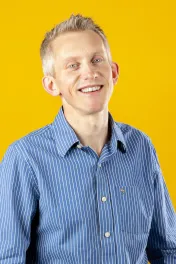
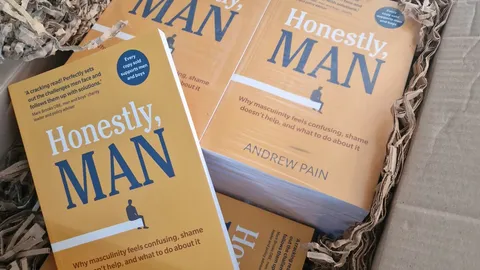
Andrew Pain is a Mental Health & Resilience Keynote Speaker who speaks from lived experience on resilience, burnout and workplace wellbeing. Host of the Men on Show podcast, author of the book Honestly, Man, and a TEDx speaker. Member, International Coaching Federation, and Mental Health First Aider trained.
Never miss an episode
Candid conversations with everyday heroes – ordinary men doing extraordinary things.