Men on Show · Episode 25
Men, Rugby and Life After Sport with Stevie Ward
- 13 March 2024 .
- 32 min .
- Hosted by Andrew Pain .
Stevie is a former professional rugby player, and part of the golden generation at the Leeds Rhinos, one of the most successful teams in super league history.
Andrew hosts this podcast. His own keynotes are on burnout, resilience, imposter syndrome and difficult conversations.
In this episode
About the conversation
Stevie launched Mantality in 2016, inspiring conversation around mental health for men. Mantality now offers counselling and life-coaching services, and engages people through a stigma-breaking podcast. Throughout all of the winning and losing in life, Stevie believes that the truest form of resilience is to realise the potential of our true selves. Stevie put this to the test by leading culture meetings as a captain of the Rhinos team in rugby league; one of the toughest sports there is. Promoting authenticity formed championship winning teams and formidable relationships. Stevie believes that authenticity is the only thing that aligns success with fulfilment, and we all crave it...
Reach out on Insta: www.instagram.com/ste_ward/ http://www.stevieward.co.uk Or on Linked In Stevie Ward Linktree: linktr.ee/stevierayward
Key points of the episode
- What stood out for Stevie as a kid on the pitch.
- That there was no rugby "in the genes" .
- How emotional and mental well being was not a "thing" in the early days .
- How wearing your heart on your sleeve was acceptable on the pitch, but less so off.
- How he realised it was no longer possible to stuff feelings down anymore… and what he did about it.
- His long term post concussion symptoms.
- What he feels is his new purpose .
- His message for men and boys today.
Men on Show shares lived experience and honest conversation – it is not medical or therapeutic advice. If you're struggling, you don't have to cope alone.
Samaritans: call 116 123 (free, 24/7) NHS: 111
Full transcript
Read the whole conversation
A complete, verbatim transcript of this episode – every word is the host's and guest's own; the topic headings are ours.
Welcome to Men on Show, the podcast Candid Conversations with Everyday Heroes. Join Andrew Pain as he interviews fascinating guests, ordinary men doing extraordinary things. If you love the show and you think somebody could benefit from hearing it, why not tell them about it by giving it a share on social media? Oh, and at the end of the podcast, if you can leave us a five-star rating and a review, it really helps us more than you know, and it gets this important message out to more people that need to hear it the most. Right now, enjoy the next episode. The next episode.
Hi, my name's Andrew Pain, and welcome to Men on Show. And I'm delighted to welcome Stevie Ward to Men on Show. Stevie, a former professional rugby player, and part of the golden generation at the Leeds Rhinos, one of the most successful teams in Super League history. Steve became the youngest captain. Is that right? The youngest grand final winner ever, a named captain at just 26. But also you've faced adversity, some life-changing injuries, and I want to get into that. And obviously now you're promoting mental health for men through your counselling, life coaching services, and a stigma-breaking podcast that you've been running. So it's an absolute privilege, Stevie, to have you on the show.
Thank you, Matt. Awesome to be here.
Rugby as a child on the pitch
So just to start us, growing up, Stevie, what kind of stands out to you as a kid? What's your kind of most vivid memories? Is this good or bad?
What stands out to me, mate, was many times turning up to a rugby field and catching a ball and feeling this fear and trepidation gravitating towards the defensive line in front of me, which on a rugby field is a load of guys. You know, when I was young, obviously the young boys, but in my mind, they were big, angry men that wanted to grab me from me, to grab and smash me, you know, but I remember like the feeling that I used to get catching a ball and moving towards the line.
And it was, well, I mean, it was there was fear in it, but there was also this like anticipation and excitement moving towards it. And naturally, it was so natural. But coming into touching distance on that line, I'd sort of veer towards the right. And I'd almost like side on, and I remember shaping my body up to the skies. And I remember just at the perfect moment, stamping my right foot down, and put it into this defensive line there.
And you know, is that moment of truth where you feel this like racing for contact, and you're sort of like hoping that you get through to the other side of it. And you feel these arms trailing your waist, these fingernails scragging at your neck, you know, to bring you back to the other side of the line. And I remember popping through, and hearing my mum, you know, I can remember that, I hear my mum from the touch line screaming my name, come on, stay there.
And, you know, it's just like I just had that feeling of freedom and exploration and adventure, and like I could do anything, you know. And then moving towards the fullback, who was the last line of defence between me and the tri-line. I'd just be full of it, I'd have this swagger and I'd act on a daydream that I'd had four days before in maths class, and I'd drop the ball onto my foot, I'd knock it over the top of his head, and I'd run round the side and I'd catch it.
And then it would just be sprint, a sprint home. That's what I like to call it, sprint to the tri-line. You know, and getting there, swan dive over the line and landing on your front with the ball as you're landing, game. I did just have this feeling that everything was just right. And that was a lot of my life, you know.
Early talent, drive and coaching
Yeah, amazing. And you feel, looking back, that there was something kind of naturally in you. Or do you have rugby in your family at all?
Read the rest of the transcript Collapse transcript
Not so much, mate. No, my mum and dad were met on a bike rally, motorbike rally. They called me Stevie Ray Vaughan after the famous blues guitarist and singer, which I've got more similar hair to him now. You know, since I finished rugby, I can grow my hair and look like a blues guitarist. But yeah, it wasn't really in the family. I just saw my child minders, I remember, the next-door mate was playing around with a rugby ball, and that was it, you know.
And just immediately had this searching, like, all in feeling about me, all in drive about me. And at the same time, I think there was a layer of real caring and sensitivity and vigilance as well, you know?
You had that for rugby, would you have set that kind of drive? And I'm imagining it now, because I was terrible at rugby. I mean, I absolutely hated rugby as a kid. I was all right at football, but the thought of running out there, I was a bit of a scraggie runt when I was sort of a teenage. I was always flattened. I was always put on the wing and flattened. I actually remember one game, my team were furious because I had the ball.
I was running. I could see I was about to be flattened. So I stopped running and gave the team the ball, said, you know what, just take it away, whatever. So like, I didn't, I mean, I had drive in other areas of my life. Do you feel like what you're describing, running at that defensive line, that anticipation, you're describing vigilance, like the feeling alive, the determination when people got their hands around your waist, the excitement of the game.
Did you have that kind of excitement, those kind of personality traits for other bits of your life? Or was it just on that rugby field that it sort of all came together?
That's a really good question. I think, I think, yeah, I think listening to music, you know, I enjoyed English literature when I was younger, especially if it was a book I was interested in. And I'd like, you know, I've been a field there looking at what it meant, what these things meant. And, you know, just like I made a contract with myself when I was younger to not miss a tackle and not feel like I'd let myself down.
I think somehow I was leaked into life as well. And trying not to leave a stone unturned, really. I guess social life when I was younger was just, you know, things were a conquest and things were to achieve and things were, yeah, a high achiever, you know. I just couldn't let things go and I had to be the one that was doing the thing, whatever that was.
And when did you start playing rugby? Like I imagine sort of you're at school, you've got talent, presumably that talent gets spotted at some level. Actually this kid, not only is he playing rugby, he's actually pretty good. Like, how do we sort of step him up into an area where he's really up against even better kids? When was that real talent spotted? And it was begun, you began to feel elevated.
Looking back, I feel like it was pretty much straight away, like under eights, under nines. And it was just sort of a matter of time in my mind that I would be part of some elevated camp, whether that's national camp, whether that's playing for the Leeds area, whether that's getting on to the scholarship at 12 years old, it was back then. You know, and it was sort of coming away from your comfort zone, of all these people that you know, your mum and dad are integrating into the community, and being the leader to go into these other groups of young men that you're not sure of, and you don't know who they are.
And that took some adapting, in order for my true self, and you know, that sort of winner, and achiever, and driver to come through, you know. So that was quite young. And a lot of rugby was played, a lot of training sessions were played, but a lot of times I didn't want to. But yeah, man, it was quite a ride when I was young.
And thinking back to when you were a kid, when you were a teenager, as a young man growing into the sport, was there much care and attention back then as to your physical wellbeing, emotional wellbeing, mental wellbeing? Did the coaches that you experienced have a good grasp of that from what you can recall?
I'd say it wasn't really a thing, you know. I think it was, it was, yeah, literally just relying on carrying out the physical tasks, you know, and everything to sort of get to the point of of just doing it, you know. It was as simple as just being able to do it without, I guess, much forethought around coaching and empathy and emotion. And, you know, it's definitely sort of progressing and changing now. And, yeah, I think for me, especially in the early moments of my career, that empathy and feeling connected and seen definitely helped me to bring out, as I said, that true self and that true performer that would listen to himself rather than the periphery now.
Psychological safety and feelings talk
Yeah, I mean, you went on, you enjoyed some wonderful years at the Rhinos. And I imagine, as an outsider looking into what it would, what's life like when you're in a professional, a sort of high, sort of elite level rugby team, what imagines, I'm sure I'm not alone in imagining this, there's a lot of bravado, it's all big and tough. But actually behind, you know, off the pitch, did you feel there was a good level of psychological safety within that team, that group of players, the management structure, you know, if you're struggling with your mental health, you weren't coping.
Did you feel that it was something that you could easily be open about, or would it have been something you'd have squashed and sort of kept under wraps because you wouldn't have wanted anyone else to know?
Yeah, that's a good question. Definitely waves of safety and unsafety, I imagine, just like in any organisation and workplace and team. Growing up, I sort of realised that it was... The release came on the field where you could wear your hat on your sleeve, and you could give everything, and that was sort of accepted, but off the field it was a lot riskier in terms of emotional exposure, and you sort of end up closing off and thinking that this isn't the place for that, and maybe this won't work, and I've got to be like that, so I'm going to close and conform and shape myself into this.
And then as I got older, I realised that the whole person is what you want. The whole person is who you want to speak with, who you want to be coached by, who you want to have in your team. And it got to a point when I was young, 22 years old, where I'd probably squashed, like you say, a lot of that stuff down and felt depressed. And I know Gabo Almate talks about depression is pushing something down and not feeling what isn't safe to feel.
And there were probably loads of stuff that I didn't feel safe to feel growing up. And I just realised I couldn't not feel it anymore. I couldn't keep pushing it down. I launched Mantality, as you mentioned in the intro, that was 2016. And it was an online magazine made to talk about mental health, to talk about emotions, as if they were these aliens, and in an environment which was completely sort of amiss of it, and the feedback, and the sort of connection, and the empathy that I got was just unbelievable.
And I wasn't even playing at the time. And I just thought, is this world that we live, that we don't speak about? And I'm like, well, why not? I don't understand it. And it's all for fear, and judgement, and shame, and yeah, I think it's been sort of something that I've not really been able to let lie since I've done it, really.
Yeah, I mean, I wonder how much we have, like, almost this assumption or stereotype. I was thinking back to a conversation I was having in the pub a few weeks ago, after the game of football, I still play, and me and this chap, we were chatting sort of politics and the state of the economy, something like that. And a guy came up, part of the football team, and was like, oh, this is very deep talk, isn't it? Like, a real sort of, like, deep talk, feelings talk, I don't know about that. And it's like, yeah, but...
It's strange. I don't get it.
I'm like, what do you mean deep?
Like, do you mean real? Do you mean just like, life? What were we meant to go around speaking about?
Two concussions and the symptoms since
What encouraged me was, it really struck me that I've not heard anyone say that for a long time. I do remember that. I used to be a recruitment consultant for my sins. And I do remember that kind of, almost like feelings talk is kind of fluffy, happy, clappy, none of that nonsense here. But I do think it's changed. And that comment was surprising to me because I've not heard anyone say that in my circles for a long time.
So I hope it is opening up. I mean, talk me through as well. Obviously, you were, you know, some fantastic memories of playing at the highest level, most successful team. But then there was sort of a life-changing injury. Was it a one-off match where there was an injury and life was never the same again? Or were there a series of injuries over a period of time that made the initial one sort of worse and worse?
There were, yeah, I had obviously loads of amazing experiences. And just the experiences made from when I was young. They were like reality-defining, reality-shaking, you know, from being 18 and walking out with both Wembley and Old Trafford in the first year. You know, like, to 80,000 people. And you're still sort of dreaming about doing that, but I was living it. And yeah, like walking into a different reality almost. And, you know, I had a lot of success and won quite a few trophies and shared quite an amazing amount of relationships.
And yeah, 26, after sort of being a leader in different shapes and forms and doing it unofficially when I was 24, I'd been officially made captain when I was 26 in 2020, and I've just got two concussions at the start of 2020, and couldn't recover from after the second one. And obviously post-concussion syndrome, it was called back then, and when it goes over six months, it's persistent concussion symptoms, which is what I struggle with now. So I have headaches and dizziness and stuff, being the main hurdle that I live with in life.
And it's difficult, mate, because we just spoke about me being a winner and an achiever and all the rest of it. There's a part of me that's like, why am I not better? Why can I not get better? What is it that's standing in my way? And, you know, like it's an ultimate lesson really, just like a lot of the injuries were, to say that, yeah, you set a plan, you set a goal and a direction for your life, but ultimately, there's a much bigger current to your life, which you have to accept, you know. So, yeah, the injury has been very, very difficult.
And how did that affect you, you know, playing at the top level? I imagine from what you're saying in terms of your age, with years to go, yeah, how did that affect you in terms of how you view yourself, how you viewed your world?
I look back now, and it's nearly 40 years, it will be in February, since that second game. And I look like a different person, you know. I've got muscles coming out of my neck, and I'm probably 10 kilograms, 12 kilograms heavier, you know, physically, back then. And just the sheer amount of challenge, and well, I'd say challenge is pretty the same, but I guess the physical and mental strain that I was putting myself under, in terms of the training and stuff, was just so different to now, where I struggle to exercise much now.
And I'm having to live a different life, mate. I'm having to live someone who cannot just train through something, someone who cannot just throw himself into a tackle and be celebrated, and someone who can't just rely on his talent. And I'm having to rely on acceptance and self-kindness and caring for, you know, the position I'm in, really. It's completely different. And there was an element and a shade of that life that I brought into my rugby playing career because I had so many injuries, and I found it very, very difficult and felt a lot of shame at times and felt a lot of pressure. But now, you know, it's a different playing field.
Finding a new purpose in speaking
Yeah. And what do you think is helping you? I mean, obviously, since there's injuries, and you're doing a lot of really cool stuff, the coaching, the counselling, you mentioned the online magazine, the podcast. Is that helping you to rediscover a new purpose? Is there something else that you're doing that you would say, look, I'm going to share this with the people listening because this has been really helpful to me in moving beyond this setback?
Yeah, I mean, I got to a point last year where I was like, what am I doing? Because I've taken some time out, travelled to try different treatments. I've got around and met new people and ultimately I had to find a new sort of... because I think I'm a leader, I know I'm a leader and I know that I've got that drive in me and there has to be something.
And I had to knock a few barriers out of the way, really, to speak so in depth about my experience and create what I felt intuitively and step through some more fear and realise that I said, you know what, I love speaking, I've been a keynote speaker since I was 22, funny enough, but realise that this is me, this is what I want to do, and there's the pressure to perform, there's the creativity in there, there's the off-the-cuff stuff, there's the action and there's the reliance on me to pull something out of the bag, which is like playing rugby, and also taking something on and speaking about something, in terms of the authenticity that I think is required to be a performer in that level, and speak about some of the foundations and the building blocks of all the reality that sits upon all of the nonsense that I see people talking about high performance and stuff out there. It's just like we're not, for your mate in the pub, very sharp, we're not going deep enough at all.
Whether men and boys are struggling, and why
Yeah, yeah, I absolutely agree. And just shifting it slightly, when it comes to men and boys particularly, I have men from All Walks of Life on this podcast talking about their views on masculinity. Are men and boys struggling? If so, why? I've not had many sports stars so far on this podcast. I did have Darren Harris, he's the England blind, captain of the England blind football team. He was on. Sue, your view of men and boys, are men and boys struggling in your opinion? Is there a crisis with men and boys today? And if so, why?
I don't know, I've only been around for 20, well, no, 30 now, 30 years. So, I don't know, compared to history, how much are we actually struggling? I'm not sure. I mean, I read George Orwell's book on Wigan Peter, and he's talking about the men that used to go work down in their mines. That looks pretty difficult. You know, I was just thinking the other day about imagining World War III and the call to go to war without any choice and have to go on the front line and fight.
And then, you know, you saw a sports star, and we love to play the game and say that being a sports star is difficult, and I'm not sure how difficult it is compared to what I just mentioned. But the struggle, mate, I think there's always going to be a struggle. I think there's a struggle for us to come to who we are, really, generally. You know, I think that's what there is. I think there's an element of always coming up in a social framework and having to find that out, and there's going to be the friction and anxiety around that.
And, you know, also, I look at anxiety as something which is a message and a messenger, and there's wisdom in it, and there's a real flag of anxiety to go a bit deeper and to find peace and content, you know. Instead of it being a nuisance, it's actually something that I think will, that can, if you listen to it and feel into it and just understand maybe the emotions that you're not integrating, it's a big help. But, yeah, generally, mate, probably are struggling, but I'm not sure if there's ever been a time where we are.
No, I think that's an important insight. I used to think, you know, and it was from my perspective during COVID lockdown, I've got a house with a garden. I don't know what it's like to live at the top of a tower block without a garden. But for me, with a garden, the call to stay at home and be locked down at home is a little easier to stomach than the call to go to the trenches in World War I. And I used to reassure myself that however tough this is right now in my house, stuck with my kids, trying to homeschool them, actually, it could be an awful, awful lot worse and was.
But I think really, it's some of the data that shows. So politically, we know that women in their 20s are moving to the left of the spectrum, men to the right. There's been a whole load of research has come out to show that's quite stark. And the percentages are, it's not a gradual shift here. We know that the number of women graduating is 57% now. And in education, boys are lacking across the board, lagging behind. And right down to, I was surprised by this at the start, in their early 30s, only 5% of women still live with their parents, but 15% of boys are still living with their parents.
And we know, of course, that there's tragedy around the people dying by suicide, is three quarters are men. I just wonder whether in your life, both within as an elite rugby player, and then coming out of that in this new life you have now as a speaker, whether you've picked up any of that, and if so, what you feel is driving that? And do you feel that there is like a bit sort of gender division? Do you see that in your role or have you seen that?
No, it's a good question. I'd say that immediately I wouldn't notice it, but I know in the education side of it, I think, as someone probably who just wanted to be out on the field and running around and moving around as a young kid, I think that the education side is probably for men a bit harder to attain than women. That's just an amateur guess with what I've understood. But yeah, I'm not sure, to be honest. I'm not sure, and I won't be able to give such an amazing answer to that.
Finding Stevie, and a last message
Well, I think in a way, and just to sort of come back on the answer that you have given, see, I'm not an elite sports person. I might have dreamt of being an elite football player, but I was never good. But I enjoy playing. What I lack in skill, I make up for in the desire to be good, at least. But even as someone, you know, music was my thing. I was in a musical family. But I really struggled being in that classroom day after day after day.
I always wanted to be outside. And we know, of course, that teenage boys have 30 times more testosterone in their system at that point in our lives than equivalent age girls. So I do think there is something within the education system that is not set up to really support boys and get the very best out boys. And I think I personally think that therefore a lot of boys are lagging behind, feeling like they're lagging behind. And I do think that's part of the issue, but obviously not all of it.
I mean, in terms of helping men and boys, if you could give a message of encouragement to the men and boys listening to this podcast, you've been through a huge amount. It's relatively recent from what you're saying, but you are coming to terms with the fact that your life has changed. You're moving into a new season. A message of support for the men and boys. How would you best encourage them?
Yeah, I'd say that, you know, underneath all of it, you know, whatever the flavour of suffering is, whatever the anxieties or the depression, I do feel that they're signals. I feel like they're signals from our innate well-being that we have to sort of guide us back to a place that's more whole, that's more in tune with feeling, and that's more, for want of a better word, ourselves. That's what I believe from my experience, and it's something that when I listened to it and came back to it, it came across on the field, and it's where I could wear my heart on the sleeve.
And I try to do that every day, whether that's just getting out in nature and meditating and feeling the sensations in my body, feeling those waves of anxiety that eventually can put me up into my head, and my head and my thoughts are trying to work certain things out and second guess and manipulate situations and be fearful. I try to just get into my body, and I'd say that that's a big thing. It's like that defensive line I spoke to earlier.
Coming up to that defensive line, there's the emotional exposure, there's the risk, and there's definitely the uncertainty within coming up to that defensive line. I see that as coming up to how we're feeling every day with what can be presented to us. And if we have the luxury of being able to sit with it for 10 minutes a day and meditate on it and give attention to it, then it's quite revolutionary, actually.
Yeah, so, I mean, that's wonderful. It's a wonderful way to end the podcast. You're talking around, in terms of coping with adversity, you've talked around being outside, being really present with your thoughts, sort of returning to one's whole self. I mean, this is all wonderful stuff and stuff to definitely consider when you are struggling. So I really appreciate you sharing your insights. Stevie, how can people most easily find you if they want to connect with you after this podcast?
I think you find me on Instagram, on a username that I made when I was 16, that's ste underscore ward. LinkedIn Stevie Ward on there, and also steveward.co.uk on the old Google website, Malarkey, you can find me on there.
Perfect, steveward.co.uk. Stevie, it's been an absolute pleasure having you here. Amen, Asho. Thank you so much for giving it your time to be a guest.
Thank you, Andy.
Thank you for listening to Andrew Pain's Men on Show. If you could leave us a five-star rating and short review, it would be really, really appreciated. It helps us get this important message out to more people that need to hear it the most. See you on the next episode. Thank you for tuning in.
About the guest
Stevie Ward
Stevie is a former professional rugby player, and part of the golden generation at the Leeds Rhinos, one of the most successful teams in super league history. Stevie became the youngest grand final winner ever, winning 3 Grand Finals, 2 Challenge Cups and was named captain at just 26. Amongst the highs, Stevie endured 10 operations, several mental health struggles, and had to retire from a brain injury at the age of 27.

Hosted by Andrew Pain
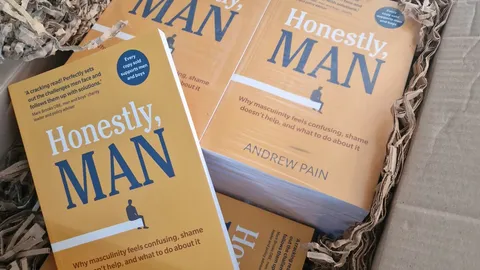
Andrew Pain is a Mental Health & Resilience Keynote Speaker who speaks from lived experience on resilience, burnout and workplace wellbeing. Host of the Men on Show podcast, author of the book Honestly, Man, and a TEDx speaker. Member, International Coaching Federation, and Mental Health First Aider trained.

Never miss an episode
Candid conversations with everyday heroes – ordinary men doing extraordinary things.