Men on Show · Episode 24
Men, Islamophobia and Inclusion with Sul Nakhooda
- 6 March 2024 .
- 47 min .
- Hosted by Andrew Pain .
As a Chartered people professional and project manager, with 18 years’ experience working in major infrastructure and urban regeneration, Sul is a versatile leader skilled in delivering impactful and sustained change in complex organisational structures.
Andrew hosts this podcast. His own keynotes are on burnout, resilience, imposter syndrome and difficult conversations.
In this episode
About the conversation
Representing large organisations such as Amey, Siemens, Arup, BAM and Network Rail. From Social deprivation to Neurodiversity, Sul has personal experience of being amongst minority groups and believes this allows him to bring unique insights into his work. As part of his current role, Sul is responsible for the alliance people and culture strategy, including the Equality, Diversity &Inclusion agenda and is an active member of his employing organisation's Neurodiversity and Multicultural Committee; helping to shape the future of the organisation.
Key points of the episode
- His experience of growing up in Britain as a young Muslim… and the challenges.
- Seeing the nuances between religion and culture.
- His experiences of Islamophobia .
- The unconscious bias that people have.
- The true power of open discussion and people coming together.
- His optimistic belief in humanity .
- We are all ambassadors .
Men on Show shares lived experience and honest conversation – it is not medical or therapeutic advice. If you're struggling, you don't have to cope alone.
Samaritans: call 116 123 (free, 24/7) NHS: 111
Full transcript
Read the whole conversation
A complete, verbatim transcript of this episode – every word is the host's and guest's own; the topic headings are ours.
Welcome to Men on Show, the podcast, Candid Conversations with Everyday Heroes. Join Andrew Pain as he interviews fascinating guests, ordinary men doing extraordinary things. If you love the show and you think somebody could benefit from hearing it, why not tell them about it by giving it a share on social media? Oh, and at the end of the podcast, if you can leave us a five-star rating and a review, it really helps us more than you know, and it gets this important message out to more people that need to hear it the most. Right now, enjoy the next episode. The next episode.
Hi, my name's Andrew Pain, and welcome to Men on Show. And today, I am so excited to have Sul Nkuda as our guest, Head of Organisational Development on the multi-billion pound TransPennine Route Upgrade, West of Leeds. He's a multidisciplinary senior project and organisational development professional, specialising in major complex infrastructure and urban regeneration programmes. He's also a British Muslim, and I'm so honoured to have him on the show to explore his experience as a man, his experience as a British Muslim man. So I'm so excited, Sul, to have you on the show today. Welcome to Men on Show.
Thanks for having me.
Growing up as a young Muslim in Britain
Brilliant. Well, look, just to get started, Sul, tell me about your life as a young Muslim boy and teenager living in Britain. What was life like for you?
Gosh, how long do we have? In summary, I come from a social class, a socially deprived area, but actually socially rich in so many aspects, too, as I've come to understand as I got older. Growing up in Britain, I was surrounded predominantly, it was first generation migrant or second generation migrant area. Growing up in Britain, you definitely felt British, you felt English. You definitely had a strong background to whatever your ethnic roots are as well. For some people, that's purely ethnic.
For other people, that's usually a mix of actual multiple ethnicities. Sometimes that gets lost a little bit. For example, my family, whilst they recently come from India, my ancestors not too far back are a mix of Persian, from the Arab Levant, Central Asian. There's a lot going on there. They themselves have lived in East Africa and my grandparents were in South Africa for a little while. There's a lot going on there which you don't necessarily realise actually.
Before you even understand yourself as you're growing up. Then there's a whole religious aspect which certainly in the 80s, quite dominant. I think with people, I'm not sure how it is for kids nowadays in various areas, but I imagine it still is. Yeah, you've got to get your head around all of that, but you don't necessarily know that you need to. Yeah. Or not necessarily the tools are available there. So, it's quite an exciting or challenging environment.
Well, what were some of the best bits? What do you remember that was just really great, the treasured memories of that life growing up?
Read the rest of the transcript Collapse transcript
I think, and comparing to now to then, I think having that social and family network, that's the heartbeat for particularly South Asian, Middle Eastern communities. I think there's a lot of value to that, which you may not appreciate when you're younger. So that would be, we'd be out, my grandparents would be out on the weekend, my cousins, we would call them brothers and sisters almost, they'd decide that we used to see them as opposed to cousins, and uncle and aunties, we used to see them almost as parents.
When I started to engage with people outside of the community, they were like, well, that's your cousin. We'd say, well, that's my cousin's brother, the system actually, and we'd see second and third cousins as family. That was amazing. This informal kind of support networks that are there, the cultural side of things, and this kind of belonging, but at the same time, you've then got that strong belonging. But then when you're watching TV or the media, or you go out of the area and you think, well, this is quite different, and then you've got to go, well, that's just completely different in some ways.
A lot of our school teachers were actually not from the subcontinent. There wasn't much diversity at school in terms of the teachers and the leadership of the teachers there. So that was interesting in terms of their dynamic, or their understanding of what's going on, and our understanding of them as well.
Religion, culture, and where he grew up
Interesting. What do you see as the biggest challenges? Were they growing up as a Muslim boy and a young Muslim man? Do you look back and see there any particular challenges that you felt that you faced?
Yeah. So those started to the back end of that response. I guess it's that the institutions, whoever the people are that are guiding your upbringing in terms of outside of the family home, do they sort of understand your cultural life, do they understand the nuances and complexity of that? And then that sort of then translates into things that we could almost take for granted now, which is a good thing. Understanding actually my Friday prayers are important.
My Ramadan is important. And there was a lot that was developing then and we were part of that development. Sometimes I feel like, should I be saying that I need to leave a little bit early because I want to have dinner with my family? You know, I'm going to open up fast or can I go to the mosque, particularly in this month, Friday prayers, maybe not all the months. And how do I go about navigating all that?
And with most of our parents being first generation immigrants, you know, some of them led a lot in terms of that front. And it just depended on what area you were from, what the relationship was in that community. So it's very sort of hit and miss, rather than consistency across the board. And then in terms of the religion and culture, I think trying to actually understand what is the religion and what is the culture? Because Islam is actually a very diverse religion.
And I think then trying to think, well, OK, that's what's culturally expected of me. And sometimes I can get confused as you grow up because you don't know your own mind yet or you haven't had those experiences to reflect on that. Or what's going around you. So not necessarily something that's kind of you're told to do X, Y, Z. But when you're growing up, you're observing behaviours around you. And you think, well, what's what? Where do I stick within this?
And then you've got the media of the 80s, you know, big, big thing, you know, there in terms of what you see on TV. And I think it was a real kind of I quite like to actually look back and think about all the sort of video games and movies and all the sort of popular shows that we enjoyed. And that is a totally different life, you know, that you see, you're quite American, you know, Home Alone, for example, you know, that big house with all the presidents and, you know, but in some ways you can identify there's a lot of family there, isn't there?
They're all going on holiday together, so you can identify with it. But anything actually, my house would not be like that. Or that huge house, which actually probably most people don't actually have, you know, with all the sort of riches and the good quality of life there and some of the advantages of it, luxuries around that, you wouldn't necessarily have that yourself. And then you kind of think, well, you know, you're trying to navigate through all of that.
So I think you kind of feel like where do you belong? I think is a big one. I think that was a big challenge for many people without them realising or not. How do we fit into this? Where do we belong? What's expected actually of us and, you know, how do we want to shape it going forward? So all that is there as a content, but you don't necessarily know what's going on.
Sure. Because where roughly did you grow up? Just sort of roughly in the UK?
So I was born in London. I started off in East London, the council estate there. We then moved up to the Midlands.
Where were you roughly in the Midlands?
So it was Leicester.
Oh, Leicester. Okay, yeah, I'm posted in Birmingham myself, so not too far.
Yeah, I moved to Birmingham after university, so familiar with Birmingham. Yeah, so, you know, obviously, if you know much about Leicester, very sort of thriving multicultural community, but then quite different to other Asian areas in other cities. But people wouldn't necessarily know that from looking on the outside. Yeah, no, not at all. It might be the same in Birmingham or Leeds or Manchester or wherever, actually. Coming from there, you go to that area, you think, this isn't what I recognise.
Right, interesting.
And it's quite different. They have their own cultures, you know, the Bengali community or Pakistani community, or, you know, things are far more diverse now as well. You've got a lot of Kurdish people, you've had a lot of, I mean, fortunately, in terms of adding to diversity, unfortunately, a lot of refugees from the Middle East and places like that as well. So you've got a different landscape now.
Islamophobia before and after 9-11
Yeah, I was reading an article from the Muslim Council of Britain saying that nearly half of reports of religiously motivated hate crime is against Muslims in the UK. And particularly with recent events in Palestine, the incidence of hate crime against Muslims in London, for example, has gone up by 140%, which is really, really tragic and sad to hear. Did you feel that you experienced Islamophobia, some sense of that, growing up? Did you did you recognise that as a younger man?
I think for me, there was definitely a line in the sand with 9-11.
OK, interesting.
Where I think Islamophobia, as we know it today, started to accelerate. Prior to that, you wouldn't even know the phrase Islamophobia, right? But it was there, but I think it was more subtle. And when it happened, you probably maybe just saw it as racism or something like that. So in terms of pre-9-11 growing up, it would be more subtle in terms of perhaps even unconscious bias from your teachers, etc. So one of my teachers actually, I thought was fantastic, but he didn't actually have much aspiration for many of the kids in the class.
Actually, only probably the real kind of high academic achievers and the ones that were just the best behaved, which I was a high academic achiever, but I'm sure I was the best behaviour, Andrew, if I'm honest with you. So his thing was, so what do you want to be when you go to grow up? Do you want to kind of go into selling cars or, you know, things like that? And actually, I had much higher hopes and ambitions than that.
And I was absolutely nailing all my tests and school results. So that was interesting because that wasn't on any basis of, you know, well, why not? Well, I wanted to be an architect at that time. Why not? Why not some of those higher professions? Where's that coming from internally, you know, type of thing? There's no reason to think why I would have been going down that route as opposed to a sort of more kind of senior route, not that there's anything wrong with that route, but, you know, it didn't really match what was actually happening on the ground.
That kind of thing going up. And then in terms of direct Islamophobia, yeah, you know, you'd be out in the town centre, for example. And if the and it was quite segregated, I think things are a bit more mixed nowadays. But communities were quite diverse, although, you know, even Leicester or other cities would say, well, we're quite diverse. But back in those days, it was diverse only in those specific groups. You know, you went to the city and mostly the Afro-Caribbean people lived in one area and the white people lived in a different area, the South African kind of people lived in a different area.
So when you'd venture out, you'd then get it from if there was a group of, let's say, white kids from Iran, you have your mosque hat on or something like that, you would get bullied or they would, you know, some instances we were robbed of our money and that type of thing. We used to have bricks and bottles and stones thrown at us on the way to the mosque, which we used to go for our learning in the evenings around religion and other areas, Arabic and things like that.
You'd be, you know, you'd say, they'd call out names that you're wearing a skirt and that type of thing. So that kind of thing was there. But you just sort of accepted it because you thought, oh, I am different. So you were felt, you felt different, you definitely felt different because there was no kind of integration really there. So that kind of thing. And then post, you know, 9-11, that's when I certainly had this feeling of, oh no, they're going to think that's got something to do with me.
And I say they, I mean, the larger mainstream population, the media, you started seeing more in the media, you know, things like that. And you think, oh, what does it mean for me? I still have got nothing to do with that. I don't think anything about that. But most people I knew were just, you know, actually everyone I knew were just wanting to do good in society and contribute in a positive way, you know, going to the mosque and that type of thing.
I do actually remember going back when I was a child during the Iraq war. That's when it first really hit me and you can probably class that as Islamophobia. So I went to school and in our school was predominantly the same ethnic background, but they were Hindus. So it was really odd, Andrew, because actually you felt like you spoke the same language, same mother tongue, ate very similar food, although we probably ate a bit more meat because we were muslims.
But actually I found out afterwards, I thought Indian food actually was very vegetarian food and we used to throw meat on top. I realised that afterwards. You then felt an outsider within that own community in a sense. Actually, our parents who lived closer together, neighbours in East Africa, felt closer together and as part of one community, then we did as born and growing up in England. I remember he said to me, we're going to beat you and he was in Hindu religion.
I knew about that. I said, what do you mean? He said, well, you guys in terms of Saddam Hussein and Raqqa and I thought, I'm not on their side. I don't really even know what's going on. To be honest with you, and as you imagine, the kids are pushing me around and that type of thing. It was more play, but actually that was the first time I experienced that he saw me on that side, purely because of my religion.
Impact of bullying, and whether it is worse
Yeah. And you say it was more play and you've referred to people calling out to you, are you wearing skirts? And you very much downplay that in terms of its impact on you psychologically. But do you think it did impact you? Do you think that to me sounds really hard to deal with as a fellow growing up, wanting to belong, wanting to feel like you're a man, to be faced with mockery about who you are, about your culture, in that situation with Iraq, some sense of confusion.
Like, hang on, you're connecting me with, do you think that affected you or do you think genuinely it was like it was not a major deal for you personally?
I think no doubt it would have affected a lot of people of my generation, my peers, no doubt. But I think we were in that space then where you just had to get on with things. So you'd feel bad. And it probably did impact then, my friendship with that individual or others. Or when we used to go to town, we used to have to hide our money in our shoes and things like that. We'd be more careful about what we did.
So it would affect you and you'd have some kind of anxiety or nervousness around things like that. But then there was resilience that comes out of it as you probably know with the good work that you do Andrew in terms of dealing with that and learning how to find in your own ways. And I'm sure that there's people that really struggled more than I did perhaps. And I did struggle at points, you know, but that's probably made me more resilient now.
And looking back, certainly, it's kind of shaped who I am. But yeah, you wouldn't want that for any children at the time. Yeah, you would kind of, as I've explained, I was thinking, well, that's not me. That's what it had to do with me. So I think of these things. Am I an outsider, you know? Yeah. And you'd be worried about going to the mosque, you know, talking about violence there when people throwing bricks and bottles at you and things like that.
You'd kind of go in groups. Sometimes you'd walk together for a certain patch where you knew that there might be other kids. Yeah. Around and that type of thing. And then you'd kind of go off and walk on your own and that type of thing. So, yeah, you know, you'd have that fear. But then I think we accepted it as this is the area we live in, and this is what life is like. So you need to get on with that. Yeah.
And do you think it's worse today, though? I mean, that's the question. Obviously, we've mentioned the Iraq War where you kind of noticed that it may have, there was the outcome for you was sort of being teased a little bit about whose side is going to win. You mentioned 9-11 very specifically as something that, you know, there was almost like a date before 9-11. It was like just general bits and pieces of racism, not really conscious of it in that way. But like after 9-11, you talk after 9-11. Therefore, what do you see more of it? Is it a bigger problem? Islamophobia, you've seen that as a bigger problem, do you think?
I think the unconscious bias was definitely always there, or sometimes conscious bias. Some of the early jobs I had, you'd be made to feel less welcome, perhaps, or there'd be a social after work or whatever it might be. Sometimes you'd be in food, sometimes you wouldn't. You'd feel like an outsider. That was already there. But I think what that did was bring it out into the open. I think the media then really started to, the mainstream media, I think, until today, and we're seeing now with what's happening in Gaza, that unfortunately, the mainstream media don't actually, they portray a particular agenda.
And I think there's various understanding and reasons why that's currently happening. And I think that definitely was become apparent. I mean, partly because I was probably about 19 or 18 at the time, as I was probably more aware now and conscious of what's going on. Incidentally, there was an issue at the time. There was Israel was doing one of its assaults on, I think it was Gaza at the time. You might remember there was a dad with a child.
And he said, don't shoot. He was protecting his young child. And he was hiding behind a can or a bin or something like that. And then they still shot the dad. Oh, actually, I'm sorry, they shot the child. I'm not sure they shot the dad as well. That, for me, really kind of hit home. And I was like, wow, you know, you're led to kind of believe that the institutions around you, the government, et cetera, are there to protect you.
That we in the West are very democratic and protect everyone, things are fair and equal. And in a lot of ways we are. I know people have been abroad quite a bit. And you see that we are. We've got great. But then when it comes to certain things like that, you think, well, you know, it's not fair. Now have your back, you know, there was an innocent person that was clearly very innocent and that type of thing.
And that started to, you then start to witness things like that. But one thing I didn't want to share was, I think it was important. When that happened, I remember speaking to my dad and thinking, sharing some of how I felt, which was interesting because I imagine a lot of, you know, young lads and men, regardless of race or anything, in those days, wouldn't probably talk to their dad that much about how they're feeling, you know, that type of thing, particular age.
And my dad said, and it was a solid advice, I think, he said, do you know what the hardest thing is, son? He said, the hardest thing, people get carried away when these things happen. And sometimes they then respond negatively. The best thing that you can do with any human being is to focus on doing things well and having the best behaviour. Because actually, if everybody did that cumulatively, people would just get along more, and they'd realise that what they're seeing on TV doesn't actually reflect back in the people that they know.
And, unfortunately, this is the case, when you do something wrong, that's going to be amplified. You do something good. I think that's just the way human psychology works anyway, doesn't it? But I think particularly said, if you're from this sort of minority background, you do that because you're a Muslim. You don't necessarily see people say that about other religions or races or faiths and they do do it for some. And he made me aware of that and that really stuck in my head.
I think that's been a big motivator of mine. It's actually hard to just live the day to day really well and treat people really well and contribute to society positively. And I think that sort of thread has then stayed with me all the way through. And, you know, I'd like to think that people then through their interactions with you go, actually, hold on, that's not what I see in a group. But I do think that media, the bias, I think in some ways we've seen with our governmental institutions that we should know and trust, not there all the time consistently for various groups, I think, is actually quite a strong counter-acting force in terms of that landscape of how people feel and that culture is shaped. So that is, I think, I felt that way through.
Ignorance, and how to build understanding
I think we have a shocking ignorance here in the UK. I mean, you've described quite clearly how within the Muslim community, within the UK that you grew up in, there is so much diversity, so many different communities within that one community. And I think often those of us that are not part of that community lose sight of that. I mean, it's fairly obvious, but we just need to remind ourselves that that is the case. And I was laughing at, well, not laughing, I mean, it's really not funny at all, but just at the shocking level of ignorance, even of Richard Madeley, TV presenter, going to be watched by millions of people.
And when the MP, yeah, British-Palestinian, Leyla Moran, Liberal Democrat MP, for Oxford Western Abingdon, and she was on one of his programmes, worried about her family hiding out in a church in Gaza, because of her family there, Richard Madeley genuinely asked her in all sincerity, well, did your family know, did you know, did you have prior knowledge of the Hamas attacks? And she was like utterly bewildered. Just because of her family out there, he just made this assumption that maybe she would have known, she'd have had prior knowledge, and she sort of gasped, and then she was actually wonderful in the way that she responded.
She responded very intelligently and with great dignity to what was the most ridiculous, absurd, stupid, biased question. And it strikes me just how much ignorance there is. How do we create better understanding? I mean, I suppose it starts with the press actually reporting in a more intelligent manner, which would be a good start. But how do we create more intelligent debate so we understand and we've just got a more balanced view of what's actually going on out there?
So I studied politics at uni, despite my ambition to be an architect. And I studied politics because I've been doing quite a bit of backpacking a year out before university. And I understood more and more what's happening in the world around me. I didn't quite know what career I'm going to go in, but I thought I want to get my head around this. And I knew someone who was on a similar course, who then, you know, inspired me a little bit as well.
I thought we'll take it from there. I know that I could do something with this, whether I end up working, you know, with the UN or whether I work for an NGO abroad, you know, whatever it might be. And what I came to understand, we studied the Cuban Revolution quite a bit. What I come to understand is that the government institutions, the Western media, particularly in the way that we live at this moment, with globalisation, with a lot of large sort of corporations, very sort of elitist people at the top kind of control a lot of what's owned at the moment in terms of the media and business and influence on policy and politics.
So I've come to the realisation that actually it comes back to the individual, it comes back to that advice that my dad gave. And I'm not just saying this because I might share this with him at some point, because I give him plenty of flack on other things anyway. So just reflecting on that now, pretty solid advice because I think the chat that we're having now, I think the chat that we've been having at work, we did Holocaust Memorial Day, we marked it yesterday.
And we marked that within its own right and that comes under my work. And obviously people are trying to think, well, what does this mean for guys in the past? I was like, well, let's just focus on that and understand what happened there. The chat came on and he talked about his own family experiences there. And you couldn't help bringing some of this stuff up. Well, that's exactly what's happening now. Exactly. And back then, people would have been probably less sympathetic to the Jewish community then because of the way things are now.
Ironically, now it's happening so well. So we see the direct link, but the lessons, have they been learned or not? And not everybody is kind of, there's a whole diverse mix of them. But in the mainstream media, that seems to be one narrative. So I've come to understand that it does come back to everyday people, everyday people understanding each other. We talk about everyone matters at work, and I talk about that quite a bit. And someone challenged me on that actually, because when I came up with that, I think everyone matters.
Someone said there's a sort of movement in America where they say all life matters, trying to counteract the Black Lives Matter movement. And I thought perhaps we shouldn't talk about that. I thought, well, that's not where we're coming from. But when you look at every individual and we look at what challenges they have, I have this wheel of privilege or underprivilege. When you look through that, someone can be underprivileged because they're from a socially deprived background.
They might be a carer, they might be neurodiverse, all these other experiences. And actually, I could be very similar to yourself, Andrew, in some of the stuff that we've been through, but just the religion or race might be different. But we're probably more connected and we don't know it than someone, like I said, that child at school that I thought was my mate, I don't hold anything against him, by the way. He was just, he wanted to play, you know, good guy, bad guy.
But when we look at that, we have more that connects us, that doesn't. And those, and I think about the 80-20 rule, 80% of the challenge are common all the way through, respect, understanding each other, you know, and that 20% is nuanced, and he wants his specific groups have their specific turn about to know that. But I think sometimes we try and solve everything. I think if organisations, schools, communities, religious kind of communities, the workplace a lot in terms of well-being and ED&I, focus on that kind of commonality, that intersectionality, I think we solve a lot of issues. Like most things you start to see that exponential benefit of what you're doing, that sort of halo effect.
Class, and how Amey has changed
Yeah, I mean, I agree with that. We are so connected. I think for me personally, this is my own personal view, that the biggest determining factor of disparity, privilege, disadvantage, is actually class and generational wealth, rather than your gender, your culture. And those are the things that will determine whether truly someone has those privileges or not. So I think that's really important. We remember across cultures, across genders, that we are connected. There are a very, very small group of hyper wealthy elites who have an awful lot of control.
And actually, the rest of us, we are connected. We are on each other's wavelength and to try to work together better. The advice that your dad gave you, I do love that focusing on doing what you do well and being kind and respectful. So you can be your own beacon of light. There's a growing effect, which is really great. You obviously, you work within construction now, within organisational development, in developing people in the organisation, very much within construction.
I know you've been site-based as well as part of your journey there. The men that you serve, Amey, sorry, within you, because it's Amey, they're your overall employer, aren't they? Do you think there's a greater awareness now around some of these, but psychological safety, so creating an environment where people are safe to speak up, challenge, and they're not going to be penalised if they talk about their struggles. Do you think there's greater awareness that actually, as men, we shouldn't just have it, think we've got it all sewn up and talk about stuff? Is that changing from what you see within the world of construction?
Yes, I've been with Amey quite some time now, and the TLU project is an alliance of various other major players, Network Rail, Vam Nuttall, Siemens, Arup, etc. And I'll talk about Amey. The journey I've seen Amey go on has been phenomenal, and I think there's a lot more to do with well-being now out there. There's a lot more to do with ED&I out there being inclusive, the gender pay gap, expectations, things like that are coming to play.
I think the public sector expectations are part of looking at contracts in terms of social value, expectations are increasing, environmental awareness of KPIs and that type of thing. That's just taken a new step in terms of ESG they call it, environmental sustainability. So within that period, now where we are at Amey is actually, it's amazing. There's these employee networks of different groups. They all talk to each other. There's different leadership programmes tailored for women or if you're from a multicultural background, which I think is fantastic.
Now, this may happen in other industries elsewhere. Construction industry, sometimes public sector is sometimes a bit behind. So I can only really talk about that. That's predominantly my post-university sort of experience. But for that sort of area, it's amazing. And very much the talk is about men's health, everyone's wellbeing, what do women need, what are the different populations. And it all seems to centre around our people and our people are the centre of us achieving what we need to achieve.
And I think the penny has really dropped within Amey, another organisation as well. So I think it's a really exciting time. But I think at the same time, expectations of the younger generation coming through has completely changed. I look at some of these guys and I'm in awe of them because they won't keep quiet. Interesting. Or the majority of them won't keep quiet. They feel strongly about something. They're happy to challenge quite senior people. As I would have been, we've been growing up as part of that respect for your elders.
And that's part that you get confused in terms of you can't challenge them, that type of thing, people of authority. And actually, it's not a bad thing. This is a good thing that they're part of that conversation. And it's quite changing all the time as well with the change in technology. So I think companies are actually on the front foot meeting their own populations need in terms of getting the work done and actually their customers. But bringing back that round, going back to our previous point, the people that have brought that change around actually come from within the organisation at all levels and across the whole spectrum of diversity.
And I've seen that. So those people saying, wouldn't it be good if we had this? And this isn't quite working and this is what we need to improve. And it's not always easy in such a large organisation to make that change, but that resilience around going for something when it's right and doing it in a positive way. And there are occasions where that doesn't happen, you know, and everyone makes mistakes, but then reflecting on that moving forward.
And again, I think it's coming back to, sometimes I think people think this large organisation and something's going to happen automatically, things are going to fall in place. And that does sometimes happen. But actually, it's people coming together. I think that's really powerful. And as we're seeing our previous conversation about what's happening on the world stage at the moment time, I think, you know, I've been pro-Palestinian since I saw that video, you know, over 25 years ago type of thing.
And I wouldn't talk about it previously. Absolutely, I wouldn't talk about it because people's understanding of it and people's understanding was, you know, this is a rightful, this is a Jewish homeland. It was too sensitive around that because of what happened in World War II. But actually, that's all fine. But there's this, you know, real kind of things that are happening with people not aware of it. And if you talk to them, there's too much work and too much kind of trying to get people to understand it.
And now people talk openly about it, people talk rashly about it. They're looking at the facts. And I think that then people, that understanding coming together, and I've seen that with different groups as well, coming together of all backgrounds. It's not just a kind of Arab thing or a Muslim thing. It is people actually going, hold on, if this is happening elsewhere, it could be us tomorrow. It could be that group or we've seen it happen with all these other countries or these sort of ethnicities before these certain groups.
So all of this is kind of links back to this, the same kind of reasons, the root causes. And I think people are starting to understand and be more, more kind of open around that. So yeah, it's kind of people again coming back, understanding each other, supporting each other.
Men and boys struggling, and us versus them
And that's presumably how you would see, you know, we know that a lot of the data points to men and boys struggling. In fact, only this last week, Cambridge University Press and Assessment had led some research that showed that across all subjects, girls outperform boys across the education system, with the exception of maths. And yet the one conclusion from this research is we need to do more to get women into STEM, the fact they're not performing so well in maths.
And yet very little said about actually boys are underperforming within education across the board. So actually, what's the impact of that on society? We know that then some people would say, yeah, but once boys get into the workplace, they saw like wings, you know, they got wings like eagles and they leap forward financially. But then again, some data is coming out on the fact that by the age of 30, 5% of 30 year old women still live with their parents, but 15% of men still live with their parents.
We know in terms of suicide, three quarters of people that die by suicide are men. Yeah, yeah. So clearly there are issues, there are challenges for men and boys. I feel the media miss a lot of those and just sort of skate over them. That's my own opinion. How do we address some of these issues? What do we need to do for our men? What's going on there?
Within Amey, the leading point was women, focusing on women. But what was nice to see was that the women actually have been instrumental in saying we need a multicultural development programme. We need to develop our early careers more. I know on our project, local employment in the north and those deprived areas. So actually, we need to work together on this because what benefits them benefits men and the other way around. So again, it comes back to that point.
I think sometimes people get into this us versus them. And I always give this example. You sit in a meeting and someone says white, pale and stale or something like that. And it makes me cringe because I think I'm not of that view. I don't want someone to just say that, you know. I take you to take each person for their own merit and that comes from a religious kind of perspective as well. Each person is taking on their own merit.
So what we need to do is actually look at all of the areas equally. Men, women. What are the challenges? And they'll be different sometimes for different industries. You can't solve the world. Sometimes picking what are the two or three priority areas tackling that and then moving forward and you see those big barriers break away. And I think definitely men need to be considered included within that because we talked about that wheel of privilege or lack of privilege.
And whilst, you know, men do have the front foot, statistically speaking, compared to women because of representation and senior levels. You don't always see that, you know, there's a lot of people who stay at the same level, a lot of people who don't actually make it through. So it needs to be more nuanced. I think that's just touching on you. Again, talking about some ethnic minority background, religious background, sometimes those odds are sometimes stacked against you, for you in terms of resilience and things like that, for you in terms of some of those networks that sometimes don't exist, you know, growing up in that type of thing.
But then again, so in terms of English, it isn't necessarily your first language growing up, and that statistically can call you, even though people may be particular in themselves fine at that point. Their face doesn't fit, as you know, whatever that kind of means in all its kind of complexities of that. So it's more than just kind of going, well, you're a man, you're going to be fine, because actually sometimes, and I've seen actually, particularly in the people space, and I hope the ladies don't mind me saying this, actually it's easier if you're a white female.
I've seen that with my own eyes, you know, because there's more white females in that space. So they support each other, generally speaking, and it's easier, you know, I might come in, and although nobody's got any bad intentions, but I can see, you can feel the vibe sometimes, there's a bloke in the room, you know, type of thing, or you know, and naturally, you know, we, I might speak a bit louder and make them across a bit more dominant, or whatever it might be, I might be a list, generally sometimes a little less chatty in terms of small talk, how are you, how's your kids, and we generally do do that, but I think sometimes it's a bit more sort of natural, I think, for women and they're a bit better than that, I think, I meant, so there's sort of different levels of it.
Being in the minority, and sheep mentality
Well, there's two things, you know, being in the minority anyway, you know, 15% primary school teachers are male, so if you're a male primary school teacher and you're in the minority, we know that whether it's cultural gender minority, class minority, it's really easy to, when you're in the minority, get this sense of imposter syndrome. Even if there's nothing rational to back that up, even if the people around you are very welcoming, you feel like, do I belong?
There's a spotlight on me, so I think that is yeah, being in the minority in any context is a challenge, just how we manage ourselves. I really like the point you raise and I'm really encouraged that actually, you've said within your organisation, you know, women are calling for a much more sort of 360 approach that encompasses all the different groups. And I think that's for me where we can really make progress as men, women, people where just as men, we should be calling out the dividers, the haters, the Andrew Tates, the ridiculous things that they say and say, no, not on our watch, that does not.
Also, ladies, please do the same for us. Let's look out for one another, let's support one another. And my own little mantra that I've got is every pound we invest for male welfare is a pound for the women that love those men and every pound we invest for female welfare is a pound for the men that love those women. We are all in the same boat and we can raise, we can all raise each other if that makes sense.
That's right, yeah, there's a there's a chap I've fallen in linked in, his name is Sul. I've forgotten his surname, unfortunately. It's quite prominent in the ED&I space. And he always hashtags his linked in posts as we rise when we lift each other. And I really like that. I wish I'd come up with that. Because I think it's great. And I think you make a good point there in terms of the pound aspect of it. But the reality is the more comfortable, psychologically safe someone feels, the more kind of included that they feel you're going to want to do this natural human behaviour.
You want to lift others. You want to be more inclusive of others. People tend to go on the defensive. They don't feel comfortable. They don't feel like they belong. They feel like they're being targeted or things aren't easy. That's unfortunately when people tend to get a bit defensive as we've seen. The majority of people actually want to see people have equality. Want everyone to do well. Whether they realise that or not actually. I think the behaviour as humans, whether we like it or not, we do have a lot of sheep mentality.
You know, psychological studies. We follow our leaders. We follow groups. And if it's positive, then we follow and we help each other out. And if it's not, it can get quite bad quite quickly with some of the examples we've talked about, the Holocaust or Palestine. The Uyghurs in China or whatever it might be.
Finding Sul on LinkedIn, and a last message
So just to conclude, it's been a pleasure to have you on the show. If you could give a message of brief encouragement for the people listening to this podcast, the men and boys particularly listening to this podcast, what would you say to them in a couple of sentences, your sort of concluding message?
I think we're all ambassadors for ourselves and for each other. We have a higher purpose whether we realise that or not. So I think in today's world, there's a lot of challenges in terms of information overload, social media. Try and take some of that space out to find out what's your purpose. It's a big question. Ask people what's their purpose. Whatever you enjoy, whatever good you want to see in the world, whatever legacy you want to live, you start to think about that, follow that.
When things get difficult or when things are good as well, just wake up in the morning thinking that's that person I want to be today, that's what I want to achieve. There's going to be peer pressure from your mates, you want to look cool, or at work, sometimes, what if I say this, what if I do that? But what you soon start to find is if you do things in the right way, you do the behaviour the mind follows, actually.
And people slowly start to follow the right way. And it is a person who has to take small steps at a time, I think. If I wake up one day and think, oh, I'm just going to crap the world with the whole team. You can think that, but sometimes it can be a bit more challenging than that. So that grip effect, I think. People underestimate that. Slow change over time. But where everyone does it, it's powerful. It's cumulative.
Brilliant. Now, I love that as a message. I love the use of the word ambassador. I suppose that could be a different question. If you ask someone, what's your purpose? I might find that a difficult question, but that could be a different way of asking that same question, couldn't it? What are you going to be an ambassador for? What are you going to champion? I like that. That's a really good way to end. I like the use of the word ambassador. And there's an absolute last question. Sul, where can people find you and get in contact with you? If they want to talk to you more, connect with you, how can they do that?
Yeah, so I'm not one for much more of social media and that type of thing, but I've started use LinkedIn a bit more. I wanted to understand the world a bit better, just myself. So I was receiving information, but now I tend to put a few more posts up and that type of thing. So I think looking for me on LinkedIn is probably the best way. It's got me a message like one of the posts that you think resonates and get behind that kind of movement. So I have to put some of these positive messages out there so that we have that cumulative effect as well. So yeah, it's probably the best way, Andrew.
Brilliant. So it's been a pleasure to have you on the show. Thank you so much for your time.
Well, thank you, Andrew, it's been a pleasure.
Thank you.
Thank you for listening to Andrew Pain's Men on Show. If you could leave us a five-star rating and short review, it would be really, really appreciated. It helps us get this important message out to more people that need to hear it the most. See you on the next episode. Thank you for tuning in.
About the guest
Sul Nakhooda
As a Chartered people professional and project manager, with 18 years’ experience working in major infrastructure and urban regeneration, Sul is a versatile leader skilled in delivering impactful and sustained change in complex organisational structures.
Driven by a passion for social purpose and enhancing the lives of others, Sul is a people-focussed leader and has successfully led diverse and multi-disciplinary teams across a broad range of projects in large private and public sector organisations, and is currently the Head of Organisational Development for the alliance delivering the TransPennine Route Upgrade programme.
Hosted by Andrew Pain
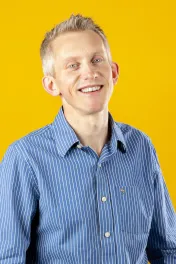
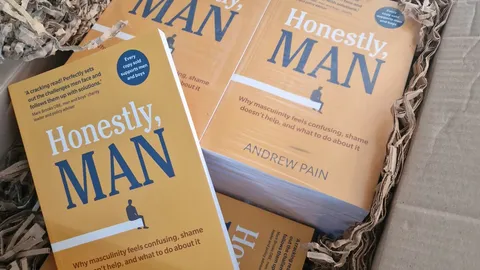
Andrew Pain is a Mental Health & Resilience Keynote Speaker who speaks from lived experience on resilience, burnout and workplace wellbeing. Host of the Men on Show podcast, author of the book Honestly, Man, and a TEDx speaker. Member, International Coaching Federation, and Mental Health First Aider trained.
Never miss an episode
Candid conversations with everyday heroes – ordinary men doing extraordinary things.