Men on Show · Episode 21
Men, Alcohol and Sobriety with Duncan Bhaskaran Brown
- 14 February 2024 .
- 50 min .
- Hosted by Andrew Pain .
Key Points of this Episode: His somewhat humourous take on our educatiion system.His early inspirationsThe key to good writing ( not what his teachers thought)How he hid his addictions (or tried to)The mixed messages we have around alcoholThe actual nuances of the problemHow stopping alcohol has helped him as a manHow the revenue from the alcohol industry is nothing compared to the lost productivity.How alcohol is percieved promarily as a female problem, but is really is not!What men need to ...
Andrew hosts this podcast. His own keynotes are on burnout, resilience, imposter syndrome and difficult conversations.
Key points of the episode
- His somewhat humorous take on our education system.
- His early inspirations .
- The key to good writing ( not what his teachers thought) .
- How he hid his addictions (or tried to) .
- The mixed messages we have around alcohol .
- The actual nuances of the problem .
- How stopping alcohol has helped him as a man .
- How the revenue from the alcohol industry is nothing compared to the lost productivity.
- How alcohol is perceived primarily as a female problem, but it really is not!
- What men need to address with this issue.
- A key inspiring message.
Men on Show shares lived experience and honest conversation – it is not medical or therapeutic advice. If you're struggling, you don't have to cope alone.
Samaritans: call 116 123 (free, 24/7) NHS: 111
Full transcript
Read the whole conversation
A complete, verbatim transcript of this episode – every word is the host's and guest's own; the topic headings are ours.
Welcome to Men on Show, the podcast, Candid Conversations with Everyday Heroes. Join Andrew Pain as he interviews fascinating guests, ordinary men doing extraordinary things. If you love the show and you think somebody could benefit from hearing it, why not tell them about it by giving it a share on social media? Oh, and at the end of the podcast, if you can leave us a five-star rating and a review, it really helps us more than you know, and it gets this important message out to more people that need to hear it the most. Right now, enjoy the next episode. The next episode.
Hi, welcome to Men on Show. My name is Andrew Pain, and today I am delighted to welcome our guest looking suited and waist-coated. You're probably the smartest guest we've ever had, Duncan, for those of you that are watching the video version. Duncan is a professional, lived experience speaker and author of the book, Real Men Quit, which we're definitely gonna unpack that today. He's also a Morris dancer. Maybe you should write a book, Real Men Morris Dance. He's an alcohol awareness expert. Duncan, welcome to the show.
Thank you, thank you. And I do have a bit of a backlog of books I wanna write, so don't tempt me.
Growing up, school and the Scouts
Yeah, Morris dancing is definitely one. I think you can bring that to life. So starting off, and I asked this question of most guests that come on, is there something that stands out to you from your past? You're growing up, and what was life like for you growing up?
So the thing I always end up returning to in my childhood was just how much school sucked. I did not get on very well with school. It was not for me. And I've spent a lot of time thinking about it. And the thing I normally say about it is, I think that the purpose of the education system is to turn you into a good employee, and I am unemployable. So it was just never going to work, was it?
Yeah. What was it, when you think back, I mean, you mentioned it's to turn people into a good employee. I suppose with that, I'm assuming you're referring to timetabling, the ringing of bells and all of that. It's a signal, end of this, start of that. It's quite regimented because it has to be, I suppose. For you, looking back at school, and we know that school is a challenge, particularly for boys, teenage boys, 30 times more testosterone in their system than equivalent-aged girls.
We know that infant boys' brains develop more slowly than girls. We know that the data, the evidence is there. Why is it for you that school, what was the reason why school sucked for you? What do you recall from that?
Read the rest of the transcript Collapse transcript
Well, I think there was a bit of a mismatch. So I, as you pointed out, I am a writer. I have always been a writer. And I remember one particular occasion when I was at school and I wrote this poem. And I was quite proud of my poem. You know, it had what I now know is metaphor and imagery and things like that. You know, technically, I think for an eight-year-old, it was probably a fairly accomplished poem.
Yeah, sounds like it.
That said, what I got from my teachers was, your handwriting is scruffy. You've spelled those words wrong and you haven't put the full stops in the right place. And at that point, like even at eight, I knew that they were idiots. That the idea that good writing comes from where you put the full stops, what your handwriting looks like and how you spell words, it's junk. But writing comes from things like imagery and metaphor, and you can hire an editor to make sure that your full stops go in the right place. So there was this kind of mismatch that I thought I was brilliant and they thought I was terrible. So it was never really going to work, was it?
Yeah, I mean, I do recall from my own school years feeling very bored a lot of the time. And I was physically present in the classroom, but I wasn't present in the classroom, which meant my parents had to sort of help me an awful lot when, you know, with sort of trying to get me up to date with my subjects and topics, because I would never listen. I couldn't listen. Just sat there in the classroom for lesson after lesson after lesson. So boredom was what stuck at me. So for you, what stands out for you about school is that this mismatch. Yeah.
Yeah, I think so. And there's an interesting kind of contrast to my school system. I absolutely loved the Scout Association. I was a member, I still am a member. I'm president of the local Scout District these days. So they wheel me out at watch events to do a bit of motivational kind of stuff. But I noticed that with the Scouts, it was much more self-directed. If I was interested in something, I could pursue it, I could do a badge.
And if I worked my way through the criteria, then I got the badge at the end of it. So it was like, if I did the work, I got the success. Whereas at school, I did the work and I didn't get the success. And actually, if I didn't do the work, I didn't get the success. So it didn't seem to matter whether I tried or I didn't try it. Still, it taught me that I might as well not bother because the result is going to be the same.
Whereas at Scouts, I learned the lesson that actually, if you try, if you put in the effort, if you're interested in it, if you're kind of like enthused about a topic, then you get rewarded. And that's why I had, you know, average GCSEs, but a ton of badges.
Amazing, average GCSEs, ton of badges. I like that. And who inspired you growing up? I mean, you mentioned the scout movement. That's great. So you obviously were being inspired in some ways. Was there a particular individual that inspired you?
Yeah, I think, you know, I was quite into athletics when I was a kid. So a few people like, I used to like the battle between Sebco and Steve Fram, that kind of rivalry that inspired me a little bit. And again, you know, I guess it's the same sort of lesson. Those guys, you know, they worked hard, they tried, they put their all into it. And that was ultimately the lesson that I learned. Despite everything, the school really tried quite hard to knock that lesson out of me, but I still learned it somehow.
The root of his drinking, and hiding it
Now on your LinkedIn profile, you mentioned that you experienced 20 years of hardcore drink, drug and food abuse. What do you think was at the root of that abuse? When did that abuse happen in your life and what caused it, do you think?
Well, I mean, you can draw a straight line back to that Blinkin Poem and all of that disappointment in school, because, you know, I didn't get on with school. I was quite dissatisfied and I looked for a way to remove myself from that situation, to numb the pain and to distract myself. And the best way to do that at the age of eight is of course with chocolate, because it is a socially acceptable drug for an eight-year-old.
So I very much started with just eating rubbish and kind of trying to numb myself that way. Of course, once I hit my teens, I discovered alcohol and realised that that is a much more effective hammer for that particular nail. And then once you start to get into drinking, you start to get into smoking, you start to smoke a bit of marijuana, get into the drugs. So yeah, it all kind of developed from there. Started off as a little bit of fun on the weekend with a lot of people.
By the end of it, the amounts had gone up, the frequency that I was drinking had gone up, and the amount of people I was drinking with had gone down, and in the end, I was just sat at home drinking a couple of bottles of wine on my own.
What did your family make of that? What was going on with your family? Did they notice any visible changes in the way you were living your life and in what they were seeing?
So I was a high functioner. I hid it pretty well. I still get people who look at my book and go, yeah, but you're a bit of a fraud, Duncan. You never really had that much of a problem. It's like, I was just pretty good at hiding it, because if you'd actually seen me back in the day out at an event or something like that, I'd have one glass of drink in a very kind of restrained way, like normal people would drink.
It's just I would then go home and finish it off, kind of thing. So it was something that happened absolutely behind closed doors. So I hid it as effectively as I could from my friends, from my family. I honestly even cried as hard as I could to hide it from my wife. Obviously doesn't work out so well because they live with you and they see the recycling, don't they? But I still tried.
Support from his wife, and how he stopped
And through this time, was there any support that you felt you could access? Were you able to open up to anyone? And if so, kind of what was that? And who was that? And if not, what was stopping you access support?
So I think, well, I was going to say that's a very interesting question, but it's about four questions.
Well, it's two. Because it's, did you open up? If so, what just talked me through that? If you didn't, why didn't you?
So the thing that really did it for me was the support that I got from my wife. She was very good. She was very gentle. She kind of nudged me in the right direction and pointed out that maybe there was a different way that I could live my life. And that was absolutely what I needed. I didn't need that kind of like strong arm, kind of like, are you killing yourself? You're costing her a fortune. That never works, does it?
So I was very lucky in that sense that, I had the support there when I decided that I needed it. So, I was in a relationship, lots of friends, family around me, job, somewhere to live. I had all of that stuff, and that is so important. In terms of like seeking help, why did I not seek help? Well, I don't know. I mean, the answer is to say, well, I'm a man, we don't do that sort of thing.
And I guess there is something in that, but you know, for me, it was, I have a responsibility to kind of deliver on certain things. I have a responsibility to be a certain way, and I've got to just kind of hold it together. And alcohol was, you know, that was the coping mechanism. That was what I thought helped me to hold it all together.
So, I mean, clearly giving you work today, and we'll talk about your book, Unreal Men Quit. There's been something that has enabled you to make big changes in the way that you approach your relationship with alcohol, presumably drugs and food. I'm assuming there, again, that you've probably exercised the same self-discipline that you do with alcohol now. You've carried that across. I'm assuming that, and do correct me if I'm wrong. But again, assuming those things, what was the spark? Was it, if you described the spark to us, was there a one-off moment, stand out? Was it a gradual path? What happened?
Yeah, I mean, I did kind of like, you want the 4 a.m. staring in the mirror kind of story, but honestly, I'm not sure they really ever exist. And I don't think they're as important as they're often made out in the memoirs. For me, it was absolutely, it was a gradual kind of thing. It was, as I got more deeply into the relationship with the woman that became my wife, things changed. And around that, some of it was smoking.
That was the first thing I stopped doing. Because when you're sitting at home on your own smoking, it's not good for you, is it? But you're not actually impacting on other people if you're in the room on your own. But if somebody comes and lives with you, all of a sudden you're giving them all of your secondhand smoke and all of that sort of stuff. So it was obvious that that was having an impact on my wife.
So that was part of the motivation why I stopped smoking. She just kind of gently pointed out to me that it might not be a great idea, that our lives might be better if I didn't smoke. So I stopped smoking. And then from that, I stopped taking drugs, I stopped drinking, and the last thing I sorted out was my diet. So yeah, I live a pretty healthy life these days, although I don't think I exercise that much in the way of self-control.
I think what I've done is I've changed the beliefs I had around alcohol and cigarettes and junk food. I don't believe that they provide me with anything anymore. And because I don't believe that, I don't have to resist them.
So, I mean, I mean, I don't, for me personally, I think you're right. What society likes is a standout moment, a eureka moment that's very dramatic, that makes great headlines, and makes a great story. What we don't like is what happens for most people, that there's just a gradual unfolding of events. Sometimes we can see a pattern, sometimes not always. Although the one pattern I would say, I don't feel like I'm trying to create a pattern that's not there, but it would appear to me, just hearing what you're saying, that your wife and your relationship with your wife over time has had a massive impact over the way that you handle yourself in terms of alcohol, drugs, that she, from what you've said so far, clearly seems to have been the spark over a period of time. Is that a fair assessment?
Absolutely. She can have all of the credit. Yes. I mean, I would go even further than that, you know? I think it's so much more than that. It's about kind of like really getting to know and understand emotions and learn how to talk about them, how to communicate in a more effective way. All of my behaviour, that was getting in the way of that. And since I've stopped drinking, yes, I feel a lot better. Now, I no longer poison my body.
But more than that, it's given me the opportunity to actually dig into other areas of my life. One of which you could call emotional intelligence, or relationships, or whatever you want to call it. That whole piece, that has been one of the great things that has come out of stopping drinking.
Mixed messages on alcohol, and a nuanced problem
You talk about alcohol poisoning your body, so let's jump into the topic of alcohol. You're the first podcast guest, actually, that I've had to really explore the topic of alcohol. I did have someone unpack their journey into crystal meth. That was Chris Thrall, fascinating to hear his journey into addiction, his journey out of that. So let's jump in. Alcohol, for me, I feel that there's some mixed messages. I feel like, generally, we all know, and society can accept that heavy drinking is bad for us.
There's no question about that. There's almost this sense that light drinking, moderate drinking, there are some qualities to red wine, antioxidants and whatever. And we know, for example, heavy drinking reduces testosterone levels, which is bad for men's mental health, physical mental health. Again, we've had a podcast guest, Ryan Park, who specialises in that. We know the impact of low testosterone, but it would appear from the scientific data that whilst heavy drinking does reduce male testosterone and decrease the quality of male sperm, moderate drinking, there isn't yet any conclusive evidence to suggest that moderate drinking does.
And so, for me, there's mixed messages. Like, it feels like heavy drinking bad, light moderate drinking is all right. What do you say about that? Obviously, in your book, Real Men Quit, you spare no punches on what you feel the ideal solution is. So what are your thoughts on that?
So, I think that is largely speaking a message that the alcohol industry has been trying to get out for a long time. What they want us to think is that, there are certain problem drinkers, and they are heavy drinkers, and they are the issue. Everybody else is fine. It is those individuals, it is not the product that is the problem. It is the people, not the product. That's always been their message. But that isn't really true, because there is an amount of alcohol.
If you put enough amount of alcohol into somebody's body, they are going to develop alcohol dependency. It doesn't matter who they are. There is a point where you put enough vodka down your throat, you will become dependent on it. So there is an issue with the product. What I think the real issue is that we do, we think of it as a binary thing. Like there are heavy drinkers who have a problem, and then there's everybody else.
And the truth is that it's far more nuanced than that. There are people that don't drink, and there are people that drink in low amounts, at what might be termed the lowest risk category. And there are people that drink at very heavy amounts. And then in between those, you have people who are moderate drinkers, and you have people who are moderate to severe drinkers. Now the problem experienced, the problems experienced by moderate and moderate to severe drinkers are not as big as the problems experienced by heavy drinkers.
But because there are so many moderate and moderate to severe drinkers, if you actually add it all up, most of the harm done by alcohol is in the middle. It's done to these moderate and moderate to severe drinkers. Now, I am not particularly an expert on testosterone, but even if mild drinking had no impact on your testosterone levels, it still has impacts on other things. It is not like it is a health product. Idea that it's got revizitrol in it, and antioxidants and those are good for you, that's a myth, you know?
That is absolutely a myth. There is antioxidants in wine, but the fact is that the damage caused in terms of inflammation, oxidation by ethanol, is far outweighs any antioxidants that are in wine. And honestly, if you really want those antioxidants, drink grape juice or better yet, eat grapes.
Alcohol industry revenue and lost productivity
Yeah, no, I mean, we could come to that. So I mean, I completely agree with you that, yeah, if you're gonna drink fruit juice, you may as well eat the actual fruit and get the fibre as well, and not just fill yourself with something that's gonna send your blood sugars crazy. I wonder whether, obviously, the alcohol industry itself, I mean, when I think about it, they want you to buy their product. Some of their bottles look beautiful.
I like wine. I have to say, I like to think that I'm fussy enough, I know enough about wine to not be drawn in by the label, the look of the bottle. But they do look nice. And even at Christmas, buying like various bottles of gin, all the bottles of gin look amazing. They do look great. The alcohol industry itself is worth something like six billion quid a year. We're one of the biggest, we are the world's biggest exporter of liqueurs and spirits, whiskey being the real key driver of that.
So I wonder how much government plugged into wanting this message where it's like, look, we really should say that severe drinking is bad, but we need to protect moderate drinking because the economy relies on it.
Okay. So there's two things there. There's the economic argument and then there's the meat bashing the government. Let's start with the economic argument. So do you know how many people the spirits industry employs in this country?
I have no idea.
About 60,000 people. It is a drop in the ocean. You know, it's not even an NHS trust worth of people, is it? It is a very small amount of people. And then the actual amount of revenue generated for the country is far outweighed by the costs associated with drinking. Just to, you know, give you some sort of statistics, I reckon it costs the NHS about 6 billion a year. In terms of policing, it's about 3.5 billion.
You know, in terms of lost productivities, you can talk anything up to about 40 billion. And what's the revenue generated by alcohol? It's somewhere around 11 billion a year. So it does, it gets nowhere close to paying for it. You know, we talk a lot about externalities from things like petrol and the fossil fuel industries and how they're not paying for the damage that they're doing. Well, we should be talking about the same things for the alcohol industry.
They are massively, massively costing us money in terms of lost productivity. In fact, if you look at the American economy, last year, alcohol, just in terms of lost productivity, cost the American economy 430 billion US dollars. That's more than apple. That's more than apple's entire turnover. So if you removed alcohol from the American economy, you would have another, everybody would be so much more productive, you'd have another apple.
How stopping drinking helped him, and any backlash
So, and how is it, the impact on you in going to, moving to sobriety and not drinking, what's been the impact? How has that helped you personally as a man?
So for me, it's like night and day. Literally, I could go on for hours about this. The things that I value the most, I think are energy. I get up in the morning. I recorded a podcast the other day at 4.30 in the morning. There is no way I would have done that when I was drinking. The only time I was ever up at 4.30 in the morning when I was drinking is if I hadn't have gone to bed, yeah, I certainly wouldn't have been coherent enough to record a podcast.
You know, I'm regularly getting out of bed at 6, whereas when I was drinking, I would regularly be getting out of bed at 9, you know? And I had a lot less energy because alcohol really affects your sleep. So energy is huge. In terms of focus and concentration, that is massive. In terms of peace, you know, I sort of spent my whole life chasing something. You know, you kind of like, you've got an itch and you try and scratch it with something like food, but that just makes the itch worse.
So then you try and scratch it with something like alcohol, it just makes the itch worse. You try and scratch it with something like drugs, and you just end up chasing and chasing and chasing. You spend your entire life running after a train that you can never quite catch up with. And stopping doing that, you know, that was huge, that sense of peace and calm and ease that I got from it. And then you can add to that the time.
So I didn't think I spent a lot of time drinking. I rarely started drinking before eight, nine o'clock in the evening, but actually, if you add it up three and a half hours a day, late till 11.30, 8.30 till midnight, something like that, three and a half hours a day, add that up. It's 24 hours a week, isn't it? You know, that's an entire day, including the bit you're asleep. So, yeah, energy, focus, sense of calm, and a lot more time. Yeah, that's how I've written three books.
And do you think there's sort of... Have you faced any sort of backlash at all? Or like, you're in a pub with your mates, you've ordered a coffee. It's like, a coffee, what are you talking? Because, you know, I mean, for example, only last week, Alice Wood was convicted of an alcohol and jealousy rage. It's what she was fuelled with rage due to alcohol, due to jealousy. She murdered her partner, Ryan Watson, ran him down deliberately, convicted of murder.
So this mix of sort of, a toxic mix, alcohol and rage, it's bad for men, it's bad for women. But I wonder whether with men particularly, there's this need to drink to be macho. It's part of being a man, even though we sort of know it's a toxic mix. Have you come up against anyone that's sort of almost as challenged you as not being manly because you don't drink?
So, and I think absolutely, you know, this is the drum that the alcohol industry has been banging for years and years and years. And that is the, you know, what better way to prove what a real man you are than sinking a bunch of poison and still being stood up at the end of it, you know? So absolutely, I think we have to acknowledge that that is a message that gets pumped into the heads of men from, you know, advertising, social media, streaming shows, movies, TV.
It is literally everywhere. I can get quite boring on the subject, but just to return to the point, have I got any grief for stopping drinking? Oh, look, you know, I would say the only time anybody has ever kind of like said anything about my drinking in that sort of sense, they've said it in the same way that they casually inform me that they're sleeping with my wife. You know, it's like, it's a joke, isn't it?
It's banter. That's what I've got. And, you know, I don't mind that because they are mates and they are taking the mick out of me and that's part of our relationship. And I'm quite happy with that. I think I stopped talking to the people who I had nothing in common with other than the fact that I used to drink with them. You know, the kind of people that I hung around with simply because they made me feel better about my own drinking.
I stopped hanging around with them. Maybe they would have been hateful and they would have said horrible things to me. But people that, like, I really have a connection with, that I have far more in common with than just alcohol, they never gave me a hard time. And I would say this to anybody who is concerned about it, 95, 99% of people don't share what you drink. They honestly don't care. They are only concerned about how they're going to pay their mortgage, what their boss is trying to do to take over the world and that rash they've got on their bum. They could not care less about what you put in your glass.
Drinking attitudes, and what a real man is
Yeah, and I wonder whether, I mean, for me, the attitudes around alcohol, like, real men drink, real men go and get drunk and have a punch up, for me, it goes beyond TV and media messaging. Where we go on holiday up in Yorkshire, Robin Hoods Bay is quite lovely. I can't remember, is it Robin Hoods Bay or Stade? No, it's Robin Hoods Bay. And there's a notice with some history, and they tell the stories of drunk men in pubs, sailors and fishermen fighting, being taken to prison.
You know, back in the 1880s, 1870s, long before we've had TV, you know, there's always been drunken punch ups and this kind of alcohol-fuelled aggression. And so for me, the messaging on alcohol and being a man, is for me, it goes beyond TV. I feel like it's deeper than that, perhaps. But I do think the attitudes are changing today. I do think it's more acceptable today to say, I don't drink. It's more common, it's more normal than perhaps it would have been 100 years ago, 50 years ago.
Well, so I think the history of it is very interesting. The one thing that I think a lot of people miss is the data is there, you know? The government has been keeping records on the strength of beer for hundreds of years. And you can go back and you can look at the strength of the beer that those sailors were drinking. And it was not anywhere near as strong as the beer these days. Same is true of wine.
Wine has got a lot stronger. And you can see it now because the units are all so confusing. Back in the day, one pint of beer was two units. It's now 2.8 because beer is so much stronger than when those units were first calculated. So alcohol is getting stronger. We haven't always drunk alcohol. That is a myth. I mean, for a start, alcohol is fundamentally an agricultural product. So for the vast majority of human history, we haven't touched the stuff because you can't make it unless you are part of an agricultural society.
In the vast majority of human history, we were hunter gatherers. So it is actually quite a modern thing. Are people drinking less? That was your question. Well, there's a tension in everything, isn't there? So yes, if you look at young people, there are quite a lot of them who are much more comfortable not to drink and to talk about sobriety and to be happy without alcohol. But that ain't all of them. Some of them are still going on those alcohol fuel vendors that I went on when I was a young man.
That still happens. That hasn't gone away. So there are still people who are at risk and who we need to help. And then look at the absolute other end of the spectrum. If you are in the kind of like 65 to 75 bracket, you are the drunkest generation in history. I mean, that group drinks more than anybody has ever drunk in the history of humanity. So yeah, it's getting better, but there's still an awful lot of problems out there.
Yeah, the data seems to suggest from what I could gather that young people in Western societies is generally falling, but globally, it's massively increasing actually, and the country is fuelling that China, India, Vietnam, which is interesting. And so it is clearly a problem, which is why you have your book. Let's get to your book. And then I want to talk about men more generally, but your book, Real Men, Quit, that came out, didn't it, over Christmas time?
Yeah, Boxing Day, that day when everybody sort of realises that maybe they over did it a bit on Christmas Day.
Now, I know we've messaged, yeah, we've messaged in preparation in preparing for this podcast. Obviously the title of the book is, there'll be some men that won't warm to that as a child, because there'll be some men that are, that the reason they're struggling with substance abuse is due to some quite deep-seated childhood trauma. They're struggling to kick the habit because they haven't yet quit. Are they real men? Are they? So I guess some people would be uncomfortable with that title. What's the main purpose of the book? What are you saying by that book? So what is the title? So let's unpack that first.
So, look, I mean, titles, you know, they exist to create discussion, don't they? And to build intrigue. And that's exactly why I called it that. I mean, the purpose of the book is, there are three sections. The first one is about getting you to kind of get to grips with your beliefs around alcohol. You know, what do you believe about alcohol? Do you believe that, you know, if you are a sophisticated guy in a tuxedo, in a casino with a beautiful woman on your arm and a welfare PPK in your shoulder holster, do you have to have a martini?
Is that, you know, are those things really connected? So we get to grips with the idea of sophistication, socialising, friendship, manliness, macho strength, all of that kind of stuff, and help people to understand what they believe around alcohol. Is it serving them? Is it true? Is it useful? The second bit is about the thoughts about, a little bit about how alcohol works, how it affects you from a psychological, cognitive point of view, and how you can rethink the way you approach alcohol.
And then the last bit is about what you're gonna do after you've stopped drinking. And that is the bit where I felt the most need to actually get into defining what a real man is.
What is a real man then?
Well, I'm either gonna come up with some sort of like amazing transcendental wisdom or an utter cop out, depending on how you look at it. And I think at the end of the bend, I'd spent a lot of time reading around the subject, talking to people, really trying to get into it. And I came to the conclusion that, you know what? I can't tell you what a real man is. I can't tell you how to be you, can I?
I can't tell you how to be a man. Only you can work that out, you know? And that sort of like really gets down to my fundamental philosophy. I am not going to tell you what to do. I'm more than happy to talk to you and help you think through what you want to do, what the best option for you is, but I'm never going to tell you what to do. I'll walk down the path with you, but I won't tell you what path to walk on, because I am not your sat nav.
So I cannot tell you how to be a man. You've got to figure that out for yourself, I am afraid. Happy to help, give you some pointers, but I think when you really get down to the bottom of the well, it is a question that only you can answer.
How to make a start on alcohol
We will talk more generally about men in a moment. It's really important for each podcast. I guess we talk about that in the concluding part of the podcast. If I was someone struggling with alcohol, let's say I've read your book, I've listened to this podcast and I'm like, actually, I really want to get on top of my relationship with alcohol. I drink too much. I'm either a heavy drinker or whatever it may be. If I want to change my habits, how would I make a start? If you could give someone a couple of tips to get started, what would you say?
The thing is, get yourself educated. There is so much misunderstanding about alcohol. So read around the subject, listen to the podcasts, jump on social media. There are a lot of people now talking openly about alcohol. Andrew Huberman, who your listeners might have come across, he recorded an amazing two-hour long review of all of the research that really digs into actually how what we consider to be a moderate amount of drinking, the effects that it has on your body.
So, you know, it starts with awareness, with understanding. But I mean, I always come back to beliefs, getting to grips with what you believe about alcohol. It's the game changer. And I've interviewed a lot of people who've stopped drinking and gone on to be very, very successful. And the one thing they all share is they no longer believe alcohol serves them in any way. They no longer believe it provides them with anything. And if you don't believe that it helps you or provides you with any benefits, then why would you drink it?
Yeah, no, that's better. I mean, and certainly in my own journey with alcohol, I would have had myself as a man down as a moderate drinker, but someone who probably drank most days of the week and found it very hard to not at least have a beer or a glass of wine towards the end of the day. And I've often sort of used parenting and work pressures as an excuse. But about, as during COVID, we, myself and my wife, we only drink at weekends now.
And it took so much getting used to. It was really hard to do it. But, and I think we have some false assumptions as people that are, you know, you make a new habit in 21, 28 days. That's absolute bunkum. There'll be some habits you can create them just like that, and there'll be others you'll struggle with for months. But it has really helped us. We, I do feel fresher in the week. What I found at first was I was drinking quite heavily at weekends, but now we've got to the point where we still only drink at weekends and quite moderately so.
We enjoy a bottle of wine between us. But I think my encouragement to anyone listening to this podcast and who reads your book as well, and I think that's a great advice, do look around, do educate yourself, is understand that new habits take time. And if you've had a lifetime of drinking, it won't take a lifetime to unpick that, but it's going to take more than 28 days.
I mean, I think if you're worried about your drinking, one of the best things to do to start off with is we've got a quiz called maybe drink a little bit less. That will actually tell you where your drinking is, and it won't say, you're a moderate drinker, because that doesn't mean anything. If your definition of moderate drinking is drinking every day, then you really don't understand alcohol, I'm afraid. There is no way you can be a moderate drinker and drink every day.
But so, find out where you are to start off with. And then once you've worked out where you are, you've got a decision, haven't you? You can either continue doing what you're doing, you can try to moderate your drinking, or you can go sober. Now, if you've figured out you need to do something, then just doing what you're doing isn't going to work, is it? You know, arguably, if you've got this far through the podcast, you're probably just doing what you're doing isn't going to work.
So you've got moderation or sobriety as your options. And moderation is the right thing for some people. The two warnings that I would give you around moderation is be careful of anybody who's selling you what you want to hear, because they're often just saying what you want to hear. And there are people out there who say, oh, you can become a moderate drinker. It's easy. It's fine. It's fun. And it's not necessarily. Some people can become moderate drinkers and they can enjoy it.
I would not dispute that fact. However, it's not necessarily easy for other people. Also, the other warning I would give people is if you want to moderate, then you need to reset. So you need to spend some time not drinking. You need to get all of the alcohol out of your system, which will take 7 to 10 days. And then you need to spend some time resetting the levels of dopamine and GABA and serotonin and all of those brain chemicals.
You need to spend some time allowing your brain to reset as an absolute minimum, that would be 4 weeks, though I would recommend a bit longer than that. And you can get into the minutiae of that a little bit more. I'm more than happy to talk to people about how to make that work. And then what you do after that. I mean, you've sort of talked about what I would call bright lines moderation, which is where you put a line in the sand and you say, well, I'm only going to drink that bottle of wine that I share with my wife or I'm only going to drink on the weekends.
And you kind of make those big lines that you don't cross. That's one way of doing it. So, yeah, you've got to have a break and you've got to have a strategy, and you've got to ignore the people on Instagram that promise you the world. Yeah.
Men struggling with alcohol, and organising
Okay. Well, look, listen, we've talked a lot about alcohol. What I do want to get on to as well in these sort of final five, five, ten minutes or so. Men and boys, as a man, working in the area that you're working. So I would imagine you're in contact, particularly with a lot of guys. Do you think men and boys are struggling from what you see, from what you see in your life and what you see in the press? What are your thoughts?
In the area that I am in, we are struggling, you know. So if you look at the statistics, men are two to three times more likely to have a problem with alcohol, yet way less likely to actually try and get any help about it. If you look at all of the superstars in the sobriety space, people like Annie Grace, Laura Willoughby, Claire Pooley, you know, they're all doing amazing work, but they're all women. If you look at on Amazon, you look at the best-selling books, you know, they're all written by women.
Or, well, Alan Carr does quite well for himself, particularly considering he's been dead for 17 years. You know, so that's like the best-selling male author on alcohol. He's not even alive anymore.
But why? Why is that the case, do you think?
Because as men, we don't talk about sobriety. There just aren't a lot of guys out there talking about it. It is probably, you know, one of the few areas in life which isn't dominated by blokes. So we need more male voices to stand up. We're not organised in the same way as women are. We don't put our issues on to the agenda through political action, do we?
Yeah, and that's where, you know, there's been some campaigning for a minister for men. There's been a minister for women for a number of years who, at parliament level, joins the dots, lobbies, and there has been a campaign for a minister for men. And that's where I suppose the value of a minister for men you would start to see progress in some of these key areas. And I suppose that's the folly of not having one. That would help at a political level.
I mean, I'm a big fan of Kayleigh Moran. I think she's an amazing writer. I do slightly disagree with her, though, because she said if you look at your great-grandfather 120 years ago, you know, you look how different your life is to their life. It's not really very different, but if you look at your great-grandmother, her life to your sister or your wife, you know, they have a very different life because they have economic empowerment, they have political empowerment, they aren't tied to the home in the same way.
I mean, I know there are still issues, but there is a huge difference between the lives of women living 120 years ago and women living today. Whereas Caleb Moran says the difference between men living 120 years ago and men living now is that we don't wear hats anymore. And I think that's a bit, I saw the face there. I think that is a bit harsh, but there is something to that. Over the last 120 years, women have organised to put women's issues onto the agenda.
And men have sat around in the pub drinking beer and talking about sport. And that's what we need to do. We need to organise more. We need to actually get our issues onto the agenda. Honestly, if you go onto the socials, you would think that drinking was primarily a female problem, yet it is not. It is primarily a male problem. Of every alcoholic drink that is served around the world, every four alcoholic drinks served around the world, three of them are drunk by men.
The average man worldwide drinks about three and a half bottles of wine or the alcohol equivalent of three and a half bottles of wine a week. That is not moderate.
I mean, I think you're right. I would agree. I think the more that men can organise, we've seen an explosion of men's communities organically across the UK from Men's Pie Club in the Northeast to the Proper Blokes Network in London Hiking Community. There's loads of, many of them are guests, being guests on this show, Charlie Bethel from the Men in Sheds. So I do think men are organising more effectively. We need more of that. We need more psychological safety where it's okay to be open and honest and all those good things.
I do think for men, we need to catch up with support levels for men at a political level within the messaging for the media. Still, I think a lot of the messaging within the media very much vilifies men or makes men look like idiots in general. And so I think there's a huge amount that can be done there. But I do think politically that there are changes that we need to make to put men's agendas onto the spectrum and say actually these matter. They need resource. They need funding. They need airtime. I think that's very important.
I'm not surprised you agree with me. But from my point of view, I think we need two things. So we need structural change. There are a lot of structural issues around the way alcohol is taxed, the way it is advertised, the way it is promoted, the way it is viewed as a society. There is a lot of structural stuff that we could do that would make life better for men and for women. Great. That is something that we need to do, and we need to recognise that change is possible.
And we've done all of it pretty much with smoking, or at least some of it we've done with smoking. We need to now do that with alcohol. What's that going to take? I don't know, 20 years? Great. However, I've worked with a lot of people that don't have 20 years. They can't wait that long. In fact, I've worked with people who don't have 20 days. You know, they need to change now or they will die. And that's the other part of it.
We need to help individuals find a way to navigate through what is effectively a toxic system. So we need to change the system and we need to support the individuals. So, you know, no pressure, guys.
Finding Duncan, and a message of encouragement
Yeah, and all of these, what we're discussing impacts how we help men and boys be the best version of themselves, which is really at the heart of the podcast and the people that I bring on to the show. How do we help men and boys? You've shared a lot of insight around, particularly around the topic of alcohol, which is really helpful. If there's, if you had a message, if you could give a brief message of encouragement to the men listening to this podcast, and any ladies who may also be listening to the podcast, particularly April men, what would that message of encouragement be if you could put it into a couple of sentences?
I can put it into a word for you, and that word is enough. You know, everybody who is listening to this podcast, you are enough. You do not need things like alcohol and cigarettes. You have inside you everything that you need to live a healthy, happy, fulfilling life to smash the SH-20 out of your goals. You know, you are enough.
Great, what a fantastic message and great way to end the podcast. Before I stop recording this, Duncan, what's the best way for people to get in contact with you if they want to reach out to you?
Yeah, so if you put getover.uk into the internet, that will take you to a little bit on my website. You can grab yourself a free copy of my last book, not Real Men Quit, the one before that, Get Over Indulgence. It's PDF or the Kindle version or the audio version on there. That link will also take you to my website. So at the top of the banner heading thingy, there's a button which is Maybe Drink a Little Bit Less, which will take you to the Maybe Drink a Little Bit Less quiz.
All of my socials are on there. I'm on Instagram, LinkedIn, Facebook. We're quite active. And if you can spell Bhaskaran, I am really, really easy to find. If you can't, you know, just either stick Real Men Quit into the internet or getover.uk and I will come up. Brilliant.
Duncan, it's been a pleasure speaking to you. Thank you so much for your time today.
It's been fun.
Thank you for listening to Andrew Pain's Men on Show. If you could leave us a five star rating and short review, it would be really, really appreciated. It helps us get this important message out to more people that need to hear it the most. See you on the next episode. Thank you for tuning in.
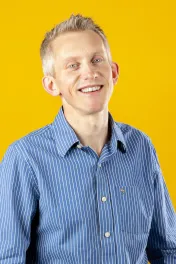
Hosted by Andrew Pain
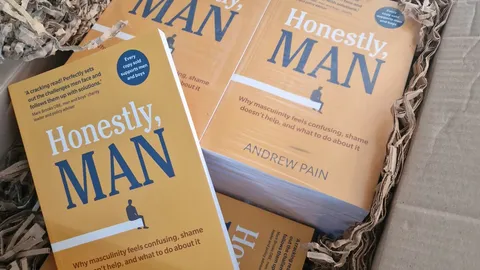
Andrew Pain is a Mental Health & Resilience Keynote Speaker who speaks from lived experience on resilience, burnout and workplace wellbeing. Host of the Men on Show podcast, author of the book Honestly, Man, and a TEDx speaker. Member, International Coaching Federation, and Mental Health First Aider trained.

Never miss an episode
Candid conversations with everyday heroes – ordinary men doing extraordinary things.