Men on Show · Episode 22
Men Policing and PTSD with Rob Hosking
- 21 February 2024 .
- 40 min .
- Hosted by Andrew Pain .
Rob Hosking is a TEDx international motivational speaker, former Police Officer, and mental health advocate known for his inspiring journey from adversity to happiness.
Andrew hosts this podcast. His own keynotes are on burnout, resilience, imposter syndrome and difficult conversations.
Key points of the episode
- Rob's early influences - in the backdrop of the troubles in Northern Ireland .
- Why policing in Northern Ireland was hardly a risk free job!
- His thoughts on the macho culture and the choice of "Get involved or left behind" .
- The former gender disparity on how domestic violence cases were dealt with.
- How the P.T.S.D. manifested.
- How he was saved from suicide by his dog!
- His healing process and what he recommends.
- His book - "The Rise of Happiness" - a Well Being Magazine.
- His thoughts on the happiest country in the world (It's not the UK!)
- His thoughts on being a healthy man today and how to remove stigmas.
Men on Show shares lived experience and honest conversation – it is not medical or therapeutic advice. If you're struggling, you don't have to cope alone.
Samaritans: call 116 123 (free, 24/7) NHS: 111
Full transcript
Read the whole conversation
A complete, verbatim transcript of this episode – every word is the host's and guest's own; the topic headings are ours.
Welcome to Men on Show, the podcast, Candid Conversations with Everyday Heroes. Join Andrew Pain as he interviews fascinating guests, ordinary men doing extraordinary things. If you love the show and you think somebody could benefit from hearing it, why not tell them about it by giving it a share on social media? Oh, and at the end of the podcast, if you can leave us a five-star rating and a review, it really helps us more than you know, and it gets this important message out to more people that need to hear it the most. Right now, enjoy the next episode. The next episode.
Hi, my name's Andrew Pain, and welcome to Men on Show. And today, I'm delighted to welcome Rob Hosking to the show. He's a keynote TEDx speaker. Always nice to meet a fellow TEDx speaker, former police officer, co-founder of the magazine, Rise of Happiness. Really want to get into that with you, Rob. So welcome to the show, it's a pleasure to have you here.
Thank you so much for having me, really excited for the chat.
Childhood in Northern Ireland and joining the police
Cool, and a great sort of place to start. I always like to start in this place with all my guests, who are currently are all adults, as you can probably imagine, are varying ages. So like growing up, you know, looking back, what kind of stands out in your memory growing up sort of good and bad? What was life like for you as a kid?
Life was good, life was really good growing up. I grew up in the backdrop of the Troubles in Northern Ireland. So I probably find that my parents were a lot more, you know, safe with me. They didn't want me to do too many things. They needed to make sure that they knew where I was all the time. So yes, I was a little bit sheltered bringing up with my upbringing, but it didn't harm me in any way.
You know, that shelterness, it just, it didn't harm me in any way. And I had a great childhood with lots of love and laughter. And yes, of course that you get your bad weeks and stuff, but overall I had a really good childhood. And I really enjoyed growing up in Northern Ireland, which is surprising because when my parents grew up in Northern Ireland and what they've been through, for me, I had a completely different experience. I had so much different experience with so many people in Northern Ireland where I had a good time.
Yes, you know, the backdrop was still there. Things were happening. The dangers were still there. But overall, my generation probably had a completely different experience to the generation that came before us, which is such a shame for that generation before us. But yeah, I think we were very fortunate because from the backdrop of The Troubles, we actually got a lot of love from people because people were fed up of fighting. You know, people were fed up of it and they wanted to move on.
Now, obviously, you had your minority who didn't want to move on. But overall, Northern Ireland as a country wanted to move on. So that backdrop of that friendliness came through. And I find that, especially when I moved away, when I moved away, I realised, wow, Northern Ireland really is a friendly place compared to some other places. And anytime I go back, that friendliness is still there. So it was, yeah, it was a really good upbringing.
And I guess that's a message, you know, as someone that's not from Ireland, that makes me feel quite hopeful that if that's the generation coming through, and that generation will obviously grow up and have families of their own, that with that experience, you know, maybe we really can achieve something that's long and lasting, satisfactory for the vast majority, peaceful. That gives me a lot of hope that you, that's your reflection of life growing up in Ireland.
Read the rest of the transcript Collapse transcript
And that's the idea of the peacefulness that happened in Northern Ireland. I say peacefulness, you know, obviously, it wasn't always peaceful, even when I was growing up. But that peacefulness did have that undertone fright to my childhood that Northern Ireland was ready to move on. Northern Ireland was ready to evolve into the 21st century. And it was such a great place to grow up in as a result. Yes, there was disadvantages where the shelterness came into it, but overall, it was a very good place to grow up.
Yeah, amazing. And so in that kind of sheltered upbringing and growing up in Ireland, where traditionally there has been such a tough place to be, where did the idea of becoming a policeman, where did that come from? Was that like a standout moment of, oh, I should be getting something that triggered it, or was it just this gradual thing?
Yeah, you know what? I would love to say I had this dream of being a police officer, and I joined the police and my dreams came true. But unfortunately, that's just not the reality of it. For me, growing up, the police were targeted in Northern Ireland, and even to this day, where they would have to check under their cars for car bombs and stuff. And it was never a profession where you thought, I would like to do that because there's so much risk and danger involved in it.
But my family were either police or military, whether it was uncles or my dad or whatever, cousins. There was police and military involved in each of them. So although I never wanted to become a police officer, when the opportunity came up, when I was in Scotland, the opportunity came up and I was like, hmm, maybe subconsciously thinking, this is maybe something that I was going to end up in anyway with the family backdrop of what they ended up doing.
And I just applied and one thing led to another. And before I knew it, I was at the police college. I was like, how did that happen? That was a quick transition. So look, it was a job for me. It was that point in my life where I needed to know what I wanted in my career. I finished in university and I didn't know what I wanted. And it came up and I just thought, is this something that I could see myself in? And I just joined. So there's no fairy tale-ness to it.
Life in the police and its macho culture
No, no, there most usually isn't. I mean, the few fairy tale stories, I suppose, come out in the press and then we think it's normality, but it generally isn't. As a policeman, as a man in the police, what was life like for you in the police?
I think it's difficult. I think the police, whether you're a female or a male, it is a difficult culture to be part of. And I was looking to this, and I look into the negativity that exists in the police force. Now, negativity in two parts. The first part is the negativity of what you see day in and day out. You're seeing the worst of people. You're never seeing the best of people. You're seeing death on a regular basis.
Makes you change your perception of what life is. And you can imagine from that sheltered upbringing to then seeing what humans are actually capable of. It was a real culture shock to me. And also the negativity of other police officers who've been there, done it, 20 years in, 30 years in. There was the bitterness. There was the negativity. They've seen so much awful things in their life and in their career, sorry. And they wanted to make sure that you knew about it.
They were never optimistic. They were never positive. So I feel like being a male or a female in the police, with that culture, that undertone of that negativity, it's very difficult. But going on to being just a male, you had that very macho culture that existed, in my experience anyway, and it was either be part of it or be left behind, be that isolated and it will be the different one. And you end up just getting involved in the macho culture, the banters, they called it.
You end up being saying things that you maybe didn't mean in terms of this dark humour that existed in the place. You'd say these kinds of things. And then before you knew it, you realised, wait a minute, who am I? What have I become? I was becoming that negative pessimistic person when before I was bright-eyed, optimistic about the world and its opportunities. Well, then all of a sudden, I was healing the world, that dark humour came out.
And being a man, I felt like it was that case of, well, you can't show your emotions. Fair enough, if a female colleague wanted to share emotions, people would be like, oh, what a shame, and they'll put their arms around them. But as a male cop, you could not share your emotions because nobody else did. And the males made it clear that you just had to suck it up and get on with it. And that is a very difficult thing for being a male in that kind of culture.
Support services and not seeming weak
Yeah, I know, absolutely. And within that culture, were there, I mean, are there support measures that people can easily access? And if there are, would people avoid those in case people found out they were accessing them and it might show them to be weak? How did that work?
Yeah, definitely. I think anybody who's, I know who'd assess these resources who are female. And although you're a male surgeon or anything, would say to me, oh, by the way, these things are available if you want. Actions speak louder than words. And whenever you would get an email, so whenever there was a traumatic incident that you'd witnessed, where it was a car crash, someone died, whatever it was, after a traumatic incident, you get an email a couple of days later saying, we're gonna offer you, it was called training services.
And it was like for a traumatic incident, and we're gonna offer you counselling if you need it, if you just want to chat, that's fine. The amount of times where I would say, oh, did you get that email to my colleague? And they look at me like, oh yeah, just deleted it. A lot of crap, wasn't it? And you think, right, so that's the true perception of what people and men viewed that as. It was, oh, we can't be seen doing that.
That's not for us, just delete it. So then you end up deleting the email too. My high beneficial, how good these services were, I don't know, because I didn't take part in them. But for a number of people, from some of the females who I knew who had access to them, they said it was very beneficial just to chat through the incident, chat through their feelings about it. But the men didn't, not who I knew anyway, the men did not think it was something that we should even consider, nevermind do.
And you definitely would have been seen as, I want to say weak, although I say weak in vertical commas, because you wouldn't have been seen as weak, but I think to a lot of people, you would have been seen as weak by even just accepting that, actually I need to talk about this, I need help.
Yeah, and I don't think that that is uncommon in other industries. So the people in my business that I reach out to, I usually sort of L and T directors, HR directors, and a common comment that they make around men attending the wellbeing sessions or talks that we're putting on is, there's a fear of attending in case, if other people find out that they're attending, they might think they're struggling. Their boss, if they see them going to the wellbeing, the session on burnout, they might think that they're struggling.
They don't want their boss to think that they're struggling, whether they don't want it due to pride or due to future promotion or aspirations, whatever it may be. I think that kind of culture of not being seen to be weak, to be vulnerable, we've still got a long way to go in cracking that. I mean, I feel like change is being made, but I still feel there's a journey to go. Would you agree?
I agree. I think you could see the culture and society's change in the perception around men and accepting help, but as I said, there's so much more to do where although the culture might be shifting, men need to then get on board with it. And at the minute, unfortunately, there's still exists that more men think it's that taboo-ness of, I can't speak about my mental health. Although society is thinking, yes, you can. And we're making it clear they can. For me, the percentages are still too high for men to be like, no, it's fine. I'll cope with however way I want to cope, but I'll get through it. And that's the difficulty that exists.
Domestic abuse and how police dealt with it
And there is that term psychological safety, isn't there, where if leaders, if leadership can lead and show that it's okay to be vulnerable, to dare to be vulnerable, to set the tone, it is something that can then spread. There's actually a relief. I was like, oh, so maybe other people are struggling, or maybe it is okay to speak out. I know when I was going through it in my former abusive marriage, I worked with nice people, but I wouldn't have dreamt of telling them what was going on, because nobody did.
We were just best bits on display, because that's what we did. But hopefully, that is changing. In terms of the gender issues, how do you see those being played out on the police? Are there any sort of, within sort of domestic abuse, for example, it can be a sensitive topic, because on the one hand, a third of male victims of domestic abuse are in fact men. Some reports would suggest that's higher, if you include the underreporting.
Did you see that at all in the police? Or was it generally quite gendered opinions on things like domestic abuse? Actually, it's mostly going to be a guy doing it to a woman. So that's the narrative that we'll take. Or did you feel people had quite enlightened attitudes in the police?
No, unfortunately, they didn't, I don't believe. And I do believe there was many incidents that I've attended where, hence we both were just as bad as each other. And let's say we weren't going to arrest anybody, there wasn't an actual crime per se that we were going to pursue, but there'd be an argument. And domestic abuse and how we dealt with domestic abuse has changed for even the time when I was in the police, from when I started to at the end, and how we dealt with it's completely changed.
And towards the end, it was the fact of, if there was even an argument, 90% of the time someone had to get to jail. And that was the unfortunate thing about it, where it's went the other way, where it's like, right, someone's gonna get to jail because we can't, just in case something happens, we can't be seen by, oh, we've been here and something happens. But when sometimes there's just an argument and somebody has reported it, let's say a neighbour or someone walking by, brings a lot of difficulty into it because they've maybe just heard an argument between a relationship between two partners, which happens in any relationship, of course, people are going to argue.
And getting the police involved, it's not the best way in most of these cases. Now, some of the cases we find that there was actually a lot of hidden stuff there and it was great that somebody, an anonymous person had got us involved, but a lot of the time it was just an argument and that was nothing more. However, what we were told is no matter what, we have to separate these people. So let's say it was like 10 o'clock at night, we had to separate these people.
And in my experience, I was told by my sergeant, sergeants, more than just one, the man needs to leave. Why did the man need to leave? And it was always like, you need to get him to go find a place to stay, go stay at a friend's. I have, from my personal experience, it wasn't a female who had to leave. So already you can see that there's an undertone where, although we're not talking about the criminal stuff of arresting just men, but there was that undertone of, well, we have to get the man to leave.
And that shows that there's something underneath this ideas of, well, men are the aggressor, men are the ones who are going to be doing the things against the women. And that's not the case. And I've spoken to many men in my time in the police when we were dealing with domestics, and they would share things with me saying, you know, well, she did this, she did this. I was like, well, I will write this down. We will take this as a report.
And they were just like, no, no, no, no, I don't want it. I do not want it. So although they came to me and said, or not came to me if I was present there, they said to me and opened up to me about the domestic abuse they've suffered. The percentages of them actually wanting to continue with it in a criminal matter were so high. They didn't want it. Women more so wanted it. And like, yes, let's get done.
And even if they didn't, and I can guarantee that this happens, and it happened to mine when I was in the place, whenever a woman didn't want to report it, I was told by my sergeant, well, tough, it's going to happen. But in the men's situation, it didn't. Why? We were okay. It's okay to say to the man, it's okay. If you don't want to report it, that's fine. And let us just move on. But in a women's situation, it's no, we will do something about it.
Too much is, like, domestic abuse happened. I'm not saying it doesn't happen to women. Of course, it does happen to women and men and the different thing. We need to look into it as a society. And like, there needs to be an acceptance that both genders can be just as bad. There's no, yes, there may be more percentages or anything, but it's not like a 90-10 split. And unfortunately, I think in society, we view it maybe as a 90-10 split of the women perpetrators, outside the male perpetrators and the women victims.
But that's not always the way. And she said about the silence of men, not reporting the stuff that's going to be going on behind closed doors because of these stigmas that are attached to it.
Leaving the police and the PTSD that followed
That's absolutely right. Yeah, even today, I was reading, someone posted an article from Sky News that the Home Office has approved a fund to help female victims of domestic abuse get out of that relationship. Which is great, that fund to help people make that exit, but literally not a mention in any of it about men. And you think, yeah, but as you rightly say, it would be different if 3% of victims of domestic abuse were men.
But you're talking a third. I like to go with what the data that we have. So I would just say it's possible that it's a lot higher than that due to underreporting. What the data says is a third is a very significant percentage. And certainly, I think in terms of our approach to issues with children, is there this perception that, well, if there's a mum on the scene, it's probably okay. If we've got concerns about a certain child, if there's a mum on the scene we've seen in plenty of cases, that hasn't prevented the child being murdered.
But where both parties, the mother and boyfriend or mother and biological father, stepfather are both guilty. So I personally think there's a long way to go from what you're saying as well. That kind of backs it up in terms of just challenging some of these stereotypes that we have around men and women. But moving on to you, keeping it really on your story, because if you get me on my soapbox, I'll never shut it. You left the police.
You mentioned, I know on your profile, a PTSD. Is that what prompted you to leave the police? Or was the PTSD sort of kicking afterwards? Or was it something that kicked in at the time? So just talk me through that.
So the PTSD, the things that caused the PTSD were the things that made me leave, but it wasn't the PTSD that kicked in until later on after I actually left the police. So I had witnessed, as you can imagine, being in a police office, you witnessed traumatic thing after traumatic thing. And I wasn't healing from any of it. I wasn't speaking about how I felt. It was a very closed book. It's part of that culture, that negativity culture that existed.
And that got to me because it was completely alien to who I was as a person before I even joined the police. I always wore my emotions off my sleeve. So then to get to that point where I wasn't saying anything, I wasn't sharing how I felt. I wasn't sharing how things have impacted me. You can imagine how unhappy, how sad I felt about being unable to share my feelings. And I got into that negative habit of, well, it's fine, we'll just keep moving.
I wasn't eating right. I wasn't sleeping right. I wasn't doing, I wasn't exercising. I wasn't doing the fundamentals for good mental health. Never mind anything benefit, anything extra for mental health. So I found myself in this vicious cycle. And it came to the point where I just, I'd had enough of my own life. I was so fed up and I couldn't see any way out. I was so unhappy in a job. I was under tone of seeing the worst in people every day.
Sticks to you, because you're just saying, what is this life? And I wanted to take my own life. And on that day that I did, I made all the plans to take my own life. On that day, I was saved by my dog because I looked down and Louis, my dog, he looked back up at me and he gave me a big lick. And right in that split second, I realised, wait a minute, someone needs me, somebody show me that love that I needed in that one brief moment.
And I kept going, but that was an awakening to understand, wait, I've hit rock bottom, and I've hit rock bottom because of work, what I've seen at work and how it's impacted me and my other coping mechanisms that I didn't have. And then I kept going and I struggled on, and it was an awakening on my last ever shift, which just made me think, right, I'm done. And on my last shift, I witnessed a young male take his own life, and I was there for him as he took his last breaths in this world.
And it reminded me of me, that young male who didn't want to live any longer, and taking that decision that that was it, that was the finality of it. And I watched as he took his last breaths in this world. And five hours later, my colleague then had a heart attack on shift and died. And my colleague had 29 years service, one year left until retirement. And he'd often tell me about his plans for the future, what he was going to do with his wife, the travelling they were going to do.
And I was watching as the paramedic was giving him CPR. I was emotionless, and I just thought to myself, what am I doing? I'm in a job that I hate. I dread going to work. It makes me so unhappy. There's more to life there. And that last shift was an awakening. And just to make me realise, Rob, there's a life there that you don't need to stay in this job for 30 years and get a good pension, and then you can do what you want to do.
Life is for living right now in the present moment. And my life in that present moment wasn't a happy one. So all that and all the other traumatic incidents that I witnessed on a daily basis, it all just kind of came to me, and I realised I need to focus on me and what makes me happy. And by doing that, I had to remove the things that made me unhappiest in my life. And the first thing that made me unhappiest in my life was that career, the place I needed to quit.
So that's what I did. And then it was about a year after I started having these harp publications, these night terrors of previous traumatic incidents. And I realised, what's happening here? Is there something unhealed here? And I went to doctors and went to counselling and everything like that, and eventually got diagnosed with PTSD. That was a year after being away from the Force, which just shows you just, my body just took time just to almost decompress everything.
And then I realised after a year, wait a minute, we've not healed from this trauma, what were this traumas? It wasn't just that last day, it wasn't just what I've been through in my own mental health. So many of these traumas that I was recollecting in my dreams and anything, they were things that were just everyday things that I didn't realise had it impacted me as much. But how can you, and I always say this in talks, I always say, how can you heal from trauma when you go from one traumatic event to the next one, to the next one?
And that last shift was a perfect example. And the PTSD has then been a consequence of all these traumatic incidents throughout those five years that I haven't healed from. And I now have to give my body and my mind that time to heal from it, talk about it. What is it about it that you need to get off your chest? And it's been definitely a difficult time, even after the place, even though I thought that was my chapter that closed in my life. But it got reopened the year after, because a lot of those traumatic incidents came up.
Starting points for PTSD and support
So for anyone that might think that they're struggling with PTSD, or for anyone that maybe is living with someone who they suspect might be experiencing PTSD, what's the starting point? What should one do?
I think what we need to do in society, especially with PTSD, if you've got partners who are in the forces or the military, anything like that, is we need to promote open communication as much as possible. It's not enough to ask them, are you okay? You know, if they seem a wee bit down, you say, are you okay today? It's not enough just to say that and then for them to say, yeah, I'm fine, and to move on to conversation.
At the end of the day, if you know your loved ones, you know your friends, whatever, if you notice any slight difference, you need to make sure that they know that you're there for them. And you know what job they do. You need to understand that it's such a difficult job, unlike any other job, that not everybody can understand. And there might be a little bit of that in them where they're like, I don't want to speak to you because you don't understand, you don't have the experience in it.
And if that is the case, then you need to just make sure that they know that there's a support network there for them, with you, an unjudgmental support network. And then also try to get other people to help you with their scripts and software, PTSD and, you know, veterans and anything like that, where you can talk to other people who have like-minded, who have seen the same things. And you'll be very surprised when you put these kind of people in that room, they start opening up because all of a sudden they're in that situation where they get it, the other people, they get it, they understand what PTSD is, they understand what I'm going through, they understand what I've seen and the kind of things that I've seen.
So getting the right support network is great. Sometimes you don't need it, sometimes having the supportive partner, the supportive friend is enough, but they need to be that supportive and understanding friend or loved one to understand that it's going to be a long process and not every day will they want to talk about it, but as long as they know that they can and don't pressurise them into it, as long as they know that you're there, that's the main thing, I think.
The Rise of Happiness and simple tips
OK, and your book, obviously, The Rise of Happiness, you co-founded that. Talk me through The Rise of Happiness. What's the purpose behind it? What is it? How do people access it?
So it is a well-being magazine. Me and my partner co-founded it. And the idea of Rise of Happiness is that people are sharing their stories, their own unique stories within the magazine. So we have different articles of people, whether it's the public eye or everyday people, talking about their mental health journey, their well-being story, whatever it may be. So it could be someone talking about what we had in their last issue, someone from Sky Sports talking about their diabetes journey, someone from an actress who used to star in Edward Dale, talking about her anorexia journey.
These kind of things, whether it's meal, mental health, whatever it is, people are sharing their stories in their words. We don't edit it, we don't interview them, they write it themselves. And within the magazine, we also have then expert tips and well-being advice from the experts, whether that's sleep experts or nutritionists, whatever it may be. Also giving people that, you know, we've got the vulnerability side with the stories, but then we've also got the tips like, well, take this forward in your life, and this will help.
So there's a nice blend there. You can get it online at www.riseofhappiness.com and it's also in WH. Smith stores around the UK. You can get your copy of the magazine, and hopefully get some inspiration from the vulnerability that people are sharing in their stories.
Oh, that's brilliant. It's brilliant you've got it into a distributor like Smith, so great job, great job. And what are your sort of, if someone was really struggling, they felt really miserable. I mean, obviously, being happy, becoming happy, there's so much to it. There's no quick and easy answers. But for you, what works for you in terms of the best tips you have for happiness, if you share a couple?
I think the main thing is, you know, people I think overcomplicate well-being in general. Look at the cold water therapy that everyone's doing day in and day out these days, the meditations, the yogas, whatever it is in the public domain that society seems cool in the well-being space. They're all great, yes, and they'll have great benefits. However, let's start from the basics. Let's simplify it when we're talking about happiness. And the simple thing you can do is do something a day, each day, every day, that just makes you happy.
That might be listening to some music for 10 minutes, maybe going for a walk, just go for a coffee. Let's simplify well-being and think, well, what does well-being mean to me? What does happiness mean to me? And yes, people have got busy lives and stuff, they've got children and they've got work, but we can do something every day. Five minutes of listening to music, if you love music, you can do five minutes. You can go for a walk, you can do these things.
So simplify it, understanding just what little things, put a smile on my face, reading a book, whatever it may be, do that, and you'll be surprised when you can do these healthy habits day in day out. Yes, the meditation is all brilliant. You can start adding them too, but start with what makes you happy and the wee basics, and you'll see great results.
Why British people don't fare so well
Yeah, love that, love that. And do you think, you know, I've done some reading around the fact that, you know, Scandinavian people, they're often quoted as the happiest people on Earth. I think it's Denmark, isn't that supposed to be the happiest society?
I think Finland, Finland, I think it is that.
Is it Finland? It had to be a Scandinavian country, didn't it? British people don't seem to fare so well on the happiness scale. Why is that, do you think?
I think a lot of pressures with society, a lot of, you know, the stigma that exists in society with men and mere mental health. I think that goes a long way to unhappiness and creating unhappiness in society. What men deem as what they can be or what makes a man, toxic masculinity that exists, toxic positivity that exists. I know social media will be everywhere in the world, but I feel like in the UK, they're so focused on what an ideal happy life looks like.
And if you don't have the three-bedroom house for the children and a dog and living in a whatever, then you can't be happy. Fortunately for other countries, I feel like they've got a better grasp of happiness where it can be simple things like just going out in nature. Finland, the happiest country in the world. Why? Because I can't remember what it was, but it's like 70% of their country is nature, it's trees. So being getting out into nature is such an important thing for them, and the little things that matter.
But I feel like in the UK, we are so driven to get ahead. We are so career driven, which is great, but I feel like we must, we feel like we have to do everything to get ahead of somebody else, that competitiveness of how everybody else are feeling in their life. It's keeping up with the Joneses, it's that idea. And unfortunately, people get caught up in that rat race, caught up in catching up with what their neighbours are doing, rather than just figuring out what they want to do in their own lives and just follow it. And just that's the key to happiness. Know what you want and who cares what anybody else thinks. Just follow your own happy path.
Stigma, language and where to start
Yeah. Some interesting observations. I mean, I think the UK is Europe's most nature depleted country from what I recall. So maybe there is a lack of nature thing there. I definitely agree with kind of this whole keeping up with the Joneses thing, which is so much a problem from social media. Never before, if you go back through history, have we as humans being exposed to everybody else's good bits in quite the same way that we are today on a daily basis.
No wonder we all feel so inadequate and are driven to try and catch up with all this stuff we perceive that everybody else has. And I think the three-bed house and the car and the garden, we sometimes forget that it's very difficult to achieve that. Usually, for generations before, to own a house that comes after years of graft in a job, these things are not easy, actually. And yet, I think with where we have today, we're very impatient as a culture, because you have everything at our fingertips.
And so we struggle to cope with stuff and get our heads around the stuff. It's going to take a long time. So why can't I have it now? I almost feel like I'm entitled to have it now. And I don't think that helps. There's a whole convenience culture, isn't there, where we're driven for convenience as well, which speeds up our expectations of ourselves and others. So I think all of those are really important points. I think you're right.
I do think there's some stigmas in terms of what it is to be a man. I think some of that's changing, but I still feel we've got a long journey to go. I think the political establishments need to do a lot of work on actually saying, actually, men and boys are struggling. That requires resource. It doesn't just require just, well, they're struggling a bit. It requires some action and resource if we're going to do anything about it.
So I think you touch on lots of very interesting points in what you're saying, particularly some of your insights in the police is very interesting. So to help men and boys be the best version of themselves, how do we do that? Where do we make a start?
Thank you. Unfortunately, there is a generational thing that exists with men and boys, and that is going to be something that, unfortunately, some men and boys are going to be hard with. I remember the stigmas that's been created because of their families. Hopefully society does a lot, and she said it starts with the top-down, whether that's a top-down approach from an employer or a top-down approach with celebrities or people in public eye. We need to get comfortable with having more of these conversations of what it means to be a man and break down these stigmas.
Even with my generation, I've heard so many times my dad saying things like, oh, man up, oh, grow up when you're showing emotion. And you think, you know, that sticks. Unfortunately, stigmas exist and they stick for a long time. It doesn't take a long time to create a stigma, but it takes a long time to try to get rid of it. And it does take time, and we just need to be surrounded by people who, not people, we need to see, whether it's on social media or left, right and centre in society, that these stigmas aren't actually there.
But unfortunately, not just in my conversation with my dad, I see the stigmas exist. So I do, and I just think we're trying to, we're trying to get rid of the stigmas, but the language some people use, you think you've ticked all the boxes in terms of what you need to say, but then you have to just root out one thing, because I don't think they understand the language and the importance of language to get rid of stigmas.
And I will read some things, and even from motivational, I saw a motivational speaker who talks about it, and he put something up, and he said about having to man up when he talks about his story, that inner voice, and I thought, you shouldn't be saying that, you shouldn't be telling yourself to man up, because that sticks. And it's the little things, it takes time, but as a nation and as a world in general, you just need to try to be braver in using the right language and be braver in challenging these awful things that people think of what makes a man, because it's outdated and it's completely wrong, and it's only damaging.
Finding Rob, and a last message
Yeah, I think you're right. I think being braver to gently challenge, you know, there's nothing wrong with a motivational speaker saying, actually, I feel like I need to toughen up. I need to make peace with a few things that I can't change. But understanding that man up is not helpful. And I think in the way that we challenge is being able to do so in a fun way, in a respectful way. I do think there's a lot of fear among men about being cancelled if they really say how they feel.
So I think trying to recreate the value of healthy debate, which I think we've lost a little bit. We have. It's just been fantastic. I could talk to you all day. If you had like a two sentence message of encouragement for the men listening to this podcast, what would that be?
Just, you're unique. You are unique. And remember that. You don't have to succumb to anything that other people believe that you should be or what you believe you should be yourself. Understand who you are as a person, understand your uniqueness and follow it. That's the best thing to do. That's more than two sentences.
But that's great. No, that's OK. That's no problem. There's nice and succinct, even so. So thank you. That's really that's wonderful. How can people find you? You're obviously a talented speaker. You have your magazine. You mentioned how we find your magazine. How do people find you if they want to book you, get in touch with you?
Perfect. So if you get a look at my website, it's talkingwithrob.com. And my Instagram is also Talking With Rob. So have a look on both those sites and in my LinkedIn, Rob Hosking. And you can find all the links and all these socials. And they're all linked up together. And you can go to book some talks.
Amazing. Look, that's fantastic. Thank you so much for your time, Rob. It was an absolute pleasure having you on the podcast.
Thank you. I appreciate it.
Thank you for listening to Andrew Pain's Men on Show. If you could leave us a five-star rating and short review, it would be really, really appreciated. It helps us get this important message out to more people that need to hear it the most. See you on the next episode. Thank you for tuning in.
About the guest
Rob Hosking
Rob Hosking is a TEDx international motivational speaker, former Police Officer, and mental health advocate known for his inspiring journey from adversity to happiness. Through fearless talks, he vulnerably shares his experiences with mental health challenges and trauma providing his audience with lessons on how they can prioritise their wellbeing and thrive in the face of challenges. Drawing on his rich experiences, Rob translates the principles of stress management, resilience building, and work-life balance learned in the high-pressure world of policing into invaluable lessons for the corporate realm. In his talks Rob delves into the pivotal role that employee happiness plays in driving organisational excellence highlighting how the wellbeing and resilience of any workforce are essential ingredients for a thriving organisation.

Hosted by Andrew Pain
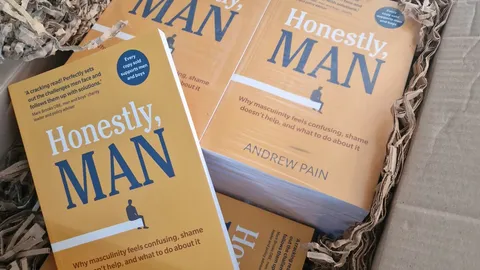
Andrew Pain is a Mental Health & Resilience Keynote Speaker who speaks from lived experience on resilience, burnout and workplace wellbeing. Host of the Men on Show podcast, author of the book Honestly, Man, and a TEDx speaker. Member, International Coaching Federation, and Mental Health First Aider trained.
Never miss an episode
Candid conversations with everyday heroes – ordinary men doing extraordinary things.