Men on Show · Episode 20
Men, Crisis and Recovery with Jon Salmon
- 7 February 2024 .
- 1h 0m .
- Hosted by Andrew Pain .
Jon Salmon is an award-winning producer, a digital pioneer, co-founder of Byte Entertainment and Co-CEO of the Speakers Collective social enterprise.
Andrew hosts this podcast. His own keynotes are on burnout, resilience, imposter syndrome and difficult conversations.
In this episode
About the conversation
Jon lives in London, a proud Dad and speaks openly about mental health and being dyslexic in the hope it will help others ask for help and save lives.
Mental health initiatives:
www.speakerscollective.org – Co-CEO, Lived experience community and social enterprise
www.whatsgoingoninyourhead.org - Co-founder, live performance and discussion
https://timetotalkwf.co.uk Co-Chair & Champion Time to Talk Waltham Forest
www.letstalkaboutloss.org - Trustee, Supporting 18-35 year olds who have been bereaved
www.hosb.org.uk/mentoring - Mentor, The House of St Barnabas Homeless Employment Academy
https://www.byteentertainment.com/talkitout Exec Producer, mental health music project bringing people together
Ran New York Marathon in November for suicide prevention Byte Entertainment
Key points of the episode
Men on Show shares lived experience and honest conversation – it is not medical or therapeutic advice. If you're struggling, you don't have to cope alone.
Samaritans: call 116 123 (free, 24/7) NHS: 111
Full transcript
Read the whole conversation
A complete, verbatim transcript of this episode – every word is the host's and guest's own; the topic headings are ours.
Welcome to Men on Show, the podcast, Candid Conversations with Everyday Heroes. Join Andrew Pain as he interviews fascinating guests, ordinary men doing extraordinary things. If you love the show and you think somebody could benefit from hearing it, why not tell them about it by giving it a share on social media? Oh, and at the end of the podcast, if you can leave us a five-star rating and a review, it really helps us more than you know, and it gets this important message out to more people that need to hear it the most. Right now, enjoy the next episode.
Hi, my name's Andrew Pain, and welcome to the podcast Men on Show. And I am delighted to welcome Jon Salmon to Men on Show. Jon is founding member, CEO and CEO for the Speakers Collective. They promote over 100 different mental health, lived experience speakers, everything from men's mental health to menopause, neurodiversity, suicide, domestic abuse, and following his own journey with mental health, losing a friend to suicide. Jon now speaks about awareness, reducing stigmas, saving lives. And he's also appeared with Will and Kate. Presumably, Jon, they were your supporting act. Jon, it's a pleasure to have you on the show.
Hey, Andrew, great to be here. Great to, yeah, really looking forward to our conversation today.
Role models, and learning with dyslexia
And so I always ask this, of all the guests that ever come on the show, growing up as a kid, was there something or someone that particularly inspired you, something that stands out to you?
Yeah, that's a really good question to start with. Yeah, I think probably a few different people, I think, that have inspired me when I was growing up. I'm dyslexic. That's something that I didn't really, there wasn't a lot of sport for me when I was dyslexic. So there was people like Richard Branson, quite successful entrepreneurs that have done quite a lot to also talk about and promote charities that bring awareness to dyslexia and neurodiversity. So yeah, he was always somebody that I quite liked as a role model and somebody that was quite fun and kind of taking on the big boys, I guess, when it came to business and stuff.
So I quite like that. And then as I got slightly older, I guess, in my kind of teenage years, it was, yeah, which I guess we'll come to talk more about in a bit, but in the mental health space. So, you know, I've had my own challenges with my own mental health and also within my family. And so there was very, very few men that were talking about mental health when I was having my own problems.
And those few men and guys that were doing that were people like Professor Green, Johnny Benjamin and Stephen Fry. These people that were showing a bit of vulnerability, I guess. I think have definitely really inspired me as I've grown up, because they have been open about who they really are, what makes them tick and what struggles they sometimes have.
And how was school? You were dyslexic, you mentioned that. Do you recall that being a problem for you? Was school difficult because of that?
Read the rest of the transcript Collapse transcript
Yeah, school was, I went to a boy's school, really, really sporty. If you were good at sports, you kind of seemed to get on at that school. Yeah, there was, it wasn't really a great time at school. I did find it challenging. I didn't have any support at school for my dyslexia. And I guess just tried to get through the days. There was obviously things that I did like. But for me, the eureka moment with education was when I left and decided not to carry on with sixth form A levels.
And I went to college. And then that opened up a new way of learning. It was kind of coursework. It wasn't just all exams. It was mixing with different people as well. So like different age groups and being in mixed groups rather than just single sex kind of all boys school. Yeah, so it got better for me. But yeah, but something I definitely, you know, struggled with reading and writing.
That's so with the dyslexia, that's the impact of you. You mentioned there were some challenges. So it was just harder to pick things up as quickly as you felt as other kids or did you find yourself just daydreaming because you weren't getting it or how did it, how was it a problem?
Yeah, yeah, yeah. I think what I've kind of, for me, I realised the way I take on information, I kind of need kind of longer to process that. So I guess like some people are very good at just whacking their hand up, aren't they, in class and just they can have got that information recall really quickly. But I would, I love learning about new stuff and really like trying to figure things out. But it just, I think it just takes my brain a bit longer to do that.
And sometimes within that kind of rigid school, kind of, you know, you've got 30 minutes to do maths, then you want to French and then, you know, that didn't really, yeah, suit my way of learning. And then you just start to think it's all those negative things that, oh, I'm a bit fit, come a bit slow. And, yeah, you're just kind of, you know, not really, not really as supported as well as I should have been, I think, within education.
And when you think, I mean, I've talked to a few people on the show that have been teachers. When you think of the size of classrooms that they have, the pressure on teachers for targets, when we think back in the day, there wasn't quite the same awareness around dyslexia, you just expected different lessons, it's then bustling on to the next lesson and the next and the next. It's just not, I mean, you must have felt like you just quite lost in the system, I suppose.
Yeah. You know, I think we all try and find our way and try to create our coping mechanisms to get through those earlier years in life. My mum is, is why she's retired now, but she was a teacher and then a head teacher. So I guess I also did and I still do have great respect for anybody that goes into teaching to support their education and, you know, the stress and the, you know, especially after the last few years of with the pandemic and, yeah, kind of that routine falling out for so many people in the country of schooling and how teachers had to adapt.
I still don't think that they've been given the credit that they deserve really for trying to get young people through this. Yeah, it's kind of a difficult time. So, yeah, what do I think? I think, yeah, we need to support teachers and, yeah, class sizes are a big problem. And I think, yeah, as a teacher, sometimes you, yeah, you just, you know, got to make sure the behaviour is there, that people are listening. But, yeah, if you're one person that's looking after 30 odd kids, I struggle. I've got two kids and I can't control them. And so I have great respect for, yeah, the teachers and the job they're doing.
His father's suicide and its impact
So, and you talk, I read that you lost your dad tragically to suicide as a teenager, which obviously just must have been really, really difficult to handle. Just talk us through that. Are you aware what drove him to that, to make that decision?
Yeah, it was incredibly, as you say, a very, very, very tough time for myself and my family and friends of my dad. I was 17, sadly, when he took his life. And yeah, it was, he had been ill for a while. My dad was a very caring man. He was an innovator, he developed some of the first underwater housings for cameras. We kind of take it for granted now that we can get a camera and dunk it in underwater in a swimming pool, but he developed some of the first housings for cameras that we use for kind of documentaries and work.
But I think it was that pressure of running a business, going through a recession. We were moving house around that kind of time. So I think there was a number of things kind of going on for him. And, you know, something he was very, very outgoing to then, you know, being like a school governor and being involved in lots of things. That depression kind of kicked in. And again, I think, well, I know now I would have responded differently to when he was ill, because we didn't talk about his illness.
Nobody really knew that he was was ill. And other than kind of GP visits and stuff, there wasn't really, again, much other than here's some tablets. From my memory, there was no other kind of offer of help to kind of support him to deal with it with his illness. And so when when he died, that came as a massive shock to to so many people because they didn't even know he had been that ill. And also, it was this was in the 90s.
We we, you know, we've got better at talking about mental health now and in the 2020s. But back then, nobody talked about mental health. There was no if you talked about mental health, it was all really, really negative. It was. Yeah. And so, so, you know, when when he died, I didn't get any bereavement support or any counselling. You know, it was just that kind of man up, bury that emotion as deep as you can and just keep keep, yeah, just keep plodding on trying to to go so, you know, my mentality was trying to support my mum. I've got two older brothers. We kind of got, we were close supporting each other. But again, something that we still to this day find difficult to talk about.
So what was the impact on you at the time, do you think? Looking back now, how did that traumatic event affect you?
Yeah, so I think it changed my life. I guess my dad's death and I think as a teenager, I didn't realise how much it would go on to impact my life, his death and especially by not dealing with it. So yeah, it ended up in a few years later. So in 1999, I was in my first, I kind of put it my first real job. It was the start of the internet. And yeah, that typical thing when you're in kind of first job or new job where you're wanting to kind of impress, you're working all the hours, you're not probably asking for help.
My line manager at the time, I should have probably been asking her for more help and guidance. But, you know, I look back at it now and obviously all the signs were probably there. You know, I was working long hours. I was going out. There was quite a lot of parties being the.com boom. It was an exciting time. I wasn't looking after my mental health. And I woke up one morning completely panicked, really, really scared. My partner at the time had already left for work.
I'd overslept and I just just remember being incredibly paranoid and really, really scared and looked out of the window. I thought people were watching me. My brother luckily came to get me. And, you know, it wasn't long before I was, you know, being sectioned and back in the hospital. That I had only been visiting my dad a few years previous. I was on the mental health ward that I'd actually visited my dad. And, you know, I look back now and see not dealing with my dad's death was one of those, you know, connecting factors to my own decline in mental health.
And then the more I've done and work around mental health that I've done is about those that have been bereaved by suicide or have been impacted. They're already, they're just put straight away in a more high risk group. You know, the stats show that, you know, the more, and so there's so much to unpick from my dad's death. And there's so much lessons that could be learned to really reduce suicide, yeah, around the world. But yeah, it's, you know, and it's gone on, you know, we may talk about it later, but I was able to get the right help.
It took a, I was off work for a year. It took me, it was, yeah, it took me a while to kind of get back. But once I was back on my feet and able to go back into work, there was no way I was going to tell anybody about what had happened to me, because that stigma in 2000 was just immense. You know, if you'd said you had a mental illness in 2000, yeah, you wouldn't be employed, you wouldn't have relationships.
Stigma at work, then slow recovery
And is that the sole reason? Yeah, because you mentioned it took you 20 years to talk about it. So was the stigma, the fear of being belittled, laughed at, maybe held back in your career because people would think, well, you've had a mental illness in the past, when will it resurface? Is all that stuff what kept you in silence or were there other things that stopped you from talking about it?
You're so right, Andrew. Yeah, all of that, that fear, that judgement of what people would think. Yeah, that real nervousness to show truly who I was. Yeah, because I think kind of stemming from being dyslexic, I've got quite good at learning different kind of coping mechanisms, or how not to talk about my dad, the types of questions, or I wouldn't get into certain conversations. But I always thought, and especially the internet, in the early days, was still a very small industry.
So there was always in the back of my mind, they're like, oh, I bet they're thinking, oh, that's Jon, that's the one that went crazy at work. And, you know, that's the mad one. So you've got, you already think that people, I know now that people are more focused on generally on themselves than they are really thinking about you at all. But yeah, it was that stigma and that fear if I was to say some of these things.
And you mentioned as well, it's like, oh, will it, oh, let's not, but we don't want to, it may happen again. Let's not put him under pressure and almost like treating you with like kid gloves. It just felt like, it felt like there was no benefit to revealing what had happened to me.
And also back in the day, back then, so I remember some of the worst domestic abuse that I struggled with before I set my own business up where then it was more, is even more hidden. But I was working with a recruitment company in London and they're all nice people. So, but nobody was vulnerable. You didn't show vulnerability. What are you talking? It was all banter. It was all about targets. And there was a friendly atmosphere there, but because nobody else revealed vulnerability, I'm not gonna say actually I'm really struggling.
The reason I haven't made it in last night is because it's all kicking off. I'm not coping. I wouldn't have dared say that. And then trying to hold it together and hold it together and hold it together. My employment performance plummeted like a stone. And I remember the day I was about to get fired actually for poor performance, which would have been a fair call. I resigned to suffer that extra, to escape that extra humiliation. But I think now that there is more awareness, 20 years later, thankfully, of the value of being vulnerable is what we talk about with psychological safety. And I do think if we'd had it back then, I probably would have said something because it was a real struggle.
Yeah, things have changed. People are more open now to at least be a bit more self-aware. I wasn't even self-aware when I was, for me, when I got ill, it was obviously a horrific surprise. On one hand, because we are talking about it, because organisations having speakers like yourself to go in and talk about these subjects are starting to open up that and change that culture within places. This is still obviously a considerable way to go.
So how did you move forward following being sectioned? What was the stuff that really worked and helped you to make progress?
Yeah, for me, it was really, really slow. It took a real while for me to build my confidence back up. So, you know, after being sectioned, I was then out of hospital, but again, wasn't given any support and actually kind of made an attempt on taking my own life as well. And that was really then that other support started to open up. And we found out that through my work, and that was medical health insurance, and that got me access to day patients, very, very luckily in the Priory.
And so some of the things that really helped me early on for me was CBT, it was meeting other people that were having their own mental health challenges and struggles. So not really, you know, so whether that was around addiction, and it was actually, it was nice to be in a space, a kind of a safe space where I could be vulnerable with other people from different backgrounds. That really helped me to feel less alone and thinking, oh, you know, but this person here, they've got this and this, and that's happened to them.
And I think that shared or that empathy around and learning from other people that have had a mental illness has definitely been a great part of my recovery. Doing some sort of physical exercise, as I say, but when I was trying to get better, leaving the house really was like getting out of bed, as I've said before in the past, was like a marathon. It really was that fear of leaving the house, feeling I was going to get lost or whatever, bump into somebody I know.
But it was those small steps of, you know, getting out, going for a walk, right, let's do a little run. And yeah, over the years, like physical exercises has definitely helped me, that especially if I'm getting a bit stressed, something where I can kind of go for a run, go for a walk, and try and figure out what's going on upstairs in my brain. Yeah, they've been definitely part of my recovery.
You say it was slow, and a lot of what you've mentioned there, lots of little steps. It wasn't some just sort of great, somebody helped you, and they provided the breakthrough, and off you go. And I wonder whether often when we support people, we can be a little impatient, we've given them a bit of time. It's like, oh, come on, you know, sort of pull yourself. It's been a few months, but actually, progress takes a long time and requires a huge amount of patience, particularly if you're supporting someone. It's an important lesson, I think, there.
Yeah, definitely. And like this year, I've had like a physical injury. I've done, I've kind of ripped like a miniscule tear. I've had a tear or something in my knee. So I've not really been able to do any running since since February. And I saw the physio last week and he's like saying it's almost there. Right. He's like, I wouldn't recommend doing much running. You know, it's it's almost better. But he would, you know, it's going to be a year, right?
Just for that need to recover. And again, this, you know, we talk a lot about mental health and physical health. And yeah, something like that. We were a bit more sympathetic to like, oh, yeah, of course, it's going to take longer for that muscle to to rebuild or to recover. But yeah, you're right with mental health. Yeah, there's sometimes people can lose their patience with people that are having having challenges with their mental health.
How the Speakers Collective began
Yeah, yeah. And I think we have moved on. You know, I think back in the day, if you'd have broken your leg and you're off work, you'd have had a card signed by all the employees at work. If you're off with mental health issues, it would have just been general confusion, but I think today we are generally moving towards a better place, which in a way is a good segue into talking about what you do today. And I'd love, you know, to do tell our listeners, Jon, because you're doing some fab stuff. What are you doing today and why are you doing it?
Yeah. Well, today I was just putting a blog live on our Speakers Collective website from one of our members. So the Speakers Collective was set up around, well, we kind of came together in 2018. So Jonny Benjamin, who I mentioned earlier, you know, somebody who had been publicly speaking about mental health and the challenges he had growing up, yeah, contacted a few of us that were talking on social media or to the media in general about mental health.
And he sent an email along with a person called Joe Emerson, who was working with Jonny and invited us all into a room in the city one afternoon. And so I was quite surprised to be, A, invited. And then when I walked into the room, I just assumed that there was like 15, 16 people in that room that day. And I assumed everybody else knew each other. There's only over time that I just realised that actually, we, nobody, maybe people vaguely knew each other through social media and the work that they had done.
But what Jonny was able to do is to kind of, he had noticed that there was people that he could see that were sharing their lived experience, that having great impact on individuals or organisations. But actually, there was very little support there for the public speaker, the person with lived experience that was doing the heavy lifting. And that's something that I'd experienced myself when I shared my story for the first time that you can, depending on how you do it, you will get a lot of messages and reaction to that.
And out of that small group that came together that day, we came up with the name Speakers Collective, and we wanted to just create an informal group initially, just to support each other. Because also there were some times that maybe you'd be asked to do a talk or an event and maybe you were struggling with your mental health or, and actually this could be like a supportive community for somebody else to step in and do that talk on behalf of the other person.
And over the years, that's now evolved to be a social enterprise. We've been going for five years now. We've got well over 150 members that have joined our Collective. We provide monthly check-in calls for all of our members, hopefully try and raise the profile of the work our members are doing and, yeah, sometimes provide speaking opportunities. But foremost, really, the Speakers Collective now, I think, it's just amazing the diversity and depth and range of conversations that our speakers talk about.
So we initially were just a group of mental health speakers. But now, as your intro said, we pretty much, you name something that is stigmatised or from a lived experience perspective, we probably have somebody that speaks about it. And again, we're very proud, Andrew, that you're one of the members and supporters of the Speakers Collective as well.
Men struggling, and valuing lived experience
No, well, no, and it's great to be part of it. And for you, what is the one crucial thing that you want to see changed through operating the Speakers Collective?
Yeah, the one thing I'd like to see changed, and it is changing, is that we really value as a society the role that people play and that share their own lived experience and how valuable they are in society to bring awareness and understanding of sometimes very difficult and complex subjects. And I think sometimes you would have individuals that would go in and make a real big difference with a talk or maybe something that they've an event or something they've been involved in.
But in the pecking order of like being paid, they're usually at the bottom and there'd be other people that are, you know, other speakers in other areas that would be would be paid higher. And I think, yeah, that was something that was also a real priority for me and Joe from the Speakers Collective as well, that also that people really, as well as supporting speakers that actually if somebody, you know, is sharing their lived experience, there is a value to that.
And you know, it's changing now, but you know, definitely in 2018, a lot of the people that were doing an amazing amount of work, even changing policy and stuff, weren't being paid. And yeah, we really got to change that and still, still lots of problems. Sometimes with people doing amazing work that maybe get some of the recognition, but they're not being paid what they should be. And there really is a massive discrepancy in the funding that goes into certain projects.
And then when it comes to the lived experience or the co-produced element, that lived experience usually forms like that whole kind of campaign, but still the person that's contributed to that idea sometimes isn't valued as much as some of the other people in the room.
Yeah. Now the lived experience does make a huge difference to your believability, credibility, to the richness of kind of angle and insight that you bring. And in people really being able to kind of see, really experience what you experienced, almost like they were there. If you're a good storyteller as well and can talk about your lived experience in that compelling way, it's just so important, so much more memorable in some ways, even than someone that's researched it a lot but never experienced it.
I mean, both have a value, but you do need a place. I definitely agree for the lived experience. You're talking about sort of men. Obviously, this is Men on Show and you know my interest in sort of really exploring men's mental health and thinking about where men are at. From your perspective, doing so much in the mental health space as you do, we read so much about toxic masculinity. We read about male privilege and yet we know from the data that the men and boys are struggling in many senses. Do you think men and boys are struggling and if so, why would that be?
Yeah, well, the most shocking stat that exists is that suicide is the biggest killer of men under the age of 50. There is a massive problem that still exists today. Suicide rates in men are still pretty much the same-ish each year. And so, yeah, we do have a problem in society where men are very sadly feel that that is the only option that they have when they can't find another way to get help. So, yeah, a lot is a big subject to unpack.
I've got a son, a nine-year-old son, and, again, it's trying to, yeah, make sure that he's being supported as well as around his own mental health. We're very lucky at the school that he goes to, they've got a place to be, which is there's actually kind of built into school that there's a place if you want to go and talk about your feelings and emotions. So that never had that as a child was, you know, what was growing up about feelings and emotions.
We weren't even told to, you know, it was all boys don't cry. If you did cry, well, you'd get bullied even more, wouldn't you? At school. So again, it's it's interesting looking at different age groups. You know, I'm in my mid 40s. And so for me, I've kind of grown up around, you know, the the loaded magazine culture, the FHN, the kind of the lads kind of kind of. Yeah, that kind of culture, right. That was all very, very acceptable, you know, which obviously now now isn't.
And yeah, I think what's I think being part of the Speakers Collective as well has been brilliant because I have got to meet so many different people have had so many different life experiences. And I think what we really need to kind of build on for men is this empathy and understanding. And yeah, there's these kind of traits sometimes that we have to be, you know, beer and football and not not talk about how we feel. Yeah, it has to change.
Engaging men in groups and pubs
So there's building on empathy, I suppose that there's awareness, there's parenting styles that make a difference. There's obviously provision from the very early stage at school. The place to be is a great is a great programme. I know I know a few kids that I know of that have gone through that. And it's been really amazing to have that. Well, I didn't have that when I was when I was a kid. I'm 49. Some of those measures are really important, of course.
And we need to think about how we want to say scale them up. I mean, also bring them up the age group. So if we're going to have a place to be in our schools, what do we put in place within our workplaces? But one, you know, I know a comment that I often hear from sort of wellbeing directors that I speak to is that, you know, we put this stuff on for blokes, but they don't show up.
It's the women that show up, even if it's intended for blokes, they're not showing up. So how do we engage men? What are some things we need to do?
Yeah, like it's it's it's it was fascinating. The first talk that I was asked to do, proper talk was, yeah, like had like it was like men's mental health or something. And it was a few years ago. I didn't think anybody was going to I didn't think many people were going to turn up to it. I was kind of surprised it was ended up being kind of standing room only. And then the other big surprise, it was a room full predominantly of women.
And I was like, OK, right. And so we know why women go to events like that, because they generally have a man in their life or somebody that they know that's a man that they're worried about. And so it's so it's not that that event is any worse off for doing it. But yeah, there is a continual struggle for organisations or to engage with men. But and I think we just need to think about it differently.
And sometimes that I'm a trustee of a charity now called Let's Talk About Loss, and they support they have support groups running up and down the country and bereavement support groups for young people at age 18 to 35. And these groups have been I'm very, very proud trustee. And also these groups around the country still are more have historically been more females that have turned up to these groups. So we've been really working hard on how can we talk to guys and I'm really, really pleased that just last month we put on an event in a pub in London and that was all about men talk about loss.
We got some brilliant speakers, a rapper called Shocker and a mental health campaigner called Ben West. And, you know, the kind of grief and alcohol and mental health is sometimes there's a bit of an area where you definitely kind of bit like, oh, do we want to mix the two? The other let's talk about loss meetings, usually in like coffee shops or places where there isn't any alcohol available. But what was really lovely about the event that we did in London was it was with a brand called Lucky Saint, which is a non-alcoholic beer.
And so we were able to do the event upstairs in the pub. It was a, you know, lucky to do a great non-alcoholic beer for anybody that's looking to either limit or maybe move away from from alcohol. And it was just wonderful to see, I was like standing downstairs by the bar, just looking at the door, just every time it kind of opened, I was like, oh, is that person coming to the event? And one by one, on their own, guys turned up.
And, you know, if you walked into that room, didn't know, you would have thought all these guys knew each other. We had like 30, 40 guys in a room chatting, talking about grief. And again, it was like, oh, we're onto something here. This is a space that works, that men feel comfortable coming to. So I'm not saying we should do all our events in pubs, but we were also just, you know, it's finding those spaces where men feel comfortable going.
And there's some great groups around the country, whether it's Andy's Man Gang, you know, there's just so many other places that are starting to pop up now for men to kind of talk about their feelings.
I think that's a recognition.
I think that's the challenge.
Yeah, I think there's a recognition that some guys enjoy the talking groups, like Andy's Man Club, Andy's Man Gang. There's the Men's Pie Club in the Northeast. There's the Proper Blok Network. We had the founder of that on the show, where that's more sort of a walking club. We had Joe Horton from the Guild of Dads Hiking group. I think we need more variety for men. There are some men that will engage in talking groups and some that won't.
I think some men will engage with things as and when they feel they need them. So they won't attend a workshop on loss, but they might be glad of something that's available and open at the point where they feel that they need it. I definitely think that's a challenge. I have heard it said that for some men, there's still this sense of if I go along and connect with some of these men talk groups, then my boss might think I'm struggling and I don't want my boss to think I'm struggling.
So for me, it helps in terms of engaging men if leadership themselves are attending and showing, look, I'm coming, you lot come along. We almost need those leadership ambassadors championing male health, championing men's communities. And that's the other thing I'm excited about. I don't know whether you see this, but I see so many men's communities growing organically now within organisations. Where organisations are saying, we have a women's network with a big budget actually for their speakers.
We have literally nothing for men. And actually that needs to change. That needs to change. We need to be able to, we need to be adequately supporting our men and our women.
Yeah, completely, completely. And yeah, I think it's, yeah, and it's a variety. It's looking at those options, you know, whether it is, yeah, whether it is going for walking groups or, you know, I've been doing this group that I was part of, which is all around kind of music and mental health. And it was about, yeah, just going to gigs together, you know, and we had meeting a record shop and talk about the music that we liked.
And so I think around those interests, you can kind of tap into. But yeah, I think definitely there's still a fear. You know, I can guarantee every single one of those guys that came to, they mentored about loss. You know, they weren't like bounding through the door with confidence, right? They were all like really quite nervous. And yeah, whereas I think if that was like a women's event, that would have been like groups of girls coming together, you know, it would have been very, very different.
Yeah, so I think we have to give men also a lot of credit as well to go into these events, because I think for men, they historically do do it on their own when they do go to these types of events. Whereas I think sometimes what's out there for women, it's seen as normal that you would go with another person. And I don't know really how we change that sometimes too. Yeah, as you say, it's that leadership of somebody, another guy's bringing along another guy kind of a thing. Yeah, that's my association with the pub.
I think the pubs are really important. I think we can use our pubs an awful lot more than we do in terms of men's mental health. I know when I walk into a pub, I feel immediately relaxed and up for a chat. Whereas if you put me in a room in a community centre, same event, there's coffee and biscuits, I'll be like... Yeah, where you put me in a pub with a pint in my hand, I'm gregarious straight away. It could be a really lousy pub as well. I feel differently because I'm in the pub.
Yeah, it's trying to recreate those kind of spaces, isn't it? Because alcohol, again, can be a real trigger and a difficult... It could be sometimes causing... We talk about how men deal with different challenges in life. And rather than not talking, we take part in more risky behaviour. Drinking, you know, that's the problem with the pub environment. But also that is where... That's your captive audience, right? So... It's an interesting one to try and figure out.
Men in the media and on social media
So in your wider work, obviously you do... The Speakers Collective stuff is really important work. I love the promotional work you do around mental health speakers. They have so much to give and often, we've still got a long journey to go on yet. Obviously, your wider work is very much involved in the digital space. So how do you see men portrayed on social media, mainstream media? What do you see as the messaging around men?
Yes, there's some really good campaigns that have been done around aimed at men. So there's a website called The Book of Man that does some really interesting articles and content and team up with different individuals, whether it's comedians or footballers. So I think that kind of works quite well. I think still some parts of Instagram, for example, still feel like quite a female space when it comes to mental health. I learned so much from the people that I follow.
That could be people like Brian Gordon, does a lot of campaigning around mental health. For me, social media has been really good to learn about mental health and what people are doing. But also social media in itself has become such a difficult place to be. There's so much argument that happens on Twitter and it's quite toxic in certain parts of social media. So I think what's quite nice about the things that I put out on social media and the content that I create, I think, does reach both genders.
So we had Charlie Bethel, CEO of UK Men in Sheds, on the podcast, and he talked about how, I asked him what some of the challenges were they faced at Men in Sheds, and they have like over a thousand sheds in the UK, and they tried to set up a shed one time, but where they were going to do it, these are just guys coming together to make stuff up, cycle stuff and all of that. Where they were going to do it, it was in this space used by other charities, including the Women's Institute, but because the space was opposite a school, they were refused because they were deemed a safeguarding risk simply because they're men.
And I wonder how much of that kind of anti-male sentiment you see in the press. We have, for example, Wayne Cousins and a tragic and terrible situation. One of the outcomes being in the press, at least, a call to the police need to sort of create more robust measures as they scrutinise future police officers. Yet with Lucy Letbe, there's no such call that we need to spend more on scrutinising future nurses. And there's almost this disparity in the media. Did you see that yourself at all?
You know, I kind of like to see a breadth of the media. I like, you know, I'll look at different media's outlets and seeing how they're reporting on certain stories. And I think it is just that reminder around why it's important to have these spaces. And, you know, when these horrible, horrific crimes that happen that involve men, you know, rightly so, everybody should be completely disgusted and this shouldn't happen. Of course it shouldn't happen. And so I think that's, you know, that we've got to work on this together, you know, and try and figure out how has this come about.
And then, you know, this trying to make it a male-female kind of debate is like trying to create these understanding and support on both sides. But, yeah, it's difficult, isn't it, where you hear these stories of other men that are trying to put groups together to support other men that are having these kind of barriers put in their place for what probably is no particular reason.
Yeah, I mean, I'm passionate about allyship, where we, men and women, stand shoulder to shoulder in calling stuff out. You know, we should be calling out misogynistic behaviour when we see it. And I would extend a plea to women as well, where they see comments that are really quite misandrist, misandry, obviously, the hatred and dissing men, that we call that out as well. You know, we want to raise healthy men and boys. Where I talk to teachers, there's a teacher again I had on the podcast a couple episodes ago, where he was asked by a boy, am I toxic?
Simply because he's a boy, and he's heard all about toxic masculinity. And so for me, I'm passionate that we create, that we tackle the media actually, and that we try to have a more balanced and helpful message about people. And that for me, allyship is understanding that there are destructive people in the world, men and women, destructive towards themselves and others. And I'm not a big fan of the toxic masculinity as a phrase. I don't think it's helpful as a phrase, nor toxic femininity for that point.
But from your perspective, obviously, you've had your own journey with mental health. You do so much in the mental health space. If there's one thing that we could do to help men and boys be the absolute best version of themselves, is there something that would, for you, it's like, yeah, this is the thing. There's loads of things we can do and should do, but we need to prioritise this.
Talking with children about how they feel
Yeah, for me and my son, it's been important to try. I've learned kind of the times a day when I'm more likely to get a conversation out about how he's feeling. It's the books that I buy my son to kind of give him, and hopefully that knowledge and see different role models, so he can get a diverse viewpoint of what different boys and men can be like, I think is really important. Especially the reason I talk about mental health and do the work I do is because of my two kids, because I know that they're currently 9 and 11, but when they get slightly older, there'll be times when they won't want to talk to me.
But it's trying to instil that knowledge within them, that understanding just to really try and embrace, accept the good bits and the bad bits about yourself, and try not to be so judgmental of yourself. It's really what I'm trying to try, and we'll see how well I get on in my kids. But I think it is that role models, it's really important at a very early age, leadership, that level of empathy, what's happening within the classroom.
And so being aware of their friends. And you can see things, whether kids have been singing about Andrew Tate in the playground, right? How does that happen? This stuff needs to be addressed. We do need to have these kinds of conversations. But coming back to that statistic of suicide being the biggest killer of men under the age of 50, we've got to be doing so much more to support boys, young men, older men, to feel that they can be who they really want to be.
Because I think sometimes there's a lot of men that are struggling with their identity and who they really are, just because of the way that they've been told to behave or act in a certain way, that can then create some quite bad kind of behaviours.
One of the things I know a lot of mental health speakers advocate, and I do this with my boys before they get to bed, and they really like it, 10 and 7 year old, 4 year old, we talk about what made him happy, sad that day, and anything that he's worried about. My 7 and 10 year old mark themselves out of 10 for the day, and how they feel, whatever score they gave, the question being why, and also why is it not lower than it is, and why is it not higher than it is, unless it's a 10 of course.
And that's just as a little thing, has got them talking about how they feel, and for me, that's just a real small thing. And I suppose it's, everything you're saying is absolutely spot on, and I suppose this as well, trying to find the little things that we could deliver. We're all busy as parents, we're all under huge amounts of pressure. So what are the small easy wins that we could deliver on consistently to get our kids used to talking about stuff, analysing stuff as they get older as well, so that when they look at Andrew Tate, they fact check some of the things he's saying and some of the things he's claiming rather than just taking it as gospel truth and really thinking about, well, if it's on Instagram, it doesn't necessarily mean it's real.
These are all the small and quick and easy wins, I suppose, that we can do. And then, I suppose, like you've said, the place to be, growing that, making sure stuff like that's available. Hopefully we can make progress on it. I'd love to think that one day we see a zero-suicide society. I'd love to see that day and take that as a real... I mean, it's an extraordinary target, but it's one that I think we could achieve with the right things in place.
Yeah, and there's Zero Suicide Prevention Alliance. They've also got some amazing online training that's free that anybody can do. That really helps you identify those... I guess those signs that maybe somebody's in trouble and then how to intervene, how to get somebody, whether that is actually calling 999 or getting signposts into the right kind of help and support. Because, yes, suicide is such a horrible word to say. It's such an emotional word to talk about, but we do need to talk about it more.
And we do need to be able to know where to signpost or where the support groups are, and particularly they do exist for men. There are groups out there, there is support and things that people can get involved in.
So how do people find you, Jon, online? How do people connect with you? What's the best way?
Finding Jon Salmon, and a last message
Yeah, so where you can find out about the Speakers Collective at speakerscollective.org. I'm just Jon Salmon on social media, so yes, that's J-O-N, and I'm Salmon Like the Fish. And yeah, I'm always, you know, I like collaborating, working with different people that have got ideas. I think what's been lovely, you know, we're working on a project at the moment, all about connection that's going to come out in January 2024 for the mental health day called Great Mental Health Day.
And that really, you know, we're using Beth as the trained dancer, and we're using kind of dance and people writing messages of hope. And it's going to be hopefully a really impactful campaign. So I think kind of, yeah, if you've got an idea, the whole idea of the Speakers Collective is supporting people that want to make change happen. And we really like to kind of join the dots to make things happen. So I'm really, you know, open for, yeah, connection and collaboration.
Brilliant. And a final message of encouragement to the men and boys listening to this podcast. What's your message of encouragement to them?
Yeah, just sounds cheesy, isn't it? But, you know, try to, you know, try to love yourself. Even a little bit, I think, kind of as guys that we, yeah, we don't give time to reflect on, you know, we're always trying to sometimes putting kind of pressure on ourselves to be bigger or better or, you know, this competitive part. But I think sometimes, you know, to use a little bit of time for reflection. Yeah, to be a bit kinder to yourself.
And also, yeah, like, if you need to talk, there are places to talk to. You've got the Samaritans that can be called on 116 123. You don't want to talk. You can text Shout on 85258. You've got the Hub of Hope, which is an amazing website and app, which will signpost you to resources and groups in your local area. So I think it's, yeah, a bit of self-love, as the artist Shocka talks about, I was talking about recently.
And yeah, don't, yeah, be a bit more vulnerable. You know, let that guard down and lean into some of those emotions that you may be suppressing. And it really isn't, you know, talk to a friend if you're struggling and, you know, or somebody that you can trust. And that was the biggest takeaway that when I talked about, you know, suicide and mental illness, you know, the messages that came back were not like, Jon, you weirdo, what's all this?
The messages that came back was, oh, I felt like that, or I've been suicidal, or, you know, and this was all backgrounds, you know, from chief execs to my hairdresser. So I think, you know, sometimes we can be very nervous about sharing our feelings and emotions as guys. But my experience in doing that, taking away that, you know, that brick wall of suppressing those kind of feelings and emotions by kind of like chipping away at that wall internally, I feel a lot better for that.
I feel a massive weight off my shoulders. And it sometimes can feel like a really big step to take to admit that maybe something's not right in your life. But I can only say from my own personal experience, but, you know, I just wish I'd done it sooner. I wish I'd spoken up a bit sooner. And, you know, and I think that, yeah, with my dad's suicide, if I'd got the right kind of help, gone to the right kind of spaces, as you talked about, Andrew, that I felt comfortable in, yeah, maybe I wouldn't have had that mental health crisis.
So that's my real message, really, to anybody who listened, that, yeah, if you're listening and you're feeling like that, you are struggling a bit, that's completely fine. But do something about it.
Brilliant. Jon, it's been a pleasure having you on the show. Thank you so much for your time today.
Brilliant. Thank you, Andrew.
Thank you.
Thank you for listening to Andrew Pain's Men on Show. If you could leave us a five star rating and short review, it would be really, really appreciated. It helps us get this important message out to more people that need to hear it the most. See you on the next episode. Thank you for tuning in
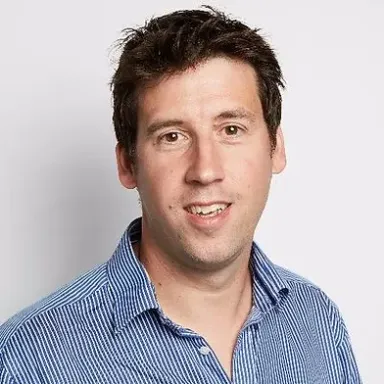
About the guest
Jon Salmon
Jon Salmon is an award-winning producer, a digital pioneer, co-founder of Byte Entertainment and Co-CEO of the Speakers Collective social enterprise.
Jon lost his father to suicide when he was a teenager. A few years later after starting his first job he was sectioned and admitted to hospital with stress and depression. Luckily, Jon was able to get the right help in the end and returned to work a year later.
However, Jon decided not to tell anyone about his mental illness or Dad’s suicide for nearly 20 years due to the stigma and affect he thought it would have on his career and friendships.
It was sadly after the suicide of a close friend due to postnatal depression in 2016 that Jon decided he had to speak out.
Jon couldn’t have picked a more public platform to speak out when he spoke alongside the Prince and Princess of Wales as part of the Heads Together mental health campaign in the lead up to the London ‘Mental Health’ Marathon in 2017.
Jon has since gone on to be the Co-CEO of the Speakers Collective not for profit, challenging stigma and facilitating important conversations with lived experience speakers.

Hosted by Andrew Pain
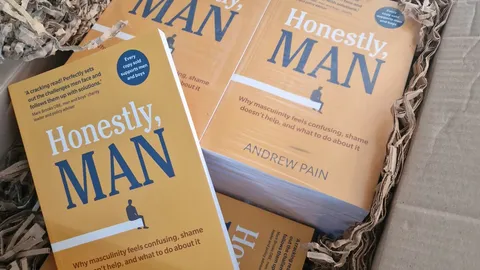
Andrew Pain is a Mental Health & Resilience Keynote Speaker who speaks from lived experience on resilience, burnout and workplace wellbeing. Host of the Men on Show podcast, author of the book Honestly, Man, and a TEDx speaker. Member, International Coaching Federation, and Mental Health First Aider trained.
Never miss an episode
Candid conversations with everyday heroes – ordinary men doing extraordinary things.