Men on Show · Episode 23
Men and the Grieving Pint with Ben Mason
- 28 February 2024 .
- 36 min .
- Hosted by Andrew Pain .
Ben Mason, is the founder of The Grieving Pint, an enterprise, which creates opportunities for young men to speak about their mental wellbeing in a safe and natural environment (the pub!), to find community and access support.
Andrew hosts this podcast. His own keynotes are on burnout, resilience, imposter syndrome and difficult conversations.
In this episode
About the conversation
Key points of the episode
- Welcome the youngest guest so far on the podcast!
- Who he admires.
- How he tragically lost his mum at 18.
- What the "Grieving Pint" is and the motivation in setting it up.
- His views on the challenges men face today .
- How people think that "Middle class white young men" have no problems or issues.
- How he thinks there is a "silent epidemic" going on which is being ignored.
- How men are scared to speak out as they fear being misunderstood, judged or cancelled.
- His philosophy on life!
Men on Show shares lived experience and honest conversation – it is not medical or therapeutic advice. If you're struggling, you don't have to cope alone.
Samaritans: call 116 123 (free, 24/7) NHS: 111
Full transcript
Read the whole conversation
A complete, verbatim transcript of this episode – every word is the host's and guest's own; the topic headings are ours.
Welcome to Men on Show, the podcast, Candid Conversations with Everyday Heroes. Join Andrew Pain as he interviews fascinating guests, ordinary men doing extraordinary things. If you love the show and you think somebody could benefit from hearing it, why not tell them about it by giving it a share on social media? Oh, and at the end of the podcast, if you can leave us a five-star rating and a review, it really helps us more than you know, and it gets this important message out to more people that need to hear it the most. Right now, enjoy the next episode.
Hi, my name's Andrew Pain. Welcome to Men on Show. And today, I'm delighted to have Ben Mason on the show. A student at Bristol University, and in fact, the youngest podcast guest so far on Men on Show. One of the founding members of The Grieving Pint, bringing together two of my most favourite things, beer and chat, but for a purpose to create spaces to support men in particular. I really wanna sort of dive into what The Grieving Pint is about, what Ben's plans are.
And of course, of course, as the youngest ever member on the show, it'd be really great to get your ideas, Ben, around masculinity, what young men are thinking about. Andrew Tate, we hear so much about him. So how's he going down? So all this great stuff. Ben, welcome to the show.
Hey, Andrew, thank you so much for having me. Really, really excited to be on here, and yeah, can't wait to get into it.
Teenage inspiration, and losing his mum at 18
Cool, well, look, let's always start at the beginning. That's how I like to start. So kind of thinking about yourself growing up like as a teenager, who kind of inspired you? Was there anybody that stands out to you as a guy?
Yeah, I think, well, I should probably disclose this. I'm quite a big Spurs fan, and I think always growing up, growing up, I think, you know, watching a lot of Harry Kane, I think always inspired me a bit. Not that I was any good on the football pitch, but just the leadership qualities in which that, you know, looking around a team and really picking up one another, I think is such an inspiration to follow suit. But I can't say I ever had any particularly clear role models.
I just sort of, I guess, found my way, sort of chugged through under the stewardship of tutors and mentors. And yeah, ended up at Bristol University where you're surrounded by so many highly intellectual people who are full of drive and passion for what they study and what they partake in around their studies. I think that you sort of fall out, not fall out, but you sort of drift away from needing that sort of single person, but it's more about the environment in which you create, which actually drives you on and guides you.
So yeah, but growing up, I think I've always been into my sport. It was huge into cycling for a very long period of time and just the driven determination of trying to excel in a sport, I think is what it's really pushed me on for so many years.
I mean, just going back, there's a couple of things we'll touch on. But I mean, you are talking to a lifelong and passionate Arsenal fan who, I mean, Harry Kane has been a pain in my neck for so long. I'm so glad to see him go to buy a minute. One of the things that stands out to me about Harry Kane of course, was people thought he wouldn't make it because he was quite slow, he was quite awkward in comparison with his peers on the pitch, but it was his sheer grafting mentality that literally stood him out.
And I like that about Harry Kane. I have to begrudgingly admire that about him. It's great to see what he's achieved. But do you have anything, I suppose standing back as a teenager, looking back at your teenage years, is there anything that really sort of stands out to you as sort of a good memory or something that was tough, a particular challenge?
Read the rest of the transcript Collapse transcript
Well, I think probably not trying to deepen it too much. I think what actually completely changed me and I think made me grow up so much was when I lost my mum at the age of 18. I actually felt very, very raw at that time, at that period, as you do. But weirdly, you asked me about my teenage years. I sort of looked back and I was saying this to my dad just the other day, you know, it feels like your brain has mentally blocked it out because of what happened and how much trauma that installed on what went on.
So I actually think I, in a weird way, I do remember school and I remember growing up. And I remember, so you work out, finding yourself and finding what you're passionate about. But I don't remember childhood particularly distinctly. That's not because it was particularly bad or I was unfortunate. You know, I've been so fortunate to grow up in a very nice part of London and it'd be very comfortable. But, you know, that doesn't mean bad things don't happen.
And, you know, my brain has sort of mentally blocked out most of that period before mum passing, which there's so many fond memories, but I really feel like I, I know it's cliche, but became a bit more of a grown up following that and realised there's a responsibility that I now need to guide myself, but understand what I am and understand who I am and understand what my purpose is on the planet following that.
So, I mean, that came at a time where you still, I mean, we always need our parents, don't we really? But like, there's so much change happening there, maybe going off to uni, the next stage. I mean, that, yeah, wow, wow, that's a big, and I mean, if you look at the uni thing for a moment, was that always an aspiration for you? Was it a last minute thing or were you always pretty clear sort of going into your latter teens? That's what, you know, 16, 17, you knew you were gonna go.
Yeah, I think uni always appealed to me just sort of to, you know, really try and drive on and sort of almost see how far you can get really and really push for the upper echelons of what I could achieve academically. So when I was there as a teenager and A-levels hit, sorry, coronavirus hit just as I was doing my A-levels. So I'm sure many people who might be listening will immediately think I got an easy ride in A-levels, which isn't quite the case, but I realised it really provided me an opportunity to actually excel as well as I could in my academics because I had not all the time in the world, but you couldn't do anything else.
I thought I'd put my mind to my academics and really sort of hone in and see how well I could perform. And that was, fortunately, was able to unlock a course I really enjoy at Bristol, and I've always sort of aspired to do with economics and management. And what's the beauty of that? It means I've understood leadership better and I've understood how to create a team and an enterprise, which I have done in The Grieving Pint, and it's given me a toolbox, which now means I can help give back to society and also hopefully develop a corporate career.
I mean, it's quite a humble approach you have there and you're saying, you know, some people might say you had it easy with A-levels and coronavirus. And I'm thinking, well, I don't see how that's at all possible. It shut down a lot of our face-to-face social contact. It shut down a lot of activities that you might have relied on to sort of just freshen up what was going on, you know, to really have that self-driving discipline. I mean, I take my hat off to you, not an easy time to do your A-levels at all, I would say, quite the opposite.
Well, I don't think there's ever an easy time to do your A-levels, and I think they seemingly get harder year on year by year. But no, I think I'm a firm believer and you've got to make the best of whatever cards are dealt to you. And so, you know, following the passing of mum, I had two options, really. I was at university at the time, I either thought, okay, I'll drop out or drop a year and stagnate my life and sit around moping or actually, okay, how can I, not spin this, but how can I make genuinely the best out of this situation? And that's what I really endeavoured to do most days with The Grieving Pint and continue to endeavoured to do in my personal life, regardless of mum.
What The Grieving Pint is and why
So, I mean, and you bring me on to, and this is what I really want to explore. I mean, I love everything about the concept of The Grieving Pint. I love the name of it. I love, I think what you're going to tell us about it. So, you obviously set this up with a colleague, a peer of yours, Alex Barnum. You guys set it up together. What was the motivation behind? Well, I mean, first of all, there's a few questions here wrapped into one.
What is The Grieving Pint? If you explain that to us in clear words, so we know what we're talking about here. And what inspired you to set that up? Where did the motivation come from?
Yeah, so I came up with the idea back in November, 2022, when I sort of was first, not pressured, when I was first suggested, I spoke to someone about my mental health. Not that it got particularly bad, just because I think a lot of predominantly female influences around me had sort of suggested, you know, mom's friends, girlfriends, you know, different peers had sort of said, you know, maybe you should try talking to someone. And I sort of pushed it off.
And then I engaged in it to some degree, but I could never find a rhythm or a situation that would work for me, because I'm not, you know, I like to think of myself as fairly stereotypical in terms of being a bloke. You know, I quite like, you know, sport, going to the pub with my mates, and talking to someone over a box of tissues doesn't really fit into any of that remit. So I struggled to find a position where I could actually open up about how I was feeling.
However, I did find that I'd do it at my local pub with whatever company was there, voluntary or involuntary, you know, attendance. And so that sort of was the founding of it. And I reached out to a pair of Alex at the time to sort of suggest to him, as I know, he's quite an equally driven individual to see if he would, you know, be sort of a founding member and help support my vision and help get it off the ground, which he did in a very brilliant way.
And so The Grieving Pint, in essence, is just an opportunity for young men to get together around a pint of their choice. It doesn't have to be alcoholic. We promote responsible drinking only and speak about their mental health and mental wellbeing. The conversation isn't 100% about mental health. It's a very usual pub evening with all associated banter and different comments and conversations. But it just is an evening where it's commonly known that it's okay to speak about your mental health.
And it's really just trying to create a movement for young men to be able to talk about it in positions where they might otherwise not be able to do so. And so, yeah, we set up, we launched that first back in May, 2023. So a few weeks before that, April, 2023, and have since run about 18 sessions over the course of last year, and are now across four cities in the southwest of the UK, and hopefully will be in 10 by May this coming year. So yeah, really exciting expansion, and it's a really enjoyable project to be a part of and lead and drive.
And all alongside your studies, which I know, I remember my university days, you've got pressures on your shoulders, you've got to keep up with it. So to launch this, to be implementing it, is an amazing thing that you're doing.
Yeah, and having had Alex step away from it back in the mid-year last year, it certainly leaves a larger weight bearing on my shoulders to direct and drive it forward as the sole originator of the idea and the person who, I guess, fundamentally has the backstory from where it all cropped from. And it's now time to put the proof in the pudding, if you will, of what we make of this enterprise.
Whether men talk, and the need for communities
Yeah, I mean, I'm so inspired speaking to people like you. I had Scott Johnson on the show a while ago, set up the Proper Blokes Network in London, a load of walking groups across London. We know about Men's Pie Club in the North East. I'm trying to get them on the podcast. They promised they'll come on this year. Yourself with The Grieving Pie. It's great to see these creative ideas moving forward. And we had Charlie Beckill from Men in Sheds a couple of weeks ago.
Do you find, we hear this old, I think it's a myth, but I'm interested in your take on this. Oh, well, men just don't easily talk. Men don't talk. There's kind of that kind of assumption. Do you find from your experiences with The Grieving Pint that men don't talk or are men talking?
Unfortunately, I do believe that men don't really talk openly. I don't think it's quite a commonly spoken about issue. I don't think that's not to say men aren't willing to talk though. There's two very different aspects there. Men, you know, won't talk often on their own volition, which is what we are trying to change and trying to support and encourage that, you know, men who do talk are, you know, men who talk are guys who like their rugby and their football and will happily drink, insert some ludicrous number of pints on a Wednesday evening at sports night and make sure that a society knows that even those more masculine men or less masculine men or men who don't like sports, men who like arts, everyone can talk together, but there's no defining shape or mould for a man who talks about their mental health.
But no, I don't think men often voluntarily talk. I don't voluntarily talk, actually. And that's the biggest issue with I find is leading this project is I'm probably our target demographic, but equally the worst customer, because I don't like talking, I don't often do it, and I often hide it. And yeah, as much as it is for everyone else, a lot of the love TGP was actually just sort of started because I realised there's surely other people like me who just seemingly crap at talking about their emotions and probably need to do something about it. And funny enough, there are.
And there's definitely a need for these, you know, for communities. You think about Andy's Man Club, how many of those? Yeah. You think about what you're seeing in your work with The Grieving Pint, men in sheds, over a thousand sheds across the UK. So to my mind, just my own thought on this is, I think men do want to talk. I think instinctively, if we don't feel safe, if there's not like a ready community that we feel bonded to, that we feel like we could speak openly about without fear of reprisals, then we won't necessarily speak that openly.
But if those communities are there, and we're aware of them, then we may well plug in to them, particularly if they plug in to our interests. So I talk quite easily on a Friday night after a game of football, because that's what I'm all about. I like football, I love playing, and I'm much more like you. I'll open up more in a pint, put me in a therapy room with a box of tissues, probably less so. But if that same therapist, could be female or male, was in a pub with me in a pint, I'll probably open up a lot more easily.
Bigger names, the future and stepping aside
Yeah, exactly. And that leads us a bit on to what our development of TGPs looking towards. I mean, we're sort of starting playing with the idea of getting some maybe some bigger names or in the world of sports or different industries. To basically just do a really low key session where they just sit around the table and talk about their mental health. It sort of shows that so many influencers and sports people love to speak about mental health, but there doesn't seem to be a lot of tangible action.
And so how can we really sort of remove status and remove importance and just show that it's very primal mental health? It's been around for decades this issue, but only recently has it actually been acknowledged and spoken about. And so I think there's this perception that big stars and big influencers and they don't have these issues. I think everyone has these issues and how they're spoken about and sat down and talks over over a pint can really remove a lot of perceptions of people.
Yeah. You know, the very first guy I had on as a podcast guest, Patrick Naumbu, talks about trying to recreate these campfire conversations. Yeah. We would have had the millennium for thousands of years around the campfire, just sort of talking openly and share. And I do think it's kind of evoking that spirit in different formats, in the different spaces that we inhabit. What's your vision then for sort of the next three to five years? Have you got a sense of that?
Or is it at the moment, with all some things, you don't necessarily have a clear vision. You just kind of see where you're going with it. Is it more the latter or do you have something that's quite clear in your mind where you want to go with it?
I mean, it's probably more the latter. I think the beauty of TGP is it's ever evolving in its personnel and it's ever changing in who we look to help and the individuals we look to help. It's becoming more and more a community project in the sense of we have different people doing our logo design, which we've just redone and we've got other people creating campaigns for us. And the sort of the individual cohort is quite a core group.
We've got about 10 or 15 of us who run it, but we have about an associated 50 people who run it in different cities and keep the branches going and stuff like that. And so it's hard to say because a lot of us are students and I've probably only got a few more months on my tenure. That's probably the news from me, but that's not to say TGP won't live on in a different remit. And I'd like to see another student or another young man take it on as a responsibility and just use it really as a vehicle for young men to get leadership experience from a corporate side of the corporate aspect of thinking that is an enterprise which lots of young people can run and do their own little skin, and they might do six months, they might do 12 months, they might have their own plan.
And we're really tapped into a big industry now. But I'd like to see it sort of starting to get more formal connections with charities like Talk Club or Andy's Man's Club and linking to them and sort of be a, I'm not gonna say a baby to them, but a sort of a supporting arm for some of the younger men in society because they've got huge audiences. But I think they, and having spoken to some of them, struggle to sometimes connect with some of the younger generations.
And so if we could fill that gap, I think that's really the longevity for TGP. Whether or not I'm involved, that's regardless. This was something we've set up and the foundation and the gap will always be there.
That's fantastic. And that's quite inspirational to hear as well. I think for me personally, the mark of a fantastic leader is someone that can create things, but also knows when it's right to be able to pass that on. And I think that shows remarkable self-awareness on your part.
Yeah. And I think, you know, I think what the way I'm looking to play is that in about six months, I'll probably step aside following the end of my university stint, because I've got, you know, I've got a degree and I've got a, hopefully quite a corporate career ahead of me. I'm looking to move out to Australia. And that's not to say I wouldn't, you know, launch a branch out there and create it as a different legacy, but I've done, it's now been 18 months I've been doing this, thinking about it and doing it off the back of my mind from that first sort of idea that I had to where we are now.
And it takes a lot out of you, as you all know, running Men on Show, it's a huge commitment, which I don't, I think people can often, it feels, can be often underestimated because people might go, oh, well, Andrew just runs a podcast or Ben just organises people to go to the pub and have a drink. But keeping brand new up, keeping social awareness, it's all very challenging. And yeah, there's only so much you can do for so long before you think, okay, I've done my input. Yeah. I've done my leg of the rest. Yeah.
Andrew Tate, TikTok and speaking out
And you've started something and maybe on to the next thing. So, I mean, just shifting the conversation slightly, you know, as a young man, and I mentioned this at the very beginning, you know, we hear a lot, we've heard a lot about Andrew Tate. My own thoughts as a 49-year-old man is it feels like his influence has reduced, he's more of a caricature. And I've got a daughter who's actually 19. And I remember her saying to me, it was last year, can't remember exactly when it was, latter part of last year.
And she's like, dad, Andrew Tate, seriously, you know, everybody knows about him, but all my male friends, they quote him to wind us females up and wind the teachers up. But none of them take him seriously. They all think he's, you know, excuse, he thinks he's a complete Wally. No one takes him seriously. Is that your reading of it as a male, when you think about your peers? Does he have a meaningful appeal or is he just a caricature?
Yeah, I think he's definitely more the latter caricature now. I don't think, I think what's dangerous now is the influence that platforms, especially TikTok have on the younger generation. So a few generations, well, probably the generation below me, in the sense that TikTok has an algorithm whereby anything can be put onto your feed, regardless of who you follow. Whereas growing up for me, it was, and most of my peers, we had Instagram, which was probably the main source of different, you know, news or posts or ideology.
But on Instagram, you can often, you can follow and tailor exactly what you want to view. And that's the danger of TikTok is ideas can spread. But, you know, I think it's definitely, you know, a caricature in a lot of our eyes because we're quite, I'm not going to say we're established, we're anything but established most of our 20-year-olds and especially some of my mates. So, you know, but we have an idea of what we believe in and what we don't believe in. Whereas I think a lot of the younger kids, maybe 14, 15 could be influenced and could be, you know, taking down the wrong path.
And what do you think, you know, in terms of men voicing concerns, things that they disagree with? So I hear stuff that, and I see this actually where guys are almost afraid of saying how they feel because they don't want to offend anyone. They don't want to get cancelled. They don't want to get shut down. Do you see that fear yourself among young men today?
Yeah, on the general population, I do. I think it's very true. I think that there's a big perception that you can't say a lot of things nowadays. I always run the rule that if it's factual, then I don't see anything wrong in saying it, regardless of beliefs or colour or gender. I think as long as it's 100% correct and there's a fact in what you're saying and you can back up what you state with evidence or a belief or data, then I think it's a very dangerous topic.
I get nervous even speaking about it now. It's a dangerous topic, especially in universities, about different people and their beliefs and different people have their own upbringings and have been nurtured in certain ways. And some will have been exposed to more bullish behaviour, some exposed to a very molly coloured behaviour. And those overlapping can obviously cause tension. But I don't think there's ever a active concern, if you will, about what people state. But I think it's something which men need to be wary of about expressing their opinions.
Challenges for white middle-class men
And what would you say, when you look at your own life today as a young man and your peers, what do you say as men, you see as sort of the biggest challenges that you currently face?
Well, probably, again, I'm not sure if I'll get in trouble for saying this, but I think the big issue is sort of, there is something to be said about being a white middle-class male these days in the UK in the sense that I think the world has been phenomenally developed in a brilliant way to promote a lot of different ethnicities and a lot of different diversification, which is sensational, but I think it does need to be taken to a certain point where we don't forget what our quality actually is.
It's not the fact that we're disregarding people, it's the fact that when there was negative discrimination, I was very damaging for certain parts of the population. But I do firmly believe that everyone should have an equal opportunity, regardless of gender, race, skin colour, upbringing, education, these are factors that individuals, we don't choose. I didn't choose to be born where I was, I didn't choose to be a man, I didn't choose to be white, just as I'm sure there are women who think I didn't choose to be like this, but often a lot of social movements revolve around promoting or honing in on certain aspects of society, where actually there is, as I'm proving, in mental health, there was actually a demand amongst young men. That's an issue. But because people think we're young men, people don't think we've actually got an issue, because everyone thinks we're fine.
Yeah, and I mean, I'm heartened. I do think some things have moved forward. I think with the campaign for a minister for men, although there has been some kickback on that, not as much as you might have imagined there could be. And I think that will progress forward. I think we'll, you know, and that's good news. I'm heartened by it. And I do believe that most people increasingly, and you have people on the extremes, most men and women understand that every pound invested for women's welfare is actually a pound for the men that love those women and vice versa.
And I think increasingly we're seeing sensible debate, but I'm passionate about sensible debate, men and women standing shoulder to shoulder, women calling out the dividers and haters that might be female particularly, and men doing the same, and really trying to stand alongside each other and truly thinking about what equality is, and understanding that actually for a white man from a council estate that's come from generational poverty, how is he advantaged? How is he privileged? And just having that debate openly and rationally.
Precisely. Precisely, and by the same token, there's nothing to say that on the other scale that white men from phenomenally privileged backgrounds aren't struggling massively with their own mental health. I've been so unfortunate to see through being in a certain remit of schools, which a lot of people would probably just write off of thinking everyone's very comfortable. I've seen several, unfortunately, several peers have decided to take their own life. And it's clear that not every young white guy is right.
I'm not gonna say there seems to be a public perception, but I seem to think that for whatever reason, people just go, oh, these guys, they'll figure it out. They'll be all right. They're always all right. And I actually know there is a silent epidemic going on and people aren't recognising it.
Speaking out, rational debate and hiring applications
Yeah, I mean, I had a guy recently who it was actually only a couple of weeks ago. So he's a speaker, a fellow speaker, and he's a white middle-class man. He apologised to me for having an opinion on diversity and inclusion. He said, look, I'm really sorry as a white middle-class guy. I know I shouldn't have an opinion. It's like, well, you can have an opinion on it. Everyone's entitled to an opinion.
Even just what I was saying just then about two minutes ago in this podcast, I'm now sort of replaying in my head thinking, oh, God, do I say anything wrong? Because there is this social pressure, but I do firmly believe that, you know, everyone has challenges. To be really clear on my stance point, everyone has challenges. Across, you know, across women, across men, across races, across backgrounds, across educational levels. And that goes in corporate hiring, non-corporate hiring, welfare services.
I just think it should be equal. I'm not saying like, you know, white guys should get more, or, you know, purple people should get more, whatever. It's just about, you know, the ludicracy I think it's got to you though, is men don't feel they can actually speak out. I don't feel now that I could actually speak out and say that, because I'm so worried about people perceiving it like, you know, there's more diversity.
Yeah. And I think, you know, we'll move on to something more positive in a moment, just to conclude. But I was delivering a session a couple of months ago to a company where the speaker after me was going to be talking about diversity and inclusion. And I've done my bit, there's a bit of a break, and they wanted me to stick around and network, just in case anyone had any questions. And one guy was saying to me, he was dreading the next bit, because there's a lot with what there's, with the piece on diversity inclusion there, that he disagrees with, but he knows he's not allowed to voice any rational debate.
And we need to not lose the art of rational debate, if it is rational and sensitive and thoughtful. And I think we're both, that's pretty much what we're saying, that we're passionate about equality, but we can't lose freedom of speech, as long as our speech is sensitive and rational and well thought out.
Yeah, and I think there has to be a component of understanding for all. I think that's the overriding factor. But nowadays, even on hiring applications, a lot of people comment that you can look through and it can be, okay, women in finance, brilliant. People from ethnic diversity and finance, brilliant. Or people in ethnic engineering, brilliant. And lots of different aspects, which phenomenal to see, but in a society where we're promoting everyone to be able to see themselves, an individual like myself or an individual like some of my peers or an individual like yourself would probably look at that application and think, actually, I don't see myself.
Maybe it starts to feel like, okay, maybe they don't want me. And then you start self-doubting thinking, well, what have I done? I've worked hard at school. I've done my best, given my cards. I've tried my best regardless of adverse situations like my mum. So why should you get penalised for something that you had no jurisdiction over deciding? Yes, it's ludicrous. Yeah.
Helping men and boys, and finding a tribe
So how do we, and sort of coming to the concluding part, how do we help men and boys? When you think about the young men, you mentioned yourself, you've known peers that have, on paper, come from privileged backgrounds, you could argue, yet they've still tragically taken their own lives, died by suicide. And how do we help men and boys to be the best versions of themselves? Practically, what are some of the things we need to be doing?
Yeah, I mean, it's funny you say best version of yourself, that was actually the motto of my school. So I think it's just about creating an environment where young men can really excel in what they want to excel in and be able to channel the energy into what they want and not have the societal pressures that make people feel like they need to conform to some regime. And I think it transcends a lot of different aspects of society, but I think social media definitely plays a role and it sort of gives us this feedback loop that certain people should attend, pick around in uni.
Certain people should attend Reading or certain people should attend Leeds or certain people should attend Manchester or Bristol or wherever, and it's sort of a self-fulfilling clique, if you will, and I think for some people, if they then go to one of those universities and don't fit in as a young guy, it can be a bit daunting and a bit worrying, but people always find their tribe, and I think it's just about people becoming comfortable and when they do find their tribe and engaging in what they want to do.
You know, I was pretty nervous when I first launched The Grieving Pint. You know, I was phenomenally worried about what people would think. And, you know, it's, I'm not going to say I've got no leg to stand on here, but I've always described to people, I can imagine if someone was to come out and say like, oh, you know, you're putting your name to a standpoint, you go, oh, my name's whatever. And I believe, I had the same feeling.
I was like, my name's Ben, and I believe in mental health. And you're such like, oh, God, it's a bit worrying, you know, what are people going to think and what are people going to say? But what ultimately comes back to you is a huge wave of support and embrace from a community, from your community, from your friends, from, you know, I feel like I fill the gap in your sector, which as I found out in Manchester when I first met you was, you know, seemingly needed to be filled. So it's, I think it's brilliant. And you just got to do what you want to do and get on with it.
Finding The Grieving Pint, and a last message
So a message just to clarify two things. Number one, how do people find out more about you in The Grieving Pint? What's the best way of getting hold of you?
Yeah, so we're The Grieving Pint on Instagram, LinkedIn. We've got a website called www.thegrovingpint.godaddiesites.com. Not very catchy, but we are a startup charity, so don't have much money. And yeah, just reach out if anyone wants to learn more. We run sessions currently in Bristol, Bath, Exeter, and Swansea, and we're constantly looking for individuals to help us expand across the UK. So do reach out over either the website or over social media channels. They all get monitored. They all get engaged with. So there is no issue with just sending us a DM or an email to info at the grievingpint.com. So yeah, they're all our contacts. Cool.
And a message of encouragement, if you could put it into two sentences, to the young men, and maybe older men as well, listening to this podcast, give us a message of encouragement to finish off.
Yeah, I always say we're eight billion people on a rock, and we're all gonna die, which isn't particularly encouraging, but what it does mean is just go and do it. What are we gonna do? Just go and do it, get on with it, and embrace it, do it with a smile. And yeah, I'm sure lots of people will engage with it and enjoy what you do, and support you along the way.
Brilliant. Ben, it's been an absolute pleasure having you on the show. Thank you so much for giving it your time. We wish you the very, very best.
Thank you so very much for having me.
Yeah, and also your life beyond. Wish you the very best. I'm sure you will absolutely smash whatever you set your mind to. But thank you again for your time. Wish you the very best.
Cheers, Andre.
Thank you for listening to Andrew Pain's Men on Show. If you could leave us a five-star rating and short review, it would be really, really appreciated. It helps us get this important message out to more people that need to hear it the most. See you on the next episode. Thank you for tuning in.
About the guest
Ben Mason
Ben Mason, is the founder of The Grieving Pint, an enterprise, which creates opportunities for young men to speak about their mental wellbeing in a safe and natural environment (the pub!), to find community and access support. Ben is currently a student at university and founded the growing initiative following his own trauma and the impact it had on his mental health.
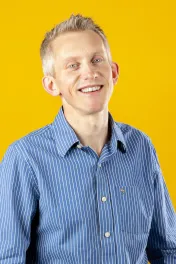
Hosted by Andrew Pain
Andrew Pain is a Mental Health & Resilience Keynote Speaker who speaks from lived experience on resilience, burnout and workplace wellbeing. Host of the Men on Show podcast, author of the book Honestly, Man, and a TEDx speaker. Member, International Coaching Federation, and Mental Health First Aider trained.
Never miss an episode
Candid conversations with everyday heroes – ordinary men doing extraordinary things.