Men on Show · Episode 10
Men, Food Waste and Changing the World! with Adam Smith
- 22 November 2023 .
- 28 min .
- Hosted by Andrew Pain .
Adam Smith is a founder and co-director of the visionary, multi-award-winning, global initiative: The Real Junk Food Project (TRJFP).
Andrew hosts this podcast. His own keynotes are on burnout, resilience, imposter syndrome and difficult conversations.
In this episode
About the conversation
Adam is currently writing a book due for publication next year. In 2023 he is starting a Foundation Degree in Environmental Science. His alias is Mr Junk Food Chef and he has been a featured speaker on a truly memorable TedX talk. His story is utterly inspiring.
Check him out:
Men on Show shares lived experience and honest conversation – it is not medical or therapeutic advice. If you're struggling, you don't have to cope alone.
Samaritans: call 116 123 (free, 24/7) NHS: 111
Full transcript
Read the whole conversation
A complete, verbatim transcript of this episode – every word is the host's and guest's own; the topic headings are ours.
Welcome to Men on Show, the podcast, Candid Conversations with Everyday Heroes. Join Andrew Pain as he interviews fascinating guests, ordinary men doing extraordinary things. If you love the show and you think somebody could benefit from hearing it, why not tell them about it by giving it a share on social media? Oh, and at the end of the podcast, if you can leave us a five-star rating and a review, it really helps us more than you know, and it gets this important message out to more people that need to hear it the most. Right now, enjoy the next episode. The next episode.
Hi, my name's Andrew Pain, and welcome to Men on Show. And today, I am delighted to welcome social entrepreneur and speaker Adam Smith to the show. Adam's a founder and co-director of the visionary multi-award-winning global environmental initiative, The Real Junk Food Project, with an amazing and simple manifesto. I love this manifesto, Feed Bellies, Not Bins. Project started with one cafe in Leeds, went on to inspire over 120 cafes in seven countries, feeding over 17 million people from food waste. The plaudits of the course followed. Adam has voted one of the 40 most influential men in the world by Ask Man, named as an unsung hero of Leeds. Adam, welcome to the show today.
Morning, Andrew.
Growing up in care, and not getting help
Yes, so just get started, Adam. Who and what inspired you growing up?
I don't feel like I was inspired, really. I was in a very dysfunctional setting. I suffered abuse and trauma and ended up in care. I was in prison when I was 21 on remand. I was sectioned as a child as well. So I don't think I really had the time and capacity to be inspired. It was more about getting through each day and surviving. I didn't really get out of that survival mode until I was around 25 years old, after a very serious suicide attempt, which I was pronounced dead at the scene.
But obviously, I came through that. But it wasn't until that part of my life had changed that I started looking at inspirational people to look up to. So, yeah, no one really. I just had to get to where I am now.
You mentioned the serious suicide attempt. You're looking back now, had you tried to reach out for help leading up to that?
Read the rest of the transcript Collapse transcript
Not really. I think, you know, if you're going to go, you know, there's very, very few people that you'll speak to on this planet that are able to speak about what it's like getting to those depths because most people never come back from it for obvious reasons. You know, they're successful in their attempts. And I wasn't successful in a very strange, paradoxical way. It's, you know, and I'm still here and I didn't intend to be here.
So no, you don't kind of. If you're going to get to those depths and you are going to do that, there's very, very little you can do to intervene. There's probably people should have intervened when I was 10 years old. In fact, I got an apology from CAMHS, the Mental Health for Children, saying that they had failed me. And this was like when I was going into therapy around two, three years ago. You know, they apologised to me and said, you know, we'd failed you as a child because we just didn't know what we know now about neurodivergence and trauma and all the other things that I had suffered.
So, yeah, I probably didn't get some help along the way. I was on antidepressants as a child prozac when I was 11 and 12 years old. I had social workers very pissed throughout my life. And there were always somebody at school, even though I got thrown out of school. But there was always a character within my life. Whether I was in care and it was my key work or whether I was in prison and there was somebody there that I kind of attached myself to that kind of allowed me to get to where I needed to get to in life.
So not necessarily help as such, but I always managed to land on my feet and get to where I needed to go next, you know. And even though I had no plan of where I was going to be next, like I said, in a survival mode, you kind of just latch onto the most positive thing that's around you at that time. So not necessarily looking for help, but there was probably a lot more people could have done to prevent to where I ended up.
The trigger for his suicide attempt
So, I mean, obviously, some huge challenges through your life. You described there being in survival mode. Was there something that brought you to a point of suicide where you said no more? When looking back, was there a particular moment that stopped you wanting to survive?
Yeah, I think there always is in everybody's case. You know, there were some studies recently around the point of trauma of when people become homeless and they found out that it can take up to like 11 years from the point of trauma for somebody to get to that stage, but there's always a trigger, there's always a moment. I mean, for me, it was a relationship that had broken down. I had to move away from my new home, which I'd made in North London, back up to Leeds, and it was just incredibly traumatic.
And I just felt like that was it. You know, I'd left my home place to get away from my issues, and I was forced to kind of come back completely my own doing, you know, everything was entirely my own fault. And then it was just at that point where there was just nowhere else to turn. And this just seemed, you know, the only way out. I just felt like a failure and that I don't understand why, you know, I was keeping I was hurting people or hurting myself, you know, I couldn't understand why.
Even at the age of around 24, 25, I was still doing this. You know, you're meant to be an adult, supposedly at that age. And, you know, discovering now even as someone who's nearly 40, that I wasn't an adult, I was still a child. You know, I had not dealt with any of my issues as a child, as a child whatsoever. And I'd not understood the kind of transition into adulthood or what it meant or what I'm supposed to do as an adult, I had no role models and nobody to kind of nurture me into that position.
So, yeah, there was a moment and I feel like a lot of people that I've spoken to have been in similar positions to me. There's always that moment. It could be just something that, you know, the straw that breaks the camel's back as such. It could be just something really trivial, you know, your card getting declined in a shop, you know, something like that, which people then associate that with the act and it isn't, you know, it's years and years of trauma, it's years of depression, survival mode, you know, that point in your mind where you're in survival mode where you can't trust anybody, you don't know where you're going to be next, constantly on edge, constantly being triggered, lots of clouding of judgement around your thoughts and processing thoughts and feelings and emotions.
Obviously, I was autistic and I didn't know that until like literally two, three years ago. So I was dealing with all the kind of neurodivergent part of me, which wasn't explained, thinking I was weird and not like everybody else and not understanding that and yeah, and trying to somehow be what was expected of me as an adult male and yeah, it just got to the point where I didn't think I could be that person.
Australia, and the idea on a farm
And so coming out of that suicide attempt, you survived. What was it that sort of, was there something that lit a spark in you? Was there something that sort of helped really sort of get you going? What did you draw on?
It's hard because your life just doesn't change just because you've survived. That's not how it works. You know, there's still a path you have to take. It's taken me 13, 14 years now from that moment to get to where I am today. And it is a journey. There's no epiphany moment. There's no light at the end of the tunnel kind of moment. One of the things that kind of did it inspire me as such, but I always remember is my friend who was at my bedside said, You're not very good at this.
You might as well stop doing it. And we kind of laughed and joked about it and it made sense. I'm very, very good at things that I know I'm very good at. My friends always said I had a gift. You know, I was able to do things that other people weren't able to do. And I was using that gift in a very, very self-destructive way. And it was just that moment of going, well, what happens if I started doing good stuff?
Or what happens if I just focused on the things that I like and see where that leads me? And one of the things that I decided to do was just get away from everything and go to Australia. I've always wanted to go to Australia. I didn't have much money, but I just travelled down there on a working visa and decided to go there. I basically travelled, seen the world and opened my eyes and potentially find myself, you know, which is what happened to me.
I had some good and some bad times down there, but I found the Real Junk Food Project in Australia and then brought it back to the UK and the rest is history, as you've mentioned.
What was it that gave you the idea for the junk food project? I've actually eaten in some of your cafes a number of years ago and I just love the concept. My wife absolutely loves the concept as well. Where did that idea come from?
22nd of February 2013, I was stood on a farm in north Melbourne, so just outside of Melbourne, about three hours north. It's not actually Melbourne, it's outside of Melbourne, about three hours north, a place called Shepperton. Working on a farm, bashing some trees with a stick to harvest some almonds, which is what I was doing. There was food being fed to the pigs on the farm that I was eating the same food as the pigs, and I was questioning why this food was being fed to pigs.
And the farmer just explained to me, just in layman's terms, you know, this food is harvested, it's not used, and the farmers share it with each other, and they usually feed it to each other's livestock. My initial question was, well, why is it not fed to people in need? And he just bluntly said to me, we're not a charity, you know, we're a business, you know, I shouldn't have to be, I can't afford to give this away.
And yeah, we just, I was with a group of people at the time, and I just stood there and went, I'm going to do something about this, I'm going to take this food and feed it to people and kind of focus on the environmental issues of it, rather than the kind of the social issues of it. I felt like I'd witnessed a lot of food being wasted, and it was physically impossible for me to understand how this food was going to feed everybody on the planet, because there was just more than we can consume being created.
And then I said, I literally just said it. I just went, I'm going to create this real junk food project. I'm going to feed the world. And I said it just like that. I had no idea how it came to my head or anything. It just, that was it. And then that was it. I was on a journey, and I went out and started researching, working in restaurants in Melbourne. I was a head chef in Melbourne, and I started working on barbecues.
Out in the River Yarrow, just basically getting people's food and just cooking it and giving it out to people and saying this was going to go to waste and just making nice food for people. Didn't quite get the feedback I'd expected, but I was really inspired by this kind of, all this food was going to get thrown away and I could do something with it. I didn't have a business model, I didn't have a plan. I just felt like people needed to know more about this. And that was the start of The Real Junk Food Project.
His biggest challenge was himself
Wow, and early on, as The Junk Food Project is getting off the ground, what are some of the biggest challenges you felt you faced looking back?
My biggest challenge was me. You know, I'd not dealt with a lot of my issues and I was about to start and become an entrepreneur and the whole world wanted my attention. My ego got carried away. I was in every paper and on TV and I was everywhere and I felt like this is what you were supposed to do. And I was still living with trauma and not being diagnosed, neurodivergent and still struggling, really struggling. I had a child at the time, really, really struggled with that.
The whole kind of dynamics of being a father and not having a father and being in a toxic relationship as well, which included me, you know, it was both parts. And yeah, I was the biggest challenge. You know, it was always me that was either holding things back or running too fast and not, you know, a lot of people, everybody was chasing after me. And the project was growing globally and everybody was wanting a part of me.
And I couldn't physically do it mentally and physically. And so, yeah, it was me. It was me. I mean, with all due respect, running a business is fairly easy for me. I've got no diversion. You know, I can just set up a business. I set up businesses all the time for people. I show them how to do it. Love all the back end stuff of setting things up, setting up insurances, registering in a company's house, getting, you know, your finances in place.
All that kind of stuff. Love it. Can do it off the top of my head. I can just do a bullet point of how to do it. And the whole social media, getting a word out there, highlighting what people want, working with customers, you know, income, all of that stuff. That stuff was relatively easy for me. But to be a leader, to work with people, to be what people expected of me, I didn't really understand or know what that was.
So I was trying to be something, and I was especially masking a lot, being exhausted and burnt out, not through the physical running of the business. And it was more about the masking of being that person that people wanted me to be, whether I was in a board meeting or whether I was speaking to a customer, dealing with new suppliers, all the different kind of dynamics of your tone and communication. I didn't understand it, and I still don't understand it now.
I struggle massively with communication. But it's only since I've been in therapy over the last couple of years that I've learned how to be vulnerable, be the best version of myself, deal with trauma, process it better, take time to deal with things, communicate better, don't act on impulse, wait for people to have an input and feel part of the conversation rather than just going off and doing something. All those things I was doing was building The Real Junk Food Project.
And I think the project suffered because of that, but it also benefited to the point where it went global. And lots and lots of projects, which are still running to this day, that don't call themselves The Real Junk Food Project, are all thriving and doing amazing things. And it's probably because of how I was. But there was obviously the negative side, which potentially could have stopped it all as well at the same time. So yeah, I think the biggest challenge was me.
What he is most proud of
I mean, you've left an incredible legacy. I know when I've worked in food banks and the tins are just beyond sell-by dates, so we can't give them away. But we always gave them to The Junk Food Project. And now even myself, when I look at things that are out of date in my kitchen, whereas before I might chuck them now, I'll use it. It's fine. You've created… I mean, you've had influence over my life, over my habits. Is there something that you're most proud of, something that stands out for you, that you're looking back, that really stands out as a thing that you're proud of?
Yeah, ironically, it's the work that I do with people. I struggle massively with people. And there's a lot of people that dislike me because they misunderstand me. And I am a very misunderstood person. I know that. I've accepted that. But despite, you know, the amount of food we've stopped, you know, over 10,000 tons globally, feeding over 90 million people with that food, inspiring cafes and projects worldwide, which are still going, you know, eight to ten years later.
And the impact that that's had, like you said, the change in people's behaviours and attitudes towards surplus food. You know, people just see it as food now, which is what we always wanted it to be. For me, it was all about the work that I did with people, people that you'll never know, you know, people that might be in similar situations to me, that basically I just treat like a human being. My approach is I just treat people like human beings.
And basically, if you're not a very nice human being, then, you know, I really don't have time for it. And I feel like there's a lot of people that I've worked with across the years now, over a decade now, that have come and gone and are probably in better positions because of this kind of really organic and holistic approach that I've always had with dealing with people. It's just treat him like a human being and be kind.
And that's the thing that I'm proud of the most, because for someone like me, you know, lots of people have accused me in the past of being arrogant or, you know, overconfident. I've been called a maverick and all these things. And I feel like it's just a reaction to something that I've done in that immediate there and then, rather than looking at the kind of impacts I've had on people's lives over a long period. And there's people that write cards to me or, you know, come in and tell me and go, you know, like yourself, then, you know, like you just said, you know, you had a change in your lifestyle or your behaviour towards something because of the impacts that I had on your life.
There's people that I've met and worked with even for a short period of time that I've gone away and still to this day come back and say, you know, it's because of what you said, it's because of what you did. And you just give me an opportunity or you give me a chance or you just believed in me or you just told me I could do it and that I've now gone on to do this. And I just feel like I always felt like The Real Junk Food Project and Surplus To Purpose now is all about not trying to retain people, but trying to put a better person back out into the world.
So we have people come and go all the time, but they're trained and skilled and educated around some of the issues that we face, especially in the warehouse environment. And they're all getting jobs and working. They all apologise to me, I can't come back and volunteer because I've got a job now. I feel really proud that I put that person back into that world and got you in a better position because at least you didn't go down the path that I went down, which some of them could have quite easily have done.
So for me, that's probably – I don't think about it and feel proud about it, but I feel like from an impacts perspective is that that's the greatest impact. That's the thing that I'll live with, that maybe people will ever recognise or give me gratitude for. But deep down I know that the impacts I've had on these people's lives and the difference that I've made. Just by being a human being, you know, because I could, so therefore I did.
Surplus To Purpose and its catering
So tell me briefly about Surplus To Purpose, because we talked about the Drunk Food Project, but you're working now on Surplus To Purpose. Tell us a little bit about that.
It's a very similar project. It took over from Real Drunk Food Project, which ended around the end of 2021. Surplus To Purpose was effectively created to deal with surplus food and cater with it, which is what Real Drunk Food Project wasn't really doing much of, even though it was dabbling it. So it's kind of like a catering event of what Real Drunk Food Project should have been, but unfortunately Real Drunk Food Project didn't make it. It passed its eighth year, and Surplus To Purpose just basically took over.
We run a supermarket, we deal with surplus food, we do events and outside catering, and we redistribute food all over the world to other projects. It focuses a lot on food that is kind of forgotten about within the industry. So catering style food, things like 25 kilo, I've got a delivery of 26 pallets coming this morning, which is all catering and manufacturing style food, which nobody touches, nobody goes near, but we can make things out of it, we can do events with it, we can make it into smaller sizes and get rid of it, pass it on to projects that cook with it, etc.
So there's a lot of good stuff that we can do with this food. So that's where our main focus is. And yeah, we've got a warehouse in Leeds. We do a lot of outside catering events. We've just done a wedding this weekend in Whitby, which was brilliant. And because of the nature of food that we get in, we can do allergen-free menus and cater for religious requirements and dietary requirements, and we're experts in it. So there's not many other people doing that large-scale environmental catering as we are, which is kind of our USP, I guess.
And yeah, it's quite exciting times now, because we're just about to enter year three. And we're hoping to become one of the largest environmental caterers in the UK and really, really push hard on. There's a lot of food still being wasted that nobody's touching at the moment. Which even the third sector can't deal with at Surplus To Purpose is picking up and doing some great stuff with.
Men and boys struggling, and toxic masculinity
Amazing, amazing. And a little shout out for Whitby there. We holiday up near Whitby every year. It's Sanzen. We love that part of the country. I mean, moving on. We hear that men and boys are struggling today. We hear so much about toxic masculinity in the press. From your perspective, do you see, for the people that you work with from your own experiences, do you feel that men and boys are in crisis, that they're struggling in some way?
Yeah, absolutely. I work in warehouse and logistics, so I deal with a lot of males, and males of a certain age. So there's some that I deal with around the 18 to 35. What you can see, I've come from kind of like traumatic backgrounds. Potentially, I've had children struggling, and I've seen those. It's no wonder that it's one of the highest demographics of people that unfortunately attempt to take their own lives or are successful at doing it, because I see how people are struggling and how difficult it is.
And I do see that. I also see the kind of really toxic generation that's just above me, the kind of 45s to kind of onwards, that kind of generation that I see, especially in warehouse work and logistics work that come, and are still kind of a little bit behind the times. And I call it out. I really do. I call it out in front of people and correct people when they're using the wrong terms or referring to people in ways that they shouldn't be.
And so I still see it. And I still see them as role models to these people that are kind of struggling, this kind of generation that I'm part of. And so, yeah, I do see it a lot. And then I've got a son who's nine, and he's in a very different generation to me. And it was only a couple of months ago that I was talking to him about trans people. We had a trans couple working with us, talked to him about them both.
And he just didn't care. He was like, so what? And I was really shocked by his reaction because he wasn't shocked around the situation. He was just like, I don't care. He probably is aware of that within his school environment anyway. So I feel like there's positive in the next generation being more aware and understanding of some of the things that maybe we're in the middle of. You know, there's wearing the generation that's kind of seeing it all come out more.
You know, how men are supposed to be talking much more and being more vulnerable as a male and being less toxic and all the other stuff. We're in the middle of that, whereas the next generation, like I said, he's kind of going to be brought up with it and hopefully not see or deal with some of the things that maybe I grew up with, especially, you know, male toxicity. I had very toxic males around me and, yeah, it nearly destroyed me.
And I don't want my son to ever think that of me. So there's a lot of men probably in my position that are really battling with themselves to not be like, you know, what they grew up with and to kind of constantly question themselves and criticise themselves, which I know I speak to a lot of men my age who have got young children who say like, oh, you know, I'm a bad dad because I raise my voice to my child.
It's like, do you want to know what my dad did to me? Like, seriously, like, you know, don't be so hard on yourself. But, you know, we are, we are very hard on ourselves. So, yeah, I have a lot of hope that in a generation of two, you know, a lot of this kind of toxic masculinity around even like the Me Too movement, you know, women feeling more empowered to be able to speak up and speak out and not let people get away with it, but also men supporting that kind of rhetoric as well.
So, you know, I do it just like I know lots of other people do in my environment, is that we don't allow people to be disrespectful or, you know, unkind to others. And, you know, I have no issues with standing up and being brave and saying stuff that I feel like is wrong or don't agree with, and, you know, not just leaving it to like females to do it or people that are not white to do it, for example.
You know, I stand up and say, like, I have a position of responsibility as somebody who can maybe speak on their behalf as well as, you know, stand alongside them. So, yeah, it's an issue. I still see it every day. Like I said, the environment I'm in, I see it a lot. But I do see the difference compared to what it was like when I was a kid, when maybe people said and did stuff that they got away with that you'd never get away with these days.
Hugging his son and being vulnerable
I mean, I do, I passionately believe in this whole concept of allyship where, as men, we stand shoulder to shoulder with women and everybody, people in transition or have transition, and hopefully as well, women become our allies too. We understand each other's challenges and support one another in constructive positive language. That's my hope. So I'm pleased that you're hopeful for the next generation. I mean, I'm an optimistic kind of person. How would you just sort of concluding really the podcast, how do we help men and boys to be the best version of themselves? What's your thoughts on that?
I don't know, because I didn't get that support or help. You know, people always say to me, if I could go back to like 10-year-old me, what would I say? And I always say, I wouldn't say anything to him, I'd just give him a hug. You know, I hug my son and I tell him I love him all the time, every day. Even sometimes he don't care, he just brushes it off. But I know how important it was because I didn't hear those things or get those things.
And so therefore I'll keep doing it to him. You know, I embarrass him, I hug him, I squeeze him. I hug him for 20 seconds because it releases endorphins in your brains and I count 20 seconds with him. Even in public, in a shop, I'll do it to him. And he gets so embarrassed and he laughs about it and we joke about it. But I feel like, you know, if men could open up and be vulnerable and not allow themselves to kind of be that chain, you know, that reaction, that kind of like passing it down and continue being the negative chain that we experienced and to make a change, just a simple change, then there's probably a lot more impacts that you could have on the next generation or even your own family's life than you ever realised.
And I see it a lot more, you know, you see men going out with their children or pushing their prams in the street by themselves and stuff, or, you know, there's men's group, Leeds Dads in Leeds, you know, it's an incredible organisation where men are being more empowered to take on roles that maybe were associated stereotypically with women. And, you know, that's what we need more of and more championing of that of, you know, it's fine to be vulnerable, to be the stay-at-home dad, you know, to look after the children, not be embarrassed by it, you know, and I feel like if we champion that a lot more and put a lot more effort into that kind of narrative, then, you know, like I said, I'm hopeful that the next generation will benefit from that definitely.
A one-sentence message, and the website
Yeah, and I'm very excited to see the, there's a whole movement, isn't there, around equalising paternity leave to empower dads, to be dads in those difficult times, and also as a way of addressing the pay gap, gender pay gap, parenting pay gap, some would refer to it as. If you had then a message for men and boys in one sentence to conclude us, what would that be?
I allow yourself to be vulnerable. That's why I say allow yourself to do it. It changed my life. I stepped back and realised that maybe I was the problem and I allow myself to be vulnerable. And it does things that you would never expect. Obviously, I don't know what the outcome is going to be for everybody because everybody's situation is different. But you allow yourself to be vulnerable and open yourself up and it works. It really does work.
Amazing. And how can people find you? What's the best way to…
They can go to the website, www.surplusthepurpose.com, and they can get in touch with the organisation and myself through that. We're quite an open book, so we're quite easy to get hold of. But yeah, men on the website, they can register to volunteer, get involved in catering. They can come on down to the warehouse and shop with us. So yeah, it tells you all the ways to get involved on that.
Brilliant. Adam, it's been an absolute pleasure speaking to you. Thank you so much for giving up your time and being a guest. It's been a complete pleasure.
Thank you, Andrew. I appreciate it.
Thank you for listening to Andrew Pain's Men on Show. If you could leave us a five-star rating and short review, it would be really, really appreciated. It helps us get this important message out to more people that need to hear it the most. See you on the next episode. Thank you for tuning in.
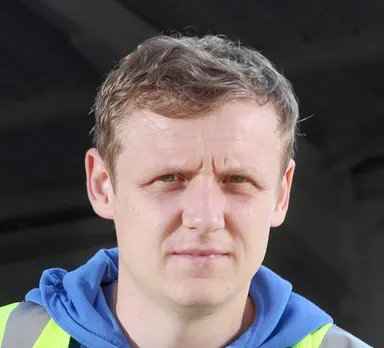
About the guest
Adam Smith
Adam Smith is a founder and co-director of the visionary, multi-award-winning, global initiative: The Real Junk Food Project (TRJFP). Set up in December 2013, to revolutionise the disposal of avoidable food waste into landfill, the pioneering movement's manifesto is to: feed bellies, not bins.
Adam has received numerous plaudits and awards from organisations ranging from NESTA to The Observer. In 2014, Adam was voted one of the forty most influential men in the world by AskMen. The Telegraph voted Adam as one of the 50th most influential people in UK Food & Drink – Food & Drink Power List 2017. Adam was honoured with an Unsung Hero award presented by the Canal & River Trust in 2022. The award celebrates those who have made a positive impact in their community.
In 2022, Adam was appointed as CEO of Surplus To Purpose, SToP, a revolutionary catering enterprise. Surplus to Purpose utilises food destined for waste, by safely redistributing this through cooked meals, products and provisions to families. It focuses on the environmental issues of food waste, which measures its impact on climate change within the food industry.
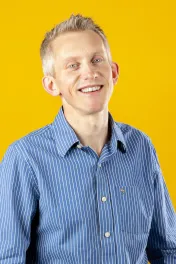
Hosted by Andrew Pain
Andrew Pain is a Mental Health & Resilience Keynote Speaker who speaks from lived experience on resilience, burnout and workplace wellbeing. Host of the Men on Show podcast, author of the book Honestly, Man, and a TEDx speaker. Member, International Coaching Federation, and Mental Health First Aider trained.
Never miss an episode
Candid conversations with everyday heroes – ordinary men doing extraordinary things.