Men on Show · Episode 16
Men and the Men in Sheds Movement with Charlie Bethel
- 10 January 2024 .
- 43 min .
- Hosted by Andrew Pain .
Charlie Bethel is the Chief Executive Officer of the UK Men’s Sheds Association and has been with the organisation for over five years.
Andrew hosts this podcast. His own keynotes are on burnout, resilience, imposter syndrome and difficult conversations.
Key points of the episode
- The people that inspired Charlie in childhood.
- A very famous relative!
- How psychometric testing can be damaging.
- The transformational power of Men's Sheds… and the challenges faced.
- The Unconscious Bias sometimes encountered .
- How "the tide should raise all boats", and it should not be exclusivist.
- The importance of gender specific interventions (and probably not for the reason you think) .
- His vision for the future, both strategically and politically.
Men on Show shares lived experience and honest conversation – it is not medical or therapeutic advice. If you're struggling, you don't have to cope alone.
Samaritans: call 116 123 (free, 24/7) NHS: 111
Full transcript
Read the whole conversation
A complete, verbatim transcript of this episode – every word is the host's and guest's own; the topic headings are ours.
Welcome to Men on Show, the podcast, Candid Conversations with Everyday Heroes. Join Andrew Pain as he interviews fascinating guests, ordinary men doing extraordinary things. If you love the show and you think somebody could benefit from hearing it, why not tell them about it by giving it a share on social media? Oh, and at the end of the podcast, if you can leave us a five-star rating and a review, it really helps us more than you know, and it gets this important message out to more people that need to hear it the most. Right now, enjoy the next episode. The next episode.
Hi, my name's Andrew Pain, and welcome to Men on Show. And I'm so excited that today's guest is Charlie Bethel, CEO of UK Men's Sheds Association, commonly known as Mens Sheds. Over 1,100 sheds across the UK, where people come together to do stuff, make stuff, upcycle stuff, particularly targeted, I would say, towards men, but that's my understanding of it. We'll unpack some of that with Charlie and get a real sense of masculinity, of what Mens Sheds is achieving and what Mens Sheds is seeing as well. That's really important. So Charlie, welcome to the show.
Thank you for inviting me. It's a pleasure to be on.
Who inspired him growing up
Brilliant. And where we generally start, Charlie, it's always good to know a little bit about yourself. Obviously, I want to get into Mens Sheds and learn more about that. But as a young man growing up, was there a particular inspiration for you when you look back on your life?
I think, yeah, when I was growing up in the, I suppose the eighties, the late seventies, boy, but I think, you know, from a sporting perspective, Daley Thompson, because he was just absolutely incredible.
He was epic. I grew up in the eighties, but I remember Daley Thompson. Absolute guaranteed gold medal, wasn't it?
Read the rest of the transcript Collapse transcript
Yeah. And the facts, you know, I don't know. It didn't understand race at that point, but the fact that he was different and you knew he'd had to overcome adversity to be there was just, was inspirational. And then I think, you know, my dad, I always wanted to be a jeweller. My dad was a jeweller.
Okay, interesting.
And I had a teacher, Mr. Dale, who in my primary school, and his son was in the US Army. He was an American. But yeah, he was just, he was adored by all the children. And yeah, he was, he was an inspiration as well. And then after wanting to be a jeweller, I did want to be a designer, well, sorry, a teacher, and then a design teacher when I went to secondary. So they were my influences, I think.
So you've got a very creative side to you. I suppose if you're, you'd wanted to be a jeweller at some point, you've gone in some more design side. That is in you, that kind of design, creative, doing stuff with your hands type of mentality.
Yeah, I'm not good at it, but yeah, I, you know, inspired and my great uncle was an artist. He was an engineer by trade, but he did portraits. He was commissioned to do portraits of Churchill, Dennis Healy as well. So yeah.
Shyness, imposter syndrome and psychometric tests
Okay. And looking back, if those are your sources of inspiration, are there any particular challenges you feel now that you faced as a young man?
I think I was, I was very shy. So, and I still am. So that is a challenge and, and that shyness, I don't quite know where it comes from, but you know, I've been thinking about this with how difficult it is for men to engage in, in wider talks and wider groups. So they don't go to, it's very difficult for a man to come into a men's shed, for instance, but it's difficult for a man to go into a new activity, whether that's bingo or something else.
And maybe it's that, that feeling that you're not in control because you don't know those people around you. So I was thinking about this over the last few days, because people have asked, why is it difficult for, for men to engage? And there'll be lots of reasons, but I think that that's with me. I just, you know, don't like to put myself out there necessarily and, and say hello. I find it difficult to say hello to strangers in a, in a room.
Do you see, is some of that, I wonder, so I do sort of some of my work, I talk about imposter syndrome, and research around that. And of course, when that was first coined as a phrase in the 1970s, it was felt that it was more of a challenge for women down men. And of course we now realise it affects men, women, people across the globe, across the culture, this sense of the fear of being found out, the fear of being exposed.
And I wonder whether with some of the sort of the gender stereotypes that you want to be tough, you want to be seen to have it together. I wonder whether actually that is a real problem for men, imposter syndrome that makes us more reserved, makes us nervous of going into those new situations. What if they realise that I'm not the bigger man that I should be?
Yeah, no, absolutely. Yeah, and I do recognise that. And I've, particularly my old job, I used to have a coach and yeah, it was very much, you are doing all these things, it's not just a game, you're just, and I think part of it is maybe I look at work as a one coping strategy and an old design teacher told me this when I was looking to do teacher training. He said, remember, it's just a game.
So, and maybe part of that, but yeah, definitely imposter syndrome. I mean, when I look back at some of the things I did, particularly my old job, but this one as well, and last week I was speaking at a select committee in parliament for a guy who grew up on a council estate in an overspilled town of Birmingham. It's quite a big step. I mean, my school was known as Boston by the caretaker.
Where did you grow up in? Because I'm from Birmingham. I grew up in...
Yeah, so I grew up in Tamworth. I'm from Birmingham originally, but yeah, I grew up in Tamworth. And yeah, so the imposter syndrome is most certainly there. But yeah, and I also remember being labelled at school was we did some psychometric style testing and it was like, oh, you're a worker. You're a worker bee, you're not a leader bee, you're a worker bee and things like that. I think that's quite damaging really. It's, you know, I'd have been about 11 or 12 and to be labelled in that way.
Yeah, I mean, hopefully psychometric testing has come on a bit since then.
Yeah, I struggle with it. I, last time I had a psychometric test, I showed it to a colleague. He was the CEO of the British Paralympic Association and he said, the summary is not you. And when I look back at my exam results and I had this student when I did my degree, I was quite good at mechatronics, mechanics and electronics. And my A-level, my, sorry, my exam results in my first year at uni was really poor.
And yet my coursework was a hundred percent. I got called in, I was asked a number of questions and it was, well, why the effing hell didn't you do that in your exam? And I thought I had, didn't feel stressed, didn't feel, never felt. So I think psychometric tests, I think I'm just not good at tests, so.
From Loughborough and sport to Men's Sheds
Yeah, well, I mean, my view of psychometric tests without wanting to digress too much is that they're conversation starters. They're not necessarily gospel truth. The point is that they start conversation. That's how I see it. But so tell me about, before you came into Mens Sheds, and I really want to get into that and sort of dig into your thoughts around men and men's sheds. But you worked first, didn't you, in sort of the wheelchair sport arena. I don't know whether you're still involved in that. What took you into that? I'm just interested.
Yeah, so when I was at uni, I was at, I studied at Loughborough, or Red, as I was told I was going to be doing at Loughborough. And I, you know, I enjoyed sports. I was never going to be a Loughborough student, but I played for my hall of residence. And then I got involved in the student rag. And in Loughborough, it's like a business. They raise over a million pound a year now. When I was there, it was in the region of 200,000 and we were the biggest.
So I got quite involved in charities. And particularly one called the Spine Injuries Association. I met quite a lot of people in wheelchairs and saw the transformational power of sport. And then I was lucky enough to get a job. My first job out of uni was working for an organisation which was called the British Sports Association for Disabled. And then I moved on. That was as a fundraiser based on my experience at university. And then I moved into sport at Stoke Mandeville where the whole Paralympic movement began in the world, not just in the UK.
And then I was lucky enough to move into a job as CEO of Wheelchair Basketball, which I'm still on the world board of, responsible for competition. But the thing for me was the inspirational power of sport and what it did to people's lives. So you need the performance end because you need that showcase. And that inspired people as well. Inspired lots of people, but also that transforming lives. And the same is true when I saw the Mens Sheds job.
So I gave up my old job. We had a few bits at home where my father-in-law had just died. We just had our third child and we were looking to build a house. So it was in a position where we could give up my job so that I could concentrate on the design work and work with the architects. And so I did, oh, my hip was collapsing as well. I'd already got one full sip and my everyone was on his way home.
So I took the opportunity to take a break, continued the international piece. And then after my operation for my second hip, I started to look around and I saw the Mens Sheds advert, which I thought was quite bizarre. Then when I read about it and the transformational power there, that's what really inspired me into that as well. So, you know, that was, yes.
The challenges Men's Sheds faces
So what led you to Mens Sheds was you read something about it, but the key was how it transforms lives. That's what led you into Mens Sheds. Interesting. And so how do you see kind of the main challenges that you face at Mens Sheds? What would you see those as?
Though from a, I suppose, from a physical perspective, it's finding facilities for the sheds. There is a bit of a prejudice towards men that we experience. And it's probably unconscious, but there have been a number of occasions, but one was a children's services that wouldn't allow a men's shed to be in a property adjacent to a school. And when I inquired why, they said, well, there are safeguarding risks because they're men. And the building was being used by a number of other charities, including the WI, who, you know, I spoke to them and they were all very positive about men's sheds.
Why wouldn't they be there as well? But the response I then got back when I pointed out that it was a protected characteristic, protected group from that council was, well, I don't know why you keep asking because we're not going to let them in. So now I can name and shame rather than we could have gone down a legal route for that shed. But it was quite distressing for the guys from the shed because they'd already had a property that they'd outgrown.
And some of them were grandparents of the kids in that school. And they were saying, well, what does that mean exactly that we're a risk? And so it's an absolute nonsense, absolute nonsense. But so that's one of the underlying challenges. But I think we try to look more at the positive of how we can try and affect that change. And we saw one recently where somebody had called out Mens Sheds as being discriminatory because it's got men in the title.
So the journalist came to me and said, will you respond? So we did. And this counsellor very quickly changed his view and said, I now understand what they are and what you do and I think it's amazing.
How did you respond?
I said that I'm sure that the counsellor is aware that men are a protected group as are the other groups and the suicide rates amongst men being the biggest single killer of men under 46. And then I explained the mental health impacts that it has and that Mens Sheds often have women in them. So there's about 40%, we estimate, have women. They may have women-only sessions or mixed sessions. But it's really important for us that that brand of Mens Sheds is out there because there aren't many charities, if any, that have that tangible presence around the UK and talk about men's health.
So there's some fantastic work with the Mens Health Forum, Men and Boys Coalition, but they don't have those tangible places. So Andy's Man Club is one that does. And I think that the more we can raise attention and profile about men's health, the better, because it does save lives. We see that in Mens Sheds. We've got some stats behind that now. Which is humbling to see. But the conversation has to be had, because men won't have the conversation, and it's difficult to understand the language.
So I was in a shed a few months ago now, and I was talking to one of the shedders, and he was explaining that after his retirement, he went through this honeymoon period, and then he started to struggle. And then he eventually got in touch with the shed, and went into the shed, and then he's gone on to volunteering more things. When the sponsor came in, who was somebody he'd never met before, and a woman, which I think is important in this case, she asked him the same question, and he said, well, I was at a loose end, so I joined a shed.
And very, very different. But also to understand that we may say that we're peed off or angry, and what those words actually mean, because it could be I'm depressed or I'm anxious. And it's to understand that. And I was lucky when I did give up my old job, as I mentioned, there wasn't enough for me to do with the house building, so I was doing other things. But I started to get cross. And my wife said, you know, what's wrong with you?
And then I stepped back for a second, I think I'm anxious, because I'd had stuff that had had mental health challenges in the past. And I was able to, it was that moment of like, I don't know why I'm angry. I mean, I'm not working. Oh yeah, it's probably what it is. I'm not keeping myself occupied enough. And there's a beautiful quote from one guy who said, I love coming to the shed, because I can forget about being lonely.
And it is that diversionary tactic. It is that piece. And it's not only if you're no longer working, it can be, you know, if you're coming out of a divorce, or you're bereaved or redundancy. Those life changing moments, we need something there. Or a number of coping strategies. Because, you know, for many sport is the coping strategy, but if you get injured or you're ill, or it's dark nights, you know, what do you put in its place? Or what do you use to supplement that? And I think, you know, that's really important for everyone.
Talking, purpose and projects in the shed
You touch on so many different angles there that I would want to pick up on. I mean, first of all, the thing around it being Mens Sheds, and there being an issue with that, a challenge with that. We have the Women's Institute, we have Women's Aid. Of course, there should be men's organisations where the objectives are to look out for men, just as there are for women, just as we have in organisations, women's networks. I'm talking to more and more HR directors, learning development directors saying we need a men's network and seeing it.
And it is really important. I know someone was saying, well, what's the absolute value of it just being men? You could call it a men's thing, but why would you want a closed men's group? What's the value of that? And the one thing, my one experience of a closed men's group, a very tight closed men's group that I was part of years ago, was the conversation would go to places that it just wouldn't go to if there was a woman there.
I mean, really helpfully so. We know, for example, online porn has a big issue on mental health, really in relationships. When women are present in those conversations, guys tend to, that's gonna be a subject they're not gonna go into. In quite the raw detail that they would, if it's just all guys. There is a value to it, as you rightly say, for mental health, for wellbeing. And we shouldn't be ashamed of having groups targeted for men.
No, no, absolutely. And it's about, it becomes a non-competitive environment as well in the shed. So it is slightly different to sport in that. So that they're not trying one-upmanship. And if you do introduce a woman into some environments, they become a bit peacocky, they become a bit showing offy. And so whilst the banters there were just the men and they do open up and talk about things. And the survey I mentioned, we did around well-being in January.
Some sheds took the questions and spent two mornings debating them as a group. And we're discussing things that they would never do when opening up. And just building on your point as well, there's a shed in Richmond who had a shedder that took a lot of convincing to go and get his prostate checked. You know, way past the date of when he should have got his first check. And they eventually talked him into going. When he got there, he came out with a prescription for something completely different.
And they said, you know, what happened? What happened? He said, oh, it was the woman doctor. And you know, it shouldn't matter. It's not the doctor's fault, but it does matter to a lot of men. And they can't bring themselves to be examined or to talk about it. So, you know, he's going back, and they now know to book and make sure that it is a male doctor's appointment.
And some of what you're saying, though, it seems to underline, there is this notion that men don't talk, which is absolute rubbish. We know that's not true. And you take your experience in Mens Sheds, men are talking, but clearly the environment has to be right in order for men to talk. So perhaps the better question is, we assume therefore that men will talk. Let's create that assumption as a new assumption, but understand that there might be some barriers that prevent men from easily talking.
Yeah. And my wife said something at the school and I was talking to the deputy head, the only male teacher there. And I was talking to him for about 20 minutes and I got back and my wife said, well, what were you talking about? Not nothing really, isn't that? You know, we were just talking a bit about football, a bit about... It's a Catholic school, so we were talking a little bit about Catholic schools and Catholicism and that was it.
We weren't talking about emotional, how we're feeling or... Whereas in the shed, it's a different conversation completely. And so we talk about the weather or if you're in that safe environment, you will talk about more and it doesn't... Yeah, and I think one of the things that the shed helps is because you're doing something at the time, your shoulder to shoulder, so you don't have that face contact, you don't have that intensity, but you will still have that conversation.
And we just hear that time and time again from shedders. And the surveys we've done, we've done external surveys, commissioned them, as well as internal ones. The numbers come back, 96% reduction in loneliness, 97% increase in friends. 3% are still miserable souls, but the anxiety reduction in 75% depression in 89%, these are huge numbers, which people report. But the stories that back them up are incredible.
No, no, that's absolutely right. And I just, I would imagine as well, in terms of the percentage, for some men, as well as the community, just having a sense of purpose, again, a reason to get up and leave the house and work on a project that may have some benefit, some wider benefit is also so important.
Yeah, that focus, that project is absolutely essential. And if you're making it for yourself or for your wife or for your children or for somebody else, but also if you're making it for the community. So, one shed made, lots of make planters and bird boxes and owl boxes, and you can't move in some sheds for boxes. But one recently made 17 xylophones for local school. And then unfortunately for the kids, they played the xylophones to them.
But what a beautiful thing to do, giving them the gift of music to be able to play. That's virtually more than half a class, or half a class being able to play the xylophone and the saving for that school. And yeah, you talk to the shedders, they're immensely proud, their self-worth, their value in themselves goes up. Which puts them in that better place. It takes them away from the dark. It provides hope. And yeah, and you know, I first shed I went to, I'll bear it in mind my background was design originally.
And there was a bird table and there were screws and nails sticking up out of this bird table. And it would have mained any bird that went within two metres of it. But the joy in the face of the lady who'd made it, and the joy in the other shedders in how happy she was, was immense. And so I'm looking at it going, do I really want to get involved in that kind of thing? But when I saw that reaction, I thought, no, actually I get it.
And then I hope they removed all those screws and nails before she wasn't looking. But yeah, it was, yeah, the power of that is incredible. I don't think we value it enough. And we think of it as a competitive thing, that self-worth, but it doesn't have to be. You can be painting something or you can be making a bird box.
How many people tend to come to these groups each week? Is it a weekly thing or?
Yeah, well, it, lockdown had, or the rule of six that was introduced had a really positive impact on sheds because, and some opened throughout lockdowns because of the services they were providing. But the rule of six meant that the shed that might've opened one day a week started to open five days a week. There's a real need for more volunteers to be able to open the doors of sheds and some will open two or three days a week.
Some are still only one day a week, sadly. But the demand is great. And in a workshop, you'll see, sometimes you'll see two people, sometimes you'll see 12 people, but they vary in membership. We put a conservative estimate of 30 people per shed, but there are some sheds with 200 members and growing. And some don't go, some just pop in and have a cup of tea. Some work out of a couple of garages. So their membership is very limited, but others that have converted retail centres or industrial units, they're much, much bigger.
Lessons for men and boys
So how do you, with the oversight that you have of Mens Sheds, what do you say are the main lessons for men and boys? And if we're looking out for our son, our brother, our uncle, our male colleague, if we wanna create a better world for men and boys, we know the stats make for fairly grim reading. I was reading even the other day actually, for people in their 20s, a fifth of females, there's a third of men that you've even got, even as a stat like that, so many more men are still living with their parents into their 30s than equivalent age females.
The suicides that we know that three quarters of people that die by suicide are in fact men. And when we could work through other percentages, we know that in terms of graduation now, it's 57% women, 43% guys are graduating from university. That gulf seems to be widening. So with all of this data that makes for fairly grim reading for men and boys in the future, how do we change that? How do we create a better society for the men in our lives?
I think there are some generic things that we can do that will benefit men and women, just saying hello in the morning. But I think for men particularly, I think it's to help us understand our behaviours. So help us understand how we are feeling because we can be angry and that can exacerbate more anger. We can be isolated and that can exacerbate more isolation. So it's helping, and we've got one son, a couple of them, two girls.
And we try to keep them active in different environments, different things that they need to do for us so that they create that blanket, that cross work, patch quilt of different activities to keep them active, to keep them occupied. And I think that's important in older life as well. And we need to create those habits. You know, sport needs to be a habit that is accessible to everyone. You know, and differentiation is not always done in schools.
So cross country running is a really good example. You've run a lot. But, you know, the unfit kid should possibly be either set off to run 10 minutes before the other kids or be dropped off somewhere else on the cross country race so that they all come in at about the same time. And it's not that the unfit kid comes back, you know, an hour later and everyone else has gone home after school. So it's about engaging in, you know, creating these habits at a young age, whether that's sport and make it enjoyable for everybody, or whether it's hobbies, you know, craft isn't as prominent on the curriculum anymore, art, it's making sure that we've got that whole range of activity.
And that will increase performance in other areas. It was the specialty sports colleges, when the specialist schools and colleges were introduced, the only one that had a significant impact on educational achievement were the sports colleges. And so, you know, there was the science ones, there was the English, maths, but it was the sports ones that saw academic, the greater level of increased academic attainment. And so it's realising that we're complicated, or quite simple, it depends on how you look at it.
It's making sure that there's a lot out there, but recognising that somebody that's angry might just be afraid. You know, and it's like when you talk about the bully, and the bully's probably more afraid, and that's why they behave that way, at a lower level, you know, when we're frustrated, it could be something else. It could be we're anxious of something, we're gonna snap in. And so it's understanding that, and helping younger men understand that, that they take that through their life.
I think there's this also misconception that we need to get over that boys do talk now, and men do talk, and younger people talk, and therefore suicide must be coming down. And I had this conversation with a university friend a couple of weeks ago, and he was like, no, the rates are going up, the numbers are going up. But he was convinced because he hears about Andy's man club, and he hears about other interventions, that things are getting better.
I think what we're doing is we're, it could be an awful lot worse if we weren't there. But as a society, we need to talk about it. Prostate cancer, it's the biggest killer of embarrassment in the world. It's definitely in the UK for men. So we need to have those conversations. And I think men's groups are part of that solution. The women's, this isn't, I think, you would know as well, with Professor White talking about the whole movement of women's health and how that was linked to the political movement as well and equal rights.
Absolutely fantastic, but we've not done that because I think there is like the big boys don't cry and we're okay, we need to be strong. We don't recognise those gaps in the provision for men. We need to. Schools need to have that understanding. You know, there's a bias, I read an unconscious bias of teachers of 8% marking girls over boys. That's, you know, these things happen. They're not going to change if we don't start to talk about it.
Men's health at a political level
Yeah, no, I think that's absolutely right. For me, there's so many different angles that we need to really explore and encourage sensible debates on. At the political level, we have a minister for women who joins the dots and lobbies, but not for men. We have a strategy to tackle violence against women and girls, very important, of course, but not one for men and boys, even though the greater proportion of victims of violence are in fact men and boys.
So there's some movement at political level. There's the continuing growth, I suppose, of support groups for men. I love the Sound of Mens Pie Club in the Northeast. I love the Mens Walking Group, the proper blokes network in London. There's so many different talking groups as well, which is fabulous. So that's all important, but it is interesting, isn't it? You would have made that assumption, I would have made that assumption that with all the talk about mental health, surely it's now getting better.
And therefore, if it's not, well, what's missing here? And even, I did one of our guests a couple of episodes ago was Ryan Park. He's done a lot of research around testosterone. I suppose this sort of supports the work you're doing at Mens Sheds in that we know that levels of testosterone have been falling rapidly across the globe, across all age groups. The amount of testosterone, an average guy in his 20s has today is what a guy would have had in his 60s in Europe.
Only sort of 40, 50 years ago. So why is it dropping? There's lifestyle factors generally, but something that they have noticed is men's testosterone increases when they feel like they're winning and decreases when they feel like they're losing. Bearing in mind, testosterone is a predictor of mental health, good physical health. So, and I suppose in terms of the Mens Sheds, when you feel like you're in community, you're creating things, there is that sense of small marginal gains, small wins, and there is a physiological impact from that, as well as just, oh, I'm feeling slightly better.
I'm feeling like I have purpose. There's a physiological impact as well. And for me, it's understanding some of these complexities, understanding these angles, talking about them is just so important.
Absolutely. And there is a huge link between, people say mind ever matter, it's true. It's absolutely true. Our mind controls so much that we don't recognise and realise. So yes, we need to understand that more. And at a political level, I have to give credence to the government for the creation of the Mens Health Champion. I think that's an incredibly powerful and important piece because the platform is needed because there was the book by Caitlin Moran, What About Men?
And she got quite a lot of grief about it. But it was an interesting read. And it was supposed to be a fun book. We touched on some really important pieces. But that question, what about men? I've had a member of the Senate come to me and say, I'll champion what you're doing till the cows come home, but appreciate I get a lot of grief because I'll try to raise mental health issues and I get shouted down because there are other communities out there.
And there are, and we mustn't approach it as being singular about men. It is about increasing the health of the nation. But in doing that, equality is about raising everybody up. It's not putting one person over another. And I often say, when you see a statement, substitute men for women or disability or LGBTQ+, all of a sudden they go, oh yeah, we shouldn't have said that, should we? And there is cross sectionality. Loneliness is a key driver for the poor mental health and isolation.
And there's some very, very strong in the government strategy on loneliness, some really strong four areas of focus, but men isn't one of them. And so it's then saying to DCMS, can we make sure that there are consideration about male interventions in each of those groups, where it's appropriate, but it's because, you know, losing, there's a video that Ron Seal produced with us and it was about a guy who had lost, he and his wife had lost the baby during pregnancy and the impact it had on him.
But everybody was, how is his wife, how is she doing? Because the focus on the mother and he felt really excluded from that and excluded from the grieving process. And it's just, and I understand it, it's natural, but it's, watching out, you say what to do, watch out for the other side of that relationship as well. Anybody gets ill, it's also the partner that has to struggle with that as well. They may not be going through the pain or the threats in the same way, but they need strength and in the same way, just think about the husband or the son or the brother as well.
Domestic abuse and gender specific interventions
I mean, I am excited working in this space. I do feel like I'm seeing change. As you know, a lot of my story is domestic abuse. That's how I came into the men's health field. So I do have a lot of interest on domestic abuse. I do my own safeguarding training because I volunteer in various places. And I'm heartened now that within the domestic abuse bit of safeguarding training, although it's still focused, you know, the testimonies generally are women that have been abused by men.
There is at least the little snippet at the very end. It's usually a real sort of afterthought. We shouldn't forget that men are victims too. I mean, that is progress. That is progress that they don't just refer to the perpetrator as he now, it tends to be they. There's still a long way to go within that field because men are a third, they make up a third. In fact, if we look, if we consider the underreporting due to stigmas, probably more than that.
But I feel like we've made a start. I feel like there's a long way to go, but I am encouraged that we are moving forward. Would you say the same from what you said?
Yeah, I would. I would, and particularly around domestic violence as well, as you see it more in the media. And I remember working in a pub and a friend, I had a mutual friend, and he was domestically abused by his wife. But never talked about, never got divorced, because he was, and it does go both ways. But I think it's a really important point. It's a really important point about the importance of Mens Sheds. I was at an exhibition probably a month ago now, and I was being challenged by somebody about having men only in the title of our organisation.
A lady who came up with her husband, they were both in a men's shed, but it was a men and women's shed. And she said, you know, he wants a men only session, but I don't agree. And so I tried to explain why it was important to have a men's session. And she said, you're being rude, I'm leaving. And she went. Then talking to one of our ambassador volunteers came and said, I'm glad that was you rather than me.
I've just had a guy here who, his wife tried to kill him twice. He's in a shed, but he wished he was in a shed when he was younger to have that support group, because it wasn't there. You know, an ex-policeman. But, you know, it is good that it's being discussed, but it shows the real importance of having those, those gender specific interventions. And equally, you know, I'm very strongly in favour of, if a shed has women in it, you know, have a women's only session to attract more women for that reason, if not other, because it's, that's what's important.
And, you know, there may be some, some guys in shed to say, no, we're just not having them because we don't like them. It might be something more underlying in there. So it's really important, you know, women, you know, and, you know, I want to see us working more with the women's movement to learn from them, how they're achieving things because they've done an amazing job. It's not perfect for women in lots of areas still. You know, there's still pay gaps, but it's improving. It's improving.
The vision for the next five years
Yeah, really, really, really interesting insights. And I'm conscious of your time, Charlie. I mean, just sort of beginning to wrap this up, where do you see the sort of, when you've got your vision for Mens Sheds over the next kind of five years, where do you want it to go? What are you hoping to create in the next sort of three to five years?
So we want to see, we're doing this piece of work now. We want to see Mens Sheds and Mens Health. Mens Sheds is a vehicle for this. Mens Health talked about more. We want to see a Mens Health Strategy, which is why I was in Parliament. And other colleagues will be there from other organisations. We want to see, from a practical point of view, we want to see a shed in every community that wants one, which is pretty much every community.
And we want to see, you know, Orkney has two. The Scottish Mens Sheds Association works very well up there, and other organisations to help set up sheds as we do. And, you know, if Orkney can have two sheds, then most towns can have two sheds. So, you know, 2,500 is our aspirational target. We're seeing 100 more sheds each year at the moment across the UK. You know, and hopefully that will continue, and hopefully that will accelerate the more the more men's sheds are known so that it becomes a household name, but not a household name for the sake of the organisation I work for, or for each individual shed, for the sake of men's health and having safe space.
There can be more engaged with the community, whether that's helping local schools or other community groups that they do, or providing warm spaces, or those sheds that have got allotments, providing food to food banks, as they do. And this one shed just looks after chickens, but they provide the eggs to community groups to support them.
Finding a shed, and a last message
Yeah. Well, I mean, and that's incredible growth. That really is what you're describing. And no, it's so inspiring to see the work you're doing. If you had, well, first of all, no, before your message of hope to finish us off with, how do people get in touch with you, Charlie, in the most helpful way?
So the easiest is our website, which is menssheds.org.uk. So two S's in the middle, one for men's and one for sheds. And on there, there's an app that you just type in your postcode and it will tell you where your local sheds are.
Oh, that's really cool.
And it will tell you a little bit about them as well. So that's the easiest. It tells you about what we do. If you want to set up a shed, we've got plenty of toolkits to help with that. And sheds will help support a local shed. So, you know, if there's a shed in Newark and there needs to be another shed in Newark, they will help set one up. They will help. They'll lend spare tools or give away spare tools. If you want to donate tools, that's an opportunity as well for the sheds. So there's a, yeah, there's all sorts you can do. But go through the website and you'll see.
Yeah, fantastic. And to finish us off, and I generally ask this of all guests, for the most part, actually, not every guest, if you could sort of give a message now, anything that you wanted to say to men and boys, I want to say boys, men, young men, what would your sort of two-liner message be to finish us off with?
I think remember to be kind to each other and to talk, to say hello, start a conversation. And there was a great charity that I met at the Men and Boys Health Conference. And it was, you know, how are you feeling out of 10? So you don't have to have a in-depth conversation, just how are you feeling out of 10? And it's talk club and, you know, fantastic idea. So it's about just starting that conversation.
Sure, no, that's fantastic. And just to sort of support that, I think that that mark out of 10 is such a great conversation starter because you can go, I'm a seven, well, why am I a nine? And why am I a seven and not a two? And it's just a really good way to sort of stimulate thought for people that perhaps aren't that used to sort of being open about how they feel and whatever. So, no, fantastic message. It's been an absolute pleasure to have you on the show. You are doing incredible work. You are an inspiration. Thank you so much for your time today, Charlie.
Thank you, brilliant to be here. Cheers.
Cheers.
Thank you for listening to Andrew Pain's Men on Show. If you could leave us a five-star rating and short review, it would be really, really appreciated. It helps us get this important message out to more people that need to hear it the most. See you on the next episode. Thank you for tuning in.
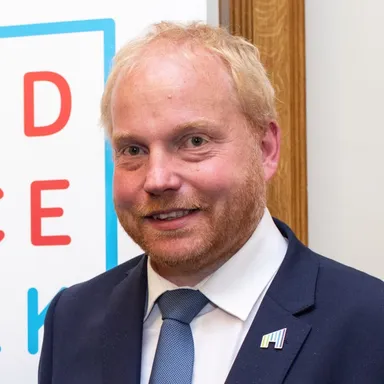
About the guest
Charlie Bethel
Charlie Bethel is the Chief Executive Officer of the UK Men’s Sheds Association and, as of this episode’s release in January 2024, had been with the organisation for over five years. On leaving University where he studied Industrial Design, Charlie embarked on a career in Paralympic Sport having served as Chief Executive of British Wheelchair Basketball prior to joining Men’s Sheds. He continues this love of wheelchair basketball as an Executive Council member on the sport’s international governing body. He believes strongly in the transformational power of men’s sheds and sport as a way of improving and saving lives.
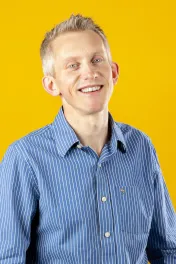
Hosted by Andrew Pain
Andrew Pain is a Mental Health & Resilience Keynote Speaker who speaks from lived experience on resilience, burnout and workplace wellbeing. Host of the Men on Show podcast, author of the book Honestly, Man, and a TEDx speaker. Member, International Coaching Federation, and Mental Health First Aider trained.
Never miss an episode
Candid conversations with everyday heroes – ordinary men doing extraordinary things.