Men on Show · Episode 19
Men, Boys and Progressive Masculinity with Mike Nicholson
- 31 January 2024 .
- 45 min .
- Hosted by Andrew Pain .
After an 18-year career as a Secondary Teacher, including one year managing an education project in Ethiopia, Mike started Progressive Masculinity in order to address the damaging 'performance' many boys and young men felt pressured to live in order to be seen as a 'real' man.
Andrew hosts this podcast. His own keynotes are on burnout, resilience, imposter syndrome and difficult conversations.
Key points of the episode
- How he did not know what he wanted to do at first, and his very first job!
- His thoughts on the weaknesses of the current teaching model.
- Progressive Masculinity. What is it and how it started.
- How he was supported by his colleagues.
- The issues he listened to in the classroom, and the impact it soon started to have.
- Why he had to leave the system to have the impact he wanted.
- How the workshops work and what they seek to create.
- What Mike wished he had as a child.
- The "soft challenge" technique.
- The kind of learning that is most relevant post Covid.
- His message and vision .
Men on Show shares lived experience and honest conversation – it is not medical or therapeutic advice. If you're struggling, you don't have to cope alone.
Samaritans: call 116 123 (free, 24/7) NHS: 111
Full transcript
Read the whole conversation
A complete, verbatim transcript of this episode – every word is the host's and guest's own; the topic headings are ours.
Welcome to Men on Show, the podcast, Candid Conversations with Everyday Heroes. Join Andrew Pain as he interviews fascinating guests, ordinary men doing extraordinary things. If you love the show and you think somebody could benefit from hearing it, why not tell them about it by giving it a share on social media? Oh, and at the end of the podcast, if you can leave us a five-star rating and a review, it really helps us more than you know, and it gets this important message out to more people that need to hear it the most. Right now, enjoy the next episode.
Hi, my name's Andrew Pain, and welcome to Men on Show. And I am delighted today to welcome Mike Nicholson. Is it Mike Nicklasson?
Nicholson.
Nicholson, why have I got an A in there? I'll start that again. Neil, just cut all of that, mate. Right, I'll start again. Hi, my name's Andrew Pain, and welcome to Men on Show. And I'm delighted today to welcome Mike Nicholson to Men on Show. Mike is a former teacher who became convinced that at the root of many of the challenges men and boys are facing is actually a regressive model of masculinity. So he started his organisation, as you can see in the video there, Progressive Masculinity.
I wanna find out about that, what's going on with that. It now has a nationwide network of facilitators with his work being featured in The Times, Daily Telegraph, Channel4 documentary. Mike, you're doing amazing work. I'm so happy you're here. Welcome to the show. Cool. So generally, I start with just trying to understand a little bit about you growing up. So as like a boy, growing through your teenage years as well, are there like any standout memories? Maybe there's good or bad, but are there any that really stand out to you?
Not knowing what to do, and male teachers
Well, I mean, I think in many ways, I had the kind of classic northern industry, pre-industrial or post-industrial town kind of upbringing, really, came from a very secure family. Mum was a nurse, dad was a teacher, and I've got an older sister who's gone on to do well for herself. Did okay at school, could have done better, could have worked a bit harder, but did okay, ended up at a Russell Group University. And yeah, I could certainly have, certainly no complaints. I had a very, very safe and happy and secure upbringing.
So, and with your dad being a teacher, was that what kind of, looking back now, was that the greater inspiration for you to go into teaching yourself? Or was there something, was it always in you, just naturally anyway, when you were at school?
Read the rest of the transcript Collapse transcript
It definitely wasn't always in me. Listen, I looked up to my dad, and my dad is a great guy, and I'm sure that was a part of it. But now I used to hate that question, what do you want to do? I used to dread it, I used to dread it, because everyone else seemed to know, and have this clear direction. And I left school, not knowing what I wanted to do. I left college, not knowing what, I even left university at the age of 21, not knowing what I wanted to do.
So it definitely wasn't always on the cards. But after university, I took a little bit of time out. I remember I spent six months in a factory screwing lids on bottles of bleach, in order to buy a plane ticket to Southeast Asia. Then I worked my way around that area, worked my way around New Zealand, tried to figure a few things out. And I thought, well, the two things that I've always loved are sport and stories, English. So I became a English and PE teacher. And then as my career developed, English kind of took over and I did less and less PE.
Okay, and teaching, were you more secondary school or junior school?
Secondary, 11 to 18.
Okay, and so with school, obviously we know that 35% secondary school teachers are in fact male. How did you find it being a male teacher?
A male English teacher, first and foremost, you're always in demand. You know, there's not many of us. So in terms of actually applying for jobs, it's probably a benefit. I mean, listen, in terms of social judgement, yeah, I recognise there was a little bit there, you know, when you meet people and they ask you what you do and you say you're an English teacher and they scratch the head, you know, how can you love Shakespeare and poetry and all that just really match with a classic model of masculinity? But I always loved it. I was never ashamed or embarrassed about it. I tried to kind of share that love of language and stories with young people.
And do you think, you know, when we look at the way education is set up and some of the biological differences between boys and girls, we know that boys, when they hit puberty, 30 times more testosterone than equivalent age girls. We know that boys are three times more excluded, three times more likely to be excluded from school than girls. We know that boys' brains develop as infants at a slower pace than girls. They make up the majority of late speakers.
We know even in terms of graduation, 57% now of graduates are female. That gulf is growing. Do you think, bearing in mind our biological differences, do you think the education system is set up with those differences in mind?
No, no, I don't. I think it's true as fine many teachers that kind of agree that it isn't. It starts really young, doesn't it, with handwriting. We know that boys develop fine motor skills quite significantly later than girls, which makes handwriting very difficult. So, you know, some of the early experiences of education, struggling with handwriting, finding we're low down in the class, almost start this deficit model, which continues up to those higher levels. And yeah, there's that lovely Einstein quote, isn't there, if you judge a fish by its ability to climb a tree, it'll spend its whole life thinking it's an idiot and come across so many young men like that.
And both in my teaching career and now with Progressive Masculinity, obviously we want to be academically aspirational and we've got to work within the system that we're in, but also there are so many different kinds of intelligence. You know, I think school only tests a very particular kind and some of these other kinds that aren't valued or tested within the education system are actually very relevant and could lead you to great success in later life. And I've seen that in some of the young men that I taught and some of my friends who maybe didn't fit, school wasn't for them, the system wasn't for them, the way they were taught wasn't for them, but actually they have so much potential and they run to them very well in their lives.
So no, I don't think the education system at the moment is set up with those differences in mind and to accommodate the different types of skills and intelligence that anyone has, not just boys.
Bored in lessons, then Progressive Masculinity
So I remember, I mean, I'm 49 now, being so bored in school. Like music was okay. I was coming from a musical family and I knew I was pretty good at it. And there's an element of practical doing stuff in music. Sport was okay as long as it wasn't rugby, but like math, the sciences, a lot of these lessons I had to do. French was so boring because the teachers were so boring. And I just spent the majority of my time daydreaming and wishing I was outside.
And looking back now, I do think this aspect of testosterone does make quite a difference. And the more we become aware of that, that is important. But then we have to decide, well, how on earth would we change and shape the system that we have? I mean, you're talking something quite extraordinary. Do you think some of that though, if we had more male secondary school teachers, do you think that helps men and boys? Is that a good thing?
I mean, ideally in a school, you want the full range of diversity to be celebrated across the classroom. That's gender, race, sexuality. You want that kind of diversity within there, don't you? And what you were saying earlier about, constantly being bored. And it doesn't have to be that way. That's what's really frustrating for me is that I think it's got worse under the multi-academy trust system. So I know that I've still got a lot of friends in education.
I know English teachers are saying to me now that it's got to the point where you don't even choose what book you teach to the class. It's dictated to you. You're given lessons to follow. And that's kind of consistent across an academy trust. And there's this vision where every kid who goes to this academy is doing the same lesson at the same time. And for me, that removes that teacher autonomy. One of my favourite parts of teaching was planning.
We're sitting like, how can I make this engaging? We're looking at semicolons. How can I make semicolons really engaging so that that lad at the back who doesn't want to be sat there, you know, writing a worksheet out, will actually get involved and engaged. I feel like teachers are being de-skilled. I feel like there's lots of autonomy. I feel like education has become very dictatorial and imposing this almost idealistic 1950s grammar style education where everyone sits in silence, copies off a board and somehow learns that way, which we know just isn't true.
Yeah, and it must be very demoralising for the teachers themselves. I know when I've sort of done teaching of adults in my coaching work, if I'm delivering somebody else's stuff that I think is either rubbish or boring, I'm just different in delivering it. I feel bored and demoralised before I've even started. So yeah, that's interesting. So tell me about Progressive Masculinity, because at some point in your teaching career, you're there teaching and you suddenly, maybe you didn't suddenly decide, maybe it was a gradual journey.
What was it that brought about your thought, that actually I wanna do something different. I'm gonna call it Progressive Masculinity. This is where I need to go. Was there like a pivotal moment or was it like a gradual journey?
No, it was very much gradual. So kind of alongside teaching, I was doing a lot of mentoring, particularly for young boys who were going through different social and emotional issues, which all teachers do, you know, break time, dinner time, after school. It's pretty normal for someone to knock on your door and say, sir, you got five minutes, or Mr. Nicholson, you had a bad day, can I chat to you? And I really enjoyed the aspect of teaching.
But working with these lads and these kind of private informal conversations, it became obvious that so many of the problems they were having were rooted in this performance. You know, then they were sabotaging their mental health, their relationships, their academics, their happiness, everything, in order to look a certain way for what they felt they had to look to have any value and to have any respect. So I went to the head teacher at the time and said, listen, I've got this idea.
I think it would really buy. The doctor paid me for it. I'm not looking for an extra money, but if I put something together, will you let me run it? And he was fantastic. He saw the value in this straight away. And I remember the first time I ran it, it's been going about five years now. It's unrecognisable to what it is today, but halfway through the programme, there was assistant head teacher sat at the back of the room kind of observing it.
And halfway through this first version of the programme, a young lad in year 10 who had a lot of behavioural issues, racked up quite a number of suspensions. He was telling the rest of the group how he's got a brother who's homosexual. And that whilst he loves his brother, he's kind of a bit embarrassed about the whole thing as well. That he thinks a lot of his behaviour in school is coming down to the fact that he wants to differentiate differentiate himself from his brother and show that I'm not like him, I'm big, I'm tough.
And not just the way that he spoke, but the way that the other lads in the room held that space for it. I thought it was really, really moving and touching and afterwards, the assistant head teacher said, You've got something here. I've never heard him talk like that. And I've never heard the other boys be as patient and as understanding as that. And that's when I knew I had something. So I spent the next three years at the school, researching it, refining it, developing it.
And by the third year, it was having quite a big impact on pretty much every group that we worked with. So that's when I decided, you know, unfortunately to have the impact that I wanted to have, I would have to leave the system to have that freedom to talk about the things that I think we should be talking about, to engage in a way that I think we should be engaging. I couldn't do it within the confines of the system. So that's when I left and set up Progressive Masculinity.
So, and obviously I can see from the poster behind you, you're talking pupil workshops, staff training, RSE days. So what does a Progressive Masculinity session, intervention, whatever you want to term it, what does it look like? That'd be one question. So maybe talk to me about that. And also I'm interested, do schools book you, do they tend to book you for a certain group of difficult boys, or is it just something that's kind of rolled out wherever you're at, you know, go through this workshop because you'll learn some. So what does it, tell me about the model and what it looks like.
The workshop model, and male body image
So the model is that of the school get in contact with us, and we have a number of different workshops and we give the school the freedom to choose which workshops they want to specialise on. Every workshop focus on the different aspects of masculinity. So we've got masculinity in the digital world, including the impact of influences, emotional communication and literacy, anger management, self-regulation, attitudes towards women, healthy relationships and consent, banter and friendships, all these. And the school choose which ones they want.
We asked the school to choose 12 influential young men, 12 young men who other people take their behavioural cues from them. And then we work intensely for two days with these 12 young men. And the idea is then that we provide a package of resources for the school to use these 12 young men as masculinity ambassadors to try and change the culture from within the pupil body, rather than being imposed by teachers. That we found through trying lots of different models.
That was the most successful model, changing the culture from within. So some of the older pupils, my peer mentor, a younger lad, who's going through the same issues, that's a very popular next step. And that brings out the best in the peer mentor and the mentee as well. Some of the lads who are maybe a bit, they've not got that in them to be a peer mentor, maybe they're a little bit more timid. They don't like that kind of interaction.
We've had them design PSHE lessons from a pupil's point of view, which are then delivered by the teacher in PSHE lessons. And they've gone down really, really well at things like male body image, which I've taught lots of PSHE in school. And whenever you talk about body image, it's always from the female point of view, which we know that women have ridiculous pressure on that kind of stuff. But women have also had the body positivity movement for over 10 years, which has yielded fantastic results.
They diversify what it means to be beautiful, but male body image, we get that classic alpha kind of posture run down our throats every time we're looking. So many young men have so many issues about the way that they're lost in self-confidence. I think so that's just one example. And then the teacher delivers that from a pupil's point of view. The pupil response has been fantastic, like this is exactly what we needed. So the whole model is set up to work with a relatively small group, but then get that small group to impact the wider school.
Yeah, I mean, the body image is really interesting and not something that we've covered in the podcast, but I know as a teenager, I was a late developer. I was quite short, quite skinny. And I was so embarrassed about my body. And these were back in the days where after PE, you'd shower. And I was always so embarrassed about my body being underdeveloped, being skinny. And it was the thing that really pushed me into weights in a big, big way and weight training. So you could say I had a positive outcome. I've always kept myself in good shape. But as a teen, it was really hard. To me-
When I was teaching PE, when I was teaching PE, some of the things I heard in the changing room, you know, the body shaming and the attacking, and it was all hidden under banter. But it was really, really nasty. And I had a huge impact on that. I tell, I mean, I quite openly tell, I was very, very slight and skinny growing up as well. And I, I stood in front of hundreds of people in the assembly and said, I used to go home in year eight or nine, take my top off, try and flex in front of the mirror.
And I absolutely hate myself for what I saw. And you know, that would carry over to my, I'd be a little bit aggressive and defensive about anything to do with body shape, which obviously didn't help me much in school. So yeah, it's things like this that we don't talk about that I feel like we should.
Andrew Tate as a symptom of the problem
Yeah, I mean, the hours and hours and hours that I then spent in the gym, the vanity, the checking myself out in the mirror for years was as a direct result of just this sense of teenage inadequacy that I felt. And I mean, we will talk, I wanna talk about particularly the way you're redefining masculinity. I wanna get there. But you mentioned a couple of the other options that you offer school and I can't let this go.
You know, you talk about influences. Of course, Andrew Tate seems to be one of the main influences whose name you hear again and again. And I've heard a variety of things. You know, my own view is he simply fills a void. When there is quite a negative media message about men and boys, where men and boys are struggling, people like that will come into the void and be quite influential. So we need to fill the void with something better than him.
I've also heard it said that his influence is already massively on the decline. Most people think he's an idiot anyway. In fact, my daughter, who's 19, said that a lot of her male friends, they quote him simply to wind people up. They actually all think he's a complete idiot. They don't take him seriously. So my question to you, given that you deliver a workshop on this, should we be worried about his influence? Does he have influence? Is his influence falling? What do you think about Andrew Tate?
This is what the Channel 4 documentary was all about, that we were filmed for. I think they're stalling the release of that until we find out what the outcome of the court case is going to be.
That's interesting.
For me, what concerns me when I go around schools, particularly when we do the teacher training, is that people think if Andrew Tate gets locked up, August is going to go away. I'm actually with you on this. Andrew Tate is a symptom of the problem, but he's not the problem itself. Materialism and misogyny existed way before him. My concern is the society that creates a need for this kind of content. That's my concern. If he does get locked up, and his brother does, there are already three or four guys jockeying for position who are worse than him.
So we're not ripping it out by the root there. We're not addressing it at the root. Anyway, he is a symptom, he's not the problem. So let's actually address the social problems and the attitudes rather than looking at, you know, the actual guy who's cash, like you said, cashing in on a space. I think what comes across very strongly with young men that we work with is that they feel really unseen, unheard, unvalued. And then you've got to put yourself in that position.
I actually, I sympathise, whilst I find his model of masculinity, frankly disgusting and everything that we're against, I sympathise with young men that are taken in by him because you've got these angry, disenfranchised, marginalised young men. And then all of a sudden, this really muscular, successful, wealthy, articulate, charismatic guy comes in with these opulent displays of wealth and success and says, you're right, the world hates you, the matrix hates you, the system hates you, but I can teach you, I can show you, you can be like me. There's no wonder so many get taken in by it. I actually really do sympathise.
Marginalised young men and a values approach
But you say, and interesting, I'd be interested to know your thoughts on this. So you say marginalised, almost like forgotten, angry young men. Well, why are they so marginalised? You know, there'd be a lot of narrative that would say, but men have had the privilege, the power. So how have these men, how do they find themselves in a position where they feel marginalised, forgotten? What's going on there, do you think?
Yeah, I understand why people might disagree with that and say, you know, we live in a patriarchal society, men have all these advantages. And I understand that, you know, as a wife, straight, able-bodied, neurotypical, I understand that I exist almost on the axis of ultimate privilege, and I hate that. I hate it, and I don't want that, but I accept that it is real. But the overwhelming social narrative is negative about masculinity, and young men feel like they're punchbags.
They feel like everyone has got somebody fighting for them. You know, feminism, Black Lives Matter, LGBT, every social group has somebody fighting for them, except for them. They kind of feel a little bit left behind. They feel like constantly blamed for all societies and the world ills, without really seeing anybody stick up for them. Progressive Masculinity, we're going in there, not as masculinity gurus or as experts. We don't have all the answers, and we're not here to impose our vision of masculinity on you.
We're here to create a safe space where you can get these frustrations out. They're not looking for answers. They're not looking for answers and solutions. They're looking to be seen, heard, valued. And for a lot of them, that's enough to get that frustration out. And from that point on, once they've vented and got it out, you can then start to help them rebuild a model of masculinity that's more consistent with their values.
So in rebuilding the model of masculinity, the way that you see progressive masculinity, are you coaching young people to develop their own models of masculinity just within a safe setting and a positive way? Or do you have your own model where you say, look, this is progressive masculinity, this is what we're aspiring towards?
I suppose it's a combination, but more the first one. I know as a young man, I would have hated somebody coming in saying, listen, I've got it all figured out. I know what masculinity is. I've got the answers. This is how you've got to be. What I would have wanted, what I needed when I was younger was maybe an older, more experienced man to sit down and to actually listen to me, to challenge me when it was appropriate, without shaming me or humiliating me, to let me challenge him and be accepting of that challenge.
And we operate what's called a values-driven approach. So we get the young man to decide, what are your key values? Drop the performance, drop the bravado, stop trying to outlad each other. What are your key values? And we're given this kind of big selection and the three most popular values. I always make a little tally of, it helps with the staff training and other things as well. I always make a little tally of what they choose.
And there's three that are overwhelmingly more popular than the others. And they are resilience, selflessness, and loyalty, which I think is incredible, especially for this kind of COVID generation where resilience, resilience is always important, obviously, but you know, I said that you're going through all the difficulties I went through, but you've got all these additional ones as well with the digital world and with COVID. So resilience, selflessness and loyalty, I think are incredible kind of values to then construct a model of masculinity around it.
I would say to them that when you come across these really difficult moments in your life that, and it is, you know, being a young man, boy, it's very confusing, very difficult. Sometimes it's not an obvious right and a wrong, it just seems like a series of difficult or wrong choices. Fall back on those values. Let them guide you along the path so you become the man that is consistent with those values. That's basically what we do for six hours.
We throw a different set of scenarios, we get up and we do a practical activity, sit down, talk about it. And by the end of it, hopefully they have constructed what they think is a model of masculinity that is consistent with who they are, who they want to be.
Male banter, boundaries and the soft challenge
Yeah, no, no, I like that. And you talk about male banter. You mentioned that a few times. And I know we were chatting about this before we were recording. That line of male banter, when I was in a formal relationship, it was an abusive, violent marriage. And it didn't help that when I said the locker room, I don't play football to a high standard. I just play football and I'm very, very, very, very average. But like where you're getting changed or like the side of the pitch, before or after, all the stuff are out, your big girl's blouse, have you got your kitchen pass?
That kind of talk, that definitely didn't help in that moment where I was in that abusive marriage because I did already feel like I was this miserable, worthless human being. I was a guy, I should have it sorted, but I don't have it sorted. A good man hangs in there for his marriage and helps his wife to become the better because you just help everybody else. And so that male banter thing though, it is important though, isn't it?
Where do we find the right line between that natural kind of, I mean, is male banter naturally sort of taking the mick out of another guy? It can be quite harsh, but then it's important, or is it?
I think it's really important. There's a book released recently called Working With Boys by Andrew Hampton. He goes into a lot of detail about banter. He details a school that actually tried to ban it because it was being so upsetting, particularly for the girls. It was two private schools that then merged in sixth form and there had not been a lot of intermingling before that. And the girls were so disturbed by the boys banter, they actually tried to ban banter, which I personally don't think is the answer.
I think banter is really important in the male world. You know, we connect that way. We can often bring up sensitive topics that make us feel uncomfortable through banter. You know, it makes us feel safe. But you mentioned earlier, the line, the line is all important. Where do we draw, is everyone's line in the same place? How do you recognise where someone's line is? We spend about half an hour just on this banter section. We throw different ideas around, watch a few little clips.
So for example, I'll show this little clip of where these lads are having a penalty shootout, and one of the lads takes this terrible penalty, skies it over the bar, did a lot of teasing, and one of them shouts out, oh, you faggot. We just discussed that and say, okay, you know, your mate's taking a terrible penalty. He's kind of expecting a little bit of banter coming his way. And I know I would, and I take it in good spirits.
But out of all the words he could have chosen, why faggot? You know, did we have a certain topics, you know, homophobia, racism? Is it okay to use the n-word in banter? And we're talking about this, you know, we're talking about how language does matter. Language reveals mindset, it reveals bias and, you know, usually one of the lads will come back saying, but what if there's no one who's actually around to hear it? And then we'll bounce that back.
Okay, should that matter? He still revealed an attitude that was homophobic. And you can imagine what would happen to a young man in school if he said something like that. You know, he'd be isolated, he'd be sent to an exclusion room, he'd be suspended. And my problem with that is that you haven't changed his attitude. All he's learned from that is that it's not safe to say it in front of you, but it's still there. Challenging in a way that doesn't humiliate and shame and show it in the real world consequences is far more effective than just, you know, just stick, just punishment.
And that's kind of, I think that's why the ads react really well to the workshops. At first, they think, oh, it's brilliant, we can say whatever we want. And they'll say one or two outrageous things. Then they'll get bored of that really quickly. And then they'll just say what they really think, which is, that's when you're at the point of growth. Yeah.
Well, I mean, I guess with banter, and I encourage this with my three boys, and this would have helped me. I was rubbish at this as a sort of a teenager. And it's partly, I suppose, why I ended up drawn into an abusive relationship. This sense of boundaries, understanding your own stop and enough, being a real man, it's not just about, it is about being selfless, but it's also being able to say enough for me. And I'm courageous enough to say, no, please, I've had enough.
And then we also need to get better when someone says those words, stop or enough, that we say, okay, we've teased this person about the penalty 20 times. It was funny the first 19, but maybe actually they've had enough. They've said stop, I respect that. And just getting comfy with boundaries, being able to say no, stop and enough comfortably, I think is a really important life lesson.
Spot on. And we do not challenge each other enough in the male world. We don't hold each other to account enough because a lot of us have this binary view of being an upstander where you say nothing and let it happen, or you become this big moral figure that imposes laws and rules on everyone. You don't really want to be that guy. So we work on something called the soft challenge, which is a kind of sweet spot in the middle, where you show your disapproval, but in a way that doesn't escalate, in a way that doesn't become confrontational or doesn't make you out to be the big I am.
And we role play about five or six different scenarios where what would be the soft challenge here? You know, how could we do it in a way that preserved the friendship, but that stops the behaviour or the language that we would have gone happy with?
Challenges facing boys, and lockdown
Yeah, no, really important. And in terms of like the challenges that the boys are facing that you're working with, I'm imagining that there's just so many different challenges. But when I think about, I was reading in the evening standard that there were gonna be teams going into schools to tackle the scourge of toxic masculinity. And the thing that struck me was, many of our young boys are faced with adverse childhood experiences, which may be very deep rooted that you're not gonna necessarily know about.
That takes time and trust them to open up about. Either the loss in funding for youth services, closing hundreds of the youth centres, losing thousands of youth workers across the UK. The whole rise of technology, not just the access to the voices like Andrew Tate, but it's made us more sedentary for a star. That can't be helping the mental state of our young men and boys. Do you, when you think about these challenges, do you think that they're, yes, look, there's a whole variety.
We could literally, if we listed them all, this podcast would be about four hours long. Or is there just one or two where you're like, look, Andrew, in spite of all the problems, these two, we need to give them our attention now. Are there like some that stand out for you?
I don't know if you remember, but when we were getting towards the end of lockdown, we had all these psychologists and all these thought leaders and all these really high academics saying, we need to move just for a little bit. We need to not prioritise academic attainment. And we need to focus on social and emotional learning because what this generation has been through with lockdown, with a lot of them were locked down in urban areas with no green spaces, retreating constantly into the digital world, very little physical activity.
No other generation has ever been, including the war generations, no other generation. I'm not comparing, no war is obviously terrible, but in a different way, this was almost as bad. Actually the war improved social cohesion and suicide rates dropped after the war because of that trench spirit almost within communities. But it never happened and I was still teaching at that point. We kind of got them back in the classroom, but they were constantly getting the mobile phones out through muscle memory because they were so used to it.
I remember just before I finished teaching, I was doing a year eight lesson and the lesson had gone really well. They'd learned what they were supposed to learn and we finished five minutes early. And I said to the class, listen, I'm not going to give you another task and punish you for doing really well. I've got a few things to get ready for the next lesson. You guys have three or four minutes just chatting, munch yourselves while I get things ready for the next lesson.
And they all, they were quiet and they were all being really anxious and kind of awkward. I said, no, it's okay, guys, you can talk. And one of them said, can we get our phones out? And I said, no, it's all right. Just have a chat while I get the equipment ready for the next lesson. And they literally didn't know what to do. You know, they were in year eight, so they were 12, 13 years old.
Going back to, we need to focus more on social and emotional learning. That's what Progressive Masculinity is. It's intended to have positive impacts on academics and things like that, because a happier pupil is a more achieving pupil, but actually social and emotional learning, like those experts were saying throughout lockdown, is where our focus needs to be.
Yeah, and it is, you know, as parents, it's not easy. You know, when I go to a restaurant with my boys, which isn't that often, but when we do, it would be easier in some senses to get an iPad out for each of them. They can sit there in silence, and me and my wife can drink wine and chat. Or we all have conversation, but they will bicker a little bit. Someone will say something to the other one, and then he said this, and then you're trying to sort the R, and like, we're tired.
So I understand why we rely on screens, but yeah, I don't, when you add COVID into the mix as well, I do wonder how much actually, you know, the kids having mobile phones, it's such a, you know, we see this even primary schools, you're just like, when will there be a time where we say, enough, this has not helped our young people?
I mean, when we do the Digital Masculinity Workshop, which every school picks, it's one of the most popular ones.
Interesting, yeah.
Digital habits and critical thinking
Yeah, masculinity in the digital world, what kind of men are celebrated online? What are your digital habits? Are you the same person online, offline, that kind of, so it's really, really popular that one. But we do this little audit where it's kind of anonymous audit where they give these answers and then the results come up on the screen without any names attached. And some of the questions are things like, how long do you spend on your phone?
And average about three, four hours a day for most of them. And then there's other questions, but one of the last ones is, do you think being on your phone that much makes you happy? And it's usually about 90%, no. Which tells me that we're getting into the realms of addiction, where you're constantly doing something, even though you know it's not making you happy, even though you know it's hurting you, this kind of constant fear of missing out.
I think we are getting to, I don't understand psychology that well to go into any therapy for addiction, but I feel like we're getting into that stage with a lot of them. Yeah.
So what's the answer then? How do we, I mean, obviously the answer is Progressive Masculinity, obviously, but no, and I mean that in a really serious sense as well, the kind of social interventions that get young men, young men and boys really thinking about who they are, what kind of man they want to be, some of the reality of the world that they're in. So as you're saying, from your digital stuff, really thinking about what is actually real from what we're seeing. Because I know-
I think they're the critical thinker. For me, we need to teach more, move away from this very heavy content-based curricula and actually teach them to be critical thinkers. Because when we look at influencer culture, if we take Amputee as an example, I often work with young men who, they'll defend him no matter what he said. And I would say to what threshold of evidence would you actually need to say anything negative about him? I don't- there's no attack or demonising.
But I link it to- So I'm a Liverpool fan because my dad was a Liverpool fan. And we used to have a striker called Luis Suarez that played for us. And because he was my best player and because I'm a Liverpool fan, I found myself defending some of the things that he did. So he racially abused a Manchester United player. He's bit three different people in his career. He's done all these terrible things. And I say this in the session, I said I found myself defending him purely because of this hero worship.
And I thought, actually, if I was a critical thinker, I would be able to separate the things I enjoy about Luis Suarez from the things that are not consistent with me and my values. You know, this is the same with Andrew Tate. If you find some value in his message about mindset and resilience and work ethic, fantastic, they're great messages. But can you separate that from when he crosses the line? Because I'm pretty sure you don't agree with, you know, rape victims have to be blamed.
You know, what was she doing? Why was she drinking? Why was she alone at night in that part of town? I'm pretty sure that's not consistent with your values, you know, blaming rape victims. So this idea of becoming a critical thinker, particularly with an influencer culture.
Beyond like the obviously the awful misogynistic things that Andrew Tate says, even things like he'll say, you know, a couple of comments of his, where, you know, back in the 1960s, where, you know, a good man could buy a car. He said, it was like car ownership is higher today than in the 1960s. Or he'll say things like, you know, in Sweden, they didn't wear masks and you know, COVID wasn't a thing there. So, you know, there's the evidence that COVID is big government, sort of, you know, overreacting.
But so yeah, but Sweden's not a densely populated country. And you didn't introduce masks in America until everyone was dying from it in America. You know, he makes his statements that are not particularly well researched. And then our young people take it as gospel truth. Sweden was fine. There were no problems in Sweden. There were problems in Sweden. Do your fact checking. And like you say, so important when it comes to critical thinking.
Yeah. So it's the way that he delivers it though. He's so charismatic and he's so believing in what he says that it's, even some dark corners of me, I can feel the pull, you know, that that young man, that confused young 14 year old boy that I was, that didn't like himself, that felt like nobody understood him. I can almost feel the pull of his words to that 14 year old boy that's still in there somewhere.
But obviously because I now challenge things and I look for bias and I question sources of information, obviously I don't subscribe to it anymore, but as a 14 year old, like I said, coming at it from a sympathetic view, I think this is what's driven almost the success of the programme. I don't think there's many people out there doing anything positive or masculinity. I think what we try to do is challenge the regressive stuff, but try and build something more positive in its place, show some sympathy and understand it.
I think like you said, everything else is all toxic masculinity, toxic masculinity, which does exist, but let's show them a better way that let's not just demonise, let's help them build something that looks better.
Toxic masculinity and a void of masculinity
Yeah, the problem with toxic masculinity is a phrase, I think it is a phrase that's banded around. You probably hear a lot perhaps in your schools. I don't do a lot of schools work myself, but I do know speakers that they go in to talk about toxic masculinity, very much as in a way of tackling it. And my concern with it is it's a very lazy label. A lot of the things that contribute to young men behaving not so well, they're going to be complex, hugely varied.
It's not just going to be because they're a guy. So for me, it's lazy. And I just see it as a wall builder, not a bridge builder. We need to build bridges. If people are struggling in their behaviour, then we need to understand root causes. We need to take an intelligent approach. And I think toxic masculinity is a bit like the patriarchy. You go on about it too much, people switch off. And I think that's what's happening with many of our young men.
Yeah, I like that wall building up, bridge building up. I might steal that, Andrew, thanks. Yeah, I mean, most of our work is based in secondary schools, but we do sometimes, we've got a primary version where we work with year five and six. So the nine, 10, 11 year olds, that's as young as we go. And I was in a school once in Bolton, and this really cute, lovely little 10 year old lad actually said, Mike, am I toxic?
And I thought that was just a really good example of how this phrase, and toxic masculinity does exist, and we're gonna address it and we're gonna challenge it, but masculinity isn't toxic. No, it's not inherently toxic. No way. We actually think the absence of masculinity is what is toxic, like Julian Peterson said. But we've been approached to write by a couple of people about books and publishers, and I actually think that would be a great title, Am I Toxic? with a silhouette of a little boy on the front.
But there was an article in the Australian Press where there was a picture of a 12 year old boy, and the headline was, How do we stop this kid becoming a monster? And I think sadly, that is how the world views it. I personally, I talk about it as destructive behaviour, which men, women, people, we can be destructive towards ourselves and others. So what are the causes of that? There'll be some patterns with men, some patterns with girls, there'll be patterns that cross over, and we have to find those patterns, which takes time.
And for me, toxic masculinity is a lazy, unhelpful term. It belongs in the bin with toxic femininity, which was used as a term on Love Island not so long ago. I think that also belongs in the bin for the same reasons. So moving forward, you've talked about critical thinking being really key and teaching our young people to, and I love that. And you've talked about the issue with phones and maybe sedentary lifestyles trying to, I mean, I'm a big believer in trying to get our kids outdoors, more, you think about when I was a kid, it was definitely becoming, you know, you had to really think about whether you were going out or not.
But you think about, you talk to the older generations and that would go out and be sent out to play in the street. And now we sort of lock our kids down and stick them on screens. I feel like as well as teaching them to critical think, it's part of as well outside time. You talked as well in terms of the curriculum, some of the social skills. I love the story about the clatter, where you had those last few minutes at the end of your lesson.
I mean, actually a massively powerful story. Therein is a huge problem where actually, and a lot of problems then stem out from the fact that kids, young people, they don't even know how to talk that well now without phones. So there's lots of areas to work on. But if there's, aside from those, if you had like a message of hope or encouragement that you wanted to give to young men and boys, what would that message of hope be or encouragement?
Well, when I went into kind of bragging or sounding arrogant, in the last five years, I doubt there's anyone in the whole country that's gone around and spoken to as many young men about masculinity as I have and as we have. And when people find out that I've left teaching what I do, and I describe it to them, this kind of sympathetic look comes across their face like, oh, well, you're very brave, you know, something like that.
It's actually like, no, actually, I walk away from almost every single workshop feeling positive and enthused and what I hear, given the young men, this non-judgmental safe space, what you get back is incredible. I mean, when I talked to you earlier about resilience, selflessness and loyalty, that's not them telling me what I want to hear or what the teacher at the back of the class, that's them being honest. So there's this huge desire among boys and young men to become a really good man.
But what they've not got, you mentioned earlier the word void, and I use that constantly. I think we've got a void of masculinity in this country. We're great at telling young men what's wrong with masculinity, what not to be, what not to do. But we're terrible at showing them the opposite. We're terrible at showing or helping them develop the opposite. And we fill our programme with stories and clips of men that we think are amazing, men that embody those values.
When we get feedback, anonymous feedback at the end, the two most popular pieces of feedback that we get are, I love the stories about these other men, because these are the kind of men that are not appearing on their social media feeds. You know, people like the rugby player, Kevin Sinfield and Rob Burrow, who came down with motor neurone disease. Kevin Sinfield runs marathons to support his friend, and he picked him up and carried him over the finish line and gave him a kiss.
And people like that. These are humble men who don't look for subscriptions and likes and attention on social media. So how the young boys and men don't know about people like here, and showing them people like that, that embody the kind of masculinity that maybe we're looking for, that they admire is really powerful. And the second thing is that no one's ever let me talk like this before. I didn't know men could talk like this before.
They're the two most popular pieces of feedback that we get. So, like I said, I don't think anyone's engaged as much as we have on this topic, and what we hear gives us so much hope. Yes, there's some disturbing stuff mixed in there, but even giving them a chance to get that out without shutting them down or judging them is healthy. Yeah.
So, a message of encouragement then to our young boys. What are you going to say?
Finding Mike, and a last message
Don't listen to everything you hear about masculinity. There are some issues around masculinity. We don't do as well at school. We dominate prison, homeless, suicide statistics. All that is true. However, that is what the media is presenting. There's so much more to masculinity than that. Figure out what your key values are. Build a model of masculinity around them. That will help you become the kind of man, friend, partner, father that you want to be in the future and the kind of man that this world needs.
Oh, fantastic. That is a fantastic message. Mike, you're doing some amazing work. And I'm sure most men and boys listen to this and women listen to this as well. Wish you the very best. I want for your progressive masculinity to grow as it should. So how do people find you? How do people book you?
Yeah, so just go on to the website, it's progressivemasculinity.co.uk. That lists all our different services, people workshops, assemblies, staff training, parental sessions. And then just email us, inquiries at progressivemasculinity.co.uk. Like you said earlier, we've got facilitators all over the country now. So we will be in your area. And we'd love to work with you.
Fabulous, Mike. Thank you so much for sharing your insight. Thank you so much for giving your time today when I know how busy you are. It's been an absolute pleasure having you on the show.
Thanks, I've loved it. I could talk about this all day. Thank you very much for having me.
Cheers.
Thank you for listening to Andrew Pain's Men on Show. If you could leave us a five star rating and short review, it would be really, really appreciated. It helps us get this important message out to more people that need to hear it the most. See you on the next episode. Thank you for tuning in
About the guest
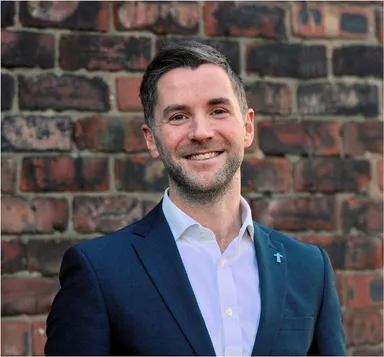
Mike Nicholson
After an 18-year career as a Secondary Teacher, including one year managing an education project in Ethiopia, Mike started Progressive Masculinity in order to address the damaging 'performance' many boys and young men felt pressured to live in order to be seen as a 'real' man. Progressive Masculinity challenges regressive dominance and power-based models of masculinity and supports young men to construct a model which is consistent with their personal values and the kind of man, friend, partner and father they wish to be. By creating safe, nonjudgemental spaces Progressive Masculinity helps boys and young men who feel unseen, unheard, marginalised and frustrated realise their value and the incredible potential of our gender. Progressive Masculinity has developed into a nationwide network of facilitators delivering pupil workshops, staff training and parental sessions with their work featured in The Times, The Daily Telegraph, BBC Radio 4 and Channel4
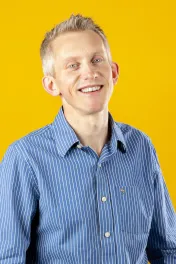
Hosted by Andrew Pain
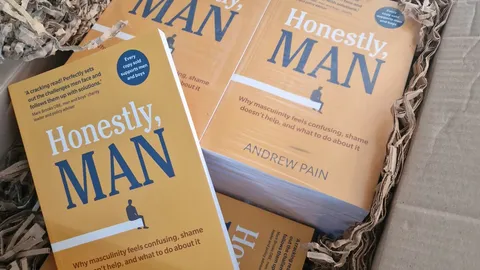
Andrew Pain is a Mental Health & Resilience Keynote Speaker who speaks from lived experience on resilience, burnout and workplace wellbeing. Host of the Men on Show podcast, author of the book Honestly, Man, and a TEDx speaker. Member, International Coaching Federation, and Mental Health First Aider trained.
Never miss an episode
Candid conversations with everyday heroes – ordinary men doing extraordinary things.