Men on Show · Episode 18
Men, Prison and Reform with David Breakspear
- 24 January 2024 .
- 58 min .
- Hosted by Andrew Pain .
After spending most of his life trapped in the revolving doors of crisis and crime, David turned his life around and now uses his lived experience as a lived experience team member at the charity, Revolving Doors, and as a lived experience influencer at the National Suicide Prevention Alliance, to influence reform and change.
Andrew hosts this podcast. His own keynotes are on burnout, resilience, imposter syndrome and difficult conversations.
In this episode
About the conversation
Key points of the episode
Men on Show shares lived experience and honest conversation – it is not medical or therapeutic advice. If you're struggling, you don't have to cope alone.
Samaritans: call 116 123 (free, 24/7) NHS: 111
Full transcript
Read the whole conversation
A complete, verbatim transcript of this episode – every word is the host's and guest's own; the topic headings are ours.
Welcome to Men on Show, the podcast, Candid Conversations with Everyday Heroes. Join Andrew Pain as he interviews fascinating guests, ordinary men doing extraordinary things. If you love the show and you think somebody could benefit from hearing it, why not tell them about it by giving it a share on social media? Oh, and at the end of the podcast, if you can leave us a five-star rating and a review, it really helps us more than you know, and it gets this important message out to more people that need to hear it the most. Right now, enjoy the next episode. The next episode.
Hi, my name's Andrew Pain, and welcome to Men on Show. And I'm delighted to welcome today's guest. So excited to get into our chat with David Breakspear, first arrested at the age of 10, then in and out of prison as a man for decades. He describes his education, loved this, as the school of hard knocks, which I think is probably some very valuable life lessons there for sure. He's now a successful speaker, mentor, campaigner, campaigning for prison reform, youth justice reform.
I really want to get a sense of what David's campaign is. It's going to be really interesting to chat about. And of course, we'll be talking about masculinity, the challenges, where we go from here. David, it's a pleasure to have you. Welcome to the show.
Andrew, thank you. Great intro, love it.
Being the youngest of six
Oh, bless you. So look, I mean, I always say this to the guests when we start talking. I'm yet to interview anybody that young. Most guys that I interview are sort of 30s plus, but doing incredible work. So I always like to know kind of like, well, where did this all begin? So like in your early years, kind of as you remember, what kind of stood out for you as a kid? What do you remember now, good or bad? Kind of just what jumps out at you?
One thing I remember is I was the youngest of six, and always struggling to find my own identity. That's something that stuck with me for a number of years. But being the youngest of six, going through the same, well, in the same home, it was very difficult for people to call me by my first name, sorry, to call me by my right name. They'd go through my other siblings first before getting my name right. I wasn't the only sibling that happened to, but it all matched in with everything else.
Then primary school, infant school, junior school, I'd been following my siblings through there. So I was always getting, you're not like your brothers, you're not like your sisters. And looking back with hindsight, I can see how much that really did affect me. Being the youngest of six, my mum and dad had me, they were quite old, they were in their forties, they're both dead now, God rest them. But they kind of been all through it before.
So when it comes to school events and stuff that I was involved in at school, I didn't have my family around me. I've never seen my mum and dad there, didn't see any of my brothers and sisters there. So yeah, it's quite, even though I was from a big family, it was quite a lonely childhood, if you like.
Interesting, interesting. I do know I did do that. I've got three boys and it's just, I think the amount of chaos that that creates, there's often a day where I'll be like, oh, Roo, and it's like, oh, no, he's not called Roo, that's the other, but you do just, your mind goes to mush as a parent. But I can see how, yeah, that could have affected you. What, I mean, and in terms of school, how did you find that as a young boy?
Read the rest of the transcript Collapse transcript
Hating school, and being arrested at 10
I don't know, I loved learning, believe it or not, but I hated school. I've got my sister, the next kind of sibling, like my sister, she taught me to read from a young age. And on the back of that, rather than buying sweets as a kid, I used to buy comics and I was always reading comics, always reading books, I loved to read. So obviously learning, whenever you read, you're learning. So I loved to learn, but I just didn't like school.
I just didn't get on with school. Primary school, infant school, I recall being punished and having to sit in my headmistresses' office to eat my lunch for quite a while. I can't remember what that was over, but yeah, I had to eat my lunch in there. Junior school, in junior school, it wasn't too bad there. I even joined the choir. But that was when I contracted meningitis when I was 10. And after that, the rest of my junior school years were messed up because I'd go back part-time either in the morning or in the afternoon, depending on how I was feeling. And that kind of played. But it was great. I loved it. I didn't want to be in school. I hated school.
What did you hate about school?
I honestly can't remember. I can't put my finger on it. Obviously, it wasn't all school that I hated. I think it was more to do with the teacher rather than the subject. If it was the right teacher, the subject was irrelevant. I'd learn. And it was having that connection with a teacher. I mean, for me, PE sport, that was something that I really enjoyed at school. I loved doing that at school. But I used to get bored quite quickly.
I used to do my work and I used to get bored quite quickly. And I'd start becoming a class clown. And then being a class clown for someone that was searching for an identity and someone that was, I suppose, as well, looking for attention. I was a youngster, six, don't forget. And so I started getting the attention I wanted as well. But unfortunately, in the wrong way, I was getting the attention from playing up rather than any other way, I suppose.
Yeah, I mean, that boredom, and I think of my boys when I think of the amount of energy that they have, they struggle to sit still for more than five minutes. And I do sometimes wonder whether sort of the classroom environment is set up for boys and girls. We know that boys and girls, infant brains develop at different pace, different ways, put them in the same classroom, though, don't we? And expect similar results. And I do feel that there has to be a better way of engaging, particularly young boys in education. I can't help but think sort of the classroom environment maybe isn't the best.
No, I totally agree with that. And obviously, again, looking, it's a lot easier now because in 2010, I was diagnosed with a number of disorders, being neurodivergent, one of them. And looking back, it's like, well, makes sense. It all made sense. Everything that I was told back in 2010 made sense for who I was as a child. It just, everything, yeah, it just all come together and made sense.
Yeah. So, I mean, at 10 in your life, I know I've read on your bio, you were arrested at 10. I didn't know you'd contracted meningitis at 10 and you were in and out of school quite a bit, as you've just said. So are those two things linked in some way? Or was it just coincidence that both things happened when you were 10?
You can find an argument for both. And although I was playing up before the age of 10, prior to that, I'd been sexually abused as well at the age of eight. So all of those things combined, it's very difficult to turn around and say that was the one that set me on this road. In a way, it was unlucky what had happened to me in such a short amount of time. Each on their own could have been the catalyst, if you'd like.
So together, yeah, it's... If we look at the evidence and the research that we have these days, I mean, you can, of course, there's a link. But obviously back then, didn't disclose the abuse until 2008. So no one knew really about neurodivergency back then. You were just labelled as troublesome and challenging and disruptive. And it was easy to point the finger rather than get your help, if you like. So, yeah. Yeah.
You talk about your sort of being arrested at 10 on your bio. Do you see that? Was that a particularly pivotal moment in your life? What was the impact of that on you?
I suppose, in one aspect, it cemented the identity of who I was to get, you have to play up to get attention. And here I am now getting attention from a lot of people. It led to me getting a caution from the chief inspector. Myself and my dad went up to his office, stood in front of his desk, and he basically gave me a rollicking. Brought me to tears, but obviously it didn't change anything. And I was back in his office a couple of weeks after that.
But yeah, it's very difficult to kind of, again, put my finger on whether or not being arrested back then made the difference. But again, with research and with evidence, I can confidently say that it did make a... For people with my background, my condition, if you like, we were arrested at a younger age than the normal population, if you like. So everything matches. Do you know what I mean? It all matches.
The school to prison pipeline
Yeah. And of course, at that point, I would imagine all those years ago, when you got that rollicking, that chief inspector would have imagined, you know, if I can give young David a really good rollicking, sort of give him a kick up the pants, I'm sure that will sort it out. But of course, we know in terms of working with our young people, it requires such a more intelligent approach if we're going to really get to the heart of what's going on.
Because, I mean, you talk as well about the school-to-prison pipeline. Now, I'm interested about that as a phrase. I've not heard that myself as a phrase. So talk me through that pipeline. I'd like to know, well, what actually do you mean by that? And of course, I imagine, hopefully you'll tell us kind of some thoughts about how we would break that pipeline. Do you want to just give us some stuff on that? It'd be really helpful.
Yeah, well, for me, it really wasn't until 2005 in prison. I'd become a mentor for a charity called Shannon Trust. Shannon Trust are a charity who train people in prison who can read to teach people in prison who can't read to read. It sounds quite a simple process. And to be honest, it is quite a simple process actually, but maybe we can come back to that. And where I began talking to the people that I was, sorry, the learners, you started to uncover some of their story and started to share stories.
And I started to realise how I used to think my story was quite unique, not in an ego way, but obviously not talking about it to people. And I suppose in a way that was what led on to me disclosing in 2008 about the abuse that happened to me because of the conversations that I were having with others. And following on from being a mentor for Shannon Trust, I then trained to be a listener for the Samaritans, which everyone knows who the Samaritans are.
And basically you've got people in prison who are trained by the Samaritans to listen to people's problems in prison, 24 hours a day, 7 days a week, 365 days a year. And it's an incredible service. And on the back of the mentor role where, all right, the conversations could be quite deep, when you're speaking to people as a listener, those conversations really are deep or can be deep, and you're dealing with people's really real inner demons.
So those two combined, for me personally, I think that that was what, it didn't come out in the right way. I suppose things never do, but as I say, eventually in 2008, that led on to me disclosing my own stuff. And again, one of the things that I noticed was school exclusions, how many people were excluded from school, which led on to them not being able to read properly or being able to read. And why they were excluded from school.
Again, the label challenging and disruptive, troublesome. No, this is what had happened to them and why. It was just being labelled, labelled, labelled, labelled. And of course, if you get the same label time and time again, you become the label that you wear. And it's so easy. We talk about influence. We talk about motivating. We talk about role models. And you've got people like this that are here. And others are seeing that. And it's kind of a deterministic way of looking at things, I suppose.
But that's what happens. So, yeah. And then when I, over my time in prison, I don't want to jump too far ahead in the story, because I know we've probably talked about it, but I kind of become a better person in prison. So I started to learn a lot more about the stuff that were my issues, the stuff that happened to other people as well, the sort of herd experience as well as my lived experience that I was kind of researching about.
And I really started to get a deeper understanding of those around me. Yes, we might be bad people, if you like. Sorry, we might have done bad things, but that necessarily doesn't make people in prison bad people. They've made choices from a certain set of circumstances in life. They're not making choices from a level playing field. They're making choices from down below, if you like. And it's very difficult to make the right choice. It's very difficult to see the opportunities to grab your chance when you're in that situation and when you're in survival mode.
So the school to prison pipeline really does have a major effect, for me, on the numbers in prison. And we need to start having an impact on it now to make sure that prisons aren't overcrowded in the future, that we need less prisons. And we do that through early intervention. For me, prison, the horse is already bolted. It's too late. Once someone's got involved in prison, it can be very difficult then for that person because of stigma and discrimination as well as everything else, the negativity side of things.
It can be very difficult for someone to be able to turn their lives around. If you don't do it the first time, the chances are it won't be until you're 8th or 9th or 10th time that you're able to turn your life around. So it's all about intervention and finding out why people are ending up in the school-prison pipeline. Why are children being excluded? And when you look at the figures, the majority of children being excluded from school is due to persistent, disrupted behaviour.
So it's not major incidents of violence. It's not major incidents of arson. It's not sexual assault. It's many minor discrepancies, many minor things that all come together and lead on to the school excluding them. So where's the intervention after the first one? Where's the intervention after the second one? Where's the intervention after the third one before you're excluding them from school? I think this has been an issue for me personally since 1997, I think it was, in the introduction of the league tables for schools. Once they introduced league tables for schools, school exclusion started rocking, because people didn't want children on their records that are going to be bringing their scores down.
Children of prisoners and school exclusions
Yeah, and particularly, I feel for the teachers because they're under so much pressure, they've got to deliver results. You think about the pressure of Ofsted, you think about the size of classrooms that they have, the amount of paperwork, the amount of work they have to do. So I fully understand it, they've got someone that's persistently disruptive. They want that person out of the classroom so they can focus on the others. But I totally get what you're saying, that obviously with exclusion, you've got the labelling aspect, possibly some shame aspect as well.
Obviously, you're then taking that child out of the classroom environment so they may not be learning. And of course, what we're not doing by excluding them is trying to deal with the problem. It's just an arbitrary bit like you're rollicking from the Chief Inspector, just like words, just an arbitrary punishment that actually doesn't get to the heart. It could be neurodiversity. It could be a verse-chartered experience. It could be anything. But I guess the challenge is just anything that makes an impact, in my opinion, takes time.
You can't just say, well, I know, we'll have an intervention. We'll give the kid six coaching lessons over six weeks, and then job done, box ticked, get the government funding. You know, I met someone that does a lot of work with lads. It works with lads needs dads, brilliant programme in Essex. They journey with their young as part of their intervention for as long as eight years, eight years. But actually, funders want immediate results so you can then move on to the next person. And so it's I suppose it's how we break that. It's how we create genuinely a resource.
Well, this can I was going to say, this is why I love the charity called Children Heard and Seen. They're based in Oxford. And they work with the families and children of people in prison because intergenerational imprisonment is an issue. And something that unfortunately I've been trying to research but can't find the numbers is how many children excluded from school have a parent in prison? So how much is the impact of a parent in prison having on school exclusions?
You'd imagine someone would have done the research on that. Surely that's quite an obvious link.
Well, they don't even know how many children are impacted. I think it was Crest Advisory estimated a few years ago that there's 312,000 children per year that are impacted by parental imprisonment. Someone else, I can't remember who it was, but the main number that was being bounded about was 200,000. And there's just been some recent studies done where they said that on average there's 1.14 children per adult in prison, which equates to just over 100,000 children are impacted.
But even if you take that lower figure of 100,000, when you look at the impact that parental imprisonment has on their own children, that child is more likely than not to follow their parent in prison. So even if you said 10%, that's 10,000 children that are going to probably, without intervention and support, follow their parent in the prison. And that's where we can really have an impact on the future number of prisons. The more that we can intervene now and support children now, the less need we have for prisons in the future.
I mean, I do wonder, as a stat really winds me up, but as a result of austerity, government cut 70% of funding to local authorities for youth services. And you do think, you know, I understand we're all trying to cut costs, but the long-term impact of that, what did we think was going to happen when all these youth centres shut? We lost all these youth workers. And you do think, for the amount of money it would take to create meaningful intervention that journeys with children at risk over a period of time, that is an expensive operation. But I wonder how much money long-term it would actually save if we broke the school to prison.
Absolutely millions. And when you look at the statistics, in the youth custody estate, 90% of children in youth custody estate were excluded from school at some point. And when you look at, what annoys me is they call it, being excluded from school is a rarity. I think it was something like the last figure suggested, over 6,300 children were excluded from school. However, that's a rarity. In 2017, when I was last in prison, there was just under 86,000 people in prison at the time. 54,164 had been excluded from school. So you've got 90% of the youth estate, and you've got just over 60% of the adult estate excluded from school. That's some rarity.
Yeah.
And that's the future impact of school exclusions. So if you imagine if all of those 54,000, you'd half the prison system. You'd have half the prison system if that 54,000 were intervened and supported as children. And when you consider even serial killers were once innocent children, you can see the importance of support and intervention for children.
Yeah. I mean, I'm watching the programme, The Long Shadow on Peter Sutcliffe. I mean, just the whole story is tragic and awful. You read about Peter Sutcliffe as a five year old. He was glassed by his father for sitting in his father's chair. And you do, you know, that doesn't necessarily turn you into a serial killer. But you think what chance did he really have as a kid?
Blame and judging people quickly
And having issues as a child doesn't excuse future crimes. It really doesn't. And something as well you mentioned, I wanted to say when you said about you feel sorry for teachers because they've got so much put on them. I also feel sorry for parents because it's either the teacher's fault or the parent's fault. And that's the thing. One of the issues that we've got is that too many people are looking to blame. Let's stop blaming and let's start doing some action.
Yeah, no, absolutely. 100%. And obviously I do a lot of talking in the field of domestic abuse. And we often forget one group of people that make up the domestic abuse statistics are parents abused by their children. And they feel like failed parents. Surely if you're abused by your kid, it's all your fault as a parent. And I think you're absolutely right. We've got this sort of passion, haven't we, for sort of big headlines in the media, the Daily Mail when you think about some of their headlines, the social media stuff. I don't think that's helped us in just becoming so impulsive to judge people, judging people quickly.
It's as if we feel entitled. Us as individuals feel entitled to look down on others. And that's such an ignorant attitude to have.
Yeah, without knowing anything about their story. It's like some people that get wound up by people that drain the NHS. Why can't they just lose some weight? Why can't they just stop smoking and then they'll put less pressure? I have to fund the NHS with my taxes. But it's like, yeah, but you don't know what their story is like. You don't know what they've been through, the struggle they have.
The more we invest in children, the less we spend on crime and punishment, the more they can spend on the NHS. So that's the reason why we should be supporting. If anything else, if you don't look at the criminal justice system, unless you read the Daily Mail, I knew what I was going to say then, but it didn't come out right. But stop pointing the finger. Do you know what I mean? What I do, the reason why I reform so heavily, so much and forthrightly, is because it has an impact on everybody.
Crime affects us all. So therefore, the sooner that we have a criminal justice system that is fair, just and equitable, the more benefit it's going to be for society as a whole.
Prison, and hitting bottom in 2015
We were talking about how, also, you were obviously in and out of prison as a man. When you were out of prison, were you consciously trying to get your life on track each time? And if so, how come you kept going back into prison, if that makes sense?
I wish I knew that answer. But yeah, coming out of my teenage years, I've been away a couple of times, and I thought this life ain't for me. And I come out and being, I was the only one that was like it in my family. There was no, like my brothers and sisters were all goody-goody. So I was the only one like it. And I kind of, in my last sentence, back end of the 80s, I was like, I need to do it for my mum and dad.
I need to show my mum and dad that I can be a normal person, if you like. And because, I mean, they really did support me. I mean, I say they supported me. They were always writing me letters, coming to visit me. I mean, they never pushed me. I wish they were like that when I was at school. That might have made a difference, but there you go. It is what it is. As I say, my last one, as a youngster, as a teenager, that was when I sort of had this epiphany of doing the right thing.
And it was the worst thing to have done, really. I come out, settled down, took on, got married to someone who had another child, got a mortgage, got a flat, got a mortgage. And then a few months after getting married, which was a few weeks after my 21st birthday, sorry, yeah, a few weeks after, I got married in April. My 21st was in September. My mum died a couple of weeks later. She was only 59. And that just, in one aspect, it was good because she had finally seen me get married and settled down.
But it ruined me. I wasn't right after that. It eventually led on to my relationship breaking down. And I moved completely, met someone else, moved areas, moved up to London. I was in Kent at the time, moved up to London. And just, although I was trying to, kept trying to do the right things, I was always, always finding myself involved in crime at the same time. Even more so in London. And quite heavy crime as well.
But again, I was still trying to do the right thing, still trying to do the right thing. In 1997, I got done for drink driving, and kind of things started going down. A massive family fallout, my brother's engagement, which led on to me not being invited to any more family gatherings after that. And it just kept going downhill, downhill, and the decisions I was making, I was just doing the wrong things, drink, drugs, kept going downhill, downhill, and then by, and I've been getting into trouble as well, I've been going to court, I've been lucky a few times, been quite lucky on the sentences I was getting, I was getting community sentences, which was probably because I was working and I'd been, yeah, I suppose because I was working, that was the major reason that kept me out of jail at the time.
But as I said, I was still getting into trouble, and I think 2004, I had a massive fight with two fellas in an area where I lived. And that started the ball of prison once again. And then from then on until 2017 when I last got out, I was backing in out again.
And what's happened since 2017, obviously a long time out now, and you've turned your life around, you do all kinds of amazing stuff, which you're going to find out about in a moment. I want to get on to that. So what happened in 2017? How come this time it seems to really have, you seem to really step forward?
It wasn't 2017, it was 2015. It was just before it was going to prison. I'd found myself right at the bottom. I mean, I thought I'd hit rotten bottom before over my life, but none more so than 2015. I was in a bad way on drugs, class A's, class B's, alcohol. I was living in a church doorway, and I had a decision whether I wanted to live or die. And I chose to live, but the life I was going to lead wasn't going to be the life I had before.
I wanted to have a different life. And subsequently, I ended up in prison for three years, nine months, and well, served half of that. And it was on that sentence where I knew before going to prison that one, prison was a place for me to be able to do it, but two, as I said, I wanted to live. I didn't want to live like that anymore. But I also knew the lived experience I had could make a difference.
I'd become a better person in prison by giving back, by helping others, and I really wanted to do the same sort of thing in the community. If you like, it was about going into prison and getting the person I was in prison and bringing him out with me this time. And that's what I've done. And it hasn't been easy, and it's took a lot of hard work. But all I've done is turn my back on crime.
I'm not Iron Man Everest or anything like that. But it's the stuff that I've dealt with that's enabled me to turn my back on crime. It's the reasons behind what I've done. That's what makes me really proud.
Revolving Doors, and justice and rehabilitation
And it should do. And it's every bit as big as climbing Mount Everest, if not climbing it several times over. I mean, it's amazing and wonderful to see the work you're doing. And that leads well into your work today. Tell us, what are you doing today? What's kind of your passion? What's driving you? What are you actually doing today?
Well, for me, the key thing is awareness. I mentioned at the start about people in prison might have done bad things, but they're not exactly bad people. And it's to try and make people aware that that's the case, that everyone's got a story to tell. And when you see the headlines in papers like the Daily Mail, to read behind the headlines, find the real truth, because you only get one side of the story in the media.
You don't get to hear the back story. When they go up to court, everyone has, well, the majority of people in court will have mitigating circumstances, but you never see those mitigating circumstances in the media. All you see is the judge's remarks on sentencing, if they're found guilty and sentenced, obviously. So it's about making people aware, really, because if you want to influence real change, you first got to change the way people think before you can start moving on to organisations and systems.
You've got to start off loads, you know what I mean? So, but the majority of my work is what I do through Revolving Doors as a volunteer for them. I'm part of the lived experience team there. Revolving Doors are another charity. They were created in 1993. So, this, well, last month was our 30th anniversary, but we still got some celebrations to come for that next year. And Revolve, yeah, they were set up in 1993. They were looking at, they were more to do with research, really.
They were looking at the reasons why people were ending up trapped in Revolving Doors of crisis and crime, what led on to people committing crime, what led on to people being entrenched in the life of crime. And a lot of it was coming back to poverty, trauma, homelessness, mental health issues, drug addiction, alcohol addiction, gambling addiction, whatever, multiple disadvantage. And then they started to understand the importance of lived experience. They started to understand as well the importance and the impact that the real voice has.
It's like bringing the facts and figures to life, if you like, when you use lived experience. It's all one and good, oh, 100 people done this and 100 people. But when you start to hear the actual story behind it, it does make a huge difference. And we, since 2008, they've created their own lived experience team, and we now collaborate with the NHS Health and Justice and provide our lived experience perspective with them on co-producing their services.
The Ministry of Justice, we've collaborated on a number of their initiatives, again, by giving the voice of lived experience and what we think can work, what we think will work and what we think won't work, basically, based on our own experiences.
And coming to prison, so for me, I know nothing about this, by the way, so these are just questions. I'm not trying to lead you in any way. For me, I imagine when it comes to how we deal with crime, there's an aspect of justice for the victim of the crime. There's an aspect of safety that we need to consider, the wider public safety, of course. And then there's an aspect of rehabilitation, if that's possible. Maybe we have that view that's possible for everyone.
Maybe we have a view that we feel is possible for just some. But those are the three, justice, safety, rehabilitation. So if that's the case, when you look at prison, as imperfect a system as it is, as flawed a system as you're probably going to tell me it is, is it actually the best of a bad bunch of options? Or is there something better that we're missing, that we're missing so close-minded?
Yeah, there's lots better. And when you mention justice and kind of rehabilitation separately, they're the same thing. And surely any victim of crime would want the criminal justice system to ensure that that individual who committed a crime doesn't commit another crime again. That's justice. That's not to say that the person who committed the crime shouldn't be punished. Of course they should. We have right and wrong in this country, well, in the world for a reason. And if you do wrong, you should be punished.
And when it comes to prison, the punishment is that loss of liberty. That's it. The loss of liberty is your punishment. That on its own is a nasty punishment to be segregated away from your friends, your loved ones and everything else into a 13 by 8 foot room that you might have to share with someone and the toilet in the kitchen, a telephone in your cell so you can't have private conversations if you share in a cell.
I mean, it has quite an impact on you as an individual. That's the punishment. And again, like I say, the majority of people in prison will be getting released. 98%, whatever it is, of people in prison will be getting released. And you've got to ask yourself the question, do I want the person coming out of prison that's going to be coming back to my community less likely to re-offend because of the work that they were able to do in prison or more likely to re-offend?
Because at the moment, people being released from prison are more likely to re-offend because they're not getting the support and the interventions they need whilst they're in prison. Especially for people that we've been... There's a lot of talk at the moment of presumption against short-term sentences. That doesn't mean that they're going to be removed. It just means that magistrates and judges have to first consider alternative sentencing before they consider a custodial sentence, basically a last resort.
But that's what it's always been. Prison has always been a last resort. So it's quite... It's a bit funny, really. They're saying that it should be seen as a last resort. It's the same as remand. Remanding people in prison so they don't commit another offence or whatever reason. That's supposed to be used as a last resort as well. Yet we've got 15,500 people, almost 20% of the prison population, are people on remand. Well, I'm sure that there are more and better ways that them people can be managed in the community.
And that's what it comes back to. It's about what can we do in a community to ensure that these people that are committing offences stop committing offences? How do we stop offending? Or how do we stop reoffending? And that's by understanding the reasons why people commit crime. And a lot of people commit crime, not because they're criminals, but because of something else that's gone on in their life. We said before about even serial killers for once innocent children. That doesn't exclude the fact that they've committed their crimes, but there is a reason behind why their crimes were committed.
Changing prisons, reoffending and the causes of crime
So is it a question of, just so I understand this, it's not that prison is a bad option, it's just that we need to rethink what goes on inside a prison and how the prison is constructed. Is that what you're saying?
Yeah, the principal of prison, if you like, is spot on. It's the practices. And one thing that frustrates me about this country and our prison system is why shouldn't we have and why can't we have the best prison system in the world? When you look at one of the countries that we're going to start to be using to deal with our overcrowding issue, Estonia, if it happens, in the last ten years, they've halved their prison population.
So rather than utilise their prison spaces for our prisoners, why not learn the lessons from what they did to halve their prison population? Well, they just changed the way that they looked at crime. They looked at a lot of crime from the lens of health, and that's a lot of reason why people, because of unmet health needs, and by that I'm also including undiagnosed conditions, if you look at people who are dyslexic in this country, 80% of them left school undiagnosed.
So 80% of those people, and there's millions I think, so basically they were failed by the education system. Our education system fails far too many children who end up in prison, and then we start pointing the finger at them when they're in the criminal justice system. So why aren't we pointing the finger at the education system before they end up in the criminal justice system? Because we know the reasons why people commit crime. So let's, rather than be tough on the crime itself, let's be tough on the causes of crime. We keep hearing that sentence, but we never see the tough on the causes of crime side of things.
Yeah, and I wonder whether, I'm sure, so I don't know my facts on this one, but I was reading around some prison experiments. They had a very good, when I say good, a low rate of reoffending from those that went through it. Where, and I'm sure it was Norway, where they really focused on ensuring that within the prison campus as such itself, there was huge amounts of sort of green space, woodland, where prisoners, they were locked in to that space, but rather than just being surrounded by concrete, they were also surrounded by green space as well, and they were locked into the campus, but they were able to be in that space a lot, as well as having some of the interventions that you're probably talking about.
So maybe even rethinking around it along those lines, but you can imagine the Daily Mail headlines of, prison gets new park, this is an outrage. What about our communities? You can see the headlines kicking off already.
Yeah, and I don't know if you've ever seen a documentary on the prisoners in Norway. I think it's Halgen, the name of the prison. I've seen a documentary on there. A lot of the guys turned around and said, regardless of all of that that you've just said, they still turn around and say, but we're still in prison. So yeah, as nice as the environment is, at the end of the day, you're still in prison. So it's great that, but again, it's so frustrating.
Why do the Daily Mail want our prison so full? Why do they go out of their way to ensure the public are so scared of the criminal justice system that the government can get away with any raft of changes that always benefit, apparently, society? But they don't benefit society whatsoever. The more people we have in our prison system just shows how failing our society is. Surely the less people in prison, the more successful our society is. It's that simple.
So for low level crime, which I guess for me again in my mind, is crime where, you know, all crime is bad, of course, but like it's maybe not repeat violent crime where... Sue, are you saying there's a better alternative? Sue, we know that we should reform our prisons so that there's more meaningful intervention prisoners are being worked with. I think that's the point that you've put across. And is there also a really good alternative to prison for some types of crime?
Yes, there is, and there are. And not just only is there, there also, in the respects of reoffending rates, Alex Chalk himself says that for people serving 12 months or less in prison, the reoffending rate is over 60%. For people on certain community orders, it's a combination order. For people on these community orders, it's 24%. So the difference between the reoffending rates for people in prison and the reoffending rates for people on community payback or combination orders is if you want in brass tax terms of money, millions and millions and millions of pounds is more efficient than sending someone to prison.
And it's not just the efficiency of stopping the reoffending. Once you stop someone reoffending and you start giving them the skills and the tools to have a successful future, they're going to have less need on the social department for work and pensions. So they won't be getting benefits. So they'll more than likely be working and paying tax in rather than taking money out. And having more money, you can look after yourself better. So you can have less impact on the health service.
So I mean, there's so many benefits from doing the right thing. It is, it's really frustrating. And the problem is, like you say, the Daily Mail, and you get crimes like Lucy Letbe, like Wayne Cousins, and looking back in Huntley and people like that, they become the face of the criminal justice system for years. And it's wrong because they're only a small minority of people in prison. I think when you look at life sentences, there's only around 9,000 people in prison serving life sentences.
The majority of people in prison are serving less than 10 years. Unfortunately, that number is getting... The number of people in prison that are serving longer is getting more and more, which is why we're seeing so much overcrowding, because you've got longer people. People in prison for longer, there's less space available down the road. So your best way to see that is to stop that churn of thousands and thousands of people going in for days, for weeks and for months, and then they go back and they go back again and they go back again, because no one's got the time or the tenacity to work with them.
Men in prison and white privilege
Yeah. Well, talking about prison population, 95% of people in prison in the UK are actually men. Why is that, do you think? Why is that so high?
I don't know. I don't, I really don't know. But then when you look at it as well, the majority of people who are homeless are men. The majority of soldiers are men. The majority of people who die by suicide are men. So, and we do live in quite an equal population. I don't know, what is it, 51% male, 49% women. I don't know what those, what the actual figures are. So the split there is quite even.
But when you start looking at things like that, there's huge disparities. But on the flip side, women in prison are 20 times, sorry, 10 times more likely to self-harm than men in prison. But yet 97% of men in prison who commit, sorry, 97% of suicides in prison are done by men.
Yeah, I mean, do you think, you know, looking more widely when we think about being a man today, when you think about your own experiences, I mean, do you think men and boys are sort of, are in some kind of crisis today? There's increasing awareness around male mental health, the suicide stats that you mentioned yourself. Is there a problem particularly today for men and boys, you think?
Has it ever changed? I mean, if you look at history, all the history books we read, it's men, men, men, men, men at the top of this, men doing that, men doing that. So if you are a male, and I'm only speaking for myself, I'm not a psychologist, I'm not Stephen Fry, I'm not Katie Hopkins either. But from my own experience, you kind of, you have to be masculine. You can't, again, it's changing now, it's like the talk around mental health, about manning up, I'm so glad to see the back of that.
We are breaking through all those stereotypes, but still that masculinity seems to exist. I don't, I really don't know why. Is it to do with who we are as individuals, sorry, as genders in a way? Are we born with that hunt of instincts and women were born as gatherers? I don't, do you know what I mean? I don't know if it's something that comes from old and our instinct, but there's something, because we've just said about the disparity in numbers and how huge those disparities are. So something's going wrong and something's not going right for men and boys because of those disparity in numbers.
Yeah, because when you mentioned the Wayne Cousins and the Lucy Letbe case, certainly with the Wayne Cousins case, there's been a lot of media campaigning that police need better, more robust measures to do their background on future police officers. We need to do more checks, more checks somehow. And of course, the fact they're doing less checks is partly due to austerity.
Yeah, but how do you prove a negative, though? How do you prove a negative? Do you know what I mean? It's like how do you look at someone that hasn't yet committed a crime and say they're going to be committing a crime in the future as nasty as what Wayne Cousins did? Unless there is history there, obviously.
Well, there is that side of it. What's interesting, if you compare both cases, is with Lucy Letby, there's been no talk that actually for future nurses, we need to make our measures more robust when we recruit them. So why would we need to do that for Wayne Cousins and not Lucy Letby? And is there a danger that perhaps, you talk about some of the labelling earlier on in the conversation, that some of the issues for men and boys is we sort of label ourselves as these kind of would-be aggressors and perpetrators.
I know I was talking to a guy for the CEO of Men's Sheds. They had an issue where they tried to create a shed. The Men's Sheds are where guys come together, they build stuff, make stuff, it's just all very sociable. They tried to get a space opposite a school where there were other charities also operating in this space. And they were denied the space simply because as men, they were seen as a safeguarding risk for the school across the road. And yet the other child... So do you think we label ourselves in a negative way as men?
Um... But then I think we're forced to, even more so these days. It's like sometimes, and especially being a white male, I sometimes feel I have to be apologetic. It's like, sorry I'm white, sorry I'm a man, do you know what I mean? That's how it feels sometimes these days. Um... so I... I honestly don't... I mean, I could probably say the wrong thing because of it, but I just don't know what... the difference between... in that situation, why men are more like this and women are more like this, do you know what I mean?
Is it the media that puts the pressure on men? Is it, as I say, the history books that put pressure on children? And really do give an early indication of how they should act as an adult? I don't know. I'm sure there's smarter people out there than me that know.
Oh, I don't know. I mean, definitely. I mean, you're doing some amazing work anyway. And I love kind of your approach to sort of prison reform and really trying to draw lessons from your own life experience. And so certainly looking at your background, yes, you're a white male, but are you really a privileged white male? You look at your own background. You wouldn't say so. How are you any more privileged than?
Yeah, I mean, when you consider my background, no. But there are some aspects in my life where I do see my, through everything else that I see in life, that I do see my own white privilege. And I've been arrested several times over the past by armed police. And I've been quite voiceless towards them, so nastily so as well. And I wonder if I were black, would I have been shot? So for me, although I can't understand it in respect to my life, I can understand it in certain aspects of my life.
And I've seen the racial disparity in prison. I've seen the racial disparity in respects of control and restraints procedures, like the security. And again, it's not just me saying that. I'm backed up by research and evidence that there's a lot of racial disparity in this country.
Yeah, and you see that in the prisons as well.
Very much so. And with children and school exclusions, I think black children are more disproportionately more likely to be excluded from school than a white child.
Helping men and boys be their best
Wow, that's really interesting. It's really interesting. Coming to the conclusion of the podcast, it's been really interesting talking to you, getting your take on things. When we think about male mental health and we think about suicide stat, when we think about 95% of people in prison are actually men, and yet, as you rightly say, the split of our population demographically is sort of 49 to 50, yet 95% in prison, how do we help men and boys to be the very best version of themselves? You know, moving forward, how do we help our sons to realise their potential in a really healthy way? What are the things we need to do?
For a start, we got... There's something I've been... I don't know a lot about it yet, because I've only just started looking into it, group identity and individual identity. And I think we need to start looking at people as individuals, whether they be male or female, or whatever gender they identify as, that we should look at people as individuals and build from... Something I always use as an example is David Beckham. When he was at school, he couldn't even spell professional footballer, yet that was all he wanted to be.
And he was lucky that his parents and the school allowed him to do that. Look at him now. Imagine if they forced education on him first. You can't do football until education. Would we have ever heard of David Beckham? So that shows the importance of loving support from the family, but also support from the school, and understanding that not everyone in life is going to be academically inclined. That doesn't mean to say they're not going to be talented or have skills and abilities in other areas of life.
We need musicians. We need sculptures. We need artists. It doesn't mean to say they have to be experts at algebra. So we've got to remove all of this, the pressure of being a man, the pressure of being masculine. I think that's changing for the better, but I think it can go a lot further. And I think we can start introducing that in schools. For me, you look at the history, and you start being taught about Henry VIII and his six wives.
I mean, what is that teaching children about misogyny? Do you know what I mean? What's that teaching them about how to act around women, how to treat women? So I think we need to look at the way that we are educating our children these days and what we're using to educate them for. Are they being educated for today's standards, or are they still being educated for Victorian standards?
Yeah, maybe we should be teaching them about the Thailand Cave rescue, the all-male diving team that went out there, rescued those boys, put their lives on the line for boys that didn't even know, and be celebrating that. Maybe that's a good start for our history lessons.
Or just ask a child what they're interested in, and then build it around that. Enquire, inquire, question and inquire. Getting those questions right. Asking children the right questions at the right time is the way to ensure that children can be the best versions of themselves. And obviously supporting them children to become the best versions of themselves.
Finding David, and a last message
So two things to finish with. I always ask these last two questions of anybody on my podcast. The first is a really easy one. Just how do people find you to book you? You're a speaker, you're a campaigner, reformer. So where do people go to find out about you?
LinkedIn. LinkedIn is the only place I use really. I do have my own website, but it's kind of being worked on at the moment. But yeah, LinkedIn is the best place.
LinkedIn, brilliant. David Breakspear on LinkedIn. Drop your invitation to connect. And finally, finally, finally, if you could give a message of encouragement to the men and boys listening to this podcast, what in a couple of sentences, what would, how would you encourage them?
Talk. Because a sentence I heard was from a lady doing a TEDx talk, Madeline Black. And she said, what we don't release now can leak out of us later. Something like that. And that's the thing. It's, yeah, talking. I mean, the strength, the mental toughness, the help, the coping mechanisms, the positive self-talk that I've got from talking to others is, I suppose, is what keeps me alive these days. Do you know what I mean? It's talking for me. It's don't, yeah, it's just talk, talk. Don't be embarrassed. Talk. Brilliant.
I love that, and I like the plug of Madeline Black as well. Wonderful woman. So she's done a whole podcast Unbroken. So for anyone listening to this, Madeline's podcast Unbroken is almost as good as Men on Show. No, I wouldn't say. It's a great podcast. She's a fabulous author and speaker in a self-incredible story of courage, of moving forward, forgiveness, all that great stuff. So yeah, David, thank you. It's been an absolute pleasure having you on the show.
Really appreciate you giving up your time to share your insights with us. Really interesting aspect of masculinity, of issues affecting men. I've always been in prison, a new experience around. It's been really, really useful. Thank you so much for your time. I hope you have a great weekend ahead.
Thank you, Andrew. And as I mentioned to you before, thank you so much for the platform. It's all well and good having the experience and wanting to campaign, but without platforms like yourself, I'll just be scratching to the wall.
No, you're absolutely welcome. Wish you the best.
Thank you very much, Andrew.
Bye. Thank you for listening to Andrew Pain's Men on Show. If you could leave us a five-star rating and short review, it would be really, really appreciated. It helps us get this important message out to more people that need to hear it the most. See you on the next episode. Thank you for tuning in.
About the guest
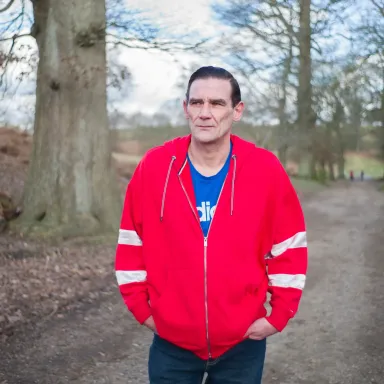
David Breakspear
After spending most of his life trapped in the revolving doors of crisis and crime, David turned his life around and now uses his lived experience as a lived experience team member at the charity, Revolving Doors, and as a lived experience influencer at the National Suicide Prevention Alliance, to influence reform and change.

Hosted by Andrew Pain
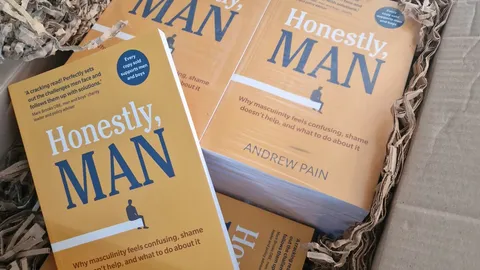
Andrew Pain is a Mental Health & Resilience Keynote Speaker who speaks from lived experience on resilience, burnout and workplace wellbeing. Host of the Men on Show podcast, author of the book Honestly, Man, and a TEDx speaker. Member, International Coaching Federation, and Mental Health First Aider trained.
Never miss an episode
Candid conversations with everyday heroes – ordinary men doing extraordinary things.