Men on Show · Episode 17
Men and Lads Need Dads with Joel Shaljean
- 17 January 2024 .
- 1h 7m .
- Hosted by Andrew Pain .
Chatting to Joel Shaljean in this episode all about his work as a Deputy Headmaster, Teacher Trainer, and pioneering thinker and programme facilitator in the educational field.
Andrew hosts this podcast. His own keynotes are on burnout, resilience, imposter syndrome and difficult conversations.
Key points of the episode
Men on Show shares lived experience and honest conversation – it is not medical or therapeutic advice. If you're struggling, you don't have to cope alone.
Samaritans: call 116 123 (free, 24/7) NHS: 111
Full transcript
Read the whole conversation
A complete, verbatim transcript of this episode – every word is the host's and guest's own; the topic headings are ours.
Welcome to Men on Show, the podcast, Candid Conversations with Everyday Heroes. Join Andrew Pain as he interviews fascinating guests, ordinary men doing extraordinary things. If you love the show and you think somebody could benefit from hearing it, why not tell them about it by giving it a share on social media? Oh, and at the end of the podcast, if you can leave us a five-star rating and a review, it really helps us more than you know, and it gets this important message out to more people that need to hear it the most. Right now, enjoy the next episode. The next episode.
Hi, my name's Andrew Pain, and welcome to the podcast Men on Show. And today, I'm delighted to welcome Joel Shaljean to Men on Show. 25 years teaching experience across mainstream, primary, secondary, and special schools in London and Essex, father to three young men, and working with the amazing Lads Need Dads programme. I really wanna get your thoughts, Joel, on sort of young men, boys, where we're going with that. Really excited to explore your story. Welcome to the show, Joel.
Well, what a lovely intro. Thank you so much. That's really lovely. Really looking forward to it. Really excited this time, Chad. Brilliant.
Inspiration from his dad and godfather Rex
Well, look, let's get started. And I tend to ask this as a first question to get the conversation sort of moving, kind of growing up as a young man. Is there somebody that was inspirational for you that you particularly remember? And why was that person inspirational, if so?
Well, I suppose the easy answer would be to say my dad. There are definitely elements of how my dad was for me growing up that would say that he was my inspiration. But there were quite a few people in my life who really struck a chord with me and maybe helped me to look at them as sort of male, what you might call male role models. And one of them was my godfather, Rex. And Rex was an engineer, and he was one of the most chilled guys you're ever gonna find.
Articular, intelligent, insightful. If you were gonna bottle wisdom, well, that would be Rex. And you get people who are godfathers in name and you get people who are really active. And my mom and dad chose Rex, and he was a real inspiration to me. Always kind, always had something important to say. And one of the things, I remember going to his funeral five, six years ago, maybe longer. And one of the things that came out of it that almost everybody said was that he made you feel like you were the only person in the room.
He made you feel like you were special. And so yeah, he was a really significant impact on me and didn't seem enough. But when I did see him, it just felt like I was special and that he valued me. And he always had something wise to say to me, wise and insightful to say to me. So yeah, he would be, I mean, I was, you know, I grew up in a time in the, I was born in 1971.
And, you know, so growing up in the seventies and eighties, there were sort of role models and role models, you know, who inspired me. There's always a typical sort of sports people out there. But yeah, it was my godfather, Rex, and my dad.
It's so important, isn't it, as guys? Cause you had a dad who obviously did inspire you, yet Rex, this, not your dad, had this big impact on you as well. And it's just so important, isn't it, as guys that we look to be male role models, not just for our own kids, but how can we be really inspirational male role models? For the other kids in our lives, for the other boys that we have connections with in our community, in our wider family.
So you grew up in the 70s and 80s actually in London, didn't you? What was life like growing up as a young man? Was it, were you south of the river or north of the river?
Read the rest of the transcript Collapse transcript
Growing up in Clapham, south of the river
Oh yeah, south of the river. I was, I effectively grew up in Clapham, but I was born in Westminster. So I was born in what is now Charing Cross Police Station. Charing Cross, old Charing Cross Hospital. And my dad was the, he used to run the social care unit, the homelessness unit underneath St. Martin's and Fields Church for, well, best part, 40 years. And so my first few years, I was living in the vicarage of St. Martin's and the Fields Church, which is effectively, about a hundred steps up and overlooking Trafalgar Square.
So I was kind of as, about as central London as you can get, really. And then as our family grew, I'm from four kids. My mum and dad moved out towards Clapham, and I kind of stayed in Clapham and southwest London for most of my adult life, really.
And what was that environment like for you in southeast London, in Clapham? I mean, today, Clapham is seen as quite a leafy part of London. Was that the case in the 70s and 80s?
Absolutely not. I mean, it's, you know, I think that they had that horrible expression, gentrification, that happened in the 80s. And you had people coming in, buying property in Clapham. But effectively, where we grew up was between Clapham and Wandsworth Common. And it is now considered to be one of the most affluent parts of London, really. But my mum and dad managed to buy a Victorian terrace in Clapham for peanuts, and we lived there. But at the time, it was a mixture of poverty and then middle-class people moving in.
So it was a real melting pot of cultures, and it was fascinating. In terms of a cultural experience growing up, it was wonderful for me. There was so much going on, it was so sort of vibrant. But what it did also bring with it was there was definitely tension on the streets. And growing up as a young man, I had the kind of, if you like, the cocoon of living in this household where I had my mum, dad together, those four of us, and you could kind of close the door behind you, and it would be safe.
But as I got older, and I got to my sort of teenage years, I know that we hear lots of stories about knife crime and what it's like in London now. We never had phones or anything. We couldn't communicate the way we can now. And so sometimes you can find yourself quite lonely on a dark night and not feeling very safe. So there were definitely times when I got mugged and robbed and that was pretty tough.
And that was really tough. And my nose shows it as well. But London is an incredible city. It's an amazing city. And growing up there was a challenge, but a blessing. I feel much wiser from my experience of growing up in London.
Two GCSEs, faith and the road into teaching
And then you journey into teaching, which is where, I guess, the story probably starts with Lads Needs Dads. So if we start with the teaching, what inspired you to become a teacher? Was there a pivotal moment? Was there someone in your life? Was it just a gradual, what on earth am I going to do? I know, maybe I'll be a teacher. And you explored it. What happened?
Well, I mean, if you'd have told me when I was 15, I was going to be not just a teacher, but what I do now, which is effectively training teachers. And I've been a head teacher, a deputy head teacher. If you'd have told me that I was going to be doing that, I would have said, get out of there. What are you talking about? Because school for me was, I just bombed at school. I mean, socially, I had a fantastic time.
But I was the first year of GCSEs, and I left with two GCSEs, which was French and Drama. And, you know, I didn't get my maths and English, and I didn't get anything else that you would obviously need to go into teaching. Because we had difficulties at home, and I kind of went off and led a bit of a wild life for five years or so. Took a break from life, if you like. And it wasn't until I met Sonia, who is now my wife, when I was 20, 21, that I really started to settle down and stop doing the rock and roll lifestyle, if you like.
And, you know, part of that was I'd always been brought up going to church. I used to sing in the choir at my mum's church. But I'd never really had a personal faith, if you like. And when I was about 21, Sonia, my wife, she was a Christian, and we had lots of long conversations and challenges about what faith was. And I made a decision to become a Christian myself when I was just 20. And, you know, part of the deal with being a Christian is that, you know, there's this life that, you know, there's out there for you and there's a plan for you.
And so I kind of prayed about that, if you like, and asked, you know, what's next for me. And I won't go too much into it, but there were lots of opportunities where lots of times when people came up to me and said, have you thought about becoming a PE teacher or a teacher, and randomly coming up to me out of nowhere and talking about this. And one of the things that really struck a chord with me was that I absolutely loved sport.
I'm really into football, absolutely nuts about boxing and mixed martial arts and judo. And I was always very sporty as a kid. And I found that I was very good with kids as well, as a young man, I was really good. I was always the one at family parties, sort of enjoying messing around with the kids. So yeah, it kind of all, everything sort of fell into place.
So there's a mix of you recognising what you're good at, what you enjoy. There's people coming into your life saying if you consider teaching, maybe some kind of spiritual sense of going into teaching. That all sort of came together over time.
Yeah, I mean, the thing was, it was the most unusual thing because I didn't have any qualifications. And that's kind of the thing that you need if you want to become a teacher. So I had to embark on going back to college as a 21 year old, working with 16 year olds, getting my maths and English GCSE. It was all I could do to get a C in maths. I've got to be honest. It was the toughest thing.
English was a bit easier. I read a lot and I'm OK with that. But yeah, it was all I could do. It wasn't humiliating, but it was certainly a little bit uncomfortable, the fact that you're with a bunch of 16 year olds. But yeah, I did that. I went to Brixton College and did an access course, got married and then did a four year degree. So yeah, it was quite a journey.
Male teachers and boys' exam results
A really long journey to get to where you obviously really wanted it to have put in that much effort. And as a male teacher, we know that in secondary schools, I think it's less than 35% teachers are male, primary schools is less than 15%, nursery education is less than 4%. From your experience in teaching as a man, do you think that really does have an impact on our boys? We know that boys are three times more likely to be excluded from school, for example, than girls are.
We know that within education, boys are struggling. Do you think as a male teacher that the lack of male teachers has a part to playing that or probably not linked? What are your views on that?
Absolutely, absolutely. Yeah, I mean, you know, I, as a, as a male teacher, you've, people, people boil down often. They think, well, male teachers will be good at doing this. You know, if you have a male teacher, nobody's going to step out of line because everyone's going to keep on, they're going to keep on your case. And, and I just don't, I just don't see that in entirely. I mean, because you get very sort of tough, strict teachers, whether you're male or female, it's about identity.
You know, it's about who am I as a man and what, what messages do I put across to kids about what it is to be a man? And what we do know is that, you know, we've got significant issues around family breakdown. You know, we know that 1.1 million kids grow up without any meaningful contact with their father at home. And so where do our male role models come from? And being a teacher and being a male role model of a teacher, it's so helpful.
It's so helpful for kids, but particularly boys, just to see that, you know, guys are all right. And they're not just the disciplinary and authoritative, punitive types, but they're actually people who've got a personality and who are interesting and who care about them because, you know, kids don't care what you know, unless they know that you care. So being a male teacher and having male teachers in our lives is utterly crucial. And I don't want to go on too much about the political side of this, and I'll talk a bit more in a minute about some of the work that we've been doing at Lesley Dads.
But if we know that there is this dearth of male teachers and we know that it is an issue and we know it is an issue in terms of the impact of not having our male teachers, then what are we going to do about it? What are we actually going to do? What strategically are we going to do to change that? What recruitment strategy are we going to have? Because we've done very well with recruiting female teachers into things like STEM subjects and STEM careers, but we just haven't done enough to do something about recruitment of male teachers and male LSAs and male pastoral staff. We haven't done enough.
Do you think there's a fear, and I do want to come back to teaching in a moment, but do you think there's a wider fear that, of course, if any initiative to really focus on encouraging men into teaching, it's going to require resource, require a real focus on getting men into teaching. But it might sound like it's in danger of somehow benefiting men as a group, and that, of course, politically could be an issue. So do you think that's a problem that actually we want to talk about it, but actually doing something, people are actually running scared because we don't want to offend anyone?
Yeah, there is definitely that. And I think the thing is that we've talked about this a lot over the years, which is there are some clear disadvantages that boys have in education. And when you look at outcomes and you look at exam results, you look at whether it's SATs or GCSEs or A levels or university entries, boys are just our way down. So when you look at the statistics, it's shocking. And the stats don't lie. And if that is the case, then it's there, it's written, it's in front of you.
And we surveyed a whole load of teachers. We surveyed, I don't know whether I'm getting ahead of myself here, Andrew, but we surveyed 1400 teachers on whether or not we thought, or whether or not they thought fatherlessness was an issue for boys in terms of behaviour, exclusion, attendance and educational attainment. And categorically across the board, they said that these teachers said yes. The 1400 teachers said this. This is what their experience is. This is what they believe.
And we've taken this and we've put it out in there to various political bodies. We put it out there on social media. We put it out there and there's not been any biting. And it's a shame because that's reality. That's the reality of the experience of school staff. So something has got to happen to shift the focus and to shift people's mindset. And I do think we're on the way. I do think we're on the way there.
It is starting to change. But there are people that are out there whose mindset is very much based in the past. I know we're getting to another realm when we start talking about patriarchy and stuff like this. But there are people who need to get with the programme, looking at the facts as they are right now, not as they were 20, 30, 40, 50 years ago, because we've got a problem.
Tough PE teachers and discipline
Well, before we get on to the lads need dads work, and I do really want to jump into that, there's one question I wanted to ask you about teaching, just while we're talking about teaching. And that is my memory of PE teachers, because you're a PE teacher, aren't you? My memory of my PE teachers at secondary school, there was two guys, Mr. Roberts and Mr. Jones, they've probably retired by now because I'm 49. They were as hard as nail rugby players, to the point that every now and then when we had a problem with another school, like there's a gang of kids coming over or whatever, the question was, what is Mr. Roberts or Mr. Jones here?
Because once they came out of the building, the gangs would disperse. They were like Alsatians arriving at Orion. Everyone just goes home. Okay, no, they're out. Forget it. See you later. They were as tough and as hard as you could possibly imagine. So as a male teacher in PE, was there pressure on you to be a tough guy? Was that the expectation, do you think?
100%. Absolutely. I mean, it was... So when I was training, I was training. I've been teaching since 1997 in central London, in inner city London. And so in the mid, early to mid 90s, you still had a lot of guys, wizened old PE teachers who'd been there since the 70s. And they would always wear shorts. They'd never wear any socks. And they were just... Yeah, there was a particular sort of model of what it was like, what it was to be a teacher.
And I remember my mentors. Wow, some of the stuff that they told me to do in my role as a PE teacher. I now look back at it and I kind of think, what the flippin heck were you talking about? And it was... I won't even say some of the stuff because it was just so politically incorrect and so out of order. But so yeah, there was a lot of pressure to be, oy, you, like it, and to really be tough.
And I suppose in a way, if you're involved in sport, and my interest was always boxing and football and basketball and athletics and any kind of mix, any martial arts, I was really interested in. So there was a certain amount of being physically tough anyway. But in terms of emotionally, in terms of who you are as a person, it did not sit right with me about having that approach. And my dad had never modelled that to me either.
So it was, I think people would call for the PE teachers when stuff went sideways, that you need to come along and sort this out, and the PE teacher will sort it out. So yeah, there was definitely pressure to be tough and even sometimes horrible. But the more I went on, the more I realised that your relationship with the kids is your primary and most powerful weapon you have. That's the biggest thing you've got in your toolkit.
I mean, because you could argue, well, how? And maybe let's get into the lads' needs now, because you're training teachers to work with some of the more challenging students that they work with. So if you're not going to be all tough, if that doesn't work, or does it work, but it's just not nice to do it, what's the best response? How do you create discipline? Maybe it's by connection, but how do you create? So you've got to have discipline. You can't have someone disrupting the entire class. So how do you create that without being really tough and punitive measures?
There's so much wrapped up in that question and even the word discipline. So I've got kind of two roles, plus I'm doing a master's at the work as well. But I work for Lads Need Dads and I run in the county of Essex an approach called therapeutic thinking, which is a much bigger approach. It used to be called steps, Essex steps. And it's about understanding and analysing and planning around behaviour. And when you look at that word discipline, we have to split it into two things.
We have to split it into external discipline, which is what we do to kids, what is done to us. And then internal discipline is what we learn to do, ourselves. So we need internal discipline moving on through life. And the thing is, as we get older, we need more and more and more internal discipline, independence. We need to be more self-aware. We need to be able to do stuff ourselves. And as we're really young, we do need external discipline, an awful lot of external discipline.
We need those really clear, consistent boundaries. But as they go through life, they need to be learning more and more about how to do things themselves. So I always say to schools that, if you're still giving out detentions and missing your break in year 11, then we've messed up somewhere along the line. Because ultimately, we should be preparing children for the reality of life. And so discipline, if we talk about boundaries and consistency, utterly crucial, so, so important.
Yeah, we really need that in order for our schools to run, in order for our classrooms to run. We need clear scripts and routines and boundaries and consistency if we get that. But often what we do is we miss the fact that when kids go through puberty, they go through adolescence and they start to say, uh-uh, I ain't doing it. And what we're saying to kids is, we see this behaviour that you're doing, we don't like it, we want to see this behaviour, right?
And when kids are younger, they're far more likely to sort of go, okay, all right, we'll change it. You know, you can bribe us or you can punish us, it'll be all right. We might not like it, but you know, okay. But then they get to adolescence and their brains change, and they go, actually, no, I'm not doing it. Which is why when you get to the most excluded age is 14, you know, so year nine, 14 years old is the year is the age when kids get excluded the most because they start pushing back.
They start pushing back because they're seeking independence, and the opinion of the adults that are around them just isn't something that they respect so much. They want to be making decisions themselves. So this is where internal discipline comes in. If we haven't helped a child to understand how they felt when they behaved the way they did, what were the feelings that drove their behaviour, then we haven't really got a great deal in our box other than threats and bribery.
We need to teach them that they felt a certain way, which led to them behaving a certain way, and what can they do about the way that they felt? So this is about emotional intelligence. So we do an awful lot of work with helping kids to understand emotional vocabulary, giving them the emotional vocabulary to explain their feelings and emotions and those of other people. Understanding how they feel and understanding how that affects their behaviour and others.
So I've kind of gone around the houses there, but essentially we do a lot of work around helping children to become self-aware. You know, what's going on for them in order to explain their own behaviour and change their own behaviour. Does that make sense?
It absolutely makes sense. And I like the way you've broken down discipline into external and internal. So what would a teacher do to help their, let's say, they're struggling, they've got someone in their class that's really causing issues for them in the way that they teach. Let's say it's a lad. I mean, it could be a young lady as well. But let's say it's a lad just for argument's sake. What would you encourage that teacher to do to manage that situation?
Teaching good behaviour and not shaming children
Well, I mean, it depends what's going on for the child. You know, we've got in schools, the government talk about a behaviour curriculum, right? And the behaviour curriculum is if we see valued behaviours in our school, if we want certain behaviours are really important, then we need to show as a school what we are actively doing to teach those behaviours. Not just expect that kids can behave in a certain way, but actually if we think that this behaviour is important, how do we teach those behaviours?
What you're doing is you're putting the oxygen into the behaviour that you want to see, not the oxygen into the behaviour you don't want to see. So you're telling them what to do rather than what not to do. And so that's the first thing, that's the universal thing that schools need to be thinking about. What does their behaviour curriculum look like? How do we teach the behaviour you want to see? Yeah. And then as you move through, you go, okay, so that's 100% of the kids need to be taught how to behave, right?
And then there's a smaller group of kids that will need the behaviour policy, and the behaviour policy will sort of start detailing the stuff that happens when things start to go wrong. So before you get to that bit, it's what have we done to teach them the right way of behaving? What have we done to teach them these value behaviours? So the behaviour policy itself will then detail, okay, the child does this, this is what we do.
This is what we say, this is how we deal with it. Now, in a lot of schools, they may say things like, right, you miss your break, right, you're going to come back for detention, right, you're going to get a phone call home, right, you're going to have something uncomfortable sort of put upon you. And, you know, whatever schools do, they need to really consider what our response to this child's behaviour, you know, how was it likely to make that child feel?
And if it then, if it made them feel shamed, humiliated, embarrassed, then we need to ask ourselves, well, how would we feel if we were shamed? And, you know, how would we react if we were shamed? Like if somebody did something to shame you, humiliate you, embarrass you, what would be your likely response? Well, you know, I can imagine there's, you know, there's all sorts of sort of negative sort of responses that we would have as adults.
Yeah. So what you're asking me, what do we do? And I'm saying what we shouldn't do. So what we shouldn't do is shame, humiliate, embarrass. And in a lot of schools, that means putting their name, putting the child's name on the board or on a traffic light, you know. You've been naughty, therefore you're going on the orange traffic light. You've been naughty, now you're on the red traffic light. What are you going to do to get that?
And when you think therapeutically, you go, whatever we do, how does it make the child feel? And how can we expect the child to behave if they feel like that? So the things that we don't do are humiliate, shame and embarrass. The things that we do do is make sure that we've taken into consideration what their needs are. So for example, you know, we have a huge amount of children who have experienced trauma. We have a huge amount of children who have special educational needs and disabilities.
I'm employed by the Essex Special Schools Education Trust. So a key consideration is asking ourselves, well, what does that child need? How are we going to teach them? Are we including their needs? So that's another big question to ask. Are we meeting the child's needs as identified in their EHCP, their education, health and care plan, for example? So we're starting to tick off the things, you know? But in terms of how it actually works in the classroom, your classroom rules may look different from classroom to classroom.
I think that, you know, shouldn't get overwhelmed, shouldn't get overwhelmed in class, and they act out of being overwhelmed. And then we react to that. And so in those moments, it is really tough being a teacher in a class full of bouncy kids. It is really, really tough. And in those moments, you do what you need to do to get through as a teacher. But we have to be reflective and go, did this work? Could we do something different?
And it's going to be different in an MLD special school to a mainstream primary, to a mainstream secondary, to a private school. It's going to be different. It's going to be a different way of dealing with things. We just need to ask ourselves, you know, our approach, how has it made our kids feel? Because children don't behave better when they feel worse. They behave better when they feel better, when they feel good. And so I know it might seem like I'm going around the houses with that.
Why the boys' behaviour is not their fault
No, not at all. Because, I mean, there's a lot of things for me, I suppose. I think it's easy to see, you know, young people out of control, toxic young men, toxic masculinity. And yet there's an awful lot going on here that really isn't their fault. It's not their fault that teachers are overwhelmed and under resourced. It's not their fault that as young boys going through puberty now, as teenagers, they got 30 times more testosterone in their system than equivalent age girls.
It's not their fault that the government cut 70% of funding to local authority youth services, closing hundreds of youth centres, losing thousands of youth workers. Not their fault. They didn't design the internet. They didn't design internet porn. They didn't ask for it. They're just born into a world where one has a phone, everybody else does, so I should... There's an awful lot of stuff going on here that could affect them. A family breakdown, a marital, they're the parents, but not their fault.
And these things stack up and up and up. None of it's their fault. Brain development. They didn't ask for there to be that stuff going. We know that sort of teenage hormones is more about their brain development. Their brains don't properly fully develop until they're into their 20s. Not their fault either. And so not their fault, therefore, that they can't see long-term stuff quite as well, because that bit of the brain hasn't yet developed. All this stuff that's not their fault.
And so I do feel like I understand why teachers under-resourced and large classrooms would feel like they need punitive measures, as you said, just to get through the lesson. But of course, a lot of the stuff affecting the behaviour of our young lads simply isn't their fault.
No, you know, when you look at things like early life experiences, adverse childhood experiences, attachment theory, so much of what drives kind of a child's, a person's default feelings is based on what happened to them as a... When you look at attachment theory, you know, that consistency, that love, that predictability of care and compassion and love and nurture, so much of it happens within like the first three years of life. Now, I don't know about you, but I can't remember almost anything from the first three years of life.
And yeah, and if you're not familiar with attachment theory, people listening to this, then just look into it. Sir John Bowlby, there's some incredible books out there to help you understand Why Love Matters by Sue Gerhart would be a really good place to start. But attachment theory and adverse childhood experiences, so much of this is just simply not their fault. They've ended up with a brain in their body that's been affected the way it's been affected, and it's developed the way it's developed.
And they may have experienced toxic stress. They may have experienced these adverse childhood experiences, which means that they think a certain way. And so we need to as teachers and adults, we need to say, well, what do they need to learn and how are we going to teach them, rather than how are we going to react to their behaviour? So yeah, there's an awful lot. And when we're talking about boys, particularly, I'm really, really fascinated by...
There's a guy called Alan Shaw. And he's a clinical psychiatrist, one of those. He's done a big piece of work, he's done lots of big pieces of work on brain development. He talks about the impact of testosterone, how the effects of testosterone mean that brain development in boys from womb to the first year in particular is way behind that of girls, and particularly on social sensitivity. And when you're looking at going through, I think it's between seven and 12 years, boys are two years behind in terms of social sensitivity.
And this is about the impact of testosterone on brain development, particularly the right hemisphere. And so if we know that, and we know that boys are not as good at explaining their emotions, understanding their emotions, and being self aware, then surely that means that we need to proactively go after teaching boys about emotions and feelings and how it affects them, and how it affects other people. That needs to be a really significant issue, because it's, like you said, it's not their fault, just the body they have.
And certainly bearing in mind that there just are biological differences that will create different behaviours. Yeah, you're right. Boys, I think, make up 70% of late talkers, I think, as infants are, in fact, boys. So we shouldn't be surprised as well with that boost of testosterone, with 30 times more, I think, as 14-year-olds, that sitting in a classroom all day, of course they're bored, restless, fidgety, can't sit still, disruptive, of course they are. And there must be a better way of doing education for boys than what we currently have.
Unstructured play and the school curriculum
You know what? I think that's a brilliant thing to say, because I think, you know, I go into schools now. So I've worked with about 400 schools, and I regularly visit schools, and I go into primary schools, and I go into secondary schools, and I wonder what the curriculum looks like and whether or not it's fit for purpose. And there's quite a lot of talk at the moment about that, about our curriculum and whether or not it does actually work for the needs moving on into adult life.
And I'm always conscious that it's too easy just to say, oh, boys are tactile kinaesthetic experiential learners, and girls will sit there quietly. It's not the case, obviously, but there is definitely some validity to that, that boys, because of testosterone, they may have more energy, they may externalise their behaviour an awful lot more, and therefore, can we have a more tactile experiential kinaesthetic experience of education to meet that need? And I can see some of the books on your shelf behind you, and some of these guys, I think you've got Richard Reeves' book there, I think some of these guys talk quite a lot about it, about boys and the physicality of testosterone.
And one of the things that I'm fascinated by the way they do things in particularly Finland, and again, I know different people have commented on this, that it's not necessarily working for boys over there as much as it is for girls or just kids per se. But there was a book that a guy called Pasi Saalberg wrote, and it's called Let the Children Play. And so much of it was about saying, look, we need to have unstructured play built into the curriculum.
We need to have opportunities for kids to be able to get up and move, to be able to focus on players being a key pivotal part of life in school. And when you think about it, if a child gets up in class and sort of does something annoying, gets up and runs around, gets up and becomes disruptive, what's the first thing we say to them as a response to that behaviour? Almost always, you miss your break.
And then we wonder why it becomes a problem further on, further on, further on. It's our primary tool. Take the thing away from them that actually really helps them the most. And it's, you know, there is no sort of, you know, there's nuance to that, but in terms of how you use the time that you have available as a teacher to talk to a child. So you may say, right, that I've got to talk to you at break time, five minutes, just need to get this sorted.
But when we punish them, we say, right, you missed your break because you called me a twat, then what we're doing is we're not making any sense of it. It's just, it's a punishment rather than an opportunity to talk to them. And actually it is counterproductive because those kids need it more than anything. And we need to think of a different way of approaching that.
The Lads Need Dads programme and its funding
Tell me briefly, the lads needs dads then work that you do practically. You're working with, my understanding, so please correct me, is you are working with groups of lads. Are they always lads in schools that don't have dads? Do you ever work with girls? Tell me about the specific work you're doing with lads needs dads.
OK, so my wife, Sonia Shaljean, she started up Lads Needs Dads in 2015, and we work practically purely in Essex at the moment. We work in Basildon, and we work in Colchester and Tendring, which are big parts of, you know, significant parts of Essex, where there is sort of, if you like, traditionally what would be seen as deprivation. We go into schools and we work only with boys who have effectively no dad, no positive male role model living at home.
And it would be quite easy just to sort of work with boys per se. And a lot of the work we do would work with boys, with boys per se. But what we found was that boys, and specifically boys who didn't have a positive male role model, to sort of identify with. These are the ones that were just so vulnerable. And so the kids that we have, they don't all fit one particular... I mean, the thing they've got in common is that they don't have dad, they don't have dad living, they don't have any substantial sort of significant relationship with dad.
So a lot of the kids will have had dad may have died, dad may have been in prison, dad may have left, dad may have been really young when mum and dad got together and they just lost track or lost touch. There may be issues around domestic abuse, there may be issues around... There are lots of different ways that you can get on to our programme, but the single thing that really draws them all together is that they don't have dad living at home, they don't have a positive male role model living at home.
And so these boys, we are early intervention. So we work with... We started out working with 11 to 15 year olds, so it was really year 7 to year 10 kids. But as... And the reason for that is that the teenage years are where the rubber hits the road, and when dad not being there, really starts to hit hard. And often what we found with the boys that we work with is that they're often quite sad that dad's not there in primary school, but when they get to secondary school, that sadness turns into anger.
And so a lot of the referrals we get will be, you know, he's supposed to hole in the wall or he just seems so angry. Anger management is one of those headline things that we're working with. So yeah, the boys that we work with, they're often going through quite a transition at that point when they're going through adolescence. And it's incredible. It's an amazing journey that we go on with them. So I'll just quickly explain, if I can, about what it looks like.
So initially it was set up so that we would do three programmes. We would do Equip, Engage and Inspire. And the Equip bit was very much about getting them to become self-aware, getting them to understand feelings and emotions. And we would introduce them to feelings cards. And on those feelings cards, you might have, you'll have the name of the feeling and the explanation of the feeling. And then that kind of, so they would choose, we would always do this check-in.
And it becomes part of every session that we do, even when they're up to sort of in their late teens and early twenties, which they are now, we're still doing this check-in. And the idea is, is you get them to, they say the name, they choose a feeling, they choose a feeling that they have right now, and then they grade themselves out 10. So it's about planting the seeds of self-awareness. And self-awareness is utterly so, so important.
If we can get them to be aware of what's going on in here and in here, it's gold dust, utter gold dust. So Equip is very much about getting them talking, getting them, you know, connecting with each other, understanding their own emotional journey and so on. And then we intersperse that with, you know, outdoor and adventurous activities and trips out. And that takes six months. And it's normally, it would normally be based in a secondary school.
And as they move on from there, they've really built this, they've started to build this strong relationship with each other, and they're starting to build a band of brothers. Six months, so you go Equip with six months, and then the next six months would be Engage. And Engage is about engaging with your community. So we teach them practical skills, we teach them self care, we teach them, you know, we might teach them how to shave, how to do up a tie, how to polish shoes, how to iron a shirt, how to use power tools.
Obviously, it's all very well risk assessed. You know, how to, we might teach them how to paint, we might teach them how to, you know, we'll give them the skills that they need in order to practically serve their community, I suppose. And then we go out into the community, and they might, we work with the elderly, those with disabilities and single mothers. And we will go and we will get the boys to clear gardens, to decorate houses, to jet wash fences and patios and, you know, and where they will effectively be giving back.
We might do a beach cleanup. And so what you're doing is they're engaging in their community. And it is so powerful. It's so amazing to see. And by the way, which is why never give kids cleaning anything up as a punishment, because all it means is that cleaning up is a punishment. Getting to be proud of their environment. I love it. Give them a high vis, give them a litter picker thing, one of those triggered things and a black bag.
And they'll love it. But if you present it as a punishment, then it won't work. And then finally, inspire. So we introduce them to inspirational people. We take them on inspirational trips. We take them to see things that we feel are going to inspire them to move on to the next stage of their life and to think about a career and think about what they want to do with their lives. Introduce them to men who have been through life, maybe grown up without a father themselves, and how they navigated that journey, what their thought processes were.
And we tend to sort of choose the best guys. Sonia is incredible at getting the right people who are going to really hit the spot. So we did those three things. And then what we realised was two things. One, we could start a little bit earlier. So we've gone down to primary schools, and we do what we call reading mentors now in year six. So we have this programme where we get our mentors to go into schools to work with the boys who fit the criteria.
They read with them once a week. They read to them. But within, say, an hour, the reading might only be about 20 minutes. The rest of it's going to be like a check-in. It's going to be like a regular consistent time with a healthy, emotionally healthy male who's going to be consistent in their lives. So we go reading mentors all the way through. And then after Inspire at the end, we have an ongoing programme called Ambassadors where they can all get together and meet once a month.
And these guys, some of them have been with us eight years. You know, some of them have, they're 21, and they're mentors themselves. And we meet once a month, and we're really proud to say that, you know, a Friday night in Clapton, in Essex, we get, say, 15, 20 lads sitting around talking about how they're feeling and supporting one another on a Friday night, you know. So it's working, it's working.
And what I love about what you've just described to me is this is not a six-session, once a week, six-week job done, box ticked. This is like, when you say a journey, I had no idea how lengthy, you know, you really are in there for the duration. And the programme that you have is so well thought out and so comprehensive. I mean, it is absolutely inspiring to hear. And yeah, I mean, so are you council funded, charity funded? Because to deliver a programme like that, in terms of people hours, resource, that's a big, big thing to deliver.
Yeah, absolutely. I mean, you know, the reality is, is that we don't get statutory funding. We don't get, there have been little pockets of funding. We've had lottery funding, but we didn't, but you know, lottery funding is, it potentially could be a political issue. But it's, you know, we would love to have further funding, but Sonya is a master fundraiser in terms of accessing different pots of funding. But what we don't get is statutory funding. We don't get government funding, which is such a shame, because we think that we've got a vaccine, and it really works. And when we look at our feedback, we look at on every level of our feedback, we've hit the spot, and it's worked, and we get some, you know.
Andrew Tate and men afraid to talk
Those 15 ambassadors on a Friday night in Clacton, I wonder where they would be without the lads and even pads. And I wonder how much money you have saved the state by them still meeting with you, being on that eight-year journey. One thing I wanted to touch on is, you know, we have heard so much about Andrew Tate. I feel like we hear less about him now. I was talking to someone only the other day, and they're like, I think his influence is sort of reducing.
And from the young people that I know, he's more of a joke figure, more of a caricature. There's this sense of the young people that I know that he sort of has an influence. Most people know who he is, but he's not really taken seriously. Do you think he has had an influence on the young? You talk about the guys that you reach out to, they don't have fathers at home. So particularly they, I suppose, would be the guys that he sort of might fill that void. Do you see him as influential, or do you think actually, like it's just fairly forgettable?
I think he's influential. I think it was interesting. One of our boys, cracking lad, he said, we asked our boys about Andrew Tate. They said, he said, chew the meat and spit out the bones. And this is coming from like a 13, 14 year old boy. He said, when I think about Andrew Tate, I think chew the meat and spit out the bones. And what he meant was, take the stuff that makes sense and disregard everything else.
Now, I think that takes wisdom and insight in order for a child to do that. So, you know, what does advice and guidance look like? Because what we know is that boys need more guidance because of the way their brains are developed. They need more guidance. And so if dad isn't around, then who do they look to? You know, before we talked about Andrew Tate, you could talk about KSI and Logan Paul. And, you know, these are people and PewDiePie and people like this who are, you know, they have multi-multi-million subscribers.
And this is who our kids look to. Now, I'll let you make your decisions about whether or not they are positive male role models. And a lot of what they've said has been well documented. I think Andrew Tate will chip in a few sort of, you know, uncontroversial things which are actually, which actually resonate with people amid all the other stuff that he says. And, you know, what's really clear from the boys that we talk to is that they don't feel that they have a voice.
And therefore somebody who is a really big character like him or a lot of the other YouTubers and social media personalities that they are, they present this life of utter confidence and, you know, that they can put their point across very articulately at times. And they can kind of make it make sense as well. And so they'll grab on to that because they we talked about toxic masculinity a couple of years back when that horrific Sarah Everard case happened.
And there was talk about boys and men being put on a curfew. Excuse me. And we just said to our boys, you know, how do you feel about this? How do you feel about toxic masculinity? Because it was around the time that I was asked to go and speak on a podcast, and the title was Are Men Ruining Everything? And I just think that, you know, when you look at that, you know, the very fact that they're, you know, they're talking about toxic masculinity, they talk about men ruining everything, and it's talking about curfews for men.
It's like, well, how does the teenage boy feel about that? What does it feel like to be masculine? And that, you know, we talk about things like gender roles and, you know, gender stereotypes and stuff like this. And what came across loud and clear is that they are scared to talk about how they feel. They are scared to talk about what it's like to be a boy, to be a man, to be a young man. What does it mean?
Am I allowed to say this? Am I allowed to talk about this? Will I be cancelled? That is a genuine concern. And that is so sad. It is so sad. So, yeah, I think that there is a reason why Andrew Tate and other people like that are popping up, and it's because they're sort of stepping into a void that's there.
And I don't think that fear is just with young lads. I think men are anxious, a lot of men, probably not Andrew Tate, but anxious about wanting to talk about stuff openly, but fearing offending people. I was talking to some guys at an event I was delivering at a couple of weeks ago where they were struggling with some of what was being discussed in terms of the diversity and inclusion measure. They felt they were very over the top, too much political retinence, but they feared, they were like hushed voices, they feared talking about it because they don't want to offend anyone, they don't want to get a disciplinary.
And it's almost that we've created this culture where people are just, men particularly, are afraid to talk just in case it's not quite politically correct. And yet we say we champion freedom of speech. It's an interesting contradiction.
Emotional literacy and box breathing
It is. And you know, I do think that when you look at school and you look at college, you know, when we talk about recruitment of male teachers and male lecturers and university lecturers and, you know, is there male representation there? Is there a voice there? So, for example, my son's on a sociology course, and I think he's doing that at college. I think he's the only boy in there. And, you know, if he puts his head above the parapet, he's got to be really ready to go for it.
He's got to be really ready to stand his ground. He's got to know exactly what he's saying and be convinced of what he's saying, because otherwise he's going to get sort of slapped down for it. And, you know, we have always said, you know, wanted our boys. I've got three boys myself, and then I've always wanted my boys to have a voice and to be able to speak their truth. So, you know, one of the things that we do, we do a lot with the boys that we work with, is this whole emotional literacy, this emotional intelligence idea, is about being aware of what's going on for them, how they feel.
And, you know, if we can get boys to be self aware and to understand what was driving their behaviour and what they need in order to drive the type of behaviour that's going to benefit them, and what they need in order to stop the behaviour that's going to, you know, that's going to have an impact on them. If we can get them to that point where they understand that and they can find coping strategies and change their experiences that lead to the way they feel, which leads to their behaviour, that is complete gold dust.
Can I just give you a little story about one of the kids that I taught? Is that all right? It'll be 30 seconds. So anybody who's heard me train anyone before may have heard me say this story. So apologies, first of all. So I was a teacher at a big MLD special school, a deputy head at a big MLD special school, and there was this boy that we'd had, we'd got him from another school, and it was that he had come from a behaviour school, from a SEMH special school.
And anyway, we were told that he was a footballer and a fighter, and we thought, yeah, we're going to have some fun with him. And so we did quite a lot of work with him. Well, his teachers certainly did quite a lot of work with him on recognising how he was feeling and putting in place a coping strategy in order to stop himself from acting on those feelings. So I'm walking through the playground, and I see him in the corner of the playground facing the wall.
And I don't agree with that. I think it's humiliating. And I went up to him and said, I'll call him Johnny. I said, Johnny, who's told you to stand facing the wall, facing the corner? And he said, it's all right, sir. No, I'm just doing my breathing exercises, because I know that if I don't, I'm going to kill that boy over there. And then I was like, yes, breathe hard. Because basically he had been taught, you know, when I get angry, I smack somebody, right?
When I get angry, this is what I do. I punch somebody. And what his teacher had taught him was, when you feel yourself getting angry, and this is to do with your vagus nerve and the way you feel your emotions in your body, when you feel like that, then do some breathing exercises. So she taught him box breathing, right? And I don't really know about box breathing, but it's something they use in the military as well.
You kind of imagine a box and you go breathe in for a count of four, hold it for a count of four, breathe out for a count of four, hold it for a count of four, breathe in for a count of four, hold it for a count of four. And what it does is it regulates your breathing and it regulates you and it gets you, it re-engages your, you know, your neophortex, the human part of your brain, if you like, and enables you to make better decisions.
And it stops you from acting out of your fight-or-flight response. And it's that that we need to be able to do for boys. Boys are far more likely to act out of fight-or-flight because of testosterone, and because of, you know, that sort of... And particularly when their brain hasn't fully developed, like you said, you know, your prefrontal cortex isn't fully grown until you're 24, 25. So they have emotional, instinctive responses. But if we can teach them the skills that they need to cope, rather than just to punish them for their behaviour, then we're on to a winner.
And that's going to take them throughout their life. I feel like this, I behave like this. You know, if we can do that, like I said, it's gold dust. And that's what we do in Lesley Towers, and that's what I do with the work that I do in schools.
Finding Joel, and a last message
Oh, fabulous. Well, look, I mean, it's just, I mean, I could talk to you for hours. You've offered so much rich insight in talking about these things, offered so many how-to's as well, practical tools. Really, really, really enjoyed today's conversation. I always ask this of every guest two things. Number one, how do people find you online? So what's the best way?
Well, yeah, you can find me on... I like LinkedIn. I'm on Twitter, but I don't really do Twitter much, but I do LinkedIn. So I'm just Joel Shaljean, S-H-A-L-J-A-N. If you want to find out more about the amazing Lads Need Dads, just go to ladsneeddads.org. You can follow us on LinkedIn. You can follow us on Twitter as well. But ladsneeddads.org is our website, and you can find out all about us there. I train schools in Essex. I train children's homes. I train respite services. I train pastoral teams on understanding behaviour. And yeah, if you want to find out more about that, get in touch.
Thank you. That's really helpful. And the second thing to completely finish us off, if you had a message of encouragement for anybody, a man, any person listening, a message of encouragement for men and young boys, what would that kind of two-liner be?
Talk more. Just talk more. You know, talking more is something that, you know, as men, as boys, but particularly as boys, start them early, get them talking about how they feel, get them understanding that their feelings drive their behaviour and get them to understand what they need to feel in order to behave the way they need to behave. And asking what they can do to change the way they feel, rather than telling to change their behaviour. Yeah, I think that would be a massive breakthrough. But you've got to give them the emotional vocabulary in the first place. And if you do that, then the process will start to take off.
Brilliant. Well, look, that's a fantastic way to finish. Thank you so much for being on the show. Joel, it's been a pleasure having you on as a guest.
It's an absolute pleasure. Lovely to be here. Thank you.
Thank you for listening to Andrew Pain's Men on Show. If you could leave us a five star rating and short review, it would be really, really appreciated. It helps us get this important message out to more people that need to hear it the most. See you on the next episode. Thank you for tuning in.
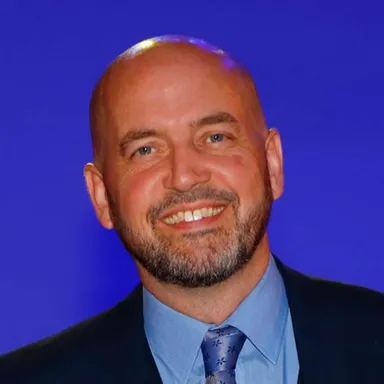
About the guest
Joel Shaljean
Chatting to Joel Shaljean in this episode all about his work as a Deputy Headmaster, Teacher Trainer, and pioneering thinker and programme facilitator in the educational field.

Hosted by Andrew Pain
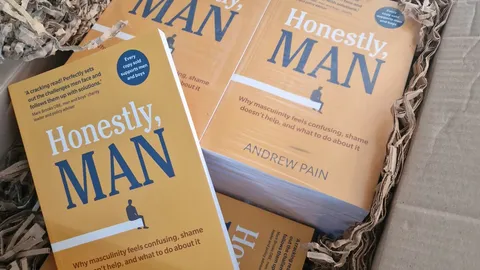
Andrew Pain is a Mental Health & Resilience Keynote Speaker who speaks from lived experience on resilience, burnout and workplace wellbeing. Host of the Men on Show podcast, author of the book Honestly, Man, and a TEDx speaker. Member, International Coaching Federation, and Mental Health First Aider trained.
Insights
Read next
Never miss an episode
Candid conversations with everyday heroes – ordinary men doing extraordinary things.