Men on Show · Episode 15
Men, Blindness and Sport with Darren Harris
- 3 January 2024 .
- 39 min .
- Hosted by Andrew Pain .
In this episode, we talk to Darren Harris who was diagnosed with bilateral retinoblastoma at the age of fifteen months.
Andrew hosts this podcast. His own keynotes are on burnout, resilience, imposter syndrome and difficult conversations.
In this episode
About the conversation
Since then Darren was the captain of the blind England football team, racking up an extraordinary 162 appearances and 10 world and European medals, and is a brilliant speaker and campaigner, talking about how to overcome adversity and how to create brilliantly diverse groups of people.
Key points of the episode
- How he remembers seeing in the early part of his life.
- How he went through the typical phases of grief.
- How some great teachers realised the skills he would need in the future.
- His thoughts on why some men are struggling.
- His incredible achievements, and the mindset that inspired it.
- Some ideas on future helpful attitudes and solutions.
Men on Show shares lived experience and honest conversation – it is not medical or therapeutic advice. If you're struggling, you don't have to cope alone.
Samaritans: call 116 123 (free, 24/7) NHS: 111
Full transcript
Read the whole conversation
A complete, verbatim transcript of this episode – every word is the host's and guest's own; the topic headings are ours.
Welcome to Men on Show, the podcast. Candid conversations with everyday heroes. Join Andrew Payne as he interviews fascinating guests ordinary men doing extraordinary things. If you love the show and you think somebody could benefit from hearing it, why not tell them about it by giving it a share on social media? Oh, and at the end of the podcast, if you could leave us a five star rating and a review, It really helps us more than you know, and it gets this important message out to more people that need to hear it the most right now. Enjoy the next episode.
Hi, my name's Andrew Payne, and welcome to Men on Show. And today I am delighted to welcome Darren Harris, the captain of the Blind England football team. Racking up over one hundred and sixty appearances, ten World and European medals, he is England's most capped blind footballer which with, More than one hundred and sixty caps is not surprising. Dual Paralympian, recipient of an honorary doctorate. Best selling author, but not in spite of, but because of his blindness.
And we're going to talk about that today. And we're also going to talk about obviously some of these bigger issues, some of these other issues I don't say bigger, but other issues such as men and masculinity. So Darren is an absolute pleasure to have you on the show. Welcome to Men On Show.
Thank you for having me.
His sight deteriorating, and the grief cycle
Cool. Well, look, Darren. Um, just to sort of start us off with, I was reading uh, reading your bio and reading up on you because I know a bit about you anyway. We've we've met um before. You, you were diagnosed with something called bilateral retinoblastoma um at the age of fifteen months. Um now I know I don't recall anything really before. I was like four. Do you feel like looking back now as as a man, Do you feel like you have any sort of subconscious fleeting memories of life with sight, or has life have you in your mind? Have you always been blind? If that makes sense as a question.
So, My treatment meant that I had one eye was removed, and the other was treated with radiotherapy. So, the eye that was treated with radiotherapy, I had vision in for. Qui te a few years, okay. Yeah, so that deteriorated gradually, But I remember being able to see and even up to sort of the age of twelve, I could still read print. Oh, right. Okay, if it was enlarged. So, yes, I remember being able to see.
And do you when the blindness sort of the total blindness occurred over from what you are saying? Like perhaps a period of time? What was the impact? On you at that time, Like were you aware that it was getting worse and you knew what was coming, or how was that for you?
Read the rest of the transcript Collapse transcript
I think you go for, you know, the entire grief cycle. You know that. That's quite well known in the world in terms of, you know, the denial phase of just not really acknowledging it, accepting it. Coming up with other reasons why you bumped into things, such as the lighting or a lack of concentration, And then there is, you know, the anger phase, which I obviously went through in terms of you know, why is this happening to me.
And then that hope phase really where I was always going to the hospital every single year, hoping for this miracle cure, and. And doctors really telling me that my sight was getting worse and that there was nothing they could do about it. And.
And that did leave me in a dark place, literally and metaphorically, I guess. So that was that kind of immediate impact in terms of you know it affected how I how I thought in terms of you know what sort of future would I have? Would I have a family? Would ever have a job? All those things. But also that emotional impact it had on me in terms of just feeling helpless and hopeless at times.
And how old were you when you were experiencing? I mean, all of that kind of. When I say rollercoaster, sort of explosion of emotions, really difficult difficult to handle for anyone. But were you handling it as a child?
Yes, I mean primarily as a teenager. I don't remember. Feeling that way, you know, when I was younger, even though my sight still wasn't perfect. But you know, when I was in primary education, I don't remember. Feel ing that way, perhaps when I was start to be ten eleven, I started to think about it more. And, that was the age that I started learning Braille and learning to touch type. So there was definitely. An idea amongst my teachers that I would need these skills even before I realised that, you know, they were going to be really important for me going forwards.
Gradual acceptance and meeting other blind people
Wow, I mean that that's a massive thing to. Process my eldest boy is is ten. If I sort of imagine him in that situation, I mean that that massive for you. Massive for your parents, you've talked about obviously some of the processes of grief. Yeah, it starts with doesn't it denial. Is it anger, then sadness, I think, and then yeah gradual sort of acceptance of the situation. What what do you was there anything at that time.
That really helped you accept and move forward in a helpful way.
Yeah, I mean, there were a few things. I mean, sport was definitely a focus for me and a way of. I suppose, distracting myself from. You know, the sort of the emotional and the mental turmoil. So. Sport just gave me this instant hit, you know. It's the it's the best antidepressant out there. It's, it's great at reducing anxiety because you're just you're very much in the moment, you know. Sport's really mindful. In fact that you only really think about the fact that you, Know your legs are hurting and your heart's beating like a drum, all those sorts of things and And I. Guess the and the other thing was just that I went to a a school where.
It was a boarding school, but it was a grammar school as well. And I just met other blind kids. And even though I didn't have a particularly great time there, There was just things that they taught me in terms of How to deal with it, And I just started to come across people doing some amazing things as blind people, which I had never had up until that point. You know, I didn't know any blind people when I was really young.
So You are only, you are only sort of. Perception of blindness is what you learn through how others react and respond to you or and treat you, because you know, they hear that you've got this ending disability, sort of thing. So for me. It's watching guys who are totally blind ride a bike, for example, were things that just completely blew my mind. It was like, how on earth is this possible? And yes, I started to sort of see people doing some really cool stuff.
So that kind of acceptance, as such, Of life of how life was going to be for you. Now that was very much. Would you see that as a gradual. Unfolding of time, where you are meeting people that are quite inspirational, but with the same condition that you have. It wasn't like a you didn't have like a standout sort of moments of epiphany. It was like a gradual. Process that acceptance.
For me, it was. Yeah, it was. You know, my sight deteriorated very gradually. It was never something I noticed day by day or week by week or even month by month. It would be. Thinking, oh, This time last year, I could see this and and you know, and I used to be able to see that. And now I can't. And I guess. That change in terms of my mindset was also very gradual, and it was only really sort of for a period of reflection where I. I started to sort of remember some sort of really key moments, but yeah, I don't think there wasn't a eureka moment for me in the sense of. Yeah,
Church, faith and blindness
And before we look at your work today, I do want to sort of really dive into the work you are doing today. But, one of the thing I wanted to just touch on about your sort of story growing up again, I read i think it's on your website that at seven, the age of seven, you recounted all sixty six books of the Bible to your church. U m, so obviously in church. What was the church kind of a key part of your upbringing that you recall?
Yeah, I was dragged to church kicking and screaming.
Dragged kicking and screaming.
Yeah, I mean my my mum's side of the family were all quite religious, and you know we went to one of those very typical black Pentecostal churches. And I'd have to say that sort of the church experience has probably changed quite a lot from when I was a kid, but. It, it was quite kind of hellfire and damnation when I used to go back then. But you know, one of the things I did engage with in church was was the music, because there were just some fantastic musicians.
And I'd just go up to them afterwards and say. How do you play that? And how do you play this? And so, you know, that was one way, but also.
I'm not quite sure how the idea of reading all the books, uh, the Bible came along actually. I did all used I always used to set myself little challenges, memory challenges when I was a kid. So, I would shuffle a pack of cards and then give it to my mum and then see if I could recite it. So um, I'd used to play loads of sort of games and stuff on There was a game called Simon.
I don't know if you remember it? Yeah these sort four colours, and you had to remember the patterns of these colours. And and I was I was a big cube. I was big into the Rubik's cube as well as a kid. So, I think I always had a good memory and and it was just one of those sort of things. I just thought, oh, let's see if I can remember all the books of Bible then. Someone came with the idea. Well, why don't you recite it in front of the church? So that's what I did.
And did you, with what you were going through as a teenager? Did faith play a part? In wrestling with that, or yeah, did it play a part? Was it a big part?
I am not saying in a positive way for me. I've always found it a little disturbing to a certain degree. And actually, How could I think of blindness in a positive way when people were always praying for me to? Have my sight restored, And even now, you know, I find myself, you know, standing at a bus stop. And. People will come, and you know, offer prayer for me for my sight to be restored. And actually now I've gone through that complete phase where I have accepted it.
And actually if you were to say I could have my sight back tomorrow, I wouldn't have that. That's like not something that I am really focused on. So, I think it sometimes narrow people's.
Thinking in terms of, well, you know, if I could see my life would be immediately much better. But when actually I've come to realise that's not really the reality. And, you know, there are blind people who haven't had particularly positive lives, and there are people who can see who haven't had particularly positive lives. And There isn't sort of this, this uh you know. Ca usality in a relationship, saying," Oh, you know, because I am blind, my life's going to end up this particular way." So. Yeah, I didn't find it that kind of empowering or positive. It was sort of, It took away from what can I do for myself to make myself my situation better.
Yeah, because I mean, I've got a faith, But I think faith, it can complicate issues such as like when do I keep persevering with something. And when would I walk away? If you have a faith, you always believe somehow that God might just rescue this situation, so I'll hang in there a little bit longer. And like you say, when do you accept something and when do you say no? I keep praying because because God can change this and and I do think faith. It can give us hope, which is a good thing, but it can complicate matters as well. And yeah, I've seen that in the church where people with an illness or a disability.
Will be prayed for, and then if they're not healed, Sort of the focus is, well, you obviously don't have enough faith that you can be healed, and that's obviously you know really unhelpful. So it's interesting that you share that. And so Today, obviously you've gone into sport. You've achieved amazing things. What took I mean, you always loved sport, But did you ever think that you would perform at the higher levels that you have?
I never did sport with this vision of, you know, being a Paralympian or anything like that. You know, I did sport as a kid because I loved doing sport, and it was one of those things which I did. Before school, break time, lunchtime, after school, weekends it literally filled my life. I remember i used to I used to do athletics. I used to be in a running club when I was a kid and I'd play football for like two or three hours.
And then go to the running club. And we never even followed the footballers' training; we were just having fun. And I think, that's so important. I meet loads of people who tell me they want to be, professional athletes. And you ask them, you know, How much they're doing? And are they part of a club and are they receiving any coaching? And and they say no. And it's like well.
That's that's the that's the starting point. Really, if you're not if you're not engaged in it and doing lots of it, you're just never going to improve. So. Yeah, that was just something I did loads and loads of, but there wasn't really a pathway for. For sort of professional sport with a disability at that time, so I went down that traditional route of going to university and. Joining one of those graduate training programmes and and all of that, and when I began my.
My sort of England blind football career, it was very much as an amateur. You know, we didn't get paid or anything like that. We I worked by day and. Weekends and evenings, I focused on you know training with football. So. Yeah, that's how I kind of then started to make that that transition across.
Yeah, interesting. And you you obviously your. So rt of slogan or your main sort of focus of your work is sort of called" U nbl ind the Mind." Today, what's what's the thinking behind that, Darren?
Unblind the Mind and resilience
I came about because you know a little bit what I was saying before. In terms of, I realised that. That lack of sight wasn't the reason why I wouldn't achieve something in life, and so I didn't want that to be the focus. I'd come up with this phrase that you know, your eyes are useless unless you use what's between your ears, and so it was very much about. How could I change my mindset, whereby I didn't think of blindness as something that was negative, that that was something that was going to. Uh, um, made my life make myself less successful as it were. But you know, was there a positive way to think of my blindness?
Could it enable me to do things that I wouldn't have done had I been able to see? And so I started to. Reengineer how I thought about buying this. When I realised that for me to go on and accomplish all the things I wanted to do, it wasn't something that I wanted to be ashamed of or. Or, or feel in any way negative about, and it's not that I haven't had. Some of those experiences, But I realised that the challenge for me was to reframe all of my thinking in terms of how I perceive blindness.
And is that that is that the heart of your resilience message?
Yeah, in terms of how we think, yeah, How we think ultimately is going to impact what you know what we do and also how we feel. So, you know changing your thinking about something is massively important. And you know it's something I use all from my. Career as an athlete, I realised that the mind was so powerful. I was really lucky to work with, you know, some really top sort of psychologists. And. And those are the things that we focused on, you know, dealing with negative self talk, thinking about how we can regulate our emotions, you know, in the moment. And it's really easy. After a game, or after a talk, or after any event that you go through, a job interview.
To reflect and think about all the things that you could have done differently, and the challenge always is. About how you can do that in the moment, I think that's what sort of really separates the. The very best from the rest,
So and definitely to sort of pick your brains while we've got you, Darren. Given the adversity that you've overcome and continue to do in in the life that you lead, I know that you are planning a marathon next year. And given that you speak on resilience to businesses, schools, colleges and the rest. If, if you could just share, you know, one tip. Let's imagine I am struggling in my life. I've been hit from on on a few different points and I feel like I am in a bad way.
What what kind of is your would be your most important resilience tip? To get someone started, I want to be more resilient tomorrow than I am today. So, what's the starting tip you'd give someone?
I think for me, it was always. Just accepting where I am, that this is my starting point. You know, you mentioned the marathon actually; I did the marathon a couple of months ago, so I don't think I am doing one next year. But I did one in October, and I think what often stops anyone from. In sort of taking on anything particularly challenging and overcoming anything difficult is also going to be challenges. Is getting really overwhelmed by the.
The magnitude of the task itself, And so what's really important for us is to is to really just accept where we are and and not kind of think too far down the road. Um, so that that's the simplest thing to do is just accept where you are.
Grit, acceptance and why some men are struggling
I love that you know, Ium because in some of the uh speaking stuff that I deliver on, I talk about grit and there is a book on grit, funnily enough called Grit by Angela Duckworth. Have you read it down?
No, but I do know about her work. Yeah,
So she's done some amazing work on grit. You know, very well researched. And, she talks about grit being where passion and perseverance kind of collide and intersect. So you find your passion with something you are more like to persevere. But the one word that I feel is missing from the book, and I say this again again again when I do my talks. Is acceptance? She doesn't really talk about acceptance as a thing, and I think that is.
So important for me, it is the missing ingredient. Working out if you are struggling in life, What are the things that I just need to accept today that I can't change? I need to stop wasting energy fighting against them. I just need to accept. I think that's a really good starting point. I love the fact that you've picked on that as your sort of key starting point. On this podcast, moving the conversation slightly towards men.
A masculinity, you know, t here is so many mixed messages about men. I feel in the press, you know, on the one hand we we have the privilege, the upper hand. We've retained power and and then t here is like a wrestle people, wrestling power from our sort of hands, but then We know from the stats for men and boys, you know, we make up eighty five percent of rough sleepers. We're more likely to be victims of violence than women or girls.
But there is no official government strategy to tackle violence against men and boys. We know that the greater majority, three quarters of people that die by suicide are men. Ninety five percent of people in prison are men. Most people who listen to these podcasts will know these stats. So, Do you think men and boys are struggling from what you see because you do a lot of work in schools? Yeah.
I think, I suppose it's always important to make the distinction that there is as much variation within. Within sexes, as there is between sexes, And so whilst when we're kind of making these sort of really global comparisons between men and women, it's important to realise that actually. There is a massive variation within men, and so there are definitely some men who are struggling, And perhaps they're the ones which represent I know a lot of the stats that you've just mentioned. But you know there are obviously lots of men who are.
Who are also achieving so the two things aren't mutually exclusive. I think that. The group of men who are struggling and boys that I come across in schools. I think, yeah, that some of the changes that have occurred in society and structures, and there are a multitude of reasons we could. Go into as to why some men are struggling. In terms of a lack of male role models, so one of the things that's obvious from so many schools I go into, especially primary schools, is that there are a handful of male teachers.
And that's not for a lack of, senior leadership teams wanting there to be men in schools, but. The ones I've spoken to are saying that men aren't applying for those roles. You know, men aren't applying to be primary school teachers, for example, and so.
Maybe this is for us to address, you know, If we feel that there is a lack of male role models within schools, and we want more male teachers, Then more of us need to put our hands up and take on some of those roles. You know, there's obviously a lack of fathers in the home. You know, my father was absent. And that's a problem which seems to be. Continuing in that particular direction, um, and and I suppose the other big area is that.
There were there was there was t here is a different set of skills. We need I think to kind of cope with today's society that we probably didn't need. Maybe ten or twenty thirty years ago, and if so, if you think about the change to. The workplace in terms of that men.
Used to be able to when we had lots of manufacturing jobs. For example, You know, you were able to earn a good living doing a manufacturing job where you didn't necessarily need. You know, certain skills and a lot of those have been replaced. For example, with service sector jobs which have got a completely different skill set. You know, They might they both might be considered as sort of entry level jobs, but they are completely different skill sets.
And I suppose so. There is a massive section of the society that are. Up basically under prepared, under skilled for sort of some of the challenges of. Of modern day life, and I think that is having an impact on, a certain section of. Of the men,
Heavy lifting and the toxic masculinity label
Yeah, I think that's really really insightful, Darren. I don't know if you've read the work of Richard Reeves. You know, he talks about you know one hundred and fifty years ago, the vast, vast majority. Of paid jobs involved elements of heavy lifting, which, if according to the American Bureau of Labor, is where you are lifting items regularly that between twelve and twenty kilos. So there was a need for human brawn in the workplace. So you are right; you know this helped guys in the workplace, but today the vast majority of jobs.
Have no, they have no heavy lifting. So the need for human brawn has gone. Of course, the workplace is in socially uh society has become more fast paced, more complex. We've seen and it's a wonderful thing. I love the fact that in many countries, we've seen the emancipation of women in the nineteen eighties. Four percent of lawyers were women only four percent. And that's not that long ago. But today, we're at forty six percent. That's a wonderful achievement.
We shouldn't be looking to turn the clock back. But. It is about saying well. Where there have been big steps forward for some groups, huge societal changes. Who's not coping so well with those changes? Why is that? How do we help them? These are really important questions. So I think you're absolutely right in terms of the changing workplace that has had an impact on guys, and there is definitely a need for development skills. And, of course, we have to remember that boys and girls brains develop very quickly at a very different pace. Girl infant girls brains develop much more quickly.
Boys, But we put them in the classroom at the same age. And then wonder why so many of the boys are falling behind. Then I suppose you add to that fatherlessness and some of these other adverse childhood experiences. It's not surprising. That we have so many issues with our young boys. I suppose for me, I don't know what your take is. I am going to ask you in a moment. But you know, one of the things that bothers me about the term "toxic masculinity," which is banded around.
To describe all manner of things, not only is it a lazy term, But also because people behave badly, whether they're men or women for a whole variety of reasons. But also for our young men and boys that may not be behaving so well, certain groups they may be struggling. I see toxic masculinity as more of a wall builder than a bridge builder. I often say that what's your view of the term toxic masculinity because you do a lot of stuff in schools. No doubt you hear that term a lot.
What's your own perception of that as a phrase?
Yeah, I think it's always helpful to sort of stay away from. You know, those sorts of blanket labels, and that they're yeah. I think what you say about it in terms of it being lazy and you know. And I think with all levels of language, even things that we think we do understand and know well, some people interpret things differently to others. So uh. If people do use it, I don't think we're ever going to remove terms from from the lexicon of language.
But when people do use those terms, you know, you just ask, you know so what what do you mean by that? And you use that to open up a conversation. So I think. Yeah, you know, rather than sort of banning phrases or asking people to not use it, it's you know, It's asking them probably to sort of clarify what it is. They mean by that.
And then using that as a conversation starter, so that's how I would deal with it. But I do hear it banded about, but not not that much to be honest. Not certainly not in schools; I don't hear it talked about. You know, it tends to be. You know, On particular sort of T V shows and and you know those sorts of discussion things, but I tend to avoid those anyway. If I am honest.
Yeah, and I mean, and I have worked. I worked with a school, not that long ago where the teachers they don't use the word themselves, toxic masculinity, but where the kids do, they obviously have these honest and real conversations understanding, actually, that men and women can be completely brutal and cruel to each other to the other gender, to their own gender. And that it's more sort of, you know, these are destructive people tendencies that people have. So what's at the roots of it? How do we deal with it in terms of helping.
Men and boys, in terms of creating better outcomes for our young men, creating better outcomes. For our male colleagues, What are some of the things that we need to be doing practically in society?
Sport in schools and why it matters
I am biased, but I do think sport is transformational in so many ways. And I think we do sell sport really badly because most people think about it in terms of losing weight, getting fit, or you know getting big muscles. And I can categorically say that sport has done so much more for me than that. It's helped me develop communication skills, leadership, teamwork, resilience, confidence. Every facet of life that you could think of, I can say that sport has given me a way of having some insight into that. And I think, the reduction of.
Of sport within schools has had a detrimental effect on people in a myriad of ways. You know, we're talking about um. People's lack of focus and attention, so you know t here is much more emphasis on people with ADHD. And, it's almost like we've normalised sitting still for seven hours a day and wondering why people are getting fidgety. And then. Labelling them and medicating them when actually lots of kids have got a propensity to move and be active, and can we still learn in an active way?
So, I think there are some. There is some real practical things around that, and perhaps there are some gender differences in boys being. Been more active and and even.
For the girls who who are you know, who were their role models, you know. So in lots and lots of schools they're bringing in external. People to do their PE because maybe some of the teachers don't want to do the PE with the kids. So, I think it's it works for everybody. So that might be one practical thing. I would I would do is not think that sport is taking away from our kids. Time to to read and to write and to realise that actually it could uh complement it in in. in In a really positive way,
I love that you've said that, Darren. Because of all the guests I've had on Men on Share, I always ask this question. As you can probably imagine. You are the first one to say" sport," and I think it's good rather than saying," Well, we could do a bit of this, bit of that." You've opened that up as a key topic. And and you are it's so right in what you say, and just really adding to what you said.
Um, One of the reasons why boys are more likely to be more fidgety than girls is when they're teenagers. They have and they go through male puberty. Uh they have thirty times more testosterone in their system than equivalent age girls. It's no wonder. They can't sit still, and I remember sitting in classrooms as a teenager being so bored, so restless, so fidgety.
And I would have loved to have had a PE session every day. I probably needed that. I would have probably focused better in the other time in the day. If I'd have had that, and I think that it's so important in terms of concentration, wellbeing, or and possibly although it's important for both genders, I absolutely agree with that fully. Due to the testosterone element, biologically we are different. Again, you pointed that out yourself. It may be even more important.
Four guys. I think it's a really Is important around communication skills, enjoyment, self confidence. As you say, it's not just about being fit. And I know that I talk most openly after game of football. We head to the pub. And if you want me to open up about anything, that would be the time to do it. I am on fire after game even if I've had a rubbish game, I feel like I am on fire in a really really good way. So that I mean, that's a fantastic answer. And and like say, you are the first guest to say, sports, how do you feel about that? Okay.
Well, unique, yeah. I think it's just you know, it's one of the great losses. I think when I was in primary school and unless my memories absolutely faulty, I seem to remember that we had an afternoon of sport. A couple of times a week, and I know, being a school governor as I am now, that it's a real challenge to fit. Ah. More sport into the curriculum because we have, you know, have so many targets in terms of everything else.
But it always seems to be it always seems to be framed as an either or, and yet I think there is lots and lots of evidence that. Sport and exercise actually increases our brain processing speed. It increases neurogenesis and neuroplasticity, so it has a positive impact on our brains.
And actually, will enable I think some of those children to learn better. And that actually, if they've just let off a bit of steam now, They are in a good position to sit down and actually learn because they're physically tired. But they're still mentally alert, and so then they can probably pay a bit more attention in the classroom.
Because I think it's also self discipline, a sense of being okay that you've lost. And there is so much emotional stuff that goes with it. A school that my uh, my grown up daughters went to for their sports day, they'd have a morning where all the kids participated and did fun stuff. Then in the afternoon, they'd have a section for what they called the gifted and talented, where they'd really race them and medals and all that stuff.
And there'd be parents that would complain about the gifted and talented session. They'd say it was elitist. It wasn't fair on the kids that weren't gifted and talented. So I do think sports one of these it can be one of these emotional things, can't it? That can.
Almost, create quite quite irrational debate. Would you agree with that?
Competition, and a message of hope
Yeah, people are afraid of competition and and rightly so. So competition works well between people who are at similar levels. So that's really important to know. And I think when you have competition between people who aren't similar levels, then you get those really. Unfortunate and unpleasant situations where people completely disengage. So, you know if you've got. If you've got the fastest and the slowest in the same event, the fastest doesn't really need to try because they know they're going to win.
And the slowest doesn't try either because they know they're going to lose. And that's not helpful for either. So I think it's really important that how we structure the sessions and how we put them together. So that we're getting people of similar ability competing against each other.
Yeah, yeah, well,
I think that's going to get the best out of everyone.
Yeah, I think the way the school did it was great. That was my own perception, but yeah, no. I mean listen really insightful stuff. Really appreciate you being on the show today. I always finish a podcast with with the same two things. First is how do people get hold of you, Darren? Because you are a brilliant speaker, talking so much about adversity resilience.
Di versity, as well. How do people get hold of you?
Hi, I am on the world wide web, so DarrenHarrisGB dot com is my website, and that's probably the best place to go. And I am obviously on most social media channels as well at DarrenHarrisGB.
Darren Harris GB, okay, love that. And finally, the final thing to wrap this up: if you just had. A couple of sentences, to give. Men, young and old, listening to this podcast: a message of encouragement, a message of hope. What would that be in a couple of sentences?
I think there is a lot of reasons to be positive, and I think we can always focus on the negatives. And I just think it's. It's time for us to really step up. And I've always said actually that it's really easy for if someone was to criticise my dad, I probably would defend him, but, You know, I know that he hasn't been the best dad possible, and so it's for us to challenge each other to step up.
And perhaps when other people do it, we might not kind of connect. But when we challenge each other and we say, boys, men, we have to step up and do better. That's that's we are the best people to do that. Okay,
But so what I got from that was. Focus on the positives. Step up and don't be afraid to respectfully challenge others to step up. That's the sum of it.
Absolutely, yeah,
Fabulous. Well, what a great way to end the podcast, Darren. Thank you so much for your time. I know how busy you are with all the work you do, that you've given it to Men on Show, giving your time so freely. I really appreciate it. It's been a pleasure speaking to you. Thank you again for coming onto the podcast.
Thanks for having me.
Thank you for listening to Andrew Payne's Men on Show. If you could leave us a five star rating and short review, it will be really, really appreciated. It helps us get this important message out to more people that need to hear it the most. See you on the next episode. Thank you for tuning in.
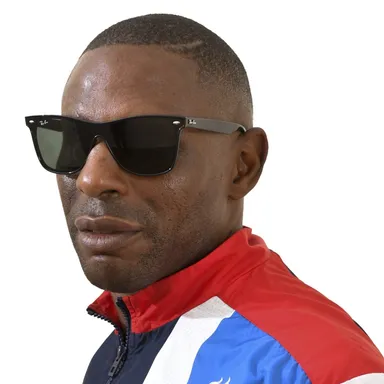
About the guest
Darren Harris
In this episode, we talk to Darren Harris who was diagnosed with bilateral retinoblastoma at the age of fifteen months.

Hosted by Andrew Pain
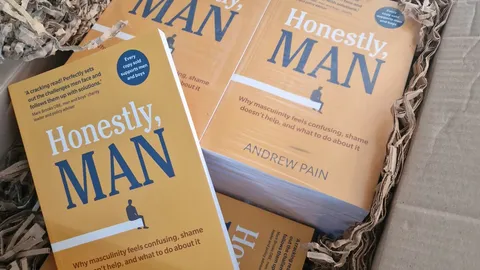
Andrew Pain is a Mental Health & Resilience Keynote Speaker who speaks from lived experience on resilience, burnout and workplace wellbeing. Host of the Men on Show podcast, author of the book Honestly, Man, and a TEDx speaker. Member, International Coaching Federation, and Mental Health First Aider trained.
Never miss an episode
Candid conversations with everyday heroes – ordinary men doing extraordinary things.